Local Governance
Ward-Based Development: The Renewed Hope Initiative at the Grassroots
N1.5 trillion is being sent directly to Nigeria’s 8,809 electoral wards. It’s a bold experiment in grassroots funding, bypassing state governments to put development at the doorstep. But can this new…

Ward-Based Development: The Renewed Hope Initiative at the Grassroots
Published: 16 March, 2026
N1.5 trillion is a number that makes you stop and think, especially when you learn it’s being sent directly to 8,809 electoral wards across the country. This sum, representing 7.9% of the national budget, funds a new policy called ward-based development, a formal attempt to move project execution closer to people by bypassing the traditional state government channels. It’s the central experiment inside the 2026 budget, and President Bola Tinubu announced the strategy back in October 2025 with a simple design: direct transfers from the federal treasury to project accounts managed right at the ward level.
The Arithmetic of Hope
The money is split between the 360 federal constituencies and the 109 senatorial districts, which means each senator gets about N2.18 billion and each House of Representatives member gets approximately N1.45 billion. The directive requires these funds to be broken down for specific projects across the wards they represent, and presidential aide Yusuf Buba says the goal is a tangible federal presence in every single community. Implementation leans on existing frameworks like the World Bank-assisted Community and Social Development Project (CSDP), with guidelines mandating the formation of Ward Development Committees made up of traditional rulers, youth leaders, and women representatives.
“The era of abandoned projects and ghost initiatives is over. We are taking development to the people, to their doorsteps, through a transparent, ward-focused model.”
– Senator Opeyemi Bamidele, Senate Leader, February 12, 2026.
A Tale of Two Wards
Field reports from the first quarter of 2026 present a picture that is not quite uniform. In Borno State, the Ngala ward committee approved an N85 million primary healthcare center, awarded the contract in February and began construction in March after a public meeting to select the contractor. Contrast this with Rivers State, where an investigation found funds for three ward projects listed as disbursed on the federal portal but the physical sites for a borehole and a market stall renovation showed exactly zero activity. Project selection lacks a standardized needs assessment, so a ward in Ekiti State prioritized a maize mill while a ward in Bayelsa chose a jetty repair, which addresses hyper-local needs but also opens a familiar door.
“We asked for a health center. Our representative said the money was enough only for a borehole. We have a borehole from the state government that works two days a week.”
– A resident of Ikorodu, Lagos, March 3, 2026.
Ghosts of Projects Past
This new policy succeeds the controversial Zonal Intervention Project (ZIP) scheme, where a 2024 report found over 4000 projects categorized as vague “empowerment” trainings with no physical assets to verify. The new model explicitly bans those and requires concrete infrastructure, with funds moving directly from the Federal Ministry of Finance to cut out intermediaries. A senior official at the EFCC, speaking off the record, noted the commission is monitoring the first-cycle transactions to prevent a repeat, but the budget size itself is revealing. N1.5 trillion for 8,809 wards implies an average of about N170 million per ward per year, an amount that exceeds the annual capital budget for many local government areas and could distort their fiscal autonomy.
Parallel Lines
The policy creates a parallel development structure outside the control of state governors, who have been the primary channel for federal allocation since 1999, and this friction manifests in practical ways. Take a ward project for a five-kilometer rural road in Nasarawa State that required approvals from the state ministry of works; the process stalled for eight weeks with the WDC chairman accusing the state of bureaucratic sabotage and the state commissioner arguing the road design failed engineering standards. The role of local government chairmen is equally ambiguous, as the law designates them as the chief development officers at the grassroots but the ward-based development model empowers a committee that operates independently, which could lead to political clashes down the line.
“We are not against development coming to our people. But development must have a plan. If every ward is building its own health post without reference to the state’s primary healthcare strategy, we will have facilities without nurses, without drugs, without sustainability.”
– Dr. Tunji Alausa, Minister of State for Health, March 8, 2026.
A Simple Bridge
The potential is significant but the risk of waste is higher, so the single most effective action might involve a simple administrative rule. The Federal Ministry of Finance could mandate that before any fund disbursement, the Ward Development Committee must register its selected project with the relevant state ministry—a health post with the state ministry of health, a classroom block with the state universal basic education board. This registration wouldn’t grant veto power but would create a record, allow for technical specifications, and ensure the asset enters the state’s inventory for future maintenance. It’s a bold experiment, this N1.5 trillion investment, and its success depends on transparency in fund flow, integrity in community committees, and a little cooperation. The evidence, as they say, will be visible.






Local Governance
Traditional Institutions Define the Role of Traditional Rulers in Local Intelligence Gathering
A police officer visits the palace first. This is Nigeria’s primary intelligence layer, a social contract older than the state. We look at the role of traditional rulers in security and the challenge…

Traditional Institutions Define the Role of Traditional Rulers in Local Intelligence Gathering
Published: 17 March, 2026
Nuhu Ribadu made a quiet admission in 2024 that many people already knew but rarely said out loud. The National Security Adviser told a room of officials that security agencies routinely leverage the access and influence of royal fathers. That was the year Premium Times reported the statement, and it felt like someone had finally acknowledged the elephant in the room, the one wearing a crown and sitting on a carved stool. A police officer posted to a new local government area visits the palace first, and a director from the State Security Service keeps a direct line to the traditional council. This is the primary, granular intelligence layer of Nigeria, operating outside any official gazette, a social contract centuries older than the state itself.
The palace sees everything
The system works because the palace sees everything. The district head knows which young man returned from the city with sudden wealth, and the village head counts strangers while the market leader hears grievances before they boil over. This intelligence flows upward from village head to district head to the emir or oba. A Nigeria Police Force report in 2024 noted that over 60% of actionable tips on kidnapping syndicates in the North-West came from these networks. The intelligence is human, relational, and pre-emptive, a stark contrast to the signal intelligence prized by modern agencies. The United Nations Development Programme called it a socio-cultural radar in a 2025 assessment, built on a trust that understands the difference between the hardship of a farmer and the grievance of a militant. That nuance is often lost in formal security briefings.
Policy and the palace
Formal policy grapples with this informal power. The National Security Strategy 2024 document mentions collaboration with community structures but avoids explicit mention of traditional rulers, reflecting a constitutional ambiguity the Office of the National Security Adviser noted in 2023. The constitution designates them as ceremonial figures, yet the Police Act 2020 provides for community policing committees that naturally include these rulers as de facto members. State governments move faster. Kaduna, Kano, and Oyo states have all established formal frameworks since 2023 to integrate traditional rulers into security council meetings. In March 2026, the Governor of Kaduna State, Uba Sani, signed a directive mandating weekly security reports from all emirate and chiefdom councils, creating a dual reporting line to the state governor and to federal security agencies.
“The palace is not a police station, but when the police come for information, we give them what the community has given us in trust. We are the bridge, and sometimes that bridge feels the weight from both sides.”
– His Royal Highness, Alhaji Aminu Ado Bayero, the Emir of Kano, Daily Trust, February 10, 2026.
But there is a catch. The financial aspect remains opaque. No specific budget line in the N49.74 trillion 2026 Appropriation Act allocates funds for intelligence gathering by traditional institutions. Resources come through informal means, with security agencies providing logistical support like communication equipment and state governments disbursing security votes that chiefs can access. A 2025 study by the Centre for Democracy and Development found that over 70% of traditional rulers surveyed received some form of operational support from security agencies, though rarely in cash.
Cracks in the system
Reliance on this system carries inherent risks. The first is politicization, as a traditional ruler depends on the state government for recognition and often for financial support, a dependence that can colour intelligence and make rulers hesitate to report crimes involving political patrons. The second risk is vendetta, where rulers who provide intelligence that leads to arrests make enemies. As The Guardian noted in 2024, the killing of the Sarkin Baka of Gidan Baka village in Niger State was widely attributed to his cooperation with security forces against bandits. The third risk is competency, because intelligence requires sifting fact from rumour, a skill that receives no formal training, and a ruler may mistake a personal feud for a security threat. The fourth, and most significant, is accountability, where intelligence flows without a paper trail. A tip that leads to a wrongful arrest has no official provenance, as the palace provided information but the security agency executed the operation, a gap that protects both parties while sometimes leaving citizens without recourse.
Digital meets ancient
New initiatives attempt to modernize the channel. The Nigeria Police Force launched a pilot program in 2025, providing encrypted tablet devices to selected district heads in Borno and Plateau states for direct incident reporting, and the National Intelligence Agency has held closed-door workshops for senior traditional rulers on basic intelligence handling. These steps aim to add speed and security, but these tools face infrastructure realities. Network coverage in rural areas is unreliable, and power supply for charging devices is inconsistent, so the human element persists. A 2026 survey by NOIPolls found that 82% of residents in conflict-prone states would still report a security concern to a traditional leader before calling a police hotline. Trust in the institution outweighs trust in the technology.
“Formalizing this relationship requires giving them a defined role, training, and resources without making them agents of the state. They lose their community trust the moment they put on a uniform.”
– Dr. Kole Shettima, Director of the MacArthur Foundation Africa Office, security policy roundtable, Abuja, January 2026.
The community view
For the average citizen, the traditional ruler remains the most accessible authority figure. The police station may be hours away, and the local government chairman may be unseen, but the palace is always present. This accessibility makes the ruler the default receptacle for information, where a farmer who loses cattle goes to the village head and a mother whose son joins a cult group may confide in the wife of the ruler. This role extends beyond crime, as traditional institutions gather intelligence on economic hardship, youth unemployment, and inter-communal tensions. A report from the Sultanate Council of Sokoto in 2025 warned state officials about rising grain prices and their potential to trigger unrest months before protests occurred. This is strategic intelligence, yet it often lacks a formal channel into national planning committees.
The policy debate
The debate in 2026 centers on legislation. A bill in the Senate seeks to establish a National Council of Traditional Rulers on Security as an advisory body, with critics arguing this merely sanctifies an existing practice and proponents saying it provides legal cover. The bill remains in committee, facing questions about federalism. Contrast this with a model from the sub-national level, where Ekiti State has implemented a Peace and Security Corps that employs local youths nominated by traditional councils, creating a formalized link between community intelligence and community policing that keeps intelligence localized and actionable. The trouble is the money. Training thousands of traditional rulers, securing communication lines, and establishing a fusion center would require a dedicated budget. In the context of the N26.02 trillion national budget, even a N50 billion allocation would be a minor line item, but the political will to create that line remains absent.
The most immediate step is transparency. State governments can mandate that traditional rulers receiving any security support file a quarterly, confidential activity report that would not detail specific intelligence but outline general activities like meetings attended, grievances documented, and support received. This creates a minimal paper trail, transforming an informal arrangement into a documented partnership with baseline accountability. The role of traditional institutions in intelligence gathering fills gaps the formal state cannot reach, operating on trust, a currency more valuable in many communities than the naira. Formalizing it without breaking it is the central policy challenge. For now, the palace keeps its watch, the intelligence flows, and the state, sometimes reluctantly, listens.
Local Governance
Local Government Autonomy: Implementing Supreme Court Directives for Regional Development
The Supreme Court ruled for local government autonomy 18 months ago. Where’s the money? The fight over cash reveals governors digging in, councils unprepared, and a system struggling to change.

Local Government Autonomy: Implementing Supreme Court Directives for Regional Development
Published: 16 March, 2026
July 11, 2024 was a Tuesday like any other until the gavel came down in Abuja. The Supreme Court of Nigeria declared the financial grip of state governors on the 774 local government areas illegal, which meant the money should flow directly to them from that point forward. Justice Emmanuel Agim read the lead judgment, stating the old practice violated the constitution, and the ruling was supposed to be the end of a long story. Supreme Court of Nigeria, Judgment SC/CV/343/2023, July 2024.
Eighteen months later, you have to ask where all that money has gone.
The Anatomy of the Fight
This battle is about cash, pure and simple, and for decades the State Joint Local Government Account was the choke point where everything got stuck. The Federation Account Allocation Committee shares the monthly national revenue, and take January 2026 when the total distributable revenue hit N1.149 trillion. The 774 local governments got N229.8 billion, which is 20% of the total pie, and before the court spoke that money would first land in state coffers. Federal Account Allocation Committee (FAAC) Report, January 2026. The Attorney-General of the Federation, Lateef Fagbemi, who initiated the suit, argued the old system crippled the grassroots, and he was right but there is always a catch. Premium Times, July 2024.
The Ghost of Allocations Past
Contrast this with recent history when the former Minister of State for Budget, Clement Agba, pointed out that N2.18 trillion had been allocated to local governments over two years. His question was sharp, asking where all the projects were, and as The Guardian noted in February 2023, he saw little evidence at the grassroots to show for it. Then there is the 2026 Appropriation Act which sets aside another N529 billion for a Local Government Transfer Fund, separate from the monthly FAAC cash, so full implementation means local chairmen would control this combined fortune. The trouble is many of them are not ready for that kind of responsibility.
Governors Dig In
State governors are the primary roadblock, and the Nigeria Governors’ Forum has challenged the judgment repeatedly with their argument that it infringes on state rights. The Governor of Sokoto State, Ahmad Aliyu, spelled it out in late 2025 when he said you need a constitutional amendment, not a court order, leaning on Section 7 of the 1999 Constitution which gives states power over local government structure and finances. Leadership Newspaper, November 2025. Some states are not just talking, like the Abia State Government which filed a fresh suit at the Federal High Court asking for interpretations on council tenures, and this brings us to the legal tangle that never seems to end. Vanguard, January 2026.
A Constitutional Trap
The 1999 Constitution is a maze of contradictions listing local government functions like roads and lights and parks while also ordering states to ensure democratic local councils exist. Legal scholar Prof. Auwalu Yadudu calls it a master-servant relationship, and he told BusinessDay in August 2024 that true local government autonomy needs a constitutional rewrite moving councils to the exclusive list. The National Assembly has toyed with this for a decade, and the current 11th National Assembly lists restructuring as a priority, but tangible progress remains slow as the National Assembly Gazette indicated in 2025.
Can They Handle It?
Autonomy assumes competence, and a 2025 report by the Local Government Performance Index was blunt when it found over 60% of local governments lack the accounting departments to manage direct allocations above N500 million monthly. Local Government Performance Index (LGPI) Report, 2025. Dasuki Arabi, Director-General of the Bureau of Public Service Reforms, highlighted the human resource crisis, telling ThisDay in October 2025 that many council secretariats run on obsolete structures with little project management skill. Pouring money into a broken system is a recipe for waste, and it gets more complex when you consider the ghost worker problem.
The Ghost Worker Problem
A major fear is ghost workers because the federal IPPIS does not cover local councils, making their payrolls a black box. Look at Kaduna State where a 2024 verification uncovered over 5,000 ghost workers across its 23 local governments, saving the state N120 million monthly, and this problem is national. Kaduna State Government Audit Report, 2024. Direct allocations could bleed through these fraudulent payrolls overnight, which is why the Chairman of the Revenue Mobilisation Allocation and Fiscal Commission, Mohammed Shehu, suggests linking payments to biometric checks and digital platforms. Go slow, build capacity first. Revenue Mobilisation Allocation and Fiscal Commission (RMAFC) Policy Memo, 2025.
Promise Meets Politics
The promise of local government autonomy is beautiful with chairmen fixing drains and grading roads and staffing clinics, but the reality of Nigerian politics is different. An elected chairman still answers to the state governor who controls the party, and defiance risks impeachment by the local legislature which often follows the state lead, so the court banned dissolution but impeachment is still a weapon. And who holds the chairman accountable when many citizens cannot name their councilor and town halls are rare? This vacuum enables mismanagement.
“Autonomy without accountability is a recipe for grand corruption at the grassroots. We must build the accountability infrastructure simultaneously with the financial independence.”
– Ezenwa Nwagwu, Chairman, Partners for Electoral Reform, Channels Television, February 2026.
The Lagos Anomaly
Consider the puzzle of Lagos State which created 37 Local Council Development Areas beyond the constitutional 774. These LCDAs get state funds and do local government work, but the Supreme Court ruling only covers the 774 recognized areas, so we have a paradox where unconstitutional entities deliver services while constitutional ones fight for cash. The court order cannot fix this political creation, and it shows how the law sometimes meets a wall it did not expect.
The Slow Roll
The Federal Ministry of Finance issued a circular in August 2024 directing the Accountant-General of the Federation to start direct payments, which sounds simple but many local governments had no Treasury Single Accounts with the Central Bank of Nigeria. Opening and validating 774 accounts takes time, and by December 2025 about 80% had compliant accounts. Office of the Accountant-General of the Federation, Status Report, December 2025. The Nigerian Financial Intelligence Unit saw new risks with hundreds of new accounts meaning more channels for laundering, so they issued guidelines to adopt anti-money laundering frameworks or forfeit the cash. Nigerian Financial Intelligence Unit (NFIU) Guidelines, 2025.
The Court’s Limited Power
The Supreme Court can rule but can it enforce? The Attorney-General filed motions in 2025 asking the court to cite governors for contempt, and the court has been measured pushing mediation through the Council of State. Legal expert Chief Mike Ozekhome put it plainly on Arise News in September 2025, saying the court lacks the machinery to force 36 state governments to comply, so real enforcement needs political will that is in short supply.
A Simple Fix
The path is fraught but one action could build trust, and it is straightforward. The Ministry of Budget and Economic Planning should mandate a public expenditure tracking display for every local government headquarters, a physical board or a digital page. Each month, within seven days of getting its allocation, the council must post a breakdown of total received, salaries, and projects with names and locations and contractors and deadlines. The tech is basic, a ministry template, a poster on the council gate, a duplicate on the state digital platform, and the Open Government Partnership Nigeria has prototypes. Open Government Partnership Nigeria, Template Library, 2025. This bypasses constitutional fights and works within existing law, giving local journalists and residents a tool so a woman in Uzo-Uwani can see the allocation for road grading and ask questions when no grader appears. This small fix attacks the core fear that autonomy just moves corruption from the state house to the council secretariat, making the money visible and creating a baseline for accountability. So here we are with the Supreme Court having spoken and the money meant to flow directly, but the political will to let it flow remains in question. Between the judgment and development lies the messy work of building systems that work for the woman selling tomatoes at the local government headquarters, the ultimate beneficiary the law seeks to serve while the system must now learn how.
Local Governance
Kaduna LGAs Approve N152.4 Billion Budget with N91 Billion for Recurrent Spending
Before a single road is fixed in Kaduna, the cost of running local government eats sixty kobo of every naira. The old arithmetic of budgets leaves little for the clinics and classrooms people need.

Kaduna LGAs Approve N152.4 Billion Budget with N91 Billion for Recurrent Spending
Published: 12 March, 2026
N91.44 billion is a number that sits on the page, heavy and abstract, like trying to imagine the weight of a mountain. It is the amount, confirmed this month, that twenty-three local government councils in Kaduna have set aside for what they call recurrent spending. That means salaries, pensions, travel allowances, and the electricity bill for the office, and it represents sixty kobo out of every single naira in their combined N152.4 billion budget for the year. Before anyone even thinks about fixing a road or building a classroom, the cost of running the government itself has already eaten most of the meal.
It is an old story told with new, slightly bigger numbers. The total budget is up from N123.3 billion last year, which you would think is good news. Yet the split remains stubbornly the same, with only N60.96 billion left for all the capital projects across the entire state. You look at that and wonder how it stretches to cover clinic renovations and water schemes in twenty-three different places, each with its own long list of needs. The arithmetic is simple but the consequences are not, especially when these councils are legally in charge of things like primary healthcare and basic education for everyone.
The Cost of Keeping the Lights On
Dig into that N91.44 billion and you find personnel costs are the giant sleeping in the middle of the room. Salaries for local government staff and primary school teachers, plus their pensions and gratuities, take the lion’s share. A senior official mentioned, quietly, that in some councils this alone can consume over seventy percent of the recurrent budget. What is left then pays for travel, utilities, and keeping official vehicles on the road, which leaves a very thin margin for anything else you might want to do. It mirrors a national headache, as the World Bank pointed out last year, where subnational governments routinely feed their bureaucracy first and starve public investment.
The pressure has only grown with a revised minimum wage and past staff recruitments, creating a cost structure that every council carries like a heavy load. Their revenues, however, do not match up evenly at all. They depend heavily on monthly FAAC allocations from the federal government, which went from N11.6 billion in January to N13.6 billion in February for Kaduna’s local governments. Internally generated revenue is still just a footnote in most places, contributing less than ten percent to the total. So budget planning becomes an exercise in hope, waiting for money that arrives from somewhere else to pay for costs that are already here.
What’s Left to Build
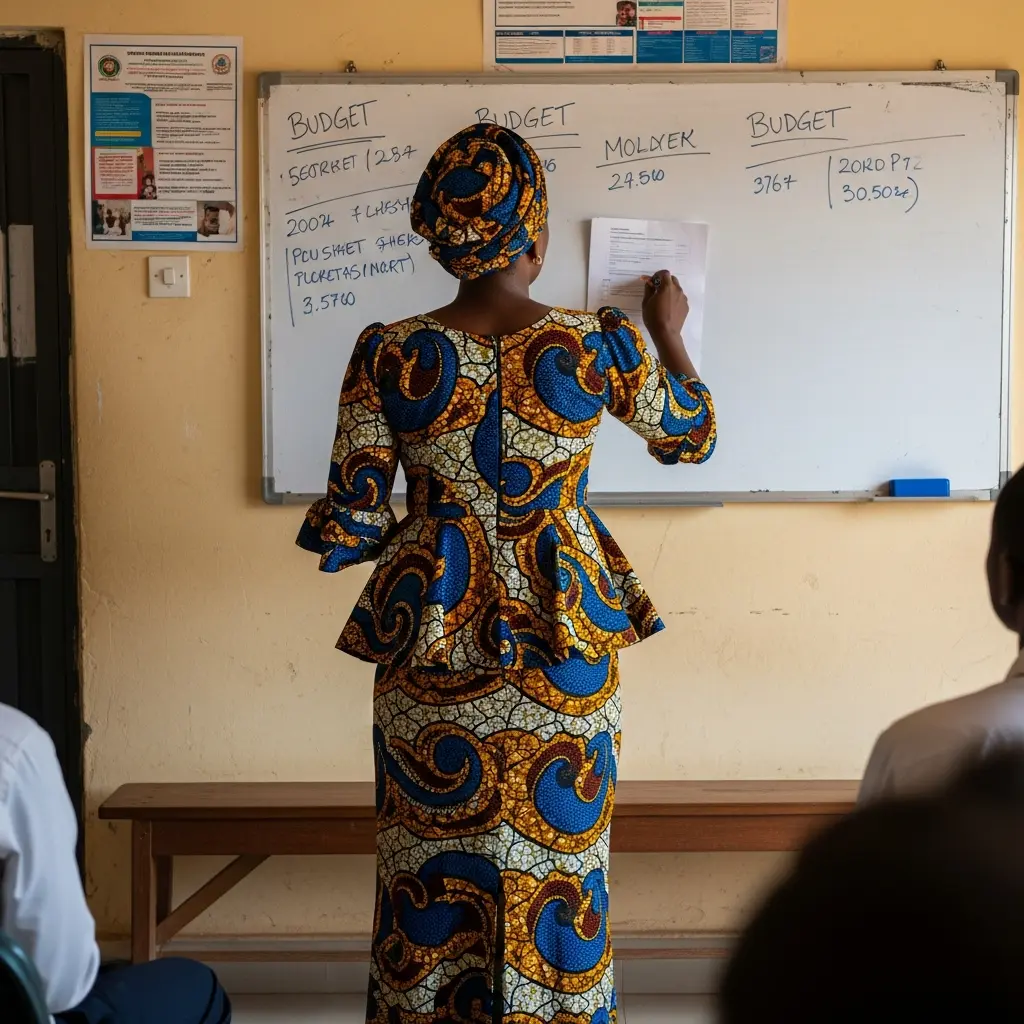
Now consider the N60.96 billion for capital projects, which sounds impressive until you start dividing it. Spread across twenty-three LGAs and a large, predominantly rural population, it breaks down to roughly N6,000 per resident. That figure, more than any other, illustrates the funding gap. It must cover classroom construction, feeder roads, and fixing water pumps, but historical data shows a familiar pattern. Implementation reports confirm that local governments are always better at spending their recurrent money than their capital funds. When revenues fall short, it is the projects that get deferred to keep the payroll running.
“The budget is a statement of intent, but the real story is in the cash backing. When revenues fall short, it is the capital projects that are first deferred to keep the payroll running.”
– Dr. Mahmud Shuaibu, Public Finance Analyst, The Guardian (March 10, 2026).
A chairperson from the southern part of the state lamented that after mandatory projects, the capital portion rarely addresses the backlog of community needs. The consequence is a brutal squeeze on the very sectors the LGAs are meant to run. A rural health center may have its staff paid, which is important, but the money to fix its leaky roof or buy new equipment fights for space in that shrunken capital pot. The high recurrent commitment, while keeping government doors open, directly shrinks the investment in people’s daily lives.
A Simple Ledger of Promises
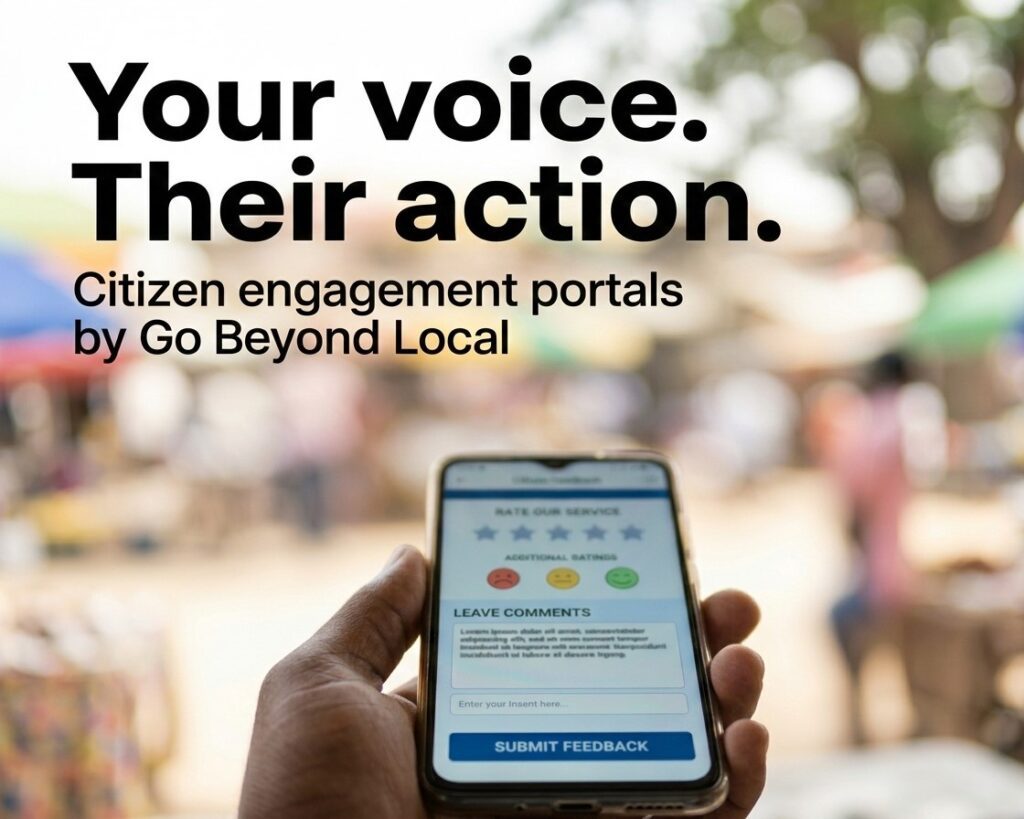
So what can be done in a system choked by these costs? One idea is straightforward and would cost a tiny fraction of that N91.44 billion overhead. Each of the twenty-three councils could be required to run a simple, public online portal. It would list every capital project from that N60.96 billion pot: the project name, its location, the contractor, the cost, and its current status with photos. Communities could then track what was meant for them, generating data and imposing a quiet discipline. By the end of the year, the State House of Assembly and anyone else interested would have a clear record of what that forty percent capital share actually built.
The technology for this is basic and the requirement is simple. For a budget debate that often gets lost in aggregate percentages, it is a way to force the conversation toward tangible outcomes. It would show where the money meant for building things actually went. And perhaps, just perhaps, it would make the story for 2027 about more than just the cost of keeping the lights on.

Ancient Rock Art Traditions Endure in Igbara Oke Caves

Palm Wine Tapper Climbs Same Tree That Killed His Father in Ozoro

Hunter Hears Dead Brother Whistle in Ganye Forest Mystery

Farmer Plants Yam That Grows Downward to Water Table in Drought

She Kept Asking and They Kept Moving Her in Nigeria

Global Food Prices Rose 2.4% in March 2026

Chigozie Obioma International Booker Prize 2026

Jidenna Pan African Sounds Latest Musical Project 2026

Hakeem Oluseyi Brings Astrophysics to Classrooms Worldwide

NANS Diaspora Nigerian Students Eastern Europe

Nnamdi Asomugha From NFL Cornerback to Hollywood Producer

Folake Olowofoyeku Stars in American Sitcom on Nigerian Family Life

Internet Sovereignty: Why Some Countries Want Their Own Separate Internet

The Story Of The Nigerian Who Helped Build Global Internet Systems

Nigerian Hackers: The Global Fraud Story and Its Fallout

Forgotten Satellites Defy Silence, Beaming Signals for Decades

The Phone Stay So Quiet: An Investigation into Nigeria’s Silent Customer Lines

Your Digital Store in Nigeria and the Reality of Domain Expiration

The Business That Died: A Nigerian Case Study in Refusal to Adapt

Hiding Your Business From People With Money

How Nollywood Grew Without Government Support

Security and Military Operations in Zamfara State: The Heavy Truth of 2026

Moniepoint Business Account Requirements Nigeria for SMEs 2026

Comedy Industry in Nigeria and Its Economic Contribution

 Digital Sovereignty8 months ago
Internet Sovereignty: Why Some Countries Want Their Own Separate Internet
- Technology & Innovation8 months ago
The Story Of The Nigerian Who Helped Build Global Internet Systems
- Crime8 months ago
Nigerian Hackers: The Global Fraud Story and Its Fallout
- Space Technology8 months ago
Forgotten Satellites Defy Silence, Beaming Signals for Decades
- Maritime8 months ago
The Phone Stay So Quiet: An Investigation into Nigeria’s Silent Customer Lines
- Business8 months ago
Your Digital Store in Nigeria and the Reality of Domain Expiration
- Business8 months ago
The Business That Died: A Nigerian Case Study in Refusal to Adapt
- Business8 months ago
Hiding Your Business From People With Money