Agriculture
Farming Communities Under Siege Threaten Nigeria’s Food Supply
The price of a mudu of rice tells the story. Violence in northern farming communities has escalated into a direct threat to the national food supply, driving prices up and farmers off their land.

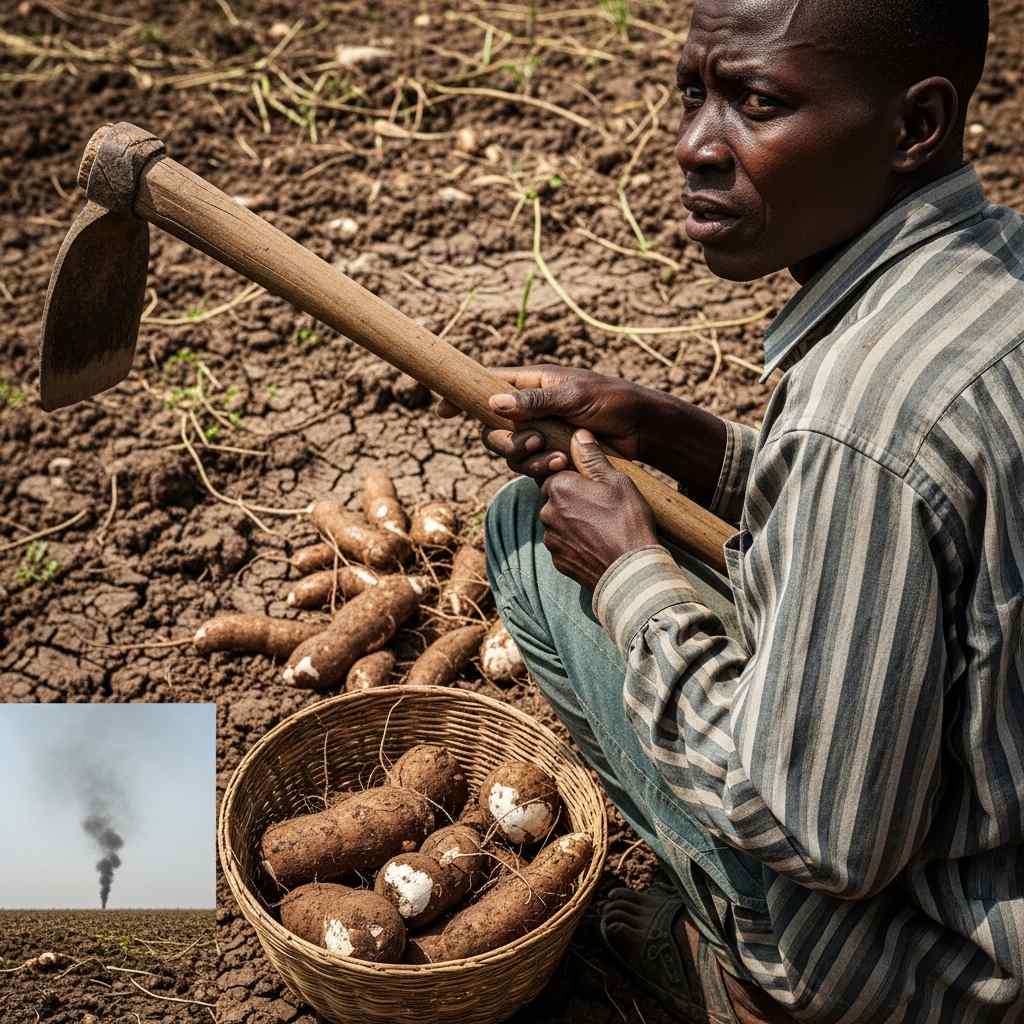
Farming Communities Under Siege Threaten Nigeria’s Food Supply
Published: 23 March, 2026
Twenty-six point five million is a number that sits heavy in the air, a projection from the Food and Agriculture Organization and the World Food Programme for how many people might face crisis-level hunger by the middle of this year. You hear a figure like that and it can feel abstract, a statistic from a report that has nothing to do with the pot on your stove. Then you go to the market and ask for a mudu of rice, and the story becomes very concrete indeed. The violence that has taken root in the farming communities of the north is no longer a distant security bulletin. It has arrived at your kitchen door, measured in the relentless climb of prices for maize, sorghum, and the beans that never made it to harvest.
The Bleak Arithmetic
That official report from February was blunt, stating the primary driver is conflict in the north-west and north-central zones. The National Bureau of Statistics added its own stark data point for January, noting food inflation had hit 35.41%. These numbers are not coincidental. They are the direct economic translation of a brutal, predictable pattern playing out in villages across Zamfara, Katsina, Kaduna, Niger, and Benue. Armed groups raid at night or during the crucial windows of planting and harvest, and their objective seems clear. It is economic sabotage, a campaign to make the land itself too dangerous to tend. A farmer from Zurmi, who asked not to be named, described the aftermath to Daily Trust.
“They took our sons and told us to never return to the farm. The beans were ready for harvest, but they set fire to everything. Now we are in town, hungry, with nothing.”
– Anonymous farmer, Zurmi, Zamfara State, speaking to Daily Trust, January 2026.
This testimony echoes, creating a double loss as productive labor flees the farms and the state must support a new, vast population of displaced persons. The International Crisis Group noted this displacement of millions in a briefing last December, and the consequence is the empty field and the full, hungry camp existing side by side.
Security and Its Discontents
The government has allocated substantial funds, with the 2026 Budget of Consolidation earmarking N5.41 trillion for defense and security. Analysts, however, question the efficiency, noting a significant portion funds conventional military operations that struggle in vast rural terrains against guerrilla tactics. In the vacuum, community-based vigilante groups have sprung up, sometimes achieving temporary security but often risking cycles of revenge that solve nothing. There was a 23% decrease in terrorism-related deaths documented in 2023, which suggests a kind of containment, but the current approach has not translated to safety for a farmer with a hoe in his hand. Security analyst Kabiru Adamu explained the shift in thinking to Premium Times.
“These groups have realized that destabilizing agriculture increases poverty and desperation, which in turn expands their recruitment pool and reduces community resistance. It is a vicious cycle that benefits the criminals.”
– Kabiru Adamu, Security Analyst, Beacon Consulting, quoted in Premium Times, November 2025.
It is a shrewd, cruel logic. The economic impact now transcends rural areas, felt by restaurant owners cutting portions and families altering diets, as the social contract frays over the simple act of feeding a family.
The Shadow on Next Season
The immediate crisis is in the market price. The greater, quieter threat is for the harvest that has not yet been planted. The planting season for many crops runs from April to July. If farmers are displaced or too fearful to return by mid-year, the harvest later in 2026 and into early 2027 will fail. The country would then face a genuine food shortage, not just expensive food. The Federal Ministry of Agriculture and Food Security promotes dry-season farming, but these programs reach a fraction of affected farmers and offer little protection from an armed attack. International partners are worried. The World Bank identified food insecurity as a principal risk to macroeconomic stability in its December update, stating rising costs could push an additional 5 million Nigerians into poverty by year’s end.
Flickers of Light
In the gloom, some local initiatives show a different way. In parts of Plateau State, community leaders have revived traditional conflict resolution platforms with support from the state and NGOs like the Centre for Humanitarian Dialogue. These platforms work on early warning and resolving disputes before they escalate, relying on the precious resource of local buy-in. Another model, a pilot project in Katsina supported by the United Nations Development Programme, provides secured, clustered farmlands with military outposts nearby. Initial reports from late 2025 indicated higher yields in these zones. The catch, of course, is the monumental cost and challenge of scaling such armed escorts for the entire agricultural belt of Nigeria.
The Road Ahead
Viewing this solely as a security problem guarantees failure. A hybrid strategy is needed, one that pairs better intelligence and more agile, technology-driven security in rural areas with an immediate, non-negotiable investment in protecting the 2026 planting season. This could involve temporary, mobile security units dedicated to escorting farmers. At the same time, a massive social protection scheme for displaced farming households is necessary. The existing conditional cash transfer program lacks the scale, with analysts at Nairametrics arguing in January that the N400 billion allocated to the humanitarian ministry in the 2026 budget is insufficient for the need. The data from all these reports converges on a single, unsettling point. The fields that feed the nation are becoming battlefields, and the time for a coherent response is not next season, but this one.
Your Next Meal
So what do you do with this? You understand the link. The high price at your market is tied directly to the violence in a distant farming community. You can support credible NGOs working on farmer protection and humanitarian aid. You can ask your elected representatives for specific, measurable plans to secure the upcoming planting season, moving beyond rhetoric. The stability of the entire country, in a very real sense, depends on the security of a farmer standing on his own land, looking not at the horizon in fear, but down at the soil in hope. That is the calculation that matters most.




Agriculture
Food Crisis Looms in Nigeria as Climate Change Devours Farm Yields
When the rains stopped for three weeks last June, maize withered in northern fields. This small interval is rewriting Nigeria’s hunger arithmetic, with the 2026 harvest projected to fall short. The…
Food Crisis Looms in Nigeria as Climate Change Devours Farm Yields
Published: 27 March, 2026
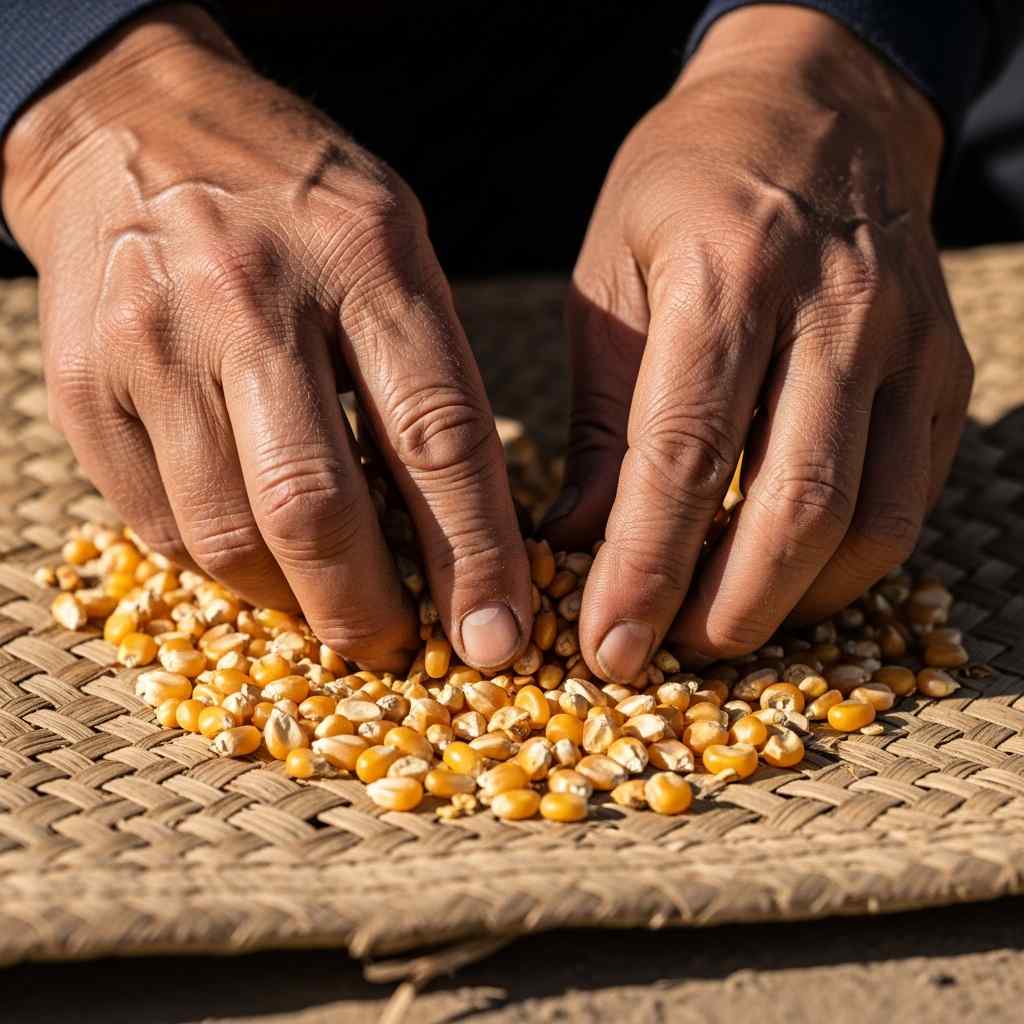
Three weeks can change everything for a farmer who plants with the first rains. That is how long the rains stopped last June in the north, leaving maize to wither in fields that should have been green. The arithmetic of hunger in Nigeria is being rewritten by such small, brutal intervals, and the projected national harvest for 2026 will fall short of what the country needs to eat. This comes from assessments by the United States Department of Agriculture and the Food and Agriculture Organization, and that deficit exists before you even account for a single flood or drought. The data from the fields points in one direction, and it is not a comforting one.
The Yield Collapse
A survey by the International Institute of Tropical Agriculture in Kano, Kaduna, and Katsina states recorded significant maize yield reductions for that early season crop, which they detailed in an IITA Field Report from August. Contrast that with the south, where the problem is too much water all at once. Flash floods in Anambra, Delta, and Rivers states last October submerged thousands of hectares of rice, a major loss of paddy that the National Emergency Management Agency estimated in its own report. Climate models predicted these patterns, and the reality confirms them with a kind of brutal consistency that leaves little room for argument. The margin for error in the food system of Nigeria has quietly disappeared.
The Price of Garri
Markets signal distress long before any official announcement. The price of a 50kg bag of garri jumped from N25,000 in January last year to N38,000 by February in Lagos, which is a 52% increase according to the National Bureau of Statistics. In many parts of the North Central zone, a mudu of beans now costs more than a litre of fuel, and the headline food inflation rate was 31.7% in February on a year-on-year basis. That number is not an abstraction when it translates to skipped meals and thinner soups for millions of people, landing as a concrete problem at the kitchen table where it matters most.
A Drop in the Bucket
The federal government announced a N200 billion climate-resilient agriculture fund in the 2026 budget, which represents a fraction of the total spend according to the Budget Office of the Federation. The scale of the intervention simply fails to match the scale of the threat, aiming for drought-resistant seeds and small-scale irrigation with distribution networks that are notoriously weak. The last major irrigation project in the Hadejia Valley started in 2018 and is still incomplete, which tells you something about timelines.
“The conversation about climate change adaptation stays theoretical for many farmers. Their immediate concern is the cost of fertilizer and the absence of rain.”
– Dr. Aisha Bello, Agricultural Economist, Ahmadu Bello University, Zaria. Interview with Premium Times, January 2026.
State governments promote early-maturing varieties, but adoption remains low because the seeds are expensive and often unavailable. A bag of certified maize seed sells for over N40,000, a prohibitive cost for the average smallholder farmer who is just trying to get by.
A Broken Reserve
The National Food Reserve Agency has a mandate to stabilize prices with a strategic grain reserve, and the capacity of those silos across the country is about 300,000 metric tonnes. There is a catch, however, because the annual maize consumption of Nigeria exceeds 10 million metric tonnes, meaning the reserve can cover a national shortfall for only a few weeks at best. The logistics of moving grain from Ibadan or Minna to areas of acute shortage are complex and costly, and past interventions saw grains arrive late or get diverted entirely. The system lacks the transparency needed for a real crisis, so the buffer is too small and too fragile.
The Import Trap
A shortfall creates immediate pressure to import, so the government granted duty waivers for maize in late 2025. The volume of maize imports through the Apapa port increased in the first quarter of this year compared to last, as the Nigeria Ports Authority reported. Importation provides that quick relief, but it exposes the country to volatile global prices and exchange rate fluctuations at a time when the naira traded at N1,383.88 to the US dollar in the official market. Funding food imports strains the treasury, creating a strange contradiction where policy emphasizes self-sufficiency while reality pushes toward greater dependence.
A Map of Hunger
This crisis has a specific address. A joint assessment by the World Food Programme and the Federal Ministry of Agriculture in late 2025 identified 72 local government areas across 16 states as facing acute food insecurity. These areas cluster in the Northeast, Northwest, and North Central, zones of high dependence on rain-fed agriculture that also experience conflict and displacement. Climate stress multiplies every existing vulnerability you can think of, and urban areas are not immune either. High food prices cripple the poor in cities like Lagos, Kano, and Port Harcourt, where the social contract frays when a basic necessity becomes a source of daily anxiety.
A Different Path
The situation demands a shift in thinking, where climate change is treated as the primary determinant of productivity rather than a secondary concern. Investment must move beyond simply distributing seeds, because the total irrigable land in Nigeria is over 3 million hectares and less than 10% of this has functional irrigation. Research institutions develop climate-smart varieties, but the pathway from the research station to the field of the farmer is clogged by a non-functional agricultural extension system.
“We have the technical knowledge and the water resources. The gap is in coordinated investment and maintenance. A farmer with a reliable water source can withstand two weeks of drought.”
– Engr. Suleiman Adamu, former Minister of Water Resources. Lecture at the University of Ibadan, February 2026.
The number of agents serving millions of farmers is grossly inadequate, which means good ideas often die on the vine before they ever reach the soil.
Start with a Forecast
The Nigeria Meteorological Agency issues seasonal rainfall predictions, but it lacks the resources to get this information to rural farmers who need it most. A farmer in a remote Kebbi village may never see the forecast that decides his planting date, which is why one simple, actionable step would be to leverage mobile networks. NiMET could partner with telecom companies to send free, localized weather alerts via SMS to registered farmers, empowering better decisions and reducing losses with technology that already exists. It is just a matter of connecting available dots that nobody has bothered to link up.
The Next Harvest
The next major planting season begins with the rains in April and May, and the conditions that led to last year’s shortfalls will likely persist. The global climate pattern known as La Niña is fading, with a 60-70% chanceWorld Meteorological Organization. Governments have a narrow window to deploy support by ensuring affordable access to the right seeds, fertilizer, and water while providing credible information. The alternative is another cycle of poor harvests, higher prices, and deeper hunger that nobody wants to see. The data presents an evident trajectory, and the response so far lacks the urgency the moment demands, leaving the fields to wait while the discussions continue.
Agriculture
Cassava Processing Industry Plan for Ekiti State
Nigeria grows mountains of cassava, but too much of it rots. A new $14.2 million factory in Ekiti State aims to turn that waste into flour, jobs, and food security, if it can navigate the usual…
Cassava Processing Industry Plan for Ekiti State
Published: 23 March, 2026
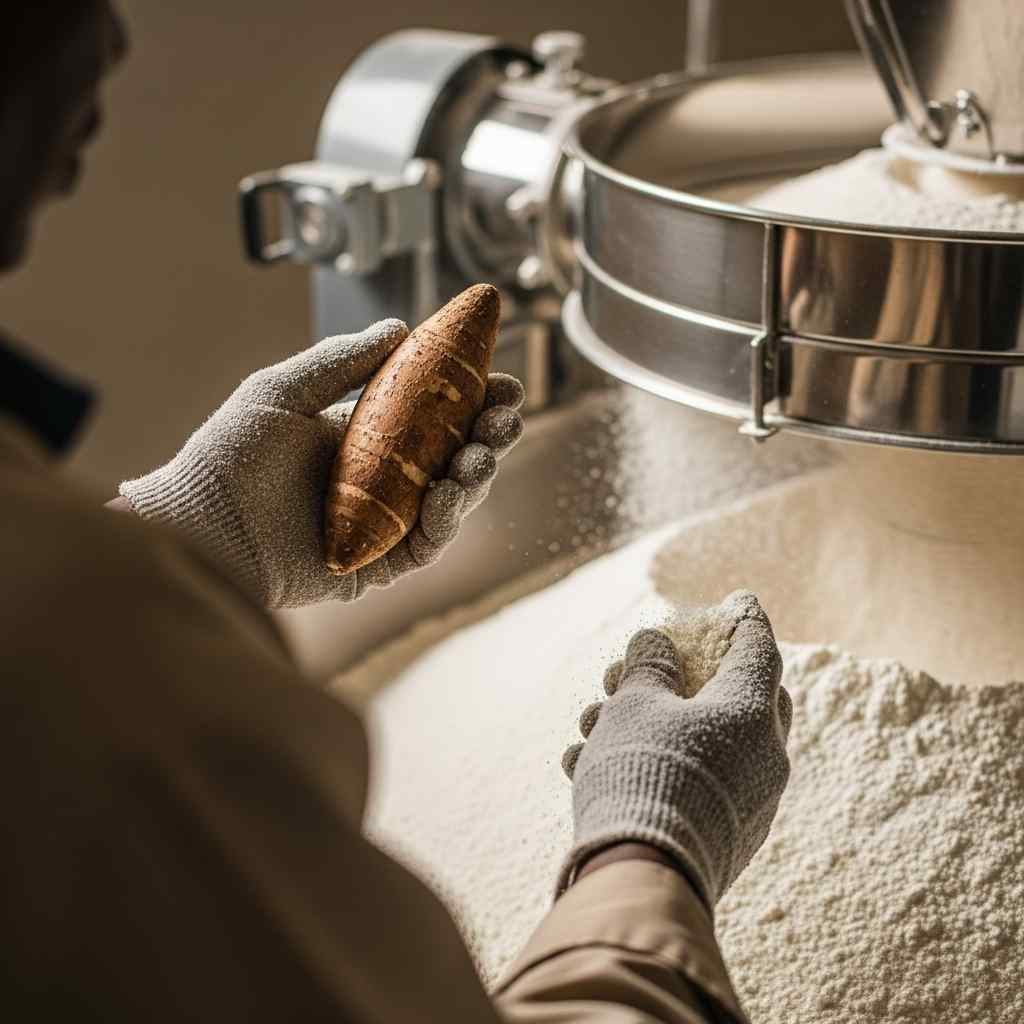
Sixty-three million metric tonnes of cassava grow in the soil of Nigeria every year, a number so large it becomes abstract until you see what happens next. A staggering portion of that harvest, worth billions, simply rots away before it can feed anyone or earn any money, which is why the announcement of a new factory in Ekiti State carries a particular kind of weight. The plan is to spend $14.2 million to turn raw tubers into flour, starch, and sweeteners, stopping the rot and starting something new.
The Money on the Table
The capital is a joint effort between the federal government and a group of private investors, though the exact split of who owns what piece of the pie remains politely undisclosed. This public-private dance is familiar for big agricultural projects, where the government provides the stage and private partners bring the technical steps, but the music hasn’t started until the first machine hums to life. You look at the number and wonder if it’s enough to build not just walls and equipment but also the trust of farmers who have heard similar tunes before.
Jobs and the Promise of Flour
Placing the factory right in the heart of a major cassava belt like Ekiti makes a certain logistical sense, cutting down on the ruinous transport costs that often spoil the harvest before it arrives. Officials talk of over 1,200 direct jobs once everything is running, from technicians to administrative staff, with the ripple effect on local farmers and transporters potentially multiplying that figure quietly in the background. The real magic, they say, is in turning a perishable tuber into a shelf-stable product, extending its life from mere days to years and supporting the national push to mix cassava flour into bread.
“This project is a practical step towards reducing our dependency on imported staples. By adding value here, we keep jobs and wealth within our borders.”
– Senator Abubakar Kyari, Minister of Agriculture and Food Security, March 2026.
The Usual Suspects
Every grand plan like this one walks into the same room and meets the same three characters waiting there. First, there are the rural roads, often more a suggestion of a path than a reliable route for moving bulky, perishable goods from farm to gate. Then comes the power, or rather the frequent lack of it, which forces a reliance on expensive diesel generators that can eat into margins before a single bag of flour is sold. The third character is consistency, the need for a large and steady river of cassava that depends entirely on farmers having the right seeds, credit, and support, a chain that is only as strong as its most fragile link.
Learning from History
The archives of agricultural announcements are filled with projects that began with a photo opportunity and a speech, only to fade into a quiet administrative limbo for reasons that are, by now, terribly predictable. Funding dries up or arrives in frustrating drips, political interests decide who manages the place rather than business sense, and sometimes nobody has truly figured out who will buy all the finished product. There is also the delicate dance with the farmers, where setting a price too low sends them to other markets and setting it too high makes the factory’s business model vanish into thin air.
“The model works only if the factory is run as a business, not as a political appointment bureau. Efficiency determines survival.”
– Dr. Akinwumi Adesina, President of the African Development Bank, January 2026.
The View from the Soil
For the people who actually grow the cassava, the news brings a familiar blend of hope and a weary skepticism born of experience. Their main question is simple: what will you pay per tonne, and will the payment arrive on time or after a long and frustrating delay? They also worry about the factory’s quality standards, knowing that a truckload of tubers can be rejected for not meeting specific criteria, which means the project’s success is tied directly to parallel support for better planting and techniques at the farm level. The beginning of the value chain, it turns out, is just as important as the shiny new end.
Between the Lines
On paper, the plan ticks all the right boxes by targeting a real and expensive problem, promising local jobs, and using a sensible partnership model. The trouble, as always, lives in the gap between the announcement in a conference room and the first commercial truck rolling out of the factory gate, a space filled with potholed roads, complex farmer negotiations, and fierce market competition. So we add another ambitious name to the list, and its fate now rests on the tedious, unglamorous, and absolutely critical work of making a plan into a thing that actually works, which is where the real story always begins.
Agriculture
Cassava Processing Industry Plan for Ekiti Aims at Food Security
A $14.2 million cassava processing plant is planned for Ekiti State, a partnership aiming to cut post-harvest waste and boost food security. The project faces familiar hurdles of infrastructure and…
Cassava Processing Industry Plan for Ekiti Aims at Food Security
Published: 21 March, 2026
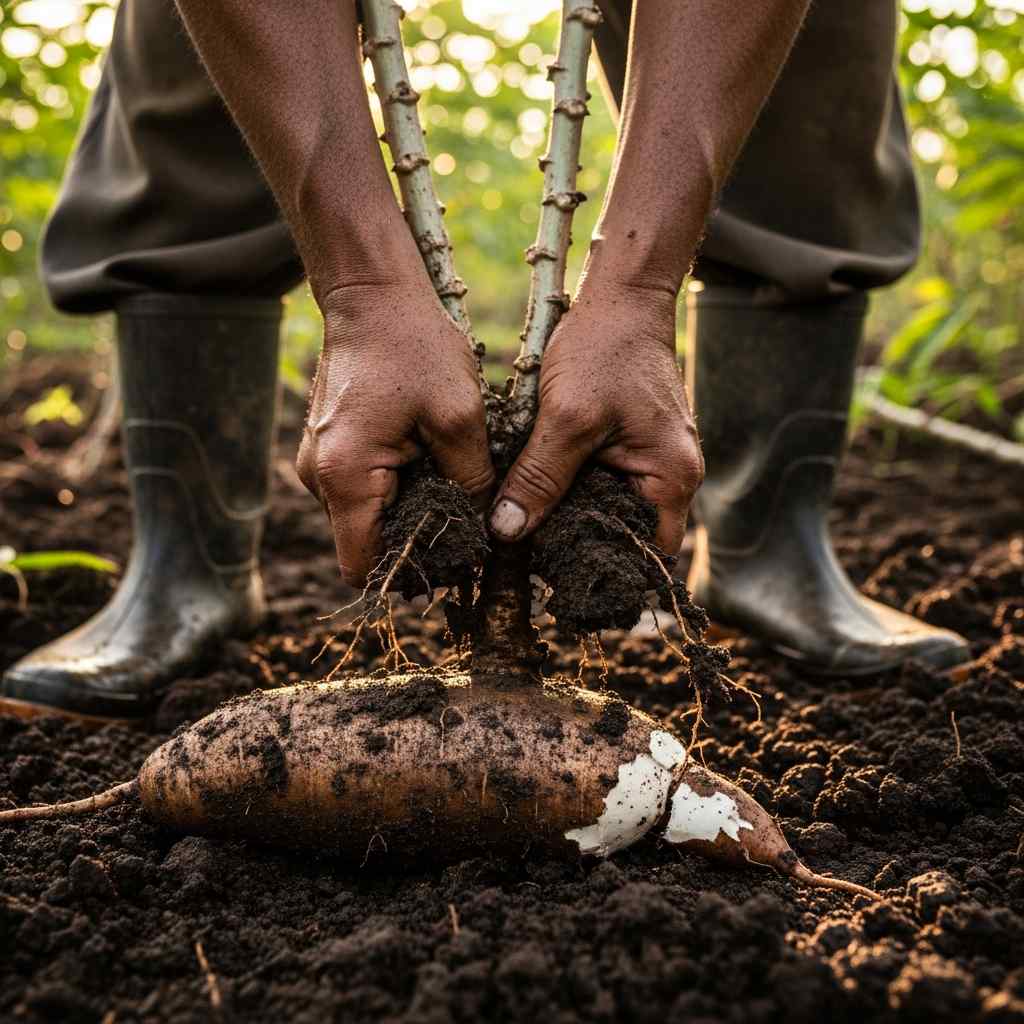
Fourteen point two million dollars is a lot of money to put on a single root vegetable in a single state. The federal government and some private investors have decided to do exactly that in Ekiti State, announcing a new cassava processing plant with that exact price tag in early March of 2026. Their bet is that this factory can stop a staggering amount of waste and add real value to the crop Nigeria produces more of than any other country in the world. The logic is straightforward, even if the execution will be anything but.
The Scale of the Waste
Nigeria grows over 63 million metric tonnes of cassava every single year, and a huge portion of it simply rots before it can be used. You can picture the piles of tubers turning soft in the sun, a mountain of potential food and income slowly becoming nothing. This new facility aims to process 500 metric tonnes of fresh roots every day, turning them into flour, starch, and sweeteners before they have a chance to spoil. According to the International Institute of Tropical Agriculture, post-harvest losses for cassava sit somewhere between 15% and 30%, which is a quiet tragedy when you think about the hunger and inflation numbers we see every day.
“This partnership moves beyond rhetoric to tangible investment in our agricultural value chain. Ekiti has the agronomic advantage, and this plant will provide a ready market for thousands of farmers, reducing waste and increasing incomes.”
– Senator Abubakar Kyari, Minister of Agriculture and Food Security, March 10, 2026.
The Mechanics of the Deal
That $14.2 million is split between public and private money. The federal government, through its ministry and the Bank of Industry, is offering grants and soft loans, while private investors bring the equity and the technical know-how. Ekiti State government provides the land, promises to improve the roads, and will link the project to its extension services. It is a classic attempt to blend private efficiency with public support, aiming to create about 300 direct jobs in the process. The model is not entirely new, mirroring one used for a rice mill in Kebbi State years ago, which gives you a reference point for both its potential and its pitfalls.
“Our analysis shows a strong internal rate of return based on current demand for industrial starch and flour. The risk is in the supply chain logistics—getting enough quality cassava to the factory gate consistently. That is where the partnership with government is critical.”
– Investor representative, BusinessDay, March 15, 2026.
The View from the Farm
For the cassava farmers in Ikole-Ekiti or Emure, this announcement brings a very cautious kind of optimism. They have heard promises before. The difference this time seems to be the visible presence of private capital, and cooperatives are already reporting early talks about pricing and quality standards. The farmgate price for a tonne of fresh roots in Ekiti can swing wildly between N40,000 and N70,000, so a guaranteed off-take agreement for at least 5,000 smallholders would allow for better planning and less anxiety. The quiet fear, of course, is that the factory might eventually favour large plantations over the smallholders who need the stability the most.
The Infrastructure Hurdle
All these excellent plans on paper meet the hard reality of infrastructure the moment you try to build something. Ekiti State has its challenges with rural roads and stable electricity, two things rather important for moving bulky, perishable tubers and running heavy machinery. The proposal includes building a dedicated power plant, which adds cost but is frankly non-negotiable. The state of the federal highways to major hubs like Lagos will also dictate distribution costs, and the Ministry of Works lists road rehabilitations as ongoing with a completion timeline that is, well, uncertain. This is where grand visions often get stuck in the mud, quite literally.
One Plant, Many Questions
If it works, the plant could be a template for other states—Benue for yam or Kano for tomatoes. It fits the national pattern of seeking import substitution and value addition in agriculture. But the risks are the familiar ones: ensuring a year-round supply of cassava from rain-fed farms, maintaining policy continuity across administrations, and managing the expectations of host communities who will want jobs and projects. There is also the matter of scale. One factory, as promising as it is, cannot solve a national problem.
“We welcome this development, but one factory cannot solve the national cassava value chain problem. We need a dozen of these, strategically located across the cassava belt, with a focus on export-grade starch and ethanol. That is the scale required for transformation.”
– Professor Lateef Sanni, Cassava Adding Value for Africa programme, The Guardian, March 18, 2026.
So the blueprint is drawn and the funds are earmarked. The ground in Ekiti awaits the foundation. For you, success might eventually mean slightly more stable prices for garri and bread, or a bit more economic activity in rural areas. It is a $14.2 million bet that Nigeria can shorten the complex path from farm to factory to table, at least for one crucial crop. The clock starts now, and we will see if this story becomes one of tangible progress or just another plan struggling with execution.

Ancient Rock Art Traditions Endure in Igbara Oke Caves

Palm Wine Tapper Climbs Same Tree That Killed His Father in Ozoro

Hunter Hears Dead Brother Whistle in Ganye Forest Mystery

Farmer Plants Yam That Grows Downward to Water Table in Drought

She Kept Asking and They Kept Moving Her in Nigeria

Global Food Prices Rose 2.4% in March 2026

Chigozie Obioma International Booker Prize 2026

Jidenna Pan African Sounds Latest Musical Project 2026

Hakeem Oluseyi Brings Astrophysics to Classrooms Worldwide

NANS Diaspora Nigerian Students Eastern Europe

Nnamdi Asomugha From NFL Cornerback to Hollywood Producer

Folake Olowofoyeku Stars in American Sitcom on Nigerian Family Life

Internet Sovereignty: Why Some Countries Want Their Own Separate Internet

The Story Of The Nigerian Who Helped Build Global Internet Systems

Nigerian Hackers: The Global Fraud Story and Its Fallout

Forgotten Satellites Defy Silence, Beaming Signals for Decades

The Phone Stay So Quiet: An Investigation into Nigeria’s Silent Customer Lines

Your Digital Store in Nigeria and the Reality of Domain Expiration

The Business That Died: A Nigerian Case Study in Refusal to Adapt

Hiding Your Business From People With Money

How Nollywood Grew Without Government Support

Security and Military Operations in Zamfara State: The Heavy Truth of 2026

Moniepoint Business Account Requirements Nigeria for SMEs 2026

Comedy Industry in Nigeria and Its Economic Contribution


 Digital Sovereignty8 months ago
Internet Sovereignty: Why Some Countries Want Their Own Separate Internet
- Technology & Innovation8 months ago
The Story Of The Nigerian Who Helped Build Global Internet Systems
- Crime8 months ago
Nigerian Hackers: The Global Fraud Story and Its Fallout
- Space Technology8 months ago
Forgotten Satellites Defy Silence, Beaming Signals for Decades
- Maritime8 months ago
The Phone Stay So Quiet: An Investigation into Nigeria’s Silent Customer Lines
- Business8 months ago
Your Digital Store in Nigeria and the Reality of Domain Expiration
- Business8 months ago
The Business That Died: A Nigerian Case Study in Refusal to Adapt
- Business8 months ago
Hiding Your Business From People With Money