Education
Nigeria UBEC Funds and the Fight for Transparency in Education Grants
N240 billion sits in Abuja, money for Nigeria’s schools that states cannot or will not claim. This is the story of UBEC funds, a transparency dashboard, and the political arithmetic keeping children…

Nigeria UBEC Funds and the Fight for Transparency in Education Grants
Published: 25 March, 2026
The Universal Basic Education Commission headquarters in Abuja is a quiet place where numbers accumulate with a certain weight. By late 2025, the Commission was holding N240 billion in unaccessed grants for the thirty-six states and the Federal Capital Territory, money deducted from the national treasury for primary schools that just sits there waiting. You have to wonder why a governor would walk away from N3.3 billion for the schools in his state, but the arithmetic is brutal and unforgiving because fail to provide a matching sum from your own coffers and you forfeit the entire federal grant. The system for distributing UBEC funds works with a cold, mechanical precision that only highlights a deeper political failure, a partnership where the logic demands joint commitment but assumes state governments have both the will and the ready cash to prioritize education.
The Matching Grant Arithmetic
It is supposed to be a fifty-fifty partnership, a simple idea following the 2024 Appropriation Bill where the matching grant accessible by each state increased to that N3.3 billion figure. Official UBEC reports from late 2025 put the total unutilized funds at that same N240 billion, a number the Commission now publishes quarterly in a transparency drive that started in 2023. This creates a peculiar public ledger where everyone can see which states are leaving money on the table, a requirement from the UBEC Act of 2004 which mandates that two percent of the Consolidated Revenue Fund flows into the Universal Basic Education Fund. The promise is clear, but the execution falters on the political calculus of state budgets strangled by salaries, debt, and the immediate splash of a new flyover over a school whose benefits materialize over a decade.
The Political Calculus
BudgIT. Education must then fight with health, water, and agriculture for these scarce resources, so the fifty percent match becomes a barrier instead of an incentive. Some state officials point fingers back at UBEC, citing bureaucratic hurdles where project proposals need detailed technical designs and the Commission conducts verification before disbursement. These controls are designed to prevent fraud, but they add layers of work for understaffed state SUBEBs. A director at the Anambra State SUBEB, speaking on background in February 2026, described the process with a certain dry resignation.“The money is there, but you must follow the process to the letter. If your bill of quantities has a single irregularity, they will send it back. This can take months. A governor wanting to show a new school before an election may find the timeline unacceptable.”
– State SUBEB Director, Anambra, February 2026.
The Transparency Dashboard
In 2023, UBEC launched a public data portal officially named the Education Data Portal, a major advance that shows real-time information on fund allocations and access. This tool shifts the accountability audience from federal auditors to the electorate, creating public pressure and a new dynamic where states with good access records, like Kwara and Edo, use the data for positive publicity. A time-series of the portal data by Premium Times in January 2026 indicated a significant increase in the total volume of accessed funds between 2023 and 2025, proof that external pressure can produce results. This transparency also reveals harsh geographic disparities, with a March 2026 snapshot showing states in the North-East and North-West dominating the list of lowest access rates, making inequalities starkly visible.
The Ghost of TETFund
Observers often compare UBEC with the Tertiary Education Trust Fund, which has a reputation for relative efficiency and less political interference. The model differs in a crucial aspect because TETFund executes projects directly through universities and polytechnics while UBEC channels funds through state SUBEBs, which are arms of the state government. A senior policy analyst at the Centre for Public Policy Alternatives, Dr. Nneka Okereke, outlined the distinction in a December 2025 policy brief.
“TETFund deals with academic institutions that have a permanent address and a continuity of leadership. UBEC deals with political structures that change with every election cycle. This fundamental difference in counterparties affects planning, accountability, and sustainability.”
– Dr. Nneka Okereke, Centre for Public Policy Alternatives, December 2025.
The TETFund model suggests fewer political intermediaries improve delivery, an idea that faces resistance from state governments guarding their constitutional turf.
Spending the Money
Accessing the money is one battle, but spending it properly is another. UBEC mandates project tracking and can suspend or recover funds for violations, which were applied as shown in its 2025 report where several states were officially listed for sanctions. The names are public. This enforcement reinforces the rules while highlighting the persistent temptation to treat education grants as a flexible revenue stream. Community monitoring adds a grassroots layer where organizations like the Civil Society Action Coalition on Education for All train local volunteers to track UBEC projects, relying entirely on public information from the data portal about project locations and values.
The Scale of the Leakage
Scale matters. The unaccessed N240 billion represents a catastrophic leakage in the fiscal pipeline with a human cost measured in millions of children. UNICEF’s June 2025 report officially put the number of out-of-school children at 18.3 million, with 10.2 million being of primary school age. The funds held in Abuja could build thousands of classrooms, so the gap between allocated resources and on-ground needs defines the tragedy, a quiet arithmetic of neglect where the money exists but the political will to claim it often does not.
A Path That Exists
The solution framework is already here because the transparency portal provides the data and the sanction mechanism provides the stick while informed citizens provide the motivation. The missing element is consistent, prioritized action from thirty-six state governments and the FCT. Some analysts advocate for a graduated matching requirement or bridge financing from development banks, ideas that circulate but lack legislative traction. The most straightforward action involves citizens using the available information from the Education Data Portal, which functions. A parent in Kano or a teacher in Rivers can check the performance of their state and ask questions at town hall meetings, transforming data into dialogue.
Check the Portal
The public dashboard for UBEC funds is on the digital platform of the Universal Basic Education Commission, and it updates quarterly. A search for the name of a state reveals the financial standing, which takes about five minutes. The next step requires more courage because asking a local government chairman or a state assembly member about the unaccessed millions for local schools builds the political cost for inaction. The machinery for transparency now runs. The challenge moves from building systems to activating accountability, a quiet fight where the money for education exists in Abuja and the power to demand its release exists in every local government area. The link between the two, that simple act of asking, defines the future for those 18.3 million children still waiting for a desk.





Education
Hakeem Oluseyi Brings Astrophysics to Classrooms Worldwide
Hakeem Oluseyi translates the cosmos from NASA labs to classrooms in Lagos, using relatable stories and a simple balloon to bridge the gap between distant stars and curious minds.
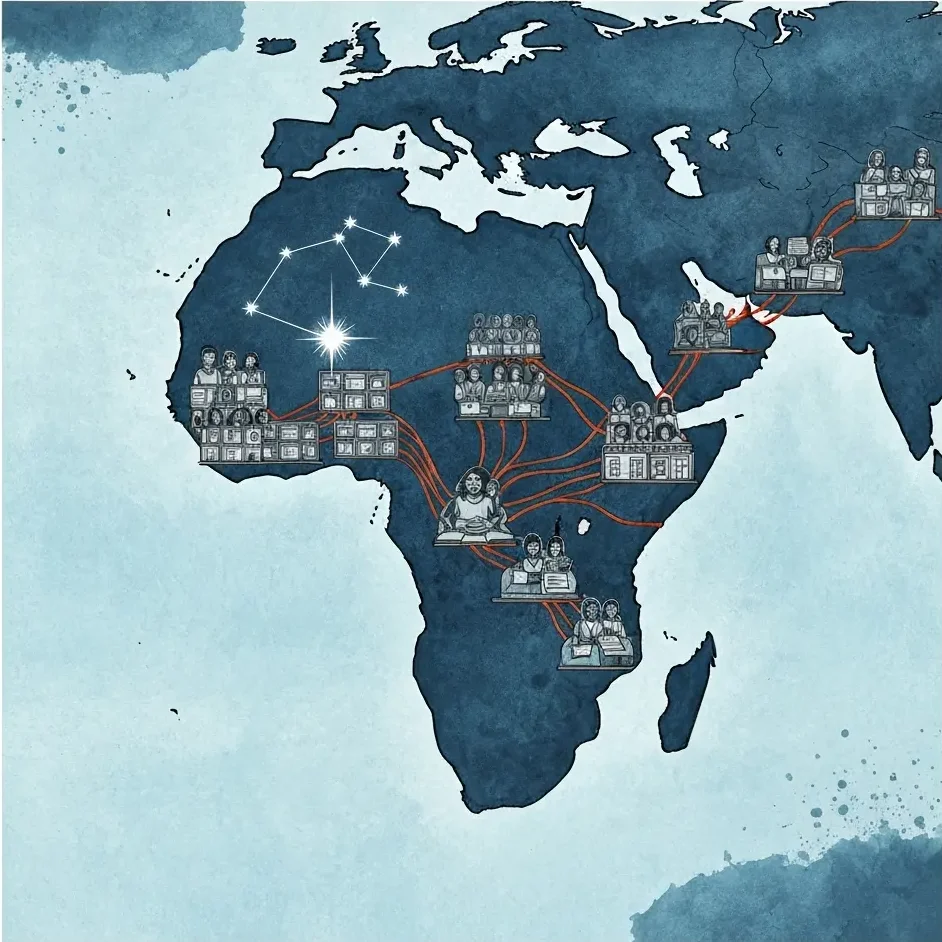
Hakeem Oluseyi and the Map Back Home
Hakeem Oluseyi has a podcast with over 80 episodes, and you can hear the curiosity in his voice, a kind of patient excitement that makes you lean in closer to the speaker. He holds a doctorate in physics and works for NASA, but his story does not begin in a lab. It starts in the rural communities of Lagos State during the 1980s, where a boy with big questions had to find his own path through the cracks.
Published: 13 April 2026
The boy with the map
He remembers what it is like to have a textbook that speaks a foreign language, a feeling many students here know intimately. His own journey took him from local schools to Tougaloo College and then to Stanford University for a PhD, but that long road did not erase the memory of the boy he was. It just gave him a better map to guide others who are standing where he once stood, looking up at the same sky.
“The universe speaks a language of mathematics and physics. Our job is to translate that into the language of human wonder.”
– Hakeem Oluseyi, speaking at a conference in 2025.
He researches interstellar plasmas and helps build new space telescopes while also teaching at the Florida Institute of Technology, and the combination is his whole method. It is high science, delivered low to the ground where real people can reach it.

Young minds in Lagos can reach for the stars like Hakeem Oluseyi did! Inspiring, isn’t it? (Illustration: GoBeyondLocal)
Bridging with a balloon
Let me tell you how this works in a place like Nigeria. A student in a university with no fancy lab can still access data from a NASA telescope because of these connections he focuses on. In February 2026, he hosted sessions for the African Institute for Mathematical Sciences where students from 15 countries tuned in to talk about dark matter. A program report said engagement went up by 40%, and they credited his relatable analogies, like explaining cosmic inflation with a simple balloon. The reality in many classrooms here involves crowded halls and scarce resources, so an idea that sticks and becomes tangible is a rare and beautiful thing.
Three continents, one lesson
His teaching has no single address, which is the point. In the past eighteen months, he has spoken on three continents, bringing the same energy to a group in Johannesburg as he does to a club in Seoul. For World Space Week in October 2025, his online talk drew over 50,000 student registrations. He works with the Global Science Academy too, helping create open-access curricula in five languages, with one made for Francophone Africa. The chain reaction is simple and quietly powerful. A student watches a talk, joins a club, and considers a new path. It all starts with access.
“You do not need a fancy degree to ask why the sky is dark at night. That question is the beginning of astrophysics.”
– Hakeem Oluseyi, during a student Q&A in March 2026.
Why it lands here
Nigeria has the talent. The National Universities Commission counts over 2 million students in tertiary institutions, many studying science. Yet figures show that less than 30% of public universities have a proper planetarium or advanced astrophysics lab. The gap is real, and his work builds a bridge across it. He uses local touchpoints, comparing the heat haze over Lagos to gravitational lensing to make the abstract suddenly familiar. And his visibility matters in a quiet way. When a young person sees a scientist named Oluseyi on a NASA stream, it changes something. It quietly rewrites a single, limiting story.
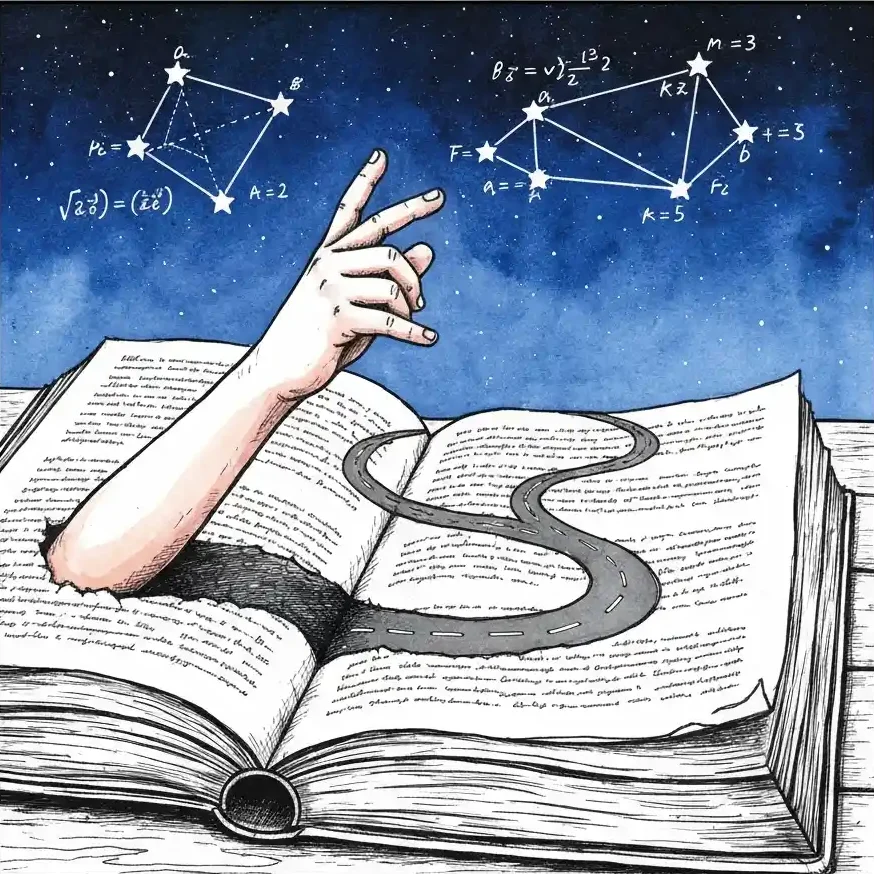
Like Oluseyi, the illustration how education can launch kids from textbooks to the stars. What a ! (Illustration: GoBeyondLocal)
The machinery of reach
How does one person actually do this? Through consistent, quiet effort. His podcast listeners are concentrated in North America and Africa, with Nigeria, Kenya, and South Africa at the top. He writes for places like The Conversation Africa. One article on exoplanets had over 500,000 reads. And he is on YouTube. The inspiration has layers, you see. You find him one way, then another, and the universe feels a little less distant.
Fitting into the picture
This individual work exists inside a bigger system. The 2026 budget proposal set aside N25 billion for the National Space Research and Development Agency, and while funding inches up, old challenges in execution remain. The work of diaspora scientists offers something immediate and direct. Groups like the Nigerian Academy of Science host lectures that link global research with local priorities, and he has spoken there too. You could say policy sets a direction, but it is individuals who fill the frame with color and life.
“Investment in basic science education is investment in national security and economic creativity. The next great discovery for humanity may start with a question in a classroom in Abeokuta.”
– From a keynote by Hakeem Oluseyi to the Nigerian Academy of Science, December 2025.
A template you can borrow
The model he shows is not just for stars. It is for any field. Accessible expertise means a leading doctor or engineer can do the same. A 2025 survey by the Diaspora Commission noted a 60% increase in such structured outreach programs, linking it to pioneers like him. The infrastructure is here. Internet penetration passed 55% in late 2025. Mobile data costs move up and down, but basic streaming is within reach for more people every day. This is the digital foundation, often shaky but holding, that makes the global classroom possible.
If you have a curious child
You might wonder where to start, and it is simpler than you think. First, visit the education section on the NASA digital platform. The materials are free. Second, search for a recorded talk by someone like Oluseyi on YouTube and watch just twenty minutes. It can spark a week of conversation. Third, look for a local group. The Astronomy Association of Nigeria has chapters that do star-gazing events and welcome the curious. The first step is often the smallest one.
The long view from here
His work is about building a culture where scientific thinking is normal, not exceptional. For Nigeria, that engagement matters because a population comfortable with evidence is better equipped for everything else. It fosters a society that can tell a good idea from a loud one. The journey from a classroom in Lagos to a lab at NASA is long and full of hard work and chance. By sharing that journey, he makes the path visible and turns the distant stars into a destination that feels closer, almost within reach. His story, and the stories of the students he reaches, are still being written. The final equation is not solved, but you have to admit, the early data looks promising.
Education
Nigeria Out-of-School Children and the Rural Education Gap
Over 10 million children are not in school in Nigeria, most in rural areas. The gap is wide, but solutions exist from community schools to digital bridges. It’s a story of forgotten villages and…
Nigeria Out-of-School Children and the Rural Education Gap
Published: 23 March, 2026
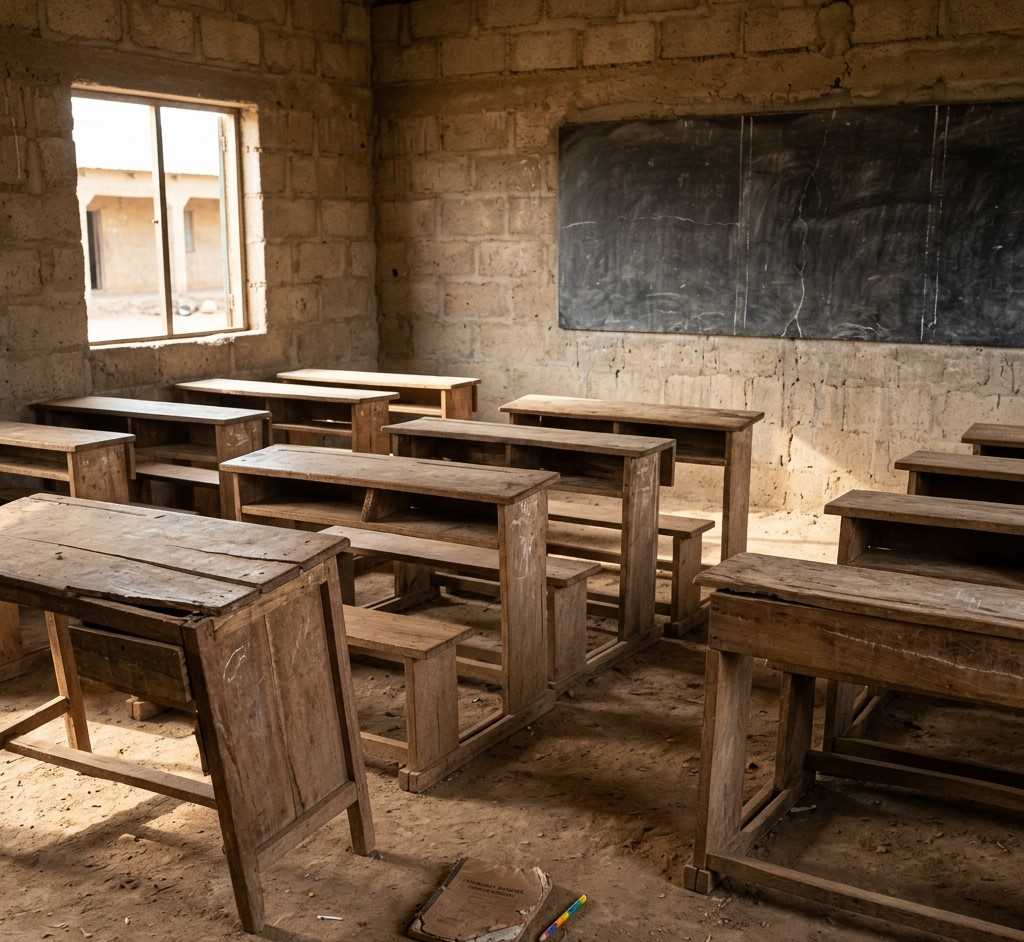
Ten million is a number that sits heavily in the room when you talk about education in Nigeria. It comes from the United Nations Children’s Fund and it represents children who should be in classrooms but are not, with most of them living in rural places far from the policy rooms in Abuja. The problem has a specific geography, concentrating in the northern regions where the North-West and North-East zones hold the largest share. States like Bauchi, Kano, and Katsina each report figures above 1 million, and in those rural communities, poverty meets security troubles and old social ways. A girl in a remote village in Kebbi State faces different walls than a boy in a Lagos suburb, with primary net attendance for girls standing at 47.7% in the North-East and 47.3% in the North-West, which you can contrast with over 80% in the South-West. The Universal Basic Education Commission allocates funds, of course, but the real trouble is getting those funds to build and staff schools in places where roads vanish when the rain comes.
Building More Classrooms Misses the Point
Conventional wisdom says you construct more schools, but the reality on the ground complicates that simple idea. The UBEC National Personnel Audit of 2018 revealed a shortage of 277,753 teachers in public primary schools, which means a new building with no teacher remains just a hollow structure. There is a catch, though, because deploying teachers to rural postings presents another whole layer of difficulty. Many teachers assigned to rural schools report for duty only on payday, citing a lack of accommodation, security worries, and the sheer hardship of the commute. A policy that funds school construction without a parallel plan for teacher housing, security, and incentives is a policy that guarantees failure, so you can see the beautiful school from the highway while the classrooms inside stay perfectly empty.
Digital Bridges Over Physical Gaps
One solution that is gaining some traction tries to use technology to bypass the infrastructure deficits. The Nigeria Learning Passport, a digital platform launched by the Federal Ministry of Education with UNICEF support, offers curriculum-aligned content that can work offline, meaning a solar-powered tablet in a community center can host a virtual classroom. Initiatives like “School-in-a-Box” deploy to displaced persons camps and remote settlements with kits containing tablets, projectors, and power banks pre-loaded with lessons. In Sokoto State alone, over 9,000 girls enrolled in the Nigeria Learning Passport during 2025, using it as a tool for learning outside the traditional classroom. The digital divide remains very real, however, because network coverage in rural areas improves but stays unreliable, and the success of any digital solution depends on consistent power and maintenance, two things that are often in short supply.
“We cannot wait for perfect grid electricity to educate our children. Solar technology and offline digital content offer a pragmatic path forward for remote communities.”
– Dr. Hamid Bobboyi, Executive Secretary, Universal Basic Education Commission.
The Community School Model Actually Works
Some of the most effective interventions quietly bypass the government bureaucracy entirely. The Community-Based School model, supported by organizations like Teach For Nigeria and the British Council, trains local youth as teaching fellows who understand the cultural context and live right in the community. In Niger State, a partnership between a community association and a local NGO established a school under a tree, and enrollment grew from 30 to over 200 children within 18 months because the community provided the space and security while the NGO provided trained facilitators and learning materials. This model aligns with the Alternate Learning Programme framework endorsed by the Federal Ministry of Education, which provides flexible, accelerated basic education for older children who missed schooling, and it works precisely because it adapts to the agricultural calendar and local realities.
Financing Follows the Child
A radical proposal gaining policy attention involves direct funding, and the “School Feeding” component of the National Social Investment Programme provides one concrete example because when children receive a daily meal in school, attendance reliably rises. The 2026 budget allocates specific funds for school feeding, scholarships, and security infrastructure under the education sector. A more direct model involves conditional cash transfers to households, like a pilot in Sokoto State that provided small monthly stipends to families who kept their children, especially girls, in school. The logic is simple: for a family choosing between a child’s labour on the farm and school, a small financial incentive can alter the whole calculation, which is why the 2026 budget includes provisions for scaling this pilot through the World Bank-supported HOPE-GOV Program.
The Teacher Problem Needs a Local Solution
National schemes like the Federal Teachers Scheme have mixed results, so a different approach recruits and trains teachers from the community itself. The “Grow-Your-Own-Teacher” initiative, active in Bauchi and Gombe states, identifies secondary school graduates from rural villages and gives them pedagogical training before they return to teach in their home communities. They receive a stipend and a promise of accelerated entry into teachers’ colleges, and because they come from the community, they face fewer issues with accommodation and acceptance. This approach directly addresses the retention crisis, since a teacher from Lagos posted to Borno might abscond, but a teacher from a village in Borno teaching in that same village has roots there that hold.
“Our data indicates that community-hired teachers have an 80% retention rate after three years, compared to less than 40% for teachers deployed from urban centers.”
– Hajiya Aisha Mahmoud, Programme Director, Northeast Education Intervention, in a 2026 policy brief.
What a Commissioner Can Do Tomorrow
The scale of the crisis can overwhelm anyone, but a state-level education commissioner actually possesses real power for immediate action. One lever involves the existing UBEC matching grants, which many states fail to access because they cannot provide the required 50% counterpart funding. A commissioner can re-prioritize the state budget to secure that funding, and accessing the UBEC grant unlocks billions of naira specifically for infrastructure and teacher development in rural areas, making it a matter of political will rather than new policy. Another action involves mandating the State Universal Basic Education Board to publish monthly data on rural school enrollment, teacher attendance, and fund utilization because sunlight, as they say, is a disinfectant, and public data creates accountability for local education secretariats.
The Long Road from Data to Desks
The headline number of 10 million out-of-school children represents a profound national emergency, but it also represents 10 million individual stories, most of them unfolding in quiet, forgotten villages. Solutions do exist, and they combine low-tech community engagement with high-tech digital delivery while financing households directly and training teachers locally. They work only when they start from the reality of the village, not from the blueprint sent from the ministry. Progress will be incremental, measured in hundreds of children in a single community gaining literacy rather than in millions captured in a headline, and the work involves building one bridge at a time across the vast gap between policy and practice in the rural areas of Nigeria. The alternative is accepting that 10 million children will begin their adult lives without the basic tools to navigate the world, and that is a future with consequences for everyone.
Education
Pick a Number 10 Million or 28 Million. Either Way, Too Many Children Are Out of School
UNICEF estimates 10 to 28 million children are out of school. Billions budgeted for education get lost between Abuja’s spreadsheets and empty classrooms in the states. The money sits, the children…

Pick a Number 10 Million or 28 Million. Either Way, Too Many Children Are Out of School
Published: 13 March, 2026
10 million to 28 million is a strange sort of estimate, the kind of range that tells you more about the person counting than the thing being counted. It comes from the UNICEF reports for 2025, and the difference depends entirely on whether you include children in Qur’anic schools in your tally. That gap of 18 million souls is wide enough to lose entire futures in, which is perhaps the point. The money for education moves through budgets in Abuja with a certain bureaucratic grace, but the distance between a line item in a spreadsheet and a child sitting on a bare floor in Borno is measured in more than kilometers. It is measured in light years of neglect. Officials at the Universal Education Commission know this intimately, and one senior director, speaking without his name in March, put his finger right on the sore spot.
“The matching grant is there, but the prerequisite is evidence of previous spending. Many states struggle to provide that evidence, so the money sits. Meanwhile, children sit at home.”
– UBEC Senior Director, March 2026 interview.
The N2.4 Trillion Question
That sitting money has a name and a number. The 2026 budget proposal from the Federal Ministry of Education talks about N2.4 trillion, which sounds like a solution until you look at where it goes. About N1.4 trillion of that, according to the appropriation bill, is already spoken for by personnel costs. Salaries swallow the lion’s share before a single textbook is bought or a single desk is repaired, leaving a much smaller number to do the actual work of education. It is a pattern that has persisted since 2005, when African governments in Abuja pledged 15% of their budgets to this cause. Two decades later, the promise remains mostly on paper, a ghost of good intentions haunting empty classrooms.
The Pot That No One Can Lift
Then there is the special pot, the UBEC fund, governed by an act that mandates 2% of all consolidated revenue go into it. By the end of 2025, that pot held N400 billion, just sitting there. The catch, as always, is in the fine print. States can only access this money if they can match it with 50% of their own funds, a requirement that leaves over 20 states unable to claim their share. So N200 billion sits untouched in a bank, a monument to a system designed to fail, while the children it was meant for remain on the street. Money in the bank, children on the street—it has a certain grim rhythm to it.
Walls That Aren’t There
Of course, you cannot fund your way out of every problem. In the north, 11,000 schools have simply closed, made targets by bandits and kidnappers, as Cristian Munduate of UNICEF Nigeria pointed out in January. You need security first. Then you face poverty, which writes its own brutal arithmetic. When 63% of people live in multidimensional poverty, as the National Bureau of Statistics found in 2025, a family that struggles to eat will send children to work, not to school. And even when a school exists, it often fails in the basics. The national average is one qualified teacher for 55 pupils, a number that stretches to 1:100 in some places. What can one person do with a hundred children? The infrastructure tells its own sorry story, with 40% of schools lacking toilets, roofs missing, and furniture absent. A local government secretary in the Northwest described a particular kind of failure in February.
“Approved funds for classroom construction in 2024. The contractor was paid, but the building has three walls. The children learn under a tree where the fourth wall should be.”
– Local Government Education Secretary, Northwest Nigeria, February 2026 interview.
The Leak in the Pipe
The money that does get released has a tendency to disappear on its journey from federal to state to local government. The Open Treasury Portal shows duplicated payments and transactions that raise more questions than they answer. The Office of the Auditor-General flagged N85 billion in unsubstantiated education spending in its last report, money that vanished into the ether without a single court case or jail sentence to show for it. Hamzat Lawal, who runs the civil society group Connected Development, says community monitors find these ghost projects all the time. The paper trail says a school was built. On the ground, there is nothing but dust and disappointment.
The Staring Solution
There is a solution, one that does not require a new law or a magical increase in budget. It requires only the will to be transparent. What if every single project funded by the Federal Ministry of Education or UBEC had to be tracked in real time on a public portal? Every contractor could post weekly, geo-tagged photos of their work, linked right to the Open Treasury Portal. When a classroom wall goes up, you would see it. When money vanishes, you would see the gap between the promise and the photo. The technology exists. The template from Open Contracting Data Standards exists. The only thing missing is the political will to make transparency a non-negotiable condition of payment. Do we want to know where the money goes badly enough to actually look?
Still Waiting
Billions flow through the system each year. 10 million to 28 million children wait outside. The money goes somewhere. The children go nowhere. The task is to connect the two, to make the money visible and the projects public, to give communities the simple power to see what was built and what was stolen. These children have waited through budgets and policies and grand announcements. They are still waiting. Only implementation that finally matches intention will ever bring them inside.

Ancient Rock Art Traditions Endure in Igbara Oke Caves

Palm Wine Tapper Climbs Same Tree That Killed His Father in Ozoro

Hunter Hears Dead Brother Whistle in Ganye Forest Mystery

Farmer Plants Yam That Grows Downward to Water Table in Drought

She Kept Asking and They Kept Moving Her in Nigeria

Global Food Prices Rose 2.4% in March 2026

Chigozie Obioma International Booker Prize 2026

Jidenna Pan African Sounds Latest Musical Project 2026

Hakeem Oluseyi Brings Astrophysics to Classrooms Worldwide

NANS Diaspora Nigerian Students Eastern Europe

Nnamdi Asomugha From NFL Cornerback to Hollywood Producer

Folake Olowofoyeku Stars in American Sitcom on Nigerian Family Life

Internet Sovereignty: Why Some Countries Want Their Own Separate Internet

The Story Of The Nigerian Who Helped Build Global Internet Systems

Nigerian Hackers: The Global Fraud Story and Its Fallout

Forgotten Satellites Defy Silence, Beaming Signals for Decades

The Phone Stay So Quiet: An Investigation into Nigeria’s Silent Customer Lines

Your Digital Store in Nigeria and the Reality of Domain Expiration

The Business That Died: A Nigerian Case Study in Refusal to Adapt

Hiding Your Business From People With Money

How Nollywood Grew Without Government Support

Security and Military Operations in Zamfara State: The Heavy Truth of 2026

Moniepoint Business Account Requirements Nigeria for SMEs 2026

Comedy Industry in Nigeria and Its Economic Contribution

 Digital Sovereignty8 months ago
Internet Sovereignty: Why Some Countries Want Their Own Separate Internet
- Technology & Innovation8 months ago
The Story Of The Nigerian Who Helped Build Global Internet Systems
- Crime8 months ago
Nigerian Hackers: The Global Fraud Story and Its Fallout
- Space Technology8 months ago
Forgotten Satellites Defy Silence, Beaming Signals for Decades
- Maritime8 months ago
The Phone Stay So Quiet: An Investigation into Nigeria’s Silent Customer Lines
- Business8 months ago
Your Digital Store in Nigeria and the Reality of Domain Expiration
- Business8 months ago
The Business That Died: A Nigerian Case Study in Refusal to Adapt
- Business8 months ago
Hiding Your Business From People With Money