Technology & Innovation
Tope Awotona Among Wealthiest Tech Founders in the United States
Tope Awotona turned the universal headache of scheduling into Calendly, a tool used by millions. His journey from Lagos to a place among America’s wealthiest tech founders is a lesson in solving…


Tope Awotona Among Wealthiest Tech Founders in the United States
Published: 06 April, 2026
You know the feeling when you are trying to schedule a simple meeting and the emails just keep flying back and forth like confused birds. Tope Awotona knew that feeling too, and he decided to build a tool to stop it. That tool became Calendly, and now it has placed him on a very short list of the wealthiest tech founders in America. The number next to his name in the Forbes ranking for 2025 was $1.4 billion, which is a lot of money for a man who started with his own savings and a few swiped credit cards.
The Short List
There is a particular club in the world of American technology, and its membership is defined by a staggering amount of wealth. People like Elon Musk and the founders of Stripe are already there. Now you can add the name of a man who grew up in Lagos and built his company in an office in Atlanta. His appearance on that list is a quiet shift in the landscape, a sign that the map of who gets to build a fortune from software is not as fixed as some might think.
Solving a Universal Headache

The idea was beautifully simple because the problem was so universally annoying. Calendly gave you a single link to share, and anyone who clicked it could see when you were free and book a slot without any of the usual back-and-forth nonsense. Awotona started building it in 2013, funding it himself at first, and by early 2026 more than 20 million people were using it every month. The big valuation came later, when investors agreed the whole company was worth about $3.1 billion in late 2024, but the real magic was in that first simple link.
Paper Wealth and Real Business
It is worth remembering that the $1.4 billion figure is an estimate of what his shares in the private company are worth, not cash in a bank account. To get the cash, he would have to sell part of the company, and Calendly has not announced any plans to do that. What makes the number believable, however, is that the company underneath it is a real business. It brought in $349 million in revenue in 2024 and actually makes a profit, which is a rare thing in the world of venture-backed startups that often burn money just to grow.
A Different Starting Point

The usual tech billionaire story begins in Palo Alto or involves dropping out of a prestigious school. This one started in Lagos, Nigeria. Awotona studied management and information systems at the University of Georgia and worked in sales and tech, keeping his eyes open for a problem worth solving. His path looks familiar to many Nigerian professionals who learn their craft and then aim for the biggest stage they can find, and it changes the narrative in a subtle but important way.
The Atlanta Advantage
Choosing to base Calendly in Atlanta, Georgia instead of San Francisco was probably a very smart decision. The cost of running a business there is lower, and the city has a diverse, grounded feel that might have reminded Awotona of home. It has universities like Georgia Tech producing talented graduates, and you do not have to conform to a specific Silicon Valley mold to be taken seriously. You can just focus on building a product that works.
A Blueprint from Lagos
For a young founder writing code in Yaba today, the story of Tope Awotona offers a clear blueprint. Find a point of friction that annoys people everywhere, not just in your neighborhood. Build a simple, reliable fix for it. Keep your costs under control and make sure the business can stand on its own. If you can do that, your location becomes less of a barrier because your customer base is the whole world. The walls are lower than they have ever been.
The Quiet Builder
You do not see headlines about Awotona giving away huge sums of money or starting a flashy foundation, which is different from some of his American peers. Those who follow him note that he often speaks of building a strong, lasting company as his primary goal. In his view, creating a business that serves millions and provides steady jobs is itself a form of giving back. The product, for now, remains the priority.
Just a Link
When you think about it, this entire billion-dollar story is built on a piece of code that creates a link. A link that lets two calendars talk to each other quietly in the background. That link saved a salesperson time, helped a doctor’s office run smoothly, and kept a manager’s schedule from falling into chaos. The usefulness created the value, and the value created the fortune. Awotona noticed a common friction in daily life and built the grease, doing it with patience and without setting piles of cash on fire. The result is that his name now sits alongside those who launch rockets and build social networks, all because he decided to fix a small, universal headache.







Technology & Innovation
Shola Akinlade Builds Paystack and Sporting Lagos in Parallel
Shola Akinlade moves between a Lagos football stadium and a global fintech dashboard. He runs Paystack, serving 200,000 businesses, and owns Sporting Lagos FC. It’s one vision, played out on two very…

Shola Akinlade Builds Paystack and Sporting Lagos in Parallel
Published: 04 April, 2026
You can find Shola Akinlade on a Saturday afternoon at the Mobolaji Johnson Arena in Lagos, watching his football club play, and then on Monday morning reviewing payment success rates across seven African countries. It is a strange and wonderful thing to see one person living in two such different worlds, moving between the roar of a local stadium and the quiet hum of a global fintech dashboard with the same steady focus. He runs Paystack, which processes money for over 200,000 businesses, and he owns Sporting Lagos, a club fighting its way back to the top flight of Nigerian football. These are not just hobbies or investments but two sides of the same ambitious coin, each one informing the other in ways that make you pause and think.
Two fields, one philosophy
Many people talk about building global companies from Nigeria, but Shola Akinlade is quietly doing it while also building a local institution that thousands of people feel is theirs. The work of scaling Paystack across Ghana, South Africa, Kenya and elsewhere continues without much fanfare, a technical expansion guided by deep local knowledge. Meanwhile, Sporting Lagos trains and plays in the Nigeria National League, the second tier, with all the passion and community engagement that entails. The connection between a digital payment rail and a grassroots football club might not be obvious at first glance, but when you look closer, you see a shared mindset. Both ventures are about building something reliable and valuable for a specific audience, whether that audience is a business owner needing a seamless transaction or a fan wanting a team to believe in.
Where the money meets the pitch
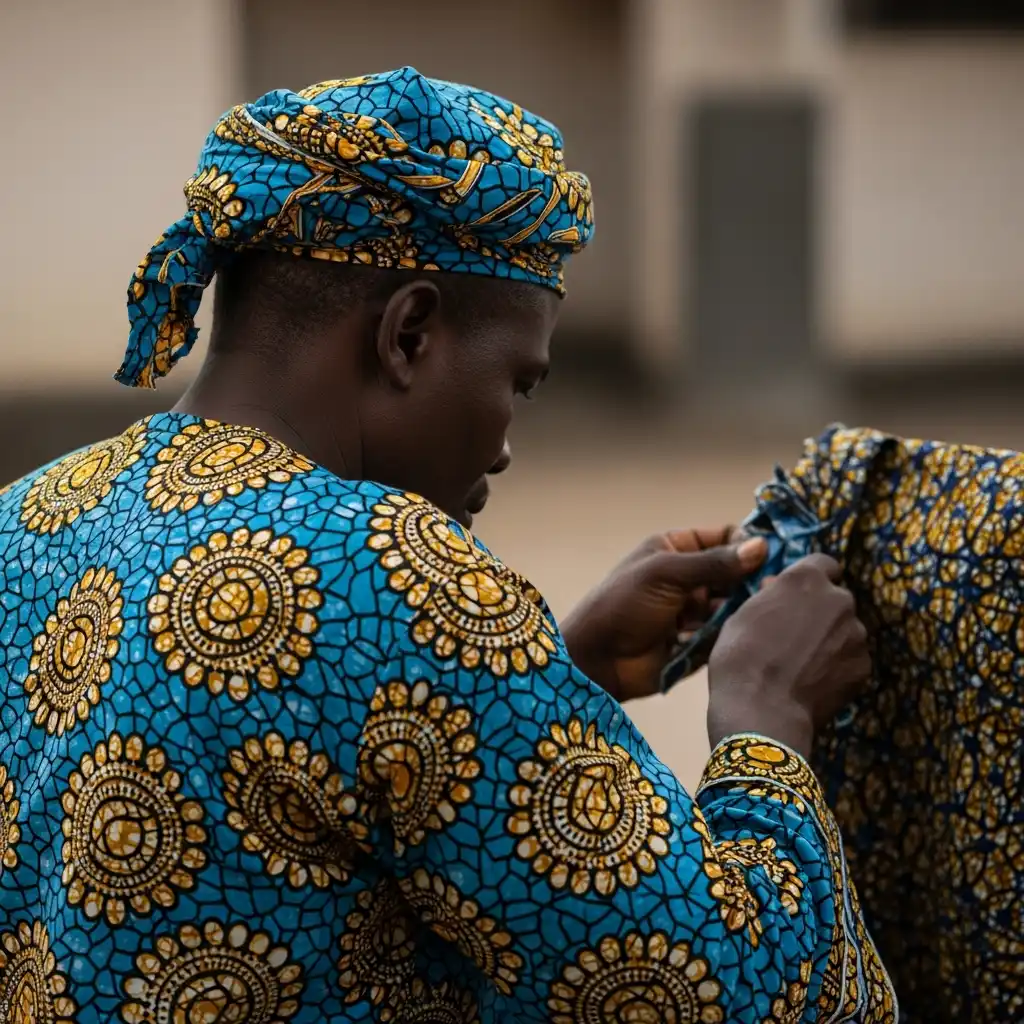
This whole ambitious project requires a certain kind of fuel, of course, and that fuel comes from the $200 million acquisition of Paystack by Stripe back in 2020. That capital provides the patient money needed for the long game, funding both the fintech expansion into new markets and the constant investment a football club demands. Player salaries, youth academies, and stadium logistics for Sporting Lagos cost hundreds of millions of naira, money that circulates right back into the local economy. It is a conscious strategy, not a rich man’s diversion, where the success of one venture directly supports the ambitions of the other. The parent company, Stripe, gets a bridge into African markets, and Akinlade gets the resources to build his dual vision, a symbiotic relationship that makes you nod in appreciation.
Building for the real world
Ambition in Nigeria always meets infrastructure, a truth that defines both of these ventures. A football match depends on a good pitch, functioning floodlights, and security, just as a payment platform depends on stable internet, consistent power, and banking systems that do not fail. The experience of navigating Lagos traffic to get to a match is not so different from designing a payment flow for a merchant with a slow connection. Paystack’s engineers build redundancy and offline capabilities into their software because they understand the environment, and Sporting Lagos invests in its own facilities to control quality. This problem-solving mindset transfers seamlessly from one domain to the other, turning everyday constraints into a source of innovation. The contribution of information and communication technology to the economy of Nigeria was over 18% in late 2025, a sector that includes companies like Paystack, while sport holds a different kind of capital—the social kind that builds loyalty no advertisement can buy.
A bridge for global trade

The vision, as Akinlade described it in a 2025 interview, is to build the rails for the next wave of global commerce. He believes many of those rails will be built by teams in Lagos, Accra, and Nairobi, solving problems for businesses worldwide from right here. Paystack’s licensed operations remain focused on Africa, serving as the bridge for global platforms that want to operate across emerging markets. It faces competition from giants like Razorpay and Adyen, but it competes on its deep, hard-won experience with the specific challenges of our economies. Its systems are built for places where card networks fail more often, where connectivity is not a guarantee. This is the ‘Go Beyond Local’ idea in action: a Nigerian-founded company becoming an essential part of international trade infrastructure, its technical expertise forged in the fires of local reality.
“The opportunity is to build the rails for the next wave of global trade. Many of those rails will be built by teams in Lagos, Accra, and Nairobi.”
– Shola Akinlade, CEO of Paystack, TechCabal interview, 2025
More than just a game
Back in Lagos, the football club does more than just play matches. Sporting Lagos runs youth academies and community programs, building a pipeline of talent and fostering a genuine sense of local ownership. The club becomes a civic institution, part of the daily life and conversation of its fans, and that community focus has tangible business value. Loyal fans are customers for merchandise and natural ambassadors for the brand, creating organic goodwill in a crowded market. While the club currently competes in the second-tier NNL, promotion back to the Nigeria Premier Football League would increase visibility through broadcast deals like the one with StarTimes. The club leverages this existing exposure, and Paystack handles the digital payments for ticketing and merchandise, closing a neat circle where passion meets practical commerce.
The long game
So here we are, watching one man tend to two very different gardens. The football club may take years to become financially self-sustaining, and the payment business faces upfront costs and regulatory hurdles in every new market. There are bumps on both fronts, from league organization to network reliability. But it is a long-term bet, enabled by patient capital and a unified philosophy. It is a model that differs sharply from the old patronage of Nigerian football, replacing it with a modern cycle where a global tech venture supports a local cultural asset. You look at the laptop screen with its payment metrics and then at the football pitch with its cheering fans, and you see it is not a contradiction at all. It is just a different kind of hustle, played out on two fields at once.
Technology & Innovation
Refurbished iPhone 13 Prices in Computer Village Market in 2026
The price of a refurbished iPhone 13 in Computer Village is a story written in battery percentages and cosmetic grades. You are not just buying a phone, you are buying its hidden history, and knowing…
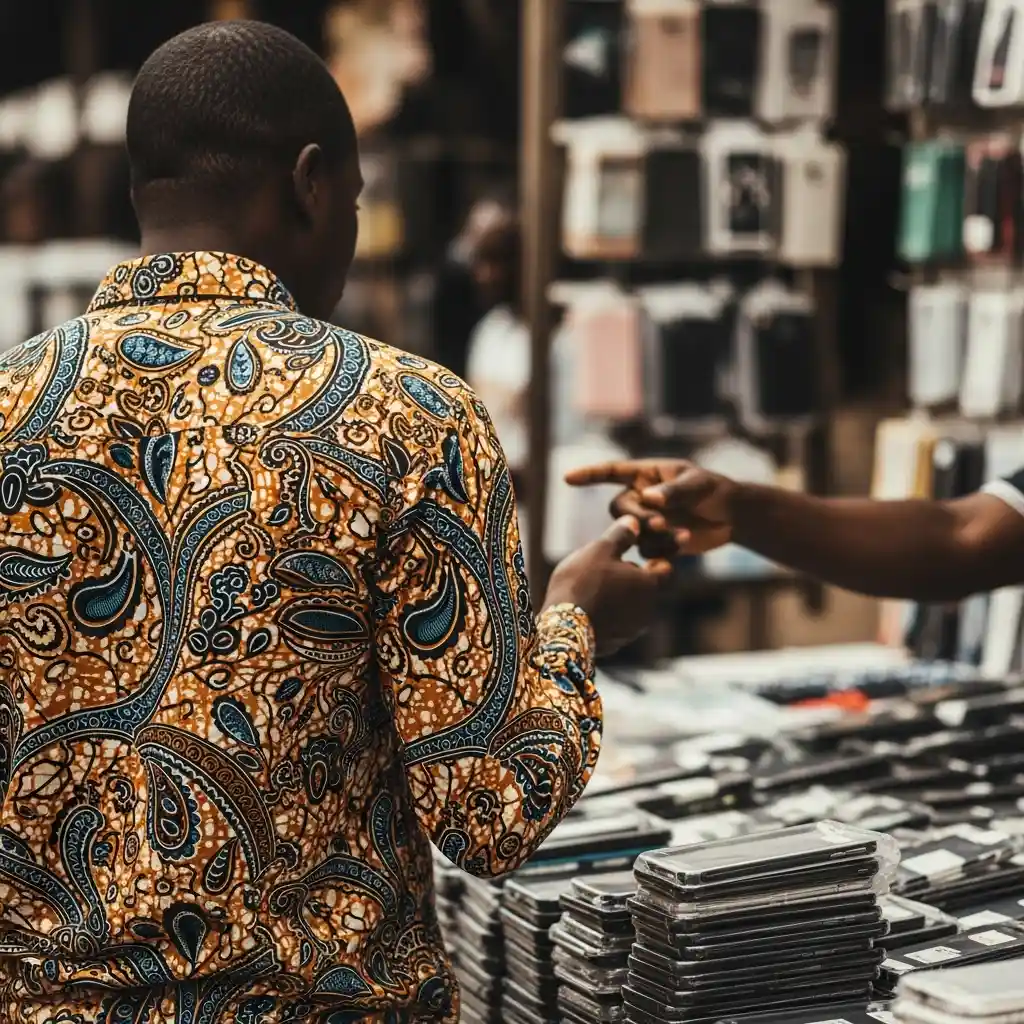
Refurbished iPhone 13 Prices in Computer Village Market in 2026
Published: 03 April, 2026
You can walk into three different shops in Computer Village and see three identical looking refurbished iPhone 13 phones with a price difference of N70,000 between them. It is a strange thing, but you are not just paying for the glass and metal in your hand. You are paying for the story of where it has been, which is a story you can never fully know. That uncertainty has a price tag all its own, and it makes the whole market feel like a quiet gamble where everyone is trying to read the other person’s face.
The battery health paradox
In 2026, the most important number on that phone is not how much storage it has. It is the battery health percentage, and it has created a funny little paradox. Everyone wants a high number, but if you see 100% on a phone that is five years old, you should probably walk away. That perfect score often means someone has put in a cheap battery that will not last, which is the opposite of what you want. Savvy buyers actually look for a reading between 85% and 89%, because that usually means the original battery is still inside and working honestly.
If the number dips below 80%, the phone itself will tell you it needs service. That message is your invitation to start haggling, and you can reasonably ask for at least N30,000 off the price to cover a proper replacement. The whole dance revolves around this one setting, a digital confession of the phone’s past life that everyone in the market has learned to interpret.
Grades and unknown parts
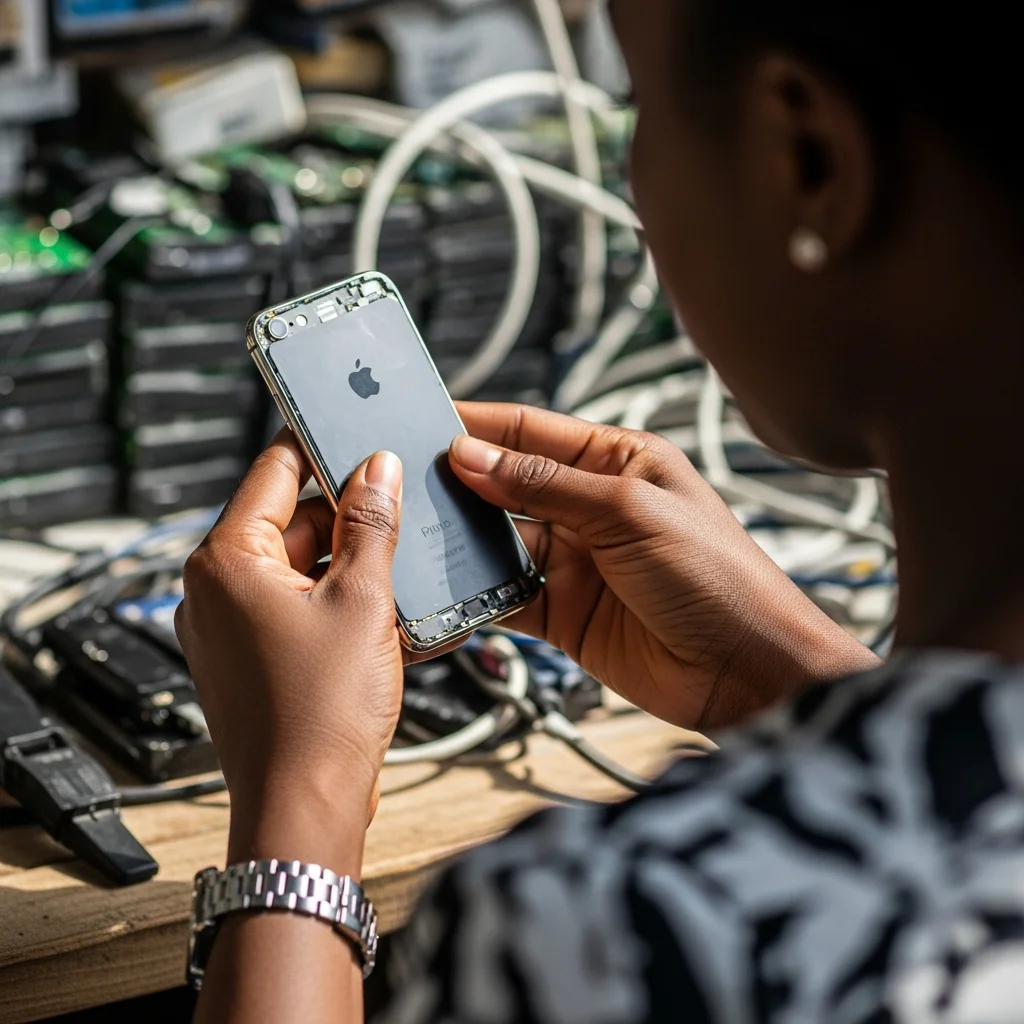
Then there is the cosmetic grade, which sellers label with letters like they are in school. Grade A looks almost new, Grade B has lived a little, and Grade C has some stories to tell on its body. The price difference between an A and a C can be a full N100,000, so you have to look very closely under the bright shop lights. An even more critical check is for something called parts pairing, a trick Apple started with this model. You must go into the settings and look for an Unknown Part warning, especially for the screen or the Face ID.
If you see that message, you know the phone has been opened and reassembled with unofficial components. Face ID might not work right, or the screen could have issues later. That phone should be much cheaper, and you should negotiate at least N50,000 off because you are buying a puzzle with a missing piece. It is a hidden flaw that only reveals itself if you know where to look.
The warranty is your insurance
The final piece of the price is the promise that comes after the sale. A shop offering a 6-month warranty will charge more than a guy on the corner who gives you one week to come back. That warranty is the shop’s way of saying they trust the phone they sold you, and they are willing to put their money behind it. You are paying a premium for that peace of mind, for the ability to walk back in if something goes wrong and have them fix it without another argument about money.
It turns a risky purchase into a slightly more calculated one. As one seller put it, the difference in price often just reflects the cost of that trust.
“A customer wants the original screen. If I have it, the price is high. If I use a high-quality copy, I can drop the price by N30,000. Most people choose the copy.”
– Chidi, a phone vendor at Computer Village, March 2026
Check everything twice
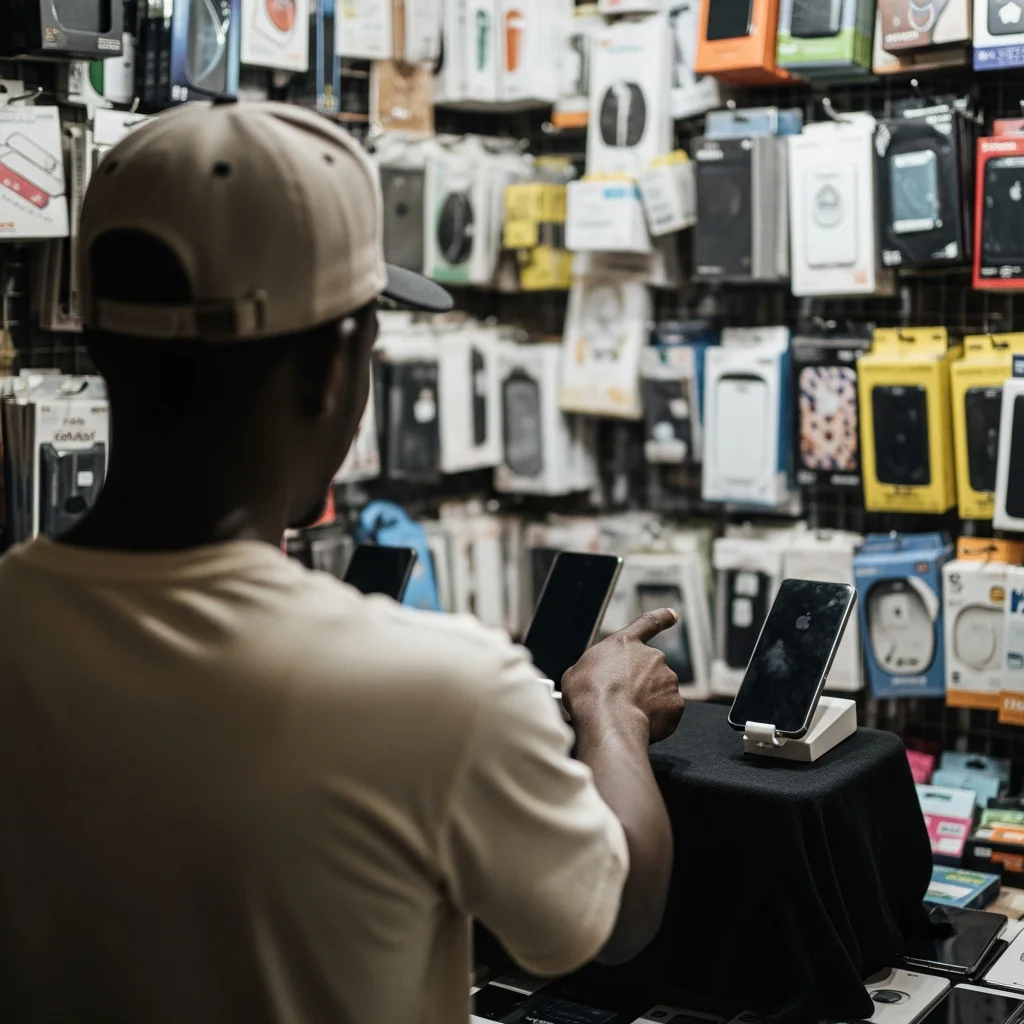
So your move, if you are serious, is to visit a few shops and compare. Write down the prices for the same grade. Check the IMEI number online to make sure the phone is not blacklisted. Ask to see the battery health and look for unknown parts. Finally, ask for a proper receipt with the shop’s stamp and the warranty terms written down. That receipt is your only real proof of the deal you made. It transforms a conversation into a transaction, which is the closest thing to safety you will find in that bustling market.
All these steps take time, but they change how the sellers see you. They stop seeing a casual browser and start seeing a serious buyer who knows the rules of the game. That knowledge, more than anything else, is what gets you a fair price on a second chance.
“The grade tells a story. Grade A phones usually come from single owners in Europe. Grade C phones have lived a harder life. We are honest about it because the customer will see it anyway.”
– Funmi, owner of a phone retail shop in Computer Village, March 2026
Technology & Innovation
The Story Of The Nigerian Who Helped Build Global Internet Systems
The internet’s story often credits American and European pioneers, but its global architecture bears the fingerprints of Nigerian engineers. From Lagos to Silicon Valley, they’ve built the cables…

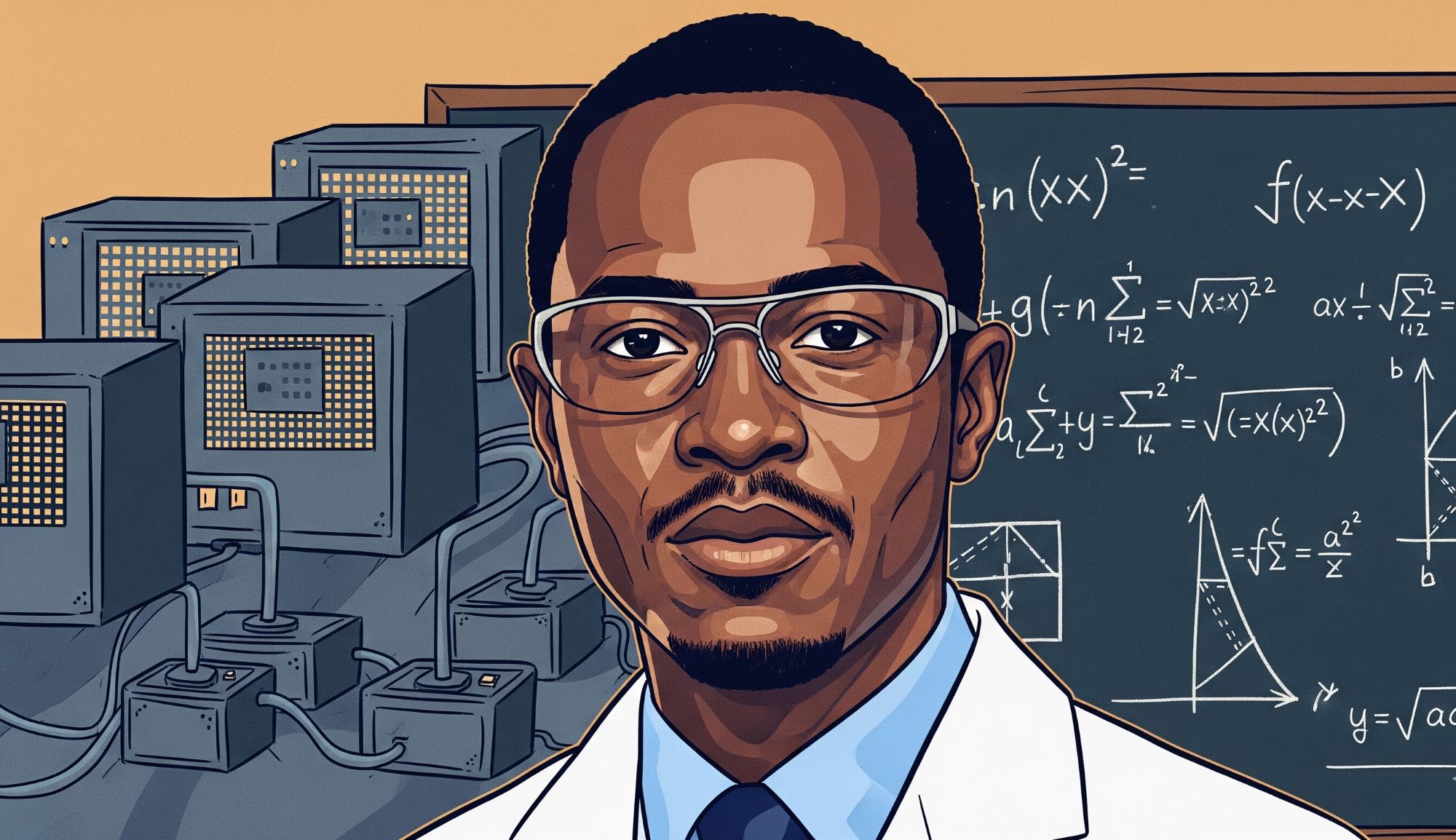
The Story Of The Nigerian Who Helped Build Global Internet Systems
Published: 12 February, 2026
Lagos does not sleep, and neither do the data centers humming along its coastline. The story of who built the internet you use today is often told as a tale of American genius and European innovation, but if you trace the cables and follow the code, you find another narrative woven into the fabric of the network. It is a quieter story, one of engineers from Nigeria who helped design the very backbone of our connected world, working from campuses in California and control rooms in Singapore while their contributions remained curiously absent from the mainstream records.
Beyond a Single Name
Many conversations begin and end with Philip Emeagwali, and his pioneering work in parallel computing certainly deserves its place in history. The narrative of Nigerian genius in technology, however, is far richer and more distributed than any single figure could represent. The internet of the last two decades required thousands of minds solving immense problems of scale and resilience, and Nigerian professionals filled critical roles at companies like Cisco Systems, Juniper Networks, and Google. They designed the routers that direct global traffic and wrote the foundational code for protocols that keep the network unified, their work embedded in data centers from Oregon to Singapore. This diaspora talent pipeline has deep roots, starting with graduates from the 1970s and 1980s who moved abroad for study and never really left the cutting edge, and now their children lead teams at Meta and Amazon Web Services. The infrastructure of the modern web, it turns out, has always had a Nigerian accent.
The Path from UNILAG
The journey often started at the University of Lagos or the University of Nigeria, Nsukka, where a graduate would secure a scholarship for a master’s program in the United Kingdom or the United States. The steady outflow of this technical talent during the 1980s and 1990s coincided perfectly with the race to build the commercial internet in Silicon Valley. These engineers brought with them a rigorous mathematical foundation and a uniquely practical mindset, honed by solving complex problems with often limited resources back home. An engineer who had experience maintaining analogue telephone exchanges in Lagos found themselves remarkably well-prepared for configuring the digital routers of California, and that combination of theoretical knowledge and gritty pragmatism proved incredibly valuable on the global stage.
Cables on the Coast
The physical reality of the global internet depends on thick bundles of fiber-optic cable laid across ocean floors, and Nigeria sits at the terminus of several major ones like the Africa Coast to Europe (ACE) and the West Africa Cable System (WACS). The landing stations in Lagos are critical gateways for the entire region, and Nigerian engineers and regulators helped plan these routes and now maintain the complex systems that keep them running. The Nigerian Communications Commission (NCC) reported that international bandwidth capacity into the country exceeded 40 terabits per second in 2025, a staggering figure that relies entirely on the work of local technicians at those landing stations. The construction never really stops, either, with projects like the massive 2Africa cable promising even more capacity and Nigerian firms like MainOne playing instrumental roles in making sure the lights stay on for millions of users.
The Quiet Protocol Engineers
Beyond the physical cables, the internet functions because of agreed-upon rules called protocols, developed by bodies like the Internet Engineering Task Force (IETF). Nigerian engineers participate in these global discussions, contributing to standards for routing security and IPv6 adoption with insights forged in local realities. A proposal for more efficient data compression might very well originate from an engineer intimately familiar with the bandwidth constraints faced by users in Kano or Enugu, translating local challenges into global solutions. Closer to home, the Nigeria Internet Registration Association (NIRA) manages the country’s top-level domain, .ng, integrating Nigeria into the global Domain Name System and reporting over 200,000 registered domains by 2025.
Working from Here and There
Building and maintaining this infrastructure from within Nigeria comes with its own set of profound hurdles, of course, where engineers must design systems with unreliable power supply and high bandwidth costs as their default considerations. This reality forces a kind of innovation in data efficiency that becomes a valuable export in itself. The interesting catch is that major technology companies now employ Nigerian engineers who work remotely from Lagos or Abuja, writing code for cloud platforms used worldwide and earning in foreign currency that flows back as remittances, a portion of the $20.5 billion the World Bank estimated entered the country in 2025. The knowledge circulates back, too, as engineers who worked on scaling the data centers of Facebook apply those hard-won lessons to building server halls for Nigerian fintech companies, creating a feedback loop of global experience and local application.
An Overlooked History
The popular narrative of technology innovation loves to celebrate the founder who pitches the venture capitalist or the CEO who gives the keynote speech, but it rarely has time for the engineer who ensures a router configuration survives a network flood. Many of the most essential Nigerian contributions fall squarely into this unsung category, because corporate publicity departments in Silicon Valley rarely highlight the national origins of their engineering staff when the focus remains squarely on the product. Within Nigeria itself, the public conversation often races toward entrepreneurship and startup funding, sometimes forgetting the deep technical work that makes those very startups possible in the first place. We celebrate the app maker and forget the infrastructure builder, even though one cannot exist without the other.
“The internet is a network of networks, and Nigerians have been architects in many of those rooms. We built the bridges, not just crossed them.”
– A senior network architect at a global cloud provider, March 2026.
Policy and Its Gaps
The government officially recognizes the digital economy as a pillar for growth, outlining ambitions in documents like the National Digital Economy Policy and Strategy, but the implementation faces the familiar challenges of funding and coordination. The National Information Technology Development Agency (NITDA) reports that broadband penetration reached 48% in 2025, which sounds promising until you consider the vast quality gap between urban and rural access. Policies to attract and retain technical talent exist more on paper than in practice, and engineers still cite better working conditions and clearer career progression abroad, which means the brain drain continues even as some return with experience and capital. The net flow of senior technical talent, for now, remains stubbornly outward.
Something to Build On
Recognition might start in simple places, like technology museums and educational curricula including this broader history. A module on the development of the internet in Nigerian universities should mention these local and diasporic contributors, because that inclusion shapes the identity and ambition of the next generation. Media profiles can expand beyond founders to interview the vice president of engineering at a networking giant, if she is Nigerian, telling a powerful story that shows young students a viable and respected career path. Professional associations like the Nigeria Computer Society could create halls of fame for contributions to global infrastructure, celebrating these engineers and finally connecting the dots between a classroom in Ibadan and a server farm in Finland.
The Proof Is in the Connection
The evidence of this collective effort is not hidden in some archive; it exists in the infrastructure itself. Every email sent from Lagos to London travels a path that Nigerian engineers helped design, and the domain name system resolves addresses for .ng because a Nigerian organization manages it. This is ultimately a story of integration, not isolation, of professionals who inserted themselves into the global project of building the internet and solved problems of mathematics, physics, and logistics for everyone. Their work enabled the digital transformation of their own country while quietly strengthening the network for the entire world, a narrative that lacks a single heroic figure because it is the story of collective, distributed effort across decades. It mirrors the architecture of the internet itself—decentralized, resilient, and built by many hands. The next time the network connects you to a service halfway across the world, it is not a bad thing to remember that the map most certainly includes Nigeria.

Ancient Rock Art Traditions Endure in Igbara Oke Caves

Palm Wine Tapper Climbs Same Tree That Killed His Father in Ozoro

Hunter Hears Dead Brother Whistle in Ganye Forest Mystery

Farmer Plants Yam That Grows Downward to Water Table in Drought

She Kept Asking and They Kept Moving Her in Nigeria

Global Food Prices Rose 2.4% in March 2026

Chigozie Obioma International Booker Prize 2026

Jidenna Pan African Sounds Latest Musical Project 2026

Hakeem Oluseyi Brings Astrophysics to Classrooms Worldwide

NANS Diaspora Nigerian Students Eastern Europe

Nnamdi Asomugha From NFL Cornerback to Hollywood Producer

Folake Olowofoyeku Stars in American Sitcom on Nigerian Family Life

Internet Sovereignty: Why Some Countries Want Their Own Separate Internet

The Story Of The Nigerian Who Helped Build Global Internet Systems

Nigerian Hackers: The Global Fraud Story and Its Fallout

Forgotten Satellites Defy Silence, Beaming Signals for Decades

The Phone Stay So Quiet: An Investigation into Nigeria’s Silent Customer Lines

Your Digital Store in Nigeria and the Reality of Domain Expiration

The Business That Died: A Nigerian Case Study in Refusal to Adapt

Hiding Your Business From People With Money

How Nollywood Grew Without Government Support

Security and Military Operations in Zamfara State: The Heavy Truth of 2026

Moniepoint Business Account Requirements Nigeria for SMEs 2026

Comedy Industry in Nigeria and Its Economic Contribution

 Digital Sovereignty8 months ago
Internet Sovereignty: Why Some Countries Want Their Own Separate Internet
- Technology & Innovation8 months ago
The Story Of The Nigerian Who Helped Build Global Internet Systems
- Crime8 months ago
Nigerian Hackers: The Global Fraud Story and Its Fallout
- Space Technology8 months ago
Forgotten Satellites Defy Silence, Beaming Signals for Decades
- Maritime8 months ago
The Phone Stay So Quiet: An Investigation into Nigeria’s Silent Customer Lines
- Business8 months ago
Your Digital Store in Nigeria and the Reality of Domain Expiration
- Business8 months ago
The Business That Died: A Nigerian Case Study in Refusal to Adapt
- Business8 months ago
Hiding Your Business From People With Money