Maritime
Kehinde Salami Africa Global Logistics Deputy Director Seaport Operations
129.3 million tonnes of cargo moved through Nigerian ports last year, but the real story is in the expensive wait that follows. It’s a quiet tax we all pay, a tale of trucks, time, and the price of…

Kehinde Salami Africa Global Logistics Deputy Director Seaport Operations
Published: 06 April, 2026
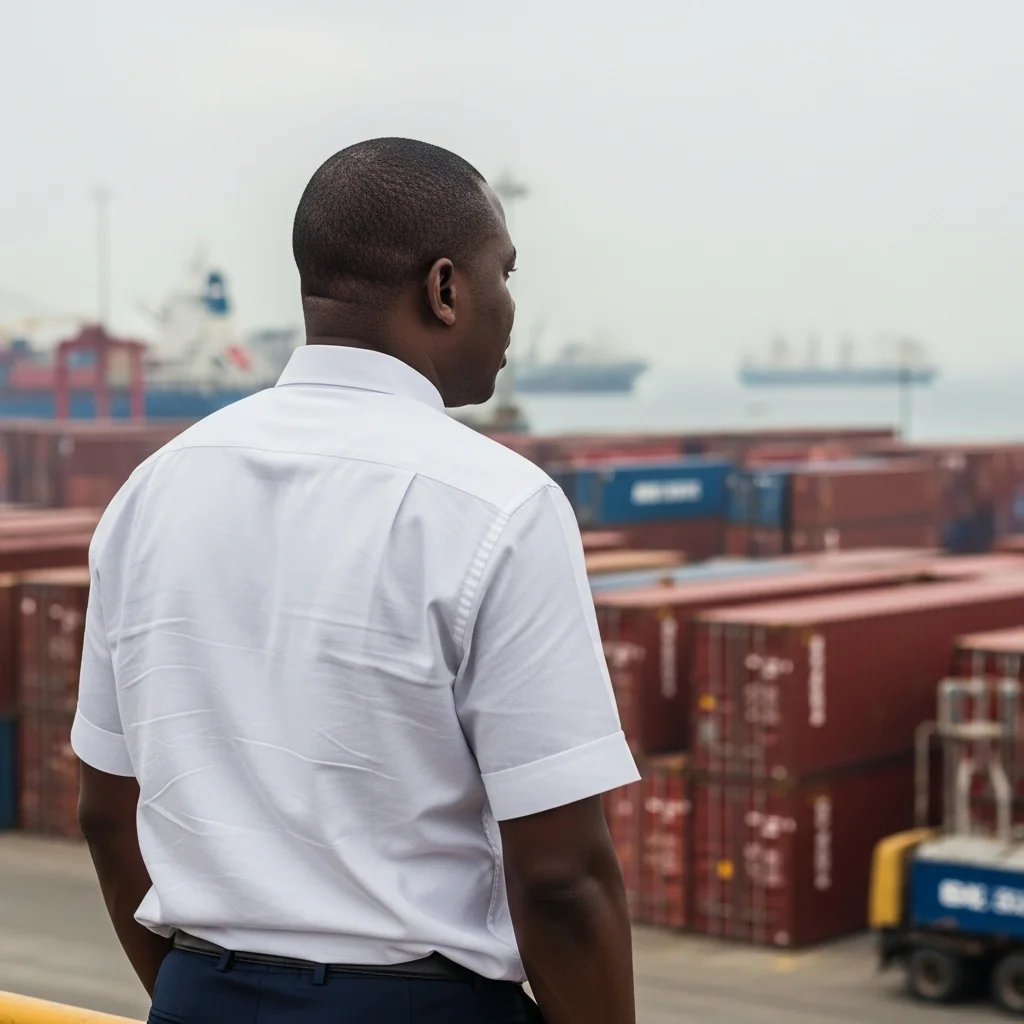
129.3 million metric tonnes of cargo moved through the ports of Nigeria in 2025, which is a number so large it feels like it should come with its own sound. You can almost hear the groan of ships and the clatter of containers. The Nigerian Ports Authority called it a 24.8% increase, and that is the kind of growth that makes you sit up. Yet the real story is not in the weight of what arrives but in the quiet, expensive wait that follows, a gap between movement and delivery that every shopper in the market ends up paying for.
The quiet tax of waiting
Imagine a truck driver sleeping in his cab for days because the road into Apapa port is a solid wall of steel and frustration. Goods that should be on shelves sit in those metal boxes under the sun, and the official term for this is cargo dwell time. In Nigeria, that time averages 20 days, while efficient ports around the world manage it in 3 to 7. This extended stay is not free. A study reckoned it costs the economy over N3.5 trillion every year, which is a quiet tax added to the price of a bag of rice or a new pair of shoes before it even leaves the port area.
Navigating the daily maze
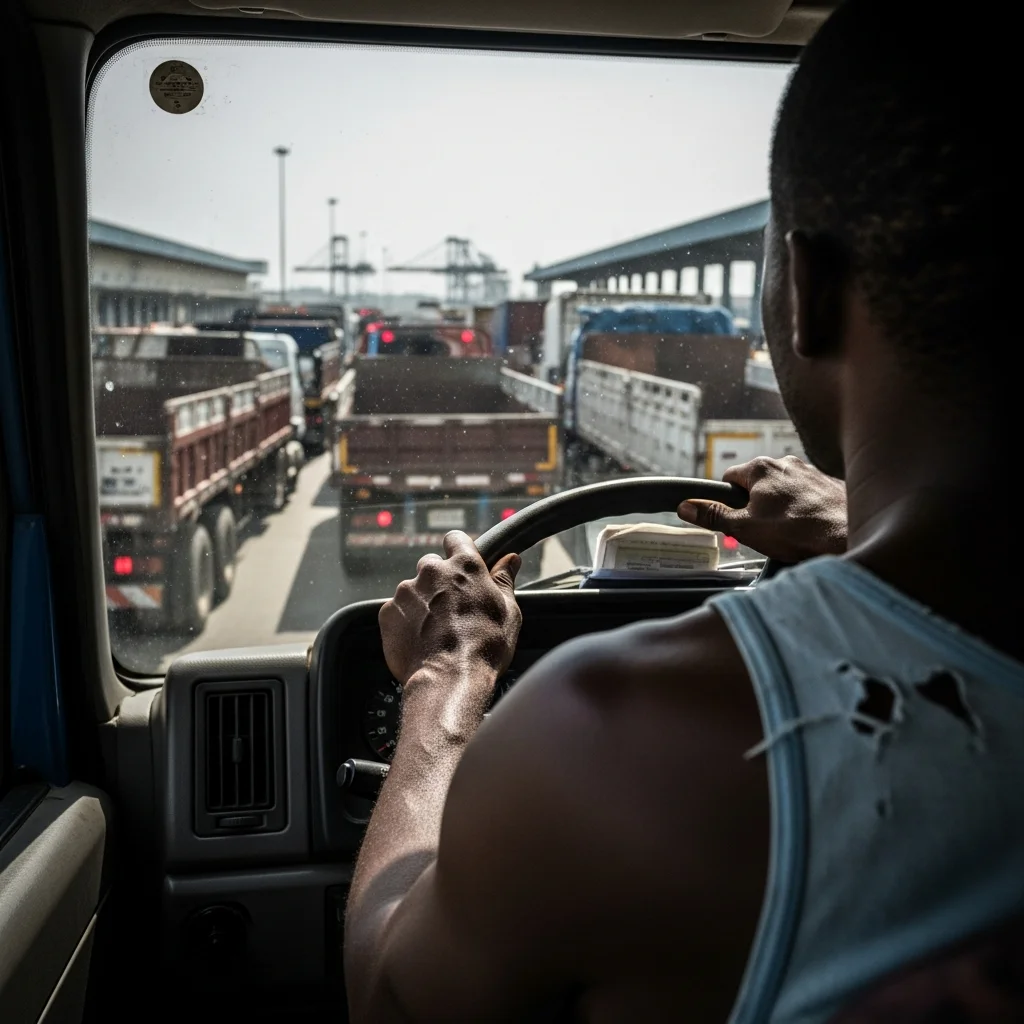
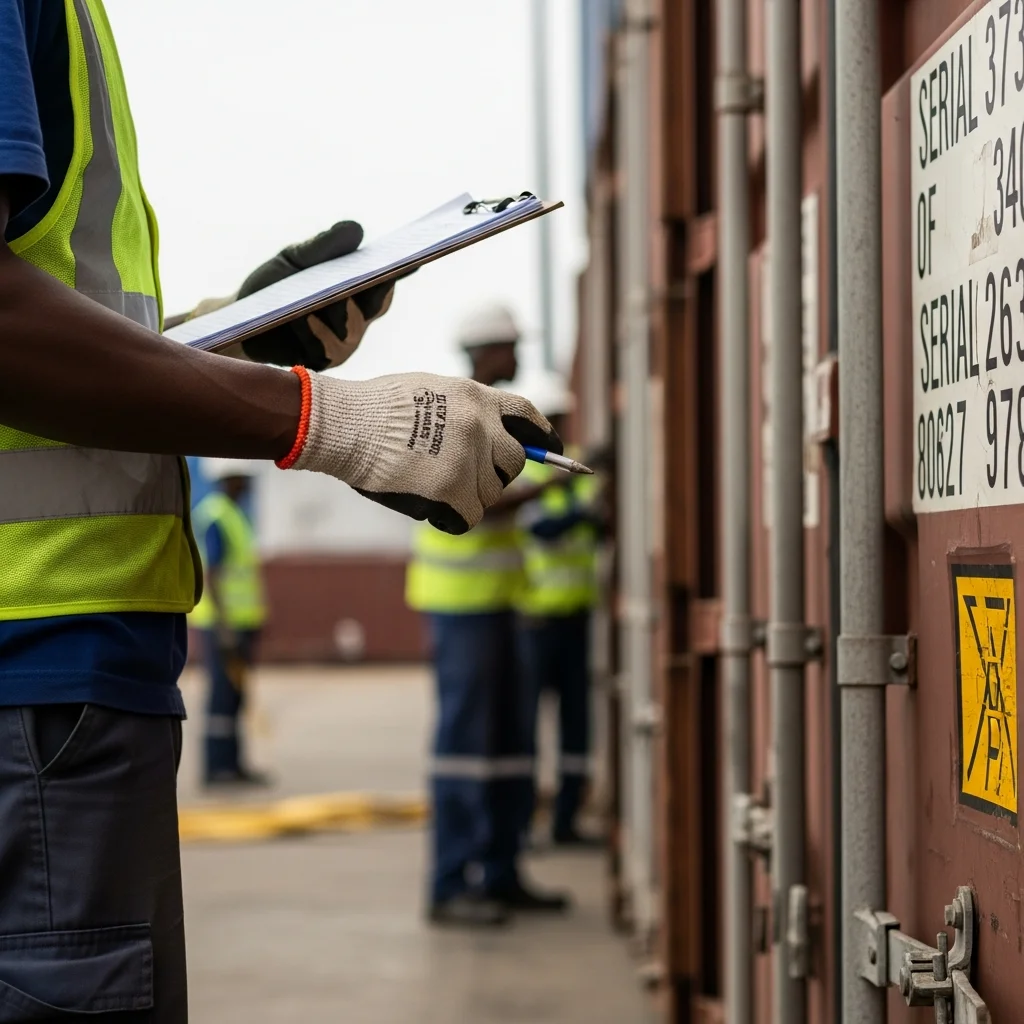
This is where companies like Africa Global Logistics operate, trying to create order within the chaos. They manage terminals, warehouses, and fleets of trucks, and their job is to be the calm conductor for a symphony that often feels like it is playing three different tunes at once. They must coordinate with the port authority, navigate customs inspections, and somehow get a container from a ship to a factory floor while hundreds of other trucks are lined up hoping for the same miracle. The volume is immense, with 55.8 million metric tonnes handled in just one quarter, so the logistics leadership has no room for a slow day.
“The success of port logistics in Nigeria depends as much on what happens outside the gate as inside it. The road, the technology, the procedures all must work together.”
– Maritime logistics analyst, speaking to BusinessDay in March 2026
Paper versus the promise
There is a great push for digital solutions, a dream of a seamless system where a click replaces a stack of paper. The National Single Window project launched to do just that, but old habits have deep roots. A report showed that right before the launch, 65% of port users were still submitting documents by hand. Paper persists. The technology exists to track a container in real time and pay charges electronically, promising visibility and control, but the full will to implement it remains the variable that everyone is watching.
Your bread costs more
This is not just a story about ships and schedules. When a container is delayed, importers pay extra for demurrage and storage, and those costs are baked into the final price you see on the shelf. So the efficiency of port operations has a direct line to the inflation rate, which was 15.06% in February 2026. A manufacturer halts a production line waiting for a component, a retailer runs out of stock, and these disruptions ripple outward. The port is a heartbeat for the economy, and when it skips, the whole body feels the stumble.
“Our focus is on creating a fluid connection between the ship and the hinterland. Every minute saved in the port is a cost avoided for the Nigerian consumer.”
– Statement from Africa Global Logistics management, January 2026
A continental race
The work here is part of a bigger picture, where other ports in West Africa are investing to get faster. Lome and Abidjan have gained market share by offering quicker turnaround, so the ports of Nigeria must improve to stay competitive. This is especially true with the African Continental Free Trade Area aiming to boost trade across borders, because goods moving from Lagos to Accra must first exit the gate efficiently. The future hinges on new ports like Lekki and consistent policy, but the core task of moving cargo reliably endures, evolving with new tools and old challenges.
Check the label
Next time you are in a store, look at the origin label on an item you buy. Many of those products came through the ports, and the efficiency of that journey from a factory overseas to the shelf influences the price you pay. The container that brought it likely sat in traffic, and you paid for that traffic. Understanding this connection makes the discussion about port operations more than a technical issue. It becomes a simple matter of economic common sense, a story written in the price of things and the time it takes to get them to you.







Maritime
The Lagos Port Complex and Tin Can Island Port Have a £746 Million Lifeline
A £746 million deal with the UK aims to fix Nigeria’s main ports in Lagos. The money targets crumbling infrastructure and legendary congestion, but success hinges on more than just new cranes.
The Lagos Port Complex and Tin Can Island Port Have a £746 Million Lifeline
Published: 21 March, 2026
March 18, 2026 was a quiet Tuesday in Abuja, the kind of day that usually passes without much notice. In a government office, a pen moved across a document committing the Federal Government of Nigeria to repay £746 million over fifteen years. The money comes from UK Export Finance and has one job: to fix the Lagos Port Complex in Apapa and the Tin Can Island Port. It follows a technical grant from the same British agency for the initial design, which The Guardian Nigeria noted back in 2025. This is not a small promise. It is the kind of financial commitment that makes you sit up and wonder if this time will be different.
A Choked Artery
These two ports handle more than 70% of the seaborne trade for the entire country. The Lagos Port Complex alone took about 55% of all container traffic in 2024, according to the Nigerian Ports Authority. Decades of inattention have created a system famous for its legendary congestion, where the average ship spent 5.2 days waiting around in 2024. You can compare that to less than a single day in major ports in South Africa and Egypt, as the World Bank pointed out. This inefficiency has a real price tag that eventually lands in your shopping basket. A study by the Lagos Chamber of Commerce and Industry estimated port problems add 30-40% to the cost of cleared goods, making everything from rice to refrigerators more expensive for the ordinary person.
The Shopping List
The plan targets the most obvious failures with a very specific list. At the Lagos Port Complex, they will rebuild the crumbling Quay Aprons at several berths and completely overhaul electrical systems last touched in the 1990s. They will also dredge the channels to fit bigger ships, a move shipping lines have wanted for years. Over at Tin Can Island Port, the focus is on transit sheds that are falling apart and a drainage system that gives up with every heavy rain. The contract includes new gantry cranes and a modern digital platform meant to replace the mountain of paper that currently slows everything down.
“This is not just about concrete and cranes. It is about rebuilding the confidence of the global trading community in our ports.”
– Mr. Mu’azu Sambo, Minister of Transportation, March 18, 2026.
The British Angle
There is always a catch, and here it is quite straightforward. UK Export Finance exists to support British businesses, so this £746 million comes with strings attached. The goods and services for the project must be bought from companies in the United Kingdom. Major UK engineering firms are already lined up as lead contractors, which BusinessDay reported. It guarantees work for British suppliers for nearly a decade, which makes sense because the UK is one of Nigeria’s top trading partners. Smoother ports in Lagos mean British exports arrive faster and Nigerian goods, especially farm produce, can reach UK shelves in better condition. So the financing is a direct investment in Britain’s own trade corridor, wrapped in the language of aid.
Ghosts of Plans Past
The trouble with announcements like this is the history that follows them around. The story of port reform here is full of ambitious plans that only delivered part of what was promised. The big concession program of 2006 improved operations but left the crumbling civil infrastructure untouched. The result was private companies running efficient businesses inside publicly owned, decaying facilities. Then there is the Lagos-Ibadan rail line, which ends right at the Lagos Port Complex and was supposed to move containers by rail. By 2025, it was moving less than 5% of them, with most still relying on trucks. A refurbished port without better connections just moves the traffic jam from the water’s edge to the gate.
The Real Battle
The success of all this money hinges on things you cannot buy with pounds. The first is governance, with a joint committee set up to oversee spending. Its transparency will decide if the funds do what they are supposed to do. The second is the digital part of the plan, a National Single Window platform to replace the current opaque, manual system. Ghana did something similar in 2020 and cut cargo clearance from two weeks to four days. In Nigeria, powerful interests benefit from the old way of doing things, so resistance to a transparent digital process is pretty much guaranteed.
“The infrastructure is one battle. Changing the process and the people in the system is the war. We have the money for the battle now. Do we have the will for the war?”
– A senior official at the Nigerian Shippers’ Council, March 2026.
Ripples in the Economy
Efficient ports act like a direct stimulus for everything else. When the cost and time of bringing in raw materials fall, local production becomes more possible. The Manufacturers Association of Nigeria has always said high logistics costs, driven by port problems, are a main reason factories close. For the government, better ports mean more customs revenue from higher cargo throughput. But there is another catch: the 15-year loan repayment plan ties a part of that future revenue to servicing the British debt. So port performance is now directly linked to the country’s fiscal obligations, which is a new kind of pressure.
The View from the Queue
The truck driver who spends five days in a line to enter the port has a simple measure of success. He will believe the work is real when his turnaround time drops to two days. The importer will believe it when her demurrage charges stop being a major budget item. The success of this £746 million deal will be judged not in ministry statements, but in the reduced cost and increased predictability of moving goods. The deal provides the capital that has been missing for a generation to fix the physical decay. The greater task remains reforming the ecosystem around the port—the customs, the trucking, the rail links. Without action on those fronts, the new cranes will simply look down on the same old congestion from a greater height.
Watching the Clock
The first real sign of progress will be when the lead contractors actually move to the site. The Nigerian Ports Authority is supposed to publish monthly reports on work done and money spent, which gives the public a tool to hold someone accountable. This project is too large and too costly to be left in the shadows. The refurbishment of these ports is a necessary thing. How it is executed over the coming years will show a lot about the capacity to deliver complex, transformative infrastructure. The money is available. The blueprint is signed. The clock starts now.
Maritime
Maritime Security Protects Assets in the Gulf of Guinea Against Piracy
The Gulf of Guinea was once the global epicenter for maritime kidnappings. A quiet shift is underway, driven by regional cooperation and a complex security machine. The price of safety is measured in…
Maritime Security Protects Assets in the Gulf of Guinea Against Piracy
Published: 17 March, 2026
Seventy percent of the world’s maritime kidnappings for ransom used to happen right here. That number from the International Maritime Bureau hung over the Gulf of Guinea like a dark cloud for years, a statistic that translated into higher shipping costs and nervous glances at the horizon. For coastal communities and the economy of Nigeria, it was more than a number, it was a daily reality that choked trade and kept fishermen close to shore. The sea, which should have been a highway of opportunity, felt like a contested frontier.
The quiet shift
Something changed, though the pirates did not simply pack up and leave. Reported incidents dropped from 35 in 2023 to 19 in 2025, a shift credited to more naval patrols and a regional conversation that finally got serious. The trouble with counting incidents is that it does not tell you about the nature of the threat, which has become quieter and more targeted. You get fewer brazen hijackings but more sophisticated operations that slip under the radar, a problem that demands a different kind of attention.
The deep blue machine
The center of this effort is the Integrated National Security and Waterways Protection Infrastructure, known to most as the Deep Blue Project. With a budget line of about N32 billion for 2026, it coordinates aircraft, helicopters, and fast boats from a command center in Lagos. It is a substantial machine, and its operational tempo picked up noticeably throughout last year. The logic is straightforward, where securing these waters means protecting the oil from Nigeria, Angola, and Ghana and everything else that moves on them.
“The collaboration between the Nigerian Navy and the Nigerian Maritime Administration and Safety Agency has been pivotal. We have moved from a reactive posture to a more proactive, intelligence-driven stance.”
– Vice Admiral Emmanuel Ogalla, Chief of Naval Staff, to BusinessDay, February 2026.
No one fights alone
Piracy does not respect borders, so a purely national response was always going to be useless. This is where the Yaoundé Architecture comes in, a regional mechanism for sharing information and organizing patrols that has been around since 2013. Its effectiveness depends entirely on the political will and funding of member states, a perpetual challenge. A report last year made the obvious but important link that piracy uses the same shadowy routes as oil bunkering and arms smuggling, which means tackling one problem has a ripple effect on others.
The price of safety
The most tangible sign of progress might be found in an insurance office in London. The War Risk Premium, a surcharge for ships transiting the Gulf, added tens of thousands of dollars to a single voyage at its peak. Improved security last year led to a reduction on some routes, which means direct savings for importers and exporters. Contrast that with the chaos of a blocked Lagos port complex, and you begin to see the connection between blue water patrols and the price of goods at Alaba International Market. The link is indirect but very real.
Boats, sailors, and allowances
The navy has new offshore patrol vessels and a dedicated Special Boat Service, tools that look impressive in procurement announcements from Abuja. The practical reality of keeping them running from bases in Oghara or Calabar is another matter, one that involves maintenance budgets and, crucially, the welfare of the people who use them.
“You can have the best boats in the world, but if the sailor has not received fuel allowance for three months, operational readiness suffers. We are addressing these welfare issues alongside hardware upgrades.”
– A senior naval officer to Premium Times, January 2026.
International partners like the European Union and the United States help with training and coordination, though the sustainability of donated equipment is a conversation that never really ends.
When the law meets the sea
Even with a strong tool like the Suppression of Piracy and Other Maritime Offences Act, which prescribes life imprisonment, prosecution remains a hurdle. Gathering evidence at sea is difficult, and international crew members, the key witnesses, often leave the jurisdiction quickly. The Maritime Intelligence Unit works to build cases that will stick, but the pace of the judicial process can feel glacial compared to the speed of an interceptor boat.
A normal horizon
Success, in the end, looks like normalcy. It looks like shipping companies routing vessels here without a second thought and fishermen working in deep waters without fear. It means attracting investment in the blue economy because the foundation of security is solid. The conversation is already shifting to protecting underwater cables and offshore infrastructure, the new frontiers for those looking to cause disruption. The work continues every day, far from the headlines, where the horizon meets the sea, and the quiet vigilance of a sailor on patrol makes all the difference.
Maritime
The Phone Stay So Quiet: An Investigation into Nigeria’s Silent Customer Lines
The desk phone in Nigerian businesses has fallen silent. Discover why customer calls have vanished, replaced by messages on WhatsApp and social media, in this story of cost, frustration, and digital…


The Phone Stay So Quiet: An Investigation into Nigeria’s Silent Customer Lines
Published: 12 February, 2026
Five rings. That is all it takes for a small business owner in Lagos to know the phone will not answer. A survey of 200 shops and offices in the city and Abuja last year found the desk phone has become a quiet relic. The conversations that matter have moved elsewhere, leaving the handset to gather dust while the real complaints hum through different wires.
A Ring That Became a Whisper
Walk into any bank or corporate headquarters today and you will notice the silence. The bank of phones on the customer service desk sits perfectly still, a row of plastic monuments to a different time. Data from the Nigerian Communications Commission shows a steady decline in voice call minutes that started years ago and simply never stopped. Between 2021 and 2025, the total volume of customer service calls handled by major banks dropped significantly. People stopped picking up the phone, and the reasons for this quiet rebellion are a tangled web of frustration, cost, and pure adaptation.
The High Cost of a Question
Making a phone call in Nigeria is not free, and that simple fact shapes every interaction. The average cost per minute is a point of constant debate, but the reality of airtime vanishing from your phone is not. A fifteen-minute wait on hold can eat through a meaningful portion of someone’s daily budget, a phenomenon subscribers have come to know as “Airtime Vanishing Syndrome.”
“Customers calculate the cost of every interaction. If a call to a helpline of a bank will cost N50 in airtime and twenty minutes of time, they seek alternatives. Social media offers a ‘free’ ticket to the same service.”
– Adeola Ogunlana, Telecoms Analyst, February 2026
This quiet calculation happens millions of times a day, tilting the scale away from the voice call. The rise of cheap data packages makes messaging apps far more attractive, as sending a WhatsApp message uses a tiny sliver of the data required for a one-minute conversation.
The Great Wall of IVR
For the brave souls who do dial a number, another trial awaits. Press one for this, press two for that, press three to be told all agents are busy before the line goes dead. An internal review last year listed “frustrating IVR systems” as a top five grievance across six different sectors. The very systems designed to streamline service became the primary reason people gave up. The phone stay so quiet because the experience of using it became a source of genuine anger.
Where the Conversations Went
The silence on the landline, however, echoes with frantic activity somewhere else. Customer service migrated. Twitter became a public complaints desk where a tagged tweet often gets a faster response than any formal call. The most significant shift, though, is to WhatsApp. Over 85% of the businesses surveyed confirmed they handle more queries there than via phone. It is cheap, asynchronous, and leaves a record. Many Nigerian banks have now integrated AI chatbots like Leo and Ada directly into the app, handling routine inquiries without a human voice ever entering the conversation.
The Infrastructure of Silence
Beyond choice, there is a physical reality to the quiet. The reliability of fixed telephone lines has been a challenge for a very long time. According to the NCC, active fixed lines stood at just over 100,000 at the end of last year. In a country of over 200 million people, that number is almost a curiosity. Most service calls were meant for mobile numbers anyway, and those lines are often just a manager’s personal phone that goes straight to voicemail.
A Policy Blind Spot
The rules have been slow to catch up. Regulations still focus heavily on traditional metrics like call drop rates, with clear guidelines for a bad phone call. A complaint about a company ignoring your WhatsApp messages for days, however, lacks a formal channel. The Federal Competition and Consumer Protection Commission, now led by Adamu Abdullahi, acknowledges the shift.
“Our act empowers us to protect consumers across all platforms. The enforcement mechanism for a bad phone call is clearer than for a neglected direct message. We are developing specific guidelines for digital service level agreements.”
– Adamu Abdullahi, Chief Executive of the FCCPC, February 2026
The push for digital standards continues, but the tools, like the old phone lines, are still adapting.
The Business Case for Letting It Ring
From a certain angle, the declining call volume makes business sense. It reduces the need for large, expensive call centers and cuts staffing costs. The catch is that it scatters customer interaction across a dozen different platforms. A company now needs social media managers, WhatsApp agents, and email specialists, and keeping the story consistent is a new kind of headache. Some businesses made a conscious choice to deprioritize the phone line, finding it more efficient to centralize everything digital. In those cases, the phone stay so quiet as a direct result of strategy.
The Human Element Fades
Something subtle gets lost in the text. The tone of voice, the immediate back-and-forth, the ability to calm a frustrated person with a bit of empathy—these are harder to convey in a chat window. Misunderstandings bloom. The personal connection diminishes, and customer service becomes a transactional exchange of text on a screen. For complex issues, the phone is still superior, but the path of least resistance for the consumer is now digital. This creates a strange paradox where the phone is reserved only for the most serious complaints, so when it does ring, the caller is already at a crisis point, which only reinforces the negative association.
A Glitch in the Digital Dream
The shift to digital channels assumes everyone has good, cheap internet. This is, of course, a flawed assumption. Internet penetration is growing but remains uneven. In rural areas or for people with lower digital literacy, the phone was the only direct link. As businesses retreat from voice support, these customers face a silent exclusion. The digital divide widens, not just in access to information, but in access to simple redress.
The Sound of What Comes Next
The quiet phone is not a sign of fewer problems. It is a sign of changed methods. Complaints are as numerous as ever, but they are now visible on public timelines for everyone to see. The nature of the interaction has been completely rewritten. The ringtone has been replaced by the notification ping. Businesses that understand this are training agents to handle conversations that start on Twitter, move to email, and might only escalate to a voice call as a very last resort. The phone line becomes a specialized tool, kept in the drawer for only the most delicate jobs.
Check Your Own Ringtone
For any business owner reading this, the exercise is simple. Pull the call logs for your customer service number from the past month. Count the rings. Then, check the activity on your official social media accounts and WhatsApp business line. The disparity will likely tell you everything you need to know about where your customers actually are. Allocate your resources there. If you keep a phone line, state its purpose clearly. Manage expectations, because the customers certainly are.
The Quiet is the Message
The silence is not empty. It is full of meaning. It tells a story of high costs, poor experiences, and a consumer base that has voted with its thumbs, choosing taps over talks. Regulators must update their frameworks, and businesses must follow their customers to where the conversations are actually happening. The era of the customer service phone call as the primary channel has passed. The phone stay so quiet. The conversations, however, have never been louder. They just happen somewhere else entirely.

Ancient Rock Art Traditions Endure in Igbara Oke Caves

Palm Wine Tapper Climbs Same Tree That Killed His Father in Ozoro

Hunter Hears Dead Brother Whistle in Ganye Forest Mystery

Farmer Plants Yam That Grows Downward to Water Table in Drought

She Kept Asking and They Kept Moving Her in Nigeria

Global Food Prices Rose 2.4% in March 2026

Chigozie Obioma International Booker Prize 2026

Jidenna Pan African Sounds Latest Musical Project 2026

Hakeem Oluseyi Brings Astrophysics to Classrooms Worldwide

NANS Diaspora Nigerian Students Eastern Europe

Nnamdi Asomugha From NFL Cornerback to Hollywood Producer

Folake Olowofoyeku Stars in American Sitcom on Nigerian Family Life

Internet Sovereignty: Why Some Countries Want Their Own Separate Internet

The Story Of The Nigerian Who Helped Build Global Internet Systems

Nigerian Hackers: The Global Fraud Story and Its Fallout

Forgotten Satellites Defy Silence, Beaming Signals for Decades

The Phone Stay So Quiet: An Investigation into Nigeria’s Silent Customer Lines

Your Digital Store in Nigeria and the Reality of Domain Expiration

The Business That Died: A Nigerian Case Study in Refusal to Adapt

Hiding Your Business From People With Money

How Nollywood Grew Without Government Support

Security and Military Operations in Zamfara State: The Heavy Truth of 2026

Moniepoint Business Account Requirements Nigeria for SMEs 2026

Comedy Industry in Nigeria and Its Economic Contribution

 Digital Sovereignty8 months ago
Internet Sovereignty: Why Some Countries Want Their Own Separate Internet
- Technology & Innovation8 months ago
The Story Of The Nigerian Who Helped Build Global Internet Systems
- Crime8 months ago
Nigerian Hackers: The Global Fraud Story and Its Fallout
- Space Technology8 months ago
Forgotten Satellites Defy Silence, Beaming Signals for Decades
- Maritime8 months ago
The Phone Stay So Quiet: An Investigation into Nigeria’s Silent Customer Lines
- Business8 months ago
Your Digital Store in Nigeria and the Reality of Domain Expiration
- Business8 months ago
The Business That Died: A Nigerian Case Study in Refusal to Adapt
- Business8 months ago
Hiding Your Business From People With Money