Culture
Tailor Sews Identical Dress from 40-Year-Old Bible Photo in Asaba
A tailor in Asaba studied a faded photograph from a family Bible for a week. Then he spent eighty hours recreating a dress for a woman buried forty years ago, stitching a bridge between then and now.

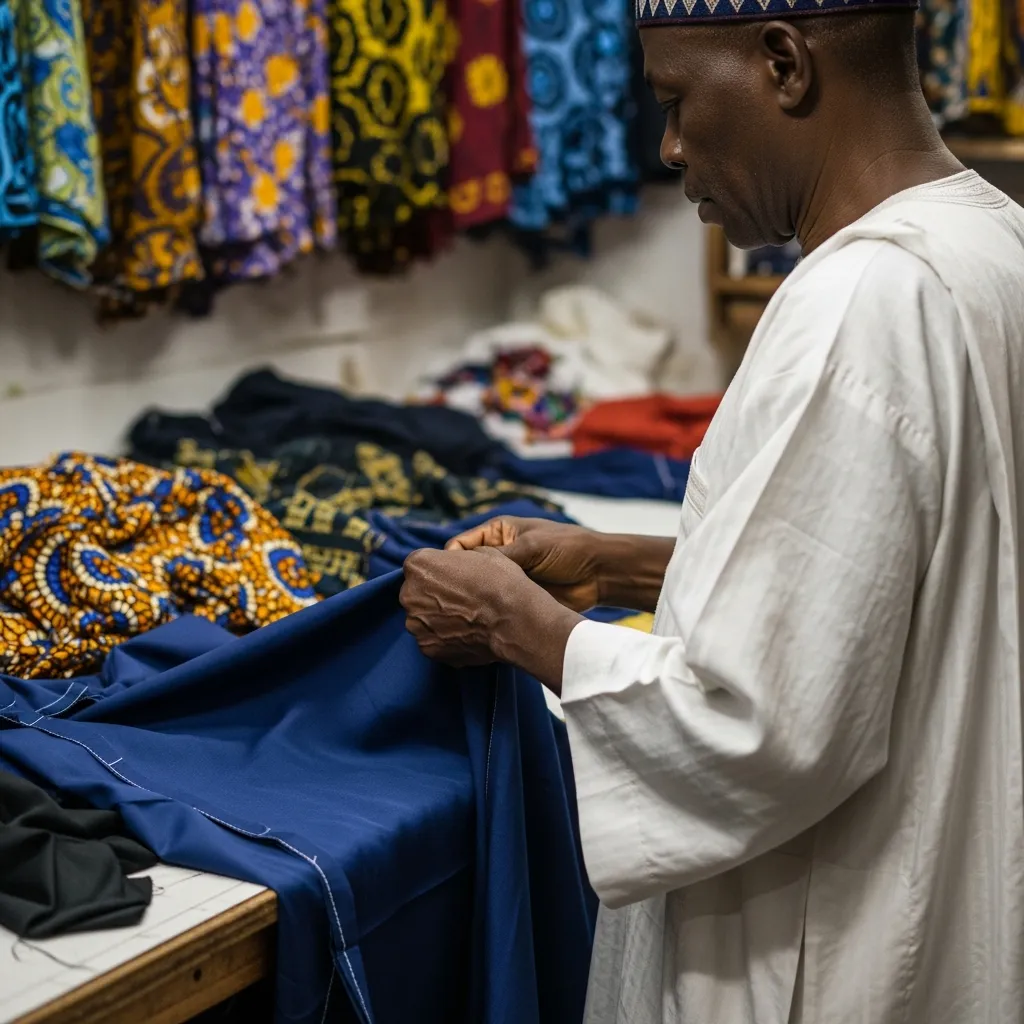
Tailor Sews Identical Dress from 40-Year-Old Bible Photo in Asaba
Published: 09 April, 2026
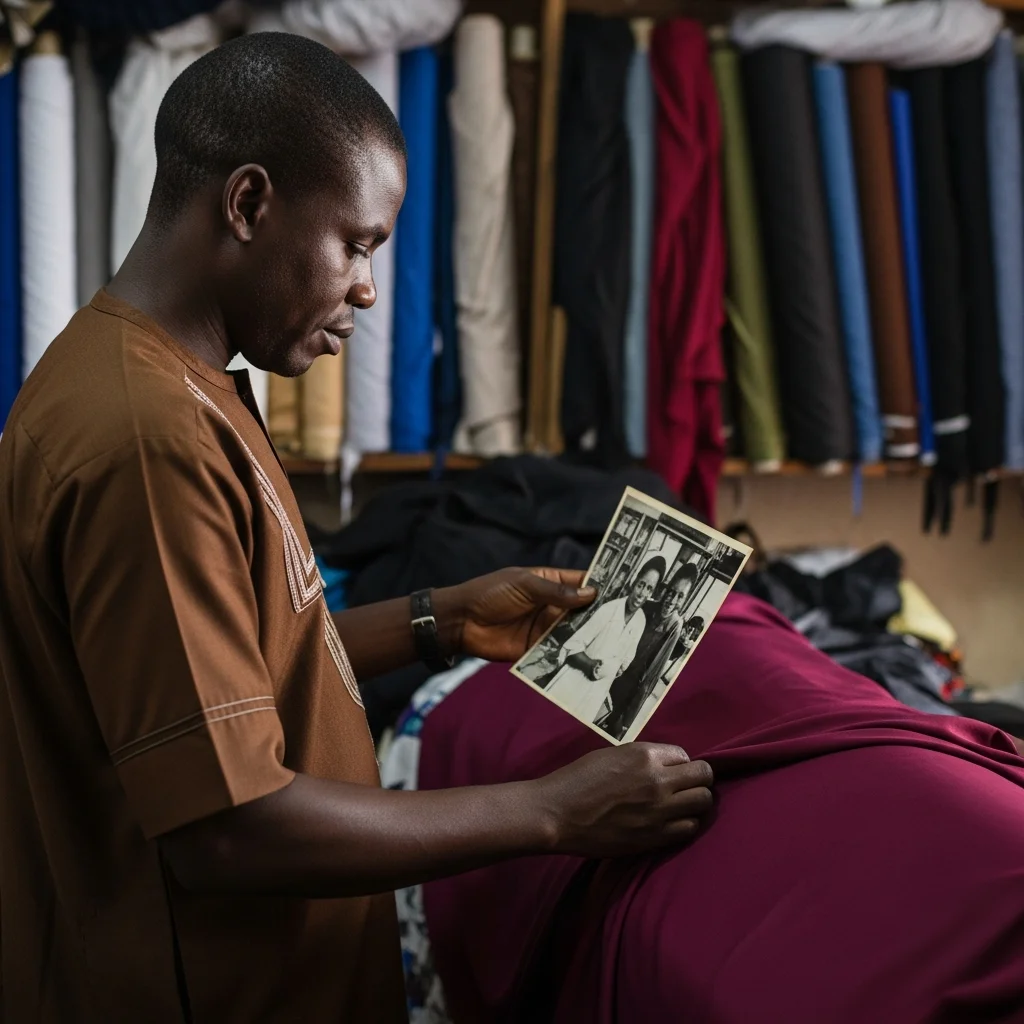
Micheal Okafor studied the photograph for a full week before he said yes. The picture was black and white and faded at the edges, tucked inside a Bible that had not been opened in years. It showed a young woman standing in front of a building that was knocked down long ago, wearing a dress with a specific pattern of lace and george material that nobody in the family could remember seeing anywhere else. They had found it during a routine cleaning, the kind where you move things you have not touched since the last time someone died, and now they wanted him to bring that dress back from the dead.
A photograph that spoke
The family had approached several tailors in the popular Nnebisi Road market area first. Many said no because the shades of the george material were impossible to determine from a black and white image and the lace appliqué work looked too complex. They eventually found Okafor in his workshop behind the Main Market, a tailor with over twenty years of experience who specialized in traditional Nigerian attire. He took the photograph home and looked at it under different lights, and something about the style with its grace from a different time spoke to him.
“The dress spoke to me. The style has a grace you do not see often today. The cut is from a different time. My work was to listen to what the photograph was saying and make it real again.”
– Micheal Okafor, Tailor, speaking in March 2026.
He began by sketching the dress from multiple angles, working out the proportions from the woman’s stance in the faded image, and he estimated her measurements based on the scale of her hands and the line of her shoulder and the way the fabric fell. Then he walked the markets of Asaba and Onitsha, looking for materials that matched the texture visible in the photo, which was the first step in a very slow work of resurrection.
Thread by careful thread
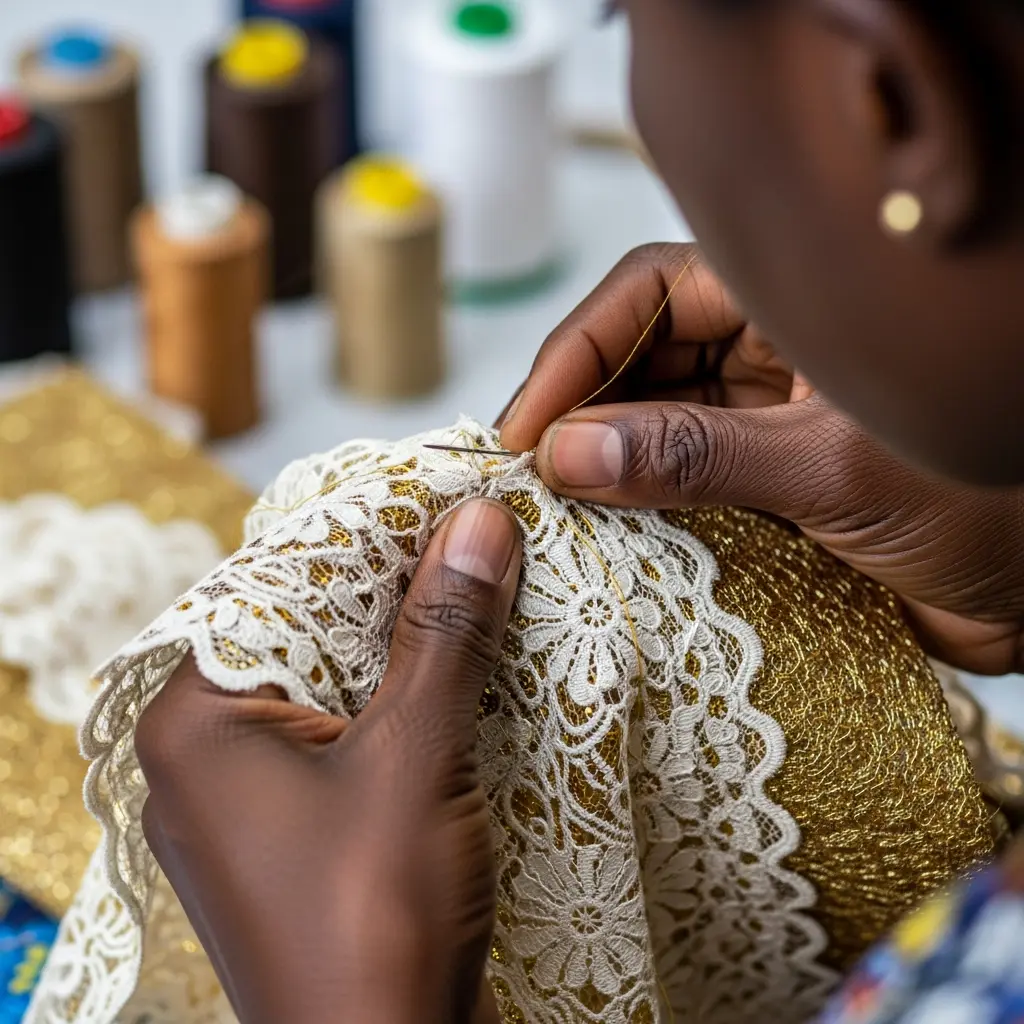
Okafor identified the style as popular in the early 1980s among professional women in the old Bendel State, with a bodice that used a combination of machine-stitched george and hand-sewn lace. He found a george material with a similar weave from a dealer in Onitsha but the specific floral lace pattern was no longer in production. So he adapted a modern lace, carefully cutting and rearranging motifs until they mimicked the older design, and it took him weeks of patient work before he was satisfied. He built a mock-up from cheap cotton to test the pattern, and the family member who would wear the dress, a niece of the deceased, traveled to Asaba for fittings where she stood while Okafor pinned and adjusted, comparing her reflection to the faded woman in the photograph. The final dress required over eighty hours of handwork before he completed the project in February 2026, and then they had the moment when the room went quiet.
When the cloth remembered
The niece put on the dress and the room fell silent. She stood in a similar posture to the woman in the photograph with her hands at her sides and her head slightly tilted, and the family remarked on the uncanny resemblance which was not just about the dress but also the way she held herself. It was as if the cloth carried instructions the body understood. They took new photographs that mirrored the old one, and then the older relatives began to talk and share stories about the woman whose name was Grace. She had worked as a teacher in a primary school in Asaba in the 1970s, and the dress in the photograph was made for her graduation from a teachers’ training college which was something no one had known before.
Hands that build bridges
Many Nigerian families possess boxes of old photographs that often lack context as older generations pass away, and this story from Asaba shows a practical way to engage with personal history using local skills and resources to rebuild a tangible link to the past. The tailoring profession in Nigeria employs many people, and while most tailors spend their days on school uniforms and repairs, projects like this dress allow them to exercise high-level creative and technical skill. They remind you that the hands stitching a simple hem can also resurrect a forgotten design.
“We are keepers of style. Each generation has its look. When I make a dress from an old picture, I am a bridge. I connect the ‘then’ and the ‘now’ with my needle.”
– Micheal Okafor.
Okafor has received more commissions for similar recreation work from other families in Delta and Anambra states since then, and the family plans to include the story and photographs in a family history book. The new dress will become an heirloom, passed down to someone who never met Grace but will know her face and the cut of her gown, which is not a bad legacy for a tailor who simply listened to a photograph.
The circle closes
In March 2026, the family visited the grave of Grace with the niece wearing the recreated dress. They laid flowers and spoke her name aloud, and the niece stood in the dress for a long time without saying anything while the fabric moved slightly in the breeze. It was the same dress made new again and the same woman remembered again, a circle that began with a discovery in an old Bible finally closed. And somewhere in Asaba, a tailor turned off his machine and locked his workshop and walked home, not knowing he had become a bridge between the dead and the living but only knowing he had done good work.
Culture
Palm Wine Tapper Climbs Same Tree That Killed His Father in Ozoro
For eight years, a man has climbed the 25-meter palm tree that killed his father. In Ozoro, they say the wine from this tree is the sweetest, turning a place of fear into a source of life.
Palm Wine Tapper Climbs Same Tree That Killed His Father in Ozoro
Published: 22 April, 2026
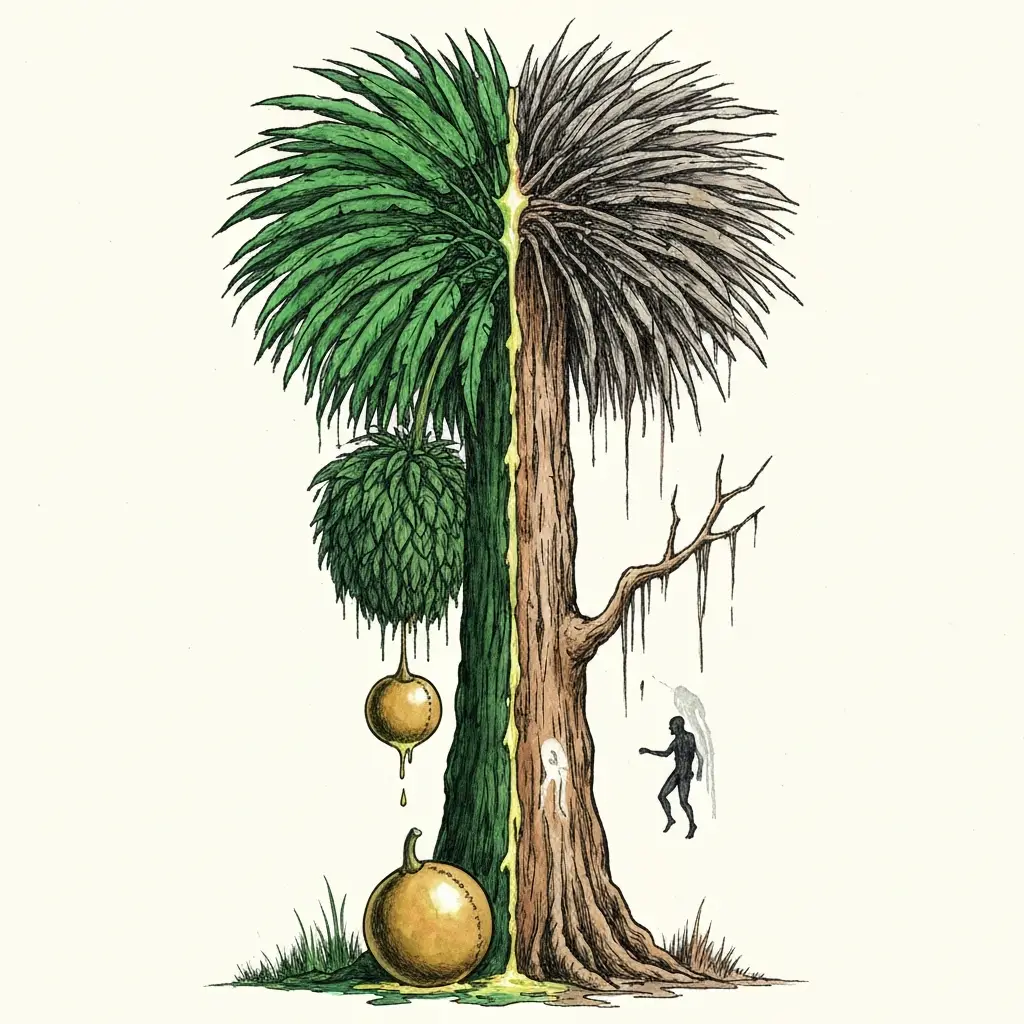
Twenty-five meters is a long way to fall. The Raphia palm in the Uzere bush of Ozoro stands exactly that tall, its smooth trunk rising from swampy ground where few other trees grow. For eight years now, a man named Oghenekaro has been climbing it every morning, cutting notches for his feet with a machete and tying a vine rope around his waist. He collects the sap that drips from the crown, filling gourds with pale liquid that will become palm wine. What makes this routine remarkable is simple. This is the same tree that killed his father about a decade ago.
The Tree With a History
Certain trees in rural Nigeria develop reputations, and this one became famous for all the wrong reasons. After the older tapper fell, many in the community considered the palm cursed or inhabited by a malevolent spirit. People began avoiding the entire grove, and the landowner thought seriously about cutting it down. The tree stood there, tall and productive, but surrounded by a silence born of fear. Then Oghenekaro decided he would tap it anyway. He needed the income, and palm wine tapping remains a vital source of livelihood in the Isoko region. A 2025 report by the International Institute of Tropical Agriculture listed non-timber forest products like palm wine as a critical income stream for over 40% of rural households in the Niger Delta (IITA Annual Review, 2025). He saw a good tree going to waste.
A Different Kind of Climb
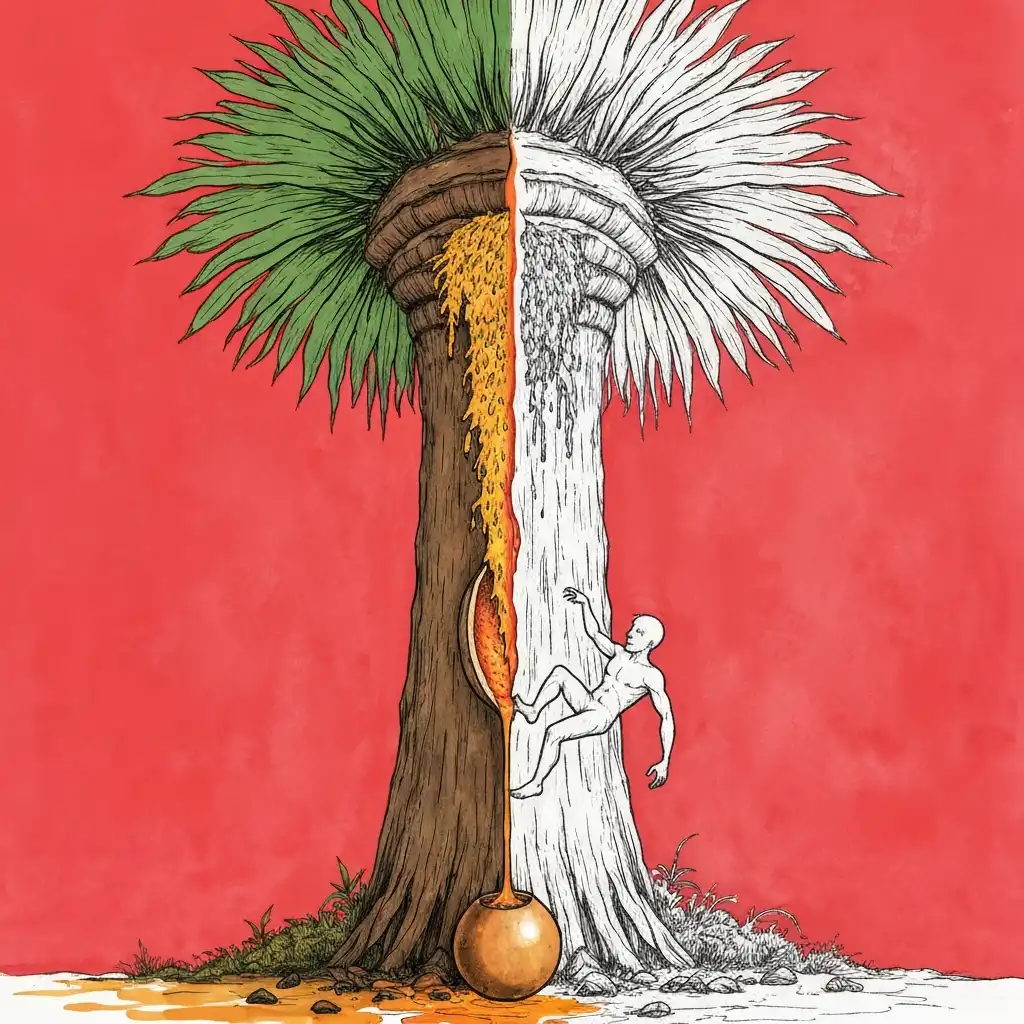
Tapping a Raphia palm requires a specific skill set because the trunk is smoother than an oil palm’s. Oghenekaro modified his technique for this particular tree, using a longer and stronger rope and inspecting the trunk for weaknesses each time before he begins his ascent. He also talks to the tree, a common ritual among tappers that mixes respect with practical precaution. He tells it he means no harm, that he is only collecting what it offers. The National Bureau of Statistics noted in 2025 that occupational fatalities in informal agriculture are rarely documented (NBS Social Statistics Report, 2025). Safety depends entirely on the individual’s skill and attention to detail.
“My father was a good climber. That day, the rope was old. The rain had made the trunk slick. I check my rope every morning now. I respect the height.”
– Oghenekaro, palm wine tapper, Ozoro. March 2026.
A Question of Taste
Now here is the curious part. Customers in the Ozoro market and the local sap bars specifically ask for wine from that tree. They claim it is sweeter and ferments more slowly than wine from other palms. A regular buyer named Madam Efe says she uses it for traditional ceremonies because of its perceived superior quality. This presents an interesting question. Does the tree’s history, or perhaps the tapper’s careful and respectful method, somehow change the biochemistry of the sap? A researcher in food science at the University of Port Harcourt, Dr. Chika Obi, offered a perspective. She said trauma or stress to a plant can sometimes alter its sap composition, though a change in the tapper’s technique likely has more influence. “Without laboratory analysis of sap from that specific tree over time, the sweetness remains an anecdotal claim,” she noted (Personal communication, April 2026). The belief, however, is real in Ozoro and adds tangible economic value to the product.
The Economics of Courage
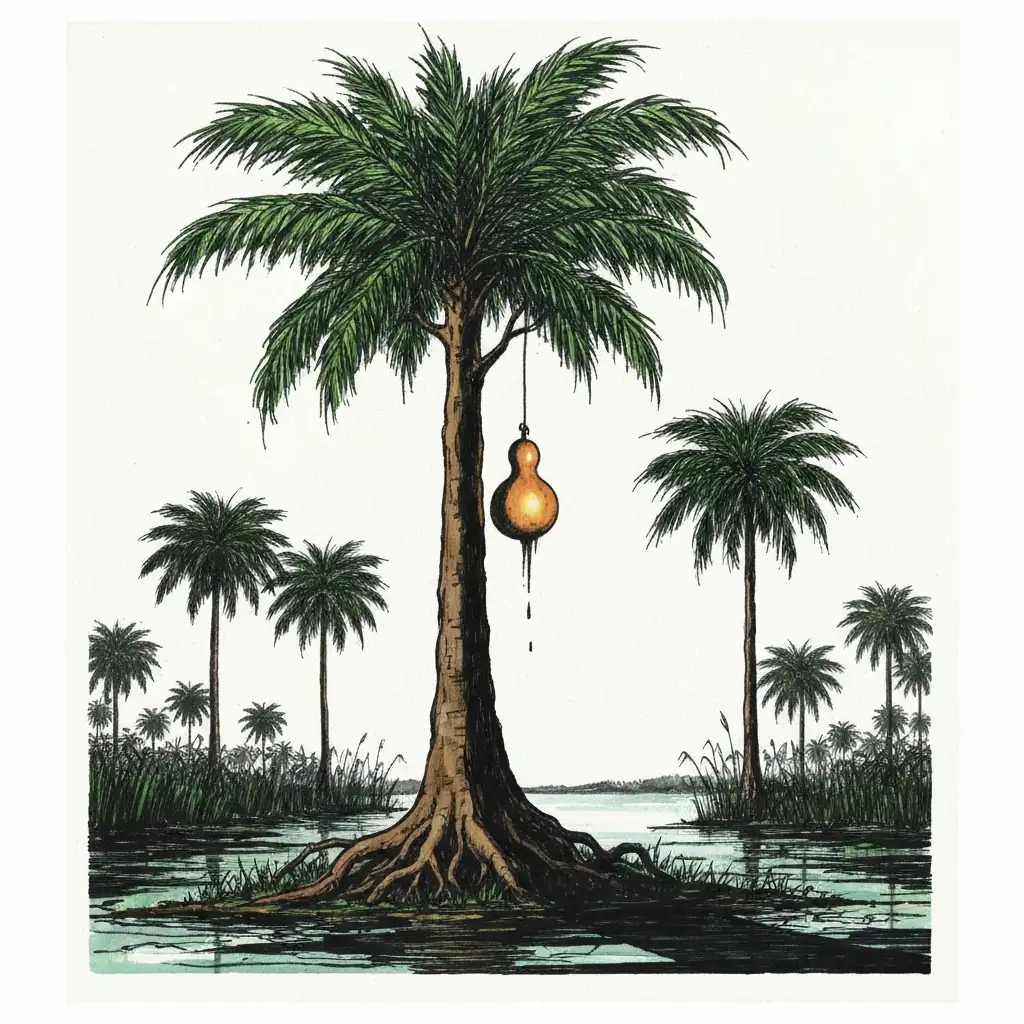
So a man faces a literal ghost from his past to make a living. A five-gallon keg of palm wine sells for between N5,000 and N8,000 in Delta State, depending on the season (Field price survey, Ozoro Market, April 2026). A diligent tapper harvesting from multiple trees can earn a daily income that pays school fees, buys food, and handles medical bills. In an economy with high unemployment, this traditional craft puts cash directly in hand. The sector receives little official support, however. The Delta State Ministry of Agriculture has programs for oil palm cultivation, but the focus for Raphia palm is less defined. A 2024 policy document mentioned developing the value chain for “all palm products,” but tappers like Oghenekaro operate without formal training or insurance (Delta State Agricultural Roadmap, 2024). Their safety net is community, personal caution, and the strength of their own rope.
Changing the Story
This is more than just a strange tale. It shows how a community can manage risk and memory. A tree that represented death has been reclaimed as a source of life and a peculiar sweetness. Oghenekaro’s daily, careful work defeated a local superstition. Other tappers now harvest from trees in that same grove they once avoided, and the economic activity has returned. You find this pattern across Nigeria, where people engage with difficult histories to create a present that works. They choose pragmatism over fear. The tree is still tall and the climb is still dangerous. The difference is a man who decided the past would not dictate the use of a resource. He applied his skill to mitigate the risk, and the result is a product people enjoy.
“We hear stories of bad luck attached to places. Sometimes, the solution is not to abandon the place. The solution is to change how you work there.”
– Chief Emmanuel Ovie, community leader, Ozoro. April 2026.
Oghenekaro plans to teach his son to tap one day. He will include the story of his own father in the lesson. He will emphasize, above all else, the importance of checking the rope.
Culture
Chigozie Obioma International Booker Prize 2026
Chigozie Obioma finds himself on the International Booker Prize shortlist again in 2026, a quiet nod to stories that live between worlds and the patient work behind them.
Chigozie Obioma International Booker Prize 2026
Published: 13 April 2026
Chigozie Obioma was on the list again when it came out on April 7, 2026, a familiar name among writers from Argentina and South Korea and Germany all looking for that prize for fiction brought into English. You hear about these things quietly, maybe over a cup of tea, when someone mentions a name you know has landed somewhere important. It felt like a small, proper celebration for people who care about books here, and Lola Shoneyin from the Ake Arts and Book Festival called it a win for African stories the very next day. He had done this before in 2019 with An Orchestra of Minorities, a book that went far and reached the National Book Award in the United States, so his new one walking the same ground where old myths meet the modern street made a certain kind of sense.
The real prize
The official money is £50,000, split between the writer and the translator, but the real prize is something else entirely. It is eyes on the page from places that might not have looked before, a chance for a story from Nigeria to sit at a much bigger table. Winners like Olga Tokarczuk found new readers everywhere, and for a writer from here, it quietly changes the whole conversation. Eleanor Catton is leading the judges this year and called the list daring in the official announcement, so the panel with people from five countries has a hard job picking just one.
Between two worlds
He teaches writing at the University of Nebraska-Lincoln, living between there and here, and his work takes a kind of time you do not see often. Chigozie Obioma digs into history and the stories of the Igbo world with a patient hand, and his first book, The Fishermen, won awards back in 2015 and even became a play in the United Kingdom. People remembered it, and this new book that made the list for 2026 feels familiar in the very best way, a family story with the weight of old tragedy that early readers say is built with deep care.
A global shortlist
Six books made the cut from Nigeria, Argentina, South Korea, Germany, Sweden, and Japan, with two of the writers having won before. The book from Argentina talks about memory under a dictatorship, and the one from South Korea looks at loneliness in a digital age, with the judges liking the way they all used language. You can see the whole list online, of course, and they will say who won on May 21, 2026, in London with a live show for everyone to watch.
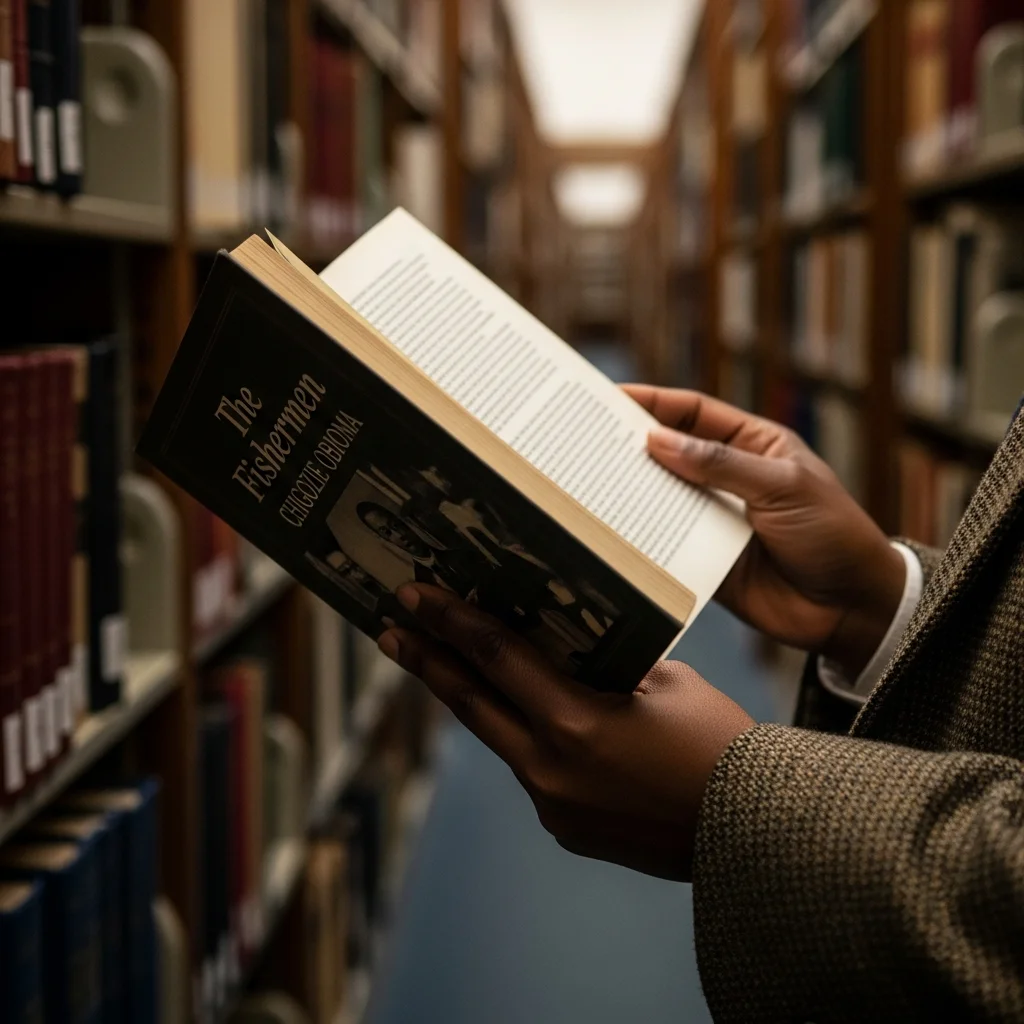
Like Obioma’s words, old books hold worlds. Nebraska light finds a page (Digital Illustration: GoBeyondLocal).
Where stories live
Seeing him do well like this makes you think about where books are born, because the big publishing houses are mostly in Europe and North America. Many African writers you know are with Penguin Random House or HarperCollins, and it is simply harder here where print runs for literary books are down. The Nigerian Publishers Association said so in its 2025 report, noting it costs a lot and schools buy textbooks instead of novels, but people are reading in a different way. A group called Worldreader says downloads of African novels on its app went up by 40% between 2024 and 2025, with young readers using their phones for everything.
The numbers change
Winning changes the numbers in a dramatic way, with sales for the 2023 winner, Time Shelter, jumping over 800% in a single week according to Nielsen BookScan. If Obioma wins, shops here will want the book immediately but often cannot get award winners fast enough due to duties and shipping delays. The applause happens overseas before the book arrives, and Adekunle Adewuyi from Rovingheights Bookstore talked about this problem recently, explaining how people want the book now while the system tells them to wait.
A good time for it
This nomination comes at a very good time when the world is looking at African stories again and streaming services want to make shows from books. Festivals are booking more voices from here, and in Nigeria, where the arts always need more of everything, a big win like this tells a different story. It says work from here can stand anywhere, and the Minister of Information, Mohammed Idris, sent congratulations on April 8 with a statement about supporting creative work and recent changes to the law. A nice gesture.
The translator’s art
This prize is special because it honors the translator too, saying a book in translation is a real partnership, though for Obioma who writes in English it is a different matter. So many great stories in Yoruba or Hausa or Igbo have not been translated at all, and the prize reminds people that translation is its own art. It asks publishers to bring those stories out, and Granta magazine did an issue on African writing in translation in 2025 where Helon Habila saw progress but said translators still need more help, suggesting grants as a start.
Marking the date
They will name the winner at a dinner in London on May 21, reading from the books after the judges have argued until the last minute, and you never know what will happen. People here have the date marked already because win or not, being on the list is its own kind of victory that goes in the record books for Nigerian writing. The last person with Nigerian roots to win was Bernardine Evaristo in 2019, and if Obioma wins it would feel different since he lives in both worlds in a way that matters.
Finding the book
The book is out in hardcover and as an ebook with the big online shops having it, while in Nigeria places like Laterna Ventures and Glendora are trying to get copies as fast as they can. Some public libraries might get it through donations because the Lagos State Library Board has a rule to stock books by Nigerian authors that get award nods, and reading it before the announcement is a very good idea. You get to be part of the talk then and see for yourself what exactly caught the judges’ eyes in the first place.
Before the crown
Prizes are funny things that pick one book on one day, but the real thing is the work a writer does over years, the books that make you think and feel and see a place anew. The light from the Booker will help people find his older books and might make a young person in Onitsha start writing, which is the quiet part of the prize that lasts. So we wait for May while the judges have their hard job, and the rest of us have some very good books to read in the meantime.
‘The shortlist presents a constellation of stories that map the human experience with rare brilliance. Each book is a world unto itself.’
– Eleanor Catton, 2026 International Booker Prize judging panel chair, speaking on April 7, 2026.
In conversation with two-time Booker Prize finalist, Chigozie Obioma about his Biafran war novel – Relevant coverage on this topic.
Culture
Jidenna Pan African Sounds Latest Musical Project 2026
You put on the new music from Jidenna and hear a conversation between Lagos, Nairobi, and Johannesburg. It is a map of the continent made of sound.
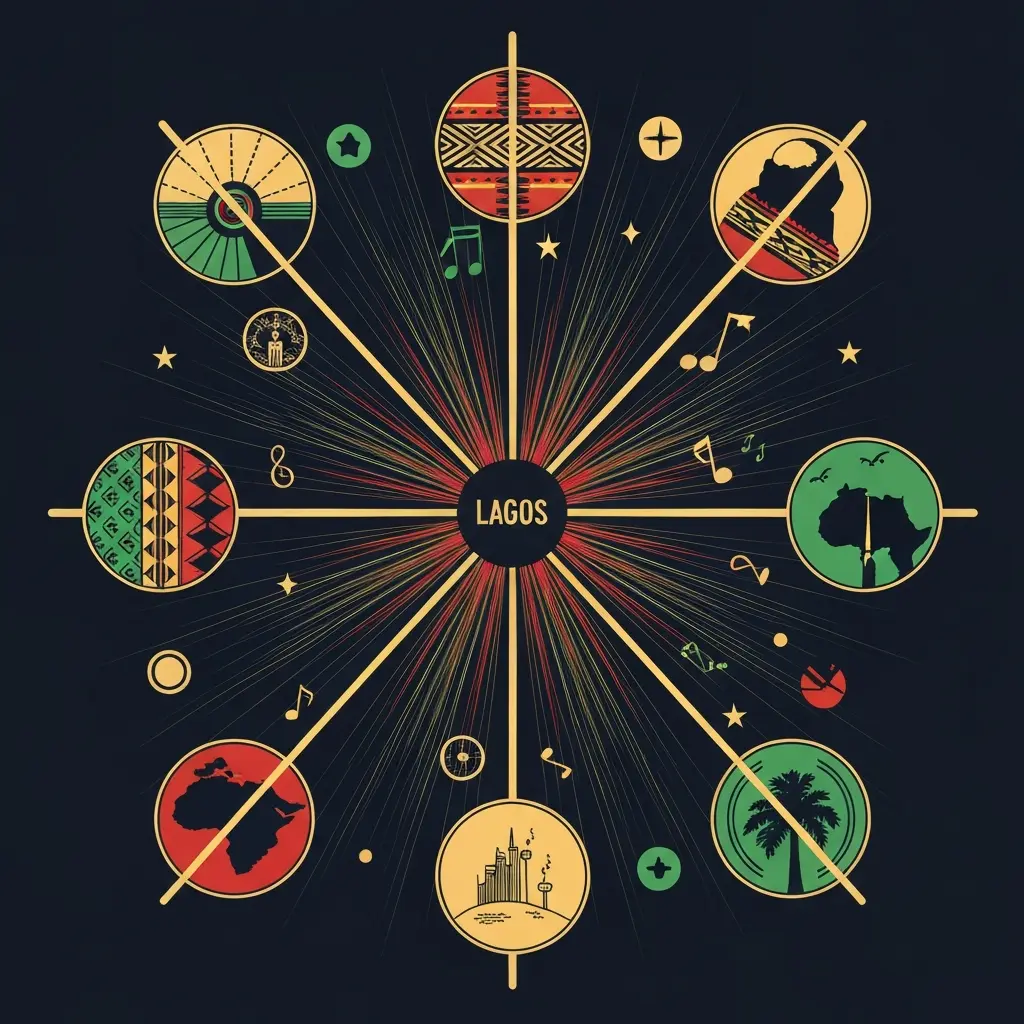
Jidenna Weaves Pan African Sounds Into His Latest Musical Project
Published: 13 April, 2026
You put on the new music from Jidenna and the first thing you notice is the geography of it all. A log drum pattern from Kenya walks in. A guitar line that could only come from South Africa follows. The whole thing sits on a bassline with the particular bounce of Lagos right now. He calls it a sonic map. It sounds like a conversation between cities that have never needed an introduction.
The sound did not come from one place. He recorded parts in a studio in Yaba, Lagos, where the power comes from the sun more often than the grid. Other sessions happened in Nairobi. The final mix came together in Atlanta. This is how you make music now, if you can afford it. A single day in a good Lagos studio costs about N500,000. Sending those big audio files across oceans needs bandwidth that does not stutter. It adds up.
Listeners are ready
People are listening for this mix. African music streams grew by 30% globally last year. Someone in Accra is playing Amapiano from Johannesburg. Someone in Johannesburg is streaming the latest Afrobeats from Nigeria. The audience is already connected. Jidenna just found a way to speak to all of them at once. His monthly listeners in Kenya and South Africa keep climbing.
“The borders on the map do not exist in the music. The feeling in Nairobi is the same feeling in Lagos, just with a different rhythm. My work is to find the harmony.”
– Jidenna, speaking with The NATIVE in March 2026.
This philosophy is beautiful. It also runs into the usual walls. The Copyright Society of Nigeria (COSON) can collect your money here. Getting royalties from airplay in Zambia or Tanzania is a different conversation altogether. The business has its own rhythm. It is rarely in sync.
The other current
Creating the art is one thing. Getting paid for it fairly is another current entirely. A lot of the money made from music here flows right back out. Artists who own their work have more control. They license directly. They negotiate for films and ads. It works, if you have a good lawyer who understands the maze.
Then there are tours. A Pan African sound should sell tickets across the continent. The logistics will humble you. Performance visas for a whole band. Moving equipment. Different promoters in every city. It tests any team.
“We see a future where an artist drops a song on Friday, trends in Lagos by Saturday, and headlines a show in Rwanda the next month. The infrastructure for that journey is being built now.”
– Tuma Basa, Director of Black Music & Culture at Spotify, speaking at Afro Nation Ghana in February 2026.
Bigger than one man
This is not just about one artist. It is a shift. The continent has over 700 million mobile internet subscribers now. Music moved from CDs in plastic wrappers to songs in the air. Record labels are scouting for talent with this connected audience in mind. They sign artists from Ghana who sample Congolese rumba. They back Nigerian producers working with singers from Tanzania. The money follows the streams.
Even the Federal Ministry of Information and Culture sees the potential. They have initiatives. The details, as always, are still being worked out.
Where it lands
In Lagos, this new project plays in ride-share cars. It soundtracks videos on social media. The appeal is in the familiarity and the novelty. You recognize the Nigerian cadence in his voice. You discover the Kenyan inflection in the beat. It feels like home, and somewhere new, all at once.
The model has limits, of course. Internet data is not free. In many places, a gigabyte of data can cost a big piece of someone’s monthly income. Streaming high-quality audio eats data quickly. The future is here, but it is on a meter.
So you listen. You play the song and try to pick out the parts. The Nigerian element. The South African guitar. The Kenyan log drum. You share it with a note about what you heard. That simple act does two things. It supports the artist. It also teaches the algorithm. It tells the machine that people want this sophisticated, hybrid sound. The future of the music here is a conversation between its many parts. The technology finally exists to let everyone speak at the same time. Whether everyone gets heard is the older question.

Ancient Rock Art Traditions Endure in Igbara Oke Caves

Palm Wine Tapper Climbs Same Tree That Killed His Father in Ozoro

Hunter Hears Dead Brother Whistle in Ganye Forest Mystery

Farmer Plants Yam That Grows Downward to Water Table in Drought

She Kept Asking and They Kept Moving Her in Nigeria

Global Food Prices Rose 2.4% in March 2026

Chigozie Obioma International Booker Prize 2026

Jidenna Pan African Sounds Latest Musical Project 2026

Hakeem Oluseyi Brings Astrophysics to Classrooms Worldwide

NANS Diaspora Nigerian Students Eastern Europe

Nnamdi Asomugha From NFL Cornerback to Hollywood Producer

Folake Olowofoyeku Stars in American Sitcom on Nigerian Family Life

Internet Sovereignty: Why Some Countries Want Their Own Separate Internet

The Story Of The Nigerian Who Helped Build Global Internet Systems

Nigerian Hackers: The Global Fraud Story and Its Fallout

Forgotten Satellites Defy Silence, Beaming Signals for Decades

The Phone Stay So Quiet: An Investigation into Nigeria’s Silent Customer Lines

Your Digital Store in Nigeria and the Reality of Domain Expiration

The Business That Died: A Nigerian Case Study in Refusal to Adapt

Hiding Your Business From People With Money

How Nollywood Grew Without Government Support

Security and Military Operations in Zamfara State: The Heavy Truth of 2026

Moniepoint Business Account Requirements Nigeria for SMEs 2026

Comedy Industry in Nigeria and Its Economic Contribution
 Digital Sovereignty8 months ago
Internet Sovereignty: Why Some Countries Want Their Own Separate Internet
- Technology & Innovation8 months ago
The Story Of The Nigerian Who Helped Build Global Internet Systems
- Crime8 months ago
Nigerian Hackers: The Global Fraud Story and Its Fallout
- Space Technology8 months ago
Forgotten Satellites Defy Silence, Beaming Signals for Decades
- Maritime8 months ago
The Phone Stay So Quiet: An Investigation into Nigeria’s Silent Customer Lines
- Business8 months ago
Your Digital Store in Nigeria and the Reality of Domain Expiration
- Business8 months ago
The Business That Died: A Nigerian Case Study in Refusal to Adapt
- Business8 months ago
Hiding Your Business From People With Money