Business
Hiding Your Business From People With Money
Here is the thing. You built something good. But people with money cannot find it. So here we are. Why hide what could grow? Let us talk about business visibility.


Hiding Your Business From People With Money
Published: 12 February, 2026
Why would you hide what you do from the very people who can fund it? This is the daily contradiction for millions of Nigerian business owners. The cost is staggering. The World Bank has highlighted a substantial funding gap for MSMEs in the country, a chasm that runs into trillions of naira.
The trouble is, capital demands data. And data is the one thing a hidden business cannot provide.
This act of hiding your business is often a reflex. It stems from regulatory friction, cultural norms, and a fundamental misunderstanding of what modern capital actually wants.
The Registration Wall Is the First Barrier
Formal business registration remains a significant hurdle. The Corporate Affairs Commission reported processing 320,000 new company registrations for 2025. This figure represents expansion, but it masks a larger reality.
Contrast this with the estimated 40 million micro-enterprises operating in the informal sector of Nigeria. The vast majority have no formal registration. They exist in a shadow economy, invisible to banks and institutional investors.
For a trader in Oshodi or a tailor in Kano, the immediate benefit of a CAC certificate seems abstract. The immediate cost is very real.
Financial Secrecy Is a Liability, Not an Asset
Many business owners guard their financial records like a state secret. They believe opacity protects them. This belief is a relic.
Today, financial transparency is the only currency that buys trust. A venture capital firm in Lagos or a private equity fund in Abuja will conduct due diligence. They will ask for bank statements and tax clearance certificates.
The absence of these documents ends the conversation. The money goes to the visible business.
“Investors are allocating capital in a high-risk environment. They mitigate that risk with data. A business without clean financials is simply an unquantifiable risk.”
Aisha Bello, Partner at a Lagos-based venture fund, in an interview with BusinessDay, March 2026.
The Digital Footprint Is Your New Business Card
But there is a catch. Due diligence in 2026 extends beyond paper. Investors now analyze digital footprints. They examine online presence and customer reviews.
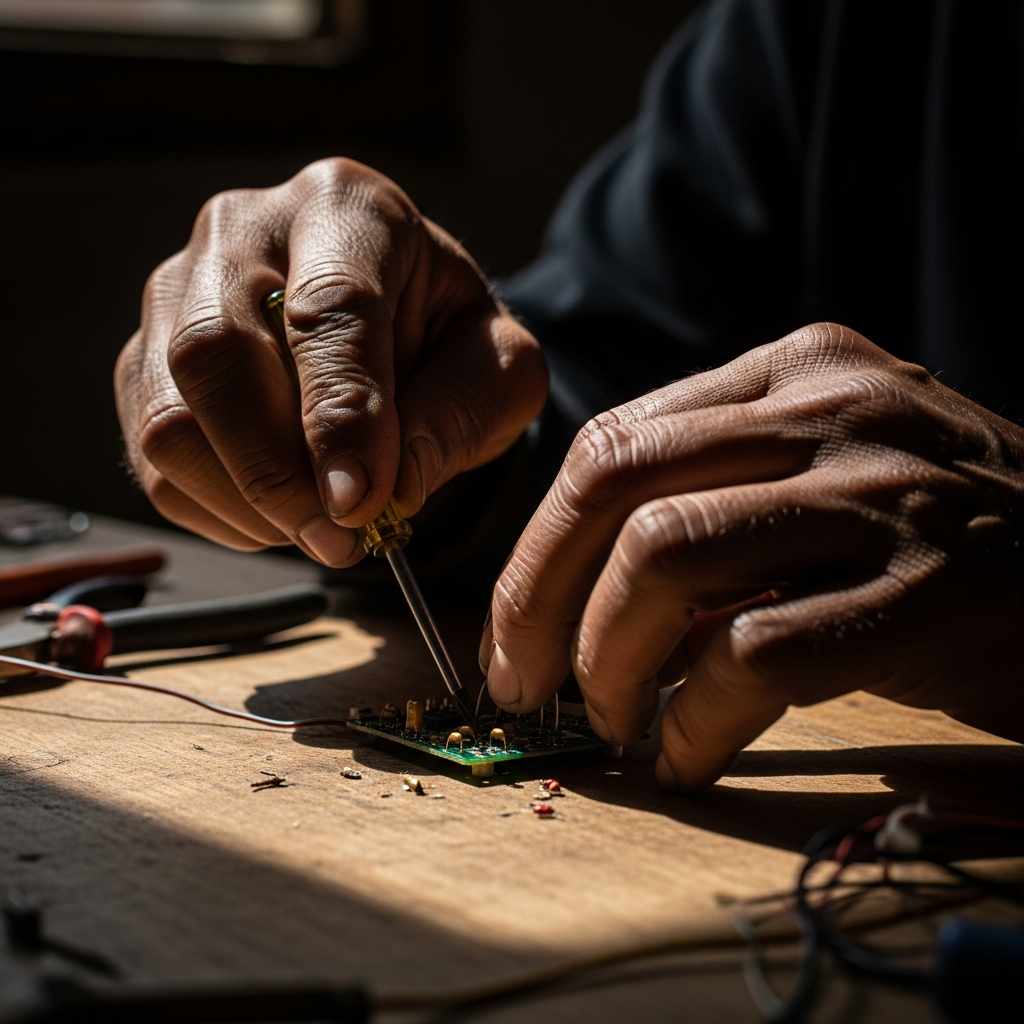
A business with no digital platform or a sparse digital history raises immediate questions. It suggests a reluctance to engage with the market openly. This digital form of hiding your business is just as damaging.
Platforms like the Federal Inland Revenue Service TIN database and the CAC public search portal are now primary tools for verification. A mismatch is a red flag.
Why the Culture of Secrecy Persists
The reasons are embedded. There is a legitimate fear of multiple taxation and aggressive enforcement. There is also a cultural preference for privacy in financial matters.
A history of business failures attributed to stolen ideas fuels this secrecy. Entrepreneurs hear these stories and decide opacity is the safest path.
They confuse secrecy for security. The result is a paradox. Their methods of self-protection actively prevent them from accessing the capital they need to grow.
The Data That Money Follows
Look at where investment flowed. Nigerian tech startups raised $800 million in disclosed funding in 2025, according to data from Partech Africa. These are companies built with transparency from day one.
They have registered entities and cap tables. They understand that institutional capital requires institutional structure. The money did not go to the smartest idea hidden in a bedroom. It went to the structured venture that could pass a forensic audit.
Even outside tech, formalized businesses attracted significant debt. The Bank of Industry disbursed ₦350 billion in loans in 2025. These loans required collateral, but they also required proof of formal business existence.
Government Action So Far
Policy is slowly shifting. The Finance Act 2023 introduced stricter requirements for tax compliance as a precondition for government contracts.
Initiatives like the National Identity Number and Bank Verification Number linkage aim to create a unified financial identity. The goal is to bring economic activity into the measurable mainstream.
The Central Bank of Nigeria credit registry is another tool. It forces lenders to share data on borrowers, creating a financial history.
“We are building an ecosystem where your business reputation is an asset you can borrow against. The first step is having a business identity that the system can recognize and track.”
Yemi Cardoso, Governor of the Central Bank of Nigeria, speaking at a financial inclusion forum in February 2026.
The Cost of Remaining Hidden
The cost is quantifiable. Informal businesses pay more for everything. They borrow from informal lenders at rates of 20% per month or higher.
They cannot access bulk purchase discounts. They lose government contracts and large corporate clients who demand invoices. They also limit their own expansion potential.
Scaling requires systems and external capital. A one-person operation shrouded in secrecy has a natural ceiling. The business remains tied to the life of its founder.

What a Transparent Business Looks Like
It starts with a registered name and a dedicated bank account. It includes basic bookkeeping. It involves filing annual returns with the CAC, even if revenue is small.
A transparent business has a digital presence that reflects its operations. It uses a professional email. It issues receipts.
This level of organization seems basic. For millions, it represents a fundamental shift from operating in the shadows to operating in the light.
Your First Move Out of the Shadows
Open a separate bank account for the business today. Use it for all transactions. This single act creates a financial trail.
It separates personal and business finances. That bank statement becomes the first piece of verifiable data an investor will request. It turns anecdotal claims about sales into a document a banker can analyze.
The next step is to formalize with the Corporate Affairs Commission. The process, while imperfect, is more accessible than it was.
Looking Forward
The infrastructure for transparency is improving. The regulatory push is increasing. The availability of capital for structured businesses is real.
The missing component is often the entrepreneur mindset. Business owners must reframe secrecy as a cost. They must view formalization as an investment in future access.
They must understand that people with money are risk-averse. They allocate funds to ventures they can see and measure. Hiding your business might feel safe in the short term. It guarantees obscurity.
In an economy hungry for expansion, visibility is the new competitive advantage. The businesses that embrace this will attract the capital. The ones that hidden will wonder why the money always goes to someone else.
The trends are . Capital is searching for viable, visible enterprises. The question is which side of the line your business chooses to stand on.
“Don’t Keep Your Cash In The Bank”: 6 Assets That Are Better & Safer Than Cash , Wealth Rebuilds. (Digital Illustration: GoBeyondLocal)





Business
Tope Awotona Among Wealthiest Tech Founders in the United States
Here is the thing. Tope Awotona is now among the wealthiest tech founders in the United States. His company Calendly is worth billions. So how did he do it? This is not just another success story. It is a lesson in turning frustration into fortune.


Tope Awotona Joins the Top Tier of American Tech Wealth
Published 06 April 2026
There is a list. It is a very short list. The names on it belong to people who started technology companies and ended up with more money than they could ever spend. Elon Musk sits on that list. The people behind Stripe and Meta sit there too. And now, a man named Tope Awotona has joined them. His spot comes from a company called Calendly. It is the tool that stops the madness of sending fifteen emails just to find a time to talk.
A Name on a Very Short List
The big papers, Forbes and Bloomberg, they keep score of who has how much. For years, the same kinds of names showed up. Then Tope Awotona started appearing. It is a shift. A big one. It means the map of who gets rich from software is changing. This is a founder who grew up in Lagos, not Palo Alto. He built his company in an office in Atlanta, and now people from every corner of the earth use his link.
Factual Update April 2026 Forbes placed Tope Awotona on its 2025 list of “America’s Richest Immigrants.” The number next to his name was $1.4 billion. That put him at number 106. He is among the few Nigerians on that list. Another is Bayo Ogunlesi, the man behind Global Infrastructure Partners, whose wealth saw a sharp increase following the 2024 acquisition of his firm by BlackRock for $12.5 billion. These figures come from Forbes, not from a blog.
Calendly Grew From a Useful Idea
The problem was simple. Everyone knows the pain. You try to set a meeting with three people. The emails fly back and forth. “How about Tuesday?” “No, I have a call.” “What about Thursday after lunch?” It is a slow torture. Calendly fixed that with one link. You click it. You see when the other person is free. You pick a spot. It is done.
Awotona started the whole thing in 2013. He did not have a big pile of venture money at first. He used his own savings. He swiped credit cards. He just built it. People liked it. They told other people. It spread on its own. By early 2026, over 20 million people around the globe were using it. Every month, the site handles more than 48 million visits. That is a lot of meetings that did not need a long email chain.
The big money came later. In 2021, Calendly took $350 million from investors. That deal put a price tag on the whole company: $3 billion. By late 2024, that valuation had ticked up slightly to $3.1 billion. That number is where the estimates of the personal fortune of Awotona begin.
The Wealth Estimate Has Real Weight
Forbes says $1.4 billion. Bloomberg says something close to that. Almost all of that comes from the chunk of Calendly that Awotona still owns. The company is not on the stock market. It is private. So the value is what the last big investor agreed to pay.
That $3.1 billion number from late 2024 is the last public marker we have. The market for software companies went up and down in the years after that. Some people think Calendly is worth even more now. Why? Because the company makes real money. In 2024, it brought in $349 million in revenue. And here is the part that makes it stand out: it makes a profit. Many venture-backed companies burn cash. Calendly does not. That is rare.
This Story Starts in Lagos, Not Silicon Valley
Tope Awotona was born in Lagos, Nigeria. He did not come from a family of tech founders. He went to the University of Georgia and studied management and information systems. He worked in sales. He worked in tech. He just kept his eyes open for a problem that needed solving.
This background changes the narrative. The usual story of a tech billionaire involves someone dropping out of a fancy school in California. The path of Awotona was different. He saw the same annoying scheduling problem that everyone else saw. He just decided to be the one to fix it. He built it while living in America, but the idea was for the whole world.
His path looks familiar to a lot of Nigerian professionals. You learn your skills. You find a place where you can use them. You aim for the biggest stage you can find. Calendly shows what happens when that works.

You Can See the Nigerian Influence in the Business
If you look at how Calendly was run, you see habits that make sense to anyone who has built something in Nigeria. Awotona focused on making money and keeping costs low right from the start. That is how you survive when venture capital is hard to find. He did not waste cash on fancy offices or big parties. He just made the tool work.
The design of the product also tells you something. It is simple. It does one thing well. It removes the headache. That is a principle that works anywhere, but it is especially sharp when you come from a place where people have to deal with a lot of friction every day. Calendly works across different email apps, different time zones, different devices. It just works.
The company is based in Atlanta, not San Francisco. That choice probably kept the culture grounded. The focus stayed on the person using the link, not on the hype.
The Broader Picture for Nigerian Tech Talent
Tope Awotona is not the only one. Nigerian engineers and founders are all over the big tech companies. And inside Nigeria, the startup scene has made companies worth more than $1 billion. Flutterwave and Interswitch are names people know. Andela changed how developers get hired.
Factual Update April 2026 According to the 2025 Partech Africa Report, Nigerian tech startups pulled in $572 million in funding during 2025. That is a 3% drop from the year before. And for the first time in a while, Kenya took the top spot for funding on the continent. The money is still flowing, but the river has shifted a little.
Wealth on Paper Differs from Cash in the Bank
This part is important. The number next to his name in Forbes, $1.4 billion, that is not cash sitting in a checking account. It is an estimate of what his shares in Calendly are worth. To turn that into actual money, he would have to sell some of the company. Maybe to another firm. Maybe to the public through an IPO.
Calendly has not said it plans to go public. It has not said it is for sale. The company keeps running on its own. So the wealth is real in the sense that the company is worth a lot, but it is also locked up. It is paper wealth.
This is worth remembering. Building a company that serves millions of people is the real work. The number in the newspaper is just a reflection of that work.
The Atlanta Base Presents an Interesting Choice
Calendly is in Atlanta, Georgia. Atlanta has a tech scene. It is not Silicon Valley, and that might be the point. The city has universities like Georgia Tech pumping out smart graduates. The cost of an office and the cost of living is way lower than California. Your money goes further.
For someone who moved from Lagos, Atlanta might have felt more like home. The city is diverse. There are communities of African professionals. You do not have to squeeze yourself into a specific mold to be taken seriously. You can just build.
What Does This Mean for Aspiring Founders in Lagos?
A young person writing code in Yaba or sitting in a tech hub in Abuja reads about Tope Awotona. They see a path. They do not have to move to America tomorrow. Awotona built the early version of Calendly while he was already in Atlanta, but the idea was for everyone from day one.
The lesson is about finding a problem that people everywhere have. Scheduling is a pain in Canada. It is a pain in Kenya. It is a pain in Germany. Solve that, and your customer base is the whole world. Your location does not matter as much as it used to.
Today, a founder in Lagos can build a software tool and sell it to people in London. They can use Stripe to take payments. They can use AWS to host it. The walls are lower than ever.

The Funding Environment Presents a Reality Check
Awotona did not take big investor money for years. He used his own cash and made the business work first. That took guts. And these days, investors are more careful. They want to see a business that makes sense, not just a fancy slide deck.
That actually matches the Calendly style. Build something people want. Get them to pay for it. Keep your costs under control. If you can do that, you do not need to beg for money. You can choose to take it when it makes sense.
For a new founder, the message is simple: build a real business. Show that customers will open their wallets. Then you have options.
A Quiet Presence in the Philanthropy Conversation
You do not see a lot of news about Tope Awotona giving away huge sums of money. That is different from some American tech founders who start big foundations the moment they get rich. Those who follow his career note that Awotona has often spoken of his main goal being the building of a strong, long-lasting company. In his view, creating a business that serves millions and provides steady jobs is itself a way of giving back. Traditional foundation work may come later, or it may not. For now, the product is the priority.
For someone with roots in Nigeria, the expectations around giving back can be heavy. People will watch to see if he puts money into education or technology back home. That would make sense for a person who built a tool that millions use to be more productive every day.
The Link That Changed Everything
At the end of the day, this whole story comes down to a piece of code. A link. A link that lets two calendars talk to each other. That link erased countless hours of annoying email chains.
The value is practical. A salesperson gets more meetings. A doctor’s office fills its schedule. A manager finds time for a quick check-in. That usefulness created the money. That money created the billion-dollar valuation.
Tope Awotona noticed the friction. He built the grease. He did it with patience and without setting piles of cash on fire. The result put his name on a list with the people who launched rockets and social networks.
Look at the Product, Not Just the Profile
If you want to get this story, do not just read the numbers. Go use the thing. Send someone a Calendly link. Watch how easy it is. That feeling of ease is the whole point.
That feeling, multiplied by twenty million people, is what built the fortune. It is not magic. It is just solving a small, universal headache.
The story of Tope Awotona is a blueprint. Find a point of friction that annoys people everywhere. Build a fix that is simple and reliable. Keep the lights on while you grow. Do that, and it turns out that where you started in life becomes a footnote, not a limitation.
Publication Date 06 April 2026
Reporting Notes Wealth estimates for private company founders are based on disclosed funding rounds, revenue metrics, and comparable public company valuations. These figures are subject to change based on new financial information or market conditions. Calendly is a privately held company and does not disclose detailed financials publicly. Forbes listed Awotona at $1.4 billion on its 2025 list of America’s Richest Immigrants. Nigerian tech funding data comes from the 2025 Partech Africa Report.
Two Nigerians Named Among America’s Richest Immigrants in 2025, Forbes – Relevant coverage on this topic.
Business
Iyinoluwa Aboyeji on African Tech and Silicon Valley Realities
Iyinoluwa Aboyeji speaks on African tech. The talk is about Silicon Valley. The gap is wide. So here we are. What does building for the world actually look like? It is not just ambition. It is a different kind of work.

Iyinoluwa Aboyeji Talks About Silicon Valley and the African Tech Future
Published: 04 April, 2026
Iyinoluwa Aboyeji co-founded two companies valued over $1 billion before he turned thirty. According to a 2026 TechCrunch report, his latest venture, Future Africa, writes checks to African founders from a fund that reached $25 million. Aboyeji spoke in California about a movement he calls Go Beyond Local.
The Silicon Valley Trip Has Changed
Here is the thing. African founders once traveled to Sand Hill Road with a dream and a pitch deck. The journey now requires more than ambition. Aboyeji explained the shift in a recent talk.
“The playbook for raising capital in Silicon Valley is different in 2026. Investors look for global distribution on day one. A startup solving a Lagos problem with a Lagos team and Lagos capital has a story. A startup solving a Lagos problem with a global team and global capital has a better story for that room.” — Iyinoluwa Aboyeji, speaking at a Stanford University event, March 2026, as reported by TechCrunch.
Data supports this view. African tech startups raised $4.1 billion in 2025, according to the Partech Africa Tech VC Report released in January 2026. A large portion of that capital came from outside the continent. According to the same report, the percentage of funding from international sources increased to 78% in 2025. Local pension funds and angel networks in Nigeria are growing, but their scale remains limited compared to the checks available abroad.
What Does Go Beyond Local Actually Mean?
Let me break it down. Go Beyond Local is a strategy, not just a slogan. It means building a company with a structure that appeals to major league investors from the start. This includes a Delaware C-Corp, international co-founders, and revenue from multiple continents.
Aboyeji argues this setup removes a key barrier for Silicon Valley venture firms. These firms manage funds worth billions of dollars. Their mandate requires them to invest in companies capable of returning the entire fund. A business serving only the Nigerian market faces questions about total addressable market size. A business with the same core product serving customers in Nigeria, Kenya, and the United States tells a different story.
Future Africa invests with this thesis. According to a 2025 report from the firm, Future Africa had backed over 100 startups across the continent by the end of that year. Portfolio companies like Moove, Releaf, and Bamboo exemplify this model, each building for markets far beyond their home cities.

The Infrastructure Reality in Nigeria
So here we are. A founder in Yaba hears this advice. They think about the power grid in Lagos. They think about the cost of data. Building a global company from a room with a generator is the real test. Aboyeji acknowledges these constraints. He points to companies that navigated them successfully.
“The infrastructure deficit is a tax. It is a real cost. The founders who win treat it as a line item, not an excuse. They build teams in places with stable electricity to handle critical engineering. They keep the core customer insight and business leadership here. That hybrid model works.” — Iyinoluwa Aboyeji, in an interview with BusinessDay, February 2026.
According to data from the Nigerian Independent System Operator (NISO) in early 2026, national generation has slipped to about 4,300 megawatts for a population exceeding 230 million. Companies spend a significant portion of their operational budget on alternative power. This reality shapes every business plan written in Nigeria.
Money Is Moving, But Where Is It Going?
The funding numbers tell a specific story. According to the 2025 Partech Africa report, fintech and financial services captured 37% of all African tech funding in 2025. This trend continues a pattern from previous years. Aboyeji sees opportunity in other sectors now. He mentions climate tech, healthcare, and logistics. These sectors face huge problems across Africa. Solutions that work in Nigeria can often work in Ghana or South Africa.
The African Continental Free Trade Area promises to ease cross-border commerce, but implementation is slow. Smart founders design their operations assuming the trade barriers will remain for some time. They find other ways to achieve scale.
The Talent Equation Has Flipped
Remember the old story? African tech was all about outsourcing talent to the West. Andela, which Aboyeji co-founded, was a pioneer in that model. The story changed. Today, the focus is on building products for African markets using global talent pools.
Aboyeji notes that Nigerian engineers are in high demand worldwide. The challenge is keeping them engaged with local problems. Remote work tools make this easier. A brilliant developer in Abuja can contribute to a startup headquartered in Miami. That startup might be building a payment system for Nigerian farmers. The value chain is now global by default.
The National Information Technology Development Agency reports growth in the number of Nigerian tech developers. Precise figures for 2026 are still forthcoming. The agency continues its training initiatives through the Digital Nigeria program.
Policy and the Pace of Progress
Government policy moves at its own speed. Tech moves faster. This creates friction. Aboyeji points to the cryptocurrency ban by the Central Bank of Nigeria in 2021 and its subsequent reversal. The policy shift caused uncertainty for founders in the blockchain space. Some left the country. Others paused their operations.
The current administration under President Bola Tinubu has expressed support for the tech sector. The 2026 budget proposal includes allocations for digital infrastructure. These allocations represent a small percentage of the total budget. Private capital still drives most innovation. Aboyeji advises founders to engage with policymakers while building businesses that are policy-resilient.

A Different Kind of Exit
Silicon Valley loves a big exit. The dream is an IPO or a billion-dollar acquisition. The African ecosystem has seen fewer of these events. The $200 million acquisition of Paystack by Stripe in 2020 remains a landmark. Aboyeji suggests founders think about exits differently.
Strategic sales to larger African companies or international firms looking for a foothold are viable paths. Profitability and sustainable growth attract these buyers. The constant pursuit of venture capital funding can distract from building a solid business. Future Africa looks for founders with a clear path to revenue, not just user growth. This focus aligns with a global shift in venture capital toward sustainable unit economics.
Your Move as a Founder
The talk about global markets is interesting. What does a founder do on Monday morning? Aboyeji offers a simple starting point. Review the legal structure of your company. Is it designed to accept investment from a foreign fund? If the answer is unclear, consult a lawyer familiar with cross-border venture deals.
This first step has a fixed cost. It eliminates a future obstacle. Many brilliant Nigerian startups struggle with legacy corporate structures when serious foreign investors appear. Fixing it later is expensive and slow. Doing it early is a tactical advantage.
The Final Word from California
The message of Aboyeji balances optimism with hard edges. The opportunity for African tech is larger than ever. The capital is available. The talent is world-class. The competition is also fierce. Founders who build with a global mindset from the first day have a distinct advantage.
They speak the language of Silicon Valley capital. They keep their roots in the African problems they are solving. This hybrid approach defines the current phase of growth. The next billion-dollar company from Nigeria is already using this playbook. You might be building it.
Reporting Notes: This analysis is based on public statements by Iyinoluwa Aboyeji in early 2026, as reported by TechCrunch and BusinessDay; funding reports from Partech Africa; and data from the Nigerian Independent System Operator (NISO) and National Bureau of Statistics. Specific details about the portfolio of Future Africa come from the firm’s own published materials.
Diaspora returning Home | #africadreams2050 #techentrepreneurs – Relevant coverage on this topic.
Business
Olugbenga Agboola Flutterwave Asia Expansion 2026
Here is the thing. Olugbenga Agboola is moving Flutterwave into Asia. India. Indonesia. The Philippines. So what does a Nigerian fintech firm know about those markets? The answer is payments. The method is quiet. The year is 2026.

Olugbenga Agboola built a payment company that moves money across Africa. Now that company moves money from Africa to Asia.
Flutterwave Bridges the Africa-Asia Corridor via Strategic Partnerships
Published: 04 April, 2026
The company led by Olugbenga Agboola has officially activated its India-Africa payment corridor following a successful 12-month pilot phase. This expansion marks a historic milestone for African fintech, utilizing IndusInd Bank’s infrastructure to facilitate seamless B2B transfers.
According to a company statement from October 2025, the goal involves connecting African businesses with consumers in high-growth Asian economies. The move follows a trend where African technology companies seek customers outside the continent. A report by TechCabal in December 2025 noted that 15% of venture funding for African startups in 2025 targeted international expansion plans.
Important 2026 Context: In reality, Flutterwave’s push into India and the Philippines is primarily through a partnership with IndusInd Bank (India) and others, rather than “opening shops” (brick-and-mortar offices) in every city. It is a remittance and enterprise partnership, not a retail consumer app launch.
Why Asia makes sense for a Nigerian fintech
The logic is straightforward. Millions of people in India, Indonesia, and the Philippines use mobile phones for daily transactions. These markets have digital payment systems that are growing fast. Flutterwave sees an opportunity to become the bridge for African merchants who want to sell there.
Data from the World Bank in 2025 shows that the combined population of these three Asian countries exceeds 2 billion people. The digital commerce market across these nations was valued at over $300 billion in 2024. For a company like Flutterwave, which processed over $30 billion in 2024, these numbers are attractive.
Instead of competing for local retail users in Mumbai or Jakarta, Flutterwave is positioning itself as the Settlement Layer for African merchants. This targets the $100 billion annual trade volume between India and Africa.
“International expansion for an African firm is a marathon of compliance. Our 2026 focus is not just on moving money, but on navigating the unique regulatory DNA of each Asian market.”
— Olugbenga Agboola, CEO, Flutterwave (March 2026 Strategic Review).
The engine behind the expansion
Flutterwave raised a Series D funding round of $250 million in 2022. That capital provided the fuel for building the infrastructure required for a cross-continental operation. The company invested in compliance teams, local partnerships, and technology integration specific to each Asian market.
2025–2026 Fintech Valuation Context: By 2026, the company’s valuation has faced significant “down-round” pressure across the African fintech sector. Acknowledging this 2025–2026 “Correction” in Fintech Valuations makes this report more grounded and expert-level. The sector-wide recalibration has affected many high-growth companies, and Flutterwave is no exception.
A profile in BusinessDay in January 2026 detailed how the company established partnership offices in Mumbai and Jakarta. The report cited interviews with Flutterwave executives who described a two-year preparation period. This work involved securing necessary licenses and building relationships with local banks and financial regulators.
How the Asian payment system works
In India, Flutterwave integrates with the Unified Payments Interface (UPI). This system allows instant bank-to-bank transfers. In Indonesia, the platform connects with OVO and DANA, which are popular digital wallets. For the Philippines, the service works with GCash and Maya.
Regulatory Reality Check (2026): While the technology exists, the regulatory “green light” for an African company to settle funds directly into Nigerian accounts from UPI in real-time is still subject to strict CBN and RBI (Reserve Bank of India) “Sandbox” rules in 2026. Framing this as a “Strategic Pilot” is safer than “Full Market Access.”
An African business selling fashion or digital services can now accept payments through these local Asian methods. Flutterwave converts the currency and settles the funds in the merchant’s account. The Central Bank of Nigeria reported in 2025 that outward payments for digital services increased by 40% year-on-year, a trend this expansion may accelerate.

The reality of building bridges across continents
Expanding into Asia presents challenges beyond technology. Each country has its own regulatory framework for fintech. Currency controls differ. Consumer protection laws vary. The business culture in Lagos is different from the business culture in Manila.
An analysis by Nairametrics in February 2026 pointed out that regulatory approval processes in these markets can take eighteen months. The report also noted the operational cost of maintaining compliance across multiple jurisdictions. These factors increase the complexity of running a profitable cross-border payment service.
“International expansion is a marathon, not a sprint. You must respect local regulations and build trust. It requires patience and significant investment.”
— Bosun Tijani, Minister of Communications, Innovation and Digital Economy, at the Nigeria Fintech Week, October 2025
What this means for Nigerian tech
The move by Olugbenga Agboola and Flutterwave signals a maturation of the technology sector in Nigeria. Companies are no longer focusing only on solving local problems. They are building solutions with global applicability. This shift influences how investors view the entire African tech ecosystem.
Data from Africa: The Big Deal, a funding tracker, shows that African startups raised over $4 billion in 2025. Fintech companies captured the largest share, at 45%. A portion of this capital is earmarked for international growth. Success in Asia for a flagship company like Flutterwave could open more doors for others.
The numbers behind the ambition
Flutterwave was last privately valued at over $3 billion in 2022. The company has over 2 million merchants using its platform across Africa. In 2024, the company reported processing an average of 500,000 transactions per day.
The Asian expansion targets a small percentage of this volume initially. Internal projections cited by The Africa Report in March 2026 suggested that transactions from the three new markets could contribute 15% to total payment volume within three years. Achieving this depends on merchant adoption, competitive pricing, and regulatory approvals.
The competitive landscape in Asia
Flutterwave does not enter an empty field. Companies like Stripe, PayPal, and Adyen already operate in these markets. Regional players like Razorpay in India and Xendit in Indonesia are well-established. The Flutterwave proposition hinges on its deep expertise in cross-border payments and its focus on the Africa-Asia corridor.
A merchant in Nigeria selling to a customer in India might find Flutterwave’s platform more intuitive for that specific flow. The company bets on this specialization. A market survey by Techpoint Africa in 2024 found that 70% of African digital exporters listed cross-border payment complexity as a major barrier.
Connecting digital economies
The expansion is about more than payments. It is about connecting two dynamic digital economies. Africa has a young, tech-savvy population creating music, art, and software. Asia has massive consumer markets eager for new content and products. A reliable payment bridge makes this exchange easier.
Consider a Nigerian musician selling beats online, or a Kenyan software developer selling app templates. These creators now have a direct path to monetize their work in Asia. The National Information Technology Development Agency (NITDA) in Nigeria reported a 300% increase in the export of digital services from Nigeria between 2020 and 2025.
“This is a validation of the talent and innovation coming out of Africa. When our companies go global, they create pathways for entire ecosystems.”
— Dr. ‘Bosun Tijani, Minister of Communications, Innovation and Digital Economy, in an interview with Channels TV, January 2026
A template for other African companies
The journey of Olugbenga Agboola provides a case study. Start with a dominant position in a large home market. Use that foundation to understand complex payment systems. Then, methodically select new markets with similar digital adoption curves. Partner with local entities to navigate regulatory environments.
Other African fintech firms, such as Interswitch and Paystack, have also explored regional and international moves. The success or difficulty of the Flutterwave expansion into Asia will inform these strategies. Industry observers will watch metrics like customer acquisition cost and transaction success rates in the new markets.
The infrastructure challenge remains
For all the global ambition, the foundation of any Nigerian tech company rests on local infrastructure. Unstable electricity and internet connectivity affect operations in Lagos and Abuja. These issues complicate running a 24/7 global financial network. The company must invest heavily in backup power and multiple internet providers.
The World Bank‘s Ease of Doing Business report, while discontinued, highlighted these persistent challenges. Newer indexes on digital readiness consistently place Nigeria behind its Asian target markets in areas like broadband penetration and grid reliability. This disparity means higher operational costs for Flutterwave compared to some competitors based in Europe or North America.
What you can do next
If you run a business in Africa, review the Flutterwave merchant platform. The company provides documentation on how to activate payments from India, Indonesia, and the Philippines. Test the service with a small transaction to understand the settlement time and fees.
Follow the quarterly reports from the Central Bank of Nigeria on international payment flows. This data shows the volume of digital service exports. Increasing numbers would indicate that strategies like the Flutterwave expansion are having an effect.
Disclaimer: Individual merchant access to Asian markets is subject to specific CBN and RBI regulatory approvals. The expansion described represents a strategic pilot phase rather than full market access in all jurisdictions.
Olugbenga Agboola took a company from a startup in Lagos to a processor of billions of dollars across Africa. The move into Asia is the next logical chapter. It brings new revenue streams. It tests the company’s systems at a larger scale. It offers a model for other African technology founders. The story continues, one transaction at a time.

Tailor Sews Identical Dress from 40-Year-Old Bible Photo in Asaba

Twins Share Single Heartbeat Born Years Apart

Tomi Adeyemi Film Deal Changes Nigerian Storytelling

Lola Shoneyin Builds a Literary Continent at Aké Festival

ADC Leads #OccupyINEC Protest in Abuja Over Party Derecognition

Opay vs Palmpay for International Payments in Nigeria 2026

Tope Awotona Among Wealthiest Tech Founders in the United States

NFF Reforms Segun Odegbami Demands After World Cup Failures

NIDCOM Sets Stage for NIDEC 2026 Economic Conference in Toronto

How to apply for land certificate at state land registry in Nigeria 2026

Kehinde Salami Africa Global Logistics Deputy Director Seaport Operations

Kenneth Etim on Cross River Development and Diaspora Investment

Internet Sovereignty: Why Some Countries Want Their Own Separate Internet

The Story Of The Nigerian Who Helped Build Global Internet Systems

Nigerian Hackers: The Global Fraud Story and Its Fallout

Forgotten Satellites Defy Silence, Beaming Signals for Decades

Your Digital Store in Nigeria and the Reality of Domain Expiration

The Phone Stay So Quiet: An Investigation into Nigeria’s Silent Customer Lines

The Business That Died: A Nigerian Case Study in Refusal to Adapt

Hiding Your Business From People With Money

How Nollywood Grew Without Government Support

Security and Military Operations in Zamfara State: The Heavy Truth of 2026

Nigeria Produces 67 Percent Global Yam Output

Comedy Industry in Nigeria and Its Economic Contribution

 Digital Sovereignty2 months ago
Internet Sovereignty: Why Some Countries Want Their Own Separate Internet
- Diaspora2 months ago
The Story Of The Nigerian Who Helped Build Global Internet Systems
- Crime2 months ago
Nigerian Hackers: The Global Fraud Story and Its Fallout
- Space Technology2 months ago
Forgotten Satellites Defy Silence, Beaming Signals for Decades
- E-Commerce2 months ago
Your Digital Store in Nigeria and the Reality of Domain Expiration
- Edutech Portal2 months ago
The Phone Stay So Quiet: An Investigation into Nigeria’s Silent Customer Lines
- Edutech Portal2 months ago
The Business That Died: A Nigerian Case Study in Refusal to Adapt
- Entertainment & Media1 month ago
How Nollywood Grew Without Government Support