Economy
Fiscal Discipline: The Debt Service Trap and Nigeria’s 2026 Budget Reality
The 2026 budget is defined by a single, staggering number: N15.44 trillion for debt service. It’s a binding constraint that leaves little room for new roads or hospitals, turning fiscal discipline…

Fiscal Discipline: The Debt Service Trap and Nigeria’s 2026 Budget Reality
Published: 16 March, 2026
N15.44 trillion is a number that sits at the heart of the 2026 Appropriation Act, a figure so large it quietly defines the year before it even begins. More money will go to paying interest on old loans than to building anything new, which means nearly half of all anticipated revenue is spoken for before a single road or hospital project can start. The arithmetic is not subtle, and it leaves very little room for anything else.
The Binding Constraint
Fiscal discipline sounds like a theory until you look at the numbers, and the numbers show debt service consuming about 45% of what the federal government expects to earn. The Minister of Finance, Mr. Wale Edun, talked during the budget deliberations about growing revenues to change this difficult ratio, but the plan for this year is already set. The trouble is that everyone sees the trap, from the analysts in Lagos to the institutions watching from abroad.
“Our strategy is to outgrow the debt challenge through aggressive revenue mobilization and prudent spending. The 2026 budget reflects this difficult but necessary transition.”
– Mr. Wale Edun, Minister of Finance and Coordinating Minister of the Economy, December 2025.
The World Bank and the International Monetary Fund (IMF) have said the same thing in their recent reports, noting how high debt costs choke off the critical spending a country needs to grow. It is a simple, virtuous cycle in theory where you spend on infrastructure to expand the economy and then collect more taxes, but the cycle breaks when the payments for yesterday’s borrowing swallow the seed corn for tomorrow.
The Tightrope Walk
This creates a policy dilemma with no easy exit, a daily tightrope walk between cutting capital expenditure to borrow less or borrowing more to fund projects and deepening the future trap. In Lagos and Abuja, people watch the monthly Federation Account Allocation Committee (FAAC) disbursements with a sense of deepening anxiety, knowing the persistent flaw is revenue. Fiscal discipline without adequate income is just another word for austerity, and the revenue-to-GDP ratio of Nigeria remains one of the lowest anywhere.
The Federal Inland Revenue Service (FIRS) has a target that could change everything if met, but it is a steep climb made steeper by the wild card of oil revenue. The budget makes assumptions about production and price, and any shock from a global price drop or more pipeline vandalism in the Niger Delta blows the entire plan apart, keeping the whole economy tethered to this old volatility.
“The path to sustainable public finance runs through revenue. We must build a tax system that is broad-based, efficient, and seen as fair. This is the non-negotiable pillar of fiscal resilience.”
– Taiwo Oyedele, Chairman of the Presidential Committee on Fiscal Policy and Tax Reforms, January 2026.
Bets and Balances
Every budget is a list of bets, and the 2026 version makes several big ones by allocating significant sums for defense and security, which reflects ongoing challenges but is largely recurrent spending on operations and salaries. Another choice is the suite of subsidies and funds for social safety nets, where critics wonder if the money might yield better productivity elsewhere. The government also bets on public-private partnerships to build infrastructure, a bet that requires a stable regulatory environment which investors sometimes hesitate to trust when they look at the debt service ratio.
Then there is the debt itself, which comes in various grades where composition matters a great deal. A large chunk is domestic, held by local banks and pension funds and serviced with naira that stays within the economy, but the external portion demands scarce foreign exchange. Refinancing risk is the constant shadow, a sword hanging over every long-term plan because when old bonds mature, the government must raise new money at whatever interest rate the market demands at that moment.
The Full Picture
The story lacks its full dimension without considering the thirty-six states, many of which are in a similar or worse position with minimal internally generated revenue. They depend on monthly federal allocations that come already deducted for debt service, creating a perpetual cycle of distress for those that borrow just to pay salaries. True fiscal discipline needs a holistic view of all government tiers because a leak at the state level drains the entire system, and enforcement of the laws on paper remains the perennial challenge.
A Simple Fix
The big problems need complex, long-term solutions, but one actionable step is within immediate reach if the government mandates the real-time publication of budget execution data for all MDAs on a public dashboard every month. This simple act of transparency lets citizens and investors track performance, creates internal accountability, and provides early warning for fiscal slippage while building a foundation of trust that makes difficult conversations about tax or spending possible. The technology and the template from the Budget Office already exist, so the missing piece is the political will to standardize, automate, and publish without filter or delay, making fiscal discipline a measurable practice instead of a rhetorical aspiration.
The road ahead is narrow, with debt service persisting as a binding constraint for the foreseeable future as the 2026 budget proves. The escape route lies in a relentless pursuit of revenue growth and ensuring every borrowed naira delivers a tangible growth dividend, starting with the basic discipline of showing in plain numbers where every public naira comes from and where it goes. That transparency is the first, non-negotiable step on the long path back, a small fix that could change the entire culture of how things are done.





Economy
Global Food Prices Rose 2.4% in March 2026
Global food prices climbed 2.4% in March, hitting an 18-month high. From frost in Argentina to policy in India, we trace how distant shocks raise costs at your local market in Nigeria.
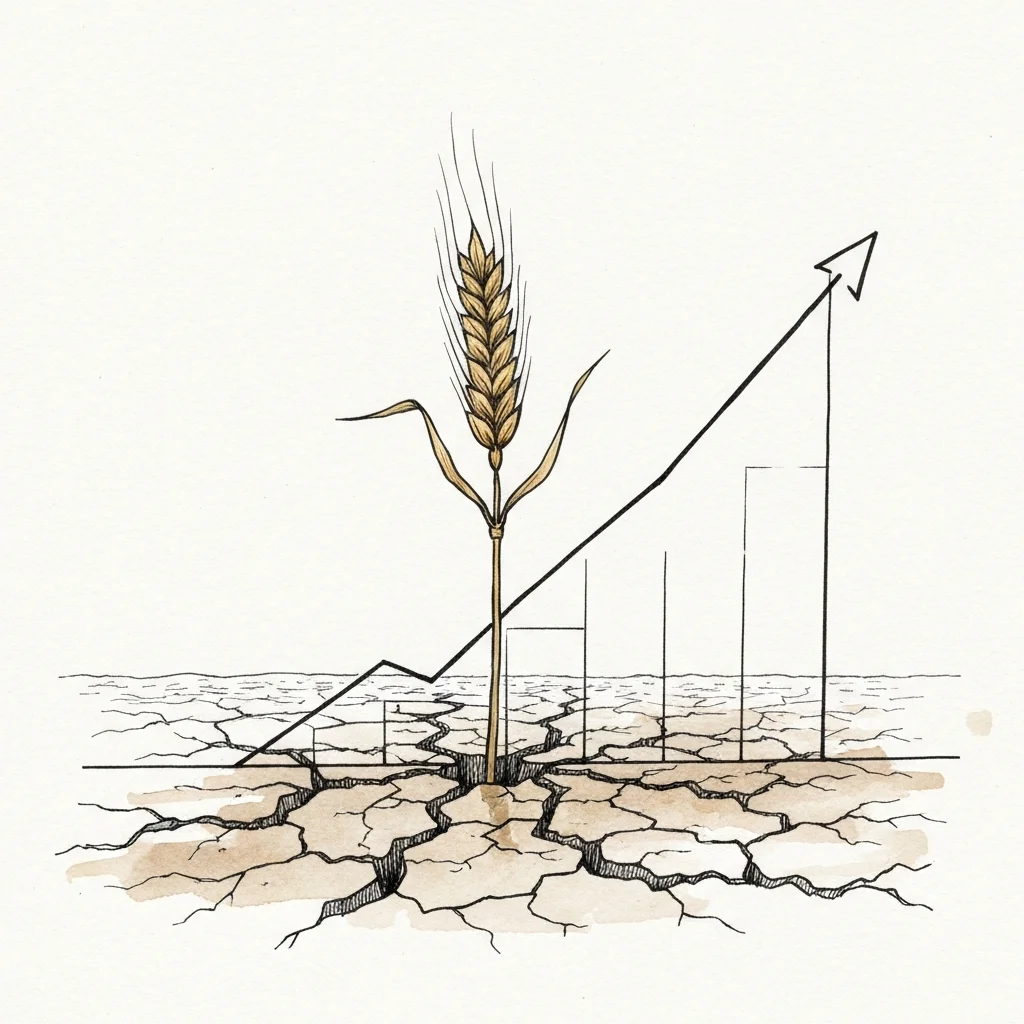
Global Food Prices Rose 2.4% in March 2026
Published: 21 April, 2026
March 2026 arrived with a quiet shift that people felt in their pockets before any report confirmed it. The Food and Agriculture Organization later put a number to that feeling, announcing the global food price index had climbed by 2.4%. That single percentage point ended a brief calm and pushed prices to an eighteen-month high, a change you could trace from a wheat field in Argentina straight to a market stall in Lagos.
The Weather and the Ledger
A late frost damaged crops in Argentina while dry conditions linked to El Niño stressed harvests in Southeast Asia. These distant weather events reduced global supply just as stocks were already tight. For a miller in Kano sourcing wheat or a family buying vegetable oil in Lagos, those disruptions became an immediate local reality. The cost of a loaf of bread or a bottle of cooking oil began to reflect storms and droughts happening thousands of miles away.
Trade policies added another layer of pressure. India maintained restrictions on some rice exports to control prices at home, which limited what was available for everyone else. Meanwhile, the cost of fertilizers showed signs of firming again because natural gas prices in Europe were rising. A rice farmer in Ebonyi State might see less competition from Indian rice as an opportunity, but then face the severe constraint of more expensive fertilizer before planting a single seed.
The Cost of Conflict
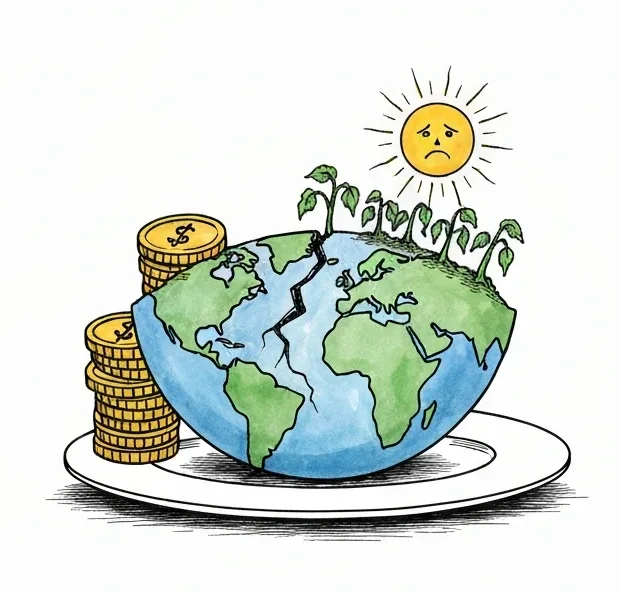
An editorial illustration for this story (Illustration: GoBeyondLocal)
The Black Sea region, where the grain initiative collapsed back in 2023, continues to shape the math. Exports from Russia and Ukraine still move, but they now travel on different routes with higher insurance and shipping costs. Those extra charges, those risk premiums, embed themselves in the final price of wheat and maize landing at African ports. Countries like Nigeria, which import significant volumes, absorb that cost directly. So the price of flour, and therefore the noodles or pasta on your table, quietly carries the cost of a conflict in Eastern Europe.
The Nigerian Bureau of Statistics reported that imported food inflation was already high, and the March global increase suggests that trend simply kept going. It makes you wonder why local production does not step in to fill the gap. The answer is found on bad roads and in empty silos. Inadequate storage leads to massive post-harvest losses, while expensive and unreliable transport from farm to city eats into any potential profit. Farmers talk about access to credit and the high cost of quality seeds as persistent barriers that keep them from expanding.
“The farmer sells his maize cheaply because he cannot store it. The trader who can store it then sells it at a high price months later. The system rewards the middleman, not the producer.”
– Aderemi Ogunjimi, National President of the All Farmers Association of Nigeria, March 2026.
The Currency Squeeze
For nations that import food, a weak local currency acts like an extra tax on every shipment. The Naira has seen its share of volatility through 2025 and into 2026. When it loses value against the US dollar, it takes more Naira to buy the same dollar-denominated container of rice. So when the FAO says prices rose 2.4% globally, the increase for a Nigerian importer, and eventually for you at the market, can be significantly larger. The policies of the Central Bank to manage liquidity and stabilize the exchange rate are not abstract monetary exercises; they directly influence the price tag on that bag of flour.
Look at sugar and vegetable oil, two staples that saw notable jumps. Lower outputs in Thailand and India pushed sugar prices up, while forecasts for lower palm oil production in Southeast Asia did the same for cooking oil. In Nigeria, these are not figures on a chart. They are a more expensive bottle of soft drink, a higher-priced packet of biscuits, and a costlier bottle of groundnut oil at Mile 12 Market. Local palm oil production exists in states like Edo and Ondo, but it does not meet national demand, leaving the country exposed to every global supply crunch.
What Comes Next
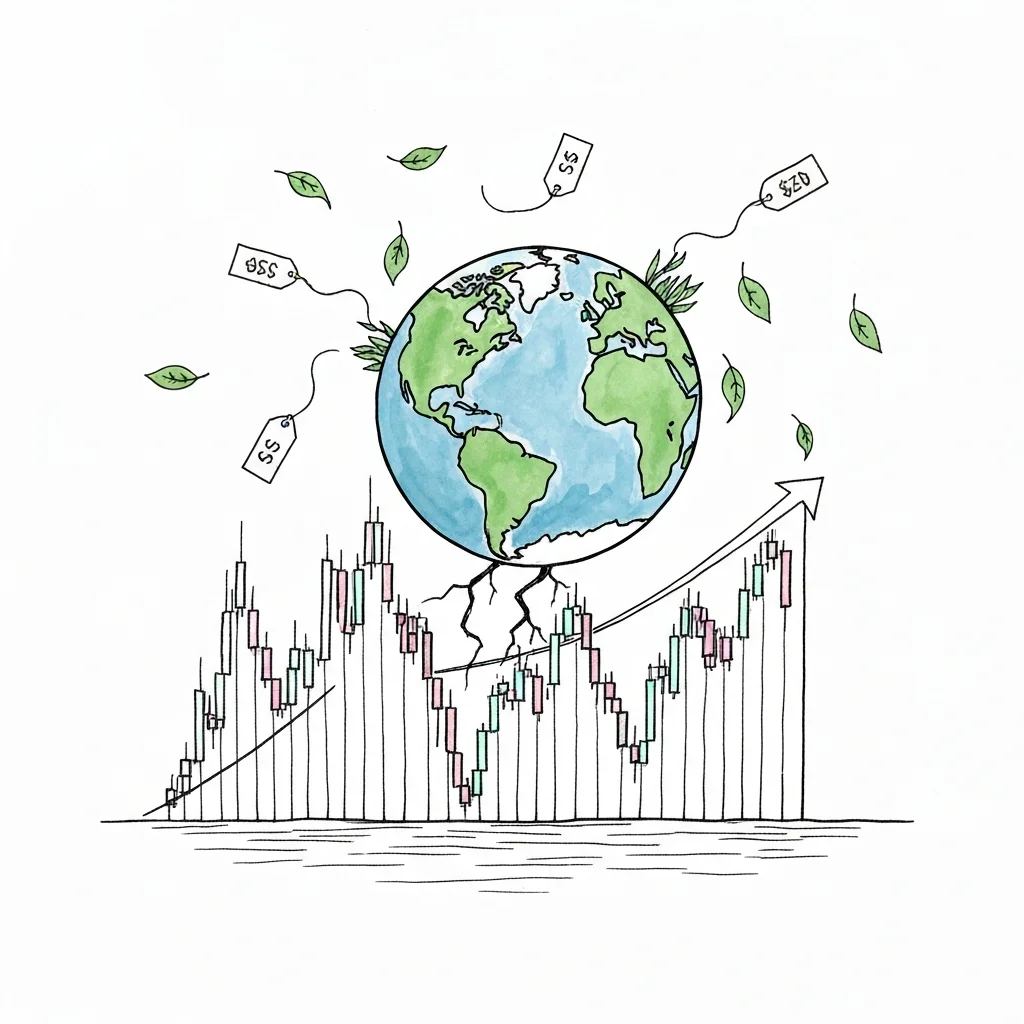
Analysts are watching the sky and government offices with equal attention. The El Niño pattern is expected to weaken by mid-2026, which could bring better growing conditions. The coming harvests in the United States and the European Union will be critical; any drought or excessive rain there could trigger another round of increases. On the policy side, export restrictions might calm a domestic market but worsen shortages for everyone else. In Nigeria, programs like the National Agricultural Growth Scheme aim to boost local production, but their effectiveness against these global tides will take time to measure.
From a policy desk, the March rise is a warning about fragility. It makes a case for climate-resilient crops, better irrigation, and diversified import sources. For Nigeria, the path involves a difficult balance: funding farmers, fixing rural roads, and managing the exchange rate, all at once. It is a tall order for any government.
“A single month’s increase is a data point, not a destiny. The concern is the trend. We see recurring climate shocks and geopolitical friction becoming permanent features of the food trade. Building resilience is no longer optional; it is the core of food security planning.”
– Dr. Abimbola Adesina, food security analyst, April 2026.
At the Family Table
Households feel all this directly, and their response is often one of quiet substitution and careful management. Families might switch to cassava or yam when imported rice becomes too dear, or reduce waste by planning meals more carefully. Community savings groups, the esusu or ajo, provide a small buffer for these unexpected food expenses. On a broader level, buying from a nearby farm or local market shortens the supply chain, supports local agriculture, and sometimes offers a better price. It keeps money within the community, which is its own form of resilience.
The 2.4% increase is a reminder that food inflation is a global phenomenon with very local consequences. While international factors set the baseline, national policies and local infrastructure determine the final price you pay. For the foreseeable future, this volatility will remain. Preparing for it means expecting fluctuations, diversifying diets to include more local foods, and understanding that the price on your plate is written in distant fields, on shipping routes, in trading pits, and finally, at the market stall where you bargain. It is a complex equation, but knowing the variables is the first step.
Economy
Multinational Exodus in Nigeria Deepens with N94 Trillion Loss
N94 trillion and 20,000 jobs have left Nigeria with departing multinationals since 2021. The reasons are a familiar list, but the scale of the loss is a heavy, quiet stone in the economy’s well.

Multinational Exodus in Nigeria Deepens with N94 Trillion Loss
Published: 27 March, 2026
N94 trillion is a number that sits there on the page, heavy and silent, like a stone dropped into a deep well. It is the quantified damage from major international companies leaving Nigeria since 2021, a figure from a report by the Manufacturers Association of Nigeria that landed in the first quarter of this year. You can add over 20,000 direct jobs to that total, and the domestic market cannot replace this lost output, not even close, which makes the silence after the stone hits all the more profound.
The thing about the numbers
That N94 trillion is an aggregation of divestments, asset sales, and profits that could not find their way home over five long years. The real trouble begins when you realize new money is not coming in to replace it, as data from the National Bureau of Statistics shows foreign direct investment has declined for four years straight. Look at the names that have gone: Procter & Gamble, GSK, and Sanofi exited manufacturing, while Unilever stopped making home care products, and each closure cited a similar, brutal cluster of problems.
What they are running from
Ask any business operator in Lagos or Port Harcourt for the short list, and they will give it to you without hesitation. A survey pins the primary constraints as foreign exchange volatility, persistent insecurity, and the relentless cost of generating your own power. Even though the Central Bank of Nigeria has unified the exchange rate window, accessing foreign currency remains a daily struggle that frustrates entire corporate treasury departments because you cannot plan when you cannot source dollars for raw materials.
“You cannot run a factory where you cannot source inputs, guarantee staff safety, or predict your energy cost from one week to the next.”
– Segun Ajayi-Kadir, Director-General of the Manufacturers Association of Nigeria, January 2026.
Insecurity along major transit routes does not just create fear but inflates logistics costs and insurance premiums to absurd levels, making moving goods from Lagos to Abuja as expensive as shipping a container from China, and these are the mundane realities that quietly kill profitability.
A policy of broken records
The government has announced interventions and allocated funds for national security and infrastructure in recent budgets, with all the rhetoric about improving the ease of doing business. Here is the quiet reality check: the total capital expenditure in the 2025 budget was about N11.99 trillion, and the amount lost to corporate exits in five years is nearly eight times that single year’s entire capital budget. Tax incentives exist on paper, but the experience on the ground involves navigating delays at multiple agencies, and a company choosing between Nigeria and Ghana will weigh those operational headaches very heavily indeed.
Who fills the space
The exit does create opportunities for local conglomerates like the Dangote Group and BUA Group to expand into vacated segments, promising greater domestic ownership in the long run. Capacity has its limits, however, because most local manufacturers lack the balance sheet to absorb the massive capital expenditure and technology the departing multinationals possessed, which means the quality and variety of goods available may quietly decline. Job creation from these local firms is slower and more cautious, as they face the same headwinds with less access to global financing, resulting in a net shrinkage of formal sector employment that nobody likes to talk about.
“Local production is growing, but it is a marathon, not a sprint. We cannot replace 50 years of multinational investment in two years.”
– CEO of a major Nigerian food and beverage company, anonymous comment to Vanguard, February 2026.
The view from the street
For workers, it translates to fewer stable, pensionable jobs, with those 20,000 lost positions mostly being formal roles with benefits that have now vanished into the informal sector or precarious gig work. Consumers face higher prices and reduced choice as imported alternatives get more expensive with currency depreciation and locally produced substitutes struggle with consistency. Landlords in industrial areas watch vacancies rise while local vendors lose their largest clients, and the entire economic ecosystem around a major plant deteriorates so fast you can almost hear it crumbling.
Is there a path back
Stopping the exodus would require treating the root causes with a consistency that has been lacking, starting with foreign exchange management that offers transparency and a predictable window to repatriate dividends. Security of life and property is non-negotiable for any serious investment, and the power sector remains a national emergency that makes manufacturing a heroic undertaking every single day. This all comes down to coordination, or the lack of it, across various ministries and the central bank, where businesses receive mixed signals and lose confidence with every passing month.
One tangible step
The government could establish a dedicated Presidential Delivery Unit for the top five investor complaints, a unit that would track and publicly report monthly progress on foreign exchange access, port clearance times, and security on trade corridors. It would need the authority to cut through inter-agency delays with a mandate focused exclusively on removing bottlenecks for existing businesses, where success would be measured simply by a halt in closure announcements. Such a unit would need a leader with direct presidential access and a small, technically competent team publishing simple online dashboards, signaling a shift from talking to doing that everyone could see.
So here we are
The story is one of capital, jobs, and confidence leaving, quantified by that N94 trillion and those 20,000 jobs, with reasons so well-documented they have become a tired refrain. Reversal is possible with focused, sustained action on power, security, and foreign exchange, but the alternative is a continued contraction of the formal industrial base and higher unemployment. The next closure announcement may come tomorrow, and the time for a different response was probably yesterday, which leaves us all waiting to see what today will bring.
Economy
The World Happiness Report 2026 Places Nigeria at Position 106
Nigeria sits at 106th on the 2026 World Happiness Report. This number reflects daily pressures—from inflation to security—that shape how people evaluate their lives. It’s more than a rank; it’s a…

The World Happiness Report 2026 Places Nigeria at Position 106
Published: 23 March, 2026
Finland did it again, for the ninth year running, sitting at the very top of the World Happiness Report with Iceland and Denmark following close behind. This is not about them, though, and if you look further down the 2026 list, past Costa Rica breaking into the global top five, you will find Nigeria at position 106. In Africa, we are not in the top five, trailing behind Mauritius (73rd globally), Libya (81st), Algeria (83rd), Tunisia (105th), and South Africa, which brings us to the real question of what a happiness ranking actually measures for the average Nigerian.
More Than a Feeling
The report uses a cold, hard tool called Cantril’s ladder, which asks you to imagine a ladder from zero to ten where the top is your best possible life and the bottom is the worst. Researchers from the Gallup World Poll simply ask which step you are on right now, and your answer becomes your life evaluation score, but there is a catch because that score is then explained by six variables. The model accounts for GDP per capita, social support, healthy life expectancy, freedom to make life choices, generosity, and perceptions of corruption, with the rest being a residual that represents the cultural fabric of a nation. For Nigeria, the 2026 score is a direct reflection of navigating a complex reality where these factors intertwine.
The Naira’s Heavy Footprint
The economic variable carries immense weight in the report, using the log of GDP per capita at purchasing power parity, and the International Monetary Fund forecasts the figure for Nigeria at $9,860 for 2026, which suggests a slow recovery. Now, contrast this with the ground truth where the National Bureau of Statistics reported on March 16, 2026 that headline inflation dropped to 15.06% and food inflation was 12.12%. This is a sharp decline from the terrifying peaks of 2024, but the damage is already done because a salary that covered basics two years ago is now stretched thin, applying direct pressure on the wellbeing the report tries to capture.
“When the price of a ‘painter’ of garri changes every market day, the ladder of life feels shaky.”
– Chika Mbonu, a civil servant in Lagos, speaking in March 2026.
A Strained Safety Net
The social support metric asks if you have someone to count on, and in Nigeria, the answer has always been the extended family, which is an informal network that compensates for a weak formal system. The trouble is that economic pressure is breaking the net because when everyone is struggling, who has the capacity to help, and the scale of need is official. The National Social Safety Nets Coordinating Office manages a National Social Register with over 15 million households as of late 2025, a number from the Federal Ministry of Humanitarian Affairs that reveals the vulnerability our family systems are trying to hold.
Screens and Satisfaction
The 2026 report has a new focus on digital life, and its research found a sweet spot where less than one hour of social media daily links to higher wellbeing than zero use. The global average is now 2.5 hours, a level tied to lower life satisfaction, and it highlights a sharp happiness decline among youth in English-speaking nations, pinned partly on passive scrolling. For Nigerian youth glued to Instagram and TikTok, this is a warning because the comparative effect on our own wellbeing is an emerging, silent variable that creeps into daily life.
Freedom, Giving, and Fair Play
The freedom question is simple, asking if you are satisfied with your freedom to choose what you do with your life, and for many here, the answer is constrained by the job market and by security fears. Generosity, measured by charitable donations, often remains high because it is in our culture, but then there is corruption where the report uses a Gallup World Poll question about whether corruption is widespread in government. Nigeria’s score here has barely budged for years, and this perception eats at trust, corroding the belief in a fair system that should work for everyone.
“The data suggests that where citizens believe their efforts can lead to fair outcomes, life evaluations improve. The opposite is also true.”
– Professor Aisha Mohammed, a policy analyst at the Centre for the Study of the Economies of Africa, in a March 2026 briefing.
Security as a Health Issue
Healthy life expectancy data comes from the World Health Organization, but security concerns in regions across Nigeria cut direct lines to health because instability disrupts farming, fuelling food insecurity and malnutrition. It restricts movement for commerce, education, and healthcare, creating a background anxiety where a trader in the North-East weighing the risk of a market trip has a different calculus of freedom than someone in a stable area. That anxiety filters straight into the life evaluation score, making the ladder feel less stable with every uncertain step.
The Regional Reality
In Sub-Saharan Africa, Nigeria ranks 17th out of 40 countries, placing us in the middle of the pack where the regional average is low, dragged by common struggles with economy and institutions. The global top ten, dominated by Nordic nations, shows what high-functioning institutions and comprehensive welfare achieve, and that is the gap. As the 2026 report notes, Mauritius (73rd) leads Africa, followed by Libya (81st), Algeria (83rd), and Tunisia (105th), and we are behind, looking up at those rungs.
Policy and the Ladder
The report’s authors argue that wellbeing should guide policy as much as GDP, with each variable being a policy lever where boosting GDP per capita needs reforms that create real jobs and strengthening social support means expanding safety nets formally. There is a catch, though, because these issues are tangled together where growth without equity fails and anti-corruption drives without visible convictions fail to shift perception. It is all connected, a delicate balance that requires more than just good intentions.
The Weight of 106
For the average Nigerian, position 106 is not an abstract rank but the ATM queue, the electricity bill, the school fees and the cost of drugs, and the doubt about a fair contract or an honest police officer. These daily realities build the ladder, and the slip from 105 to 106 is minor statistically, but it signals that for many, the step felt less secure over the past three years. Cumulative inflation, insecurity, and eroded trust offset any small gains elsewhere, making the climb feel steeper than before.
“Happiness research tells us that beyond a certain income threshold, the quality of relationships and the fairness of society matter more than extra cash. Our focus must broaden.”
– Dr. Ben Akabueze, Director-General of the Budget Office of the Federation, at a public lecture in February 2026.
What Comes Next?
The data for the 2026 report covers 2023 to 2025, meaning policies launched in late 2025 or 2026 will only show up later, and the real test is whether they can move the needles Gallup measures. Can they lift real incomes, mend social cohesion, and rebuild public trust, because the answers will write the next happiness chapter of Nigeria. It is a question that hangs in the air, waiting for the work to be done.
A Number to Ponder
106 is just a number that smooths over the vast experiences of 200 million people where some are on the ladder’s top step and many are on the bottom. The report’s value is its consistent method, providing a comparable benchmark where the one-place drop is small but the direction matters more, asking policymakers what will make the average citizen step up one rung next year. The conversation starts by acknowledging the daily pressures behind that number and continues with policies for a good life, not just a growing economy, with the next ranking due in March 2027. The work that counts happens every day between now and then, in the quiet moments of struggle and hope.

Ancient Rock Art Traditions Endure in Igbara Oke Caves

Palm Wine Tapper Climbs Same Tree That Killed His Father in Ozoro

Hunter Hears Dead Brother Whistle in Ganye Forest Mystery

Farmer Plants Yam That Grows Downward to Water Table in Drought

She Kept Asking and They Kept Moving Her in Nigeria

Global Food Prices Rose 2.4% in March 2026

Chigozie Obioma International Booker Prize 2026

Jidenna Pan African Sounds Latest Musical Project 2026

Hakeem Oluseyi Brings Astrophysics to Classrooms Worldwide

NANS Diaspora Nigerian Students Eastern Europe

Nnamdi Asomugha From NFL Cornerback to Hollywood Producer

Folake Olowofoyeku Stars in American Sitcom on Nigerian Family Life

Internet Sovereignty: Why Some Countries Want Their Own Separate Internet

The Story Of The Nigerian Who Helped Build Global Internet Systems

Nigerian Hackers: The Global Fraud Story and Its Fallout

Forgotten Satellites Defy Silence, Beaming Signals for Decades

The Phone Stay So Quiet: An Investigation into Nigeria’s Silent Customer Lines

Your Digital Store in Nigeria and the Reality of Domain Expiration

The Business That Died: A Nigerian Case Study in Refusal to Adapt

Hiding Your Business From People With Money

How Nollywood Grew Without Government Support

Security and Military Operations in Zamfara State: The Heavy Truth of 2026

Moniepoint Business Account Requirements Nigeria for SMEs 2026

Comedy Industry in Nigeria and Its Economic Contribution


 Digital Sovereignty8 months ago
Internet Sovereignty: Why Some Countries Want Their Own Separate Internet
- Technology & Innovation8 months ago
The Story Of The Nigerian Who Helped Build Global Internet Systems
- Crime8 months ago
Nigerian Hackers: The Global Fraud Story and Its Fallout
- Space Technology8 months ago
Forgotten Satellites Defy Silence, Beaming Signals for Decades
- Maritime8 months ago
The Phone Stay So Quiet: An Investigation into Nigeria’s Silent Customer Lines
- Business8 months ago
Your Digital Store in Nigeria and the Reality of Domain Expiration
- Business8 months ago
The Business That Died: A Nigerian Case Study in Refusal to Adapt
- Business8 months ago
Hiding Your Business From People With Money