Infrastructure
Okrika Community Receives New Landing Jetty with Passenger Waiting Hall
A N280 million jetty replaces muddy planks in Okrika, offering shelter and order to a riverine community. The real test of this concrete handshake with the water will be how well it’s maintained long…

Okrika Community Receives New Landing Jetty with Passenger Waiting Hall
Published: 12 March, 2026
N280 million is a lot of money to spend on a handshake with a river. That was the contract value for the new landing jetty in Okrika, a concrete pier and a roofed hall now standing where an eroded bank once demanded daily acrobatics. For thousands who balanced on narrow, muddy planks with bags of goods and the tide lapping at their feet, this is more than infrastructure. It is a fundamental change in how they meet the water that defines their lives. The Executive Chairman of the Okrika Local Government Council, Hon. Akuro Tobin, calls it bringing order to chaos, which sounds simple until you remember how long the chaos has been the only way.
The Old Way of Doing Things
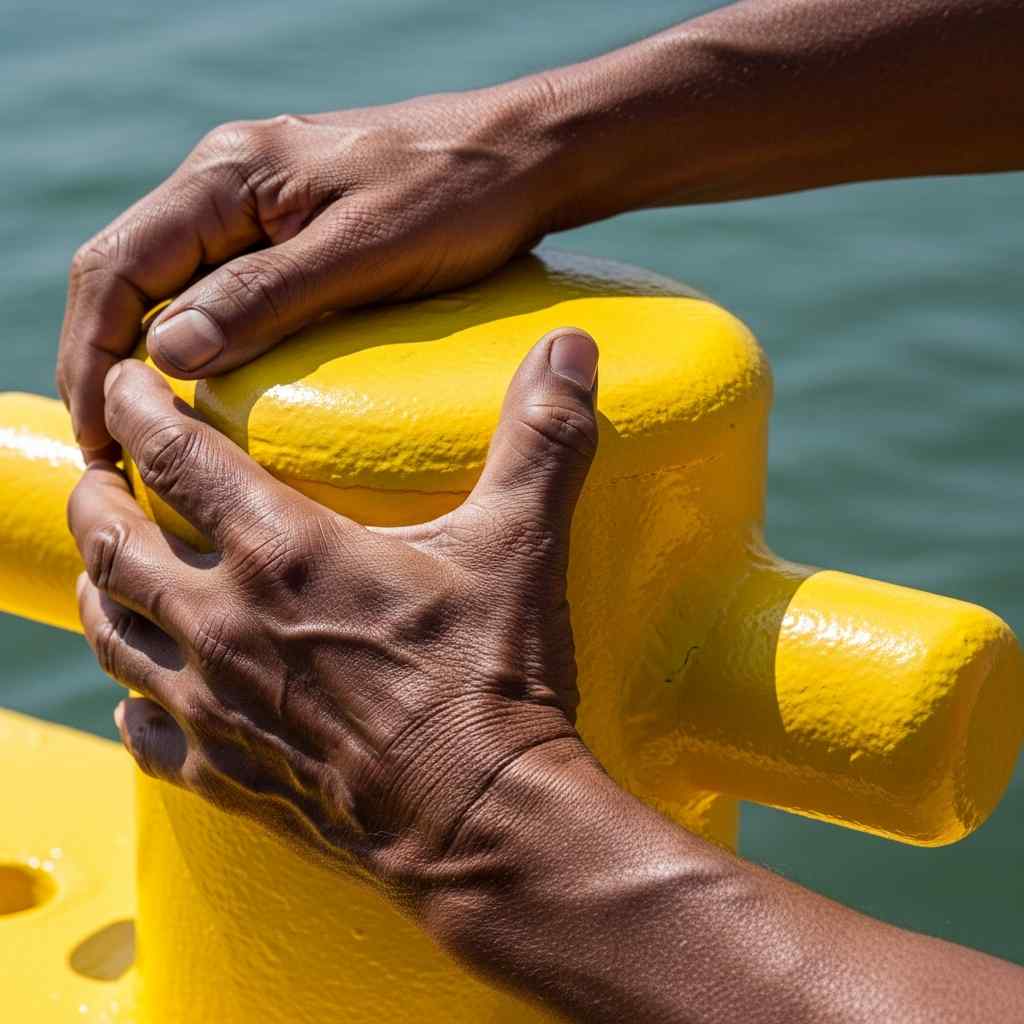
Imagine a system where you board a wooden boat directly from a crumbling bank, a system described by community leaders as simply hazardous. That was the daily commute, especially treacherous during the rains when planks turned slick and the water rose. The new facility, with its mooring bollards and waiting area, provides a stable platform, which is a critical consideration for elderly commuters and traders moving goods. It replaces improvisation with intention, a roofed hall now offering shelter from sun and rain where before there was only exposure. A report by BusinessDay argued such projects address critical mobility gaps for riverine populations, but you do not need a report to feel the difference between concrete and mud.
“Hazardous, especially during the rains. People balanced on planks.”
– Community leaders
Building on a Timeline
Project records show this as a flagship initiative under the local council, with the public bid opening for the Kalio-Ama Landing Jetty held on October 30, 2025. By mid-February of the following year, construction was well beyond the mobilization phase and racing toward a first-half completion target. Analysts from Nairametrics point out the high cost per unit of community impact for such marine engineering, but the ledger of community impact has columns for safety and dignity that are harder to quantify. The project is being executed by the Okrika Local Government Council, and the finish line is now in sight, a new rhythm waiting to be established.
More Than Just a Dock
Okrika’s economy lives on the water, with people and goods constantly moving to Port Harcourt and other islands. The new jetty creates a single, designated point, which boat operators and traders expect to reduce the old chaos. A representative from the Okrika Market Women Association told Vanguard the hall allows for orderly queuing and protects perishable goods, which is a practical concern for anyone trying to sell fish in a market. More significant than slightly shorter trip times is the potential for scheduled services, with the informal boat operators’ union beginning to discuss a rudimentary timetable. This organizational shift could bring predictability to daily travel, turning a scramble into a schedule.
The Safety Question
The primary advertised benefit is safety, a concern given the grim maritime safety records for the region where incidents are often linked to overcrowding and poor boarding. The National Inland Waterways Authority (NIWA) has banned loading at informal jetties, though enforcement is famously weak. A designated jetty provides a focal point for inspections, with NIWA officials in Port Harcourt confirming plans for routine checks on life jackets and boatworthiness at the new site. A stable jetty with clear boundaries makes managing numbers easier, and the waiting hall prevents overcrowding on the pier itself, aligning with broader federal goals that are often inconsistently applied.
The Real Test Begins Later
This brings us to the perennial problem of any new thing here, which is what happens after the opening ceremony. The long-term functionality depends entirely on a maintenance plan, with routine upkeep assigned to the Okrika Local Government Council. Council officials quietly acknowledge the challenge of funding this from their allocation, a local government engineer citing the corrosive marine environment as a constant threat requiring periodic painting and repair. Community stewardship models are under discussion, like a small levy per trip proposed by the boat operators’ union, but the success of such arrangements in the Niger Delta has been mixed. The durability of this N280 million investment will test local governance capacity, a reality that outlasts any ribbon-cutting.
A Notebook for the Future
Perhaps the most actionable step now is a simple one. Secure a public maintenance ledger at the jetty office, a notebook to record every repair, cleaning, and inspection with dates, costs, and responsible parties. Transparency creates accountability, letting community members see when work was last done and empowering them to ask questions. That ledger requires only a notebook and a commitment to regular entries, which is a minimal investment for sustaining a multimillion-naira asset. It is a small, tangible thing, a handshake with the future, hoping this concrete in the water lasts longer than the memory of balancing on a plank.







Infrastructure
The Delta State Government Commits N34 Billion to Police Infrastructure
Delta State is spending N34 billion to build 25 new police stations. It’s a huge number for concrete and hope, aiming to fix security from the ground up. But a new building is just the start of a…
The Delta State Government Commits N34 Billion to Police Infrastructure
Published: 20 March, 2026
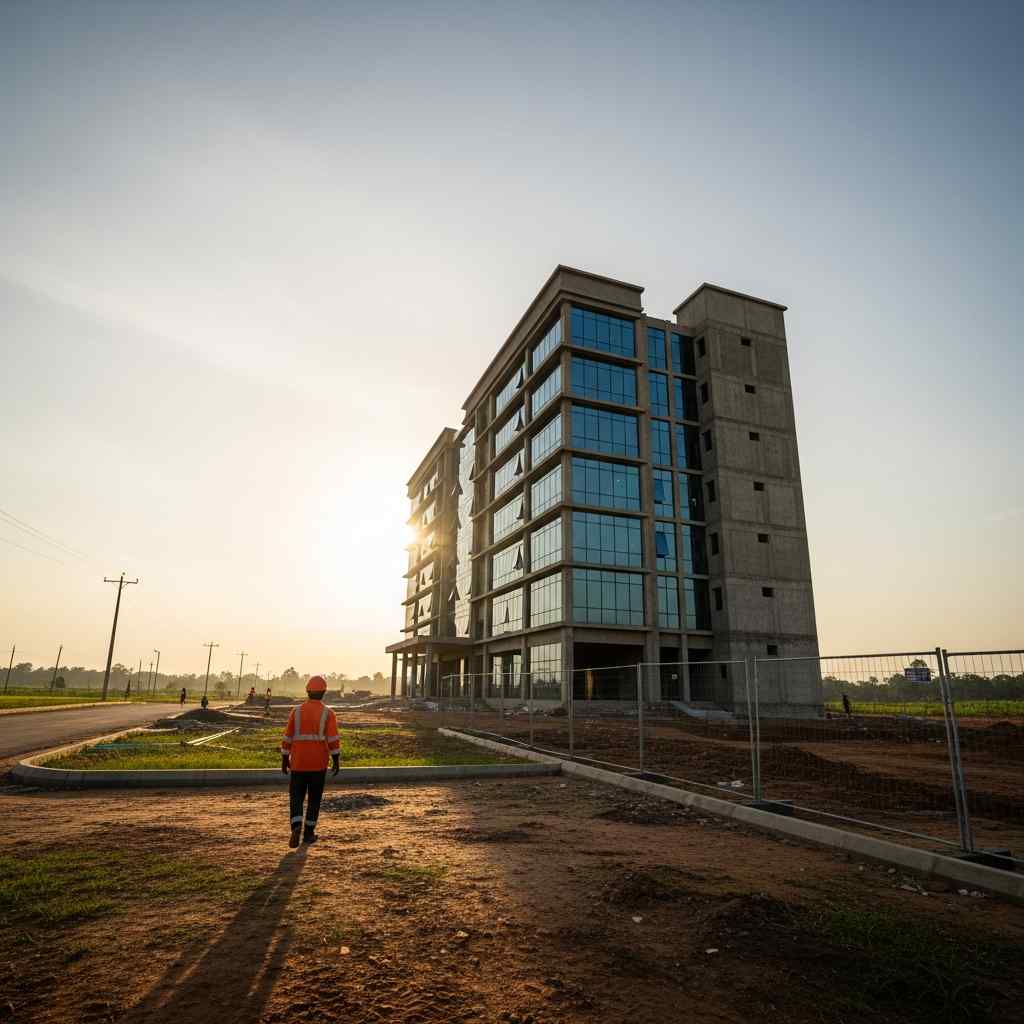
N34 billion is a number that makes you pause for a moment, a sum that sits in the budget for 2026 with the specific purpose of building new police stations. Governor Sheriff Oborevwori announced it during the presentation of the Appropriation Bill, framing it as a non-negotiable foundation for everything else, and the plan is for a standard divisional headquarters in each of the state’s 25 local government areas. Vanguard reported it in March, and the figure just hangs there, waiting for you to do the maths.
The size of the pie
That police allocation is just a slice. The total budget proposal for the year is a much larger N724.9 billion, christened the “Budget of Sustainable Development and Prosperity for All Deltans.” Within that, N397.5 billion is for capital projects, and the N34 billion for police infrastructure sits firmly in that column, as noted by Premium Times. The governor’s argument is straightforward enough because you cannot attract investment or enable development without security, so his solution is a fully equipped, modern police station in every LGA headquarters.
A glaring need
The trouble is the need is glaring. Kidnapping, communal clashes, and oil theft create a complex environment for law enforcement in the Niger Delta, and many existing police facilities are dilapidated and lack basic amenities. A 2025 report by the Nigeria Police Force itself identified infrastructure deficits as a major impediment, citing poor offices, inadequate cells, and a lack of vehicles, which ThisDay covered. The move by the Delta State Government is a direct intervention, and building 25 new headquarters at once is one of the largest single-state investments in police infrastructure in recent memory.
Doing the maths
So you do the maths. N34 billion for 25 projects gives an average cost of N1.36 billion per station, and that figure alone raises questions about what exactly a “standard” divisional headquarters is here. Contrast this with a project in Lagos State where in 2024, the government completed a new divisional headquarters in Ikoyi that BusinessDay estimated cost roughly N850 million. The Delta budget is about 60% higher per facility, but there is a catch because the state has provided limited public details. Commissioner for Works Charles Aniagwu told Leadership in 2026 that designs include modern offices, holding cells, barracks, and digital command centers, so staff housing and tech infrastructure likely explain the higher unit cost.
“This project goes beyond bricks and mortar. We are building institutions that will enhance the welfare of police officers and their operational efficiency. A motivated officer in a proper facility serves the public better.”
– Charles Aniagwu, Delta State Commissioner for Works, March 2026 (The Guardian)
One project among many
The total 2026 budget of N724.9 billion is up from N714.4 billion in 2025, and the police project is about 4.7% of the total budget and 8.6% of the capital expenditure. This is not the only major project because the same budget funds the Ughelli-Asaba Road dualization, new buildings at the Delta State University of Science and Technology, and rural electrification. The scale of the police investment shows its priority, and it is an attempt to turn political rhetoric on security into concrete, measurable action.
A constitutional quirk
This brings us to a constitutional quirk. The Nigeria Police Force is a federal institution, and state governments have no direct operational control, which often creates friction. Wait, it gets more complex because state investments in infrastructure offer a workaround where they can provide buildings and equipment even if they don’t control the officers. The Lagos State Security Trust Fund, started in 2007, pioneered this model, and Inspector-General of Police Kayode Egbetokun has welcomed Delta’s plan, calling it a “model of collaborative federalism” in a Daily Trust statement. But the success hinges on sustained funding for maintenance and utilities, which is a federal responsibility.
When and how
Governor Oborevwori said work would start in the second quarter of 2026, after the budget is passed, but the timeline for all 25 headquarters is unspecified. Building simultaneously across multiple LGAs is a huge logistical challenge, and the state plans to use multiple contractors through an open bidding process run by the Delta State Bureau of Public Procurement. Commissioner for Finance Fidelis Tilije assured Premium Times the process would follow the law, so observers will watch the contract awards closely because transparency here is a key test.
“We have a duty to ensure every kobo is accounted for. The Bureau of Public Procurement will publish details of the successful contractors and the contract sums. Deltans deserve to see how their money is spent.”
– Fidelis Tilije, Delta State Commissioner for Finance, March 2026 (ThisDay)
Where things stand
Nigerians know grand announcements can stall. The gap between budget appropriation and cash release can be wide, and Delta State’s own 2025 budget performance report showed a capital expenditure performance rate of 68% by December. Funding for this N34 billion project depends on state revenue because Delta relies heavily on volatile monthly allocations from the Federation Account, and its internally generated revenue averaged N15.2 billion monthly in 2025. Then there are the common risks like cost overruns, contractor failure, and community disputes over land, and a project this spread out demands management, which is a known weakness in many state projects.
More than a building
Improved infrastructure can boost police morale and capacity. A station with reliable power, communications, and proper cells changes an officer’s daily reality, and it can affect public confidence too. But there is a catch because this addresses only one dimension. Effective policing needs trained personnel, intelligence, community trust, and swift justice, so a new building alone solves none of that. The ultimate impact hinges on the Nigeria Police Force in Abuja and whether it will deploy more personnel or establish new protocols to use these facilities, and those decisions are not Asaba’s to make.
Residents can track this. The Delta State Bureau of Public Procurement digital platform should publish tender notices and awards, and checking it quarterly creates public awareness. People in each LGA can note the proposed site location, and visiting after contract awards to see if work has started is grassroots monitoring. Sharing these observations on community platforms keeps the conversation alive.
The N34 billion allocation is a bold statement that recognises security as the bedrock. The path from budget line to 25 functional police stations will be long and fraught with Nigeria’s typical execution challenges, and the promise of safer communities makes the effort necessary. The reality just demands vigilant public scrutiny every step of the way.
Infrastructure
Governor Sheriff Oborevwori Opens a Road, and a Debate on Riverine Development
A N78 billion road in Delta State replaces a history of boats, slashing travel time and raising hopes. But in the riverine Niger Delta, the real test begins after the ribbon-cutting: the fight…

Governor Sheriff Oborevwori Opens a Road, and a Debate on Riverine Development
Published: 19 March, 2026
N78 billion is a number that makes you pause. That was the price tag for the new 31-kilometre Ohoror-Bomadi Road in Delta State, a ribbon of asphalt that was commissioned on March 18, 2026, with all the usual fanfare. It is a direct land link slicing through two major riverine local government areas, which means it replaces a history of complete dependence on boats and canoes for people who have known nothing else. The change is immediate and startling, with travel time collapsing from over two hours by water to about thirty minutes by vehicle, and you can already see the difference in the faces of farmers who can now move their fish and plantain to market without watching them spoil on the journey.
The Terrain Fights Back
Building in the riverine Niger Delta is a specialised fight against soft, waterlogged earth, a battle the contractor Setraco Nigeria Limited waged with sand filling and stone base. That N78 billion figure represents a huge chunk of the state’s capital budget for the year, which was N235 billion for all expenditure, so you understand the weight of the investment. Governor Sheriff Oborevwori framed it as something far greater than just bitumen during the ceremony.
“This road is more than bitumen and asphalt. It is a pathway for commerce, for education, for healthcare. It brings our riverine communities into the mainstream of the state’s economy.”
– Governor Sheriff Oborevwori, at the commissioning ceremony, March 18, 2026.
The Logic and the Catch
The economic argument is beautifully straightforward. Bomadi Local Government Area is a fishing hub, and before this road, much of the catch would spoil before it reached a proper market. Now refrigerated trucks have a direct route, and local traders already talk about a 40% drop in their transport costs. A study estimated that efficient transport could boost riverine farmers’ income by up to 60%, which is the kind of number that makes planners smile. Then comes the brutal catch, the one everyone whispers about after the celebrations end. Maintenance. The region’s heavy rainfall and high water table eat roads for breakfast, and a road built in 2024 can look like a forgotten memory by 2027. The state has a plan for a N500 million annual maintenance allocation, but observers note, with a dry chuckle, how such dedicated funds often find other homes when fiscal pressures mount.
A Human Pathway
Beyond the spreadsheets, the human element is profound. A pregnant woman in Bomadi needing urgent care at the General Hospital in Ohoror now has a fighting chance, and schoolchildren have a safer alternative to those dangerous canoe rides across the water. A community leader said the road makes them feel like part of the state, a sentiment of inclusion no contractor can invoice for. This road is one piece of a larger puzzle, part of 17 major road projects flagged off since 2023 that aim to connect agricultural zones to urban markets, which makes sense when you consider agriculture contributes over 25% to the state’s economy.
“Infrastructure is the skeleton upon which economic growth is built. Without it, plans for diversification and poverty reduction remain mere documents.”
– Dr. Eugene Uzum, Director, Centre for Public Policy Research, February 2026.
The Road Ahead
The commissioning is a milestone, not a finish line, and the real work of maintenance and security begins now. For the administration, this road becomes a reference point, and its condition in 2027 will be the true judge of commitment. It quietly challenges the old, fatalistic view that riverine communities are simply condemned to isolation. The tarmac is real, the reduced travel time is measurable, and the hope is palpable. The enduring test is to ensure this road remains open, safe, and productive long after the commissioning ribbons have faded in the sun.
Infrastructure
Infrastructure Development: Okrika LGA Presents N11.9 Billion Budget
Okrika LGA bets N8.7 billion on roads, water, and light. It’s a bold plan in a tight time, a statement of intent lashed to volatile federal cash. Can it build, or will it just promise?
Infrastructure Development: Okrika LGA Presents N11.9 Billion Budget
Published: 12 March, 2026
Hon. Akuro Tobin stood before the council members with a document that felt heavier than its pages suggested. The Chairman of Okrika LGA in Rivers State had just presented a budget estimate of N11.9 billion for 2026, and the number seemed to hang in the air like a promise waiting to be tested. More than 70% of that total, a staggering N8.7 billion, was earmarked for capital projects like roads, water, and clinic renovations. It was a bold leap from the N6.3 billion approved the year before, an attempt to build a way out of long-standing neglect in those riverine communities. The ambition was clear, but you could almost hear the unspoken question in the room, a quiet worry about reduced federal allocations and the relentless climb in the cost of construction materials.
The Numbers on the Page
Let’s look at what that N11.9 billion actually means when you break it apart. The plan splits into N3.2 billion for the day-to-day running of things and that massive N8.7 billion for building things that last. The capital portion is remarkably precise: N4.1 billion for roads, N2.3 billion for water and sanitation, N1.8 billion for electrification and public buildings. It’s a direct, tangible response to what people in the communities have been asking for, sometimes shouting for, over the years. Now, contrast this with the wider picture. The National Bureau of Statistics noted that the average capital expenditure for local governments hovered near 45% of total budgets recently. Okrika’s 70% stake makes it a stark outlier, one of the most capital-intensive plans you’ll find in the Niger Delta. The entire feasibility of this grand design, however, is lashed to one unpredictable thing: the monthly disbursements from the Federation Account Allocation Committee. Everything depends on that cash arriving on time and in full.
A Shaky Foundation
This brings us to the revenue problem, and it’s a familiar one. Local Government Areas in Nigeria typically get over 80% of their money from those FAAC allocations, with internally generated revenue making up just a small fraction. The Okrika proposal expects N10.5 billion from FAAC, N1.1 billion from local sources, and N300 million from elsewhere. That local revenue target is the tricky part. It requires a collection jump of over 40% from what was recorded in 2024. Can levies from markets and sand dredging really deliver that kind of spike without completely overhauling how taxes are collected? Many economists quietly shake their heads at the thought. During the budget presentation, Tobin framed the challenge in his own words.
“The budget is a statement of intent. Its success rests on our ability to harness local resources and ensure every kobo translates to visible projects for our people.”
– Hon. Akuro Tobin, Chairman of Okrika LGA.
The sentiment is clear, even if the path to get there is covered in the usual fog.
Roads, Water, and Light
So where is all this money meant to go? For transportation, the N4.1 billion aims to build 15km of new concrete roads and fix up 22km of earth roads, focusing on links to major markets and a power project site. They’ve even set aside N650 million for geotechnical studies and swamp sand filling, a direct lesson learned from past projects that stalled over difficult terrain. The N2.3 billion for water plans five new schemes and eight rehabilitated ones, hoping to reach 50,000 more residents with something as basic as potable water. Given that reports show less than 35% of rural populations in the state have reliable pipe-borne water, the need couldn’t be more acute. Then there’s N1.8 billion for electrification and buildings, a pragmatic mix of extending the grid to some communities, installing solar street lights in others, and renovating the council secretariat, a healthcare center, and a few school blocks.
Ambition in a Tight Frame
Wait, it gets more complex when you zoom out. This local ambition sits inside a national frame of very tight resources. The Federal Government’s own budget allocates about 24% for capital expenditure. Okrika’s 70% shows a completely different priority, a desperate focus on fixing immediate physical deficits. But that FAAC lifeline is volatile, tied completely to the ups and downs of crude oil revenue. The budget, notably, contains no contingency plan for a shortfall. None at all. The history of local government projects in Nigeria is, as you know, littered with stories of abandonment and mysterious cost inflation. Hon. Promise Tariah, Leader of the Okrika Legislative Council, has promised vigilance.
“Oversight is our constitutional duty. We will track every project from award to completion.”
– Hon. Promise Tariah, Leader of the Okrika Legislative Council.
Layers of oversight exist, from the council’s own committee to the state’s e-procurement portal. They might improve accountability, or they could just as easily strangle progress in a tangle of bureaucracy.
A Small Price for Trust
How does Okrika compare to its neighbors? Other riverine LGAs are playing it more cautiously, with capital shares around 55% to 60%. Okrika’s aggressive posture might be driven by its proximity to Port Harcourt and its population of over 379,000 people. The per capita capital spend works out to about N29,000, which is certainly on the high side. So what can be done to beat the old transparency curse that haunts such grand plans? One straightforward idea is a public project dashboard. The council could mandate a simple webpage listing every project, its contractor, value, timeline, and monthly photo updates. The tech requirement is minimal, almost laughably simple these days. The impact, however, could be major. It would empower citizens to watch the progress directly and create a permanent record that makes phantom projects much harder to hide. For an N11.9 billion statement of intent, that seems like a very small price to pay for a little credibility. In the end, a budget is just numbers on paper until someone starts mixing the concrete.

Ancient Rock Art Traditions Endure in Igbara Oke Caves

Palm Wine Tapper Climbs Same Tree That Killed His Father in Ozoro

Hunter Hears Dead Brother Whistle in Ganye Forest Mystery

Farmer Plants Yam That Grows Downward to Water Table in Drought

She Kept Asking and They Kept Moving Her in Nigeria

Global Food Prices Rose 2.4% in March 2026

Chigozie Obioma International Booker Prize 2026

Jidenna Pan African Sounds Latest Musical Project 2026

Hakeem Oluseyi Brings Astrophysics to Classrooms Worldwide

NANS Diaspora Nigerian Students Eastern Europe

Nnamdi Asomugha From NFL Cornerback to Hollywood Producer

Folake Olowofoyeku Stars in American Sitcom on Nigerian Family Life

Internet Sovereignty: Why Some Countries Want Their Own Separate Internet

The Story Of The Nigerian Who Helped Build Global Internet Systems

Nigerian Hackers: The Global Fraud Story and Its Fallout

Forgotten Satellites Defy Silence, Beaming Signals for Decades

Your Digital Store in Nigeria and the Reality of Domain Expiration

The Phone Stay So Quiet: An Investigation into Nigeria’s Silent Customer Lines

The Business That Died: A Nigerian Case Study in Refusal to Adapt

Hiding Your Business From People With Money

How Nollywood Grew Without Government Support

Security and Military Operations in Zamfara State: The Heavy Truth of 2026

Nigeria Produces 67 Percent Global Yam Output

Comedy Industry in Nigeria and Its Economic Contribution

 Digital Sovereignty3 months ago
Internet Sovereignty: Why Some Countries Want Their Own Separate Internet
- Technology & Innovation3 months ago
The Story Of The Nigerian Who Helped Build Global Internet Systems
- Crime3 months ago
Nigerian Hackers: The Global Fraud Story and Its Fallout
- Space Technology3 months ago
Forgotten Satellites Defy Silence, Beaming Signals for Decades
- Business3 months ago
Your Digital Store in Nigeria and the Reality of Domain Expiration
- Maritime3 months ago
The Phone Stay So Quiet: An Investigation into Nigeria’s Silent Customer Lines
- Business3 months ago
The Business That Died: A Nigerian Case Study in Refusal to Adapt
- Business3 months ago
Hiding Your Business From People With Money