Local Governance
Ward-Based Development: The Renewed Hope Initiative at the Grassroots
Here is the thing. Ward-based development sounds good. But can it work? The Renewed Hope initiative puts projects in 8,809 wards. So here we are. Where does the money come from? Who gets the water pump? The questions are many.

Ward-Based Development: The Renewed Hope Initiative at the Grassroots
Published: 16 March, 2026
What happens when N1.5 trillion is sent directly past state governors to the country 8,809 electoral wards? That is the experiment inside the 2026 budget. The sum, representing 7.9% of the N19.24 trillion national budget, funds a new policy of ward-based development. It is a formal attempt to move project execution closer to the people, bypassing the traditional state government channels that have dominated fiscal federalism for decades.
President Bola Tinubu announced the strategy in October 2025. The design is simple: direct transfer from the federal treasury to project accounts managed at the ward level. According to presidential aide Yusuf Buba, the goal is a tangible federal presence in every community. The National Assembly appropriates the funds. Legislators identify priority projects within their wards.
The N1.5 trillion is split between the 360 federal constituencies and the 109 senatorial districts. A document from the Budget Office of the Federation spells it out. Each senator gets about N2.18 billion. Each House of Representatives member gets approximately N1.45 billion. The directive requires these funds to be broken down for specific projects across the wards they represent.
The era of abandoned projects and ghost initiatives is over. We are taking development to the people, to their doorsteps, through a transparent, ward-focused model.
Senator Opeyemi Bamidele, Senate Leader, in a plenary session on February 12, 2026, as reported by The Nation.
Implementation leans on existing frameworks like the World Bank-assisted Community and Social Development Project (CSDP). The Federal Ministry of Finance issued guidelines in January 2026. They mandate the formation of Ward Development Committees. These WDCs, comprising traditional rulers, youth leaders, and women representatives, must propose and oversee micro-projects. The Office of the Accountant-General of the Federation runs a dedicated portal for tracking.
Here is the current picture
Field reports from the first quarter of 2026 present a mixed picture. In Borno State, the Ngala ward committee approved an N85 million primary healthcare center. The contract was awarded in February, construction began in March. A community leader, Malam Usman, confirmed this to a Daily Trust reporter. He said the committee held a public meeting to select the contractor.
Contrast this with Rivers State. An investigation by Premium Times in March 2026 found a different story. In the Obio/Akpor constituency, funds for three ward projects were listed as disbursed on the federal portal. The physical sites for a borehole and a market stall renovation showed zero activity. A local government official, anonymous, cited delays in the second tranche. As The Guardian noted in February 2026, the Budget Office portal shows a 45% overall disbursement rate for the first tranche as of March 10.
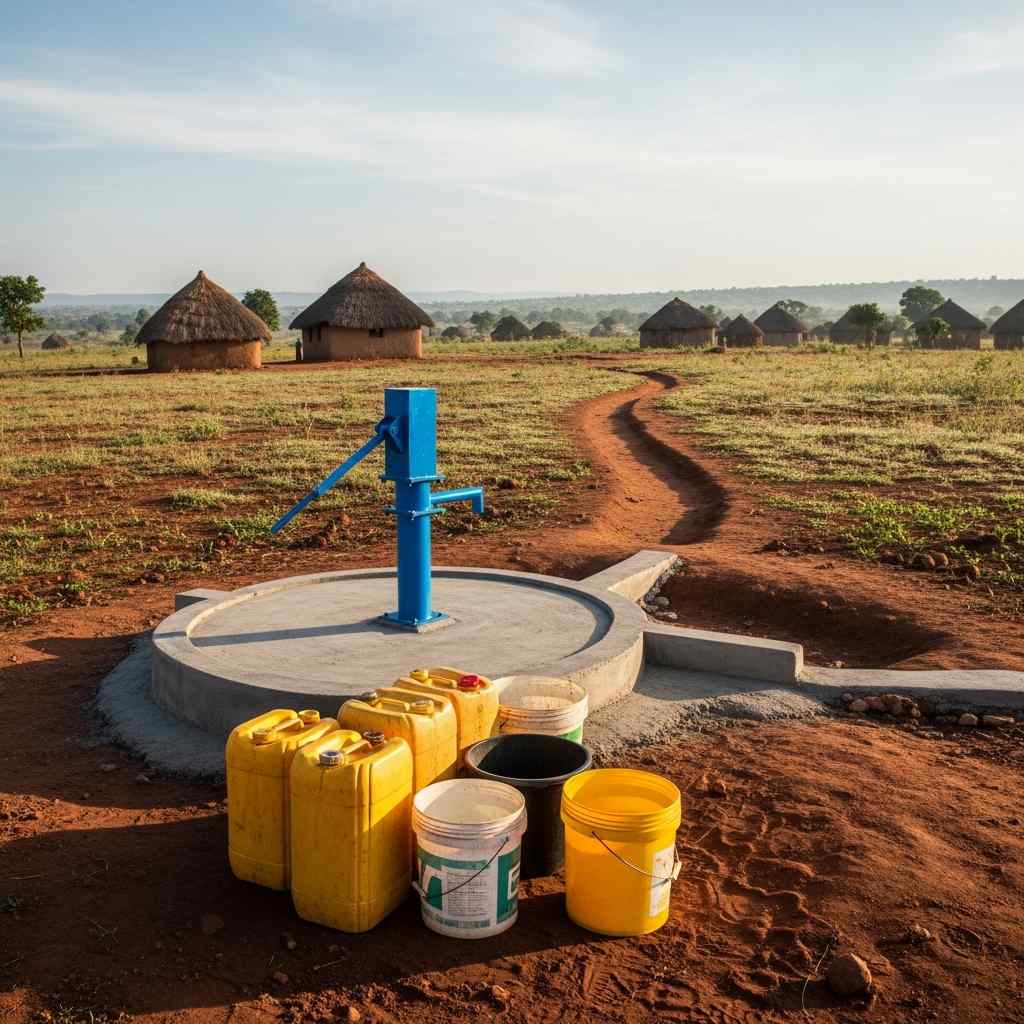
Project selection lacks a standardized needs assessment. The federal guideline provides a menu: boreholes, health posts, classroom blocks. The Ward Development Committee makes the final choice. This creates variation. A ward in Ekiti State prioritized a maize mill. A ward in Bayelsa chose a jetty repair. The flexibility addresses hyper-local needs. But there is a catch. It also opens the door for political influence.
We asked for a health center. Our representative said the money was enough only for a borehole. We have a borehole from the state government that works two days a week. Now we will have two.
A resident of Ikorodu, Lagos, speaking to a Vanguard correspondent on March 3, 2026.
Financial Governance and the Ghost of Zonal Intervention
The N1.5 trillion allocation raises immediate questions. The policy succeeds the controversial Zonal Intervention Project (ZIP) scheme. A 2024 report by civic organization BudgIT tracked ZIP execution from 2016 to 2023. It found over 4000 projects categorized as “empowerment”, vague trainings with no physical assets to verify. The new model explicitly bans ‘empowerment’ projects. It requires concrete infrastructure.
Financial control remains a central debate. Funds move directly from the Federal Ministry of Finance to the accounts of executing agencies or contractors. This process aims to cut out intermediaries. A senior official at the Economic and Financial Crimes Commission (EFCC), speaking off the record, noted the commission is monitoring the first-cycle transactions. The official said the old ZIP system was fraught with opportunities for corruption, and the EFCC is determined to prevent a repeat with the ward-based development initiative.
But there is a catch. The budget size itself is revealing. N1.5 trillion for 8,809 wards implies an average of about N170 million per ward per year. This amount exceeds the annual capital budget for many local government areas. Revenue Mobilisation Allocation and Fiscal Commission (RMAFC) data shows that in 2025, the average local government received N120 million monthly from the Federation Account, mostly for salaries. The federal fund is a massive injection. It has the potential to distort the fiscal autonomy of the third tier of government.
So what is really happening?
The policy creates a parallel development structure. It exists outside the control of state governors. Since 1999, state governments have been the primary channel for federal allocation. The N1.5 trillion moves directly from Abuja to the wards. Governors have expressed concern privately. The Chairman of the Nigeria Governors’ Forum (NGF), Governor AbdulRahman AbdulRazaq of Kwara State, made a generic statement in January 2026 calling for better coordination.
This friction manifests in practical ways. Take a ward project for a five-kilometer rural road in Nasarawa State. It required approvals from the state ministry of works. The process stalled for eight weeks. The WDC chairman accused the state of bureaucratic sabotage. The state commissioner argued the road design failed engineering standards. The project remained in limbo as of mid-March 2026. Such conflicts are predictable. The federal government builds. The state government maintains. Without coordination, assets decay quickly.
The role of local government chairmen is ambiguous. The law designates them as the chief development officers at the grassroots. The ward-based development model empowers a committee that operates independently. In Oyo State, the Association of Local Governments of Nigeria (ALGON) chapter wrote to the presidency in February 2026. They requested the formal inclusion of council chairmen in the Ward Development Committees. The presidency has yet to respond. This exclusion undermines the already fragile local government system. It could lead to political clashes during the 2027 local government elections.
We are not against development coming to our people. But development must have a plan. If every ward is building its own health post without reference to the state’s primary healthcare strategy, we will have facilities without nurses, without drugs, without sustainability.
Dr. Tunji Alausa, Minister of State for Health, during an interview on Channels Television, March 8, 2026.
Integrated Project Registration
The potential of ward-based development is significant. The risk of waste is higher. The single most effective action involves a simple administrative rule. The Federal Ministry of Finance should mandate one thing. Before any fund disbursement, the Ward Development Committee must register its selected project with the relevant state ministry. A health post registers with the state ministry of health. A classroom block registers with the state universal basic education board. A rural road registers with the state ministry of works.
This registration does not grant veto power to the state. It creates a record. It allows the state to provide technical specifications. It ensures the asset enters the inventory of the state for future maintenance and staffing. The process could take 72 hours through an online portal. This fix acknowledges a Nigerian reality: federal projects often become state liabilities. It builds a bridge. It costs little. It prevents the creation of another generation of abandoned projects.
The ward-based development initiative is a bold experiment. Its success depends on transparency in fund flow, integrity in community committees, and cooperation from state institutions. The N1.5 trillion investment in 2026 will test whether direct grassroots funding can break the cycle of top-down development failure. The evidence will be visible.











Tailor Sews Identical Dress from 40-Year-Old Bible Photo in Asaba

Twins Share Single Heartbeat Born Years Apart

Tomi Adeyemi Film Deal Changes Nigerian Storytelling

Lola Shoneyin Builds a Literary Continent at Aké Festival

ADC Leads #OccupyINEC Protest in Abuja Over Party Derecognition

Opay vs Palmpay for International Payments in Nigeria 2026

Tope Awotona Among Wealthiest Tech Founders in the United States

NFF Reforms Segun Odegbami Demands After World Cup Failures

NIDCOM Sets Stage for NIDEC 2026 Economic Conference in Toronto

How to apply for land certificate at state land registry in Nigeria 2026

Kehinde Salami Africa Global Logistics Deputy Director Seaport Operations

Kenneth Etim on Cross River Development and Diaspora Investment

Internet Sovereignty: Why Some Countries Want Their Own Separate Internet

The Story Of The Nigerian Who Helped Build Global Internet Systems

Nigerian Hackers: The Global Fraud Story and Its Fallout

Forgotten Satellites Defy Silence, Beaming Signals for Decades

Your Digital Store in Nigeria and the Reality of Domain Expiration

The Phone Stay So Quiet: An Investigation into Nigeria’s Silent Customer Lines

The Business That Died: A Nigerian Case Study in Refusal to Adapt

Hiding Your Business From People With Money

How Nollywood Grew Without Government Support

Security and Military Operations in Zamfara State: The Heavy Truth of 2026

Nigeria Produces 67 Percent Global Yam Output

Comedy Industry in Nigeria and Its Economic Contribution

 Digital Sovereignty2 months ago
Internet Sovereignty: Why Some Countries Want Their Own Separate Internet
- Diaspora2 months ago
The Story Of The Nigerian Who Helped Build Global Internet Systems
- Crime2 months ago
Nigerian Hackers: The Global Fraud Story and Its Fallout
- Space Technology2 months ago
Forgotten Satellites Defy Silence, Beaming Signals for Decades
- E-Commerce2 months ago
Your Digital Store in Nigeria and the Reality of Domain Expiration
- Edutech Portal2 months ago
The Phone Stay So Quiet: An Investigation into Nigeria’s Silent Customer Lines
- Edutech Portal2 months ago
The Business That Died: A Nigerian Case Study in Refusal to Adapt
- Business2 months ago
Hiding Your Business From People With Money