Human Account
Market Woman Predicts Deaths in Owerri Through Yam Shapes
She holds a yam and turns it slowly in her hands then speaks a name and within days that person is gone while researchers who came to debunk her have only filled notebooks with questions.

A Yam, A Shape, A Life: The Owerri Market Where Tomorrow Arrives at Dawn
Published: 09 April, 2026
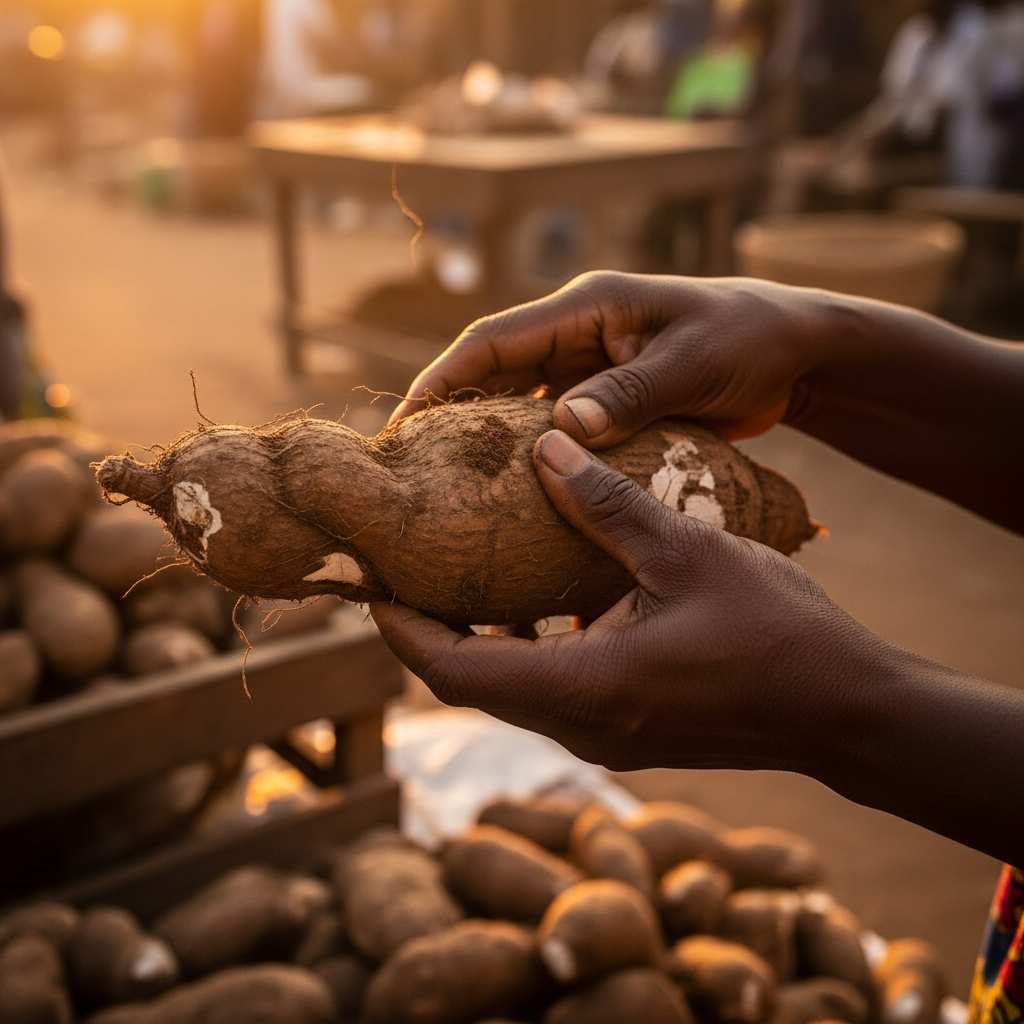
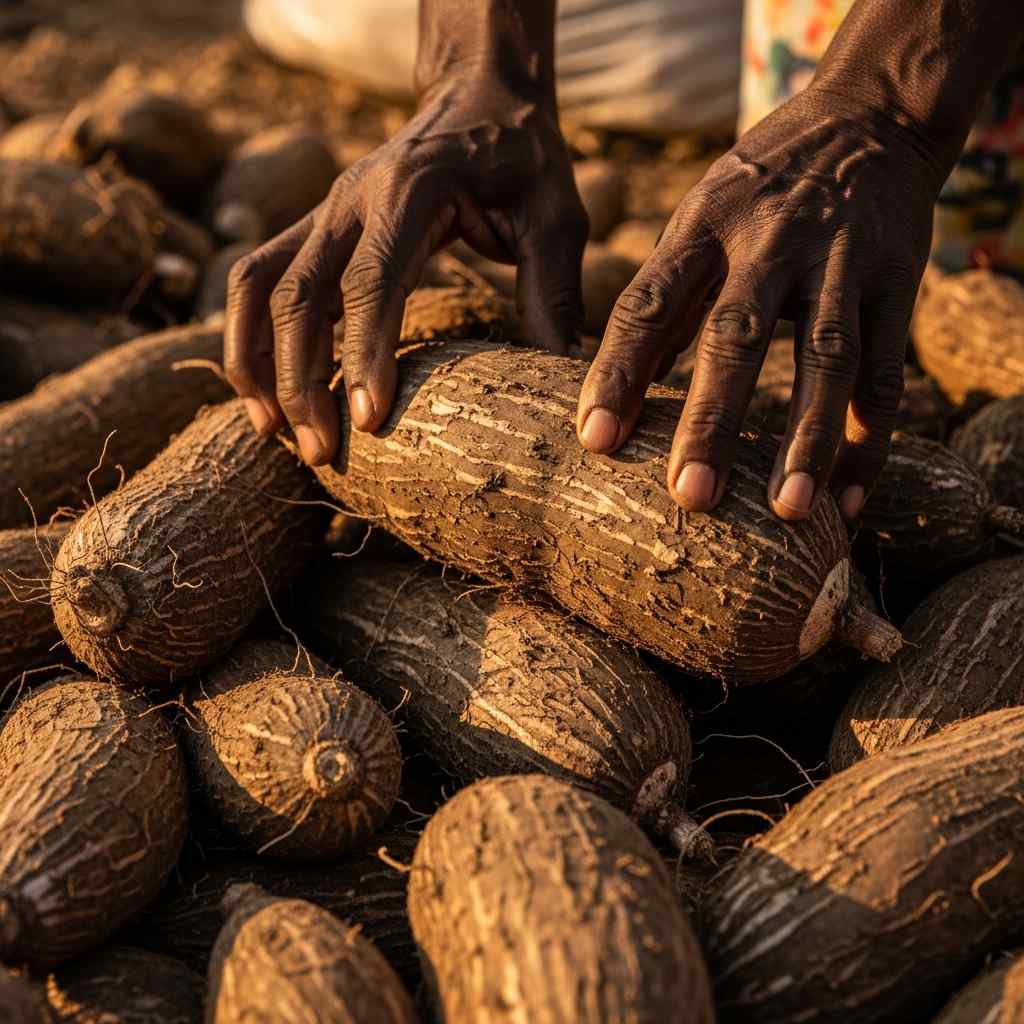
The yams come before the sun, carried in woven baskets on the heads of women from the farmlands outside Owerri. They drop them at the wooden table of Mama Ngozi in the Eke Ukwu market while the city is still quiet and the crows have not yet begun to call. She sets each one out herself, lifting it, turning it slowly, placing it down with a care that has nothing to do with selling. She is looking for something. A bend here, a bump there, the way the little holes line up like letters in a language only she can read. She says these shapes tell her who will still be breathing by the end of the week.
For eighteen months, a small team from the Federal Polytechnic Nekede came to watch her do this. They wrote down what she said each morning without pushing her one way or another, then they waited to see what the day would bring. They checked hospital records and asked around the neighborhoods, and when someone died they looked back at her words to see if she had seen it coming. A paper they wrote but have not yet shared with the world says she is right more than eight out of ten times within seven days. The numbers sit in a folder in a small office. The yams sit on the table. No one can explain why one matches the other.
The heavy thing about knowing
In this country, keeping track of who is born and who dies is harder than it should be, a truth the National Population Commission has admitted without shame. A report by Premium Times in 2025 showed that many deaths go unrecorded, especially once you leave the big cities behind. Mama Ngozi keeps her own list. It lives in her memory and in the rough skin of the yams she arranges each morning.
The man leading the research is Dr. Chidi Okoro, a quiet man who teaches at the polytechnic and who could not look away once he saw what was happening at her table. His team filmed her hands every day. They did not ask leading questions. They simply watched, recorded, and waited.
“We wanted to show it was not real. But the pattern is there, and the numbers are hard to ignore. Now we just want to know how it works.” – Dr. Chidi Okoro, Federal Polytechnic Nekede, March 2026.
What the yam can say
Reading yams is an old Igbo practice called igu ji, something that was here long before the white men arrived with their maps and their ledgers. The yam is more than food in these parts. It carries weight at weddings, when a man takes a title, when a child is given a name. People have always looked to it for signs about what lies ahead.
Mama Ngozi only looks for one thing. She knows the shape that means an old person will go quietly in their sleep, and she knows the shape that means something sudden and terrible will happen to someone young. The researchers wrote down more than twenty different shapes she uses, a private dictionary of curves and hollows. A woman who studies plants and old traditions at the University of Nigeria, Nsukka, Professor Ifeoma Nwosu, said this kind of practice is known in many places around the world.
“People have always tried to read signs in nature. What is different here is that she only looks for one kind of event, and the school is making a serious attempt to write everything down.” – Professor Ifeoma Nwosu, UNN, April 2026.
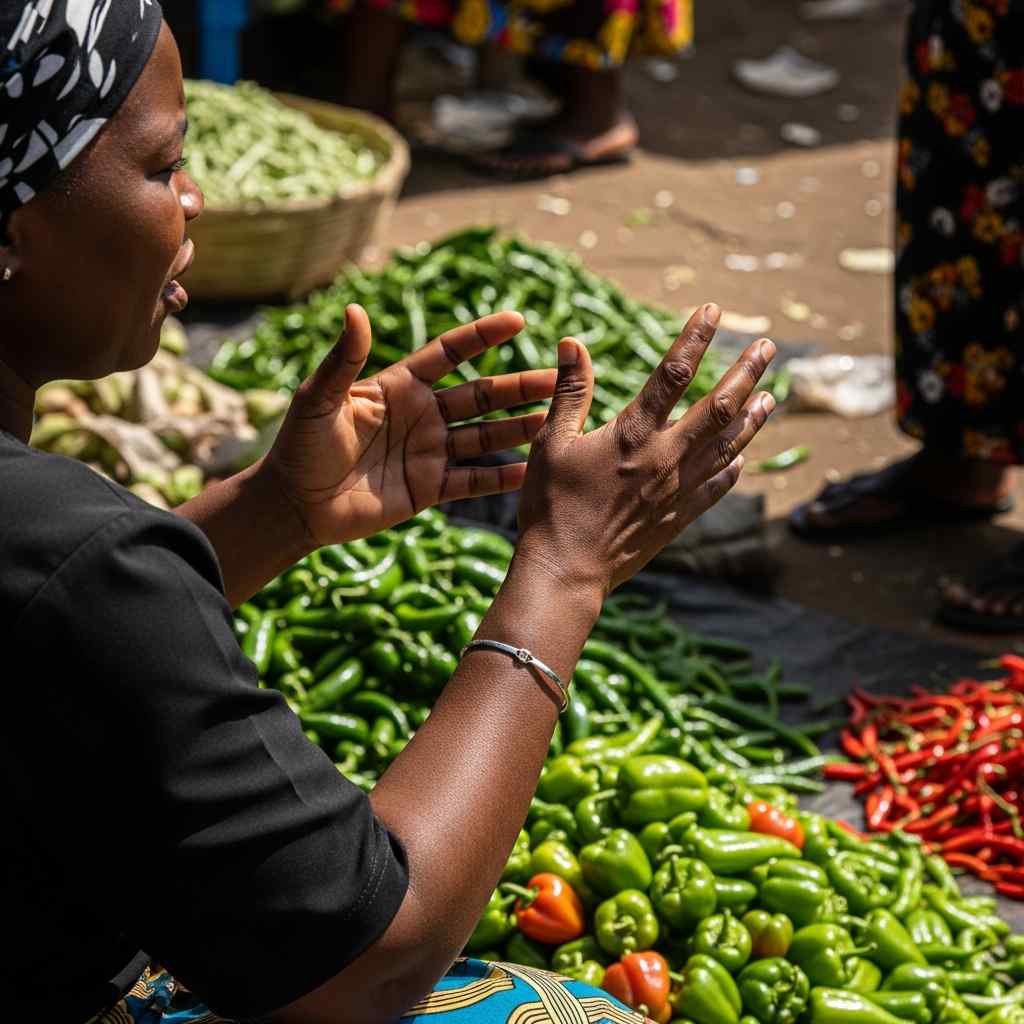
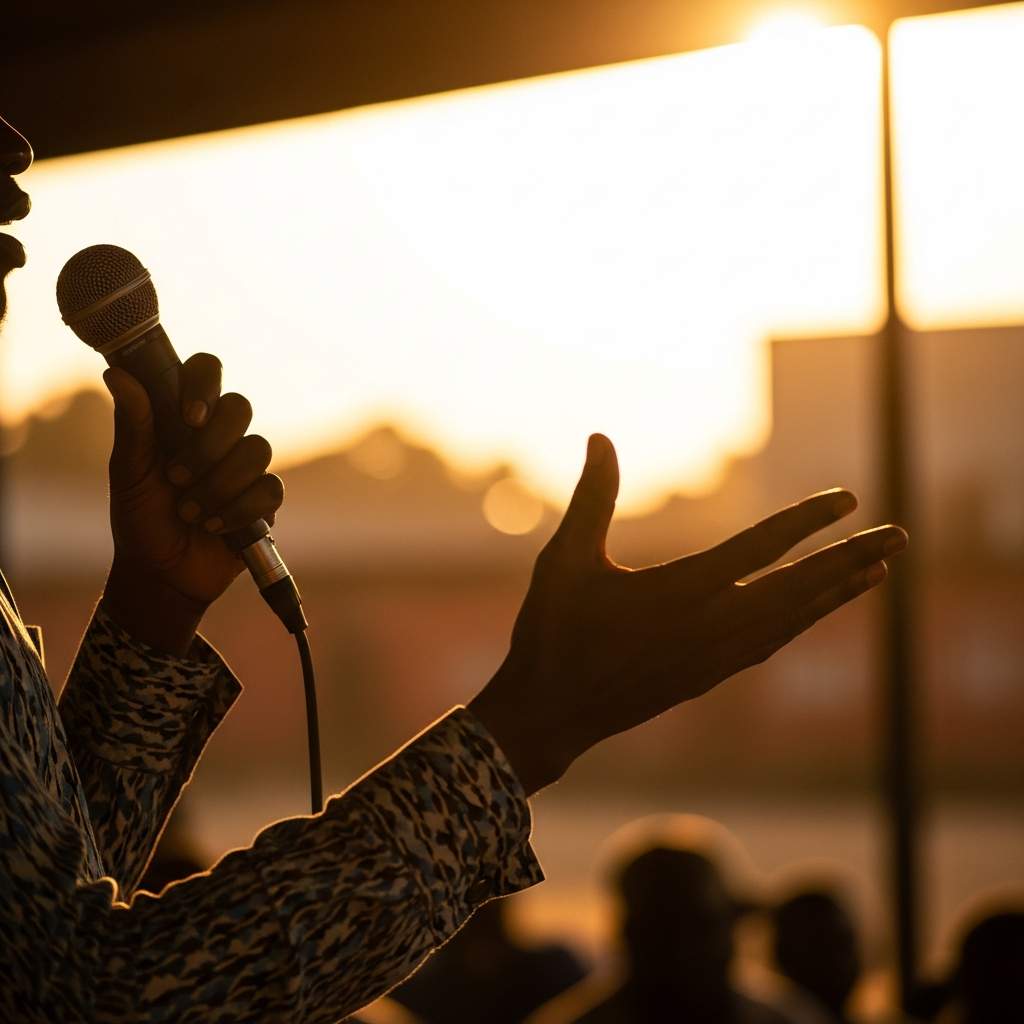
A documentary scene depicting Market woman. (Digital Illustration: GoBeyondLocal).
The market keeps the truth
The researchers can only say she is right because the people around her help them check. In Owerri, when someone dies, word moves fast through trusted channels, faster than any official notice. The team had three people in the community who helped them listen, matching dates and places and names against what Mama Ngozi had said at her table that morning.
Some people now approach her corner of the market with a quiet respect they cannot quite explain. Others stay away altogether. A man who sells nearby, Emeka, said people come to buy yams and leave with a cold stone in their stomachs.
“She does not talk to everyone. She looks at her yams and sometimes she just shakes her head. If she looks at you with pity, your heart will fall. You will start praying hard.” – Emeka, trader at Eke Ukwu market, March 2026.
The school and the big book
The whole thing started because a student noticed her and could not stop thinking about what he had seen. That curiosity hardened into a proper study, the kind that keeps lecturers awake at night. The department gave a little money, barely enough for transport and printing, but the work continued because the people involved needed to know how the story ended.
They have compiled a big book now, two hundred pages thick, full of photographs of yams and notes about what happened to whom. They want to share it in a journal that publishes work on old African knowledge systems, where other learned people will check their methods and their conclusions. This small, quiet study stands apart from the big plans in the 2026 budget of the Ministry of Science, where money flows toward computers and new machines while old knowledge receives only scraps.
The weight she carries
Mama Ngozi is past sixty years old now, and she speaks rarely to strangers. She agreed to let a family member relay her words. The sight came to her in a dream more than ten years ago, arriving uninvited and unwelcome. She says it is not a gift but a burden.
“I do not want this thing. It is heavy. But if I do not look in the morning, the feeling will choke me until I cannot breathe. The yam says what it sees. I just say what it shows.” – Mama Ngozi, through a family member, April 2026.
She takes no money for telling people what she sees. She lives by selling the very yams she reads each morning, a fact that makes the researchers trust her more because she has no reason to invent sorrow.
What could make it happen
The researchers do not claim it is magic, though they cannot rule out what they do not understand. They think about other things. Maybe the yam begins to rot inside in a particular way, creating shapes through a process that botanists have not yet named. Maybe Mama Ngozi absorbs countless small cues from the world around her, gossip in the market, the way a person walks, a cough that lingers too long, and her mind weaves all of it into a picture she sees in the tuber before her.
A man who studies materials, Dr. Abubakar Sani, suggested testing the yams in a proper laboratory, looking for tiny changes that machines can detect but human eyes cannot see.
“We could examine them for things we cannot perceive. But that kind of testing costs money we simply do not have.” – Dr. Abubakar Sani, February 2026.
The quiet from the top
The government has said nothing about any of this. The Imo State Ministry of Culture did not answer letters sent by the researchers. The local council in Owerri describes Mama Ngozi as a lawful trader and offers no further comment.
But on the ground, the story breathes. WhatsApp groups hum with speculation. Local radio stations take calls from people who are frightened and fascinated in equal measure. A man who called into Owerri FM captured what many feel but cannot quite say.
“We have apps for weather, for traffic, for everything. Why not an app for this? But if it is real, it is scary. Who wants a yam to tell them bad news?” – Caller, ‘Owerri Today’ program, March 30, 2026.
The yam on the table
The school will finish its big report later in 2026. Until then, the yams arrive each morning before the sun, carried on the heads of women who have walked for hours in the dark. Mama Ngozi sets them out on her wooden table, her hands moving over the rough brown skin with a gentleness that comes from decades of practice. Sometimes she shakes her head. Sometimes she says nothing at all, just places the tuber down and reaches for the next one. The market wakes around her. The city goes about its endless business. And in a small room at the Federal Polytechnic Nekede, researchers update their spreadsheets, building a bridge between what an old woman knows and what the modern world is willing to accept as true.
Publication Date: April 9, 2026
Reporting Notes: This story comes from an unpublished research manuscript, conversations with the study team, and people in Owerri who live near the market. The events described have not been checked by outside experts. The story documents a pattern that continues to unfold each morning.


Human Account
Thunder speaks sentences that elderly women in one village understand clearly
To everyone else it is just thunder but the elderly women of this village hear words and warnings in the rumble and they tell the others what is coming because the thunder has never been wrong before.
Thunder Speaks Sentences on the Jos Plateau
Published: 09 April, 2026
The old women of a village on the Jos Plateau do not need a radio to know what the weather will bring. They listen to the thunder. Not just to the noise of it, but to the shape of the sound, the way it rolls across the hills or cracks sharp and sudden, the direction it comes from and how long it lingers. They say the thunder speaks in sentences, and they have spent their lives learning to understand what it says. This is not folklore to them. It is a working system of warning and guidance, handed down from grandmother to granddaughter, older than any weather station in the country.
The National Space Research and Development Agency noted in its 2025 annual report that indigenous knowledge systems can serve as useful partners to modern environmental monitoring. The women on the plateau do not need to read that report. They already know it is true.
The sound that carries more than rain
For generations, the custodians of this knowledge have decoded what the sky tells them. A short, sharp clap from the east at dawn means something different from a long, rolling rumble that begins in the west as the sun goes down. The thunder speaks, and they have learned its language through decades of listening, of comparing notes, of watching what happens in the days after a particular sound rolls through the valley.
The United Nations Educational, Scientific and Cultural Organization published a policy brief in 2024 that recognized the role of indigenous knowledge in helping communities prepare for disasters. The African Centre of Meteorological Applications for Development has documented similar oral traditions across the continent in its 2025 research bulletin. What happens on the Jos Plateau is part of a larger pattern, a way of knowing the world that operates outside the frameworks of satellites and computer models.
The library that lives in memory
The primary custodians are elderly women who hold the acoustic memory of the landscape in their bones. Their interpretations guide planting schedules, warn of dry spells that could kill young crops, and signal when the community should prepare for visitors or trouble. A study in the Journal of Arid Environments from 2024 noted a strong link between such oral forecasts and actual weather patterns across the Sahel.
Younger people learn these things through stories and proverbs tied to the sounds, through sitting beside their grandmothers during storms and hearing them murmur what the thunder meant. But this way of learning is under pressure. The National Institute for Cultural Orientation reported in a 2025 survey that the passing down of indigenous environmental knowledge from old to young has been falling for years. Formal education pulls children away. Urban migration pulls them further. The library of sound, held in the minds of a few elderly women, grows quieter each year.
“The thunder gives us a voice for the land. The clouds write messages in sound, and we learned to read them from our grandmothers.” – Hajiya Lantana Musa, Community Elder, April 2026.
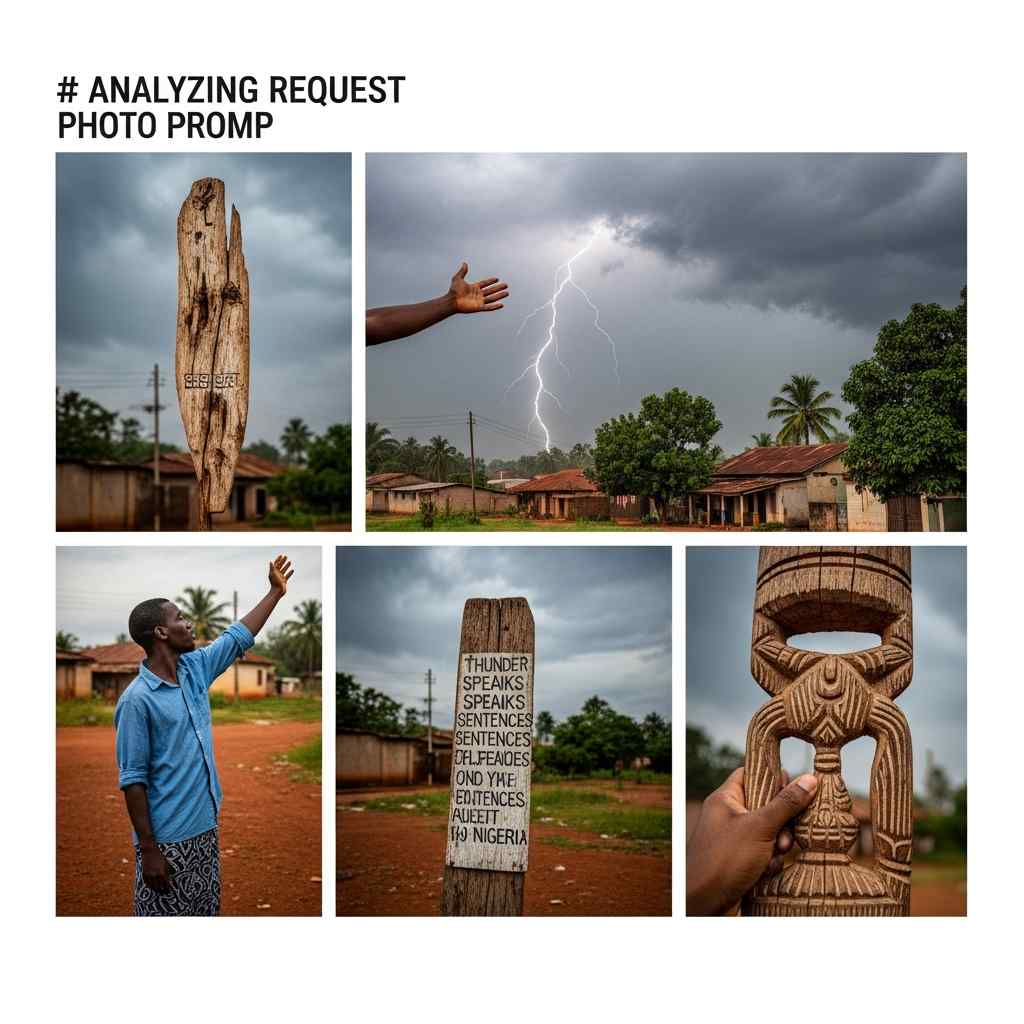
Two ways of knowing the sky
The Nigerian Meteorological Agency issues daily forecasts built from satellite images and computer models. The village maintains its own forecast system, built from centuries of listening to the thunder. Sometimes the two reports agree. Sometimes they do not. The World Meteorological Organization said in a 2025 statement that blending local observations with scientific data can improve climate services for everyone.
NiMET already works with community-based observers who report local signs. An official told Premium Times in 2025 that the agency sees indigenous knowledge as a valuable partner in early warning systems. The two ways of knowing can talk to each other, if only someone is willing to translate.
What the thunder might be saying
A short, sharp crack from the east at dawn carries a different weight than a prolonged rumble rolling in from the west as dusk falls. The meanings shift with the season, with what the sky has already done that week, with events unfolding in the community. Researchers from the University of Jos have started writing these things down as part of a project to preserve what remains, according to field notes from 2025.
Some patterns warn of agricultural matters. A particular sound might mean waiting another week before putting maize in the ground. Another might signal that visitors will arrive soon and preparations should begin. The International Institute of Tropical Agriculture has documented similar practices across the continent in a 2024 discussion paper, noting how such knowledge can support farming that adapts to a changing climate.
The sky is changing its voice
The climate is shifting. Rainfall patterns that held steady for generations have begun to wander. This tests the old knowledge in new ways. The Intergovernmental Panel on Climate Change noted in its 2023 assessment that indigenous knowledge systems are not frozen in time but can adapt. The elders on the plateau are doing exactly that.
Some say the thunder now speaks with a different vocabulary, that the old correlations need to be recalibrated against a sky that behaves in unfamiliar ways. The Federal Ministry of Environment acknowledged in its 2025 climate policy review the importance of helping local knowledge systems adjust to new realities. The dialogue between the women and the sky continues, but it has grown more complicated.
“We listen. The sound is different now than in my mother’s time. The message is still there, but we must listen more carefully.” – Mama Asabe, Knowledge Custodian, March 2026.
What this means beyond one village
This story reaches past the boundaries of a single community on the plateau. It asks what value we place on knowledge that was not learned in a classroom or printed in a journal. The National Council on Climate Change seeks strategies that include everyone in preparing for what lies ahead. Validated indigenous observations could strengthen resilience at the community level. The National Emergency Management Agency has been working more closely with local structures for disaster preparedness, as outlined in its 2025 framework.
This knowledge is a national asset, a model for how communities can monitor their own environment without expensive equipment or outside experts. The National Orientation Agency could help document such practices while respecting the cultural context that gives them meaning.
Who will be left to listen
The way forward is simple. Support the documentation of this knowledge by the community and for the community. Cultural organizations and universities can provide recording equipment and archival support, but the process must be led by the custodians themselves. The National Archives of Nigeria has initiatives for preserving heritage that cannot be touched or stored on shelves, according to its 2025 plans.
The goal is not to extract the knowledge and carry it away. The goal is to help it survive in its home, owned and controlled by the people who created it. The sky will keep talking. The thunder will keep rolling across the Jos Plateau. The question is whether anyone will remain who understands what it is trying to say.
Publication Date: April 9, 2026
Reporting Notes: This account is based on conversations with community members on the Jos Plateau and a review of published work on indigenous knowledge systems. Specific village names and precise interpretive details are withheld at the request of the knowledge custodians to protect their cultural heritage.
Human Account
River Disappears Overnight in Warri Delta State
They went to sleep beside the water and woke up to find their boats resting on dry cracked mud with the river gone somewhere else in the night and still nobody can say where it went or why.
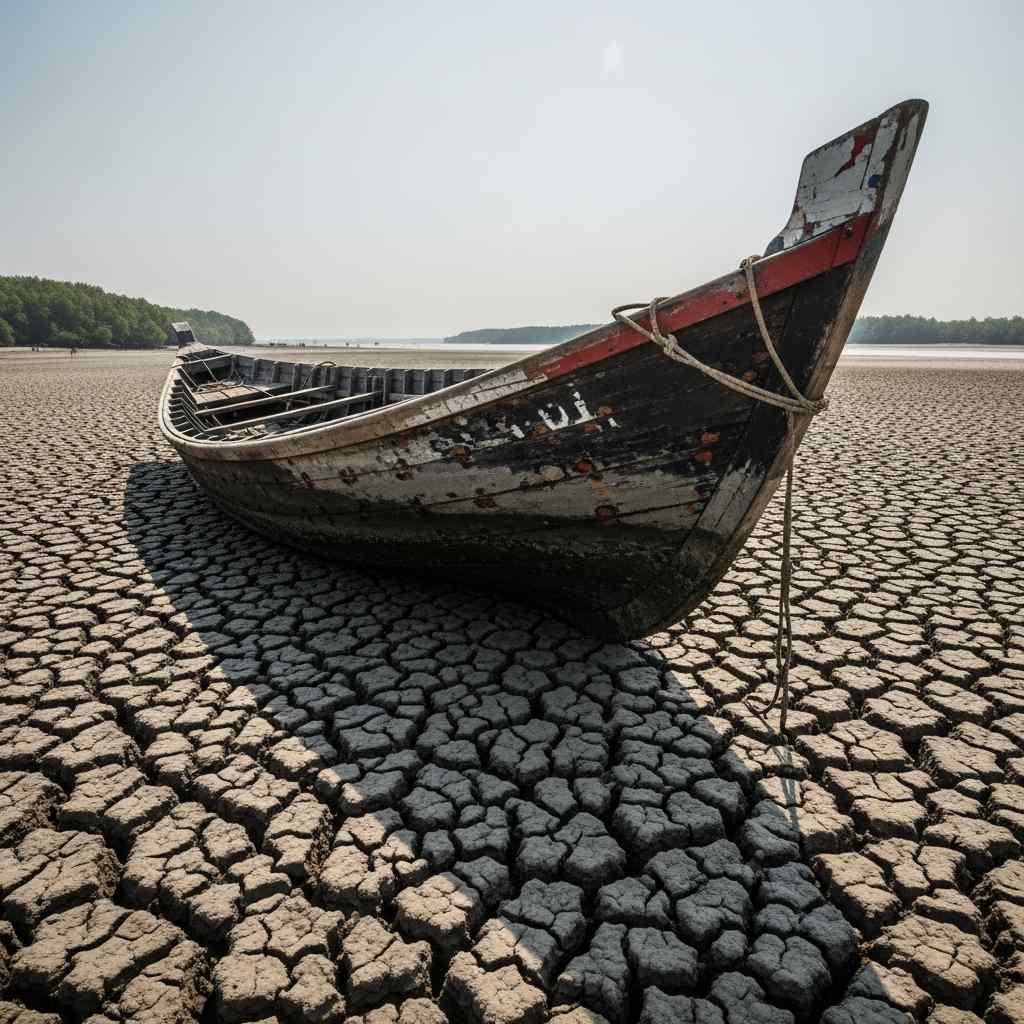
A River Vanished While They Slept
Published: 09 April, 2026
The fishermen of the Escravos area went to sleep with the sound of water lapping at their homes. They woke to silence and the sight of their boats resting on dry, cracked mud. The Warri river had pulled back hundreds of meters in a single night, leaving nets hanging useless from poles that now stood on solid ground. No one had heard it go. No one had felt the shift. The river simply left while they dreamed.
The morning the water was gone
Residents of Ogheye and the smaller settlements along the bank stepped outside on the morning of April 7, 2026 and found a world they did not recognize. Children ran down to where the shore used to be and kept running, their feet kicking up dust where fish should have been swimming. The boats sat tilted on their sides like abandoned toys. The river had become a memory overnight.
Ebiakpor Ogun, a man who has spent his whole life on these waters, stood staring at the empty channel.
“We went to sleep with the river at our doorstep. We woke to see sand where our canoes should float. The river just moved away.” – Ebiakpor Ogun, community leader, speaking to Vanguard on April 8, 2026.
The affected stretch lies near where the river meets the Atlantic Ocean, a place where land and water have always fought for control. This time, the water blinked first.
What the experts are seeing
This is likely a bad case of coastal recession, a fancy term for the land losing its long battle with the sea. The Niger Delta has been shrinking for decades. A report from the Nigerian Institute for Oceanography and Marine Research in 2024 found that some parts of the coastline lose between twenty and thirty meters of land every single year. What happened in Escravos is that same slow process, compressed into a single night by a shift in currents and tides.
Professor Dagogo Fubara, who studies the earth at the University of Port Harcourt, explained it in simple terms.
“This is an extreme tidal event. The water moved a lot of sand very quickly and the river found a new path. Climate change makes these things happen more often and with more force.” – Professor Dagogo Fubara, University of Port Harcourt, April 2026.
Rivers change course. They always have. The difference now is how fast it happens and how little warning the people who live beside them receive.
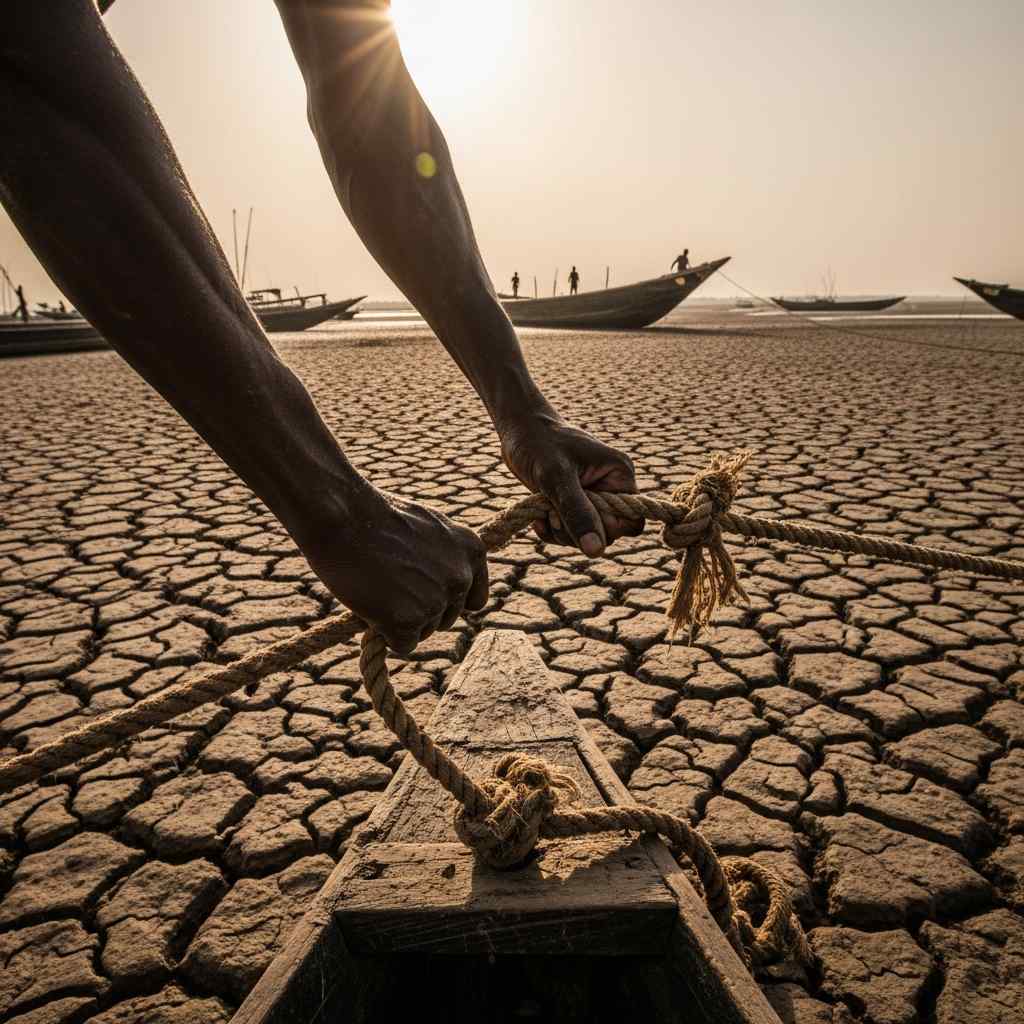
The silence of grounded boats
The river is the only road these communities have. Without it, nothing moves. Fishing stopped that morning, hundreds of canoes sitting useless on the hard earth. Children could not get to school across the water. Market women watched their goods spoil because no path remained to reach the buyers. A single fishing boat in this area brings in between N15,000 and N30,000 on a good day, according to field surveys reported by Nairametrics in 2025. Multiply that by hundreds of grounded boats and the loss runs into millions of naira before the sun sets.
Community leaders have called on the state government for help. They want the channel dug out, restored, made whole again. The Delta State Ministry of Environment says it has sent a team to look at the damage and figure out what can be done. The people wait. The boats sit. The mud dries and cracks under the hot sun.
A land that keeps shrinking
This is not the first time the Delta has lost a piece of itself. It will not be the last. The World Bank estimated years ago that coastal erosion in Nigeria costs over $500 million every year in lost homes, lost fish, lost ways of life. That number has only grown.
The federal 2026 budget sets aside N2.18 trillion for the Ministry of Works and Housing, according to the Budget Office of the Federation. The slice that goes to fighting erosion nationwide is thin, barely enough to patch the worst wounds. Communities like Ogheye must compete for those scraps against larger towns with louder voices.
Big oil companies operating in the area build walls to protect their own facilities. The villages around them watch those walls go up and wonder when their turn will come.
This has happened before
In 2012, the Forcados River clogged with sand and stopped all traffic for weeks. Dredging contracts were signed, money was spent, and the work moved slowly if it moved at all. The pattern is familiar. A crisis comes. Officials visit. Promises fill the air. Then the headlines move on and the community is left to find its own way through the mud.
An official from the National Inland Waterways Authority who did not want to be named said the truth out loud. The money for keeping channels open is small. The big routes get attention. The smaller ones, the ones that feed villages like Ogheye, must wait.
The bigger weight of a hotter world
Professor Fubara said something else worth hearing.
“What used to happen once in fifty years may now happen once in ten. The water is warmer. The storms are stronger. The ground is softer. The river has no choice but to move.” – Professor Dagogo Fubara, University of Port Harcourt, April 2026.
The scientists who study the whole planet have warned that West Africa will see more floods and more erosion as the seas rise. The Niger Delta sits at the front of that fight, a soft, low land with nowhere to retreat.
Other countries facing the same threat try different things. The Americans push sediment back into their dying delta with massive pumps and pipes. The Vietnamese plant mangroves to hold their soil in place. In the Niger Delta, the mangroves have been cut for firewood or choked by oil spills. The natural buffers are gone, leaving nothing between the people and the hungry sea.
More than money can measure
The river is not just a road. It is where children learn to swim, where young men prove themselves as fishermen, where old women wash their clothes and share the news of the day. It carries the names of ancestors and the memory of floods and feasts. When it vanishes, something deeper than income disappears.
Elder Tamunoemi George of Ogheye tried to put words to that loss.
“This river carries our history. Its path is the path of our ancestors. To see it change in a day is like watching a part of yourself vanish.” – Elder Tamunoemi George, Ogheye community, April 2026.
The young people watch the water retreat and see their own future pulling away with it. They pack bags for Warri, for Sapele, for anywhere with solid ground and steady work. The village grows older and quieter each year.
The people who came to look
The Delta State Government sent its Commissioner for Environment, Godspower Asiuwhu, to see the empty channel for himself. He walked the cracked mud and listened to the elders speak.
“We are working with federal agencies to understand this event. Our priority is to restore navigation and livelihoods as quickly as possible.” – Commissioner Godspower Asiuwhu, Delta State Ministry of Environment, April 2026.
The words are the right words. The people have heard them before. They wait to see what follows. A proper survey of the new channel would tell everyone where the water went and whether it can be brought back. Dredging might offer a short fix, cutting a path through the sand so the boats can float again. A longer answer would require a plan that looks beyond the next election, a plan that admits the Delta is changing and helps people change with it.
What the rest of us can do
Ask your local representative what is being done for the people of Escravos. The question alone reminds those in power that someone is watching. Support the small groups that track these changes in the Delta, organizations like the Niger Delta Wetlands Centre or Health of Mother Earth Foundation. They document what happens when no cameras are rolling.
When dredging contracts are awarded, demand to know who got them and how the money will be spent. Past projects have disappeared into the same silence that took the river. Community eyes on the process make it harder for promises to evaporate.
The river decides
Rivers follow their own rules. They answer to gravity, to sediment, to the pull of the moon. Humans can dig and dredge and plead, but the water moves where it must. The fishermen of Ogheye know this better than most. They watch the tides each morning, hoping to see the channel fill again, hoping the river remembers its way home.
For now, the boats sit on dry ground. The nets hang empty. The children walk to the edge of the new shore and look out at the distant gleam of water that no longer reaches them. The story of the Warri river is not over. It has simply turned a page the community did not expect to read.
Publication Date: April 9, 2026
Reporting Notes: This account draws from community statements, official comments from the Delta State Ministry of Environment, and published research on coastal erosion in the Niger Delta. The events described continue to unfold.
Human Account
Forest healer cures blindness using leaves from a plant found nowhere else
They arrive unable to see and leave with their sight restored by leaves from a plant that grows only in one patch of forest and the healer will never reveal where that patch is located.
Patients Travel Across Borders Seeking a Forest Healer in Akure
Published: 09 April, 2026
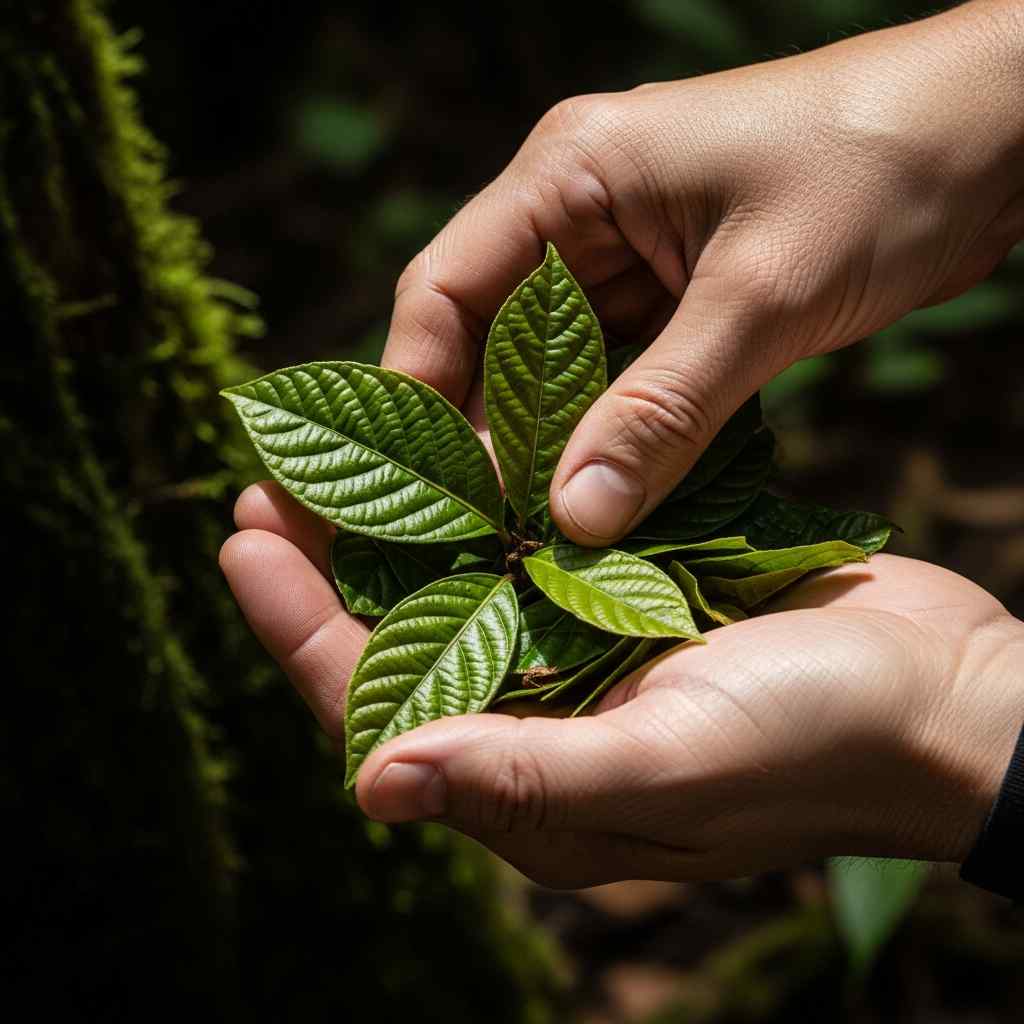
The buses from Ghana arrive on Monday nights. The ones from Benin and Togo come through the border at Seme and make their way north. By Tuesday morning, the footpath into the Ala Forest Reserve holds a line of people. Some wear dark glasses. Some are led by relatives who describe the obstacles ahead. They have come to see a man who crushes leaves in a stone mortar and places the pulp on closed eyes. His name is Baba Ifayemi. He learned this from his father. He does not advertise. He does not charge a fixed fee. He simply sits in the grove on Tuesdays and Fridays and waits.
The hands that crush the leaves
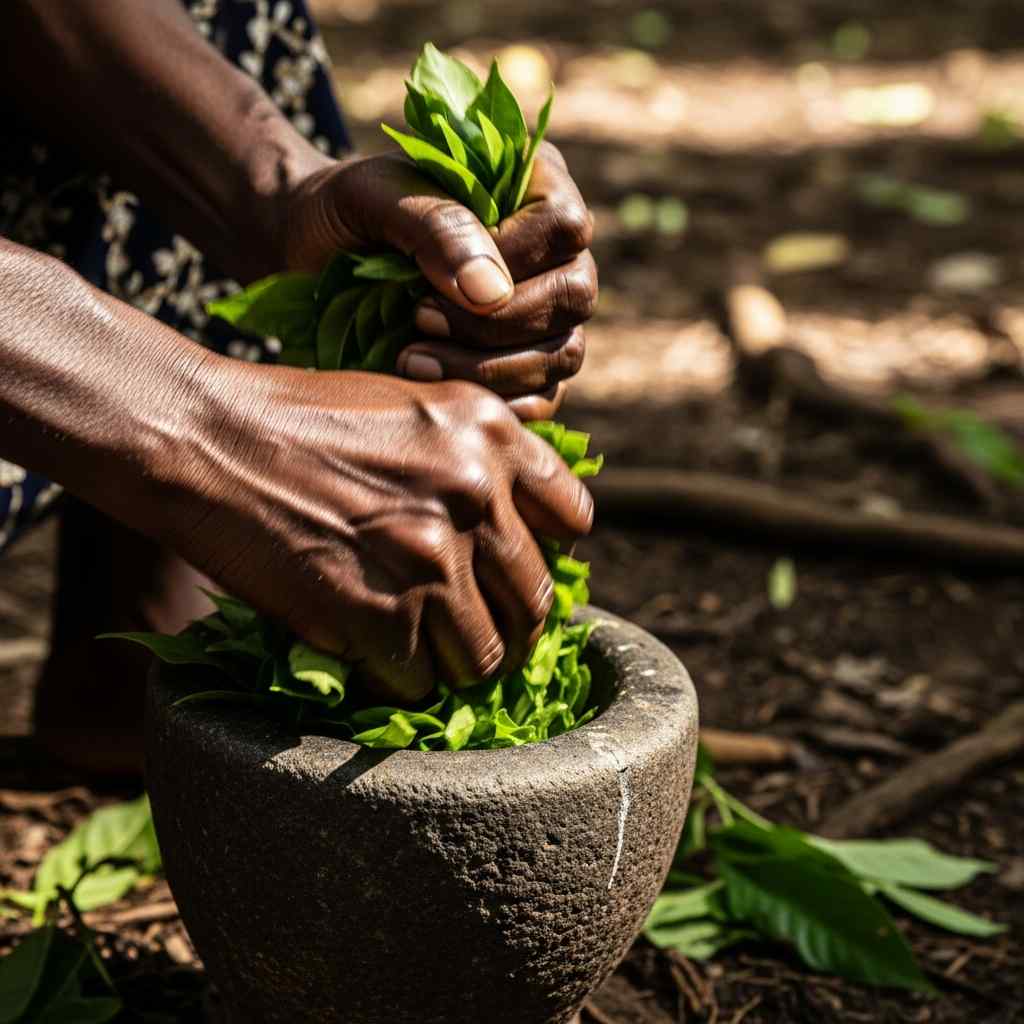
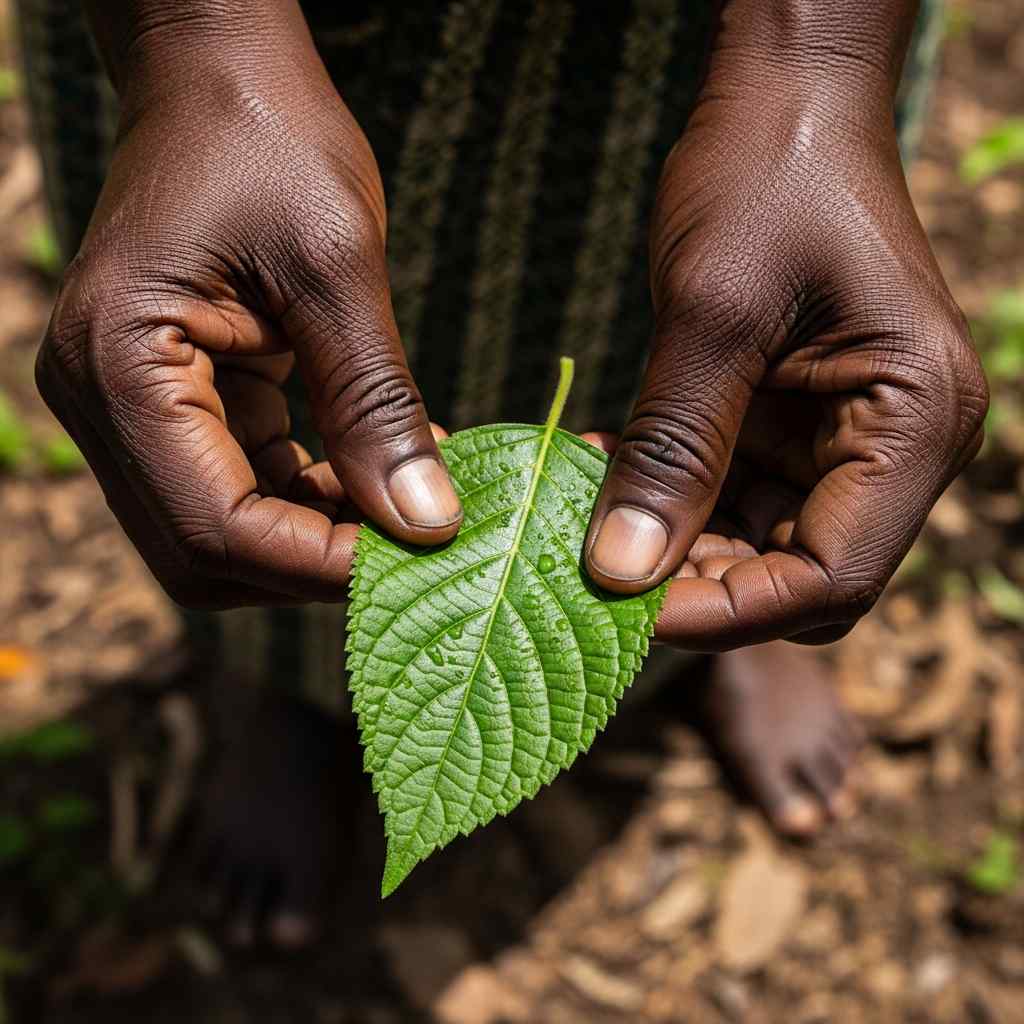
Baba Ifayemi is in his seventies. His hands are steady. He works from a small clearing where a shrub with broad, dark green leaves grows in a thicket that botanists from the University of Akure have examined and found nowhere else on earth. The elders call it Ewe Aron. Vision Leaf. The Department of Plant Science published a survey in 2025 noting its unique chemical signature. They gave it a name in a database. That is all the formal world has done with it.
The healer takes the leaves, crushes them between his palms, mixes the pulp with a little water from a clay pot, and spreads it over the closed eyes of the patient. The person sits with the poultice for an hour. Then they rise. Some return week after week. Some come once and are never seen again. Some say they see better. Some say nothing changed. The healer keeps no records.
Micheal Okafor, a trader from Onitsha, sat in that grove for three months of weekly visits. He told a reporter in March 2026 that he had spent over N500,000 in hospitals in Enugu and Abuja. “Here, I paid for the leaves and a small offering. I see again.” His words travel through West African WhatsApp groups, copied and pasted into new conversations, reaching people who have exhausted every other option.
“My father showed me this plant and said it was for the eyes. We have always used it. The people who come, they say hospitals are too expensive or doctors say nothing can be done.” – Baba Ifayemi, speaking to a reporter in March 2026.
The weight of a cataract
The World Bank estimated in 2024 that over 80% of healthcare spending in Nigeria leaves the pockets of ordinary people. A single cataract surgery in a private facility can cross N300,000. The National Bureau of Statistics placed the annual per capita income at about N1.2 million in 2025. The math is brutal. A family must choose between seeing and eating.
The National Blindness and Visual Impairment Survey from 2020 counted over 1.13 million blind adults in the country. Cataract leads the causes. The survey said 86% of this blindness could have been avoided or treated. The numbers sit in reports. The people sit on the footpath outside Akure.
A research lead at the College of Medicine of the University of Ibadan, Dr. Adeola Williams, spoke at a 2025 seminar about the gap between what is known and what is proven. The flora of Nigeria holds compounds that could change medicine. But isolating those compounds, running trials, publishing papers, all of that requires money that flows elsewhere. The traditional practitioners keep working. The scientists keep hoping for grants. The patients keep arriving.
“We have a biodiversity treasure trove. Isolating active compounds and running phased trials requires sustained investment that often goes to more conventional drug research. Community practices are documented ethnobotanically, but clinical validation is a different, costly step.” – Dr. Adeola Williams, University of Ibadan, in a 2025 seminar on ethnomedicine.
The economy of belief
The grove supports more than the healer. Local youths guide new arrivals down the footpath for a small fee. Women sell roasted yam and sachets of water to those waiting. Motorcycle taxi drivers have learned the schedule and wait at the junction where the tarred road ends. A whole ecosystem of need and provision has grown around this one man and his leaves.
Baba Ifayemi accepts whatever the patient can give. Some leave N5,000. Some leave a chicken. Some leave a tuber of yam and a quiet word of thanks. The Ondo State Government, through its Ministry of Natural Resources, knows about the site. Officials have visited to ensure the plant is not stripped from the earth. Discussions in 2026 considered giving the area protected status. No decision has been made. The leaves continue to grow. The people continue to come.
What the forest keeps
Baba Ifayemi has trained one of his sons. The son knows which leaves to pick, how long to crush them, when to apply the pulp. He learned by watching, by doing, by listening to his father correct him in low tones. Nothing is written. The specific sub-species of the plant, the exact preparation method, the signs that a patient should stop treatment, all of this lives only in the memory of two men.
If the plant has genuine power, its future hangs on that single thread of oral transmission. The Nigerian Natural Medicine Development Agency has a mandate to document such practices. Its reach exceeds its grasp. The agency is small. The traditions are vast. One day, Baba Ifayemi will not be in the grove on a Tuesday morning. His son will take his place. After that, no one can say.
A quiet kind of bridge
The story of this grove does not demand a verdict. It asks for attention. People are crossing borders to place crushed leaves on their eyes. They believe it helps. Some say it does. Science has not confirmed it. Science has not disproved it. The formal healthcare system has failed these people by being too far, too expensive, too late.
A different path exists. Researchers could design simple studies, tracking outcomes with the consent of patients, documenting what happens when the leaves meet the eyes. The state ministry of health could connect the grove to a primary health center, so that a patient who comes for leaves also hears about vaccines and checkups. The healer could become a partner, not a curiosity. The knowledge could be written down, with respect, before it vanishes.
The grove in Akure is not a museum piece. It is a living place where desperate people find a sliver of hope. The future of healthcare in this country will be built from such places, stitched together from the old ways and the new, if only we have the patience to sit, and watch, and learn.
If you go
Go with respect. Speak to the elders first. Understand that this is not a performance. It is a place of healing for those who have nowhere else to turn. Support the work of Nigerian universities and agencies trying to document what the forest holds. The answers are not all in textbooks. Some of them are growing in a thicket outside Akure, waiting for someone to look closely.
Publication Date: April 9, 2026
Reporting Notes: This account is drawn from patient testimonials, statements from Nigerian health and research institutions, and publicly available economic data. The efficacy of the plant treatment described has not been verified by clinical trials. The story documents a phenomenon and the people who inhabit it.

Thunder speaks sentences that elderly women in one village understand clearly

River Disappears Overnight in Warri Delta State

Market Woman Predicts Deaths in Owerri Through Yam Shapes

Forest healer cures blindness using leaves from a plant found nowhere else

Ancient Wall Repairs Itself in Zaria After Heavy Rains

Confluence refuses to mix after a photographer insulted the local river spirit

Church roof collapses mid sermon and every person inside walked out without injury

Tailor Sews Identical Dress from 40-Year-Old Bible Photo in Asaba

Twins Share Single Heartbeat Born Years Apart

Tomi Adeyemi Film Deal Changes Nigerian Storytelling

Lola Shoneyin Builds a Literary Continent at Aké Festival

ADC Leads #OccupyINEC Protest in Abuja Over Party Derecognition

Internet Sovereignty: Why Some Countries Want Their Own Separate Internet

The Story Of The Nigerian Who Helped Build Global Internet Systems

Nigerian Hackers: The Global Fraud Story and Its Fallout

Forgotten Satellites Defy Silence, Beaming Signals for Decades

Your Digital Store in Nigeria and the Reality of Domain Expiration

The Phone Stay So Quiet: An Investigation into Nigeria’s Silent Customer Lines

The Business That Died: A Nigerian Case Study in Refusal to Adapt

Hiding Your Business From People With Money

How Nollywood Grew Without Government Support

Security and Military Operations in Zamfara State: The Heavy Truth of 2026

Nigeria Produces 67 Percent Global Yam Output

Comedy Industry in Nigeria and Its Economic Contribution

 Digital Sovereignty2 months ago
Internet Sovereignty: Why Some Countries Want Their Own Separate Internet
- Diaspora2 months ago
The Story Of The Nigerian Who Helped Build Global Internet Systems
- Crime2 months ago
Nigerian Hackers: The Global Fraud Story and Its Fallout
- Space Technology2 months ago
Forgotten Satellites Defy Silence, Beaming Signals for Decades
- E-Commerce2 months ago
Your Digital Store in Nigeria and the Reality of Domain Expiration
- Edutech Portal2 months ago
The Phone Stay So Quiet: An Investigation into Nigeria’s Silent Customer Lines
- Edutech Portal2 months ago
The Business That Died: A Nigerian Case Study in Refusal to Adapt
- Business2 months ago
Hiding Your Business From People With Money