E-Commerce
Refurbished iPhone 13 Prices in Computer Village Market in 2026
You want a refurbished iPhone 13. The market in Computer Village sets the price. But what will that price be in 2026? Here is the thing. It comes down to battery health, parts history, and the day you walk in. So here we are.

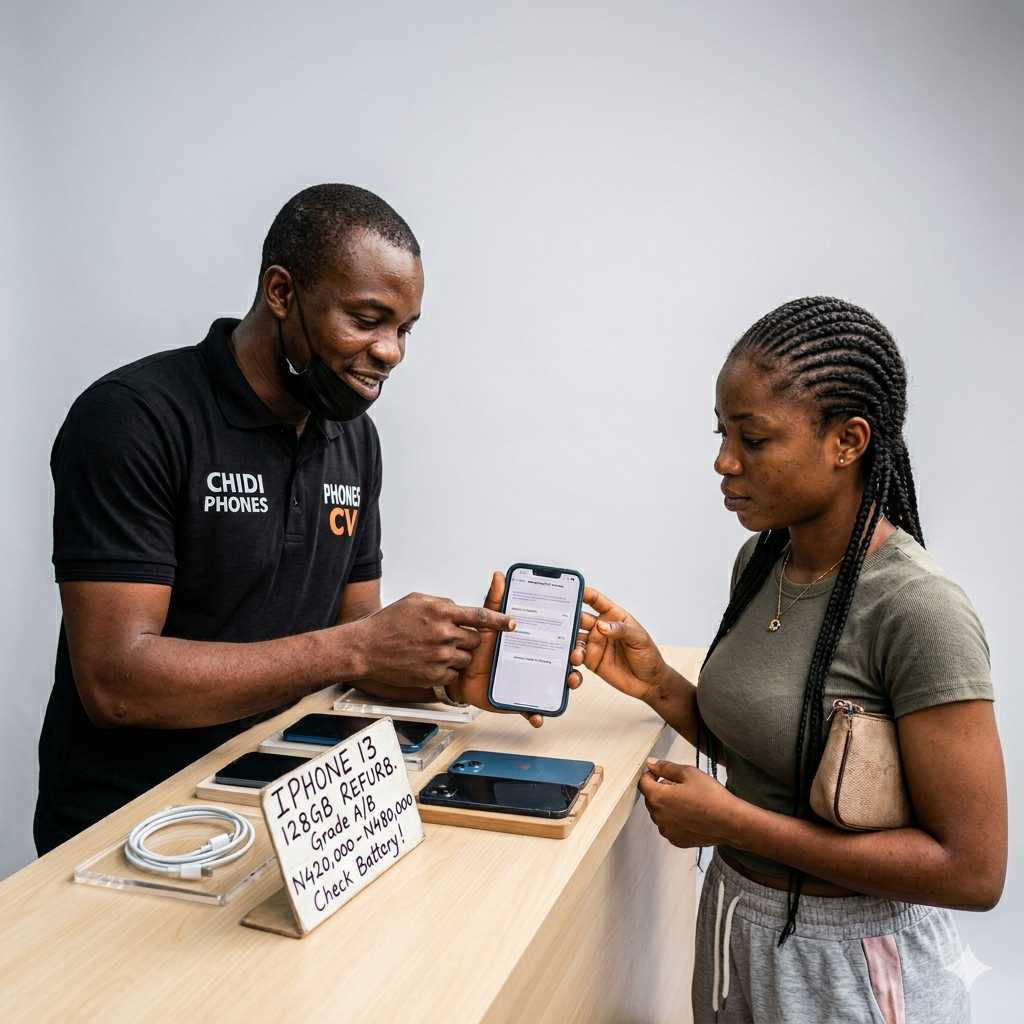
The Price Tag on a Second Chance: Refurbished iPhone 13 in Computer Village
Published: 02 April, 2026
A refurbished iPhone 13 with 128GB storage sells for between N420,000 and N480,000 in Computer Village as of early 2026. The final price depends on the phone’s cosmetic grade, battery health, and the origin of its parts. This range represents a discount of about 40% to 50% from the original retail price when the model launched.
Here is the thing about that price
You walk into a shop in Computer Village with a budget. The seller shows you three refurbished iPhone 13 units. They look identical. The price difference between them can be N70,000. The thing is, you are paying for the phone’s history. A grade A device with original parts commands the highest price. A phone with replaced components costs less.
The market operates on a simple principle. Trust has a direct monetary value. Established shops with warranties charge more. Street vendors and smaller stalls offer lower prices. The difference reflects the buyer’s appetite for risk. A report by Nairametrics in 2025 highlighted how price variations in markets like Computer Village correlate directly with vendor reputation and after-sales service guarantees.
What sellers call ‘refurbished’
Let me break it down. In the context of Computer Village, a refurbished iPhone 13 typically means a used phone imported from markets in Dubai, China, or Europe. Sellers then perform local repairs or part replacements before sale. The National Information Technology Development Agency (NITDA) has guidelines for refurbished electronics. However, enforcement in informal markets remains a challenge.
The grading system is universal. Grade A means minimal scratches. Grade B shows visible wear. Grade C has significant cosmetic issues. Battery health, displayed as a percentage in settings, is a major price factor.
The battery health trap (Critical 2026 warning)
In Computer Village, “Battery Health” is the ultimate bargaining chip.
- 85% – 89%: These are usually original “factory” batteries. They are highly prized for stability.
- 100%: Be cautious. On a model this old (iPhone 13 launched in 2021), a 100% reading often indicates a “boosted” battery or a cheap third-party replacement that may degrade quickly. Savvy 2026 buyers actually distrust a 100% reading on an iPhone 13.
- Below 80%: The phone will trigger “Service” mode. Use this to negotiate at least N30,000 off the asking price to cover a quality replacement.
A study cited by BusinessDay in 2025 noted that battery health accounts for up to 15% of the price negotiation for used smartphones in Nigerian markets.
The supply chain starts overseas
So here we are. The refurbished iPhone 13 you see in Ikeja began its journey in a wholesale market abroad. Lagos serves as the distribution hub for the entire country. Sellers cite factors like the exchange rate and import logistics as primary cost drivers. The Central Bank of Nigeria (CBN) forex policy directly impacts the landing cost of these goods.
Data from the National Bureau of Statistics (NBS) for 2025 shows continued high demand for imported used phones. This demand sustains the complex logistics network feeding Computer Village. The price you pay includes margins for the importer, the wholesaler, and the retail shop. Each link in that chain faces its own costs.
“A customer wants the original screen. If I have it, the price is high. If I use a high-quality copy, I can drop the price by N30,000. Most people choose the copy.”
— Chidi, a phone vendor at Computer Village, in a March 2026 interview.
Storage size changes the game
The 128GB model is the most common. The 256GB variant adds N40,000 to N60,000 to the price. The 512GB model is rare in the refurbished market. Its price becomes a matter of individual negotiation. Buyers with large storage needs often find the premium for higher capacity worthwhile compared to buying cloud storage.
Market surveys conducted by TechCabal in late 2025 confirmed that storage capacity is the second most important spec for Nigerian buyers of used iPhones, after overall physical condition. This preference influences what importers choose to bring into the country.
The battery health report is king
You ask for the price. The seller asks you to check the battery. This ritual defines the transaction. iOS shows a battery health percentage. A percentage above 90% is excellent. Between 80% and 90% is standard. Below 80% means the battery may need replacement soon. Savvy buyers use this number as their main bargaining tool.
Replacement batteries are available. An original-grade replacement costs about N25,000. A lower-quality replacement costs half that amount. The choice between a phone with a weak original battery and a phone with a new replacement battery involves a cost-benefit analysis every buyer makes.
Cosmetic grade: the A, B, and C of it
Grade A looks new. It has no major scratches on the screen or body. Grade B has light scratches, maybe small dents on the frame. Grade C has clear signs of use—deep scratches, noticeable dents. The price drops significantly with each grade. A Grade C phone might sell for N350,000 while a Grade A sells for N450,000.
This grading is subjective. One seller’s Grade B is another seller’s Grade A-. This ambiguity is where disputes arise. Reputable shops use consistent grading. They show the phone under bright light. They point out every flaw before discussing price. This transparency builds trust and justifies a higher price point.
“The grade tells a story. Grade A phones usually come from single owners in Europe. Grade C phones have lived a harder life. We are honest about it because the customer will see it anyway.”
— Funmi, owner of a phone retail shop in Computer Village, March 2026.
A critical 2026 warning: parts pairing
Starting with the iPhone 13, Apple increased “parts pairing.” If the screen or Face ID was replaced by a non-authorized technician in Computer Village, you will see an “Unknown Part” message in Settings > General > About. Always check this before paying.
A phone with an “Unknown Part” message should be significantly cheaper — negotiate at least N50,000 off the asking price. This message indicates that Face ID may not work properly or the screen may not function as intended.
The Nigeria Customs Service and the Standards Organisation of Nigeria (SON) have regulations on electronic component imports. The reality in a vast market like Computer Village is a mix of compliant and non-compliant parts. This mix creates the wide price spectrum buyers encounter.
The warranty determines the final margin
Shops offering a 6-month warranty price their phones higher than those offering a 1-week check period. The warranty typically covers manufacturing defects, not physical damage. This service costs money. The shop factors potential repair costs into its sale price. For the buyer, the warranty is insurance.
According to a 2025 consumer report featured in The Guardian Nigeria, buyers who paid a premium for a warranty from established Computer Village shops reported higher satisfaction rates. They cited the ability to return for minor adjustments without extra charge as a key benefit.
How the exchange rate whispers in your ear
The dollar rate today influences the price of a phone ordered two months ago. Sellers adjust prices based on current forex rates to cover future imports. When the naira weakens, prices in Computer Village rise. When the naira stabilizes, prices may soften slightly. The market reacts to CBN pronouncements in real-time.
Data from the Central Bank of Nigeria on exchange rate volatility in 2025 shows a direct correlation with price fluctuations in markets dealing with imported goods. The refurbished iPhone 13 is a clear example of this macroeconomic effect playing out on a shop counter.
The peak and slow seasons for buying
December is peak season. Prices are firm. Sellers know people have bonuses and want to buy gifts. March to August is often slower. You find more willingness to negotiate. During school holiday periods, demand for mid-range phones increases, which can affect the pricing of older flagship models like the iPhone 13.
Market analysts observing retail patterns, as referenced in a 2025 Punch newspaper article, note that discretionary spending on electronics in Nigeria follows a predictable cycle tied to salary payments, holidays, and the academic calendar.
Check the IMEI, then talk price
Before any money changes hands, check the IMEI. Use a free online service to see if the phone is blacklisted, locked, or has unpaid bills in its country of origin. A clean IMEI is the foundation of the transaction. Sellers expect this check. Reputable sellers have the IMEI displayed. This step prevents the purchase of a useless device.
The Nigerian Communications Commission (NCC) maintains a database for stolen phones. While its primary use is for phones stolen within Nigeria, checking the IMEI provides a basic level of security for the buyer. It is the first action any informed buyer takes.
Ask for the receipt from the last seller
Price negotiations conclude with a request for proof. A genuine seller provides a receipt with the shop’s stamp, the date, the phone’s IMEI, and the warranty terms. This receipt is your only protection. It turns a verbal agreement into a documented transaction. Keeping this receipt safe is as important as keeping the phone safe.
Consumer protection agencies in Lagos State have advocated for this practice. A documented sale makes it easier to resolve disputes. It moves the transaction from the informal to the formal economy, even within the bustling environment of Computer Village.
Your move in the market
Visit three shops. Inspect the same phone grade at each. Write down the prices. Ask about the battery, the parts, and the warranty. Use the lowest quote to negotiate with the shop you prefer. This method takes time but yields the best value. It transforms you from a casual browser into a serious buyer.
The difference between the first price quoted and the final price paid is often a function of the buyer’s demonstrated knowledge. Sellers respect buyers who ask specific questions about battery cycles, part origins, and IMEI status. This respect translates into a better deal.
The market for a refurbished iPhone 13 in Computer Village is a live economics lesson. Supply chains, forex rates, consumer psychology, and technology all meet on a glass display counter. The price is a number. The story behind that number is what you pay for, or what you save on. Understanding the story makes all the difference.
Why the iPhone 13 is still AMAZING in 2025 📱 – Relevant coverage on this topic.









E-Commerce
Your Digital Store in Nigeria and the Reality of Domain Expiration
Here is the thing. Your digital store in Nigeria runs on a domain name. That domain expires. One morning customers see white screen. Business gone. So what do you do? This is the reality.


“`html
Your Digital Store in Nigeria and the Reality of Domain Expiration
Published: 12 February, 2026
One day your customers can find you. The next, they cannot. A digital store in Nigeria operates on borrowed time the moment the domain name registration lapses. The address they type becomes available for anyone to claim. This transaction requires a yearly fee, a detail many forget until the service vanishes.
The Invoice You Might Miss
Domain names are rental agreements, not purchases. NiRA manages the .ng domain space of the country. Registration for a .com.ng or .ng domain typically lasts one or two years before renewal is necessary.
According to data from NiRA, the registry estimated over 215,000 active .ng domain names as of the fourth quarter of 2025. A significant portion supports commercial activity. The trouble is, the renewal reminder email often lands in a promotional or spam folder.
Business owners juggle multiple pressures. An email about a N5,000 renewal fee lacks the urgency of a supplier payment. The consequence remains abstract until the digital platform and email stop functioning.
What Actually Happens When the Clock Runs Out
The process follows a strict timeline. The domain first enters a grace period, usually 15 days. The original owner can still renew, often with a small late fee. The digital platform may become unstable or go offline completely.
After the grace period, the domain enters a redemption phase. Recovery now becomes more complex and expensive, with NiRA’s official redemption fee is N10,000, though registrars may add service charges, pushing total fees to N30,000 or more.
If the owner takes no action, the domain returns to the pool of available names. This creates immediate risk. Competitors, cybersquatters, or fraudsters can register it. They can replicate the old site to defraud customers. The original business loses its primary online identity and the trust built over years.
“The biggest loss is not the domain fee, but the customer trust and search engine ranking built over years. A business can spend months recovering from a lapse that lasts only a few days.”
Oluwaseun Adesanya, a Lagos-based cybersecurity consultant, in an interview with BusinessDay in February 2026.
The Scale of the Problem in the Nigerian Market
Quantifying expired domains is difficult. Registrars treat this data as proprietary. But industry estimates presented at a 2025 NiRA forum suggested between 5% and 8% of .ng domains lapse each year due to non-renewal. This translates to thousands of online addresses of Nigeria changing hands annually.
The proliferation of digital store platforms on social media complicates the picture. A business might rely entirely on Instagram, with the domain hosting only a straightforward landing page. Owners de-prioritize it, viewing it as a minor cost center.
Payment failures contribute. A debit card on file expires. A bank rejects an auto-renewal. The owner changes phone numbers and loses access to the registrar account. The digital infrastructure has many single points of failure.
A Policy Gap and a Business Vulnerability
NITDA promotes digital entrepreneurship. Its mandates include developing frameworks for the IT sector. But a specific policy or widespread consumer education campaign on domain name management remains underdeveloped.
The focus often rests on creation, how to start an online business, rather than sustenance. The 2024-2027 Strategic Roadmap and Action Plan from NITDA emphasizes broadband penetration. The ongoing maintenance of a digital presence receives less direct policy attention.
This creates a systemic vulnerability. Customer loyalty hinges on reliable access. A domain lapse breaks that chain of trust instantly.
“We see it as a important part of digital hygiene, akin to renewing a business premises permit. Yet, because it is intangible, many treat it with less seriousness than a physical license.”
Kashifu Inuwa Abdullahi, Director-General of NITDA, speaking at the Digital Nigeria Conference in October 2025, as reported by Premium Times.
The Real Cost is More Than a Renewal Fee
Financial loss extends beyond the domain. Search engine rankings, built over years, reset to zero. A new domain starts from scratch. Email communication halts, missing invoices and customer inquiries. Brand equity dissipates.
Customers who bookmarked the site encounter an error page. Social media bios with the now-defunct link require updating. Printed materials become obsolete.
But there is a catch. In a worst-case scenario, a bad actor acquires the domain. They can launch phishing campaigns against the old customer base. Legal action to reclaim the domain involves time and expense most small businesses lack.
How the System Works for Those Who Know
Domain registrars operate on a prepaid model. They purchase domains in bulk from central registries like NiRA. They then resell them with a markup. Registrars have a financial incentive to ensure renewals. Their reminder systems, however, depend on accurate customer contact information.
A change of email address guarantees a missed notice.
Some registrars offer multi-year registration discounts. A business can secure a domain for 5 or 10 years at a reduced rate. This requires a larger upfront payment, which deters owners operating with tight monthly cash flow.
Put a Calendar Reminder for Your Digital Rent
Set a manual reminder for one month before the domain expires. Use the date on the original receipt. Treat this with the same importance as a tax deadline.
Enable auto-renewal, but use a payment method likely to valid. A dedicated bank account for digital overheads provides a buffer. Review the contact email on the registrar account every six months.
Register the domain for the maximum period the budget allows. A five-year registration pushes the problem far into the future. The mental relief outweighs the minor discount.
The Infrastructure Around Your Storefront
A domain name is one component. Hosting, the service that stores digital platform files, is a separate contract. Letting hosting lapse also makes the site inaccessible, even with an active domain. The two services often come from different providers.
Business email linked to the domain depends on the DNS records of the domain being active. A domain lapse breaks email delivery immediately. Security certificates (SSL) also require annual renewal. An expired certificate makes browsers display security warnings.
These interconnected parts create a chain of expiry dates to manage.
A Look at the Broader Digital Situation
As Nairametrics reported in January 2026, the CBN stated e-commerce transactions via NIBSS Instant Payment (NIP) reached N5.4 trillion in the first three quarters of 2025. This illustrates the massive scale of online commerce. This activity relies on digital storefronts that accessible.
Each lapse represents a rupture in this economic network. It means lost sales and a business potentially stepping back. The expansion of fintech and payment platforms like Paystack has solved one major hurdle.
The foundational issue of maintaining a permanent, owned digital address now presents the next operational challenge.
A Practical Step
Log into your domain registrar account today. Note the expiry date in a place you check regularly. Update the contact email to one you monitor daily.
Consider consolidating services. Some providers offer domain, hosting, and email in a single bundle with one renewal date. This simplification reduces the administrative burden.
View the domain renewal fee as a non-negotiable operational cost, like electricity. Budget for it annually. The cost of losing the domain always exceeds the cost of keeping it.
The digital store in Nigeria has moved from a novelty to a core component of the economy. Its infrastructure demands diligent maintenance. The lock on the door needs a key, and the key requires an annual fee.
Forgetting to pay leaves the door open for anyone to walk in.
Where To Sell Digital Products? (Forget Etsy & Stanstore) , Rochelle Be. (Digital Illustration: GoBeyondLocal)
“`

Abike Dabiri Erewa Calls for Diaspora Women in Nigerian Politics

Katsina Goat Gives Birth to Twin with Arabic Markings

Midnight Market Appears in Okija Forest Each December

Dye pits whisper names and multiple visitors have reported hearing the same ones

Lagoon Pulls Woman Back Lagos Third Mainland Bridge Incident

Boy Remembers Past Life in Maiduguri, Identifies Strangers

River Spirit Spares Fisherman Who Defied Efik Market Day

House Built on Termite Mound Stands for Eighty Years in Ibadan

Initiates Hear Same Song Before Visiting Osun Grove

Coal Mine Collapses Twice in Enugu Miner Walks Out Alive

Refinery Lights Flicker at Port Harcourt on a Deadly Anniversary

Leather Worker Stitches Patterns from a Father’s Dreams in Sokoto

Internet Sovereignty: Why Some Countries Want Their Own Separate Internet

The Story Of The Nigerian Who Helped Build Global Internet Systems

Nigerian Hackers: The Global Fraud Story and Its Fallout

Forgotten Satellites Defy Silence, Beaming Signals for Decades

Your Digital Store in Nigeria and the Reality of Domain Expiration

The Phone Stay So Quiet: An Investigation into Nigeria’s Silent Customer Lines

The Business That Died: A Nigerian Case Study in Refusal to Adapt

Hiding Your Business From People With Money

How Nollywood Grew Without Government Support

Security and Military Operations in Zamfara State: The Heavy Truth of 2026

Nigeria Produces 67 Percent Global Yam Output

Comedy Industry in Nigeria and Its Economic Contribution

 Digital Sovereignty2 months ago
Internet Sovereignty: Why Some Countries Want Their Own Separate Internet
- Diaspora2 months ago
The Story Of The Nigerian Who Helped Build Global Internet Systems
- Crime2 months ago
Nigerian Hackers: The Global Fraud Story and Its Fallout
- Space Technology2 months ago
Forgotten Satellites Defy Silence, Beaming Signals for Decades
- E-Commerce2 months ago
Your Digital Store in Nigeria and the Reality of Domain Expiration
- Edutech Portal2 months ago
The Phone Stay So Quiet: An Investigation into Nigeria’s Silent Customer Lines
- Edutech Portal2 months ago
The Business That Died: A Nigerian Case Study in Refusal to Adapt
- Business2 months ago
Hiding Your Business From People With Money