Digital Sovereignty
Internet Sovereignty: Why Some Countries Want Their Own Separate Internet
Here is the thing. A country wants its own internet. It sounds extreme. But the reasons are simple. Block outside surveillance. Keep money from flowing out. Control the digital space. So here we are.

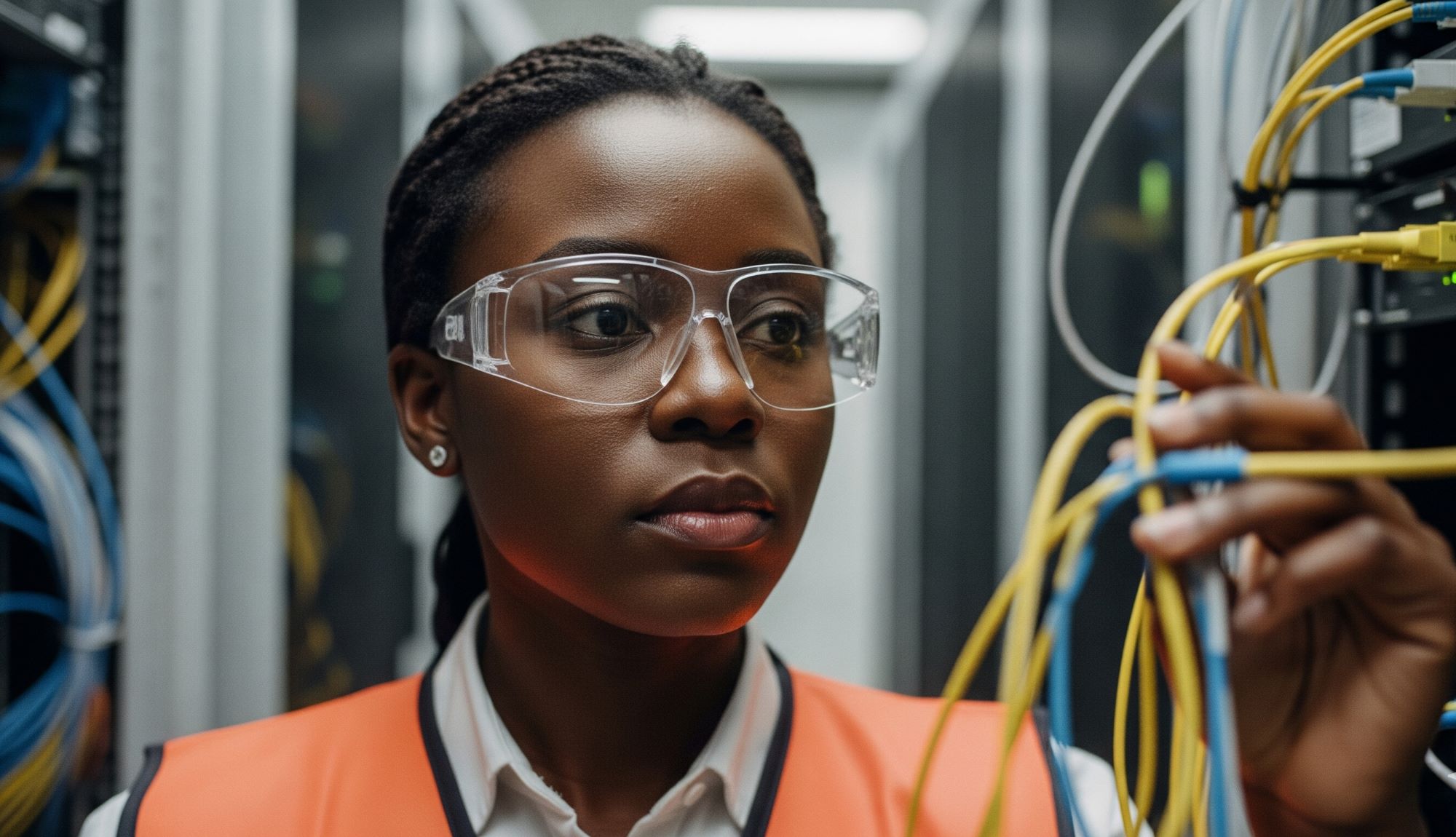
Independent Networks: The New Geopolitical Infrastructure
Published: 12 February, 2026
What happens when the road you depend on can be closed by someone else? The world runs on networks it did not build. For decades, a handful of nations controlled the valves on the internet, global finance, and satellite navigation. That era is ending.
Countries are now constructing their own independent networks. Parallel systems for communication, finance, and data. The goal is control. The method is complex, expensive, and it is reshaping alliances overnight.
The Heavy Truth About Control
In February 2026, the United States Treasury Department sanctioned a Russian bank using the SWIFT system. Transactions froze. The move was a stark reminder: SWIFT, based in Belgium, remains a tool of Western foreign policy.
This event accelerated existing plans. The BRICS bloc had already launched a pilot for its own financial messaging system. According to a statement from the Russian Finance Ministry, 159 banks from 13 countries were participating in the trial. The system offers an alternative for nations seeking insulation.
The logic is inescapable. If your economy depends on a payment highway another country can block, you lack sovereignty. Building a separate road becomes a strategic necessity.
Why Your Internet Might Come From Space
Look at the map of undersea internet cables. They cluster around Europe and North America. This creates a physical vulnerability for a country like Nigeria. A cut cable off the coast of Côte d’Ivoire in 2024 caused internet outages across West Africa for days.
This reality fuels the demand for non-terrestrial networks. Starlink, operated by SpaceX, was licensed by the Nigerian Communications Commission in 2022. By January 2026, estimates suggested the company had over 150,000 active terminals in the country, as BusinessDay noted that year.
For remote communities, it means connectivity. For the government, it means an option that bypasses terrestrial infrastructure owned by foreign telecom giants. The price is higher, but the redundancy has value.
“Diversification is not a luxury, it is a core component of national security strategy. Reliance on a single point of failure is a risk no nation should accept.”
Prof. Umar Danbatta, Executive Vice Chairman, Nigerian Communications Commission, speaking at the International Telecommunication Union forum, Geneva, February 2026
Other nations are going further. China launched the Guowang satellite constellation. India approved its BharatNet satellite initiative. These are sovereign independent networks in low Earth orbit.
The Data Must Live Here
A different kind of network is being built with laws, not rockets. Data localization laws mandate that certain types of citizen data within national borders. The Data Protection Act of 2023 of Nigeria includes provisions for cross-border data transfer restrictions.
The National Information Technology Development Agency is the regulator. In its 2025 compliance report, the agency noted that 42% of major data controllers had established local data servers, up from 18% in 2022.
The argument centers on privacy and security. Data stored abroad falls under that country’s laws. A European court order or an American subpoena can access it. Local storage creates a legal moat.
But there is a catch. Economists point to the cost. Building local data centers requires massive capital investment. It increases operational expenses for businesses. The trade-off is control versus convenience.
Where things stand today
The theory of independent networks meets the practice of daily life in Lagos. A trader in Alaba Market uses Paystack, a Nigerian fintech, for online sales. The transaction is processed locally. The data in Lagos. This is a micro-scale independent financial network.
Contrast this with a manufacturer importing machinery. The letter of credit travels through SWIFT, routed through correspondent banks in New York or London. The manufacturer pays fees in dollars and faces the full exposure of the global financial weather.
The Central Bank of Nigeria has promoted the Pan-African Payment and Settlement System. PAPSS allows direct currency settlement between African nations. Adoption is growing but slow. Old networks have inertia. New networks need critical mass.
“We are not seeking to dismantle the existing system. We are building bridges and alternative routes. In traffic, you always want a detour option.”
Dr. Olayemi Cardoso, Governor, Central Bank of Nigeria, interview with The Guardian Nigeria, March 10, 2026
The cost of independence is real. Maintaining a sovereign satellite system demands a national space agency with a serious budget. Running a financial messaging network requires global trust and technical resilience. Many nations lack the capacity.
The Security Argument That Resonates Everywhere
Cyber attacks are a constant threat. In 2025, a ransomware attack disrupted the digital platform and payment portals of a major federal ministry in Abuja for 72 hours. Premium Times reported that forensic suggested the attack originated from servers in Eastern Europe.
This incident strengthened the argument for national cyber shields. An independent network, proponents say, is easier to defend. You control the entry points. You set the security protocols. You monitor the traffic without foreign oversight.
Wait, it gets more complex. The counter-argument is technical isolation. A closed network might be safer from some attacks, but it also cuts off the rapid sharing of global threat intelligence. Security through obscurity has limits.
For military and government communications, the shift is absolute. Nations are deploying dedicated, encrypted satellite channels and private fiber-optic lines. These are the ultimate independent networks, invisible to the public internet.
The Economic Calculus of Digital Sovereignty
Building these networks is a multi-billion-dollar decision. The government of Nigeria allocated N35 billion in the 2026 budget for the expansion of the National Information and Communication Technology Infrastructure Backbone. This is about 0.2% of the total national budget.
The return on investment is measured in jobs, retained capital, and strategic leverage. Local data centers create employment for engineers and technicians. Local payment systems keep transaction fees within the economy.
But there is a risk of building white elephants. A national satellite system with poor coverage or high costs will fail. A financial network with few users is a museum piece. The technology must be competitive, not just patriotic.
The most successful models involve public-private partnerships. The government provides the regulatory framework and strategic investment. Private companies bring innovation and operational efficiency. The licensing by Nigeria of private satellite internet providers follows this path.
What You Can Do Tomorrow
For the average citizen or business owner, the grand geopolitics of independent networks feels distant. The practical implications are not.
Audit your digital dependencies. Where is the primary data of your company hosted? Which payment gateways do you use, and where are they based? Understanding your own exposure to foreign-controlled networks is the first step.
Consider diversifying your tools. If you rely on a single cloud provider based overseas, explore a local backup option. If all your payments go through one international platform, test a domestic alternative.
This is not about a full-scale switch. It is about building resilience through optionality. When the main road is blocked, you want to know the side streets.
The Inevitable Fragmentation
The push for independent networks will fragment the global digital situation. The vision of a single, open, worldwide internet is receding. In its place, we see a patchwork of regional and national blocs.
This fragmentation carries costs. Interoperability becomes a technical and diplomatic challenge. A payment from Nigeria to India might need to pass through two different sovereign systems, adding complexity.
Yet, for many nations, the cost of dependence appears higher. The ability of a foreign power to disconnect a country from the global financial system is an existential concern.
So here we are. Nations are digging their own digital trenches. They are launching satellites and writing data laws. The age of universal networks is giving way to the age of strategic, sovereign, and independent networks. The infrastructure of power is being rebuilt, one cable, one satellite, and one server at a time.
Nigeria, Independence And Nation Building Pt.6 | The Core | Channels Television. (Digital Illustration: GoBeyondLocal)


Church roof collapses mid sermon and every person inside walked out without injury

Tailor Sews Identical Dress from 40-Year-Old Bible Photo in Asaba

Twins Share Single Heartbeat Born Years Apart

Tomi Adeyemi Film Deal Changes Nigerian Storytelling

Lola Shoneyin Builds a Literary Continent at Aké Festival

ADC Leads #OccupyINEC Protest in Abuja Over Party Derecognition

Opay vs Palmpay for International Payments in Nigeria 2026

Tope Awotona Among Wealthiest Tech Founders in the United States

NFF Reforms Segun Odegbami Demands After World Cup Failures

NIDCOM Sets Stage for NIDEC 2026 Economic Conference in Toronto

How to apply for land certificate at state land registry in Nigeria 2026

Kehinde Salami Africa Global Logistics Deputy Director Seaport Operations

Internet Sovereignty: Why Some Countries Want Their Own Separate Internet

The Story Of The Nigerian Who Helped Build Global Internet Systems

Nigerian Hackers: The Global Fraud Story and Its Fallout

Forgotten Satellites Defy Silence, Beaming Signals for Decades

Your Digital Store in Nigeria and the Reality of Domain Expiration

The Phone Stay So Quiet: An Investigation into Nigeria’s Silent Customer Lines

The Business That Died: A Nigerian Case Study in Refusal to Adapt

Hiding Your Business From People With Money

How Nollywood Grew Without Government Support

Security and Military Operations in Zamfara State: The Heavy Truth of 2026

Nigeria Produces 67 Percent Global Yam Output

Comedy Industry in Nigeria and Its Economic Contribution

 Diaspora2 months ago
The Story Of The Nigerian Who Helped Build Global Internet Systems
- Crime2 months ago
Nigerian Hackers: The Global Fraud Story and Its Fallout
- Space Technology2 months ago
Forgotten Satellites Defy Silence, Beaming Signals for Decades
- E-Commerce2 months ago
Your Digital Store in Nigeria and the Reality of Domain Expiration
- Edutech Portal2 months ago
The Phone Stay So Quiet: An Investigation into Nigeria’s Silent Customer Lines
- Edutech Portal2 months ago
The Business That Died: A Nigerian Case Study in Refusal to Adapt
- Business2 months ago
Hiding Your Business From People With Money
- Entertainment & Media1 month ago
How Nollywood Grew Without Government Support