Citizen Services
She Kept Asking and They Kept Moving Her in Nigeria
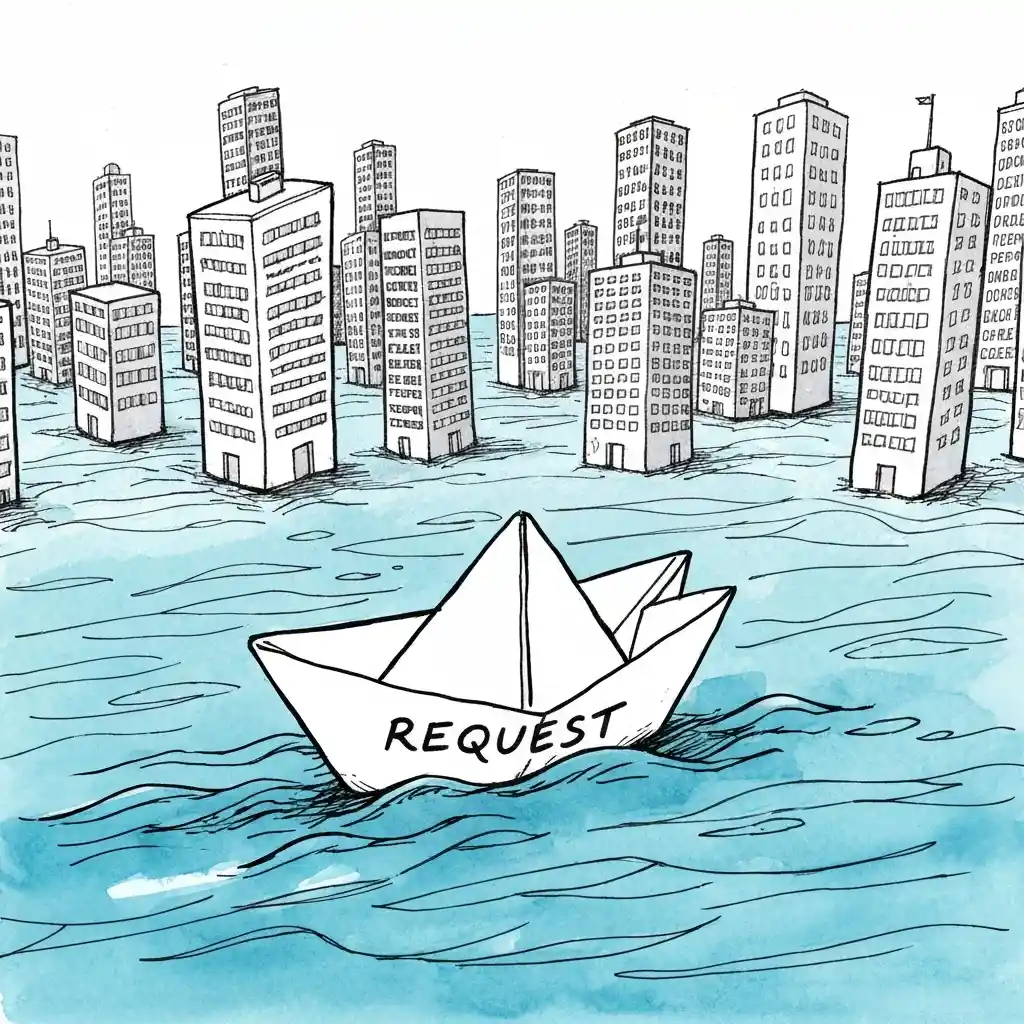
A citizen enters a government office in Abuja with a simple request. What follows is a quiet dance of referrals across the city, a story told in kilometers traveled and hope slowly worn down.

She Kept Asking and They Kept Moving Her in Nigeria
Published: 21 April, 2026
Abuja has a particular way of absorbing a person’s day, one government office then another. A citizen walks in with a simple request, something about a document or a missing payment, and the machinery begins to turn. The official at the first desk listens politely before directing her to another floor, and the officer on that floor sends her to a different building entirely. This cycle can repeat for hours, a quiet dance of referral and deflection that defines the interaction between millions of people and the civil service of Nigeria. It’s a story told in kilometers traveled and hope slowly worn down.
The First Office and the First Referral
The Integrated Payroll and Personnel Information System desk, known as IPPIS, receives thousands of verification requests every single month. A staff audit back in 2025 found over 70,000 ghost workers, so the process to fix a payroll error starts right here. She kept asking about her missing salary arrears, and the officer at the help desk gave her a reference number with instructions to take it to the Accountant General’s office, a journey of about three kilometers through the Central Area. When she finally arrived at the Office of the Accountant General, the story changed completely. The official there stated the issue actually originated with her ministry’s human resources department, rendering that reference number nearly useless and sending her back out into the Abuja sun for a letter from her permanent secretary.
The Ministry Runaround

Federal ministries are scattered across the city, so a trip from the Accountant General’s office to a ministry in Area 1 involves navigating traffic and checkpoints. By the time she arrived at the ministry headquarters around midday, the security personnel at the gate requested a staff identity card she didn’t have. After lengthy explanations, she reached the human resources department only to find the officer in charge was at a meeting. The next available officer listened patiently before explaining the file needed a director’s signature, and that director was on an official trip with no definite return date. She kept asking for a timeline, but the answer was always the same: indefinite. This scenario is far from unique. A 2025 report scored the efficiency of service delivery in 43 federal agencies at an average of just 54.7%, citing complex procedures and poor coordination as the main constraints.
When Digital Portals Become Another Stop
The Government Service Portal was launched with the noble goal of creating a single window for citizens, a unified digital access point. In practice, it often functions as just another step in the long chain. You submit an application online and the system generates a tracking number, but the next stage is almost always to present a printout at a physical office. She kept asking online for an update on a passport application, and the portal status showed “processing” for four solid weeks. A visit to the immigration office revealed the online system and the backend system operate separately, making physical verification mandatory despite all the digital promises. Data shows 65% of federal ministries now have functional digital platforms, but the real gap exists in getting these platforms to talk to each other and to the core administrative workflows they’re supposed to support.
The Cost of Moving Her Around
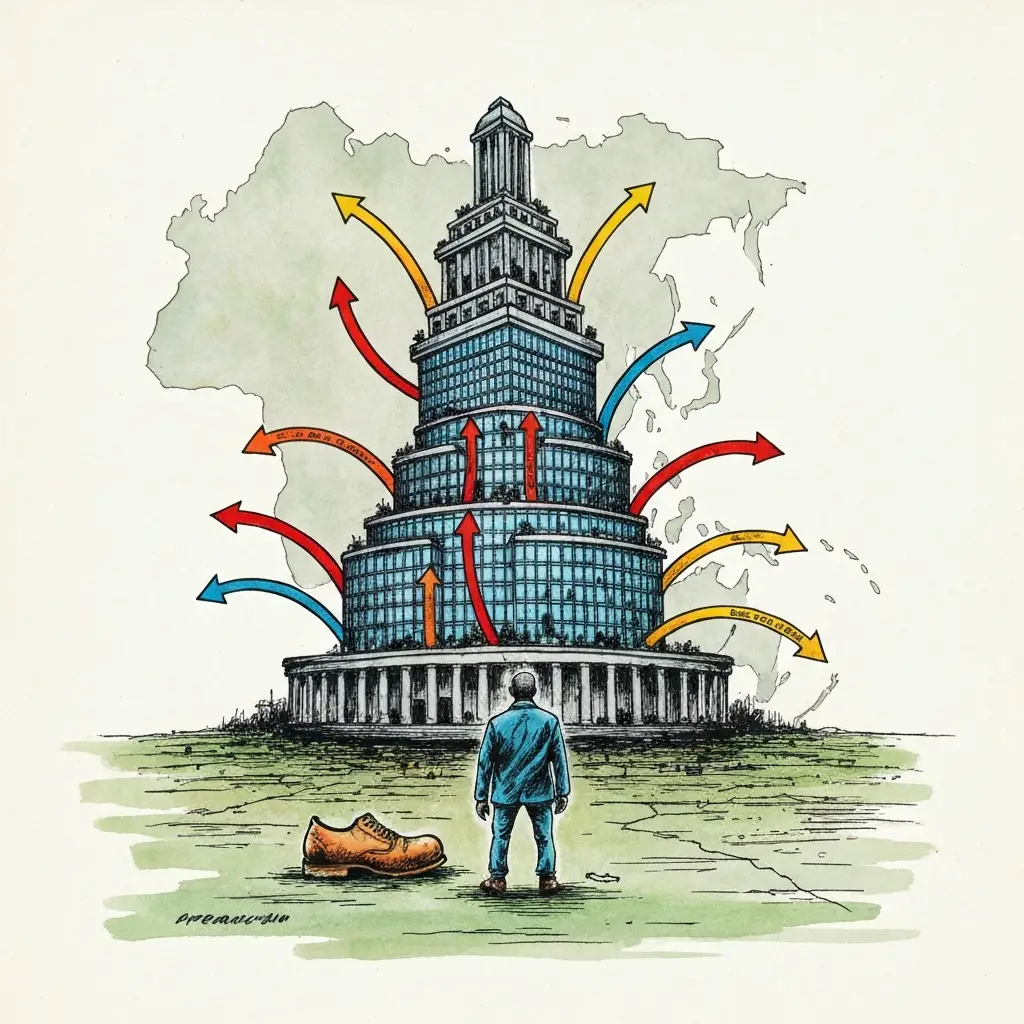
Each referral carries a tangible financial cost, with transport fare across Abuja for these trips easily exceeding N5,000 in a single day. For citizens coming from outside the capital, the bill includes accommodation, and one business owner from Lagos reportedly spent N280,000 over two weeks just shuttling between agencies for a single regulatory approval. The time cost is even larger, with one report stating the average time to get a construction permit in Abuja was 42 days of multiple site visits and office rotations. Then there’s the psychological cost, that slow-burning feeling of powerlessness that grows with each polite deflection. She kept asking with diminishing hope, and each redirection reinforces the belief that the system is designed not to serve but to exhaust, eroding trust in ways that have consequences far beyond any single transaction.
Why the Moving Happens
There is no single villain in this story, just a structure that creates a predictable outcome. Civil service regulations from the 1990s remain in use, assigning specific responsibilities to specific officers in ways that leave little room for discretion. A desk officer lacks the authority to deviate from the official procedure, so the safest action is always to redirect the citizen to the next prescribed point on the flowchart. Fear of sanctions from oversight bodies drives this behavior deeply, as an officer who takes an unconventional step to solve a problem risks investigation, while following the inefficient but official path offers protection. Add to this inadequate training, with a 2025 survey finding 40% of civil servants in customer-facing roles received no specific training on new service portals, and you have a system defaulting to paper memos and physical file transfers because that’s what people understand.
Glimmers of a Different Path
Some agencies show that change, however slow, is possible. The Corporate Affairs Commission reduced the time for company registration to 48 hours in 2025 with a fully online process, and the Federal Inland Revenue Service streamlined tax clearance issuance in noticeable ways. These remain exceptions rather than the norm, but they exist. The Oronsaye Report on restructuring government agencies aims to reduce duplication through mergers, and its implementation could eventually simplify a citizen’s journey by reducing the number of offices they need to visit. The Head of the Civil Service of the Federation made a notable statement about this shift in focus.
“The citizen is the center of our service. We are deploying performance management systems to hold desk officers accountable for resolution, not referral.”
– Dr. Folasade Yemi-Esan, Head of the Civil Service of the Federation, March 2026.
The Power of One Document Trail
There is a small, practical thing you can do when facing this maze. Start a dedicated file for every government transaction and keep a detailed log with dates, offices visited, names of officers spoken to, and every instruction given. Use your phone to take photos of any written notes or reference numbers, because this creates a document trail that serves two important purposes. It helps you track your own frustrating progress, and it subtly changes the dynamic when you present a record of your previous visits to a new officer. They see you are documenting the process, which introduces a quiet form of accountability. Share your log through official feedback channels or even on social media, tagging the relevant agencies, because public and factual documentation of a runaround can move an issue from a private frustration to a visible case study that exerts a different kind of pressure.
So Here We Are
The story of the citizen moved from office to office is not an accident but a policy outcome, the result of old rules, unintegrated systems, and personnel trained to avoid risk. She kept asking because she had a legitimate need, while the system kept moving her because that is its default setting, its path of least resistance. Real change would require redesigning the entire workflow around the citizen rather than the department, amending civil service rules to empower front-line officers to actually solve problems, and demanding that digital platforms finally learn to communicate with each other. The cost of the current runaround, measured in money, time, and lost faith, is simply too high to sustain. The citizen will return tomorrow, and the question hanging in the air is whether she will face a maze or a pathway.








Citizen Services
How to get birth certificate for child in Nigeria 2026
Three million certificates are issued yearly, yet millions of children remain invisible. This is the 2026 guide to navigating the official process to secure that first legal right for your child.

How to get birth certificate for child in Nigeria 2026
Published: 02 April, 2026
Three million certificates. That is the number the National Population Commission says they produce each year, a figure that sounds like a great deal of official business until you realize it still leaves millions of children waiting in the shadows without a legal identity. It is a curious contradiction, this machine that works so hard yet cannot quite reach everyone, and you wonder about those invisible citizens and what it takes to bring them into the light.
The first right
That little green booklet is more than just paper. It is the first right of a child, as they say, and you cannot get your child into school without it or apply for a passport later on. The people at the National Identity Management Commission will not give you a National Identification Number without it either. A report from the United Nations Children’s Fund last year put a fine point on the matter by saying 57% of children under five in Nigeria lack birth registration, which means more than half of them officially do not exist.
The one agency in charge
For all of this, there is only one place to go. The National Population Commission is the sole legal body for this work, and they have offices in all 774 local government areas, which sounds comprehensive until you remember that distance is a real problem for many people. The law they work under is the Births, Deaths etc. (Compulsory Registration) Act of 1992, and it says you must register a birth within 60 days. After that, it becomes a late registration, which is a whole different story with its own rules and its own fees.
“The birth certificate is the first legal acknowledgment of a child’s existence. It is the foundation upon which all other rights are built.”
– Dr. Nasir Isa Kwarra, Chairman, National Population Commission, January 2026.
Where you go
So you go to the National Population Commission office in your local government area, which is the rule, and major hospitals might have a point too. If you live in Lagos or Abuja, you have options, but if you live in a rural area, you might have one center serving many communities. The commission has an online directory, which is helpful if you have internet, and if you do not, you ask around until someone knows the way.
What you bring
You gather your documents. You need proof of birth from the hospital or a sworn affidavit if that paper got lost, and you need your own valid ID, like a driver’s license or passport. They ask for your marriage certificate if you have it, and the child’s immunization card, and for a late registration, you need two passport photographs of the child. If the child was born at home, a letter from the village head or a religious leader can serve as proof. It sounds like a lot, but you put it all in a file and hope nothing is missing.
What happens there
You submit everything to the officer, and they check your papers and type the details into their system. Some centers still use big paper registers, but the aim is to go digital, and they might take the child’s fingerprints if the machine is working. Then they give you an acknowledgment slip with a tracking number, and sometimes you get a temporary certificate right there. For the proper laminated one, you wait about two weeks and go back to collect it, hoping the queue is shorter.
The money question
Here is the important part about money. If you register within the first 60 days, it is free by law. Free. If you miss that window, the official late registration fee is N2,000, and some centers might try to charge for extras, like helping with the affidavit or taking the photo. You should always ask for an official receipt, and if you lose the certificate later, a replacement costs N5,000.
“We have eliminated all illegal fees for birth registration. Any parent asked to pay for a standard registration within the legal window should report to our headquarters.”
– Mr. Bimbola Salu-Hundeyin, former NPC Director of Vital Registration, November 2025.
If you are late
Late registration is for after 60 days but before the child turns 18, and after eighteen, you need a court order. The process is more involved because they might ask for school records or baptismal cards, and they might interview you. They will certainly cross-check everything. It takes longer, and it tests your patience.
Technology in 2026
They have a web portal where you can check your application status with your tracking number, and some state offices send an SMS when it is ready. They even piloted a mobile app for registrars in remote areas back in 2024. The reality, though, is that in state capitals, the digital systems work, but in many rural centers, they are still filling out paper forms that get sent to a zonal office to be typed in later. It creates delays. It creates errors that someone has to fix.
Fixing mistakes and losses
If there is a mistake on the certificate, you go back to the same center with proof of the correct information and an affidavit, and they charge a fee for amendments. If you want to change a name, you have to publish a notice in a national newspaper first. If you lose the certificate entirely, you apply for a replacement with an affidavit of loss, which takes about four weeks, and the new one has a ‘Replacement’ watermark, but it is just as valid as the original.
Why people still avoid it
A survey by Punch last year found that 30% of people in rural areas said the distance to the center was the main problem. Others just do not know they need to do it, and some wait for the naming ceremony, which can be after the 60-day window. Others hear stories about unofficial fees and get discouraged. The commission runs campaigns with local governments to try to close these gaps, with mixed results.
What you can do
You can visit the National Population Commission digital platform and use their ‘Locate a Center’ tool, and you should call the office first to confirm their hours and what exactly they need you to bring. Gather every document, originals and copies, and go on a weekday morning. Getting there early helps you avoid the longest queues and the midday heat.
The value of the booklet
In the end, that small green booklet secures a future because it opens doors to school and a doctor and offers some protection. It says, this child is here, and this child is a citizen. The process is straightforward in the official pamphlets, but on the ground, it depends entirely on where you are and what resources that office has. Persistence is the key. That persistence yields the booklet that opens doors for a lifetime. The registration numbers get a little better each year. The digital transition creeps along. The goal, they say, is for every child to count. Every single one.
Citizen Services
How to get police character certificate online 2026
Over 1.2 million people needed a police character certificate last year. The process is fully online now, from one official digital platform to a final collection point. Here is how to navigate it.

How to get police character certificate online 2026
Published: 02 April, 2026
1.2 million people asked the Nigeria Police Force for a piece of paper last year, which is a quiet avalanche of need all funneled through a single digital platform because everyone wants to prove they are not a criminal. That certificate is a small, official whisper that says you have kept your nose clean, and you need it when you want to step out into the wider world for work or study. The process moved online to save you from queuing at a police station, but it has created its own little universe of questions, which is why we are sitting here now.
What this paper really is
That Police Character Certificate is just an official note from the police stating quite plainly that you have no criminal record in the country, and foreign embassies or universities will not look at you without it. You only go through the trouble when you have a specific door to open, like a visa application, because the thing is only good for six months. The move to a digital system was supposed to make life simpler by gathering everyone in one virtual room, but you know how these things go.
Your journey starts here

All roads lead to one address: https://certificate.npf.gov.ng. That is the only real digital platform, operated by the police themselves, and you should treat any other site offering the service like a stranger offering you candy. You create an account there with your email and phone number, they send you a code to prove you are you, and then the portal holds your hand through the whole dance.
Get your papers in order
Before you even look at the digital platform, gather your documents because preparation is the only way to avoid the special headache of delay. You need a digital copy of a recent passport photo with a white background and a clear scan of your international passport’s data page. If you do not have a passport, your National Identity Number slip or driver’s license will do, but you also need proof you live where you say you live. That means a utility bill or bank statement, dated within the last three months, with your name and a Nigerian address on it.
The form is a test of focus
Filling the online form is where you must become a perfectionist. Your name has to match your passport or ID exactly, letter for letter, because the system will check and a mismatch means failure. You give your date and place of birth, your address, and even details about your parents, which always feels like a curious step. Then you list every place you have lived in Nigeria for the past five years, and getting this right is critical because someone will actually try to verify it all.
Time to pay the piper
As of March 2026, the standard fee for this service is N15,000. You pay it right there on the portal with your debit or credit card through a secure gateway, and the system gives you a receipt to print. That payment is supposed to cover everything from the processing to the printing of the certificate, so there should not be any other official fees when you go to collect it.
The waiting begins
Once you submit and pay, your application joins a queue for a background check. Officers from the Force Criminal Investigation Department will look you up in their databases across all the states you listed. This is not a fast process. The official line is that standard processing takes 14 working days, but that assumes you did everything perfectly. If there is a mistake or missing information, your wait gets longer, and you just have to sit with it.
Your notification arrives
You do not have to guess what is happening because the portal updates your application status. You can log in and watch it move from ‘Application Received’ to ‘Under Review’ and finally to ‘Approved for Collection‘. When it is ready, they send an email and an SMS with a unique reference number and the address of where you need to go. You cannot collect anything without that approval alert, so keep an eye on your phone.
Where to collect your prize
You go in person to collect the physical certificate from a specific police office, usually the Criminal Records Office at your State Police Command headquarters. If you are in Lagos, you go to the FCID annex in Alagbon Close, Ikoyi, and if you are in Abuja, it is the FCID headquarters in Area 10. The notification tells you exactly where. You can send someone else if you give them a signed letter and their own valid ID, but otherwise, it is a trip you have to make yourself.
What to bring with you
Do not walk into that police station empty-handed. Bring the original passport or ID you used for the application, a printed copy of your payment receipt, and that printed approval notification with its reference number. If someone is collecting for you, add the signed authorization letter and their own photo ID. The officer will check all of it before handing over the certificate, and you should check every detail on the paper before you leave because a mistake discovered later is a whole new problem.
When things take too long
Sometimes applications stretch beyond the promised 14 working days. Maybe your address history was incomplete, or your name did not match some other record, or they are just swamped. Your first move is to check the status on the portal. If it is stuck on ‘Under Review’, use the help desk function there and quote your reference number. They advise against showing up at the collection center to ask about pending applications because the processing is done centrally, and the person at the desk likely will not know.
If you are in a real hurry
For those with a looming travel date or a job offer about to expire, there is a fast-track option. You can pay for expedited processing, which as of early 2026 costs N30,000 and promises to get your certificate ready within 72 hours. You choose this at the payment stage on the portal, and your application jumps the queue for the same checks. It is a useful escape hatch, if you can afford the premium.
The system groans a little
This online portal is a genuine improvement over the old, manual way of doing things because it brings some transparency to payment and tracking. The volume, however, is its own challenge. They say over 100,000 applications come in every month, and sometimes the digital platform groans under the weight. You might find it down during peak times, or have trouble uploading documents because of file size limits. Their advice is to use compressed files and a stable internet connection, which is easier said than done for some.
The one trick that matters
Here is the simplest, most important piece of advice you will get. Double-check every single detail on that form before you hit submit. The most common reason for rejection is a silly typo, like mixing up a letter ‘O’ with the number ‘0’ in a passport number or forgetting a middle name. Compare what is on your screen with the physical documents in your hand, and then do it again. That five minutes of attention can save you weeks of frustrating delay, and it costs you nothing but a little focus.
This is just one piece
Getting that certificate means you have cleared a major hurdle, but it is just one document in a larger pile. Embassies and institutions will want your academic transcripts, employment letters, and bank statements alongside it. The Police Character Certificate is a critical piece, proving your clean record here, but it only works as part of a complete package. Having it in your hand means you are one step closer to wherever you are trying to go.
“The digitization of this service is a work in progress. It delivers efficiency while wrestling with the scale of demand. The applicant who is meticulous with details, patient with timelines, and vigilant against fraud navigates the process successfully.”
– Simon Kolawole, April 2026
Citizen Services
How to apply for driver’s license renewal online Nigeria FRSC portal
Two million people sought licenses in 2024. The FRSC portal promises online renewal, but the journey still bridges digital forms and physical queues. Here is how that process actually works.

How to apply for driver’s license renewal online Nigeria FRSC portal
Published: 02 April, 2026
Two million people tried to get or renew a driver license in 2024, which is a staggering number of souls all wanting the same small piece of plastic that says they can be on the road legally. The Federal Road Safety Corps tells you it can all be done online now, a wonderfully modern idea that exists in that quiet space between the official position and the actual ground, a space usually filled with a queue.
The two magic numbers
Before you even look at the portal, you need to have your affairs in order with two other very important digits. The entire renewal process is built on your Bank Verification Number and your National Identification Number, which the FRSC linked together in 2022 to stop one person from having multiple licenses. Without those two numbers, the online door simply will not open for you, which is a clever way to make sure you are who you say you are. You should also check when your current license decides to retire, because a private car license gives you three years of service while a commercial vehicle license only lasts for one. The wise advice is to start this renewal journey about three months before the expiry date, as time has a funny way of stretching when you are dealing with official systems, and a lapsed license comes with its own extra penalties.
Your portal adventure begins
So you go to the FRSC digital platform and find the license renewal section, which is the same place you would go if you were applying for the first time. You click the ‘Renewal’ option and type in your old license number, and the system should find you in its database using those two magic numbers you provided. If all goes well, it will then tell you how much you owe. As of right now, to renew a standard private license will cost you N10,450, a figure that includes all the various charges the government has decided are necessary. You pay this right there on the portal with your card or a bank transfer, and when the payment goes through, you get a receipt and a temporary license slip to print out.
“The digital payment integration has reduced cash handling at our centers. It brings accountability to the process.”
– The FRSC Corps Marshal, February 2026.
The offline pilgrimage
Here is the interesting part. The online bit is only half the story. You must then go in person to a Driver License Centre or an accredited state office, for which you book an appointment on that same FRSC portal. At this center, they will take a new photograph of you, your fingerprints, and your digital signature, because the government needs to be sure it is still you. Do not forget to bring your expired license, the printout of your temporary slip, your payment receipt, and another form of ID like your voter card or passport. They will check all these things against what the portal says, which is how the digital and the physical worlds shake hands in Nigeria.
The test question

There is a discussion about whether you need to take a test again. The official line from the FRSC is that if your license expired more than one year ago, you must take a test. If it has been less than a year, it is up to the people at your state licensing authority to decide. They have been trying to make this rule the same everywhere since February 2026, because before that, what happened in Lagos was different from what happened in Kano. If you do have to take it, the test is usually on a computer and asks about road signs and basic vehicle knowledge. You get the result right away, and if you pass, they can start making your new card.
The waiting game
After you have done all that, your application is sent off to be turned into a plastic card at a central printing facility. They say it should take six to eight weeks to get back to your local center, but you know how these timelines can be. Many people wait longer. You can check on your card’s progress using the tracking feature on the portal, watching the status change from ‘Processing’ to ‘Ready for Collection’. When it finally arrives, you will get a text message, and you go back to the same center with your temporary slip to collect it.
“We are working with the Nigerian Security Printing and Minting Company to reduce the production backlog. The target is a four-week turnaround by the end of 2026.”
– A director at the FRSC licensing department, January 2026.
Where the friction lives
Of course, the system is not always smooth. The portal sometimes decides to take a nap, or the payment fails because of a network issue. A survey in 2025 found that 65% of people said portal problems were their biggest headache. Then there is the appointment system, which might show no free slots for weeks, leading to the classic Nigerian solution of just showing up and joining the queue. And remember, while the FRSC makes the rules, your state motor licensing authority runs the capture centers. This means the experience, and sometimes even extra fees, can be different depending on whether you are in Lagos, Kano, or Rivers State.
Your temporary passport
That temporary license slip you printed is your legal proof that you are in the process. The police should accept it if they stop you, and it is usually valid for about 60 days. If your plastic card is still not ready by then, you can ask for an extension. And if you lost your old license completely, you follow a similar path but select ‘Replacement’ on the portal and will likely need a police report, and the fee is a bit higher.
Begin with patience
So your best plan is to start on a day when you are feeling calm. Have your BVN, NIN, and old license number written down. Know your timeline and budget a little extra for any unexpected turns. Understand that this is the Nigerian way now for many things: a blend of online convenience that eventually requires you to stand in a physical line. The FRSC has a plan for a fully digital license on your phone by 2030, but for now, we have the portal, the plastic card, and the journey that connects them.

Ancient Rock Art Traditions Endure in Igbara Oke Caves

Palm Wine Tapper Climbs Same Tree That Killed His Father in Ozoro

Hunter Hears Dead Brother Whistle in Ganye Forest Mystery

Farmer Plants Yam That Grows Downward to Water Table in Drought

She Kept Asking and They Kept Moving Her in Nigeria

Global Food Prices Rose 2.4% in March 2026

Chigozie Obioma International Booker Prize 2026

Jidenna Pan African Sounds Latest Musical Project 2026

Hakeem Oluseyi Brings Astrophysics to Classrooms Worldwide

NANS Diaspora Nigerian Students Eastern Europe

Nnamdi Asomugha From NFL Cornerback to Hollywood Producer

Folake Olowofoyeku Stars in American Sitcom on Nigerian Family Life

Internet Sovereignty: Why Some Countries Want Their Own Separate Internet

The Story Of The Nigerian Who Helped Build Global Internet Systems

Nigerian Hackers: The Global Fraud Story and Its Fallout

Forgotten Satellites Defy Silence, Beaming Signals for Decades

The Phone Stay So Quiet: An Investigation into Nigeria’s Silent Customer Lines

Your Digital Store in Nigeria and the Reality of Domain Expiration

The Business That Died: A Nigerian Case Study in Refusal to Adapt

Hiding Your Business From People With Money

How Nollywood Grew Without Government Support

Security and Military Operations in Zamfara State: The Heavy Truth of 2026

Moniepoint Business Account Requirements Nigeria for SMEs 2026

Comedy Industry in Nigeria and Its Economic Contribution

 Digital Sovereignty8 months ago
Internet Sovereignty: Why Some Countries Want Their Own Separate Internet
- Technology & Innovation8 months ago
The Story Of The Nigerian Who Helped Build Global Internet Systems
- Crime8 months ago
Nigerian Hackers: The Global Fraud Story and Its Fallout
- Space Technology8 months ago
Forgotten Satellites Defy Silence, Beaming Signals for Decades
- Maritime8 months ago
The Phone Stay So Quiet: An Investigation into Nigeria’s Silent Customer Lines
- Business8 months ago
Your Digital Store in Nigeria and the Reality of Domain Expiration
- Business8 months ago
The Business That Died: A Nigerian Case Study in Refusal to Adapt
- Business8 months ago
Hiding Your Business From People With Money