Safety
Coal Mine Collapses Twice in Enugu Miner Walks Out Alive
A miner in Enugu survived two separate coal mine collapses, walking out alive both times. His story highlights the perilous conditions and systemic challenges facing Nigeria’s informal mining sector.

Coal Mine Collapses Twice in Enugu Miner Walks Out Alive
Published: 10 April, 2026
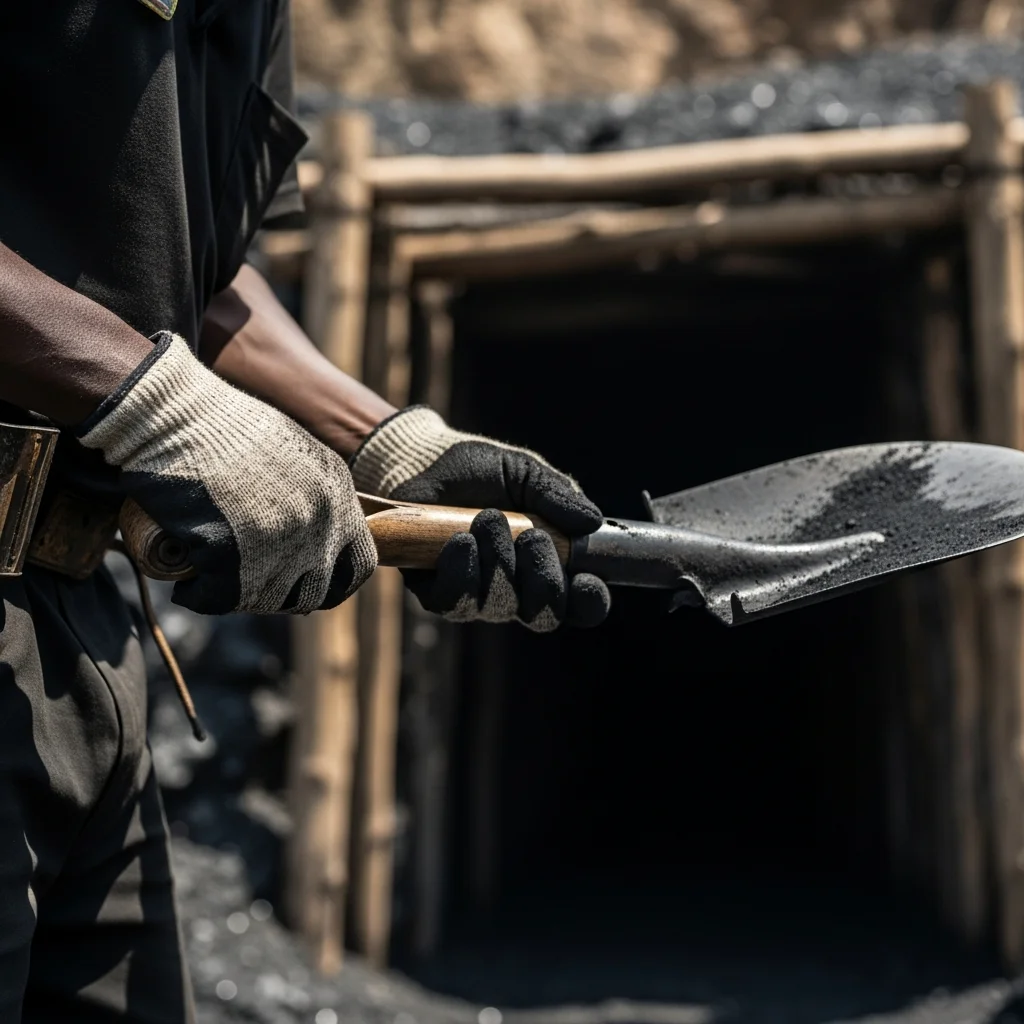
There is a man in Enugu who has walked out of the ground twice now, covered in the fine black powder of the mountain but with every bone still whole. The first time was near the end of 2025, when an old tunnel gave way without warning and trapped him for hours in the dark. He waited there, breathing dust, until his fellow miners dug him out with their shovels and bare hands. When they pulled him into the light, he was shaking and black from head to toe, but he was alive.
The mountain remembered
The second collapse came early in 2026 at the same mine, in a different tunnel, with the same man inside. The earth moved again, and maybe the mountain remembered his name, because he found a pocket of air and waited once more. When the dust finally settled, he walked out on his own two feet into the shocked faces of men who had already started digging for his body. A community leader there spoke to Vanguard in March 2026 and called it a miracle, but then he asked the question nobody really wanted to answer.
“We thank God for his life. But ask why young men have no better option than to risk death in these holes every day.”
– Community leader, Enugu, speaking to Vanguard in March 2026.
Half a million shadows
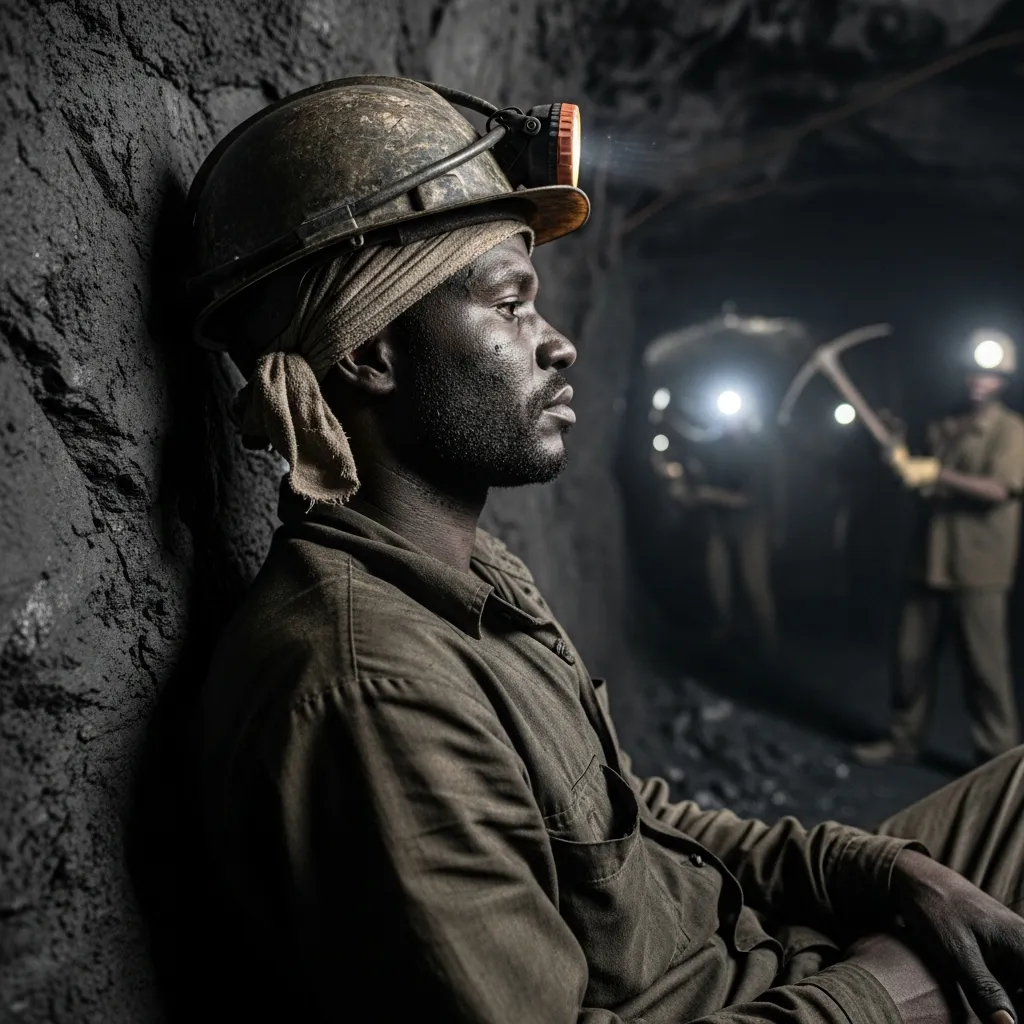
That man’s story is about incredible luck, but it is also about a system that leaves people with no other choice. Mining in places like Enugu follows its own rules, you see, where the federal government talks about the solid minerals sector in Abuja and publishes nice plans on nice paper. On the ground, however, people dig for survival. A 2025 report from Premium Times said over 500,000 people work in small, unregulated mines across the country, most with no helmet, no training, and no one watching over their shoulder. The gap between the plan and the reality is a deep, dark hole you could fall into and never find your way out.
The budget of dust
Nobody keeps good records of mining accidents here, so if a man dies in a tunnel, his family buries him without any form, investigation, or compensation. The ministry started a program in 2024 to register small miners and teach them safety, but by 2026 it has barely moved. The budget for mine safety this year is about N29 billion for the whole ministry, which sounds like a lot until you remember the total national budget is over N28 trillion. That means mine safety gets less than 0.1% of everything. For comparison, the mining sector adds only about 0.3% to the economy of Nigeria, according to the National Bureau of Statistics in 2025. The gap between what the ground could give and what the government puts in is a story every Nigerian knows too well.
Five thousand naira reasons
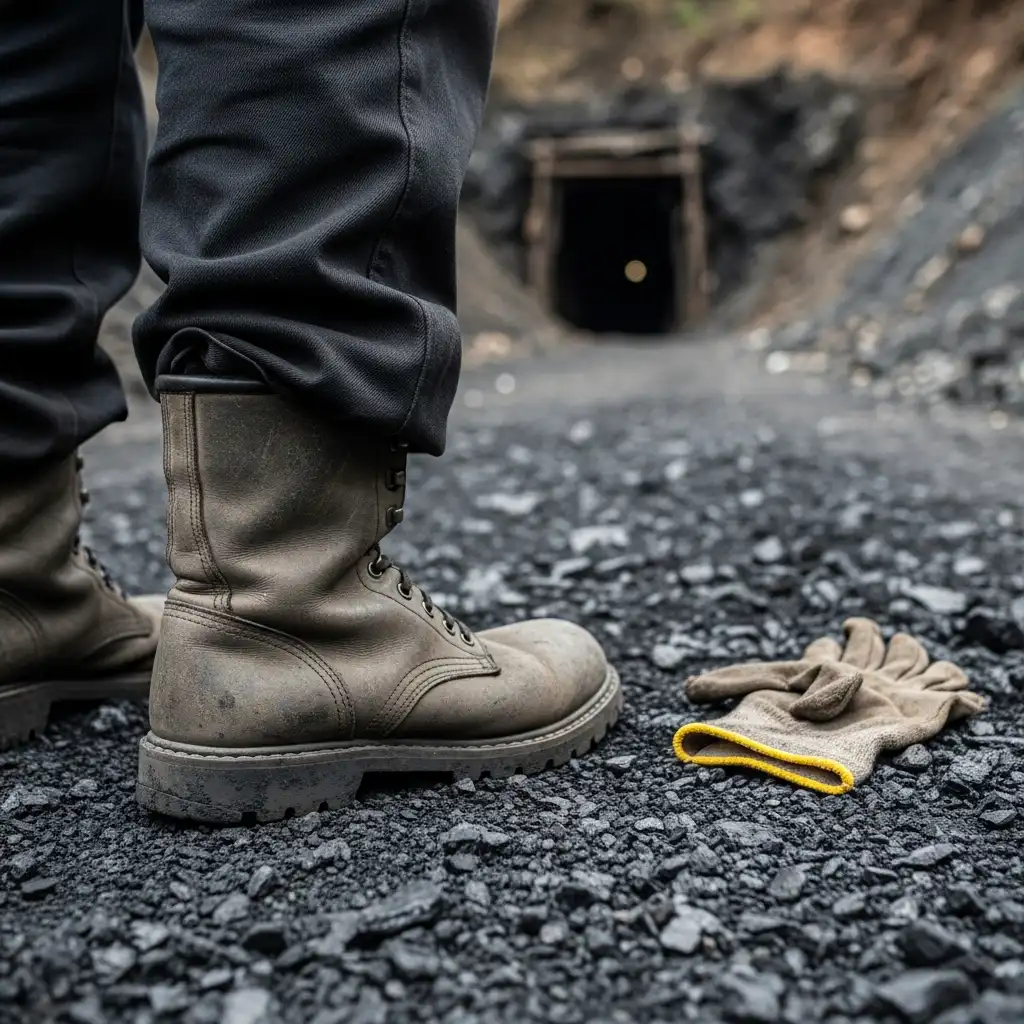
So why do men still go down there? Coal mining in Enugu is old, and the big company mines closed decades ago, but the tunnels stayed open. For the people living around those holes, digging is a job. A bag of coal sells for a few thousand naira, and on a good day a miner might make N5,000. In a country where more than 30% of young people have no work, that N5,000 is the difference between eating and sleeping hungry. The government knows people dig, and sometimes officials come to shut a site, so the miners leave for a week before they come back. The cycle of risk, poverty, and temporary fixes never really ends.
Laws without language
Nigeria has a mining law, of course. The 2023 Mineral Resources and Mining Act is a thick document full of talk about licenses and safety rules and environmental checks. For big companies digging with big machines, those rules might apply. For the thousands of men digging with shovels and prayer, the law might as well be written in a language they do not speak. The ministry created committees in each state to watch over mining, but a 2025 investigation by Premium Times found most exist in name only, with no cars, no testing equipment, and no people to send.
“Our job is clear, but the tools are few. We have the law, but no way to enforce it across thousands of small sites.”
– An official from the Ministry of Solid Minerals Development, speaking to Premium Times in February 2026.
The other side
Some people who study these things say the government cannot just shut down the small mines, because if they did, hundreds of thousands of men would lose their income overnight. The anger would be real, the hunger would be real, and the unrest would surely follow. The hard truth is they need to create safer mining while also creating other jobs in these towns, which takes money, time, and people in Abuja and Enugu talking to each other instead of past each other.
Simple needs in the dark
People in Abuja talk about digital monitoring and high-tech solutions, but down in a coal tunnel with no light and bad air, a smartphone gets no signal. What these miners need is simple, cheap, and physical: better shovels, stronger wooden beams, a fan to push fresh air into the dark. Policy has to start from the ground, not from a document written in an air-conditioned office. Some small groups try to fill the gap, like a non-profit in Plateau State that taught miners how to support tunnel walls in 2025, but in Enugu the efforts are scattered. Safety gear like helmets and boots remains too expensive for a man making N5,000 on a good day.
The cost of waiting
While the policy people talk and the committees meet, men go down the holes every morning. The man who survived twice is now a local legend, and his story gives hope while also making extreme risk seem normal. If he survived twice, maybe the mountain is kind. Maybe the earth will spare me too. For every miracle, however, there are accidents nobody hears about, where a family loses a father with no compensation, no record, just silence and an empty chair at dinner. The community carries the weight because the economic pressure never stops.
Value written in dust
The miner who walked out twice is back at work now, telling a local reporter he has a family to feed, that he is more careful, and that he prays more. His story is one of incredible luck, but it could also be the start of a conversation about value. How much is the life of a miner worth in the economy of Nigeria? Right now, the answer is written in dust and hope at the bottom of a dark hole in Enugu. The policy exists on paper. The will to fund it and enforce it is the next chapter, and nobody has written it yet.
Safety
Lagoon Pulls Woman Back Lagos Third Mainland Bridge Incident
Three times the lagoon pulled her back as she tried to swim away from the Third Mainland Bridge, a lesson in the water’s hidden power and the thin line between safety and tragedy in Lagos.
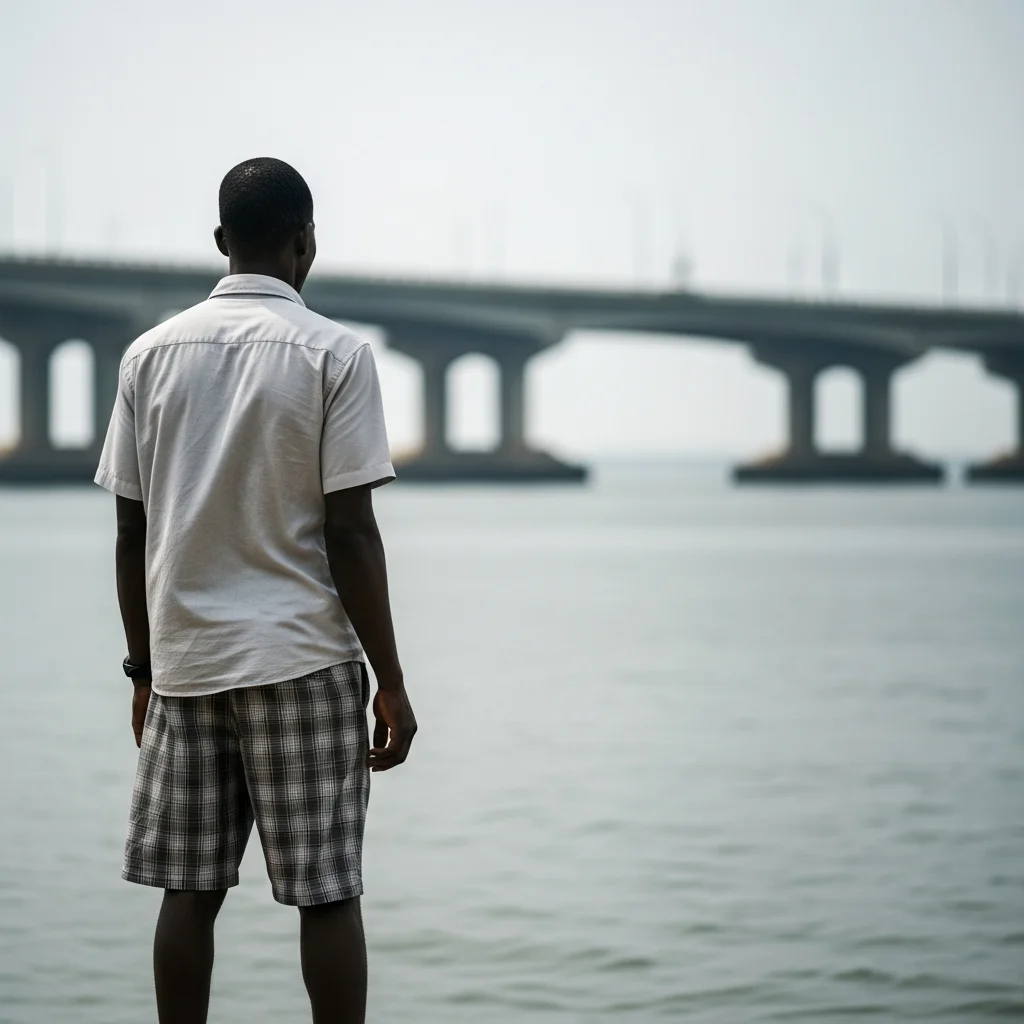
On a Monday morning in April 2026, a woman entered the water near the Third Mainland Bridge and the lagoon pulled her back three separate times as she tried to swim away. You have to understand that the water around that bridge has a mind of its own, and it decided she was not leaving just yet. Good Samaritans and emergency responders eventually pulled her to safety, but the simple, terrifying fact of that morning is that the water did not want to let her go.
The Water’s Hidden Highway
The lagoon around that bridge is a highway of hidden forces where tidal currents and underwater topography work together in ways no swimmer can fight for long. A person becomes a leaf in that flow, and a leaf does not get to choose where it goes. The incident happened near the Adekunle axis, a known trouble spot where warnings about strong currents are posted but often ignored because the water looks calm from the bridge above. You cannot see the pull from up there, of course, and you have to be in it to feel it, but by then it is too late.
Why It Grabs and Holds
Twice a day the tides push water in and pull water out of the Lagos Lagoon, creating currents that would exhaust even the strongest swimmer within minutes. Around the pillars of the bridge, these currents accelerate because the water must squeeze through narrow gaps between the supports, and the force increases to create swirling eddies and undertows. Underneath the surface, the ground is uneven from dredging and natural sandbanks and debris from years of construction, so a calm surface can hide a torrent below. Marine experts call this a hydraulic, which is a common danger near bridge piers all over the world, but the water does not care if you know the name.
The Chain of Rescue
People on the bridge saw the woman in distress and raised the alarm, alerting the marine police and the Lagos State Emergency Management Agency. The rescue boats faced the same currents she was fighting, and approaching a person in a strong hydraulic requires skill because a direct approach risks getting sucked into the same vortex. The officers used a throw rope and a lifebuoy, and the woman grabbed the buoy, but the current pulled her away from it more than once. Persistence from the rescuers finally secured her, and they pulled her into the boat where she lay on the deck coughing up lagoon water.
“The synergy between our marine unit, the police, and community volunteers made the difference. It was a difficult retrieval due to the water conditions.”
– Dr. Olufemi Oke-Osanyintolu, Permanent Secretary of LASEMA
She received first aid on the boat while an ambulance waited at the jetty, and the agency confirmed she was transported to a general hospital for observation. They praised the collaborative response, and everyone went home that day, which is not something you can say every time.
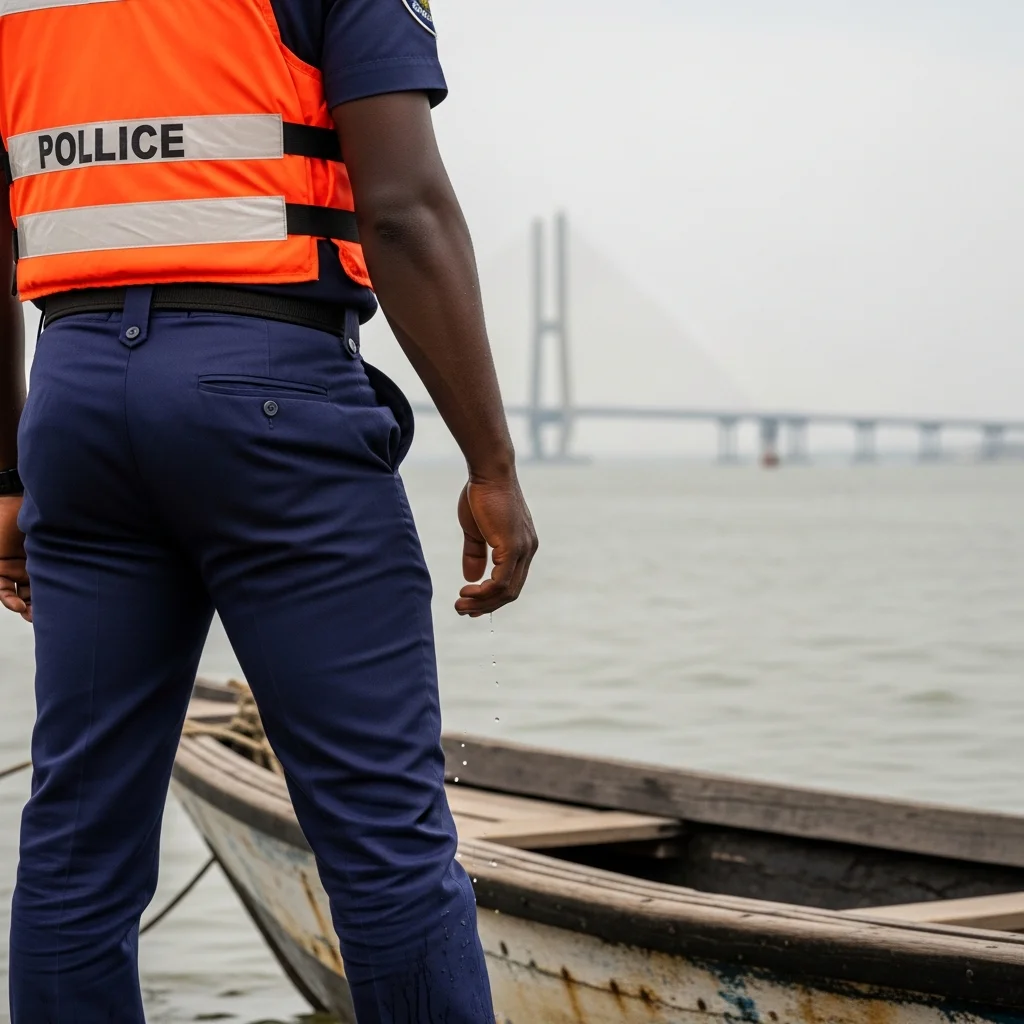
Like the officer’s damp trousers, the lagoon’s hidden currents leave a mark on those who underestimate its power (Digital Illustration: GoBeyondLocal)
A Pattern, Not a Surprise
This event is one in a series because the Third Mainland Bridge has been a site for water-related incidents for years. The Lagos State Waterways Authority recorded over 40 incidents in the lagoon and surrounding waterways in 2025, including boat mishaps and falls from bridges. The bridge itself is undergoing repairs with a rehabilitation project that started in 2024 and is now over 70% complete, according to the Federal Ministry of Works. Construction activity adds another layer of complexity to the area, and while barriers and safety nets exist in some sections, gaps remain where a person determined to access the water can always find a way.
The Gaps in the Net
The response worked this time and the system functioned, but you can still ask hard questions about the times it does not. How many marine police boats patrol that stretch of water during peak hours and what is their average response time from the moment someone calls? The Lagos State Government budgets for waterway security, and the 2026 budget allocates funds to the Lagos State Waterways Authority for safety and enforcement, but the demands on this agency are vast. The money stretches thin across a city of over twenty million people, but the water does not.
Technology offers solutions like motion-sensor cameras on bridge spans that can detect human movement near the edge, and automated alarms can alert command centers instantly. These systems require capital investment and maintenance and power, however, and the digital transition in public safety is a work in progress. Community awareness is the cheapest tool because most Lagosians living inland have never seen the lagoon up close and underestimate its power. Public service announcements on radio and in local languages could save lives, but someone has to pay for them.
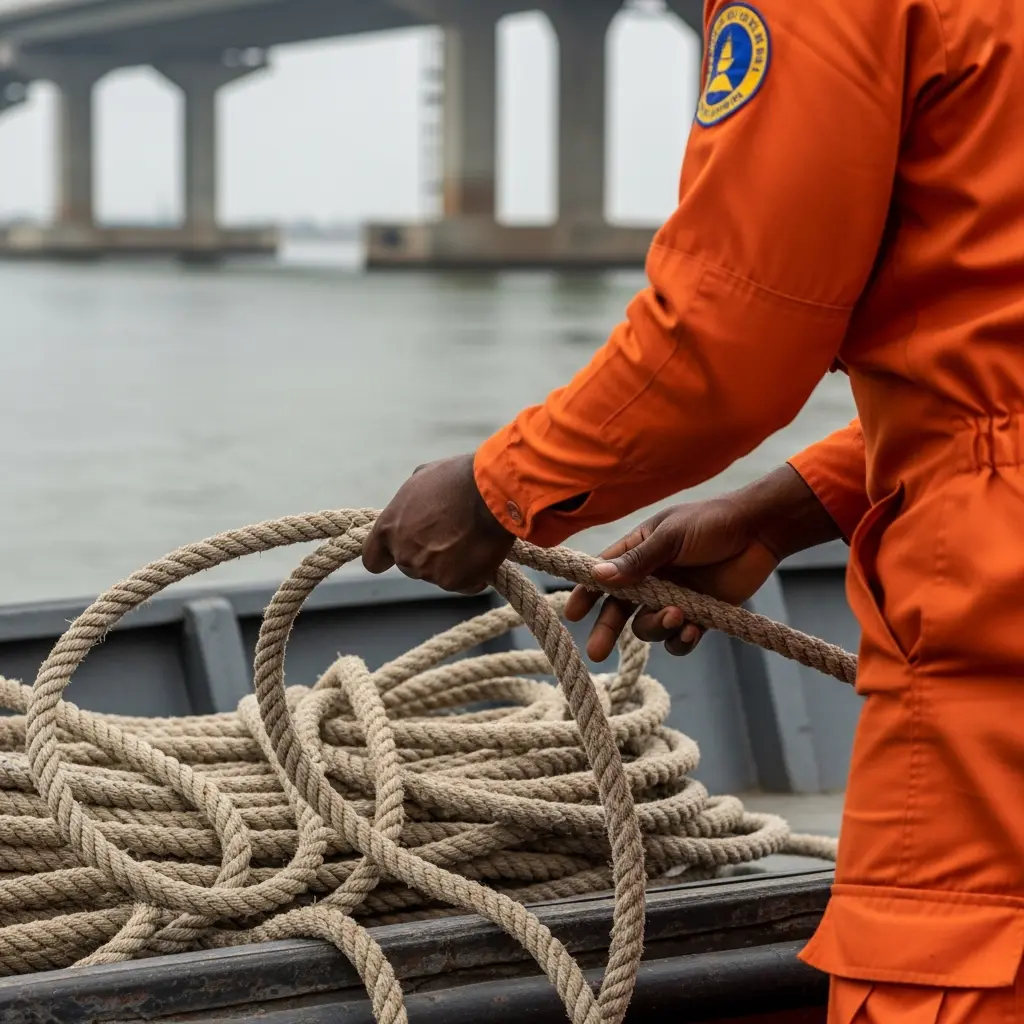
That faded rope is Lagos’ lifeline, pulled taut against a lagoon that refuses to release its grip (Digital Illustration: GoBeyondLocal)
The Human Element
Think about the bystanders on the bridge that morning who raised the alarm and stayed to guide the rescue boats. This community vigilance is the critical first link in the chain, and in many parts of Lagos the first response comes from neighbors because the officials cannot be everywhere at once. Training for these first responders is limited, and basic water rescue techniques like throwing a rope without entering the water are simple to learn. A few hours of instruction for police officers stationed on bridges would cost little and save much.
The mental health aspect is the other side of this coin because people enter the water for complex reasons like economic pressure or personal crisis. Strengthening social support systems prevents these crises from reaching the lagoon’s edge in the first place. Lagos has a public mental health program and the Lagos State Government launched the Lagos Mental Health Helpline in 2023, but awareness of this service needs to be as widespread as awareness of the police emergency number. You cannot call a helpline you do not know exists.
“Our water is not a playground. It is a living system with immense power. Respect it, and know the risks before you go near it.”
– Engr. Oluwadamilola Emmanuel, General Manager of the Lagos State Waterways Authority
What Other Cities Do
Cities with major bridges over dangerous waters install physical deterrents like San Francisco’s Golden Gate Bridge which has a suicide prevention net. Toronto’s Bloor Viaduct has a barrier system called the Luminous Veil, but these are expensive permanent installations that require political will and years of planning. Other places use patrols more aggressively, like in Sydney where harbor police and volunteer marine rescue groups maintain a visible constant presence in high-risk areas. Crucially, these cities integrate mental health outreach with physical security by placing signs on bridges that provide a crisis hotline number.
Lagos has unique challenges with the scale of the Third Mainland Bridge and its vital transport role, and the limited fiscal space of a state government with competing priorities makes grand solutions difficult. Incremental smart improvements are the realistic path with small consistent steps that add up over time.
A Small Action
Save one number in your phone because the Lagos State Emergency Hotline is 767 or 112. If you see someone in trouble on a bridge or in the water, call it immediately and give the dispatcher the exact location like “Third Mainland Bridge, Adekunle bound, between pillars 15 and 16.” Your precise information shaves minutes off the response, and those minutes decide outcomes to make you part of the safety net. Encourage your local community development association to host a talk and invite an officer from the Lagos State Waterways Authority or the marine police to explain the dangers of the local water bodies. Knowledge spreads from one person to a family to a street, and that is how change happens one conversation at a time.
The Water Remains
The lagoon will continue its daily rhythm of tides, and the currents around the bridge pillars will persist because the physical reality of the water will not change just because we asked it to. What can change is our relationship with it and our preparedness for when things go wrong. This woman survived, and her story is a lesson written in water about the hidden power of a familiar landscape and the bravery of ordinary responders who refused to let her go. Infrastructure protects, but awareness protects better, and a city like Lagos defined by its water must master both. The next time you cross that bridge, look at the water with new eyes to see the power and respect the danger, and know what to do if you witness the unthinkable because that knowledge is the strongest lifeline of all.
Safety
Horror in Kano Sand Pit Collapse Buries People Alive
A deep sand pit collapsed in Ridawa Village, Kano, trapping workers in a tragedy that highlights the deadly mix of economic desperation and regulatory failure in Nigeria’s informal mining sector.
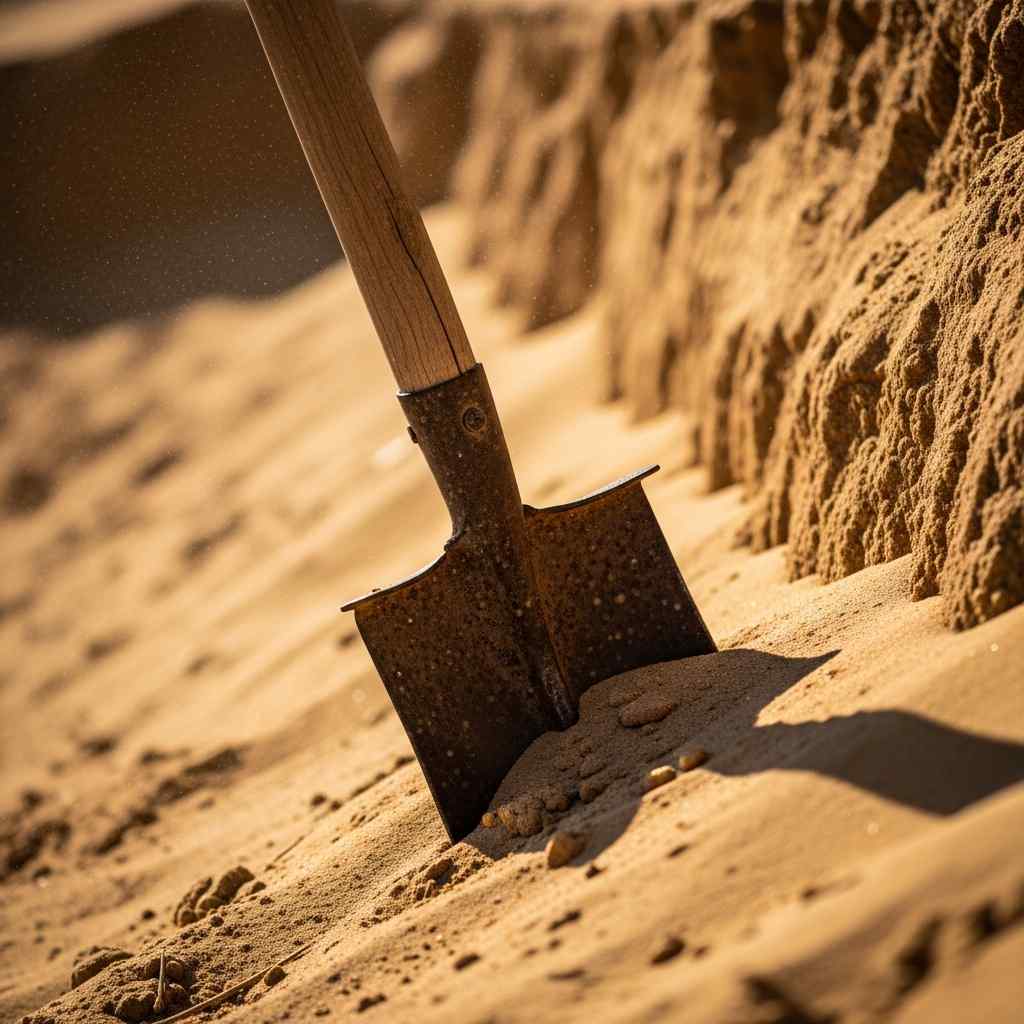
Horror in Kano Sand Pit Collapse Buries People Alive
Published: 26 March, 2026
Ridawa Village in Ghari Local Government Area is a quiet place until it isn’t, and the morning of March 25 was one of those times when the quiet was shattered by something far worse than noise. A deep pit, dug by hand for the sand that builds the cities, decided it had been dug enough and collapsed in on itself, trapping an estimated 10 men who were just trying to earn their daily wage. The lawmaker for the area, Sani Bala, confirmed the rescue efforts were underway with many feared lost, and you could feel the desperation in the air even from a distance.
The Ground Gave Way
Rescue operations began immediately, driven largely by local villagers and residents using whatever tools they could find because the heavy equipment hadn’t arrived. The Kano State Fire Service spokesperson, Saminu Abdullahi, said they were waiting for an official report from the Ghari office, which is the kind of bureaucratic delay that feels like an eternity when people are buried alive. Witnesses described a scene of pure chaos where family members and fellow diggers used their bare hands and shovels in a frantic attempt to reach those trapped, working against a pit that was over 50 feet deep in places with walls that went straight down.
“We heard a loud rumble like thunder, then the whole side of the pit came down. There was dust everywhere, and then silence. Just silence.”
– Muhammad Sani, a survivor, speaking to Vanguard on March 25, 2026.
By nightfall, the official estimate remained at 10 workers believed trapped, and the local lawmaker was calling for urgent government intervention because the current effort was just people helping people, which is noble but often not enough. The search continued into a second day with that particular kind of hope that grows thinner and more fragile with every passing hour.
A Predictable Pattern
This tragedy in Ghari LGA wasn’t some freak event but part of a national pattern where artisanal sand mining operates with a wink and a nod, supplying the booming construction industry in cities like Kano, Abuja, and Lagos. Operators dig pits far deeper than anyone with sense would recommend, often close to where people live, and they ignore every basic safety measure because the slope of a wall doesn’t put food on the table. The workers, usually young men from places where opportunity is scarce, receive no training and use tools that look like they belong in a museum, not at the edge of a potential grave.
A 2025 report by the Nigeria Extractive Industries Transparency Initiative highlighted the sector’s dangers, noting a complete absence of formal safety protocols at most of these sites and documenting 127 fatalities in similar incidents across 15 states in just two years.
“These are not regulated mines. They are death traps. The economic pressure for cheap building materials and the desperation for daily wages create a perfect storm for disaster.”
– Dr. Zainab Ahmed, a resource governance analyst, in BusinessDay, March 25, 2026.
The financial incentive is what makes the whole thing spin, where a single trip of sand from an illegal pit can sell for between N25,000 and N40,000. For the digger earning N2,500 per day, the immediate need for that money completely overshadows any abstract thought about a collapsing pit wall, and you can’t really blame them for that calculus when their children are hungry.
Governing the Void
The jurisdiction over mining activity in this country is a tangled web where the Federal Ministry of Mines and Steel Development holds the constitutional mandate, but state and local governments control the land and often issue informal permits that aren’t worth the paper they’re written on. This division creates a vacuum where federal inspectors lack the personnel to monitor thousands of scattered sites, and state authorities frequently view the activity as a local revenue source or a political favor, not an impending safety hazard.
The Minerals and Mining Act of 2007 provides a nice framework on paper, but its implementation for the artisanal sector remains a theory discussed in air-conditioned offices. The budget for mine safety inspection across the entire federation was a mere N850 million in the 2024 fiscal year, which represents less than 0.02% of the total national budget and tells you everything you need to know about priorities.
A Story You Know
The tragedy in Ridawa Village echoes other industrial tragedies rooted in informality and neglect, from building collapses in Lagos to fires at illegal refineries in Rivers State, each following a painfully familiar script. High demand for a basic commodity meets a vast population in need of work, a regulatory system exists in filing cabinets but fails in the red dirt, and local officials may be complicit or simply looking the other way. The result is always the same: predictable, preventable loss of life.
After each event, there are expressions of grief and promises of investigation, but the memory fades, the economic pressures continue, and the digging resumes until the next pit collapses. The National Security and Defence Corps reported intercepting 312 trucks carrying illegally mined sand in the North-West zone in 2025 alone, which suggests the scale of an activity that everyone knows about but nobody can seem to stop.
“We will investigate this tragedy and bring anyone found negligent to book. We must ensure such a thing does not happen again in our state.”
– Governor Abba Kabir Yusuf of Kano State, during a visit to the site, March 25, 2026.
The challenge, of course, extends beyond just enforcement and requires creating alternative livelihoods while integrating these miners into a legal, safer framework. The Presidential Artisanal Gold Mining Development Initiative attempted this for gold, but no equivalent national program exists for sand, clay, or limestone, the very materials that are fueling the relentless expansion of our cities. So the pits get deeper, the walls get steeper, and the silence after the rumble gets a little more familiar each time.

Ancient Rock Art Traditions Endure in Igbara Oke Caves

Palm Wine Tapper Climbs Same Tree That Killed His Father in Ozoro

Hunter Hears Dead Brother Whistle in Ganye Forest Mystery

Farmer Plants Yam That Grows Downward to Water Table in Drought

She Kept Asking and They Kept Moving Her in Nigeria

Global Food Prices Rose 2.4% in March 2026

Chigozie Obioma International Booker Prize 2026

Jidenna Pan African Sounds Latest Musical Project 2026

Hakeem Oluseyi Brings Astrophysics to Classrooms Worldwide

NANS Diaspora Nigerian Students Eastern Europe

Nnamdi Asomugha From NFL Cornerback to Hollywood Producer

Folake Olowofoyeku Stars in American Sitcom on Nigerian Family Life

Internet Sovereignty: Why Some Countries Want Their Own Separate Internet

The Story Of The Nigerian Who Helped Build Global Internet Systems

Nigerian Hackers: The Global Fraud Story and Its Fallout

Forgotten Satellites Defy Silence, Beaming Signals for Decades

The Phone Stay So Quiet: An Investigation into Nigeria’s Silent Customer Lines

Your Digital Store in Nigeria and the Reality of Domain Expiration

The Business That Died: A Nigerian Case Study in Refusal to Adapt

Hiding Your Business From People With Money

How Nollywood Grew Without Government Support

Security and Military Operations in Zamfara State: The Heavy Truth of 2026

Moniepoint Business Account Requirements Nigeria for SMEs 2026

Comedy Industry in Nigeria and Its Economic Contribution

 Digital Sovereignty8 months ago
Internet Sovereignty: Why Some Countries Want Their Own Separate Internet
- Technology & Innovation8 months ago
The Story Of The Nigerian Who Helped Build Global Internet Systems
- Crime8 months ago
Nigerian Hackers: The Global Fraud Story and Its Fallout
- Space Technology8 months ago
Forgotten Satellites Defy Silence, Beaming Signals for Decades
- Maritime8 months ago
The Phone Stay So Quiet: An Investigation into Nigeria’s Silent Customer Lines
- Business8 months ago
Your Digital Store in Nigeria and the Reality of Domain Expiration
- Business8 months ago
The Business That Died: A Nigerian Case Study in Refusal to Adapt
- Business8 months ago
Hiding Your Business From People With Money