Culture
Owo Igogo Festival: A 600-Year-Old Tradition Enters Global Spotlight
For seventeen days, shoes are forbidden in the Owo palace during the 600-year-old Igogo festival. This ancient spiritual tradition now balances sacred rules with global tourism and digital attention.

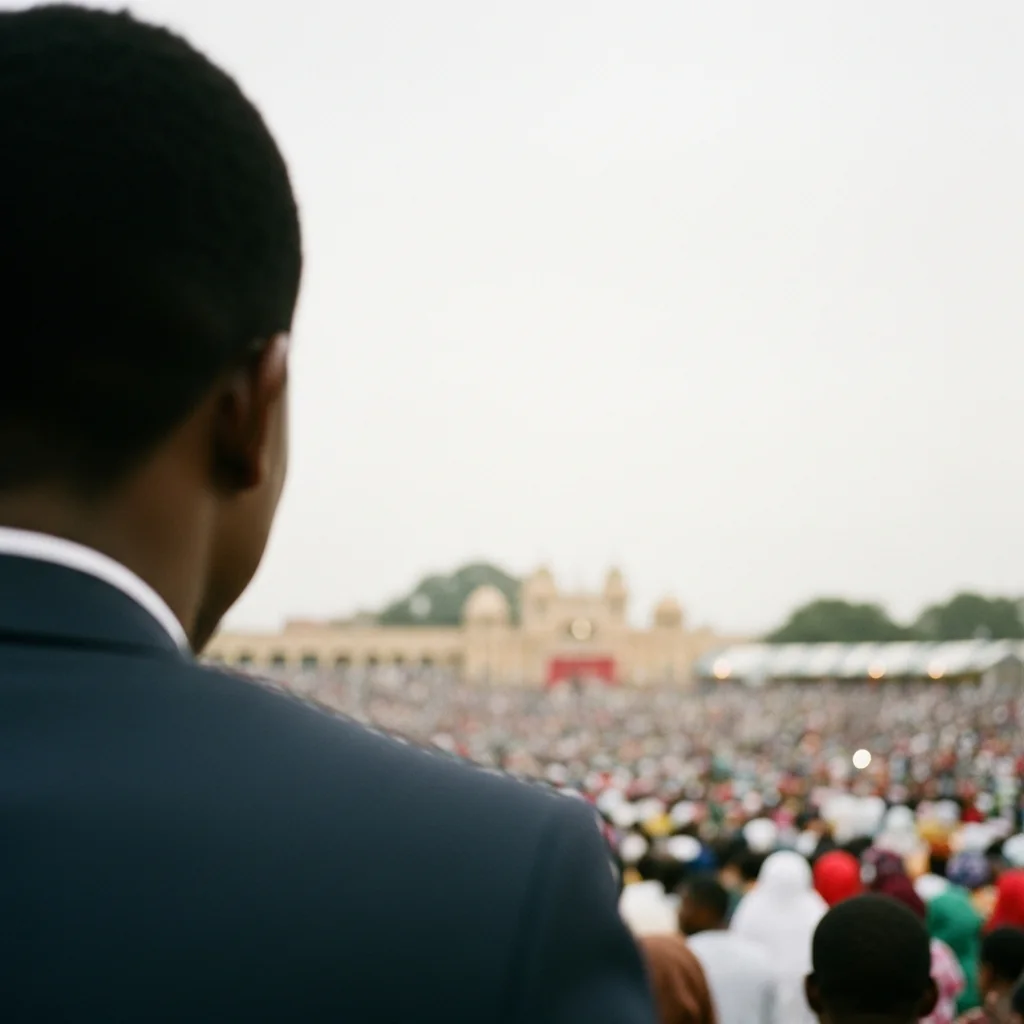
Owo Igogo Festival: A 600-Year-Old Tradition Enters Global Spotlight
Published: 24 March, 2026
Seventeen days is a long time to go without shoes, especially on palace grounds where the earth holds centuries of stories. This is the first rule of the Igogo festival in Owo, Ondo State, a tradition that has unfolded for six hundred years and now finds itself projected onto screens worldwide. The rhythm of the town changes completely during this time, honoring a queen who became a deity in the 15th century, and you have to wonder what she would make of the hashtags and the live streams that now accompany her commemoration.
Rules of the Game
The Olowo of Owo, Oba Ajibade Gbadegesin Ogunoye III, leads everything with a quiet authority that comes from centuries of practice. The taboos are specific and non-negotiable, a way of showing respect to Queen Oronsen whose story is the heart of it all. You cannot use a mortar to pound anything, and you must go barefoot in the palace, which makes you think about the texture of history under your feet. These are not suggestions for tourists but spiritual requirements for a community remembering its own transformation, a delicate balance between the sacred and the seen.
The Price of Attention
Now, the government of Ondo State set aside N2.1 billion for tourism in 2025, and a piece of that pie is meant for festivals like this one. The goal is to pull in more international visitors, which means digital campaigns and a hope that the world will click and come. When they do arrive, hotels in Owo and nearby Akure fill up completely, artisans sell more than they usually would in a month, and hundreds of people find temporary work. The money flows in, and with it comes a certain kind of weight that a spiritual commemoration was not originally designed to carry, a new expectation layered onto an old ritual.
“The Owo Igogo festival is our living history. It is a spiritual anchor that now also carries the weight of economic aspiration for our people.”
– Oba Ajibade Gbadegesin Ogunoye III, the Olowo of Owo, speaking in December 2025.
When the World Arrives
Hosting thousands of new guests on top of the usual crowd is a logistical puzzle that tests a small town. The single major road from the Benin-Akure expressway becomes a long, patient line of cars, so the state has to deploy extra officials and even run a park-and-ride system from the outskirts. Security becomes a joint operation with the Nigeria Police Force, the Nigerian Security and Civil Defence Corps, and local vigilantes all coordinating from the Olowo palace. It is a massive undertaking, all to manage the attention that the festival now commands, turning a spiritual event into a civic operation.
A Digital Layer
The promotion for the 2026 edition made the official hashtag trend in Nigeria for two whole days, which is no small feat. People in Europe and North America tuned into live streams of ceremonies like the Iloro, and content creators with special accreditation made videos for audiences who had never heard of Yoruba culture before. This digital layer lets the global diaspora feel connected and creates a permanent archive of something that was once only memory and oral tradition. It is fascinating and slightly strange, this new permanence for a practice built on ephemeral moments and shared memory.
Guarding the Soul
The elders and traditional chiefs watch all this with a cautious eye, because the primary purpose here is commemoration, not entertainment. Negotiations happen about where cameras can go during certain sacred rites, a modern problem for an ancient practice. There is talk of a UNESCO intangible cultural heritage nomination, which would bring prestige and maybe grants, but the process is long and complex. Meanwhile, other states are aggressively marketing their own festivals, like Osun-Osogbo and Argungu, which have longer histories with international tourists. The competition is real, even in the realm of tradition, where authenticity is the most valuable currency.
“We welcome the world, but the world must understand what it is witnessing. This is not a performance. It is our identity.”
– Chief Jamiu Ekungba, the Sawe of Owo, in an interview with ThisDay, March 2026.
Pride and Pragmatism
If you talk to the residents of Owo, you will hear a mix of genuine pride and clear-eyed pragmatism. The festival brings prestige and much-needed income, but it also brings disruption and inflated prices for everyday goods. Young people see the opportunity and want more—they ask for sustained investment, for museums, for better roads that last beyond the festival week. They are proud of their heritage but pragmatic about their future, which is a very Nigerian way to be, holding tradition in one hand and progress in the other, trying not to drop either.
After the Last Dance
The real test is what happens when the drums fade and the visitors go home. How many will return to Owo outside of the festival season? That is the metric for deeper engagement. There are plans for a dedicated cultural centre, but funding is uncertain, as it often is. The festival has shown a possible path, a way to honor the past while securing the future, but the balance is delicate and requires a steady hand. For now, the drums that have echoed for 600 years find a new resonance on digital platforms worldwide, and the town of Owo is learning how to control the echo, hoping the music doesn’t drown out the meaning.

Culture
Palm Wine Tapper Climbs Same Tree That Killed His Father in Ozoro
For eight years, a man has climbed the 25-meter palm tree that killed his father. In Ozoro, they say the wine from this tree is the sweetest, turning a place of fear into a source of life.
Palm Wine Tapper Climbs Same Tree That Killed His Father in Ozoro
Published: 22 April, 2026
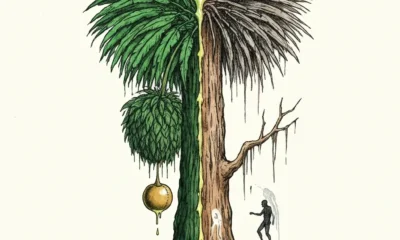
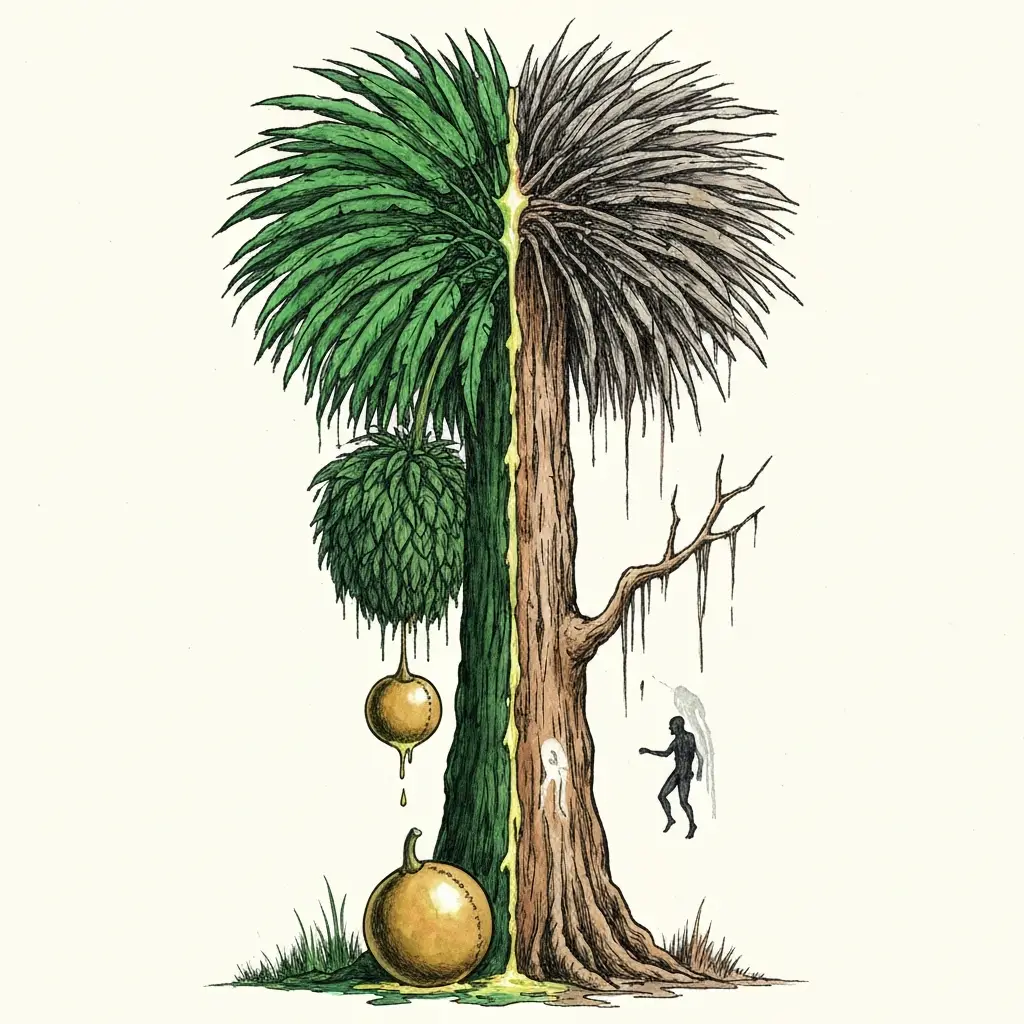
Twenty-five meters is a long way to fall. The Raphia palm in the Uzere bush of Ozoro stands exactly that tall, its smooth trunk rising from swampy ground where few other trees grow. For eight years now, a man named Oghenekaro has been climbing it every morning, cutting notches for his feet with a machete and tying a vine rope around his waist. He collects the sap that drips from the crown, filling gourds with pale liquid that will become palm wine. What makes this routine remarkable is simple. This is the same tree that killed his father about a decade ago.
The Tree With a History
Certain trees in rural Nigeria develop reputations, and this one became famous for all the wrong reasons. After the older tapper fell, many in the community considered the palm cursed or inhabited by a malevolent spirit. People began avoiding the entire grove, and the landowner thought seriously about cutting it down. The tree stood there, tall and productive, but surrounded by a silence born of fear. Then Oghenekaro decided he would tap it anyway. He needed the income, and palm wine tapping remains a vital source of livelihood in the Isoko region. A 2025 report by the International Institute of Tropical Agriculture listed non-timber forest products like palm wine as a critical income stream for over 40% of rural households in the Niger Delta (IITA Annual Review, 2025). He saw a good tree going to waste.
A Different Kind of Climb
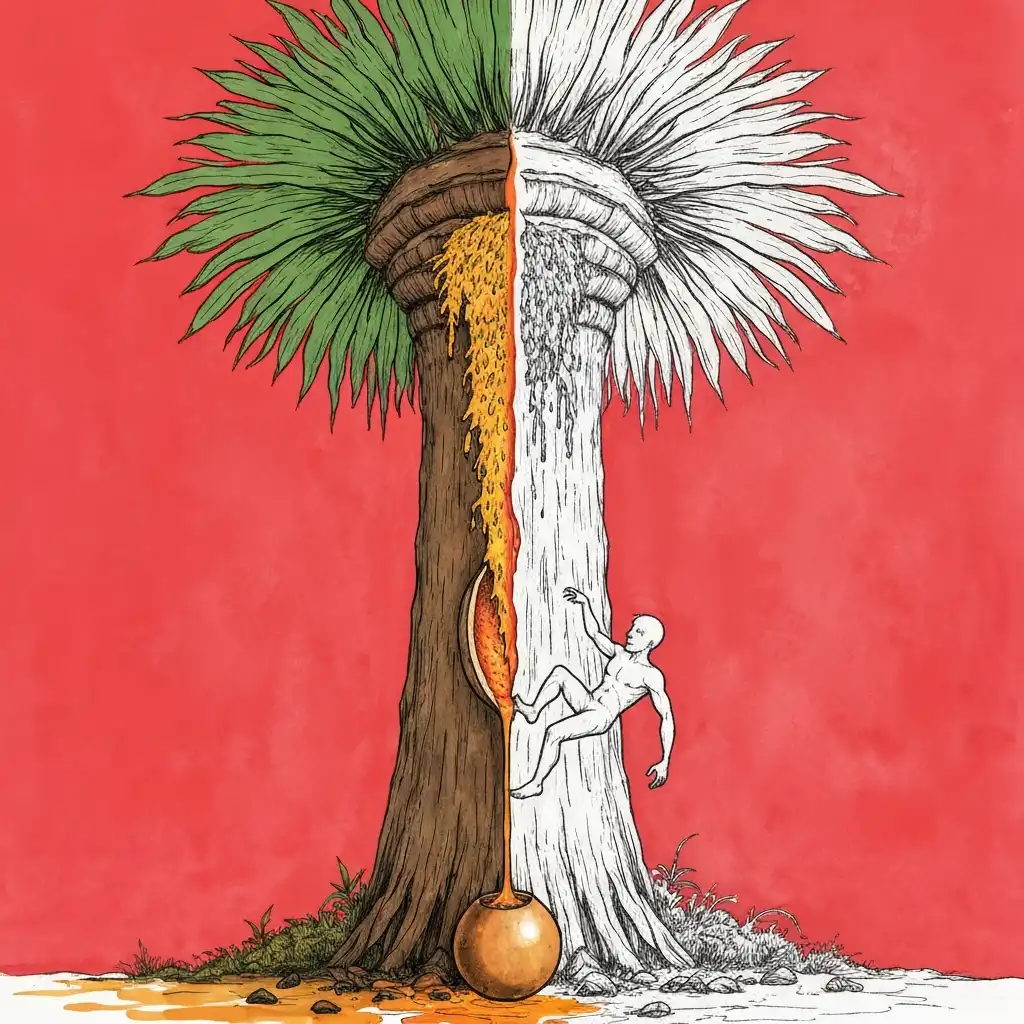
Tapping a Raphia palm requires a specific skill set because the trunk is smoother than an oil palm’s. Oghenekaro modified his technique for this particular tree, using a longer and stronger rope and inspecting the trunk for weaknesses each time before he begins his ascent. He also talks to the tree, a common ritual among tappers that mixes respect with practical precaution. He tells it he means no harm, that he is only collecting what it offers. The National Bureau of Statistics noted in 2025 that occupational fatalities in informal agriculture are rarely documented (NBS Social Statistics Report, 2025). Safety depends entirely on the individual’s skill and attention to detail.
“My father was a good climber. That day, the rope was old. The rain had made the trunk slick. I check my rope every morning now. I respect the height.”
– Oghenekaro, palm wine tapper, Ozoro. March 2026.
A Question of Taste
Now here is the curious part. Customers in the Ozoro market and the local sap bars specifically ask for wine from that tree. They claim it is sweeter and ferments more slowly than wine from other palms. A regular buyer named Madam Efe says she uses it for traditional ceremonies because of its perceived superior quality. This presents an interesting question. Does the tree’s history, or perhaps the tapper’s careful and respectful method, somehow change the biochemistry of the sap? A researcher in food science at the University of Port Harcourt, Dr. Chika Obi, offered a perspective. She said trauma or stress to a plant can sometimes alter its sap composition, though a change in the tapper’s technique likely has more influence. “Without laboratory analysis of sap from that specific tree over time, the sweetness remains an anecdotal claim,” she noted (Personal communication, April 2026). The belief, however, is real in Ozoro and adds tangible economic value to the product.
The Economics of Courage
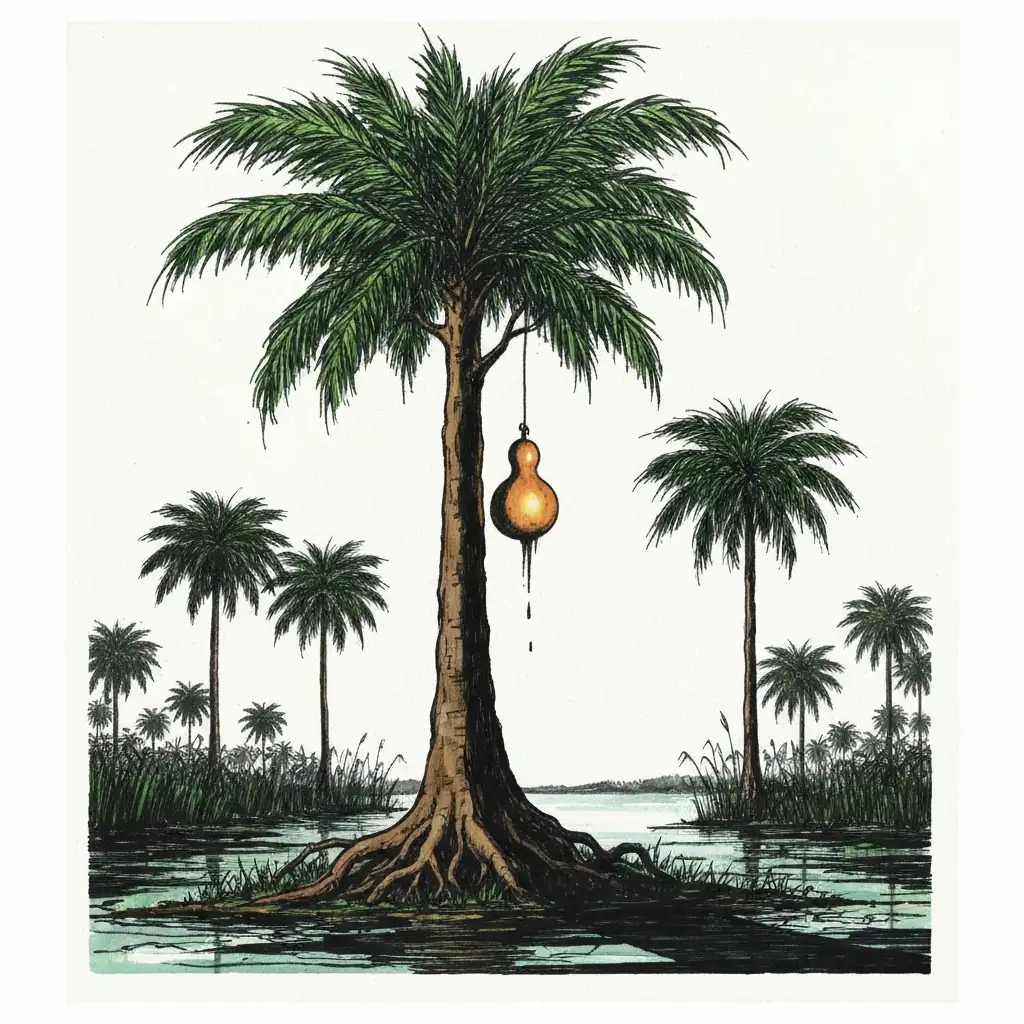
So a man faces a literal ghost from his past to make a living. A five-gallon keg of palm wine sells for between N5,000 and N8,000 in Delta State, depending on the season (Field price survey, Ozoro Market, April 2026). A diligent tapper harvesting from multiple trees can earn a daily income that pays school fees, buys food, and handles medical bills. In an economy with high unemployment, this traditional craft puts cash directly in hand. The sector receives little official support, however. The Delta State Ministry of Agriculture has programs for oil palm cultivation, but the focus for Raphia palm is less defined. A 2024 policy document mentioned developing the value chain for “all palm products,” but tappers like Oghenekaro operate without formal training or insurance (Delta State Agricultural Roadmap, 2024). Their safety net is community, personal caution, and the strength of their own rope.
Changing the Story
This is more than just a strange tale. It shows how a community can manage risk and memory. A tree that represented death has been reclaimed as a source of life and a peculiar sweetness. Oghenekaro’s daily, careful work defeated a local superstition. Other tappers now harvest from trees in that same grove they once avoided, and the economic activity has returned. You find this pattern across Nigeria, where people engage with difficult histories to create a present that works. They choose pragmatism over fear. The tree is still tall and the climb is still dangerous. The difference is a man who decided the past would not dictate the use of a resource. He applied his skill to mitigate the risk, and the result is a product people enjoy.
“We hear stories of bad luck attached to places. Sometimes, the solution is not to abandon the place. The solution is to change how you work there.”
– Chief Emmanuel Ovie, community leader, Ozoro. April 2026.
Oghenekaro plans to teach his son to tap one day. He will include the story of his own father in the lesson. He will emphasize, above all else, the importance of checking the rope.
Culture
Chigozie Obioma International Booker Prize 2026
Chigozie Obioma finds himself on the International Booker Prize shortlist again in 2026, a quiet nod to stories that live between worlds and the patient work behind them.
Chigozie Obioma International Booker Prize 2026
Published: 13 April 2026
Chigozie Obioma was on the list again when it came out on April 7, 2026, a familiar name among writers from Argentina and South Korea and Germany all looking for that prize for fiction brought into English. You hear about these things quietly, maybe over a cup of tea, when someone mentions a name you know has landed somewhere important. It felt like a small, proper celebration for people who care about books here, and Lola Shoneyin from the Ake Arts and Book Festival called it a win for African stories the very next day. He had done this before in 2019 with An Orchestra of Minorities, a book that went far and reached the National Book Award in the United States, so his new one walking the same ground where old myths meet the modern street made a certain kind of sense.
The real prize
The official money is £50,000, split between the writer and the translator, but the real prize is something else entirely. It is eyes on the page from places that might not have looked before, a chance for a story from Nigeria to sit at a much bigger table. Winners like Olga Tokarczuk found new readers everywhere, and for a writer from here, it quietly changes the whole conversation. Eleanor Catton is leading the judges this year and called the list daring in the official announcement, so the panel with people from five countries has a hard job picking just one.
Between two worlds
He teaches writing at the University of Nebraska-Lincoln, living between there and here, and his work takes a kind of time you do not see often. Chigozie Obioma digs into history and the stories of the Igbo world with a patient hand, and his first book, The Fishermen, won awards back in 2015 and even became a play in the United Kingdom. People remembered it, and this new book that made the list for 2026 feels familiar in the very best way, a family story with the weight of old tragedy that early readers say is built with deep care.
A global shortlist
Six books made the cut from Nigeria, Argentina, South Korea, Germany, Sweden, and Japan, with two of the writers having won before. The book from Argentina talks about memory under a dictatorship, and the one from South Korea looks at loneliness in a digital age, with the judges liking the way they all used language. You can see the whole list online, of course, and they will say who won on May 21, 2026, in London with a live show for everyone to watch.

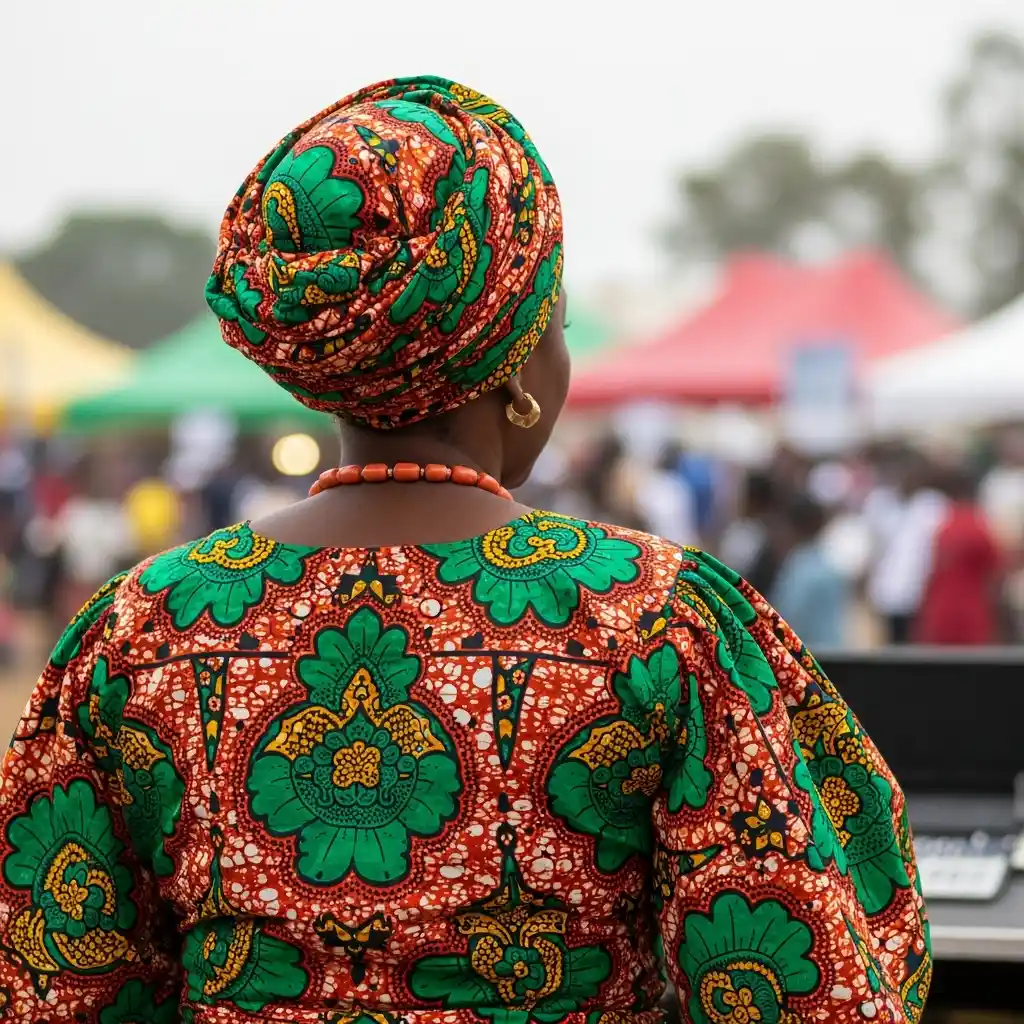
Like Obioma’s words, old books hold worlds. Nebraska light finds a page (Digital Illustration: GoBeyondLocal).
Where stories live
Seeing him do well like this makes you think about where books are born, because the big publishing houses are mostly in Europe and North America. Many African writers you know are with Penguin Random House or HarperCollins, and it is simply harder here where print runs for literary books are down. The Nigerian Publishers Association said so in its 2025 report, noting it costs a lot and schools buy textbooks instead of novels, but people are reading in a different way. A group called Worldreader says downloads of African novels on its app went up by 40% between 2024 and 2025, with young readers using their phones for everything.
The numbers change
Winning changes the numbers in a dramatic way, with sales for the 2023 winner, Time Shelter, jumping over 800% in a single week according to Nielsen BookScan. If Obioma wins, shops here will want the book immediately but often cannot get award winners fast enough due to duties and shipping delays. The applause happens overseas before the book arrives, and Adekunle Adewuyi from Rovingheights Bookstore talked about this problem recently, explaining how people want the book now while the system tells them to wait.
A good time for it
This nomination comes at a very good time when the world is looking at African stories again and streaming services want to make shows from books. Festivals are booking more voices from here, and in Nigeria, where the arts always need more of everything, a big win like this tells a different story. It says work from here can stand anywhere, and the Minister of Information, Mohammed Idris, sent congratulations on April 8 with a statement about supporting creative work and recent changes to the law. A nice gesture.
The translator’s art
This prize is special because it honors the translator too, saying a book in translation is a real partnership, though for Obioma who writes in English it is a different matter. So many great stories in Yoruba or Hausa or Igbo have not been translated at all, and the prize reminds people that translation is its own art. It asks publishers to bring those stories out, and Granta magazine did an issue on African writing in translation in 2025 where Helon Habila saw progress but said translators still need more help, suggesting grants as a start.
Marking the date
They will name the winner at a dinner in London on May 21, reading from the books after the judges have argued until the last minute, and you never know what will happen. People here have the date marked already because win or not, being on the list is its own kind of victory that goes in the record books for Nigerian writing. The last person with Nigerian roots to win was Bernardine Evaristo in 2019, and if Obioma wins it would feel different since he lives in both worlds in a way that matters.
Finding the book
The book is out in hardcover and as an ebook with the big online shops having it, while in Nigeria places like Laterna Ventures and Glendora are trying to get copies as fast as they can. Some public libraries might get it through donations because the Lagos State Library Board has a rule to stock books by Nigerian authors that get award nods, and reading it before the announcement is a very good idea. You get to be part of the talk then and see for yourself what exactly caught the judges’ eyes in the first place.
Before the crown
Prizes are funny things that pick one book on one day, but the real thing is the work a writer does over years, the books that make you think and feel and see a place anew. The light from the Booker will help people find his older books and might make a young person in Onitsha start writing, which is the quiet part of the prize that lasts. So we wait for May while the judges have their hard job, and the rest of us have some very good books to read in the meantime.
‘The shortlist presents a constellation of stories that map the human experience with rare brilliance. Each book is a world unto itself.’
– Eleanor Catton, 2026 International Booker Prize judging panel chair, speaking on April 7, 2026.
In conversation with two-time Booker Prize finalist, Chigozie Obioma about his Biafran war novel – Relevant coverage on this topic.
Culture
Jidenna Pan African Sounds Latest Musical Project 2026
You put on the new music from Jidenna and hear a conversation between Lagos, Nairobi, and Johannesburg. It is a map of the continent made of sound.
Jidenna Weaves Pan African Sounds Into His Latest Musical Project
Published: 13 April, 2026
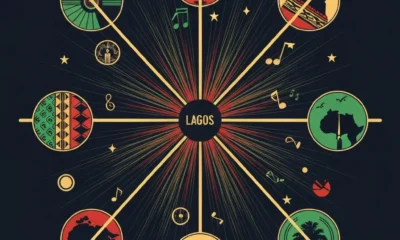
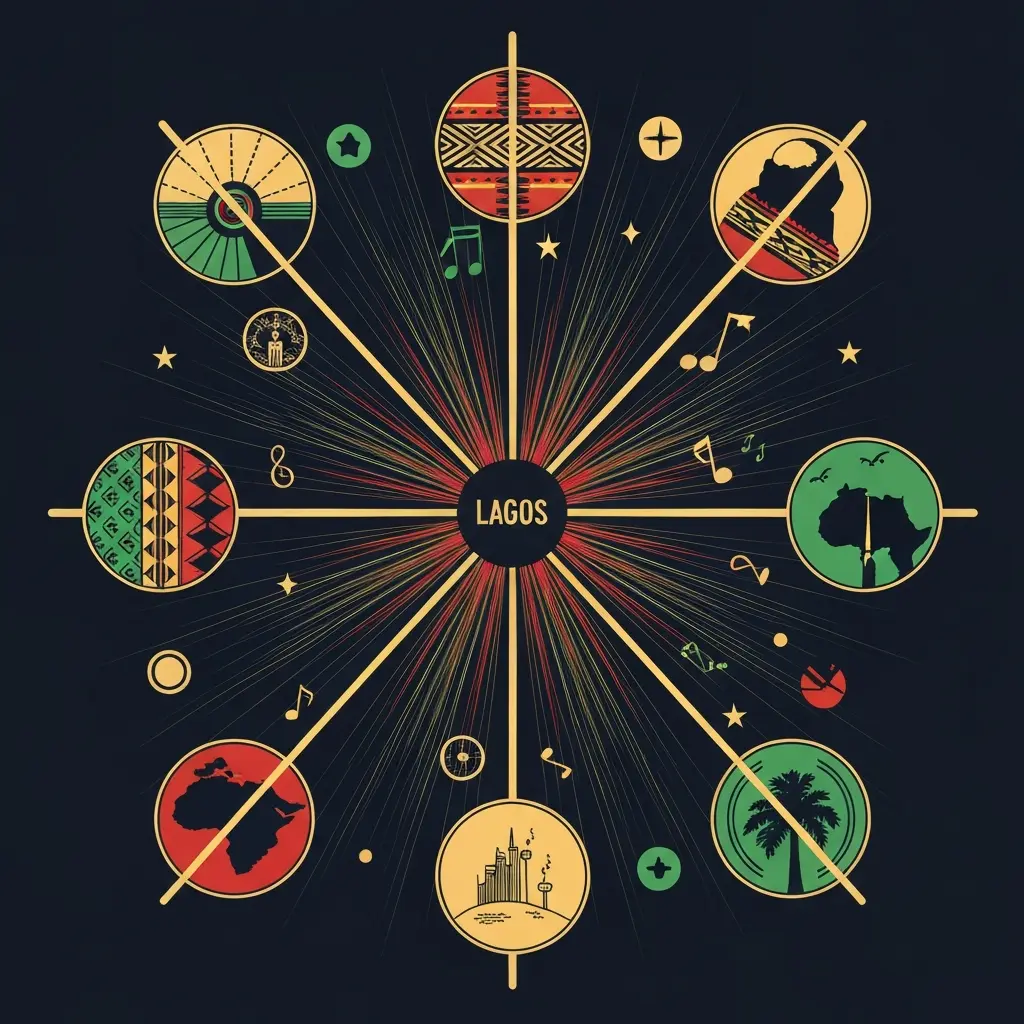
You put on the new music from Jidenna and the first thing you notice is the geography of it all. A log drum pattern from Kenya walks in. A guitar line that could only come from South Africa follows. The whole thing sits on a bassline with the particular bounce of Lagos right now. He calls it a sonic map. It sounds like a conversation between cities that have never needed an introduction.
The sound did not come from one place. He recorded parts in a studio in Yaba, Lagos, where the power comes from the sun more often than the grid. Other sessions happened in Nairobi. The final mix came together in Atlanta. This is how you make music now, if you can afford it. A single day in a good Lagos studio costs about N500,000. Sending those big audio files across oceans needs bandwidth that does not stutter. It adds up.
Listeners are ready
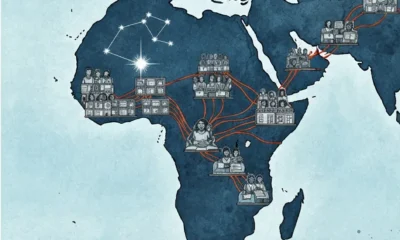
People are listening for this mix. African music streams grew by 30% globally last year. Someone in Accra is playing Amapiano from Johannesburg. Someone in Johannesburg is streaming the latest Afrobeats from Nigeria. The audience is already connected. Jidenna just found a way to speak to all of them at once. His monthly listeners in Kenya and South Africa keep climbing.
“The borders on the map do not exist in the music. The feeling in Nairobi is the same feeling in Lagos, just with a different rhythm. My work is to find the harmony.”
– Jidenna, speaking with The NATIVE in March 2026.
This philosophy is beautiful. It also runs into the usual walls. The Copyright Society of Nigeria (COSON) can collect your money here. Getting royalties from airplay in Zambia or Tanzania is a different conversation altogether. The business has its own rhythm. It is rarely in sync.
The other current
Creating the art is one thing. Getting paid for it fairly is another current entirely. A lot of the money made from music here flows right back out. Artists who own their work have more control. They license directly. They negotiate for films and ads. It works, if you have a good lawyer who understands the maze.
Then there are tours. A Pan African sound should sell tickets across the continent. The logistics will humble you. Performance visas for a whole band. Moving equipment. Different promoters in every city. It tests any team.
“We see a future where an artist drops a song on Friday, trends in Lagos by Saturday, and headlines a show in Rwanda the next month. The infrastructure for that journey is being built now.”
– Tuma Basa, Director of Black Music & Culture at Spotify, speaking at Afro Nation Ghana in February 2026.
Bigger than one man
This is not just about one artist. It is a shift. The continent has over 700 million mobile internet subscribers now. Music moved from CDs in plastic wrappers to songs in the air. Record labels are scouting for talent with this connected audience in mind. They sign artists from Ghana who sample Congolese rumba. They back Nigerian producers working with singers from Tanzania. The money follows the streams.
Even the Federal Ministry of Information and Culture sees the potential. They have initiatives. The details, as always, are still being worked out.
Where it lands
In Lagos, this new project plays in ride-share cars. It soundtracks videos on social media. The appeal is in the familiarity and the novelty. You recognize the Nigerian cadence in his voice. You discover the Kenyan inflection in the beat. It feels like home, and somewhere new, all at once.
The model has limits, of course. Internet data is not free. In many places, a gigabyte of data can cost a big piece of someone’s monthly income. Streaming high-quality audio eats data quickly. The future is here, but it is on a meter.
So you listen. You play the song and try to pick out the parts. The Nigerian element. The South African guitar. The Kenyan log drum. You share it with a note about what you heard. That simple act does two things. It supports the artist. It also teaches the algorithm. It tells the machine that people want this sophisticated, hybrid sound. The future of the music here is a conversation between its many parts. The technology finally exists to let everyone speak at the same time. Whether everyone gets heard is the older question.

Ancient Rock Art Traditions Endure in Igbara Oke Caves

Palm Wine Tapper Climbs Same Tree That Killed His Father in Ozoro

Hunter Hears Dead Brother Whistle in Ganye Forest Mystery

Farmer Plants Yam That Grows Downward to Water Table in Drought

She Kept Asking and They Kept Moving Her in Nigeria

Global Food Prices Rose 2.4% in March 2026

Chigozie Obioma International Booker Prize 2026

Jidenna Pan African Sounds Latest Musical Project 2026

Hakeem Oluseyi Brings Astrophysics to Classrooms Worldwide

NANS Diaspora Nigerian Students Eastern Europe

Nnamdi Asomugha From NFL Cornerback to Hollywood Producer

Folake Olowofoyeku Stars in American Sitcom on Nigerian Family Life

Internet Sovereignty: Why Some Countries Want Their Own Separate Internet

The Story Of The Nigerian Who Helped Build Global Internet Systems

Nigerian Hackers: The Global Fraud Story and Its Fallout

Forgotten Satellites Defy Silence, Beaming Signals for Decades

The Phone Stay So Quiet: An Investigation into Nigeria’s Silent Customer Lines

Your Digital Store in Nigeria and the Reality of Domain Expiration

The Business That Died: A Nigerian Case Study in Refusal to Adapt

Hiding Your Business From People With Money

How Nollywood Grew Without Government Support

Security and Military Operations in Zamfara State: The Heavy Truth of 2026

Moniepoint Business Account Requirements Nigeria for SMEs 2026

Comedy Industry in Nigeria and Its Economic Contribution
 Digital Sovereignty8 months ago
Internet Sovereignty: Why Some Countries Want Their Own Separate Internet
- Technology & Innovation8 months ago
The Story Of The Nigerian Who Helped Build Global Internet Systems
- Crime8 months ago
Nigerian Hackers: The Global Fraud Story and Its Fallout
- Space Technology8 months ago
Forgotten Satellites Defy Silence, Beaming Signals for Decades
- Maritime8 months ago
The Phone Stay So Quiet: An Investigation into Nigeria’s Silent Customer Lines
- Business8 months ago
Your Digital Store in Nigeria and the Reality of Domain Expiration
- Business8 months ago
The Business That Died: A Nigerian Case Study in Refusal to Adapt
- Business8 months ago
Hiding Your Business From People With Money