Taxation & Finance
The Crushing Weight of Official Fees and Physical Decay at Lagos Trade Fair
Chinedu Okoro sells phones at the Lagos Trade Fair and wonders what he’s paying for. With seven official levies plus broken roads and no reliable light, survival has its own crushing arithmetic. The…

The Crushing Weight of Official Fees and Physical Decay at Lagos Trade Fair
Published: 12 March, 2026
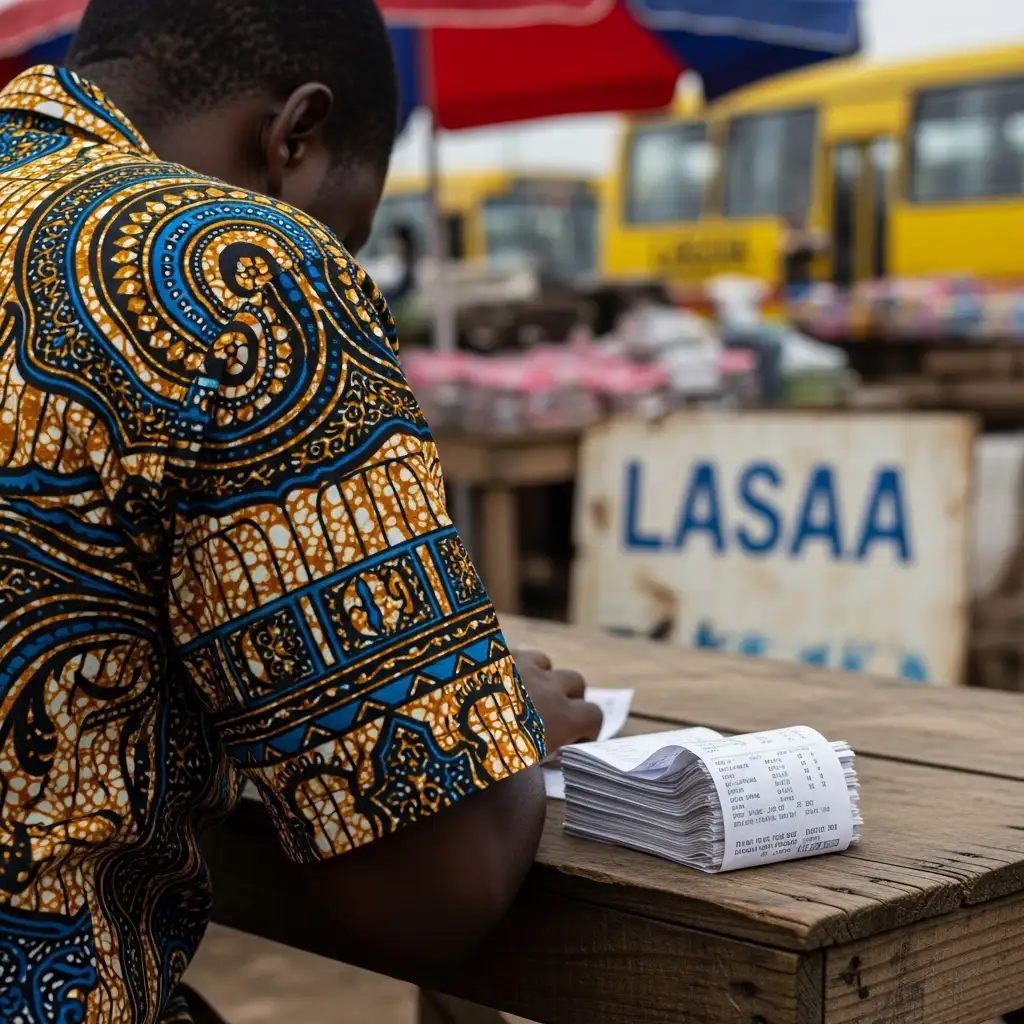
Seven separate official levies greet you before you even think about your goods at the Lagos International Trade Fair. Chinedu Okoro sells mobile phones there, and he has a question that hangs in the air like the market dust. What exactly is he paying for? He budgets for rent and signage and sanitation and security and fire service and the local government ticket, but when he finishes paying them all, the profit has vanished. You can hear the tired resignation in his voice when he tells you this, a man who feels he is just working for government.
That is the arithmetic of survival at one of West Africa’s largest trading hubs, where you start with that heavy number and then add the price of navigating broken roads and paying for your own light because the grid cannot be trusted. The compound effect of multiple taxation and infrastructure failure becomes a direct tax on viability itself, a weight that presses down on every transaction until nothing is left. A policy brief from the Lagos Chamber of Commerce and Industry pins the problem on a lack of unified collection, where different units within the same local government send separate bills for everything under the sun.
“We budget for rent, for LASAA signage, for LAWMA, for the local government ticket, for fire service, for security. By the time you finish, the profit is gone. You are just working for government.”
– Chinedu Okoro, Electronics Section Trader, Lagos Trade Fair, February 2026.
The physical decay compounds the financial pressure in ways you can see and smell. A report found over 40% of internal access roads within the fair complex require urgent rehabilitation, while clogged drainage turns entire sections into flood zones each rainy season. These conditions directly impede the movement of goods and customers, creating obstacles where there should be pathways and adding another silent cost to doing business.
The Anatomy of Overlapping Levies
Official levies come from every tier of government like rain during the wet season, persistent and unavoidable. A survey detailed one fabric merchant’s monthly dues, which included a stall fee to the commerce ministry and a sanitation levy to waste management and a signage fee to the advertising agency. The local government council adds a tenement rate and a development levy, then come invoices from state fire service and market security units, creating a layered and uncoordinated system that feels endless. There is a catch, of course, with the Federal Inland Revenue Service requiring VAT from registered entities while small unregistered traders escape this only to face more frequent informal cash demands.
The chamber of commerce calculated that traders lose 18 working days per year just navigating payment points and disputes, time that could be spent actually selling things. Annual revenue collected from the complex exceeds N500 million, though a significant portion never reaches official coffers due to various leaks in the system. This opacity fuels deep resentment among those who pay, because they see no link between their payments and any improvement in the facilities crumbling around them.
Policy Disconnect and Trader Resilience

Government ease-of-doing-business drives have limited reach here, where many traders operate without registration or bank accounts and deal in cash with physical agents. This system remains ripe for exploitation despite all the digital platforms being developed elsewhere. It gets more complex when you consider the Single Joint Account Allocation Committee initiative launched back in 2021 to harmonize revenue collection, an idea whose implementation remains patchy years later. Some local governments issue unified bills while others still use multiple tickets, leaving the trade fair in a jurisdictional gray area where harmonization consistently fails.
Traders cope in their own quiet ways, using smaller stalls to avoid certain levies or baking all charges into their prices. A number have relocated to neighborhood markets with lower scrutiny despite sacrificing customer traffic, which fragments the economic cluster the fair was meant to be. Local governments defend multiple charges by citing their constitutional duties and inadequate monthly allocations from the federal government, creating a fascinating paradox where high levies stifle expansion and encourage evasion.
“The government collects money for light, but we provide our own. They collect for sanitation, but we see dirt. They collect for security, but we pay vigilantes. So what are we paying for?”
– Alhaja Bola Adekunle, Foodstuff Section Leader, January 2026.
Looking Forward

The most actionable fix sounds simple when you say it out loud. A full transparent Single Market Charge for the trade fair would itemize contributions for stall space and sanitation and security and maintenance under one invoice with one payment point. Revenue would flow into a dedicated escrow account for the complex, managed by a committee of state officials and chamber representatives and elected trader leaders, with expenditure targeting agreed projects like road repairs and drainage and better waste contracts. This one administrative fix attacks the core complaints of opacity and multiplicity that have plagued the place for years, simplifying compliance and reducing collection leaks while creating a visible link between payment and service.
It would turn a source of constant conflict into a partnership for actual upgrading, and the success of such a pilot at this flagship fair would provide a template for markets across Lagos and beyond. You can almost see how it might work, this simple idea of one bill for one place, and you wonder why it has taken so long to consider something so obvious. Sometimes the solution sits right there in front of you, waiting for someone to finally pick it up and try.






Taxation & Finance
Nigeria Food Prices and the Tax Burden on the Supply Chain
Food inflation hit 37.92%, but the number hides a journey of levies. From farm to kitchen, a bag of rice pays a gauntlet of over 50 taxes. This is the story of the hidden cost on your plate.
Nigeria Food Prices and the Tax Burden on the Supply Chain
Published: 24 March, 2026
37.92% is a number that sits heavy in the stomach, a statistic from the National Bureau of Statistics that confirms what every market visit has been telling you for months. Food inflation reached that figure in February 2026, and while the number itself is stark, it is just the final, official sigh after a long journey of unofficial costs. The true story of a bag of rice is no longer about seeds or labour but about the ledger of levies it accumulates, a receipt for every checkpoint between the farm and your kitchen that explains the chaos behind the pain.
The Trail of Tickets
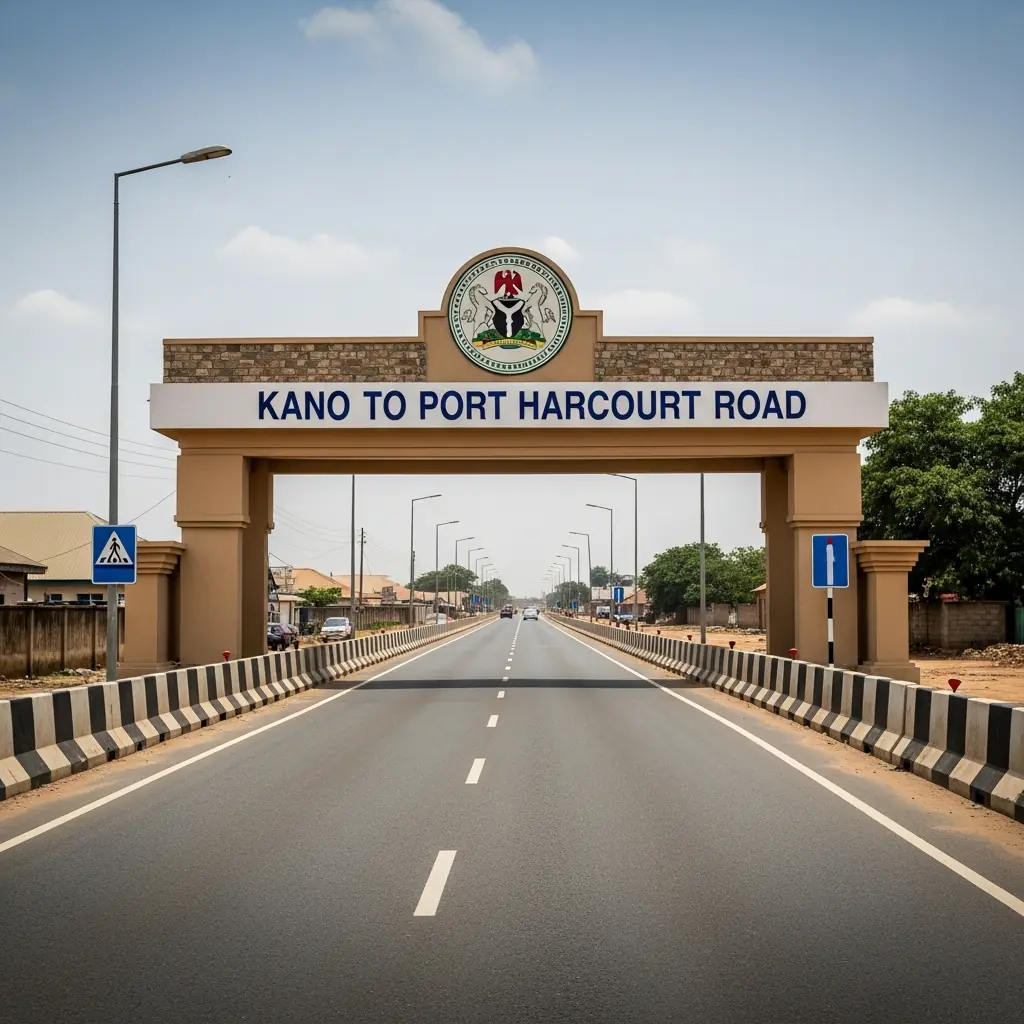
Food does not simply travel in Nigeria. It pays a toll. A truck moving tomatoes or onions faces a gauntlet where each state government and the local councils within them demand their own fee. The Manufacturers Association of Nigeria once documented over 50 different taxes and levies affecting businesses, many of which target goods in transit. A report by Premium Times tracked a single truck of onions from Kano to Port Harcourt and found the driver paid 14 separate informal levies on that trip, with receipts rarely issued. Farmers pay, then transporters pay, and aggregators pay too, with each layer adding a government charge long before the produce ever sees a market stall.
The Thicket of Authority
The trouble is the chaotic overlap of who gets to collect what. The Federal Government collects Value Added Tax, state governments impose Personal Income Tax and their own Road Tax, and local governments then add market fees and sanitation charges. The theory is a neat division of labour, but the practice is a thicket where the same activity gets charged by three different tiers, a confusion the Joint Tax Board admits crushes small businesses. Many states struggle fiscally and see moving goods as the easiest target for Internally Generated Revenue, so checkpoints multiply while the money collected vanishes into a system with little transparency. You see the high food prices, but you rarely see better roads or cleaner markets in return.
“The multiplicity of taxes is killing agriculture. A farmer is taxed on his seedlings, his harvest, and the vehicle that carries it. By the time the food gets to the city, the price is beyond the reach of the common man.”
– Kabiru Ibrahim, National President, All Farmers Association of Nigeria, January 2026.
The Mathematics of a Bag
Take a 50kg bag of rice and start at the miller, who pays an electricity levy, a business premises fee, and corporate tax, factoring it all in. The transporter pays for a road worthiness certificate, a state levy, and a loading fee, also budgeting for those unofficial settlements. By the time that bag lands in a Lagos warehouse, analysts from the Financial Derivatives Company estimate its base cost has swollen by 25-30%. The warehouse owner pays property rates, the retailer pays market fees, and each actor passes the cost forward until the final consumer bears the full accumulated burden, with the farm gate price becoming a distant memory.
The Policy Tangle
The Federal Ministry of Finance talks about tax harmonization with a goal to streamline, but progress is painfully slow. The National Tax Policy imagines one agency collecting and sharing revenue, yet state governments guard their fiscal autonomy fiercely, seeing centralization as a direct threat. A committee in 2025 recommended scrapping 15 specific nuisance taxes, but implementation across 36 states and 774 local governments remains wildly inconsistent. A federal law means little without state cooperation, and the gap between policy and practice is wide enough for a truck full of taxes to drive right through.
A Vicious Cycle
Here lies the quiet paradox. Excessive taxation can kill the very trade it feeds on, because high costs discourage formal movement and force transporters onto longer, worse routes to avoid checkpoints, which increases spoilage. Some farmers quit the market entirely, growing only for themselves, and the tax base shrinks. Governments then raise rates on those left, creating a vicious cycle that, as The World Bank noted, is a major constraint on business. For food logistics, that constraint has a direct price tag. The government might collect more per bag, but the total number of bags moving formally drops, and everyone loses in the end.
“We are not against paying taxes. We are against harassment and duplication. Let there be one fee for using the road, paid electronically. Let that money show in the budget for road repair. What we have now is chaos that benefits only the touts at the checkpoints.”
– Yusuf Lawal, Secretary-General, Nigerian Association of Road Transport Owners, February 2026.
The Human Face
Walk into any market like Daleko Market in Lagos and the conversation is always the same. A pepper seller lists her daily charges: market ticket, sanitation fee, association dues, and a levy for the area boys, adding each cost to the price of every basket. The office worker on a fixed salary feels every naira, especially when food takes over 50% of the average household spending. When prices rise, it is a direct cut to living standards that fuels tension and kills spending on anything else, with political consequences that are visible and economic damage that runs deep.
A Path Through
Some states are trying to find a way. Kaduna State implemented a unified electronic billing system for goods transporters where one receipt is recognised across the state, and early data showed reduced transit times and slightly moderated price increases. It requires political will, of course. The federal government could use its power over interstate commerce to mandate a single, electronic federal levy for road transport of goods, sharing the revenue with states based on mileage, though that would need a constitutional amendment and immense political negotiation. The alternative is just the relentless climb.
A Single Screen
The technology for a simpler system already exists. A national logistics platform is possible where a transporter logs a trip and pays one fee online, an idea discussed by the Federal Ministry of Transport and the Federal Inland Revenue Service. The real challenge is getting buy-in from 36 state revenue agencies, because without them, any plan fails. The benefit for states would be predictable, automated revenue with less leakage, and for the farmer and the consumer, a more predictable cost where unofficial levies become obsolete. Food prices would still reflect fertilizer costs and the climate, but the artificial inflation from a predatory, fragmented tax system might finally fall.
What You Can Do
Ask for a receipt. This simple act holds a quiet power, because when you pay any fee and demand a proper, stamped receipt, it makes the transaction official and creates a record that reduces the chance the money ends in a private pocket. If enough people start demanding that accountability, the system feels the pressure. Engage your local councilor too, since the most oppressive levies often start at the local government level. Attend town hall meetings, question every market fee, and demand to see the budget for how that revenue improves the market. Citizen pressure can force transparency and rebuild the connection between tax paid and service delivered, which is the foundation that is currently missing.
So here we are, with the price of food acting as a thermometer and the reading uncomfortably high. Multiple taxation on the food supply chain is a self-inflicted wound that raises short-term cash but strangles long-term wealth, and fixing it requires moving from a culture of endless extraction to one of simple facilitation. The goal, one imagines, is a system where the price on your plate reflects the true cost of production and not just the accumulated cost of bureaucracy.
Taxation & Finance
The Gap Between New Tax Laws and Economic Reality
N12.87 trillion was collected in 2025, missing the target by a mile. The space between law and collection defines tax reform in Nigeria, where ambition on paper meets the manual reality of…

The Gap Between New Tax Laws and Economic Reality
Published: 16 March, 2026
N12.87 trillion is a number that sits on a page, a target that was missed by a mile. The Federal Inland Revenue Service collected that amount in 2025, and the space between that figure and the government’s ambition tells you everything about tax reform in Nigeria. Ambition lives on paper while revenue is collected on the ground, and the two have never really learned to speak the same language.
The Tools and the Hands
The National Assembly has been busy since 2020, passing multiple Finance Acts that amended the code and introduced new ideas like a capital gains tax on shares. The logic is sound when you consider that fewer than 15% of the economically active population is in the tax net, which means the burden on the few is far too heavy. Legislation, however, requires administration, and that is where the story gets interesting. The platform for this, the TaxPro-Max system, has faced persistent technical challenges, including a system outage in January 2026 that prevented thousands of filings and created a backlog for weeks. For a system meant to simplify compliance, it creates immediate friction, and manual processes still persist in many state revenue services. A business owner in Lagos might file electronically with the FIRS but still get a paper assessment from the state, and this duality has a real cost. For a medium-sized enterprise, compliance eats up about 12% of annual profit.
“The law gives us the tools, but the tools are only as good as the hands that wield them. Our focus now is building those hands through technology and training.”
– Mr. Zacch Adedeji, Executive Chairman of the Federal Inland Revenue Service, February 2026.
A Tough Place for New Ideas
These new tools are being deployed into a complex economic environment where headline inflation moderated to 21.91% in February while food inflation remains above 35%. In this setting, every new levy faces scrutiny for potentially stifling activity, and you can see the tension in something like the 0.5% electronic money transfer levy on transactions above N10,000. Proponents say it captures the informal economy, but critics call it regressive, hitting low-income users the hardest. The potential is huge, with the total value of electronic payments reaching N600 trillion in 2025, but its real impact remains a question mark. This brings us to the core conundrum: the informal sector accounts for over 65% of employment but contributes less than 10% to tax revenue. The strategy aims to change that, but how do you assess and collect tax from a roadside mechanic or a market trader operating entirely in cash? Some state governments experiment with presumptive tax regimes, but their success hinges entirely on the relationship between collector and community.
“You cannot tax poverty. Our first task is to create a pathway for informal businesses to formalize, to grow. Taxation follows growth; it does not create it.”
– Dr. Muda Yusuf, CEO of the Centre for the Promotion of Private Enterprise, in The Guardian, January 2026.
The Digital Dream and Manual Reality
Effective modern tax administration relies on digital infrastructure, but the National Identity Management Commission database, with over 107 million registered citizens, is not fully integrated with the taxpayer system. Without a unified identity, tracking across platforms is a major hurdle, and then there is the simple matter of connectivity. Internet penetration stands at approximately 55% of the population, with a clear urban-rural divide, meaning a rural trader may own a phone but lack the skills or network to file a return online. Contrast this with the official harmonization efforts that seek to eliminate multiple taxation, and you see the friction. State governments, which depend on internally generated revenue for over 40% of their budgets, are reluctant to surrender any streams, while local government councils often lack the capacity to collect efficiently. This vacuum invites touting and illegal levies, and the success of any harmonization depends on a revenue-sharing formula that satisfies all three tiers of government. The trouble is we are often flying blind because real-time economic data is scarce, and without detailed breakdowns, it is hard to gauge the true impact of new measures.
The Missing Link
Underpinning all this is a trust deficit, where citizens question the link between taxes paid and services received. A 2025 survey indicated only 31% of Nigerians believe tax revenue is used effectively, which manifests as aggressive avoidance and a preference for the informal economy. Building trust requires transparency, and while the government’s citizen budget portal is a step, awareness remains low outside policy circles.
“When people see a road built, a school renovated, or a clinic equipped in their community, they make the connection. That connection is the strongest incentive for compliance.”
– Ms. Taiwo Oyedele, Chairman of the Presidential Committee on Fiscal Policy and Tax Reforms, March 2026.
So, what is the one small fix? A unified, public, real-time tax dashboard hosted on the sites of the Federal Ministry of Finance and the FIRS. It could display daily or weekly cumulative collections broken down by major tax type, show comparisons to targets and prior years, and then list the top five projects funded by tax revenue in each geopolitical zone. This tool would serve multiple purposes: a performance metric for government, a visible link for taxpayers, and reliable data for analysts. The technology required is basic, but the commitment required is significant. It is a matter of political will and technical capability, and implementing it would signal that reform prioritizes accountability as much as revenue. The real work happens in the spaces between legislation and collection, between digital systems and manual realities. The gap is wide, but navigable, and navigation requires less grand policy and more granular attention to administration, data, and public trust.
Taxation & Finance
Real Estate Tax in Nigeria: The 2026 Clarity Imperative
Three different bills for the same house arrive from different offices. Nigeria’s real estate tax system is a fragmented ledger where clarity is the 2026 imperative. Can a simple number fix it?

Real Estate Tax in Nigeria: The 2026 Clarity Imperative
Published: 11 March, 2026
Three different bills for the same house can arrive in the same week, each from a different government office with its own letterhead and its own deadline. That is the daily reality for property in Nigeria, where the Federal Inland Revenue Service and the thirty-six state internal revenue services operate separate, overlapping systems that treat one asset like three different things. It is a peculiar kind of multiplication where the only thing that grows is the confusion.
According to the World Bank, property tax is the biggest untapped money source for state governments, with collections likely below 20% of what could be gathered. Billions in potential revenue are left on the table each year, which is a polite way of saying a fortune is slipping through the cracks of a fragmented ledger. With no clear national framework, this need for clarity is not about paperwork but about growth, and the Finance Act 2020 (amended) that started in 2021 has brought the whole sector to a turning point where something has to give.
The Fragmented Ledger
Real Estate Tax in Nigeria is not one thing but a collection of different levies stacked on top of each other. The Federal Government, through the FIRS, collects Capital Gains Tax (CGT) on sales profits and Stamp Duties on documents, while state governments handle the Land Use Charge that combines ground rent and other fees. Local government councils are supposed to collect Tenement Rates, but in many places that power exists only on paper, which means you have a third layer that is often invisible until it is not. The Joint Tax Board (JTB) admits this setup leads to multiple bills for the same asset, so a property sale in Lagos State can trigger payments to the Lagos State Internal Revenue Service (LIRS) for Land Use Charge and then to the FIRS for Capital Gains Tax, creating a paperwork trail that would confuse an accountant.
The FIRS collects that Capital Gains Tax at 10% on property sale profits, though there is a catch because individuals no longer have to pay it when they sell their own home under the new rules. Stamp Duties apply to documents like title deeds with rates that differ based on the type, and there is some relief since lease agreements worth less than N10 million per year are now free from stamp duty to lower the cost of renting. The trouble is the absence of a national property database, which makes it hard to track deals across state borders when the paperwork itself does not know where it belongs.
State governments use the Land Use Charge as their main tool, a yearly tax based on a property’s value, location, and use with rates that vary wildly from as low as 0.039% in some northern states to over 0.5% for commercial property in parts of Lagos. But there is a fundamental flaw because property valuation records are badly out of date, with many states not having done a full revaluation in over ten years, so current tax bills are based on values far below market reality. Lagos State is tackling this with its digital house numbering system that gives every property a QR code for better tracking, which is a start, though it feels like fixing one leak in a roof full of holes.
The Cost of Confusion
This tangled system has real costs where less money is collected, investors are scared off, and city development slows to a crawl. Multiple agencies duplicating assessment work eat up limited staff and funds, with studies suggesting states may spend 45 kobo to collect every ₦1 of property tax, which is a cost that is simply too high for anyone to bear. For investors, not knowing the total tax bill makes planning hard and cuts profits, and the Lagos Chamber of Commerce and Industry (LCCI) has named unpredictable property tax assessments as a major hurdle that everyone talks about but no one seems to fix.
The Minister of Finance and Coordinating Minister of the Economy, Mr. Wale Edun, has stated the government is aware of the problem in a way that officials often do.
“The multiplicity of taxes on a single asset creates a disincentive for investment and formalization. Our focus is on harmonization to capital,”
– Mr. Wale Edun, after a Federal Executive Council meeting.
Property owners track multiple filing deadlines, different payment portals, and separate appeal processes, so a developer in Abuja might get a ground rent bill from the Federal Capital Territory Administration (FCTA), a land use charge from the local council, and later a capital gains tax bill from the FIRs all for the same piece of land. Wait, it gets more complex because many state revenue offices still run on paper, which means delays and lost documents that make compliance harder and give people reasons to avoid paying altogether. Industry surveys show most real estate companies say the sheer complexity of tax filings is a major drag, which is a technical term for a headache that never goes away.
The 2026 Balancing Act
The balancing act for this year is simple: states desperately need more of their own money, but they also need to encourage investment without scaring it off. States are under huge financial pressure, and as the World Bank points out, without better property tax collection they will keep depending on federal handouts that already make up over 60% of their spending. But if states just raise rates without fixing the system or updating values, they will face public anger and watch investors leave for places where the math makes more sense, which is why several states have built their 2026 budgets around big increases in property tax collection that depend on bringing more properties into the system, not just squeezing those already paying.
Using technology to value properties, send bills, and collect payments is the obvious key, with the Federal Government’s National Digital Identity and National Addressing System projects providing the tools for a single national property database. Lagos State has already started by putting QR codes on properties to improve service delivery and tax collection, while other states have begun digital mapping projects with help from the World Bank’s SFTAS program that previously helped thirty-four states update their property records. The next step is to link these state databases with federal systems run by the FIRS and the Land Registry, which sounds straightforward until you remember how many different keys are needed to open all those doors.
A Single Number
Big problems tempt people to propose big, complicated solutions that never happen, so the practical step for 2026 is smaller and more humble. Get all levels of government to adopt a Property Identification Number (UPIN) for every piece of real estate, using the system already built by the Joint Tax Board (JTB) working with the Nigeria Inter-Bank Settlement System (NIBSS) and state governments. What is needed now is a presidential order making this number mandatory for every property deal and tax bill, giving the FIRS, state tax offices, and land registries one way to identify the same asset from first registration through every sale and payment.
The UPIN makes a property visible across different government databases so they can share information, settle valuation arguments, and track what is owed, with Lagos State’s Identifier project showing how digital property IDs work in real life when the will is there. Putting the UPIN in place does not need a new law or a grand debate, just the will to make it happen using existing computer systems to fix the basic problem of identification without fighting the harder political battles over tax rates. This step makes the system understandable to itself first, which is the only way to make it fair and workable for the people who pay, because growth in 2026 depends on this basic clarity where good policy starts with a simple number everyone can agree on, even if they cannot agree on anything else.

Ancient Rock Art Traditions Endure in Igbara Oke Caves

Palm Wine Tapper Climbs Same Tree That Killed His Father in Ozoro

Hunter Hears Dead Brother Whistle in Ganye Forest Mystery

Farmer Plants Yam That Grows Downward to Water Table in Drought

She Kept Asking and They Kept Moving Her in Nigeria

Global Food Prices Rose 2.4% in March 2026

Chigozie Obioma International Booker Prize 2026

Jidenna Pan African Sounds Latest Musical Project 2026

Hakeem Oluseyi Brings Astrophysics to Classrooms Worldwide

NANS Diaspora Nigerian Students Eastern Europe

Nnamdi Asomugha From NFL Cornerback to Hollywood Producer

Folake Olowofoyeku Stars in American Sitcom on Nigerian Family Life

Internet Sovereignty: Why Some Countries Want Their Own Separate Internet

The Story Of The Nigerian Who Helped Build Global Internet Systems

Nigerian Hackers: The Global Fraud Story and Its Fallout

Forgotten Satellites Defy Silence, Beaming Signals for Decades

The Phone Stay So Quiet: An Investigation into Nigeria’s Silent Customer Lines

Your Digital Store in Nigeria and the Reality of Domain Expiration

The Business That Died: A Nigerian Case Study in Refusal to Adapt

Hiding Your Business From People With Money

How Nollywood Grew Without Government Support

Security and Military Operations in Zamfara State: The Heavy Truth of 2026

Moniepoint Business Account Requirements Nigeria for SMEs 2026

Comedy Industry in Nigeria and Its Economic Contribution

 Digital Sovereignty6 months ago
Internet Sovereignty: Why Some Countries Want Their Own Separate Internet
- Technology & Innovation6 months ago
The Story Of The Nigerian Who Helped Build Global Internet Systems
- Crime6 months ago
Nigerian Hackers: The Global Fraud Story and Its Fallout
- Space Technology6 months ago
Forgotten Satellites Defy Silence, Beaming Signals for Decades
- Maritime6 months ago
The Phone Stay So Quiet: An Investigation into Nigeria’s Silent Customer Lines
- Business6 months ago
Your Digital Store in Nigeria and the Reality of Domain Expiration
- Business6 months ago
The Business That Died: A Nigerian Case Study in Refusal to Adapt
- Business6 months ago
Hiding Your Business From People With Money