Scalable Online Store Systems & Payment Confirmation | Go Beyond Local


Custom Online Store Infrastructure
Millions of Nigerians participate in online commerce. They purchase clothes, electronics, groceries, and furniture. Payment methods include bank transfers, payment cards, and USSD codes. Customers expect delivery within a reasonable timeframe. While most orders arrive as expected, processing errors sometimes disrupt the experience.
Businesses relying on manual tracking for orders are prone to encountering difficulties. Documentation stands the risk of being misplaced, payments are susceptible to lacking immediate confirmation, and inventory levels are vulnerable to shifting without notice. When these systems falter, customer trust tends to decline.
Effective commerce systems possess the capacity to handle high volumes of activity. A customer who cannot complete a purchase may visit a competitor. A business that fails to track inventory risks overselling products. An unconfirmed payment can lead to lost revenue. Go Beyond Local has the capability to build scalable online store systems with integrated payment processing to manage these operations.
Operational Efficiency in Commerce
The volume of online transactions in Nigeria has increased significantly. For a business with a broad customer base, manual processes are apt to become difficult to maintain. Consider the operational capacity required for a high volume of orders. A digital system processes transactions continuously, whereas manual processing requires human intervention for each step, which limits the number of orders a business is able to handle daily.
Where Manual Systems Encounter Difficulty
A boutique might receive orders through multiple channels, such as social media messaging and phone calls. Without a central record, staff are obliged to coordinate these orders manually while serving in-store customers. During peak periods, the volume of messages is liable to lead to administrative errors, such as incorrect shipping details or misapplied payments.
The challenge is not a lack of effort from the staff. Rather, it may be a limitation of the process. Manual workflows are not designed to sustain the demands of high volume.
Capabilities of an Integrated System
Product Display
A structured catalog presents products consistently. Fast loading images and clear descriptions help customers make informed decisions without requiring manual assistance.
Shopping Cart
A digital cart maintains selections as customers browse. It calculates totals and updates availability, allowing customers to return to their pending purchases at their convenience.
Checkout
A streamlined checkout process reduces friction. By requesting only essential information, businesses increase the likelihood that a customer will complete their purchase.
Payment Processing
Integrated payment gateways provide immediate confirmation of funds. By connecting with Nigerian payment services, businesses allow customers to use their preferred methods, including transfers, cards, and USSD.
Inventory Tracking
When a purchase occurs, stock levels update automatically. When inventory reaches a defined threshold, the system notifies the business. This helps prevent the sale of items that are no longer in stock.
Order Fulfillment
Automated systems generate packing slips and shipping labels. Customers receive status updates, which serves to reduce the need for manual inquiries regarding order location.
Payment Integration and Trust
Payment processing stands at the intersection of security and convenience. Customers require assurance that their financial information remains protected, and businesses require verification that transactions are valid.
- Security: Data encryption protects information during transmission.
- Speed: Transactions confirm in seconds, providing certainty to both parties.
- Variety: Offering multiple payment methods is likely to capture a broader customer base.
- Reconciliation: Automated systems link payments to specific orders, which holds the potential to reduce the time staff spend on financial balancing.
Practical Applications
Retailer
A retailer moved from manual note-taking to an integrated system. Orders became centralized, payments confirmed automatically, and inventory reflected actual stock levels. This transition allowed the business to process more orders with higher accuracy.
Electronics Seller
A seller listing products across multiple platforms faced inventory synchronization issues. An integrated system connected these channels, ensuring that a sale on one platform updated inventory across all platforms simultaneously.
Grocery Delivery
A grocery service previously relied on phone-in orders. As volume increased, the manual process could not keep pace. Moving to an online ordering system allowed the business to handle significantly more orders by automating customer selections and delivery route planning.
Planning for Future Requirements
A system designed for current volume should also account for future expansion. Scalability ensures that an increase in visitors, a larger product catalog, or geographic expansion is unlikely to lead to system failure.
Key questions for planning include:
- Who are the customers and what are their preferences?
- What is the nature of the products or services?
- What are the logistics for fulfillment?
- Which payment methods are essential?
- What information is required for leadership decisions?
Signs a Business May Need an Integrated System
An integrated system might be necessary when:
- Orders are tracked across different locations or channels.
- Staff dedicate more time to administrative tasks than to customer engagement.
- Customers frequently inquire about payment confirmation status.
- Inventory levels are unreliable.
- Sales data exists in disconnected spreadsheets.
A Practical Approach to Transition
Businesses can start by addressing one specific problem, such as payment confirmation or inventory tracking. Once a single process is automated, the business gains the capacity to add additional functions. Go Beyond Local exercises the technical ability to build platforms based on the specific needs of the business, focusing on the actual products, delivery methods, and target customers.
Automation handles the repetitive tasks of commerce, such as payment confirmation and inventory updates, allowing business owners the freedom to focus on customer relationships and product quality.



Unexplained Phenomena
Ancient Rock Art Traditions Endure in Igbara Oke Caves
Ancient rock art in Ondo State survives through community stewardship and oral tradition. While time and weather cause gradual fading, these markings provide a vital link to the region’s cultural history.

Ancient Cave Art Endures in Ondo State Communities
Published: 22 April, 2026
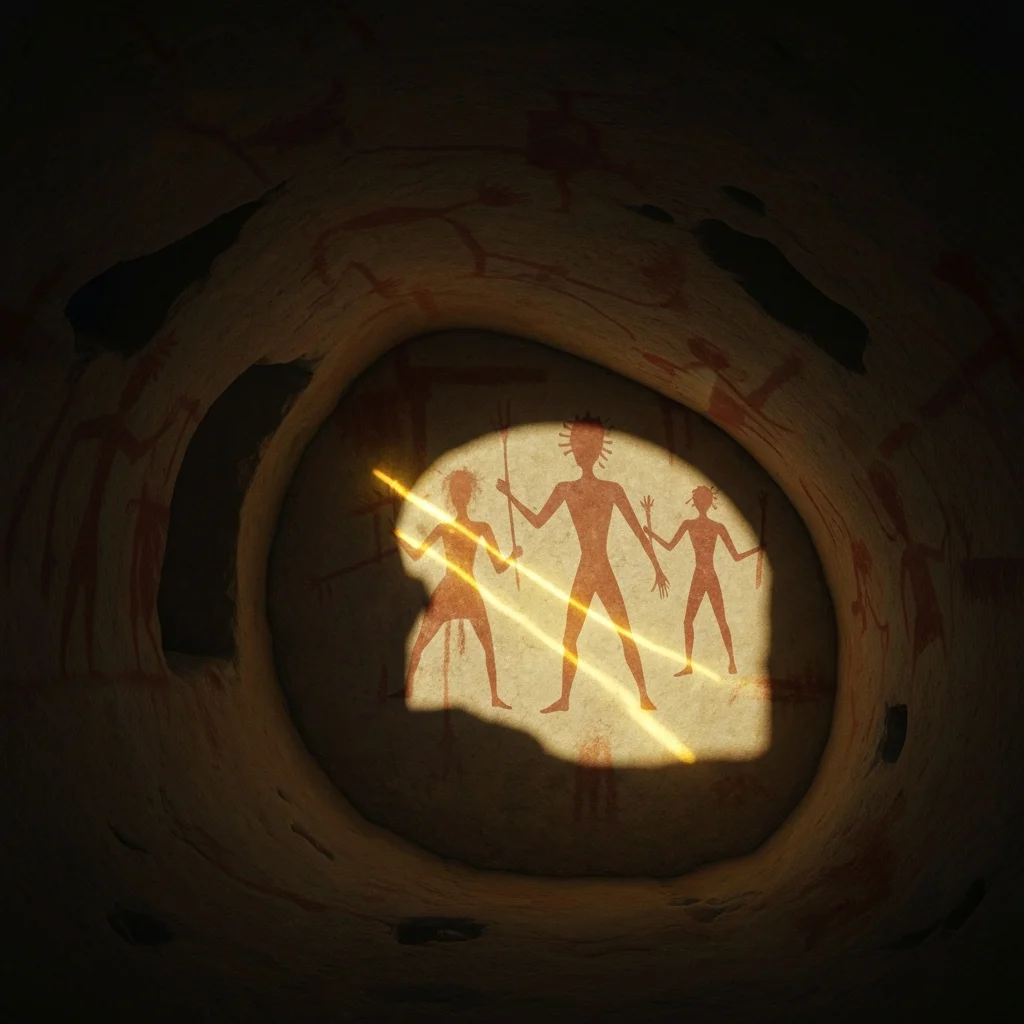
Igbara Oke is a quiet place in Ondo State where rock art has survived for generations. Local guides tell visitors about paintings on cave walls that depict animals, human figures, and symbols whose meanings have faded with time. These images do not move. They do not shift. They sit exactly where they were placed, fading slowly under the weight of weather and years.
What makes them remarkable is not movement but endurance. The paintings have outlasted the people who made them, and they continue to draw the curious and the scholarly to this corner of Ondo State.
Rock art across Nigeria
Cave paintings and rock art exist in several locations across the country, though they receive less attention than more famous heritage sites. The Cross River monoliths with their inscribed patterns, the rock gongs of the Benue Valley, and various painted shelters in the north all testify to ancient artistic traditions that predate written history.
The National Commission for Museums and Monuments maintains an inventory of these sites, though funding for comprehensive documentation and preservation remains limited. A report from the Nigerian Geological Survey Agency confirms that the sandstone formations common in parts of Ondo State provide suitable surfaces for mineral-based pigments, which explains why some paintings have survived for extended periods despite exposure to the elements.
What remains visible
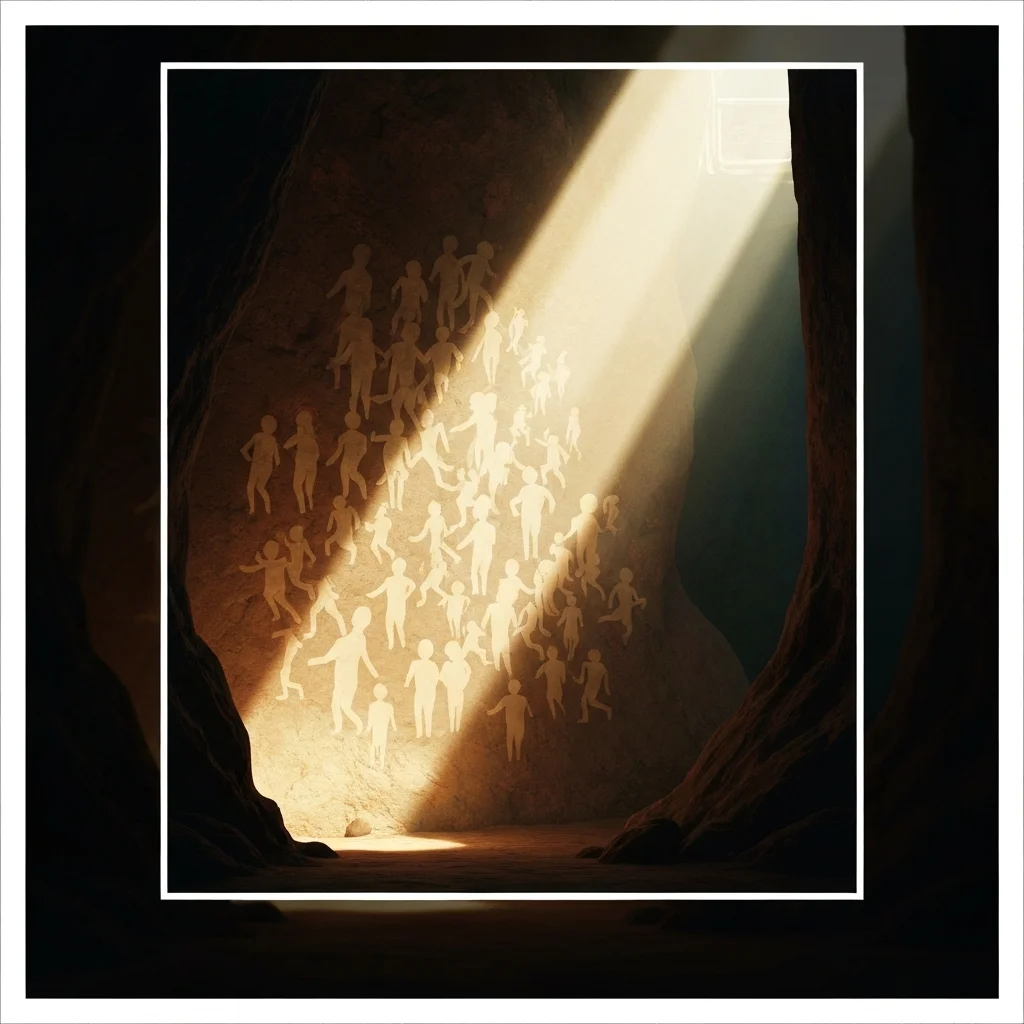
Visitors to rock art sites in the region can see faint outlines of animals and geometric patterns, though many have deteriorated significantly. Unlike protected heritage sites in other parts of the world, these paintings lack climate control or restricted access. Rain, humidity, and human contact all contribute to their gradual disappearance.
Local historians and community elders maintain oral traditions about the meaning of these images. Some associate the paintings with hunting rituals or territorial markers. Others suggest ceremonial purposes tied to seasonal events. The absence of written records means these interpretations rely on generational memory, which becomes thinner with each passing decade.
Community stewardship
The sites lack formal protection as national monuments, so nearby communities manage access and preservation through informal arrangements. Visitors may encounter local guides who share what they know about the paintings, though the information varies from person to person and place to place.
The economy of Ondo State includes cultural tourism at established destinations like the Idanre Hills, a UNESCO World Heritage tentative site with documented history and maintained trails. Smaller rock art locations remain less visited and less studied, their significance known mainly to residents and a handful of researchers.
According to a 2026 inventory from the state government, several caves and rock shelters have been identified as having potential for cultural tourism development. Funding for proper archaeological study and preservation planning has not yet been allocated.
Preservation challenges
Geologists from the University of Ibadan Department of Geology have studied sandstone formations in southwestern Nigeria, noting that the porous rock absorbs moisture during rainy seasons and dries during harmattan. This cycle of expansion and contraction causes microscopic stress on painted surfaces over long periods.
The mineral pigments used by ancient artists bond with the rock surface, but they cannot resist erosion indefinitely. Without protective measures, many of these paintings will continue to fade until they become indistinguishable from the surrounding stone. This is not a sudden loss but a slow one, measured in decades rather than days.
Documentation efforts
Researchers from Nigerian universities have conducted periodic surveys of rock art sites, photographing and measuring the paintings to create records for future study. These efforts rely on limited grants and institutional support, which means comprehensive documentation of all known sites has not been completed.
Oral tradition collected by the National Archives includes references to painted caves and rock shelters across the country, though many accounts are general rather than specific. Community elders in various locations recall stories about the origins of these images, with some attributing them to ancestral spirits or historical events.
These oral histories provide context that scientific measurement alone cannot offer, linking physical artifacts to living cultural memory.
Global context for rock art
Other sites worldwide demonstrate both the vulnerability and resilience of ancient rock art. The Chauvet Cave in France receives strict environmental controls and limited access to preserve paintings that date back tens of thousands of years. The rock art of the Sahara documents a greener past when the desert supported human and animal populations now long gone.
In Nigeria, the Sukur Cultural Landscape in Adamawa State holds UNESCO World Heritage status and receives structured support for preservation and tourism management. Smaller sites without this designation must rely on local stewardship and occasional academic interest.
The 2026 budget for the Federal Ministry of Information and Culture allocates funding for heritage sites that must be distributed across hundreds of locations nationwide. Individual sites often receive small amounts or nothing at all, which makes community management not just traditional but necessary.
How visitors can help
You can support preservation by visiting rock art sites respectfully and following local guidance about photography and physical proximity to the paintings. Touching the rock surface transfers oils and moisture that accelerate deterioration, so keeping a reasonable distance helps extend the life of the art.
Consider documenting your visit with photographs taken without flash, which can be shared with researchers compiling records of these fragile sites. Report any visible damage or vandalism to community leaders who serve as informal custodians.
Small contributions to local guides and heritage committees provide direct support for preservation efforts that receive little outside funding. These modest actions accumulate over time, much like the slow processes that created and now threaten the paintings themselves.
What endures
The cave paintings of Ondo State and other regions of Nigeria represent an ancient artistic tradition whose full extent remains unknown. They survive in quiet corners, away from major tourist routes and academic attention, watched over by communities who have lived near them for generations.
They do not move. They do not shift with the seasons. They simply remain, fading slowly, carrying forward a message from people whose names and languages have been forgotten. The images speak across time in a vocabulary of shapes and symbols that still holds meaning for those who stop to look.
Culture
Palm Wine Tapper Climbs Same Tree That Killed His Father in Ozoro
For eight years, a man has climbed the 25-meter palm tree that killed his father. In Ozoro, they say the wine from this tree is the sweetest, turning a place of fear into a source of life.
Palm Wine Tapper Climbs Same Tree That Killed His Father in Ozoro
Published: 22 April, 2026
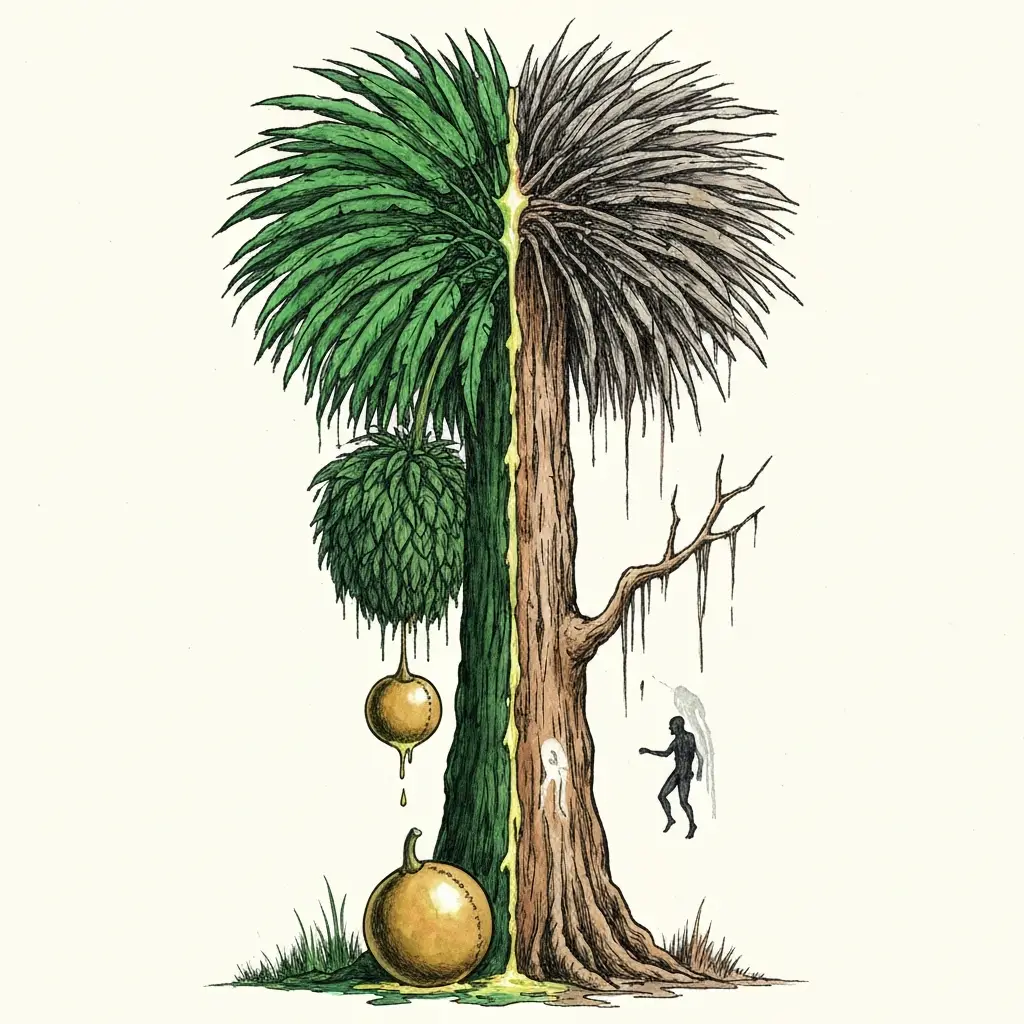
Twenty-five meters is a long way to fall. The Raphia palm in the Uzere bush of Ozoro stands exactly that tall, its smooth trunk rising from swampy ground where few other trees grow. For eight years now, a man named Oghenekaro has been climbing it every morning, cutting notches for his feet with a machete and tying a vine rope around his waist. He collects the sap that drips from the crown, filling gourds with pale liquid that will become palm wine. What makes this routine remarkable is simple. This is the same tree that killed his father about a decade ago.
The Tree With a History
Certain trees in rural Nigeria develop reputations, and this one became famous for all the wrong reasons. After the older tapper fell, many in the community considered the palm cursed or inhabited by a malevolent spirit. People began avoiding the entire grove, and the landowner thought seriously about cutting it down. The tree stood there, tall and productive, but surrounded by a silence born of fear. Then Oghenekaro decided he would tap it anyway. He needed the income, and palm wine tapping remains a vital source of livelihood in the Isoko region. A 2025 report by the International Institute of Tropical Agriculture listed non-timber forest products like palm wine as a critical income stream for over 40% of rural households in the Niger Delta (IITA Annual Review, 2025). He saw a good tree going to waste.
A Different Kind of Climb
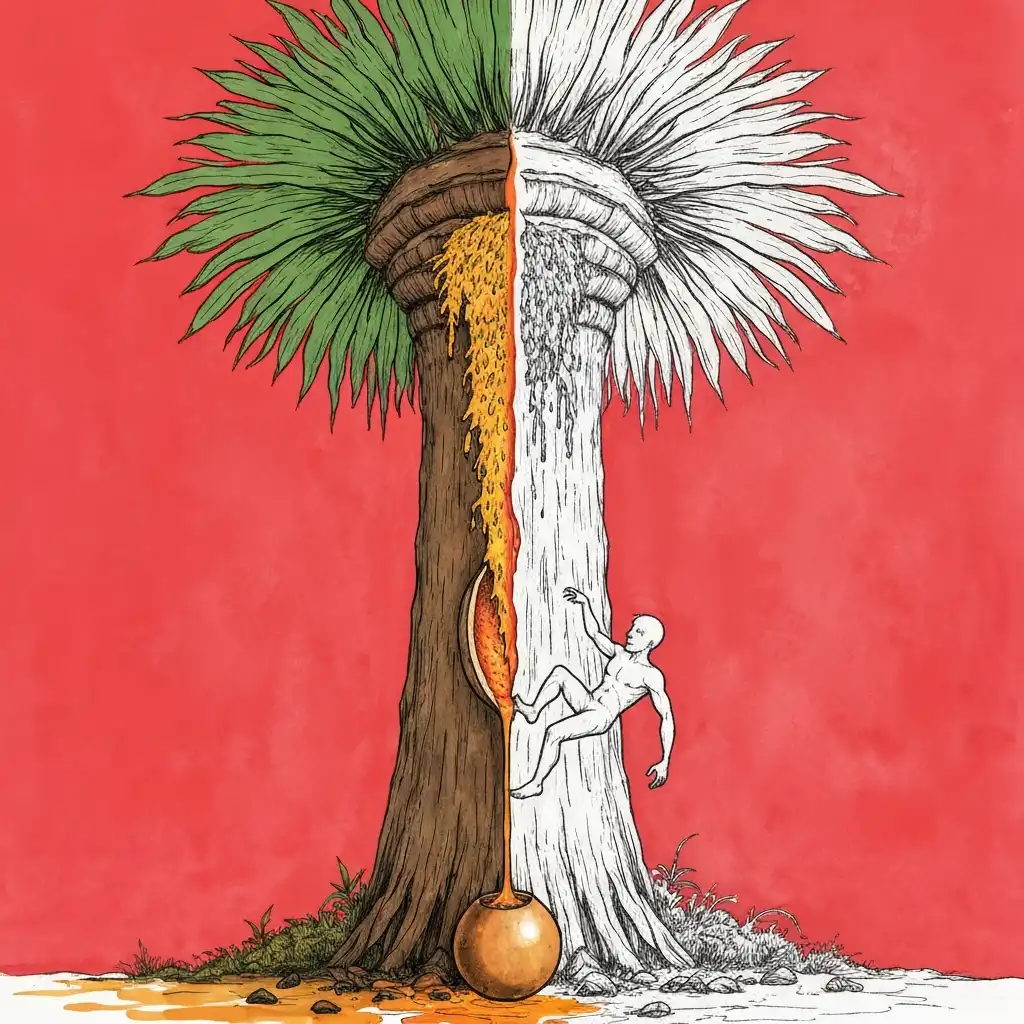
Tapping a Raphia palm requires a specific skill set because the trunk is smoother than an oil palm’s. Oghenekaro modified his technique for this particular tree, using a longer and stronger rope and inspecting the trunk for weaknesses each time before he begins his ascent. He also talks to the tree, a common ritual among tappers that mixes respect with practical precaution. He tells it he means no harm, that he is only collecting what it offers. The National Bureau of Statistics noted in 2025 that occupational fatalities in informal agriculture are rarely documented (NBS Social Statistics Report, 2025). Safety depends entirely on the individual’s skill and attention to detail.
“My father was a good climber. That day, the rope was old. The rain had made the trunk slick. I check my rope every morning now. I respect the height.”
– Oghenekaro, palm wine tapper, Ozoro. March 2026.
A Question of Taste
Now here is the curious part. Customers in the Ozoro market and the local sap bars specifically ask for wine from that tree. They claim it is sweeter and ferments more slowly than wine from other palms. A regular buyer named Madam Efe says she uses it for traditional ceremonies because of its perceived superior quality. This presents an interesting question. Does the tree’s history, or perhaps the tapper’s careful and respectful method, somehow change the biochemistry of the sap? A researcher in food science at the University of Port Harcourt, Dr. Chika Obi, offered a perspective. She said trauma or stress to a plant can sometimes alter its sap composition, though a change in the tapper’s technique likely has more influence. “Without laboratory analysis of sap from that specific tree over time, the sweetness remains an anecdotal claim,” she noted (Personal communication, April 2026). The belief, however, is real in Ozoro and adds tangible economic value to the product.
The Economics of Courage
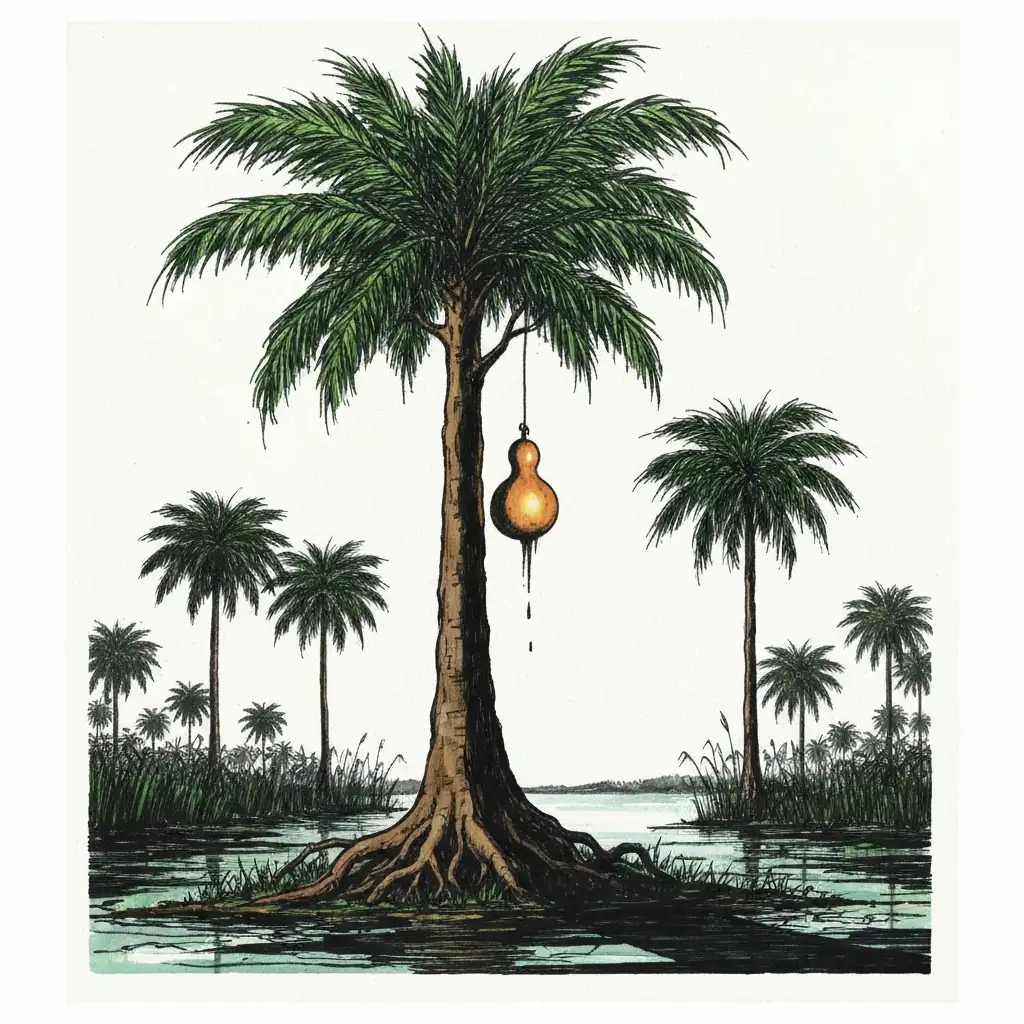
So a man faces a literal ghost from his past to make a living. A five-gallon keg of palm wine sells for between N5,000 and N8,000 in Delta State, depending on the season (Field price survey, Ozoro Market, April 2026). A diligent tapper harvesting from multiple trees can earn a daily income that pays school fees, buys food, and handles medical bills. In an economy with high unemployment, this traditional craft puts cash directly in hand. The sector receives little official support, however. The Delta State Ministry of Agriculture has programs for oil palm cultivation, but the focus for Raphia palm is less defined. A 2024 policy document mentioned developing the value chain for “all palm products,” but tappers like Oghenekaro operate without formal training or insurance (Delta State Agricultural Roadmap, 2024). Their safety net is community, personal caution, and the strength of their own rope.
Changing the Story
This is more than just a strange tale. It shows how a community can manage risk and memory. A tree that represented death has been reclaimed as a source of life and a peculiar sweetness. Oghenekaro’s daily, careful work defeated a local superstition. Other tappers now harvest from trees in that same grove they once avoided, and the economic activity has returned. You find this pattern across Nigeria, where people engage with difficult histories to create a present that works. They choose pragmatism over fear. The tree is still tall and the climb is still dangerous. The difference is a man who decided the past would not dictate the use of a resource. He applied his skill to mitigate the risk, and the result is a product people enjoy.
“We hear stories of bad luck attached to places. Sometimes, the solution is not to abandon the place. The solution is to change how you work there.”
– Chief Emmanuel Ovie, community leader, Ozoro. April 2026.
Oghenekaro plans to teach his son to tap one day. He will include the story of his own father in the lesson. He will emphasize, above all else, the importance of checking the rope.
Unexplained Phenomena
Hunter Hears Dead Brother Whistle in Ganye Forest Mystery
A hunter follows his dead brother’s whistle to avoid a poacher’s trap, only to find the sound came from a bird that doesn’t belong in that forest. The 2026 mystery sits between memory, mimicry, and…
Hunter Hears Dead Brother Whistle in Ganye Forest Mystery
Published: 22 April, 2026
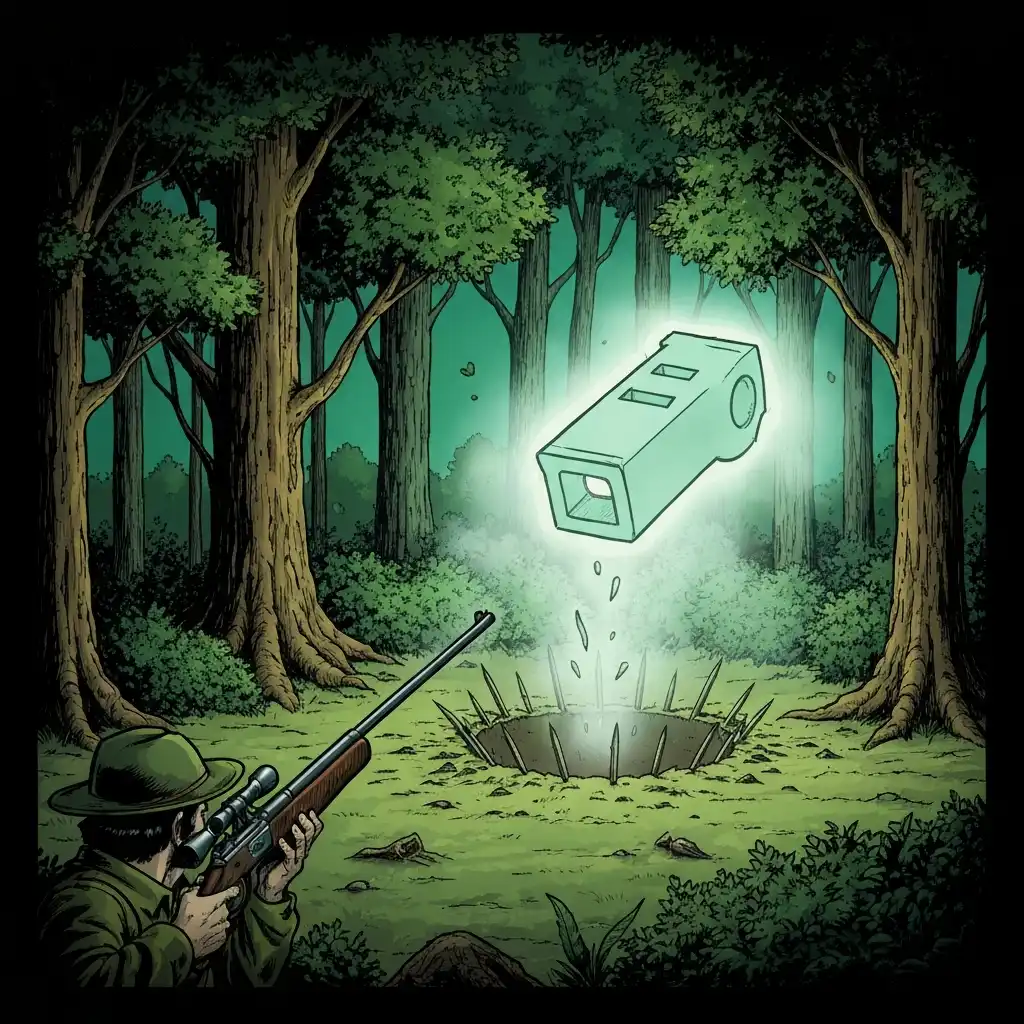
March 3, 2026 was just another morning for Mallam Ibrahim Bello when he walked into the Mayo Kam forest reserve. He carried his local rifle, hoping to find something for the pot, and the humid air hung thick around him. Then a specific two-toned whistle cut through the quiet, a sound he had not heard in three years, not since his brother Sule passed away. It was the exact signal they used to find each other in the dense greenery, and without thinking, Ibrahim turned and followed it.
The sound that saved him
He followed the familiar call for about fifty meters before it stopped abruptly. When he looked down, Ibrahim saw the danger: freshly broken branches cleverly arranged to hide a deep pit. Probing with a stick revealed sharpened stakes at the bottom, a trap designed to impale any large animal that fell through. The Adamawa State Ministry of Environment would later note 14 such illegal trapping incidents in that reserve for the first three months of the year. The whistle from his past had led him away from a very present danger.
A messenger in feathers
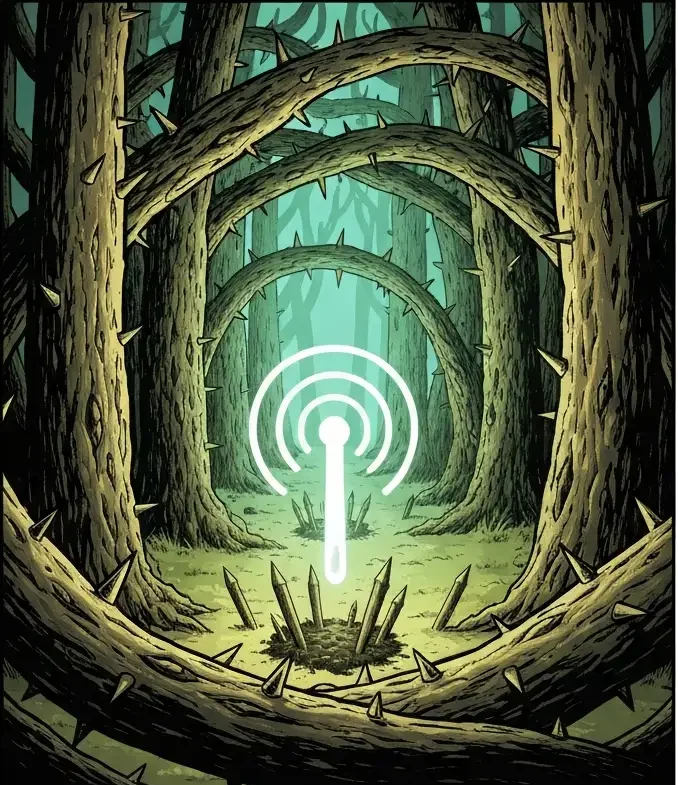
Can you hear it? A faint whistle leads the hunter deeper into the Ganye Forest’s secrets. Be careful now (Illustration: GoBeyondLocal)
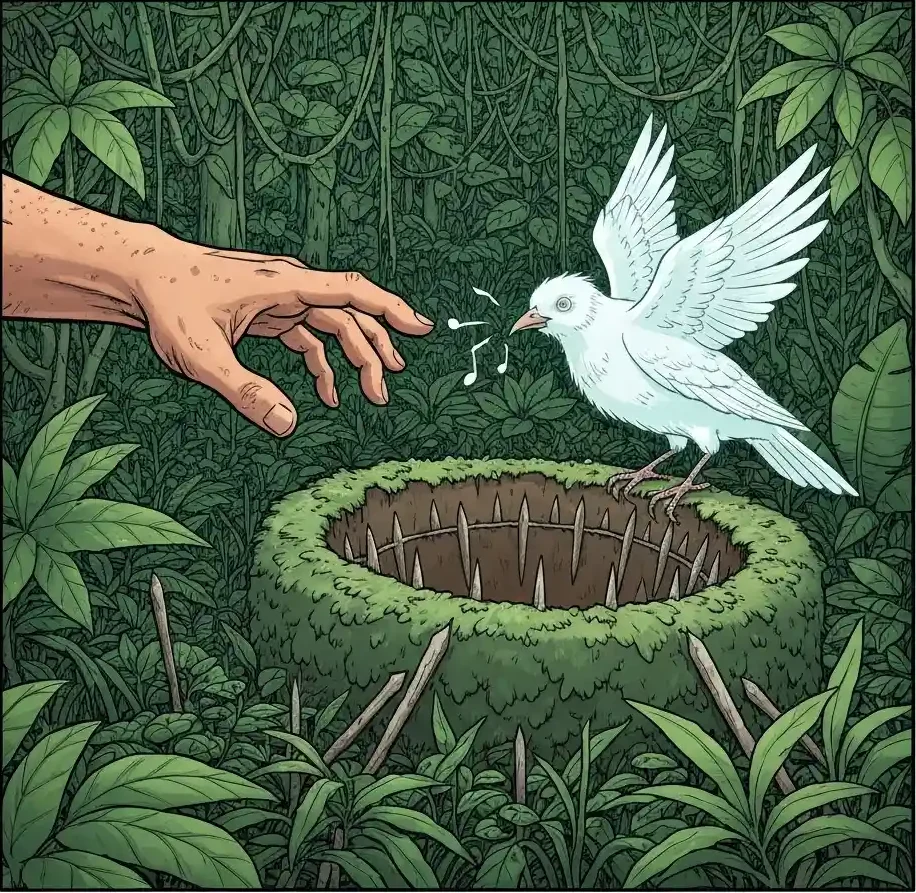
After staring into that pit, the whistle came again. This time it led him to a thicket of neem trees where a small, olive-green bird with a bright yellow throat sat watching. It opened its beak, and out came the two-toned call of his dead brother. The bird repeated it twice before flying off, leaving Ibrahim with a story that baffled his village. Elders consulted their knowledge and found no match for the bird. They called in experts from Modibbo Adama University.
“The vocal mimicry is plausible. The geographic displacement is the mystery. That bird has no documented population within 500 kilometers of Ganye.”
– Dr. Fatima Aliyu, Ornithologist
Forests under pressure
The story unfolds against a backdrop of quiet conflict in places like the Mayo Kam reserve. Pressure from logging, farming, and hunting keeps growing. The state’s budget for wildlife protection in 2026 was set at N285 million, a small fraction of overall spending. Rangers often lack the tools for proper patrols, and commercial poaching is a persistent shadow. The trap Ibrahim found used nylon rope and fresh-cut wood, signs of activity by those with more than subsistence in mind.
Two ways of knowing
In many traditions here, birds are seen as messengers, and stories of ancestors sending warnings are woven into the culture. For the community, the explanation is clear.
“Our tradition says the forest protects those who respect it. Ibrahim respected the forest, and the forest sent a guide. The scientists will look for the vehicle. We already received the message.”
– Elder Jonathan Barde, Ganye Community Leader
The scientists, for their part, talk of storm-driven displacement or escaped pets. They plan a field visit with audio recorders, hoping to capture evidence. The last proper bird survey in that forest was back in 2012, so who knows what might have moved in since.
What lingers
Ibrahim still hunts, but he goes with a partner now and avoids that particular part of the woods. The community holds the story close, a knowledge that both the dangers of the forests and its whispered protections. For everyone else, it’s an intersection: a bit of ecology, a touch of psychology, a layer of cultural belief. The immediate truth is simple. A man listened to a sound from his past and avoided stepping into a hole lined with stakes. Now, other hunters in Ganye pay closer attention to the bird calls around them, and maybe that is the most practical magic of all.

Ancient Rock Art Traditions Endure in Igbara Oke Caves

Palm Wine Tapper Climbs Same Tree That Killed His Father in Ozoro

Hunter Hears Dead Brother Whistle in Ganye Forest Mystery

Farmer Plants Yam That Grows Downward to Water Table in Drought

She Kept Asking and They Kept Moving Her in Nigeria

Global Food Prices Rose 2.4% in March 2026

Chigozie Obioma International Booker Prize 2026

Jidenna Pan African Sounds Latest Musical Project 2026

Hakeem Oluseyi Brings Astrophysics to Classrooms Worldwide

NANS Diaspora Nigerian Students Eastern Europe

Nnamdi Asomugha From NFL Cornerback to Hollywood Producer

Folake Olowofoyeku Stars in American Sitcom on Nigerian Family Life

Internet Sovereignty: Why Some Countries Want Their Own Separate Internet

The Story Of The Nigerian Who Helped Build Global Internet Systems

Nigerian Hackers: The Global Fraud Story and Its Fallout

Forgotten Satellites Defy Silence, Beaming Signals for Decades

The Phone Stay So Quiet: An Investigation into Nigeria’s Silent Customer Lines

Your Digital Store in Nigeria and the Reality of Domain Expiration

The Business That Died: A Nigerian Case Study in Refusal to Adapt

Hiding Your Business From People With Money

How Nollywood Grew Without Government Support

Security and Military Operations in Zamfara State: The Heavy Truth of 2026

Moniepoint Business Account Requirements Nigeria for SMEs 2026

Comedy Industry in Nigeria and Its Economic Contribution


 Digital Sovereignty7 months ago
Internet Sovereignty: Why Some Countries Want Their Own Separate Internet
- Technology & Innovation7 months ago
The Story Of The Nigerian Who Helped Build Global Internet Systems
- Crime7 months ago
Nigerian Hackers: The Global Fraud Story and Its Fallout
- Space Technology7 months ago
Forgotten Satellites Defy Silence, Beaming Signals for Decades
- Maritime7 months ago
The Phone Stay So Quiet: An Investigation into Nigeria’s Silent Customer Lines
- Business7 months ago
Your Digital Store in Nigeria and the Reality of Domain Expiration
- Business7 months ago
The Business That Died: A Nigerian Case Study in Refusal to Adapt
- Business7 months ago
Hiding Your Business From People With Money