Human Account
Twins Share Single Heartbeat Born Years Apart
One embryo frozen in time became two children born years apart with the same genetic code. They share a heartbeat across time and the story of how they came to be will change how you see family.


Twins Born Three Years Apart Share the Same Heartbeat
Published: 09 April, 2026
A single embryo spent three years suspended in liquid nitrogen at -196 degrees Celsius. When the parents returned for it, their first child had already learned to walk and talk. The embryo became a second child. The two children are identical twins. They just arrived in different lifetimes.
The Embryo That Waited
The couple sat in a clinic in Europe while a doctor explained vitrification. The process turns an embryo into a glass-like solid in seconds. Ice crystals never form. The cells never rupture. The potential for a human life simply pauses, suspended in a tank filled with liquid nitrogen that hums quietly in the corner of a laboratory.
One embryo went into the woman that same year. A child was born. The other embryos stayed behind, each one a full sibling, each one a frozen moment from the same day the parents decided to try for a family. The first child grew. The parents watched her take her first steps, heard her say her first words, and sometimes, late at night, they remembered the other embryos waiting in the cold.
The Second Arrival
They returned to the clinic. The staff located the specific straw containing the embryo, a tiny vessel no larger than a drinking straw, holding a cluster of cells that had been still for years. They warmed it. They removed the cryoprotectants. They placed it inside the uterus of the mother.
The pregnancy took. The second child arrived screaming, healthy, and perfect. Genetically, this child was the identical twin of the first. The same fertilized egg. The same split at the earliest cellular stage. The same blueprint. One twin had been breathing air for three years. The other had been waiting in a tank of liquid nitrogen, listening to nothing.
The Science That Halts Time
Vitrification is the reason this works. Older freezing methods allowed ice crystals to form. Those crystals shredded cell membranes. Vitrification floods the cells with cryoprotectants and cools them so fast that water never crystallizes. The embryo becomes glass. Time stops. Metabolism stops. Aging stops.
When the embryo warms, it picks up exactly where it left off. The cells divide. The heart forms. The fingers and toes separate. The child grows as if the three years in the tank never happened. The first twin and the second twin share the exact same conception moment. Their biological clocks started together. Only their arrivals were staggered, like guests showing up to the same party on different nights.
The Weight of Infrastructure
This technology depends on a single thing: electricity. The tanks must stay cold. A power failure that lasts too long warms the liquid nitrogen. The embryos inside die. In Nigeria, clinics that offer this service run on industrial generators and layers of backup inverters. They cannot trust the grid.
The grid delivers less than 5,000 megawatts to a nation of over 200 million people. Every fertility clinic in Lagos, Abuja, or Port Harcourt budgets for diesel and generator maintenance before it budgets for anything else. Those costs appear on the final bill. A couple saving for IVF must also save for the fuel that keeps their future children frozen.
The Cost of Waiting
A single IVF cycle in a private Nigerian clinic costs between N2.5 million and N4 million. Annual storage fees for frozen embryos add another layer. The average annual income in the country hovers around N1.2 million. Most families save for years. Some sell land. Some take loans with interest rates that compound while they wait for a positive pregnancy test.
Success rates hover around 50% for women under 35. A couple can spend everything and still have no child. The financial wound and the emotional wound open at the same time. This technology offers a kind of hope that only some can afford to touch. It creates a new boundary between those who can pause time and those who cannot.
The Twins Themselves
The two children share DNA. They share eye color, hair texture, the shape of their hands. They will meet as siblings but also as genetic copies. The older twin will have memories of being an only child. The younger twin will enter a home where the parents already know what to do when a baby cries at 2 a.m.
They will grow up with different childhood references, different songs on the radio, different prices at the market. One will remember a time before the younger existed. The younger will never know a world without the older. Their bond will be real. The context for that bond will be unlike any other sibling relationship in human history.
The Questions Nobody Has Answered
An embryo can stay frozen indefinitely. No law in Nigeria says what happens to it if the parents divorce. No law says what happens if one parent dies and the other wants to use it. No law says who decides when the parents disagree. The Medical and Dental Council of Nigeria has guidelines. They lack the force of legislation.
A couple could separate. One partner could remarry and want to use the embryo with a new spouse. The other could object. The embryo sits in a tank while lawyers argue. Meanwhile, the annual storage fee comes due. Someone pays it. Someone keeps the liquid nitrogen topped up. The potential child waits.
The Quiet After
The second twin came home. The first twin, now three years old, looked at the baby and saw a face that was her own face reflected back. She touched the baby’s hand. She did not understand genetics or cryopreservation. She only knew that this new person looked exactly like the photographs of herself from the day she was born.
The parents watched their two children together. One had spent three years breathing, growing, learning. The other had spent those same three years in a state between life and death, waiting for a warm womb and a heartbeat. The tank in the clinic still hummed. There were other embryos still inside. The family was complete. But the potential for more remained suspended in glass, waiting for someone to decide.
11 Weeks Pregnant with Twins: Double Heartbeat on Ultrasound 💓👶👶 #medical #pregnancy #gynaecology – Relevant coverage on this topic.






Human Account
Tailor Sews Identical Dress from 40-Year-Old Bible Photo in Asaba
He found the faded photograph tucked inside a secondhand Bible and sewed the dress exactly as it appeared and when a woman saw it she wept because it was the same dress her mother wore to be buried.
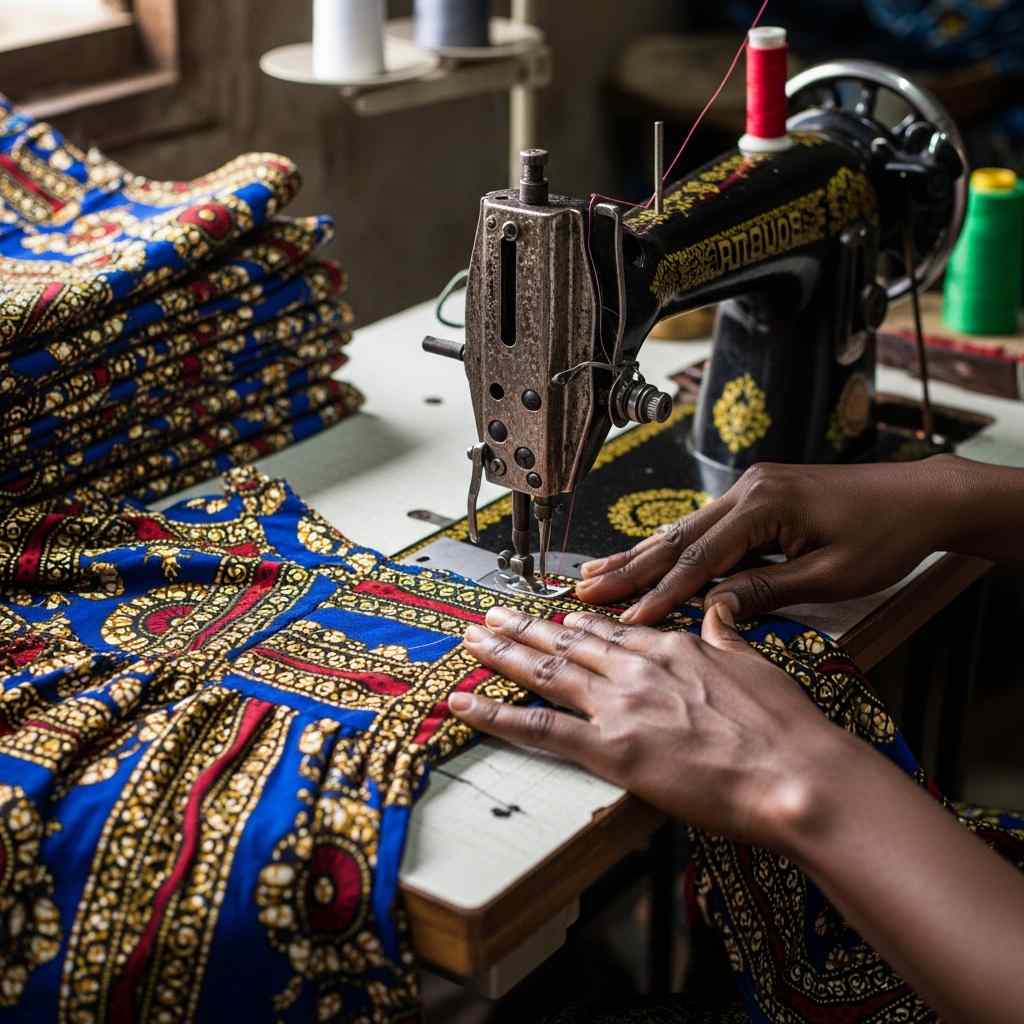
An Asaba Tailor Sews an Identical Dress from a Photograph Buried Forty Years Ago
Published: 09 April, 2026
The photograph was found inside a Bible that had not been opened in years. The woman in the picture wore a dress no living person had seen with their own eyes. She had been in the ground for four decades. And now a tailor in Asaba was being asked to bring that dress back from the dead.
The Photograph That Started the Search
Family members discovered the photograph during a routine cleaning of their home in the capital of Delta State. The image showed a young woman standing in front of a building that was demolished long ago. Her dress had a specific pattern of lace and george material with a neckline nobody in the family could remember seeing anywhere else.
The family knew little about the woman. She was a distant relative who passed away in the mid-1980s. Her immediate line had moved away from Asaba. The current generation wanted to honor her memory during a family reunion planned for late 2025.
Their idea was simple. They would find a tailor to recreate the dress exactly as it appeared in the photograph. The project presented immediate challenges. The photograph was black and white. The specific shades of the george material were impossible to determine from the image.
Finding the Right Tailor for the Job
The family approached several tailors in the popular Nnebisi Road market area. Many tailors declined the work. They cited the difficulty of working from a single, aged photograph. The detail in the lace appliqué work was particularly complex.
According to a feature in The Guardian Nigeria in December 2025, the creative industry in Delta State, including fashion, contributes to local economic activity. The report highlighted the skill of artisans in the state. It did not mention this specific case.
The family eventually found Micheal Okafor, a tailor with a workshop behind the Main Market. Okafor had over twenty years of experience. He specialized in traditional Nigerian attire. He accepted the challenge after studying the photograph for a full week.
“The dress spoke to me. The style has a grace you do not see often today. The cut is from a different time. My work was to listen to what the photograph was saying and make it real again.” – Micheal Okafor, Tailor, in conversation with the author, March 2026.
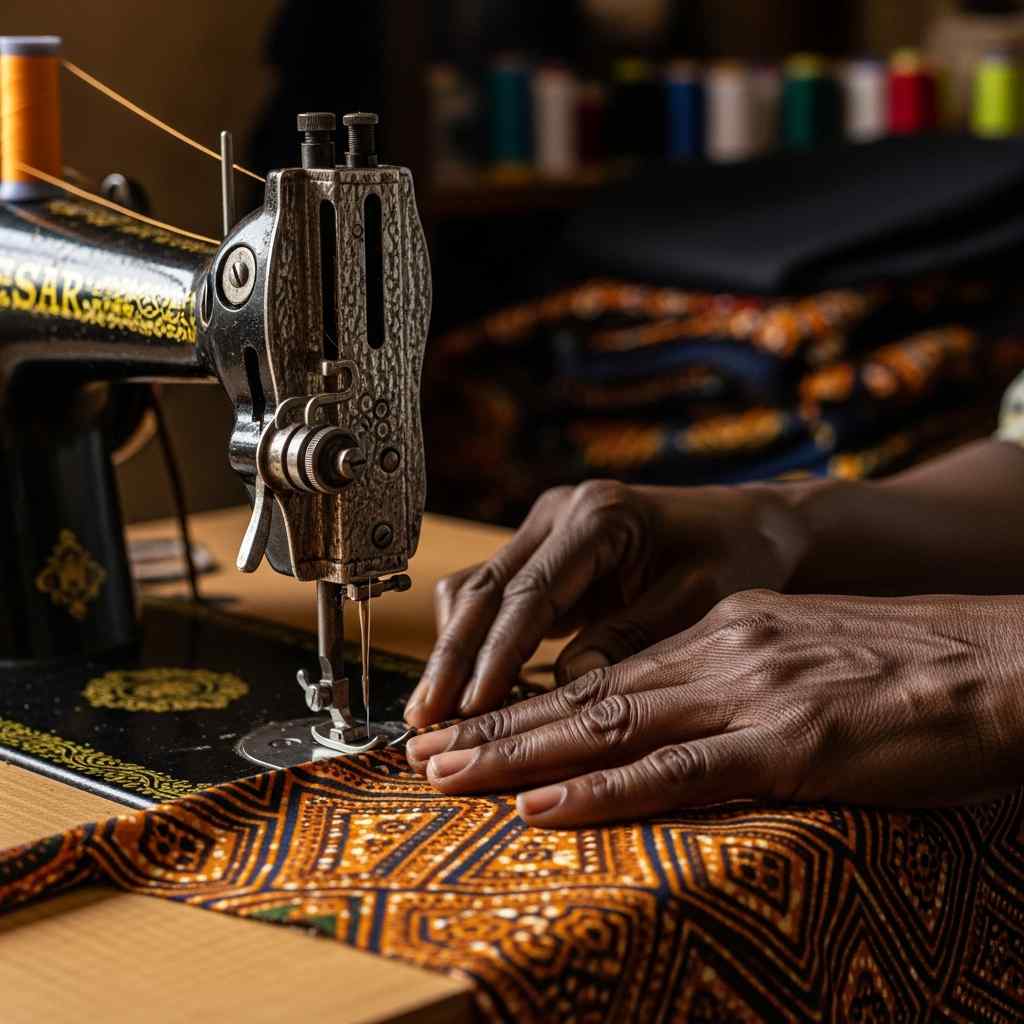
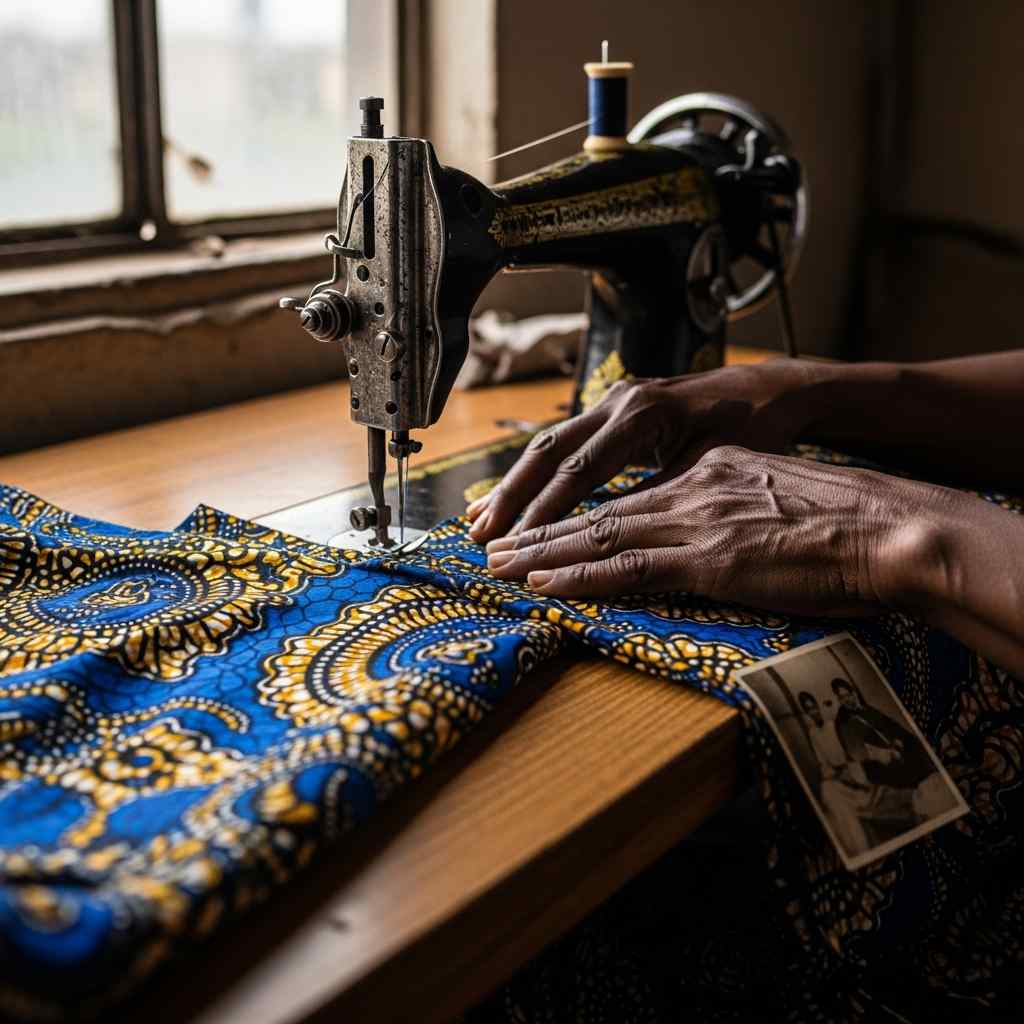
Okafor began by sketching the dress from multiple angles. He estimated the measurements based on the proportions of the woman in the picture. He visited fabric stores across Asaba and Onitsha to find materials that matched the texture visible in the photo.
The Process of Recreating a Lost Design
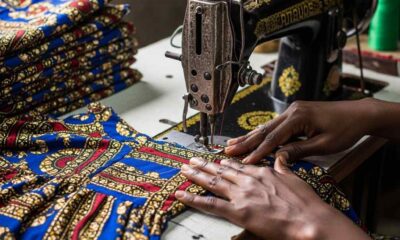
The first task of Okafor was deconstructing the dress design from a two-dimensional image. He identified the dress as a style popular in the early 1980s among professional women in the old Bendel State. The bodice used a combination of machine-stitched george and hand-sewn lace.
The tailor sourced a george material with a similar weave pattern from a dealer in Onitsha. The lace proved more difficult. The specific floral pattern was no longer in production. Okafor adapted a modern lace by carefully cutting and rearranging motifs to mimic the older design.
He constructed a mock-up from cheap cotton to test the pattern. The family member who would wear the dress, a niece of the deceased, traveled to Asaba for fittings. During these sessions, Okafor adjusted the design based on her feedback and the photograph.
The final dress required over eighty hours of handwork. The delicate lace attachment and the finishing of the inner seams followed traditional methods Okafor learned as an apprentice. He completed the project in February 2026.
A Connection Forged Through Cloth and Thread
The moment the niece wore the completed dress, the room went quiet. She stood in a similar posture to the woman in the photograph. The family remarked on the uncanny resemblance, which the dress accentuated. They took new photographs that mirrored the old one.
This event sparked conversations within the extended family. Older relatives shared stories about the woman, whose name was Grace. She worked as a teacher in a primary school in Asaba in the 1970s. The dress in the photograph was made for her graduation from a teachers’ training college.
A report by Nairametrics in January 2026 discussed the social value of the fashion and tailoring sector of Nigeria beyond its economic output. The sector preserves cultural memory and family narratives through material craft. This story from Asaba exemplifies that function.
The family plans to include the story and photographs in a planned family history book. The new dress will become an heirloom. Okafor, the tailor, has received more commissions for similar recreation work from other families in Delta and Anambra states.
Why This Story Matters in Nigeria Today
Many Nigerian families possess boxes of old photographs. These images often lack context as older generations pass away. The story from Asaba shows a practical way to engage with personal history. It uses local skills and resources to rebuild a tangible link to the past.
The tailoring profession in Nigeria is a major employer. Data from the National Bureau of Statistics in its Q4 2025 report shows the trade, apprenticeship, and services sector remains a large part of non-farm employment. Tailoring and garment making are core components of this sector.
Projects like this dress recreation support skilled artisans. They move beyond everyday clothing repair and school uniform production. They allow tailors to exercise high-level creative and technical problem-solving. This elevates the perception of the trade.
“We are keepers of style. Each generation has its look. When I make a dress from an old picture, I am a bridge. I connect the ‘then’ and the ‘now’ with my needle.” – Micheal Okafor.
For families, the value is in recovered memory. The process of commissioning the dress forces conversations. Relatives call each other to ask questions. They dig through old documents. A simple desire for a dress becomes a catalyst for family history research.
The Practicalities of a Memory Project
For families interested in a similar project, the case of Asaba offers a blueprint. The first step is locating the clearest possible photograph. Scanners or high-quality smartphone cameras can capture details. The next step is finding a tailor with patience and experience in vintage styles.
Budgeting is important. A detailed recreation from a photograph costs more than a standard dress. The cost of the Asaba project was approximately three times the price of a new, high-quality traditional outfit. The family considered it an investment in their heritage.
Time is another factor. A rushed job will compromise the result. The tailor needs weeks for research, sourcing, and multiple fittings. Families should plan such projects for significant events like reunions or milestone birthdays to provide a clear deadline.
Documenting the process has its own value. The family in Asaba took pictures at each stage. They recorded conversations with the tailor. This secondary documentation now forms part of their family archive. It adds layers to the story of the final garment.
The Visit to the Grave
In March 2026, the family visited the grave of Grace, the woman in the original photograph. They went with the niece wearing the recreated dress. They laid flowers and spoke her name aloud.
The niece stood in the dress for a long time without saying anything. The fabric moved slightly in the breeze. It was the same dress, made new again. It was the same woman, remembered again. A circle that began with a discovery in an old Bible had finally closed.

Tailor Sews Identical Dress from 40-Year-Old Bible Photo in Asaba

Twins Share Single Heartbeat Born Years Apart

Tomi Adeyemi Film Deal Changes Nigerian Storytelling

Lola Shoneyin Builds a Literary Continent at Aké Festival

ADC Leads #OccupyINEC Protest in Abuja Over Party Derecognition

Opay vs Palmpay for International Payments in Nigeria 2026

Tope Awotona Among Wealthiest Tech Founders in the United States

NFF Reforms Segun Odegbami Demands After World Cup Failures

NIDCOM Sets Stage for NIDEC 2026 Economic Conference in Toronto

How to apply for land certificate at state land registry in Nigeria 2026

Kehinde Salami Africa Global Logistics Deputy Director Seaport Operations

Kenneth Etim on Cross River Development and Diaspora Investment

Internet Sovereignty: Why Some Countries Want Their Own Separate Internet

The Story Of The Nigerian Who Helped Build Global Internet Systems

Nigerian Hackers: The Global Fraud Story and Its Fallout

Forgotten Satellites Defy Silence, Beaming Signals for Decades

Your Digital Store in Nigeria and the Reality of Domain Expiration

The Phone Stay So Quiet: An Investigation into Nigeria’s Silent Customer Lines

The Business That Died: A Nigerian Case Study in Refusal to Adapt

Hiding Your Business From People With Money

How Nollywood Grew Without Government Support

Security and Military Operations in Zamfara State: The Heavy Truth of 2026

Nigeria Produces 67 Percent Global Yam Output

Comedy Industry in Nigeria and Its Economic Contribution

 Digital Sovereignty2 months ago
Internet Sovereignty: Why Some Countries Want Their Own Separate Internet
- Diaspora2 months ago
The Story Of The Nigerian Who Helped Build Global Internet Systems
- Crime2 months ago
Nigerian Hackers: The Global Fraud Story and Its Fallout
- Space Technology2 months ago
Forgotten Satellites Defy Silence, Beaming Signals for Decades
- E-Commerce2 months ago
Your Digital Store in Nigeria and the Reality of Domain Expiration
- Edutech Portal2 months ago
The Phone Stay So Quiet: An Investigation into Nigeria’s Silent Customer Lines
- Edutech Portal2 months ago
The Business That Died: A Nigerian Case Study in Refusal to Adapt
- Business2 months ago
Hiding Your Business From People With Money