Education
Nigeria Out-of-School Children and the Rural Education Gap
Nigeria out-of-school children number over 18 million. This article examines current data and innovative solutions for rural education in 2026.

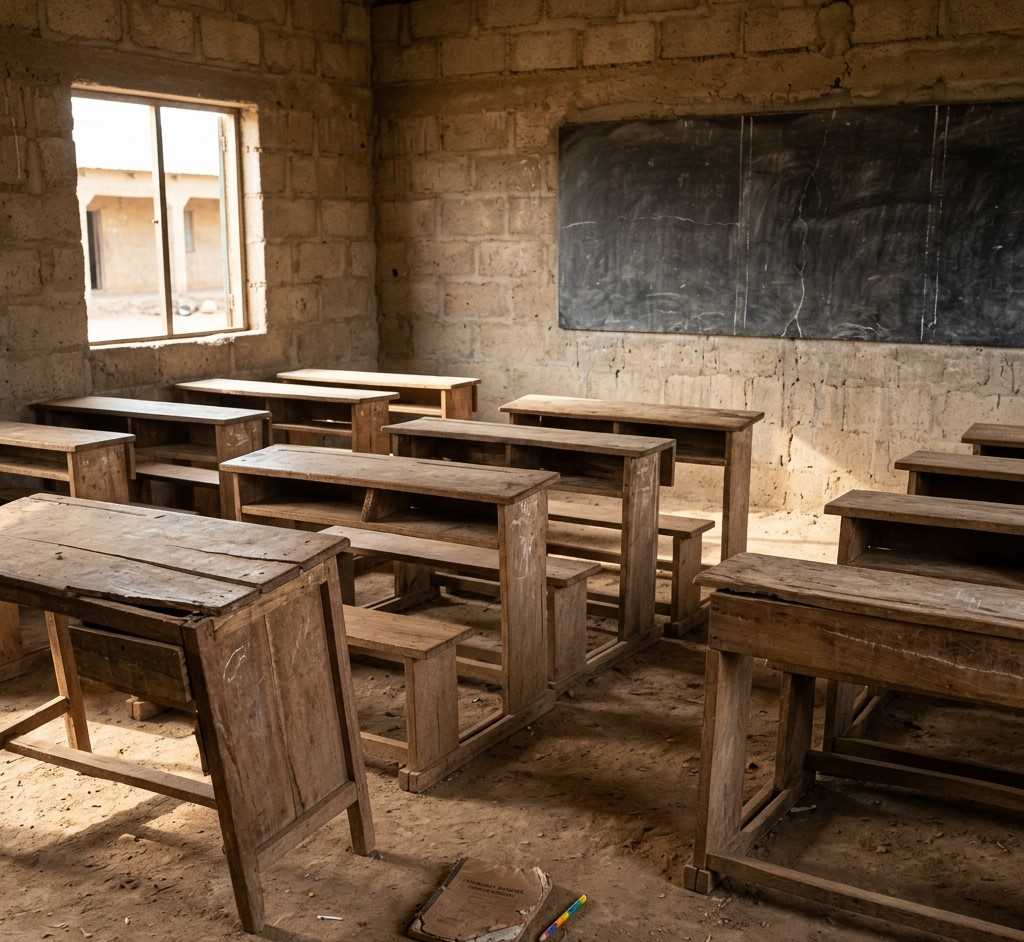
Nigeria out-of-school children and the Rural Education Gap
Published: 23 March, 2026
How do you solve a problem you can’t even see? The official number of Nigeria out-of-school children exceeds 10 million. This figure, based on data from the United Nations Children’s Fund, still places the country at the top of a global list nobody wants to lead. The majority of these children live in rural areas, far from the policy discussions in Abuja.
The Scale of the Problem Has a Specific Geography
The crisis concentrates in the northern regions. Data from the National Bureau of Statistics and UNICEF shows the North-West and North-East zones account for the largest share. States like Bauchi, Kano, and Katsina each report figures above 1 million.
Rural communities in these states face a perfect storm. Poverty intersects with security challenges and deeply rooted social norms. A girl in a remote village in Kebbi State faces different obstacles from a boy in a Lagos suburb. In the North-East, primary net attendance for girls stands at 47.7%. In the North-West it is 47.3%. Contrast this with over 80% in the South-West.
The Universal Basic Education Commission allocates funds. The trouble is getting those funds to build and staff schools in places where roads disappear in the rainy season.
Why Building More Classrooms Misses the Point
Conventional wisdom suggests constructing more schools. The reality on the ground complicates this. The UBEC National Personnel Audit of 2018 revealed a shortage of 277,753 teachers in public primary schools. A new building with no teacher remains a hollow structure.
But there is a catch. Deploying teachers to rural postings presents another layer. Many teachers assigned to rural schools report for duty only on payday. They cite a lack of accommodation, security concerns, and the sheer difficulty of the commute.
Here is the thing. A policy that funds school construction without a parallel plan for teacher housing, security, and incentives guarantees failure. You see the beautiful school from the highway. The classrooms inside stay empty.
Digital Bridges Over Physical Gaps
One solution gaining traction uses technology to bypass infrastructure deficits. The Nigeria Learning Passport, a digital platform launched by the Federal Ministry of Education with UNICEF support, offers curriculum-aligned content offline. A solar-powered tablet in a community center can host a virtual classroom.
Initiatives like “School-in-a-Box” deploy to internally displaced persons camps and remote settlements. These kits contain tablets, projectors, and power banks pre-loaded with educational content. In Sokoto State alone, over 9,000 girls enrolled in the Nigeria Learning Passport during 2025, using it as a tool for lessons outside the traditional classroom.
The digital divide remains real. Network coverage in rural areas improves but stays unreliable. The success of any digital solution depends on consistent power and maintenance, two things in short supply.
“We cannot wait for perfect grid electricity to educate our children. Solar technology and offline digital content offer a pragmatic path forward for remote communities.” – Dr. Hamid Bobboyi, Executive Secretary, Universal Basic Education Commission.
The Community School Model Actually Works
Some of the most effective interventions bypass government bureaucracy entirely. The Community-Based School model, supported by organizations like Teach For Nigeria and the British Council, trains local youth as teaching fellows. These fellows understand the cultural context and live in the community.
In Niger State, a partnership between a community association and a local NGO established a school under a tree. Enrollment grew from 30 to over 200 children within 18 months. The community provided the space and security. The NGO provided trained facilitators and learning materials.
This model aligns with the Alternate Learning Programme framework endorsed by the Federal Ministry of Education. ALP provides flexible, accelerated basic education for older children who missed schooling. It works because it adapts to the agricultural calendar and local realities.
Financing Follows the Child, Not the Bureaucracy
A radical proposal gaining policy attention involves direct funding. The “School Feeding” component of the National Social Investment Programme provides one concrete example. When children receive a daily meal in school, attendance rises. The 2026 budget allocates specific funds for school feeding, scholarships, and security infrastructure under the education sector.
A more direct model involves conditional cash transfers to households. A pilot in Sokoto State provided small monthly stipends to families who kept their children, especially girls, in school. Preliminary data indicated an increase in enrollment in pilot communities, though the specific figure requires verification from Sokoto State SUBEB.
The logic is simple. For a family choosing between a child’s labour on the farm and school, a small financial incentive alters the calculation. The 2026 budget includes provisions for scaling this pilot through the World Bank-supported HOPE-GOV Program.
The Teacher Problem Needs a Local Solution
National schemes like the Federal Teachers Scheme have mixed results. A different approach recruits and trains teachers from the community itself. The “Grow-Your-Own-Teacher” initiative, active in Bauchi and Gombe states, identifies secondary school graduates from rural villages.
These graduates receive pedagogical training and return to teach in their home communities. They receive a stipend and a promise of accelerated entry into teachers’ colleges. Because they come from the community, they face fewer issues with accommodation and acceptance.
This approach addresses the retention crisis. A teacher from Lagos posted to Borno might abscond. A teacher from a village in Borno teaching in that same village has roots there.
“Our data indicates that community-hired teachers have an 80% retention rate after three years, compared to less than 40% for teachers deployed from urban centers.” – Hajiya Aisha Mahmoud, Programme Director, Northeast Education Intervention, in a 2026 policy brief.
What a State Commissioner Can Do Tomorrow
The scale of the crisis overwhelms. A state-level education commissioner possesses real power for immediate action. One lever involves the existing UBEC matching grants. Many states fail to access these funds because they cannot provide the required 50% counterpart funding.
A commissioner can re-prioritize the state budget to secure that counterpart funding. Accessing the UBEC grant unlocks billions of naira specifically for infrastructure and teacher development in rural areas. It is a matter of political will, not new policy.
Another action involves mandating the State Universal Basic Education Board to publish monthly data on rural school enrollment, teacher attendance, and fund utilization. Sunlight, as they say, is a disinfectant. Public data creates accountability for local education secretariats.
The Long Road from Data to Desks
The headline number of 10 million out-of-school children represents a profound national emergency. It also represents 10 million individual stories, most of them in quiet, forgotten villages.
Solutions exist. They combine low-tech community engagement with high-tech digital delivery. They finance households directly and train teachers locally. They work when they start from the reality of the village, not the blueprint from the ministry.
Progress will be incremental. It will be measured in hundreds of children in a single community gaining literacy, not in millions captured in a headline. The work involves building one bridge at a time across the vast gap between policy and practice in the rural areas of Nigeria.
The alternative is accepting that 10 million children will begin their adult lives without the basic tools to navigate the world. That is a future with consequences for everyone.
Nigeria’s Education Crisis – Analysis of the scale of the education crisis and socioeconomic barriers keeping children out of school








Staged Kidnapping Case Reveals Family Extortion Trend in Nigeria

Fani-Kayode Says Opposition Has Collapsed – A 2026 Reality Check

Broda Shaggi Recuperating After Sango-Ota Shooting Incident

Terrorists Kill in Nigeria as 2,266 Die in Six Months

Multinational Exodus in Nigeria Deepens with N94 Trillion Loss

Food Crisis Looms in Nigeria as Climate Change Devours Farm Yields

Dangote Refinery Helpless as Fuel Price Hikes Defy Local Production

Deadly Diseases in Nigeria Meningitis Diphtheria Cholera Outbreaks

Lassa Fever Spreads in Nigeria to 18 States as Response Gaps Emerge

Ibadan Tanker Explosion in Nigeria Leaves Two Dead After Horror Crash

Petrol Hits N1,400/Litre in Nigeria as Global Conflict Disrupts Supply

Horror in Kano Sand Pit Collapse Buries People Alive

Internet Sovereignty: Why Some Countries Want Their Own Separate Internet

The Story Of The Nigerian Who Helped Build Global Internet Systems

Nigerian Hackers: The Global Fraud Story and Its Fallout

Forgotten Satellites Defy Silence, Beaming Signals for Decades

Your Digital Store in Nigeria and the Reality of Domain Expiration

The Phone Stay So Quiet: An Investigation into Nigeria’s Silent Customer Lines

The Business That Died: A Nigerian Case Study in Refusal to Adapt

Hiding Your Business From People With Money

Comedy Industry in Nigeria and Its Economic Contribution

How Nollywood Grew Without Government Support

Nigeria Produces 67 Percent Global Yam Output

Nigeria’s Economic Shift: From Oil to the Creative Economy
 Edutech Portal1 month ago
Internet Sovereignty: Why Some Countries Want Their Own Separate Internet
- Edutech Portal1 month ago
The Story Of The Nigerian Who Helped Build Global Internet Systems
- Edutech Portal1 month ago
Nigerian Hackers: The Global Fraud Story and Its Fallout
- Edutech Portal1 month ago
Forgotten Satellites Defy Silence, Beaming Signals for Decades
- Edutech Portal1 month ago
Your Digital Store in Nigeria and the Reality of Domain Expiration
- Edutech Portal1 month ago
The Phone Stay So Quiet: An Investigation into Nigeria’s Silent Customer Lines
- Edutech Portal1 month ago
The Business That Died: A Nigerian Case Study in Refusal to Adapt
- Edutech Portal1 month ago
Hiding Your Business From People With Money