Education
Delta State University Builds a New Home for Its Leadership
Delta State University is building new homes for its leaders. Senate and Administrative blocks rising in Abraka. Major upgrades underway. So here we are. Will these structures change how the university works? The 2026 deadline looms.

Delta State University Builds a New Home for Its Leadership
Published: 19 March, 2026
Cranes dominate a section of the main campus at Delta State University in Abraka. A new Senate Building and Administrative Block are rising from the ground, funded by the Tertiary Education Trust Fund. This is the most significant capital injection into the core infrastructure of the university in years. It aims to solve a simple problem: the need for modern, consolidated office space for the governing body and senior management, which is currently scattered.
Governor Sheriff Oborevwori inspected the ongoing construction in late 2025. He called the projects critical. His visit, covered by Vanguard in November 2025, was meant to signal the commitment of the state government to completion.
The completion of these projects will enhance the administrative workflow and provide a conducive environment for the leadership of the university. , Governor Sheriff Oborevwori, during a project inspection, November 2025 (Vanguard, 2025)
For staff and students, the construction sites are a visible sign of change. The centralization promises to cut the bureaucratic delays born from physical distance between key offices.
Why New Buildings Matter for a Nigerian University
University administration in Nigeria often operates from buildings constructed decades ago. They struggle with maintenance, space, and modern utilities. A new complex signals an attempt to move beyond those constraints. It creates a foundation for digital record-keeping and more efficient service delivery.
But there is a catch. The primary financier, TETFund, allocates money for many things at once. For the 2024 fiscal year, TETFund allocated N2.3 billion to Delta State University for various interventions, including infrastructure. This comes from the official budget breakdown of the agency. The new buildings are a direct outcome of this funding, yet they must compete for a slice of that total pie.
This brings us to a national reputation. Infrastructure projects in the Nigerian public sector are synonymous with delays and cost overruns. The timeline for the Delta State University projects remains a point of observation. Contractors face material cost inflation and foreign exchange volatility. The university community watches with a blend of hope and seasoned patience.
Following the Money and the Plan
The exact contract value for the twin projects is not detailed in public procurement records online. Project costs for TETFund are typically buried within the annual allocation to the institution. That N2.3 billion allocation to DELSU for 2024 covered multiple projects across its three campuses at Abraka, Anwai, and Asaba.
Professor Andy Egwunyenga, the Vice-Chancellor, has consistently linked infrastructure to academic quality. In a 2025 address reported by The Punch, he argued a functional administrative hub is a prerequisite for academic success. He stated that efficient administration supports research, teaching, and student welfare.
You cannot talk about academic success without a solid administrative foundation. These new buildings are part of building that necessary foundation for the future. , Professor Andy Egwunyenga, Vice-Chancellor of Delta State University (The Punch, 2025)
The architectural design emphasizes open-plan offices. This moves away from the isolated, corridor-heavy layouts of old. The goal is to foster better communication and faster decision-making.
Where things stand today
Any major construction faces the economic realities of Nigeria in 2026. The cost of building materials has fluctuated wildly. A report by Nairametrics in January 2026 noted that cement prices had increased by over 40% in the preceding 12 months. Such volatility impacts everything.
The contractor must manage these supply chain pressures. Delays in the release of funds from the Treasury can also cause work to stall. These are routine challenges.
Wait, it gets more complex. A new building requires reliable electricity, water, and internet. The university will need to invest in complementary infrastructure like dedicated power backup. The building is merely a shell without these enabling utilities.
What This Means for Students and Staff
For students, the direct impact of a new Senate Building may seem minimal. Their daily interaction with the registry, bursary, and academic affairs offices, however, will change. Centralizing these services in one modern complex could reduce the time spent moving between offices for clearance and documents.
Administrative staff will gain an improved working environment, better lighting, ventilation, and space. The move from dilapidated offices carries a psychological effect for university employees.
The project also injects money into the local economy in Abraka. Construction generates temporary employment. The long-term presence of a major administrative center supports ancillary businesses like printing shops and transportation.
The Bigger Picture of University Development
The construction at Delta State University is part of a wider pattern. Many Nigerian universities are using TETFund to upgrade core infrastructure. The University of Lagos commissioned a new Senate Building in 2022. The University of Ibadan has ongoing major projects. This trend reflects a catch-up effort after years of underinvestment.
Contrast this with the ultimate metrics. Infrastructure alone does not make a great university. The quality of teaching, research output, and graduate employability matter more. But functional infrastructure provides the platform. It is difficult to attract and retain top faculty without decent laboratories and libraries.
The Delta State Government, under the M.O.R.E. agenda of Governor Oborevwori, lists education as a priority. The support of the government for the project with this focus. The continuity of support beyond construction will be crucial for maintenance.
What stands in the way?
Every new public building in Nigeria faces the test of sustainability. The maintenance culture presents a persistent challenge. A pristine building can deteriorate within a few years without a dedicated plan. The university management will need a rigorous facility management protocol from day one.
There is also the risk of overcrowding. As the university grows, pressure for office space will increase. Poor planning could see the new facility become inadequate quickly.
The digital transition is another critical factor. A new building offers the chance to implement paper-light systems and online portals. The physical infrastructure must be matched with investment in software and training. Otherwise, the university will have a modern shell housing old, inefficient processes.
The road ahead
Completion will be a milestone, a tangible symbol of progress. The real work begins after the commissioning ceremony, when the buildings must function as engines of efficient administration.
The university can leverage this to redesign its service delivery. This involves mapping out processes and eliminating unnecessary steps. The new physical space should catalyze a review of administrative procedures.
For stakeholders, the project offers a case study. It shows how targeted investment can address a specific need. The lessons learned can inform future projects at DELSU and elsewhere.
The management can initiate a transparent communication channel. A simple dedicated page on the official DELSU digital platform, updated monthly with photos, would keep the community informed. This builds ownership, it manages expectations.
This action costs little. It requires only the commitment to share information regularly. For students, staff, and alumni watching the cranes, this transparency turns observers into stakeholders. It is a small step that builds trust.
The story of the new buildings is still being written. The foundations are poured. The walls are rising. The final chapters will detail how these structures are used to build a more effective university. That outcome depends on the people who will occupy the offices and the systems they choose to implement.









Education
Nigeria UBEC Funds and the Fight for Transparency in Education Grants
Here is the thing. Money is released. Schools wait. So where does it go? This is the fight for Nigeria UBEC funds. A push to see the books. To follow the cash. The story is old. The demand is now.

The Money for Schools Exists. Getting It to Classrooms Remains the Problem.
Published: 25 March, 2026
Why would a governor walk away from N3.3 billion? The arithmetic is brutal. Fail to provide a matching sum, and you forfeit the entire federal grant for your schools. As of late 2025, the Universal Basic Education Commission held N240 billion in unaccessed grants across the 36 states and the Federal Capital Territory. Money deducted from the national treasury for primary schools sits in Abuja. The system for distributing UBEC funds works with a cold, mechanical precision, a precision that only highlights a deeper political failure.
A Matching Grant System Built on a Simple, Flawed Promise
It is a fifty-fifty partnership. The federal government, through UBEC, provides a grant. Each state government, through its State Universal Basic Education Board, must deposit a matching fifty percent. No counterpart funding, no grant. Following the 2024 Appropriation Bill, the matching grant accessible by each state increased to N3.3 billion. The logic demands joint commitment. The trouble is, it assumes state governments have both the political will and the cash to prioritize education.
According to official UBEC reports from late 2025, the total unutilized funds held for states stood at N240 billion. The Commission publishes these figures quarterly, a transparency drive that started in 2023. This public ledger creates a peculiar accountability. Everyone can see which states are leaving money on the table. The requirement itself comes from the UBEC Act of 2004, which mandates that two percent of the Consolidated Revenue Fund flows into the Universal Basic Education Fund.
The Political Calculus Behind the Refusal
The question still puzzles citizens. The political calculus, however, offers explanations. State budgets are strangled by salaries, debt, and political patronage. Education projects like school construction lack the immediate splash of a new flyover. Their benefits materialize over a decade, far beyond most political tenures.
But there is a catch. Counterpart funding requires liquid cash. A 2025 report by BudgIT analyzed the fiscal space of subnational governments. It found that after personnel costs and debt servicing, the average state has little discretionary capital left. Education must fight with health, water, and agriculture for these scarce resources. The fifty percent match becomes a barrier, not an incentive.
Some state officials point fingers back at UBEC. They cite bureaucratic hurdles. Project proposals need detailed technical designs. The Commission conducts verification before disbursement. These controls, designed to prevent fraud, add layers of work for understaffed state SUBEBs. A director at the Anambra State SUBEB, speaking on background in February 2026, described the process as rigorous. The official praised the controls but acknowledged they delay project start, frustrating governors who want quick, visible results.
“The money is there, but you must follow the process to the letter. If your bill of quantities has a single irregularity, they will send it back. This can take months. A governor wanting to show a new school before an election may find the timeline unacceptable.” , State SUBEB Director, Anambra, speaking on background in February 2026.
The Transparency Dashboard and Its Unintended Consequences
In 2023, UBEC launched a public data portal, officially named the Education Data Portal. It shows real-time information on fund allocations and access. This tool is a major advance. Civil society and media use it to rank state performance. The publication creates public pressure. It also creates a new dynamic.
States with good access records, like Kwara and Edo, states that met UNESCO benchmarks in 2025, use the data for positive publicity. States with poor access face scrutiny. The dashboard shifts the accountability audience from federal auditors to the electorate. This external pressure has produced results. Between 2023 and 2025, a time-series of the portal data by Premium Times in January 2026 indicated a significant increase in the total volume of accessed funds.
This transparency also reveals harsh geographic disparities. A March 2026 shows states in the North-East and North-West dominate the list of lowest access rates. Security challenges and lower internally generated revenue feed this pattern. The dashboard makes these inequalities starkly visible.
The Ghost of TETFund and a Possible Blueprint
Observers often compare UBEC with the Tertiary Education Trust Fund. TETFund has a reputation for relative efficiency and less political interference. The model differs in a crucial aspect. TETFund executes projects directly through universities and polytechnics. UBEC channels funds through state SUBEBs, which are arms of the state government. This difference in architecture affects everything.
A senior policy analyst at the Centre for Public Policy Alternatives, Dr. Nneka Okereke, outlined the distinction in a December 2025 policy brief.
“TETFund deals with academic institutions that have a permanent address and a continuity of leadership. UBEC deals with political structures that change with every election cycle. This fundamental difference in counterparties affects planning, accountability, and sustainability.” , Dr. Nneka Okereke, Centre for Public Policy Alternatives, Policy Brief, December 2025.
The TETFund model suggests fewer political intermediaries improve delivery. Proposals to reform UBEC sometimes include direct project execution for specific interventions. These ideas face resistance from state governments that guard the constitutional turf of the states.
When States Do Access the Funds, What Happens Next
Accessing the money is one battle. Spending it properly is another. UBEC mandates project tracking and can suspend or recover funds for violations. These sanctions are applied. In its 2025 report, UBEC officially listed several states that faced sanctions for infractions like diverting funds or inflating contracts. The names are public. This enforcement reinforces the rules. It also highlights the persistent temptation to treat education grants as a flexible revenue stream.
Community monitoring adds a grassroots layer. Organizations like the Civil Society Action Coalition on Education for All train local volunteers to track UBEC projects. They photograph sites and report discrepancies. This surveillance relies entirely on public information from the data portal about project locations and values.
The Arithmetic of the Total National Budget
Scale matters. President Tinubu’s 2026 Budget of Consolidation allocated a record N3.52 trillion to the education sector. The UBEC fund, at two percent of the Consolidated Revenue Fund, represents a substantial portion of basic education capital. The unaccessed N240 billion represents a catastrophic leakage in the fiscal pipeline.
This leakage has a human cost. UNICEF’s June 2025 report officially put the number of out-of-school children at 18.3 million, with 10.2 million being of primary school age. The funds held in Abuja could build thousands of classrooms. The gap between allocated resources and on-ground needs defines the tragedy.
A Path Forward That Already Exists
The solution framework is already here. The transparency portal provides the data. The sanction mechanism provides the stick. Informed citizens provide the motivation. The missing element is consistent, prioritized action from thirty-six state governments and the FCT. The system has the components. The execution falters.
Some analysts advocate for a graduated matching requirement. High-performing states like Kwara and Edo could access a better ratio. Others propose bridge financing from development banks. These ideas circulate but lack legislative traction. The most straightforward action involves citizens using the available information. The Education Data Portal functions. A parent in Kano or a teacher in Rivers can check the performance of their state. They can ask questions at town hall meetings.
Check the Portal. Ask the Question.
The public dashboard for UBEC funds is on the digital platform of the Universal Basic Education Commission. It updates quarterly. A search for the name of a state reveals the financial standing of the state. This takes five minutes. The next step requires more courage. Asking a local government chairman or a state assembly member about the unaccessed millions for local schools transforms data into dialogue.
This dialogue, repeated, builds the political cost for inaction. The machinery for transparency now runs. The Education Data Portal exists. The challenge moves from building systems to activating accountability. The money for education exists in Abuja. The power to demand the release of the money to the classroom exists in every local government area. The link between the two defines the future of 18.3 million children waiting for a desk.
FG commends states over access to UBEC counterpart fund , Africa Independent Television. (Digital Illustration: GoBeyondLocal)
Education
Nigeria Out-of-School Children and the Rural Education Gap
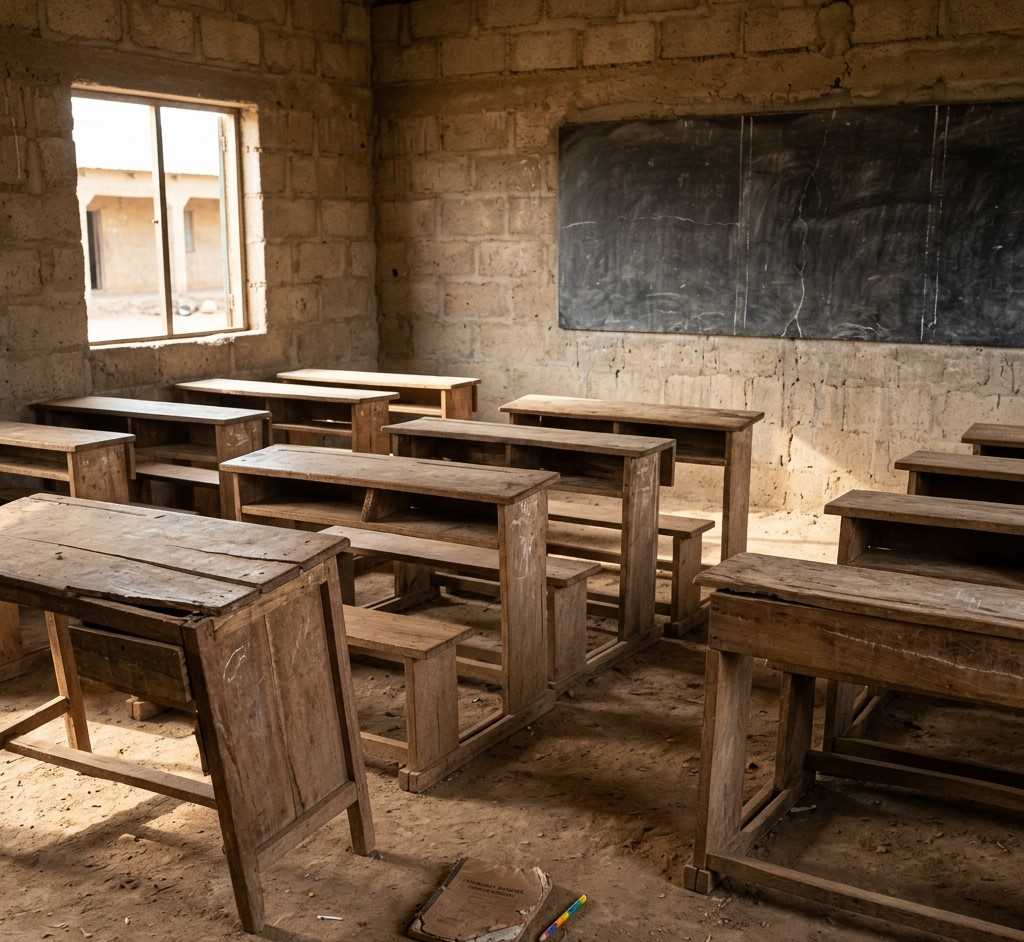
Here is the thing. Over 18 million children are not in school. Most are in rural areas. So here we are. Classrooms stand empty. What happens to a generation? The gap is wide. It is time to look.
Nigeria out-of-school children and the Rural Education Gap
Published: 23 March, 2026
How do you solve a problem you can’t even see? The official number of Nigeria out-of-school children exceeds 10 million. This figure, based on data from the United Nations Children’s Fund, still places the country at the top of a global list nobody wants to lead. The majority of these children live in rural areas, far from the policy discussions in Abuja.
The Scale of the Problem Has a Specific Geography
The crisis concentrates in the northern regions. Data from the National Bureau of Statistics and UNICEF shows the North-West and North-East zones account for the largest share. States like Bauchi, Kano, and Katsina each report figures above 1 million.
Rural communities in these states face a perfect storm. Poverty intersects with security challenges and deeply rooted social norms. A girl in a remote village in Kebbi State faces different obstacles from a boy in a Lagos suburb. In the North-East, primary net attendance for girls stands at 47.7%. In the North-West it is 47.3%. Contrast this with over 80% in the South-West.
The Universal Basic Education Commission allocates funds. The trouble is getting those funds to build and staff schools in places where roads disappear in the rainy season.
Why Building More Classrooms Misses the Point
Conventional wisdom suggests constructing more schools. The reality on the ground complicates this. The UBEC National Personnel Audit of 2018 revealed a shortage of 277,753 teachers in public primary schools. A new building with no teacher remains a hollow structure.
But there is a catch. Deploying teachers to rural postings presents another layer. Many teachers assigned to rural schools report for duty only on payday. They cite a lack of accommodation, security concerns, and the sheer difficulty of the commute.
Here is the thing. A policy that funds school construction without a parallel plan for teacher housing, security, and incentives guarantees failure. You see the beautiful school from the highway. The classrooms inside stay empty.
Digital Bridges Over Physical Gaps
One solution gaining traction uses technology to bypass infrastructure deficits. The Nigeria Learning Passport, a digital platform launched by the Federal Ministry of Education with UNICEF support, offers curriculum-aligned content offline. A solar-powered tablet in a community center can host a virtual classroom.
Initiatives like “School-in-a-Box” deploy to internally displaced persons camps and remote settlements. These kits contain tablets, projectors, and power banks pre-loaded with educational content. In Sokoto State alone, over 9,000 girls enrolled in the Nigeria Learning Passport during 2025, using it as a tool for lessons outside the traditional classroom.
The digital divide remains real. Network coverage in rural areas improves but stays unreliable. The success of any digital solution depends on consistent power and maintenance, two things in short supply.
“We cannot wait for perfect grid electricity to educate our children. Solar technology and offline digital content offer a pragmatic path forward for remote communities.” – Dr. Hamid Bobboyi, Executive Secretary, Universal Basic Education Commission.
The Community School Model Actually Works
Some of the most effective interventions bypass government bureaucracy entirely. The Community-Based School model, supported by organizations like Teach For Nigeria and the British Council, trains local youth as teaching fellows. These fellows understand the cultural context and live in the community.
In Niger State, a partnership between a community association and a local NGO established a school under a tree. Enrollment grew from 30 to over 200 children within 18 months. The community provided the space and security. The NGO provided trained facilitators and learning materials.
This model aligns with the Alternate Learning Programme framework endorsed by the Federal Ministry of Education. ALP provides flexible, accelerated basic education for older children who missed schooling. It works because it adapts to the agricultural calendar and local realities.
Financing Follows the Child, Not the Bureaucracy
A radical proposal gaining policy attention involves direct funding. The “School Feeding” component of the National Social Investment Programme provides one concrete example. When children receive a daily meal in school, attendance rises. The 2026 budget allocates specific funds for school feeding, scholarships, and security infrastructure under the education sector.
A more direct model involves conditional cash transfers to households. A pilot in Sokoto State provided small monthly stipends to families who kept their children, especially girls, in school. Preliminary data indicated an increase in enrollment in pilot communities, though the specific figure requires verification from Sokoto State SUBEB.
The logic is simple. For a family choosing between a child’s labour on the farm and school, a small financial incentive alters the calculation. The 2026 budget includes provisions for scaling this pilot through the World Bank-supported HOPE-GOV Program.
The Teacher Problem Needs a Local Solution
National schemes like the Federal Teachers Scheme have mixed results. A different approach recruits and trains teachers from the community itself. The “Grow-Your-Own-Teacher” initiative, active in Bauchi and Gombe states, identifies secondary school graduates from rural villages.
These graduates receive pedagogical training and return to teach in their home communities. They receive a stipend and a promise of accelerated entry into teachers’ colleges. Because they come from the community, they face fewer issues with accommodation and acceptance.
This approach addresses the retention crisis. A teacher from Lagos posted to Borno might abscond. A teacher from a village in Borno teaching in that same village has roots there.
“Our data indicates that community-hired teachers have an 80% retention rate after three years, compared to less than 40% for teachers deployed from urban centers.” – Hajiya Aisha Mahmoud, Programme Director, Northeast Education Intervention, in a 2026 policy brief.
What a State Commissioner Can Do Tomorrow
The scale of the crisis overwhelms. A state-level education commissioner possesses real power for immediate action. One lever involves the existing UBEC matching grants. Many states fail to access these funds because they cannot provide the required 50% counterpart funding.
A commissioner can re-prioritize the state budget to secure that counterpart funding. Accessing the UBEC grant unlocks billions of naira specifically for infrastructure and teacher development in rural areas. It is a matter of political will, not new policy.
Another action involves mandating the State Universal Basic Education Board to publish monthly data on rural school enrollment, teacher attendance, and fund utilization. Sunlight, as they say, is a disinfectant. Public data creates accountability for local education secretariats.
The Long Road from Data to Desks
The headline number of 10 million out-of-school children represents a profound national emergency. It also represents 10 million individual stories, most of them in quiet, forgotten villages.
Solutions exist. They combine low-tech community engagement with high-tech digital delivery. They finance households directly and train teachers locally. They work when they start from the reality of the village, not the blueprint from the ministry.
Progress will be incremental. It will be measured in hundreds of children in a single community gaining literacy, not in millions captured in a headline. The work involves building one bridge at a time across the vast gap between policy and practice in the rural areas of Nigeria.
The alternative is accepting that 10 million children will begin their adult lives without the basic tools to navigate the world. That is a future with consequences for everyone.
Nigeria’s Education Crisis – Analysis of the scale of the education crisis and socioeconomic barriers keeping children out of school. (Digital Illustration: GoBeyondLocal)
Education
School Protection Demands More Than Prayer and Gates
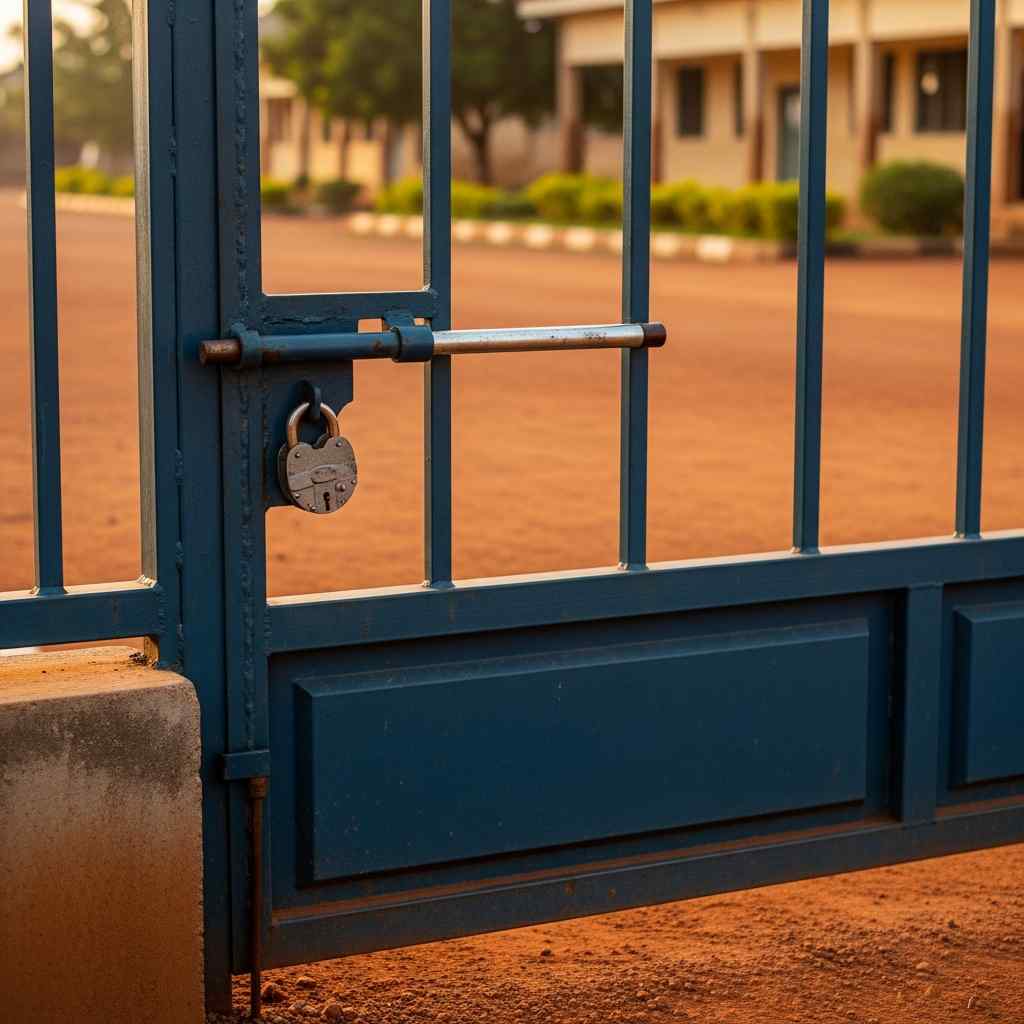
Here is the thing. Gates and prayers are not enough. So what now? We must build real protection. Integrated systems. Community watch. Digital tools. Our children deserve better.
School Protection Demands More Than Prayer and Gates
Published: 17 March, 2026
What are the odds? For a student in a Nigerian classroom today, the statistical probability of violence climbs every year. The conversation about school protection is no longer abstract policy. It is a daily calculation of risk for millions of families.
The federal government declared a state of emergency on education security in 2024. The translation of that declaration into physical safety for children remains a patchwork of intention.
Look at the pattern. Data from the Nigeria Security Tracker shows that between January 2024 and December 2025, armed groups targeted educational institutions on 47 documented occasions. These incidents led to student abductions, teacher fatalities, and destroyed learning infrastructure.
Over 80% of these attacks occurred in the North-West and North-Central geopolitical zones. As Premium Times noted in a November 2025 , the trend has shifted from large-scale mass kidnappings to more frequent, smaller-scale raids on remote schools.
The financial cost is staggering. In a 2025 assessment, the World Bank estimated that school closures and lost learning due to insecurity have cost the economy of Nigeria over $3 billion in potential future productivity since 2020. Each attack creates a ripple. Fear leads to decreased enrollment, especially for girls, and chronic teacher shortages in the worst-hit regions.
The platform run by the Ministry of Education tracks this, showing hundreds of institutions shuttered for months at a time.
The Current Safety Protocols
This reach is significant, but it covers a fraction of the need. Nigeria has over 120,000 public primary schools alone. The training often focuses on evacuation and lockdown procedures. These are essential, but they are also incomplete.
They address the moment of crisis without mitigating the factors that lead to it. The trouble is the response gap. A security consultant who worked on the program told BusinessDay in February 2026 that the biggest failure is the lack of integrated, real-time communication linking schools to rapid response security agencies.
“We train teachers to hide children and barricade doors, which is vital, but if the police or army arrive two hours after the attack begins, the protocol has already failed. The protocol must include the guarantee of a swift response.” – Security Consultant, anonymous interview with BusinessDay, February 2026.
Why the Latest Global Frameworks Matter for Nigeria
International best practice has evolved. It is now beyond gates and drills. The Global Coalition to Protect Education from Attack advocates for a multi-pillar framework: physical protection, community engagement, digital monitoring, and policy advocacy.
A key element is the ‘Comprehensive School Safety Framework’ endorsed by the United Nations. It treats safety as an integrated component of educational management, not an add-on.
For Nigeria, the most relevant pillar is community-led protection. Programs in other conflict-affected regions show that communities with established trust networks and early-warning systems are more resilient. The 2025 UNESCO report on protecting education highlighted cases from the Sahel where parent-teacher associations, working with local leaders, set up patrols and information-sharing protocols that reduced incidents.
This model depends on devolving responsibility and resources from the central state to the local level.
The digital monitoring pillar presents both opportunity and a profound challenge. Technology offers tools like geo-fencing, panic-button apps, and centralized dashboards. The state of Lagos piloted a security app for schools in 2025.
But there is a catch. A school without consistent electricity or internet cannot maintain a digital security system. The digital divide becomes a safety divide.
Here Is the Current Picture
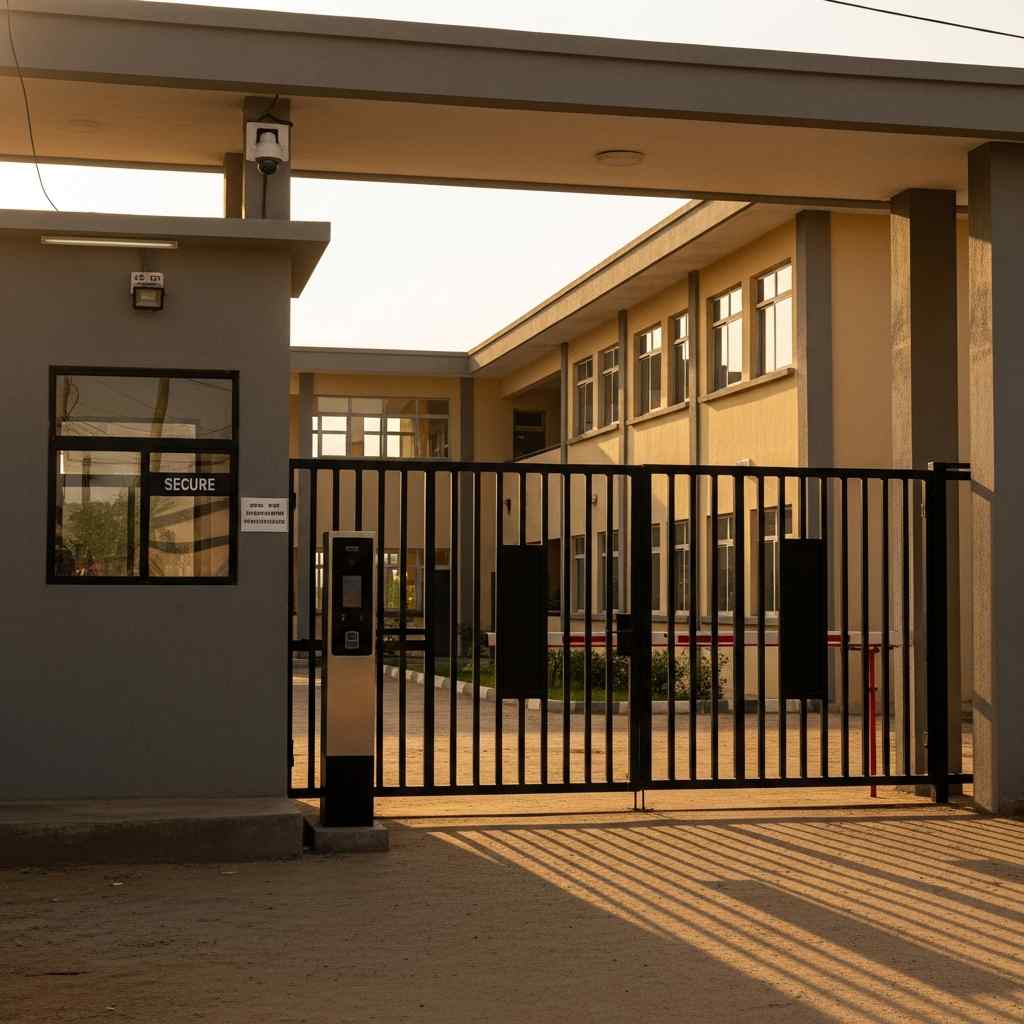
Any discussion of advanced protocols collides with basic reality. The 2024 National School Security and Safety Infrastructure Audit, conducted by the federal Ministry of Education, presented sobering data. It found that 62% of public schools surveyed lacked a perimeter fence that met basic security standards.
Over 72% had no dedicated security personnel. Perhaps most critically for modern protocols, 85% reported unreliable electricity, and 90% had no functional internet connectivity for administration, let alone security monitoring.
This audit formed the basis for the N150 billion School Infrastructure Security Fund announced in the 2026 federal budget. This allocation is a positive signal. It also represents approximately 0.6% of the total national budget for that year. Spread across thousands of vulnerable schools, the funding for each institution will cover only a fraction of the needed walls, lighting, communication equipment, and personnel.
The budget illustrates the gap between recognizing a problem and mobilizing resources at the scale required to solve it.
“You cannot install a digital radio system in a building that has no roof. You cannot expect a teacher on a salary of N50,000 to also act as a cybersecurity monitor. Our first protocol must be to make schools habitable and staff properly.” – Aisha Mohammed, National President of the National Association of Proprietors of Private Schools, speaking at an education summit, December 2025.
The Policy Is Crowded but Fragmented

On paper, Nigeria has a growing architecture for school protection. The National Policy on Safety, Security and Violence-Free Schools was approved in 2022. The Safe Schools Initiative continues. The 2026 budget includes a specific line item. State governments in Kaduna, Katsina, and Zamfara have launched their own security task forces. The Nigeria Police Force established the Schools Protection Squad in 2025.
The fragmentation is the problem. Coordination between federal, state, and local agencies is weak. Information sharing is inconsistent.
A school principal in a rural area may receive directives from the state ministry, a federal initiative, and a local vigilante group, with no mechanism to harmonize these efforts. This lack of a unified command structure creates confusion and wastes scarce resources. A policy analyst at the Centre for Democracy and Development noted in a January 2026 briefing that “multiple policies without a single accountable authority lead to the assumption that someone else is handling the problem.”
What Does a Modern Protocol Actually Look Like Here?
Implementing the latest safety protocols in Nigeria requires a hybrid model. It must blend appropriate technology with deep community integration. The first step is a mandatory, standardized risk assessment for every school.
This assessment would map physical vulnerabilities, community threat actors, and available response assets. The template exists within the National Policy. It requires rollout and enforcement.
The second step is layered communication. For schools with connectivity, a simple panic-button system linked to local security forces and a central state dashboard has merit. For schools without it, the protocol must rely on low-tech alternatives: designated runners, coded whistle signals, or pre-arranged flags understood by the entire community.
The common factor is a pre-rehearsed, unambiguous alert that triggers a known response sequence.
The third, and most critical, step is formalizing the community role. This means legally recognizing and lightly regulating local School Safety Committees. These committees, comprising parents, teachers, traditional leaders, and youth representatives, would be trained in conflict de-escalation, early warning signs, and basic first aid.
They would be the eyes, ears, and first line of dialogue for the school. This model draws legitimacy from local knowledge, something external security forces often lack.
The scale of the challenge can induce paralysis, wait, it gets more complex, but one action can start tomorrow: the formal constitution and training of a School Safety Committee for every school in the country. This does not require a massive budget allocation.
It requires a directive from the state ministry of education, a simple template for membership, and a partnership with local NGOs or the Nigeria Security and Civil Defence Corps to provide basic training modules.
This committee becomes the anchor. It conducts the initial risk assessment. It tests the communication plan. It builds the bridge between the school and the wider community. It is a force multiplier for any physical or technological security measure that follows. Starting here acknowledges a truth: the most advanced protocol in the world depends, in the final moment, on people who are present and prepared.
School protection will a complex, costly, and long-term endeavor. It intersects with wider national security failures, poverty, and governance deficits. Waiting for all those larger issues to be solved before securing classrooms is a formula for perpetual tragedy.
The work begins with the deliberate, systematic organization of the human resources that already exist around every school. The alternative is to continue managing a series of escalating emergencies, each one eroding the future of a generation.
What is Safeguarding? – Safeguarding in Schools #1 – 2022 Update , My-Progression. (Digital Illustration: GoBeyondLocal)

Thunder speaks sentences that elderly women in one village understand clearly

River Disappears Overnight in Warri Delta State

Market Woman Predicts Deaths in Owerri Through Yam Shapes

Forest healer cures blindness using leaves from a plant found nowhere else

Ancient Wall Repairs Itself in Zaria After Heavy Rains

Confluence refuses to mix after a photographer insulted the local river spirit

Church roof collapses mid sermon and every person inside walked out without injury

Tailor Sews Identical Dress from 40-Year-Old Bible Photo in Asaba

Twins Share Single Heartbeat Born Years Apart

Tomi Adeyemi Film Deal Changes Nigerian Storytelling

Lola Shoneyin Builds a Literary Continent at Aké Festival

ADC Leads #OccupyINEC Protest in Abuja Over Party Derecognition

Internet Sovereignty: Why Some Countries Want Their Own Separate Internet

The Story Of The Nigerian Who Helped Build Global Internet Systems

Nigerian Hackers: The Global Fraud Story and Its Fallout

Forgotten Satellites Defy Silence, Beaming Signals for Decades

Your Digital Store in Nigeria and the Reality of Domain Expiration

The Phone Stay So Quiet: An Investigation into Nigeria’s Silent Customer Lines

The Business That Died: A Nigerian Case Study in Refusal to Adapt

Hiding Your Business From People With Money

How Nollywood Grew Without Government Support

Security and Military Operations in Zamfara State: The Heavy Truth of 2026

Nigeria Produces 67 Percent Global Yam Output

Comedy Industry in Nigeria and Its Economic Contribution

 Digital Sovereignty2 months ago
Internet Sovereignty: Why Some Countries Want Their Own Separate Internet
- Diaspora2 months ago
The Story Of The Nigerian Who Helped Build Global Internet Systems
- Crime2 months ago
Nigerian Hackers: The Global Fraud Story and Its Fallout
- Space Technology2 months ago
Forgotten Satellites Defy Silence, Beaming Signals for Decades
- E-Commerce2 months ago
Your Digital Store in Nigeria and the Reality of Domain Expiration
- Edutech Portal2 months ago
The Phone Stay So Quiet: An Investigation into Nigeria’s Silent Customer Lines
- Edutech Portal2 months ago
The Business That Died: A Nigerian Case Study in Refusal to Adapt
- Business2 months ago
Hiding Your Business From People With Money