Economy
Multinational Exodus in Nigeria Deepens with N94 Trillion Loss
Multinational exits have cost Nigeria N94 trillion in output. While official forex rates stabilize at N1,384, the manufacturing crisis stays acute in 2026.


The Multinational Exodus in Nigeria Deepens with a N94 Trillion Hole
Published: March 24, 2026
How do you measure an economy bleeding out? Start with N94 trillion. Add over 20,000 direct jobs. That is the quantified damage from major international companies leaving Nigeria since 2021. A report from the Manufacturers Association of Nigeria confirms this accelerating trend through the first quarter of this year, as Premium Times noted in March 2026. The domestic market cannot replace this lost output. Not even close.
Here is the thing about the numbers
The N94 trillion figure is an aggregation. It covers divestments, asset sales, and profits that could not be repatriated over five years. The trouble is, new money is not coming in to replace it. Data from the National Bureau of Statistics shows foreign direct investment inflows have declined for four consecutive years (NBS, 2025). The job losses, concentrated in manufacturing, ripple outwards. They hit supply chains and service providers hard.
Look at the names. Procter & Gamble, GSK, and Sanofi have exited manufacturing. Unilever stopped making home care and skin cleansing products. Bolt Food and Jumia Food shut down in late 2023. Each closure cited a similar cluster of problems.
What exactly are companies running from?
Ask any business operator in Lagos or Port Harcourt. The list is short and brutal. A survey by the Lagos Chamber of Commerce and Industry pins the primary constraints as foreign exchange volatility, persistent insecurity, and unreliable power (LCCI, 2025). The cost of generating electricity with diesel alone consumes massive chunks of operational budgets.
But there is a catch. Even though the Central Bank of Nigeria has unified the exchange rate window, access to foreign currency remains a daily struggle. As BusinessDay reported in early 2026, implementation gaps frustrate corporate treasury departments. You cannot plan when you cannot source dollars for raw materials.
You cannot run a factory where you cannot source inputs, guarantee staff safety, or predict your energy cost from one week to the next. The Director-General of the Manufacturers Association of Nigeria, Segun Ajayi-Kadir, stated in January 2026.
Insecurity along major transit routes inflates logistics costs and insurance premiums. Moving goods from Lagos to Abuja can cost as much as shipping a container from China to Lagos. These are the mundane realities that kill profitability.
The policy response feels like a broken record
The government of President Bola Tinubu has announced interventions. The 2024 and 2025 budgets allocated funds for national security and infrastructure. The rhetoric is all about improving the ease of doing business.
Here is the reality check. The total capital expenditure in the 2025 budget was approximately N11.99 trillion (Budget Office of the Federation, 2025). The amount lost to corporate exits in five years is nearly eight times that single year’s capital budget. The scale of the outflow dwarfs planned public investment.
Tax incentives exist on paper. The experience on the ground involves navigating delays at the Federal Inland Revenue Service and the Nigeria Customs Service. A company choosing between Nigeria and Ghana will weigh these operational headaches heavily.
Who fills the space left behind?
The exit creates opportunities. Local conglomerates like the Dangote Group, BUA Group, and Flour Mills of Nigeria have expanded into vacated segments. This shift promises greater domestic ownership.
But capacity has limits. The Aliko Dangote-owned refinery represents exceptional scale. Most local manufacturers lack the balance sheet to absorb the massive capital expenditure and technology the departing multinationals possessed. The quality and variety of goods may decline.
Job creation from local firms is slower and more cautious. They face the same headwinds, often with less access to global financing. The net result is a shrinkage in formal sector employment.
Local production is growing, but it is a marathon, not a sprint. We cannot replace 50 years of multinational investment in two years. The CEO of a major Nigerian food and beverage company commented anonymously to Vanguard in February 2026.

The view from the street in Ikeja or Apapa
For workers, it means fewer stable, pensionable jobs. The 20,000 lost positions were mostly formal roles with benefits. Many move into the informal sector or precarious gig work. The unemployment rate is officially 4.1% (NBS, Q3 2023), though a methodology change affects comparability. Underemployment is the larger issue on the ground.
Consumers face higher prices and reduced choice. Imported alternatives get more expensive with currency depreciation. Locally produced substitutes may have inconsistent quality. The standard of living adjusts downward.
Landlords in industrial areas see vacancies rise. Local vendors lose their largest clients. The economic ecosystem around a major plant deteriorates fast. The impact is hyper-local and deeply felt.
Is there a path to reverse the trend?
Stopping the exodus requires treating root causes. Foreign exchange management needs consistency and transparency. Investors require a predictable window to repatriate dividends. The Central Bank of Nigeria has made commitments, yet market confidence lags, as The Cable reported in 2026. The official rate has stabilized around N1,384 per dollar, but access liquidity stays constrained.
Security of life and property is non-negotiable. Investment in policing must show results. The power sector remains a national emergency. The cost of alternative power makes manufacturing a heroic undertaking.
This brings us to coordination. Policy across the Ministry of Industry, Trade and Investment, the Central Bank, and the Ministry of Finance lacks urgency. Businesses receive mixed signals.
A single, tangible step forward
The government could establish a dedicated Presidential Delivery Unit for the top five investor complaints. This unit would track and publicly report monthly progress on foreign exchange access, port clearance times, diesel prices, and security on trade corridors. Transparency builds accountability.
It would have the authority to cut through inter-agency delays. Its mandate would focus exclusively on removing bottlenecks for existing businesses. Success would be measured by a halt in closure announcements. The current approach of generic assurances has lost credibility.
Such a unit needs a leader with direct presidential access and a small, technically competent team. Its reports should be published online in a simple dashboard. Nigerians and the international business community can then monitor progress with specific metrics. This move signals a shift from talking to doing.
So here we are
The multinational exodus in Nigeria is a story of capital, jobs, and confidence leaving. The total of N94 trillion and 20,000 jobs makes it quantifiable. The reasons are well-documented.
Reversal is possible with focused, sustained action on power, security, and foreign exchange. The alternative is a continued contraction of the formal industrial base, higher unemployment, and import dependence. The choice for policymakers in Abuja is that straightforward.
The next closure announcement may come tomorrow. The time for a different response is today.





Economy
Food Crisis Looms in Nigeria as Climate Change Devours Farm Yields
Nigeria faces grain deficits in 2026 as climate shifts impact maize and rice yields, despite moderating food inflation rates.

Food Crisis Threatens in Nigeria as Climate Change Devours Farm Yields
Published: 27 March, 2026
How do you measure a coming storm? Start with the maize. The projected national harvest for 2026 will fall short of domestic demand, according to assessments by the United States Department of Agriculture and the Food and Agriculture Organization released this month. This deficit exists before accounting for a single flood or drought. The arithmetic of hunger in Nigeria is being rewritten, and the data from the fields points in one direction.
The Yield Collapse is Already Here
Farmers in the north planted with the first rains. Then the rains stopped for three weeks in June. The maize withered. A survey by the International Institute of Tropical Agriculture in Kano, Kaduna, and Katsina states recorded significant maize yield reductions for the early season crop, according to an IITA Field Report from August 2025.
Contrast this with the south. The problem there is too much water. Flash floods in Anambra, Delta, and Rivers states last October submerged thousands of hectares of rice. The National Emergency Management Agency estimated a major loss of paddy rice in its Situation Report from November 2025. Climate models predicted these patterns. The reality confirms them with brutal consistency. The margin for error in our food system is gone.
What the Price of Garri Tells You
Markets signal distress first. The price of a 50kg bag of garri jumped from N25,000 in January 2025 to N38,000 by February 2026 in Lagos. The National Bureau of Statistics reported this in March 2026. This is a 52% increase.
In many parts of the North Central zone, a mudu of beans now costs more than a litre of fuel. The headline food inflation rate was 12.12% in February 2026 on a year-on-year basis, the NBS confirmed. That number is not an abstraction. It translates to skipped meals and thinner soups for millions. The crisis lands as a concrete problem at the kitchen table.
The Policy Response is a Drop in a Bucket
The federal government announced a N200 billion climate-resilient agriculture fund in the 2026 budget. According to the Budget Office of the Federation, this represents a fraction of the total spend. The scale of the intervention fails to match the threat.
The fund aims for drought-resistant seeds and small-scale irrigation. The trouble is the implementation. Distribution networks are weak. The last major irrigation project in the Hadejia Valley started in 2018 and is still incomplete.
“The conversation about climate change adaptation stays theoretical for many farmers. Their immediate concern is the cost of fertilizer and the absence of rain.” – Dr. Aisha Bello, Agricultural Economist, Ahmadu Bello University, Zaria. Interview with Premium Times, January 2026.
State governments promote early-maturing varieties. But adoption is low. The seeds are expensive and often unavailable. As BusinessDay reported in February 2026, a bag of certified maize seed sells for over N40,000—a prohibitive cost for the average smallholder.
Why the Food Reserve Strategy is Broken
The National Food Reserve Agency has a mandate to stabilize prices. It holds a strategic grain reserve. The capacity of those silos across the country is about 300,000 metric tonnes, according to data from the Federal Ministry of Agriculture.
But there is a catch. Nigeria’s annual maize consumption exceeds 10 million metric tonnes. The reserve can cover a national shortfall for only a few weeks. The logistics of moving grain from Ibadan or Minna to areas of acute shortage are complex and costly. Past interventions saw grains arrive late or get diverted. The system lacks the transparency for a real crisis. The buffer is too small.
The Looming Spectre of Import Dependence
A shortfall creates pressure to import. The government granted duty waivers for maize in late 2025. The volume of maize imports through the Apapa port increased in the first quarter of 2026 compared to the same period in 2025, the Nigeria Ports Authority reported.
Importation provides immediate relief. But it exposes the country to volatile global prices and exchange rate fluctuations. The naira traded at N1,383.88 to the US dollar in the official market in March 2026, according to the Central Bank of Nigeria. Funding food imports strains the treasury. Policy emphasizes self-sufficiency. Reality pushes us toward greater dependence.
Look at the Map of Vulnerability
This crisis has a specific address. The World Food Programme and the Federal Ministry of Agriculture completed a joint analysis in late 2025. It identified 72 local government areas across 16 states as facing acute food insecurity, according to their assessment from December 2025.
These areas cluster in the Northeast, Northwest, and North Central. They are zones of high dependence on rain-fed agriculture. They also experience conflict and displacement. Climate stress multiplies every existing vulnerability.
Urban areas are not immune. High food prices cripple the poor in cities like Lagos, Kano, and Port Harcourt. The social contract frays when a basic necessity becomes a source of daily anxiety.
A Different Path Exists
The situation demands a shift. We treat climate change as a secondary concern for agriculture. It is now the primary determinant of productivity.
Investment must move beyond distributing seeds. Our irrigation infrastructure requires massive rehabilitation. The total irrigable land in Nigeria is over 3 million hectares. Less than 10% of this has functional irrigation, according to the Federal Ministry of Water Resources 2025 assessment.
“We have the technical knowledge and the water resources. The gap is in coordinated investment and maintenance. A farmer with a reliable water source can withstand two weeks of drought.” – Engr. Suleiman Adamu, former Minister of Water Resources. Lecture at the University of Ibadan, February 2026.
Research institutions like the IITA develop climate-smart varieties. But the pathway from the research station to the farmer’s field is clogged. A functional agricultural extension system would bridge this gap. We don’t have one. The number of agents serving millions of farmers is grossly inadequate.
Start with the Weather Forecast
The Nigeria Meteorological Agency issues seasonal rainfall predictions. It lacks the resources to get this information to rural farmers. A farmer in a remote Kebbi village may never see the forecast that decides his planting date.
One simple, actionable step exists. Leverage mobile networks. NiMET can partner with telecom companies to send free, localized weather alerts via SMS to registered farmers. The technology exists. The databases exist. This intervention would empower better decisions and reduce losses. It is a matter of connecting available dots.
The Clock is Ticking on the Next Harvest
The next major planting season begins with the rains in April and May. The conditions that led to the 2025 shortfalls will likely persist. The global climate pattern known as La Niña is fading, with a 60-70% chance of shifting to ENSO-neutral conditions by the April to June window, the World Meteorological Organization stated in its March 2026 update.
Governments have a narrow window to deploy support. This means ensuring affordable access to the right seeds, fertilizer, and water. It means providing credible information. The alternative is another cycle of poor harvests, higher prices, and deeper hunger.
The data presents an evident trajectory. The response so far lacks the urgency the moment demands. The time for theoretical discussions is over. The fields are waiting.
Economy
Dangote Refinery Helpless as Fuel Price Hikes Defy Local Production
Dangote Refinery raises petrol to ₦1,245. High global crude costs and the ₦1,420 parallel market rate drive 2026 fuel price hikes. See the latest NCDC & FRSC data.
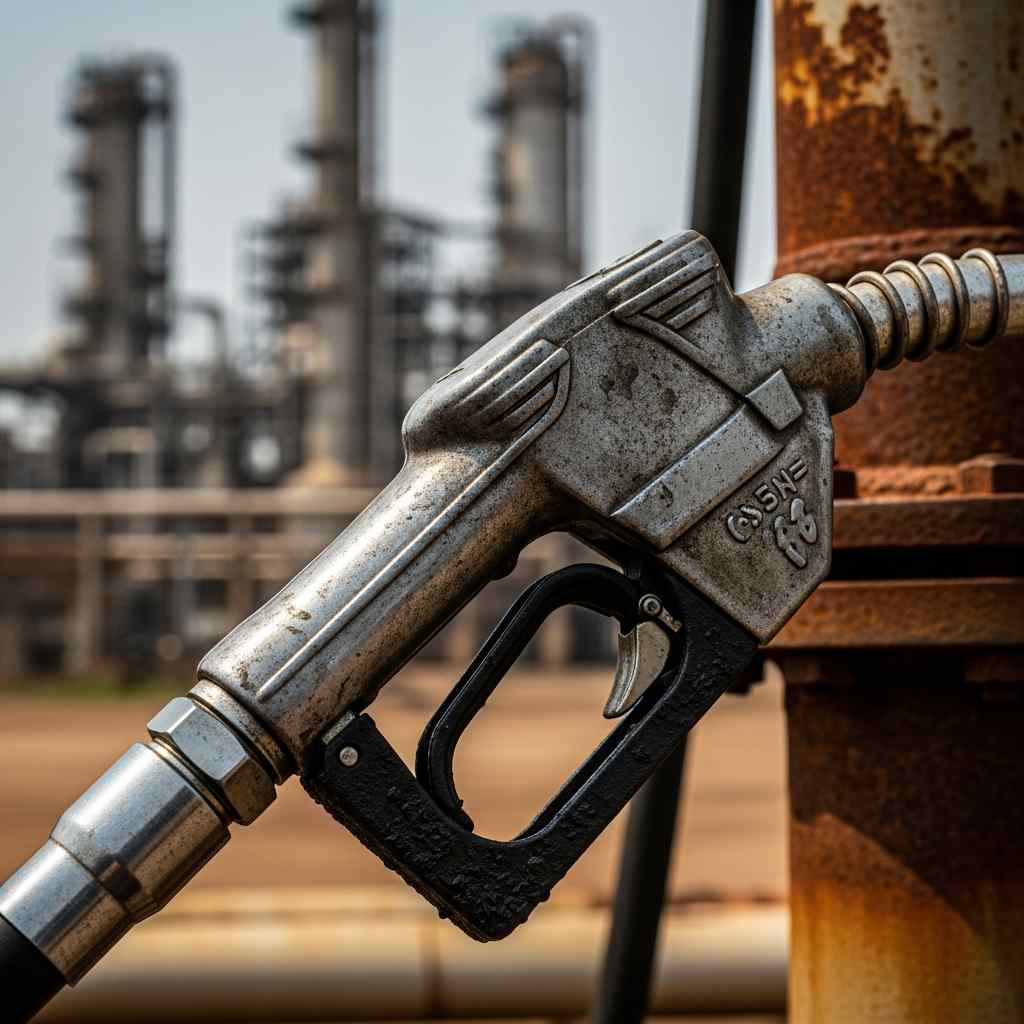
Dangote Refinery Confirms: ‘We Are Helpless’ as Petrol Prices Stay Volatile
Published: 26 March, 2026
The $20 billion Dangote Petroleum Refinery produces refined products within the borders of Nigeria.
Pump prices for Premium Motor Spirit continue to increase across the country.
These two statements define the central paradox of the energy sector in Nigeria for 2026.
A Refinery Without Control
Senior executives at the Dangote group have described their position on fuel pricing as helpless.
The admission came during a briefing with energy correspondents in Lagos this month. A company spokesperson outlined the external factors dictating their landing costs. The price of crude oil forms the first major component. The refinery depends on imports for a significant portion of its feedstock.
According to a report in BusinessDay on March 18, 2026, the facility still imports about 30% of its crude requirements. The Nigerian National Petroleum Company Limited has struggled to meet its supply commitments under a dedicated crude-for-product swap deal. This forces Dangote to source from the international market, paying in US dollars.
The second factor is the foreign exchange rate. Every imported barrel and many operational expenses require conversion from naira to dollars. The Central Bank of Nigeria reported an official exchange rate of N1,383.88 to the US dollar as of March 26, 2026. The parallel market rate hovered above N1,750.
These two variables, global crude prices and the naira-dollar exchange, exist outside the control of any local refinery. The company sets its ex-depot price based on these real-time costs. “We are price takers, not price makers,” the spokesperson stated.
“The narrative that our refinery’s production will automatically guarantee cheap fuel is economically flawed. Our pricing is a direct function of crude cost, forex, and operating expenses. We are helpless against these macro forces.”
– Dangote Industries Group spokesperson, March 2026 briefing.
The Crude Supply Puzzle
The original plan envisioned the refinery running primarily on Nigerian crude.
This would have insulated operations from volatile global prices and forex demands. The reality in 2026 is different. Data from the Nigerian Upstream Petroleum Regulatory Commission shows total crude oil production averaged 1.45 million barrels per day in the first quarter of 2026.
The Dangote Refinery, at full capacity, can process 650,000 barrels per day. Simple arithmetic reveals a problem. If the refinery took its full capacity, it would consume almost 45% of the entire national output. This is politically and economically impossible.
The NNPC has allocation commitments for the older Port Harcourt and Warri refineries, for direct export sales, and for other swap agreements. The corporation supplies Dangote with a fraction of its needs. A report by Premium Times in February 2026 cited NNPC officials acknowledging a supply shortfall.
The refinery then turns to the international market. It buys crude from suppliers in the United States, Saudi Arabia, and elsewhere. These transactions happen in US dollars at the prevailing global price, which the Energy Information Administration placed at an average of $82 per barrel for the first quarter.
This fundamental gap between expectation and reality anchors the pricing issue. Local production of fuel depends on imported raw material.
Forex, The Invisible Tax
Every Nigerian feels the pressure of the exchange rate.
For an industrial operation the size of the Dangote Refinery, the pressure is monumental. The company requires dollars for crude imports, for spare parts, for technical service contracts, and for loan repayments. The refinery’s construction was financed with foreign currency debt.
The Central Bank of Nigeria has implemented multiple reforms to unify the exchange rate windows. Liquidity in the official market stays a challenge for large corporates. Accessing sufficient dollars at the official rate is difficult, pushing some demand to the parallel market.
This forex cost is baked into the final product price. When the naira weakens against the dollar, the naira cost of imported crude rises. The refinery must recover this higher cost when it sells the refined petrol or diesel.
The National Bureau of Statistics reported that the importation of mineral fuels constituted a major demand pressure on foreign exchange. The refinery’s operations, ironically designed to reduce forex demand for fuel imports, now generate forex demand for crude imports.
It is a circular problem with a direct impact on the pump price. The Minister of Finance, Mr. Wale Edun, has stated that improving domestic crude oil production and refining is the long-term solution to forex stability.
What Happened to the Subsidy Debate?
The government of President Bola Tinubu announced the end of the petrol subsidy on May 29, 2023.
The policy aimed to eliminate a massive fiscal drain and allow market forces to determine prices. The expectation was that local refining would introduce competition and lower costs. The entry of the Dangote Refinery was a cornerstone of this argument.
In practice, the market has only one direction: up. Without a subsidy or a price ceiling, the price floats with international costs. The Dangote Refinery, as a commercial entity, has no mandate to sell at a loss. Its pricing must cover costs and provide a margin.
Some analysts expected the government to maintain a strategic reserve or a price stabilization fund. No such mechanism exists in 2026. The Petroleum Products Pricing Regulatory Agency now functions purely as a data collector and market monitor.
The removal of the subsidy transferred price risk from the government balance sheet to the individual consumer. The refinery’s production changes the source of the product, but not the fundamental pricing calculus tied to global markets.
Citizens who anticipated relief from a mega-refinery now face the reality of a fully deregulated market. The price at the pump in Lagos or Kano is a function of activities in the futures markets of New York and Rotterdam.
The Other Refineries in the Room
Attention focuses on Dangote, but it is not the only refinery.
The government-owned Port Harcourt Refining Company completed its rehabilitation in late 2024. It has struggled with consistent production. The plant operates intermittently, often at a fraction of its 210,000 barrel per day capacity, contributing roughly 5% of national PMS demand in March 2026 due to recurrent technical faults.
Sources at the Nigerian National Petroleum Company Limited indicate the old refinery faces recurrent technical faults and feedstock issues. Its output is unreliable and insufficient to influence market prices. The Warri and Kaduna refineries continue to be in various stages of attempted rehabilitation.
Several smaller modular refineries in the Niger Delta produce diesel and other products. Their combined capacity is limited. They also face the same crude sourcing and forex challenges as the Dangote facility.
This landscape means Dangote Refinery dominates the local supply of refined products. Its pricing effectively sets the benchmark for the entire market. Independent marketers who buy from Dangote add their own transport and margin costs, leading to higher prices in the interior.
The promised competitive market, with multiple suppliers exerting downward pressure on price, has yet to materialize. The market structure stays concentrated.
“The operational state of our public refineries is a national embarrassment. Until we have multiple, functioning streams of domestic production, the market will lack the competition needed for price moderation.”
– Energy analyst quoted in The Guardian, March 10, 2026.
The Ripple Effect on Everything
High fuel prices act as a tax on every sector.
Transport costs increase for food items moving from rural farms to urban markets. The price of bread rises because bakery delivery vans use more expensive fuel. Manufacturers running diesel generators face steeper power costs, which they pass on to consumers.
The National Bureau of Statistics recorded a 15.06% headline inflation rate for February 2026, though energy and transport costs stay decoupled from this moderation at 27.3%. This direct link between fuel costs and general price levels is unmistakable.
Small businesses, the engine of employment in Nigeria, are squeezed the hardest. A tailor in Aba or a phone charger in Kano operates on thin margins. A sustained increase in the cost of running a generator or transporting goods erodes these margins completely.
The social contract is under strain. Citizens were told that short-term pain from subsidy removal would yield long-term gain from investments like the Dangote Refinery. The gain feels distant, while the pain at the pump is immediate and recurrent.
This economic pressure complicates the policy environment. Calls for government intervention, for a return to some form of subsidy or price control, grow louder. The government insists the deregulation path is irreversible.
Is There a Path to Lower Prices?
The solution requires addressing the root causes.
First, the volume of domestic crude oil production must rise significantly. Higher output would give the NNPC more barrels to meet its commitments to Dangote and other domestic refiners. This reduces reliance on expensive imports. The government cites ongoing efforts to curb oil theft and attract new investment, but results are slow.
Second, the foreign exchange market requires deeper liquidity. The Central Bank of Nigeria is pursuing higher remittance flows and foreign investment. A stable and liquid forex market would allow refiners to access dollars at predictable rates, reducing a major cost uncertainty.
Third, the public refineries must achieve reliable operation. The Port Harcourt refinery needs to run consistently. This would add another large stream of domestic supply, creating genuine competition. The government has missed several deadlines to achieve this.
Fourth, policy must encourage other private sector investments in refining. The current environment, with its forex and crude supply challenges, deters potential investors. Explicit and stable rules for crude allocation and forex access for producers are essential.
These are long-term structural fixes. They offer no relief for the motorist buying fuel tomorrow. The Dangote Refinery’s declaration of helplessness is a statement of this economic reality. The refinery is a piece of infrastructure, not a policy tool.
What You Can Do Today
Track the data yourself.
The Nigerian National Petroleum Company Limited publishes weekly crude oil production figures. The Central Bank of Nigeria publishes exchange rate data. The National Bureau of Statistics releases monthly inflation and transport cost reports.
Monitor these primary sources. This practice removes speculation and provides a factual basis for understanding price movements. When you see a report on production falling or the naira weakening, you can anticipate pressure on fuel prices.
Engage with the process. Public hearings on the petroleum industry and the national budget happen at the National Assembly. Submissions from citizen groups and professional associations carry weight. Advocacy can focus on transparency in crude oil sales and the use of proceeds.
Support local businesses that are adapting. The high cost of energy is accelerating investments in solar power and energy efficiency. Patronizing these businesses helps build an alternative economy less dependent on imported fuel.
The situation is complex, but understanding the mechanics is the first step toward demanding accountability and smarter policy. The refinery is here. The question is how the nation builds an entire system around it that works for the average person.
The Dangote Refinery represents a monumental achievement in industrial capacity.
Its existence has not altered the fundamental laws of economics or the structural weaknesses of the Nigerian oil and gas sector. The refinery is helpless against global crude prices and a volatile currency.
Until the country fixes its production, its forex, and its policy coherence, the promise of affordable, locally refined fuel will continue to be just that, a promise. The pump price will continue to tell that story.
Fuel Price Hike: Nigerians Are Crying – Here’s Why Dangote Refinery Can’t Save You
Economy
Petrol Hits N1,400/Litre in Nigeria as Global Conflict Disrupts Supply
Petrol hits N1,400/litre in Nigeria after a US-Iran conflict disrupts global oil markets, triggering a nationwide fuel crisis and economic strain.
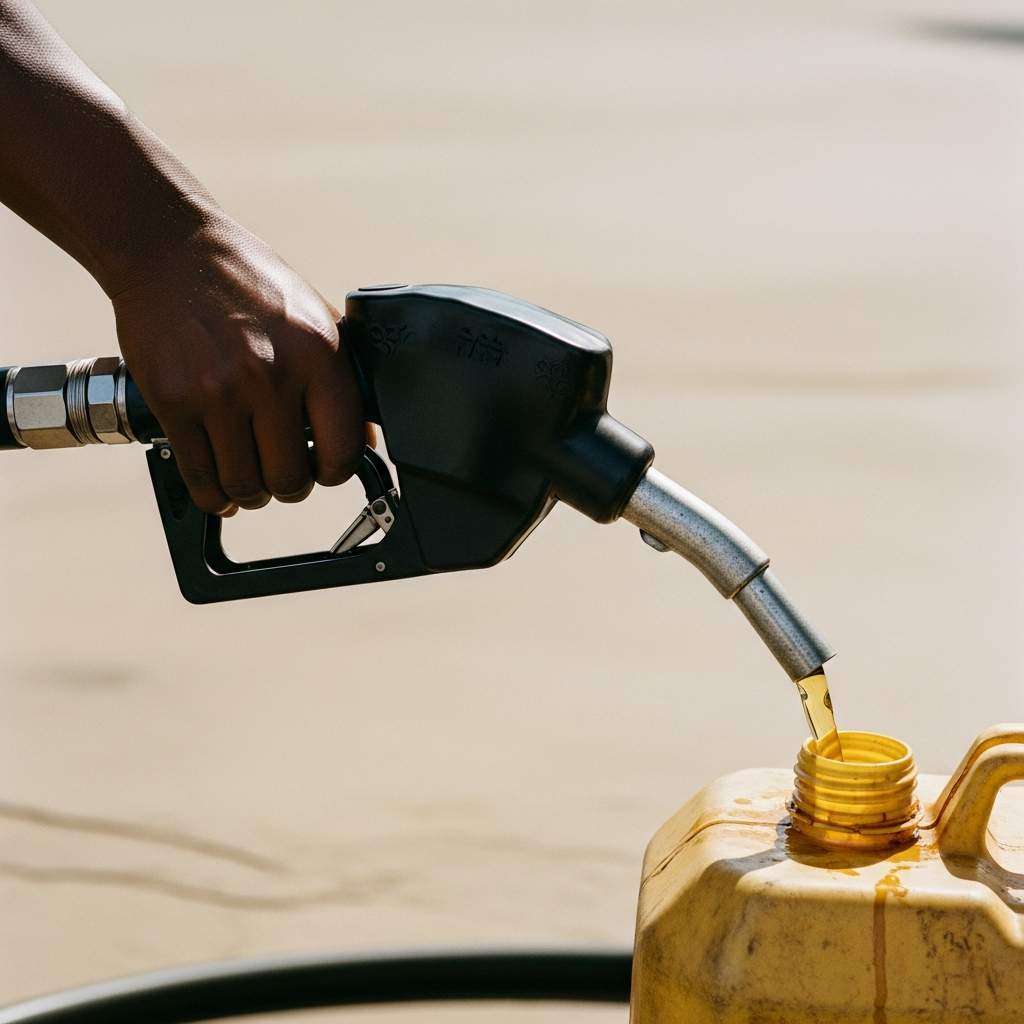
Petrol Hits N1,400/Litre as US-Iran War Strangles Nigeria
Published: 26 March, 2026
The price of Premium Motor Spirit reached N1,400 per litre at many retail stations across major cities on March 25, 2026. This price represents a 250% increase from the rate of N400 per litre that was common in early 2024. The immediate cause is a severe disruption in global crude oil shipments following military engagements between the United States and Iran in the Strait of Hormuz, a development reported by Reuters in 2026. For a country that imports the majority of its refined petroleum, this global shock has landed with full force on the streets of Lagos, Abuja, and Kano.
The Queue Returns, Longer and Angrier
Fuel queues of a length unseen since the 2022 subsidy crisis reappeared overnight. Stations belonging to the Nigerian National Petroleum Company Limited that still attempted to sell at lower prices were overwhelmed. NNPC retail outlets in Abuja and Lagos had queues stretching over three kilometers, causing gridlock that paralyzed business districts for hours, according to Premium Times in 2026. The situation at private stations was different. Many had product but priced it according to the new reality of international markets.
Independent marketers cited the crashing value of the Naira and the premium on foreign exchange needed to import petrol. The parallel market exchange rate crossed N2,100 to one US Dollar last week, as reported by Nairametrics in 2026. This rate is the benchmark for most fuel import transactions. Petrol hits N1,400/litre in Nigeria because the cost of the dollar determines the cost of the product. The arithmetic is brutal and simple for any marketer with a calculator.
“We are selling at a loss if we dispense at the old price. The cargo we expected is stuck, and the one we have must cover its cost. The government removed the subsidy, so we follow the market. The market today is war.”
— Chairman of the Independent Petroleum Marketers Association of Nigeria (IPMAN) in Lagos, speaking on March 24, 2026.
How a Distant War Chokes Local Supply
The Strait of Hormuz handles about 20% of global oil trade. Military action there has caused shipping insurance premiums to skyrocket and forced tankers to seek longer, costlier routes. Nigeria, which still imports over 70% of its refined petrol despite having four refineries, is at the end of a very fragile supply chain, a fact highlighted in the NNPC Monthly Financial and Operations Report of 2025. The Dangote Refinery, designed to ease this dependency, has faced operational challenges in ramping up to full capacity for petrol production.
Officials at the Nigerian Midstream and Downstream Petroleum Regulatory Authority confirmed a 40% drop in the volume of PMS imports received in the ports of Lagos in the last ten days. This shortage is the root of the queues and the price spike. The authority issued a statement urging calm and promising that vessels were being rerouted, but gave no specific timeline for relief, according to an NMDPRA Official Bulletin from 2026. In the meantime, the black market flourishes. Jerrycans of fuel now sell for as much as N2,000 per litre in areas with total station dry-outs.
The Ripple Effect on Everything Else
Transport costs doubled within 48 hours. The fare for a bus ride from Lagos Island to Ikeja jumped from N500 to N1,200. Food prices, already elevated, received another push. A market survey in Mile 12 Market, Lagos, showed the price of a basket of tomatoes increase by 30% in two days, directly attributed to higher transport costs from the north, according to a BusinessDay Market Survey from 2026. The headline inflation rate, which was at 31.7% in February 2026, is certain to climb higher when the National Bureau of Statistics releases its March report.
Small businesses that rely on generators face existential threats. A barber shop owner in Port Harcourt explained his diesel generator now costs over N25,000 daily to run, against daily earnings of about N15,000. The math forces a closure. The Manufacturers Association of Nigeria warned that production costs would become unsustainable, potentially leading to more factory shutdowns and job losses, as stated in a MAN Press Release from 2026. The economic shock from petrol hits N1,400/litre in Nigeria moves far beyond the fuel station.
“This is a textbook external shock. Our vulnerability is a direct result of decades of underinvestment in domestic refining capacity and strategic fuel reserves. We are always one global crisis away from a national emergency.”
— Dr. Muda Yusuf, Chief Executive Officer of the Centre for the Promotion of Private Enterprise, in an interview with Channels TV on March 25, 2026.
The Silence from the Refineries is Deafening
This crisis raises persistent questions about the state of the nation’s refineries. The government announced the successful rehabilitation of the Port Harcourt Refining Company in 2024. The plant has yet to produce petrol at a scale that impacts the market. The Warri and Kaduna refineries remain in various stages of attempted revival. The total public spending on refinery rehabilitation in the past five years exceeds N500 billion, according to the Reports of the Auditor-General for the Federation from 2025.
The Dangote Refinery exports a large portion of its diesel and aviation fuel but its petrol production streams are still intermittent. Company executives state they are in the test-running phase for PMS and aim for stability by the second quarter of 2026, as detailed in a Dangote Industries Statement from 2026. For the average Nigerian, these are technical details. The reality is that none of these large facilities is providing a buffer against this price shock. The promise of energy independence feels as distant as ever.
What the Government Can Do Today
The federal government has limited options. Reintroducing a broad fuel subsidy would require funds the treasury lacks. The 2026 budget has no line item for subsidy payments. One immediate measure would involve the Central Bank of Nigeria creating a special foreign exchange window for verified fuel importers. This action could temporarily decouple the fuel price from the parallel market rate. The CBN used a similar mechanism during the COVID-19 pandemic for medical imports.
Another step is the immediate activation of any existing strategic stockpile. The NNPC is mandated to hold a strategic reserve equivalent to 90 days of consumption. The visibility and availability of this reserve during crises are often unclear. A public audit and a transparent release of stocks to selected retailers at a moderated price would help break the psychology of scarcity, a measure outlined in the Energy Security Policy Framework of 2021. It would show a responsive government.

The Long Road Ahead After the War Ends
Even when the Strait of Hormuz reopens for safe passage, the structural problems remain. The economy of Nigeria is wired to run on imported petrol. Every geopolitical tremor in the oil-producing world sends a voltage surge through this system. The solution is domestic production. Not just from the Dangote Refinery, but from the public refineries and from new modular refineries. Policy must incentivize investment in this sector with the urgency of national security.
The second solution is a serious push for alternative energy. Solar power for homes and small businesses, and compressed natural gas for vehicles. The Presidential CNG Initiative launched in 2024 has made slow progress. A crisis like this provides the political impetus to accelerate it. Every bus and taxi that runs on CNG is a vehicle that is immune to the price of petrol. The transition requires upfront investment, but the long-term payoff is insulation from global oil shocks.
“We are in a permanent state of petrol crisis management. We move from subsidy removal to price surge to scarcity, and the cycle continues. The conversation must shift from price per litre to energy per citizen. How do we power this country without importing every drop of fuel? That is the only question that matters.”
— Prof. Yemi Oke, an energy law expert at the University of Lagos, writing in The Guardian on March 26, 2026.
A Harsh Lesson in Global Interdependence
The events of the past week demonstrate a harsh truth. A conflict between two nations thousands of miles away can determine the cost of a Nigerian worker’s commute, the price of a meal, and the survival of a small business. The phrase “global village” is often an abstraction. For Nigerians today, it is a concrete reality with a price tag of N1,400 per litre. The vulnerability is total.
This moment will pass. Tankers will find new routes, insurance premiums will fall, and global supply will adjust. The price of petrol hits N1,400/litre in Nigeria will likely retreat. The danger is treating the retreat as a solution. The real work begins when the queues disappear. The work of building a resilient energy system that serves the people, not one that enslaves them to the volatility of global conflicts. The alternative is to wait for the next shock, which will certainly come.
Check Your Generator’s Health
For households and businesses, the immediate focus is endurance. A practical step is servicing backup power systems. A well-maintained generator or inverter system uses fuel more efficiently. A clogged air filter or old spark plugs can increase fuel consumption by 20%. Scheduling a mechanic’s visit this week is a direct action that conserves scarce resources and money. It is a small measure of control in an unstable situation.
Another step is community coordination for essential trips. Carpooling to markets or workplaces reduces the collective fuel burden. These are survival tactics, not solutions. They highlight the daily ingenuity Nigerians employ to navigate failures in the larger system. That ingenuity is a national resource. The hope is that one day it will be channeled into building rather than just enduring.

Staged Kidnapping Case Reveals Family Extortion Trend in Nigeria

Fani-Kayode Says Opposition Has Collapsed – A 2026 Reality Check

Broda Shaggi Recuperating After Sango-Ota Shooting Incident

Terrorists Kill in Nigeria as 2,266 Die in Six Months

Multinational Exodus in Nigeria Deepens with N94 Trillion Loss

Food Crisis Looms in Nigeria as Climate Change Devours Farm Yields

Dangote Refinery Helpless as Fuel Price Hikes Defy Local Production

Deadly Diseases in Nigeria Meningitis Diphtheria Cholera Outbreaks

Lassa Fever Spreads in Nigeria to 18 States as Response Gaps Emerge

Ibadan Tanker Explosion in Nigeria Leaves Two Dead After Horror Crash

Petrol Hits N1,400/Litre in Nigeria as Global Conflict Disrupts Supply

Horror in Kano Sand Pit Collapse Buries People Alive

Internet Sovereignty: Why Some Countries Want Their Own Separate Internet

The Story Of The Nigerian Who Helped Build Global Internet Systems

Nigerian Hackers: The Global Fraud Story and Its Fallout

Forgotten Satellites Defy Silence, Beaming Signals for Decades

Your Digital Store in Nigeria and the Reality of Domain Expiration

The Phone Stay So Quiet: An Investigation into Nigeria’s Silent Customer Lines

The Business That Died: A Nigerian Case Study in Refusal to Adapt

Hiding Your Business From People With Money

Comedy Industry in Nigeria and Its Economic Contribution

How Nollywood Grew Without Government Support

Nigeria Produces 67 Percent Global Yam Output

Nigeria’s Economic Shift: From Oil to the Creative Economy

 Edutech Portal1 month ago
Internet Sovereignty: Why Some Countries Want Their Own Separate Internet
- Edutech Portal1 month ago
The Story Of The Nigerian Who Helped Build Global Internet Systems
- Edutech Portal1 month ago
Nigerian Hackers: The Global Fraud Story and Its Fallout
- Edutech Portal1 month ago
Forgotten Satellites Defy Silence, Beaming Signals for Decades
- Edutech Portal1 month ago
Your Digital Store in Nigeria and the Reality of Domain Expiration
- Edutech Portal1 month ago
The Phone Stay So Quiet: An Investigation into Nigeria’s Silent Customer Lines
- Edutech Portal1 month ago
The Business That Died: A Nigerian Case Study in Refusal to Adapt
- Edutech Portal1 month ago
Hiding Your Business From People With Money