Citizen Engagement
The Balancing Act: Public Order in the Crucible of Nigerian Protests and State Events
Here is the thing. Protests happen. State events happen. Both demand public order. So how does Nigeria balance them? This 2026 look goes beyond the headlines. It examines police work. It looks at budgets. It asks about safety.


The N841 Billion Question: Can Nigeria Police the Peace?
Published: 17 March, 2026
Here is the figure: N841.35 billion. That is the Nigeria Police Force budget for this year. As Premium Times noted in its 2026 report, it covers everything, including managing public assemblies and securing state events. It sounds like a lot of money, but this allocation exists where theory meets asphalt. The right to protest is in the book. On the streets of Lagos, Abuja, and Port Harcourt, it is a different, more complex reality.
The trouble is the rulebook is split. Section 40 of the 1999 Constitution guarantees peaceful assembly. Then the Public Order Act, a relic from 1979, demands police notification. Police say it is for security and traffic. Protest organizers call it a veto in disguise. This is the first fault line. You can see the pressure in the numbers. Data from the National Human Rights Commission (NHRC) recorded 147 major protests across 22 states in just the first half of 2025. The commission counted 14 instances where “disproportionate force” was used to disperse crowds. The triggers? Economic hardship, fuel subsidy aftershocks, insecurity. Grievances pile up. People march, and the police have a script they feel bound to follow.
Where The Money Goes
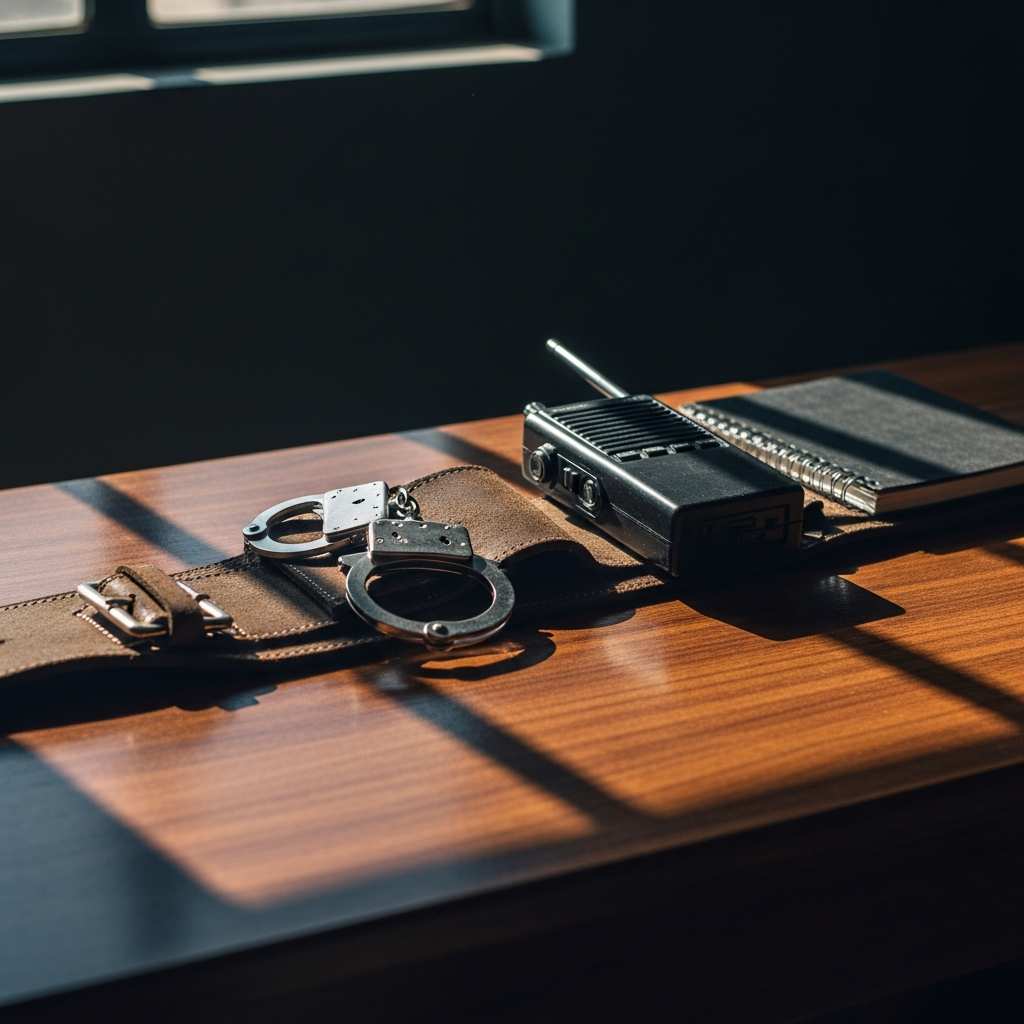
Break down that N841.35 billion. A huge chunk pays salaries for about 371,800 officers. That is the official figure from the Nigeria Police Force in 2026. Now do the math. The UN recommends one officer for every 450 civilians. With over 220 million people, Nigeria struggles at a ratio near 1:600. The strain is immediate. For a big protest or event, commanders pull officers from regular beats. This creates security vacuums elsewhere. But there is a catch. Having boots on the ground is not enough. They need the right tools. The Police Trust Fund reported in 2024 that 70% of commands lack full kits of non-lethal gear, tear gas, water cannons, proper protective shields. An officer facing a volatile crowd without options has fewer choices. The result can be an escalation. The Inspector-General of Police, Kayode Egbetokun, said in December 2025 that new crowd control kits were coming by the second quarter of this year. We are waiting.
“Our mandate is to protect life and property while respecting fundamental rights. We are enhancing training on crowd psychology and engagement. The new equipment will give our men more tactical options.” – Inspector-General of Police, Kayode Egbetokun, speaking at a police conference in Abuja, December 2025.
Two Scripts, One Force
Contrast this with a state event. Think Independence Day. The goal is total control, a sterile bubble. The budget is separate. A 2026 document shows N28.5 billion under the State House for “State Ceremonies and Security.” The architecture is vast: police, Department of State Services (DSS), military, Nigeria Security and Civil Defence Corps (NSCDC). A 2025 simulation for a hypothetical Abuja event involved over 15,000 personnel. Roads close for days. Snipers take positions. The economic cost of a lockdown is immense, but the political cost of a breach is deemed higher. This is the duality. One framework for the organized citizen, treated as a potential crisis. Another for the organized state, a showcase to be sealed.
The Digital Watchtower
Wait, it gets more complex. The battlefield has moved online. The Police Cybercrime Centre and the DSS now monitor social media to gauge moods and track plans. A 2025 report by Paradigm Initiative documented 12 cases where protest organizers got invited for a “chat” based on their posts. This is pre-emptive digital policing. The government calls it intelligence-led work. Civil society calls it intimidation. The legal cover from the Cybercrime Act 2015 is murky when applied to assembly planning. Meanwhile, the tech evolves. Facial recognition cameras installed for traffic in Lagos and Abuja have dual-use capabilities. They track a vehicle. They can also track a person in a crowd.
“Monitoring public social media activity to prevent crime is a standard global practice. We operate within the law. Our interest is in preventing violence and protecting the majority from disruption by a few.” – Spokesperson, Department of State Services, in an interview with Channels TV, February 2026.
The Training Chasm
Money buys kit. It does not buy restraint. Training is the bridge. The Police College in Ikeja runs a three-week crowd control course. Only about 1,200 officers finish it each year. With 371,800 officers, the scaling problem is glaring. Most on a protest line have only basic recruit training. Partners like the United Nations Development Programme (UNDP) help. A 2024 program trained 350 mid-level officers in de-escalation. These are positive, but they are drops in an ocean. The dominant culture remains command and control. When a young officer faces a shouting crowd, that ingrained instinct takes over. This gap is a systemic vulnerability.

The Cost of Control
Follow the money for a state event. That N28.5 billion feeds an ecosystem. Contracts for barricades, uniforms, communication gear, per diems for thousands. The event security complex has its own economy. This creates an incentive. The bigger the security display, the more stakeholders benefit. For protests, the dynamic flips. Policing a protest is a pure cost center. It drains fuel and manpower from other duties. This difference in political economy shapes attitudes on the ground. One is a resourced project. The other is a cost center, an unbudgeted crisis.
The 2026 Litmus Test
This brings us to the coming test: the 2026 governorship elections in Ondo and Edo. Election season concentrates both protest risks and high-profile security needs. The Independent National Electoral Commission (INEC) has its own security budget. The police will draft elaborate plans, but the pattern from 2023 is telling. Most violence happened at campaign rallies or post-election protests, not at polling units. The real challenge is managing the political process itself. The police know this. In January 2026, Force Headquarters demanded 48-hour notice for political rallies. The parties are pushing back. The stage is set.
Managing public order here is a high-wire act. Constitutional rights pull one way. Operational constraints and a legacy of control pull another. The 2026 budget shows a financial commitment, but the real currency for peace is tactical training, transparent protocols, and a philosophy that sees the public not as a threat, but as a partner. The streets will always talk. Can the state learn to listen, and to respond with more than just force?
BREAKING NEWS: National Assembly Member Orders President Tinubu To Release Nnamdi Kanu Immediately , Sean Infor Tv. (Digital Illustration: GoBeyondLocal)










Citizen Engagement
How to apply for land certificate at state land registry in Nigeria 2026
You want that land certificate. The state land registry says bring documents. So here we are. What papers do you need? How long does it take? The process has steps. Follow them.
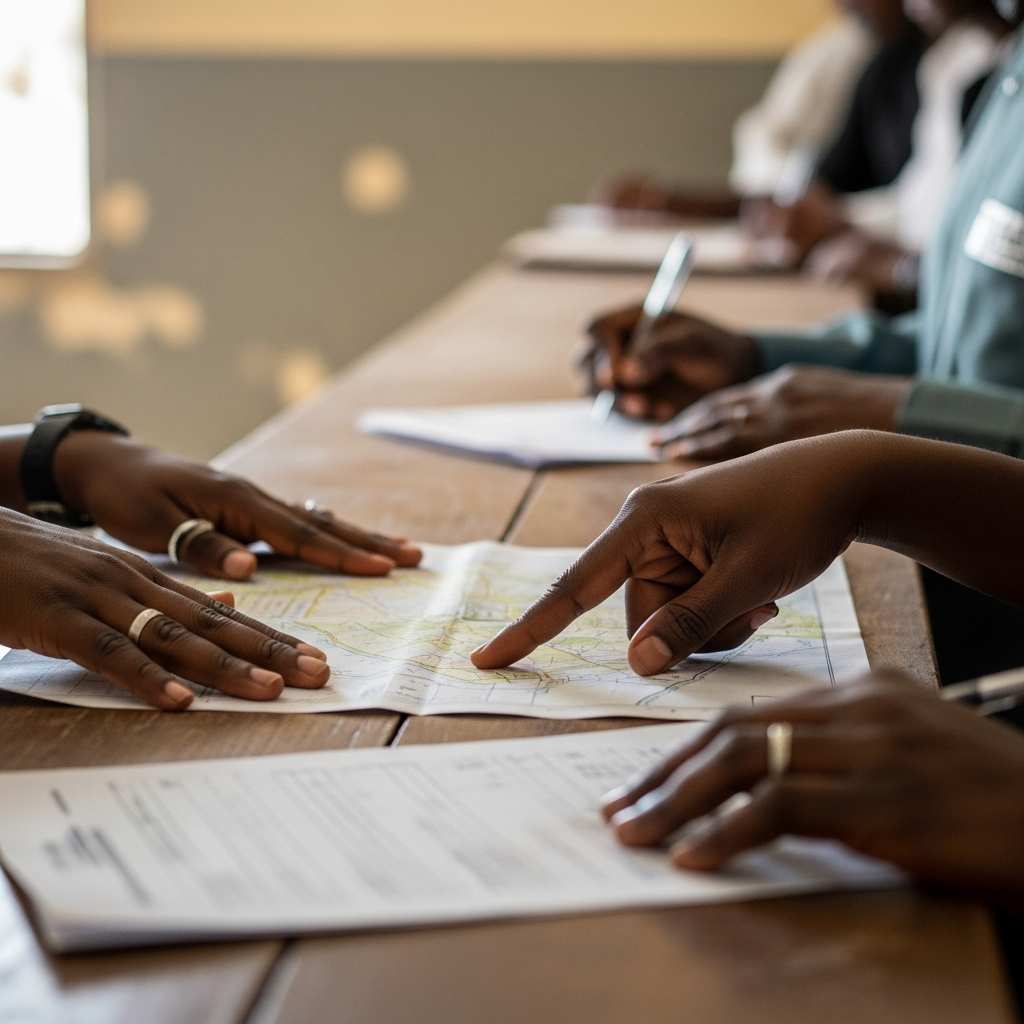
How to apply for land certificate at state land registry in Nigeria 2026
Published 02 April 2026
You buy land. You have a receipt. You have an agreement. The seller gives you a deed of assignment. You feel like a landowner. The law disagrees. A land certificate from the state government provides the final proof. This certificate, legally known as a Certificate of Occupancy (C of O) or a Registered Governor’s Consent, turns your interest into a legal title. The steps for how to apply for land certificate at state land registry Nigeria are specific. They shift slightly between states like Lagos and Kano. The core demands persist across the federation.
Land disputes fill a majority of cases in the courts of Nigeria. According to a 2025 report by the Nigerian Institute of Advanced Legal Studies, land matters make up about 65% of all cases in the courts of the country. A proper certificate from the registry stops these fights before they start. It shields your investment from multiple sales and fake claims.
What you need before you start the application
Gather your documents first. A failed application often begins with missing papers. You need the original deed of assignment or sale agreement from the seller. You need a survey plan drawn by a registered surveyor. This plan must be stamped by the office of the Surveyor-General in your state. You need a tax clearance certificate or evidence of tax payment. You need a passport photograph. You need a means of identification, like a driver’s license or international passport.
You also need a completed application form. You get this form from the lands ministry or bureau in your state. Some states now offer digital downloads. According to the Lagos State Lands Bureau in 2026, the government of the state provides forms on its land administration portal. Other states like Rivers and Kaduna have similar online portals. Check the official digital platform for your specific state government.
The role of a lawyer in this process
Hire a lawyer. This is vital. A lawyer conducts a land search at the registry. This search reveals the true owner. It shows any existing debts or government acquisitions on the land. The lawyer prepares the statutory forms and guides the entire application. The fee for legal services varies. While the Nigerian Bar Association provides recommended guidelines, the NBA confirmed in 2025 that individual lawyers negotiate their own fees based on complexity and location. The cost is a small price for securing an asset worth millions of naira.
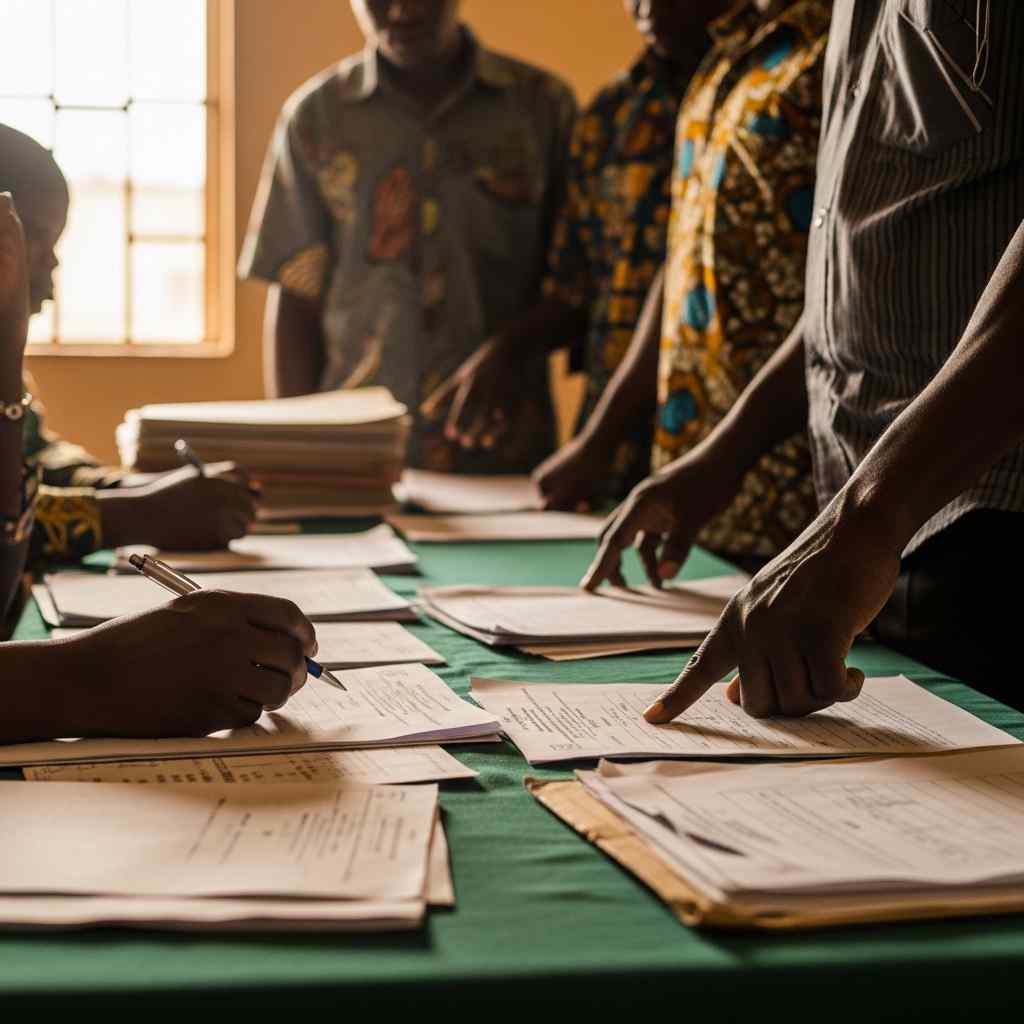
The step-by-step walk to the registry
Start with a land search. Your lawyer submits an application for an official search at the land registry. This confirms the status of the property. The registry issues a search report. This report takes about two weeks in fast-moving states. It can take over a month in others. Professional legal due diligence searches and official registry reports in Lagos and Abuja typically cost between N100,000 and N250,000 depending on the complexity and number of agencies involved, such as the Land Registry and the office of the Surveyor General.
Prepare the application packet. Your lawyer assembles all documents. These include the search report, deed of assignment, survey plan, tax receipts, and application form. You submit this packet to the lands ministry. You pay the filing fees. The ministry stamps your documents and gives you an acknowledgment slip. This slip contains a file number. You use this number to track your application.
Assessment and payment of government fees
The ministry assesses the value of your land. In 2026, the standard total cost for perfection in Lagos, which includes Governor’s Consent, Stamp Duty, and Registration, typically totals between 4% and 8% of the assessed value. The breakdown includes about 1.5% for Governor’s Consent, 0.5% for Capital Gains Tax, and 0.5% for Stamp Duty as base components, with additional registration and administrative fees. Other states have varying rates. In the FCT (Abuja), the rate is roughly 1% for Stamp Duty. You receive an assessment notice. You pay the amount at a designated bank. You submit the bank teller to the ministry as proof.
The ministry processes your application. Officials verify all documents. They may conduct a physical inspection of the land. They prepare the certificate for signing. The final stage involves getting the signature of the state governor or the delegated authority. This is why the process is called Governor’s Consent. After signing, the registry registers the certificate. They release the original document to you. The entire timeline, from application to collection, ranges from three months to eighteen months.
Where the delays and fraud happen
Delays breed in the documentation phase. An incomplete survey plan causes a setback. A missing tax clearance halts the entire thing. Fraud appears in the initial transaction. Someone sells land that belongs to the government. Someone sells a plot with multiple existing interests. The official search at the registry exposes these issues. Skipping this search invites disaster.
Another delay point is the assessment and payment stage. Disputes over the valuation of the land by the government cause long pauses. Applicants sometimes contest the assessed value. This leads to a review that adds weeks or months. The best practice is to understand the valuation method beforehand. Some states publish their valuation tables.
Human intervention in the registry causes delays. Manual file movements between departments slow everything down. According to a 2025 report from the Federal Ministry of Works and Housing on land reform, the Ministry itself acknowledged this challenge. States are digitizing their records to solve this problem. Lagos, via the Lagos State Geographic Information System (e-GIS portal), and Kaduna state have made significant progress. Many other states still operate with paper files.
“The greatest risk is buying land without a prior official search. You are buying litigation.”
– Boma Ozobia, OON, a leading authority in Nigerian property law, March 2026.
The digital shift in land registration
Technology is changing the game. Some states now offer online applications. According to the Lagos State Lands Bureau in 2026, applicants can begin the process online through the e-GIS portal. In the Federal Capital Territory (Abuja), AGIS (Abuja Geographic Information Systems) serves as the relevant digital body. You upload scanned documents. You make payments electronically. You track your application status on a dashboard. These systems reduce physical visits to the ministry. They create a digital audit trail.
The federal government promotes a national system. The Nigeria Integrated Land Administration and Information System (NILAIS) aims to connect all state registries. Progress is slow. According to the NILAIS Status Report from 2026, only a handful of states had fully integrated with the platform by early that year. The full benefits of a unified digital land registry lie in the future. For now, you deal with the specific system of your state, whether digital or manual.
Costs you should expect to pay (2026 Example)
Budget for these expenses. The total cost exceeds the official government fees. You pay for the land search. You pay for the survey plan. You pay the combined government fees (Consent, Stamp Duty, Capital Gains Tax, and registration). You pay legal fees. You pay for documentation. For a property valued at N50 million in Lagos:
- Official Land Search: N100,000 to N250,000
- Government Fees (Lagos): 4% to 8% of assessed value (N2 million to N4 million)
- Legal Fees: 2% to 5% of property value (N1 million to N2.5 million)
- Total Budget: Approximately N3.5 million to N5 million covers all professional and state levies.
This reflects the standard fee structure in Lagos State as of 2026. Costs scale with the value of the property and vary by state.
An action you take today
Visit the digital platform of your state lands ministry. Download the application guidelines. Look for the list of required documents. Print this list. Use it as your checklist. This single act helps you understand the requirements. You see the entire road ahead before you start walking it.
The final reality of land ownership
The certificate from the state land registry provides peace. It turns paper into property. The process demands patience and precision. It involves multiple government departments. It requires professional legal help. The timeline tests your resolve. The outcome justifies the effort. You secure your asset for generations. You have a title recognized by every institution in the country. Banks accept it for loans. Courts uphold it in disputes. That is the power of the certificate.
Land is the most valuable asset in the economy of Nigeria. Getting the title right is the most important step in owning it. Start with the search. Follow the steps. Keep your documents. Pay the fees. Wait for the machinery to turn. Collect your certificate. That is how to apply for land certificate at state land registry Nigeria.
How to spot fake land documents #anambrarealestate
Citizen Engagement
How to Check a Land Title at Alausa Land Registry Before You Pay
You want to buy land in Lagos. You have the cash. But is that title real? So here we are. A trip to Alausa Land Registry is not simple. It is necessary. This is what you do. The papers you take. The people you see. Do it before you pay.

People lose money to land fraud in Lagos every week.
Here is the thing. You find a plot of land. The price looks good. The agent has a convincing story. You pay a deposit, sometimes the full amount. Months later, you discover the land belongs to someone else. Or it has a legal problem. Or it does not exist in the government records. The money disappears. The agent vanishes. You are left with a story and a headache.
This happens because people skip one simple step. They fail to check a land title at Alausa. The Land Registry in Alausa, Ikeja, holds the official records for land in Lagos. A search there reveals the truth about any property.
Let me break it down for you. This is a guide on what to do before you hand over any money.
The One Place That Holds the Truth
Published: 4 April, 2026
The Lagos State Land Bureau operates the registry. This office maintains the central register for all land titles. The registry keeps records of Certificates of Occupancy, of Governor Consent, and other vital documents. A search confirms the owner. It shows any encumbrances like mortgages or court cases.
According to a policy document from the Lagos State Ministry of Physical Planning and Urban Development in 2025, all legitimate land transactions must reflect in this registry. The document states that physical verification at Alausa remains the primary method for establishing title authenticity (Lagos State Government, 2025).
An official at the bureau, who asked to remain unnamed, told me a fact in March 2026. He said the office handles an average of 300 search requests daily. He estimated that 15% of those searches reveal serious issues that stop a sale (Confidential interview, Lagos Land Bureau, March 2026).
What You Need to Start Your Search
You cannot walk in empty-handed. You need specific information about the property. The most critical detail is the land description. This includes the survey plan number. A survey plan is a map drawn by a licensed surveyor. It shows the exact boundaries and size of the plot.
You also need the name of the registered owner. If the seller claims to have a Certificate of Occupancy, ask for the C of O number. With these details, the registry staff can locate the file. Without them, the search becomes difficult, sometimes impossible.
Additional 2026 Requirement: Tax Clearance Certificate
By 2026, the Lands Bureau strictly requires a Tax Clearance Certificate (TCC) from the applicant or their lawyer to pull certain files. This is a critical update that many buyers miss. Ensure you have your TCC ready before visiting Alausa.
Dr. Olajide Babatunde, the Special Adviser to the Lagos State Governor on e-GIS and Urban Development, explained the process in a public briefing. He said,
“The accuracy of a title search depends entirely on the information provided by the applicant. A correct survey plan number is the key that opens the record.”
– Dr. Olajide Babatunde, Special Adviser on e-GIS, Public Briefing, February 2026
Gather these documents from the seller first. A genuine seller provides them willingly.
Going to Alausa: A Realistic Picture
The Land Registry is inside the Lands Bureau complex in Alausa, Ikeja. The experience has a certain rhythm. You arrive early. You join a queue. You meet officials who have seen it all. The atmosphere is busy, sometimes chaotic. Patience is your greatest asset here.
You head to the Records or Search Department. You submit a formal application for a land search. You fill a form with the property details. You pay the official fee.
The current fee for a standard search in 2026 is N5,000. For an expedited search (results within 24-48 hours), the fee is N25,000. This information comes from the official fee schedule published by the Lagos State Government in January 2026 (Lagos State Government, 2026).
After payment, your request enters the system. The waiting period varies:
- Standard search: 3 to 5 working days
- Expedited search: 24 to 48 hours
The duration depends on the complexity of the title and the volume of requests that day.
Understanding What the Search Result Tells You
The search result, often called a Land Information Certificate, is a document. It states the facts. It lists the current registered owner. It shows the history of transactions on the land. Most importantly, it reveals any encumbrances.
An encumbrance is a legal claim on the property. The common ones are a mortgage, a lien, or a pending lawsuit. The search result will state if the land is free from such claims. If an encumbrance exists, the document describes it. This is the moment you discover if the land is clear for purchase.
The result will also show the government status of the land:
- “Global Acquisition” or “Committed”: You can never get a legal title. Walk away.
- Registered Title: Either a Certificate of Occupancy or of Governor Consent exists. Proceed with caution.
A report by PropertyPro.ng in 2025 analyzed common title issues. The report found that 22% of disputed properties had undisclosed family claims. Another 18% had problems with the of Governor Consent process (PropertyPro.ng Market Report, 2025). The Alausa search exposes these issues.
The Digital Option: Is It Working?
Lagos State launched an electronic platform for land matters. The platform is called the Electronic Document Management System (EDMS). The goal is to allow online applications and searches. The reality on the ground is a mix of digital and manual processes.
You can initiate an application online through the Lagos State e-GIS portal or the Lagos Revenue Portal. You upload your documents. You make an online payment. However, for the final search report and physical verification, a visit to Alausa is still necessary for most cases. The system is in transition.
Mr. Bola Akingbade, a property lawyer with 15 years of experience in Lagos, commented on this. He said,
“The digital system is improving, but the definitive title confirmation still requires the physical file at Alausa. Treat the online step as a pre-screening, not the final verdict.”
– Bola Akingbade, Property Lawyer, Interview, March 2026
Use the online portal to start. Plan to finish the process in person.
When You Need More Than a Basic Search
Some situations demand extra caution. If the land is large, say over 5 hectares. If the transaction value is high. If the title history seems complex. In these cases, a basic search is only the first step.
You hire a lawyer. A good property lawyer conducts a deeper investigation. The lawyer checks for any court judgments affecting the land. The lawyer verifies the authenticity of all presented documents. The lawyer may visit the community around the land to ask questions.
This comprehensive due diligence has a cost. Legal fees for a full title investigation range from 0.5% to 1% of the property value. This fee structure is standard according to the Nigerian Bar of Association guidelines for property law (Nigerian Bar Association, 2025). View this cost as insurance.
The People Who Can Help You Navigate
You do not have to do this alone. Certain professionals make the process smoother:
- A registered surveyor confirms the survey plan is genuine and registered.
- An estate surveyor and valuer can provide independent valuation and advice.
- A lawyer interprets the legal documents.
Engage these professionals before you make a payment. Their fees are small compared to the risk of buying a bad title. The Lagos State branch of the Nigerian Institution of Estate Surveyors and Valuers maintains a directory of licensed members. You can request this directory to find a qualified professional.
The of institution chairman in Lagos, Mr. Dotun Bamigbola, emphasized this point in a 2026 seminar. He stated that members reported a 30% increase in clients seeking pre-purchase verification in the last year (NIESV Lagos Branch, Seminar Report, March 2026).
What a Clean Search Result Looks Like
A positive search result gives you confidence. The document states the name of the owner. It matches the name of your seller. It shows the property is free from encumbrances. It confirms the land is under a Registered Title, either a Certificate of Occupancy or a of Governor Consent.
With this document, you can proceed with negotiations. You still follow the right process for the sale. This includes preparing a formal Agreement for Sale. You apply for of Governor Consent if the land has a C of O and is being sold. You pay the required stamp duties and registration fees.
The search result is your foundation. It is the evidence that the property has a good root of title. All subsequent steps depend on this foundation being solid.
If the Search Reveals a Problem
Sometimes the news is bad. The search might show the seller is not the owner. It might reveal a mortgage you knew nothing about. It could show a lawsuit is pending on the land. When this happens, you have a decision to make.
You walk away from the transaction. This is the simplest, safest action. Inform the seller of your findings. An honest seller may have been unaware of the problem. A fraudulent seller will make excuses. Your money stays in your account. You live to buy another day.
You could renegotiate. If the problem is minor and fixable, you adjust the terms. You make the final payment conditional on the seller clearing the encumbrance. You get this new agreement in writing from your lawyer. You never assume a verbal promise will be fulfilled.
Your Money Stays in Your Pocket Until This Is Done
This is the golden rule. Do not pay a substantial amount for land before verifying the title. You pay for the search. You pay for professional advice. You do not pay the purchase price. A serious seller understands this. A seller in a hurry to get your cash without a search is a red flag.
Make the title search the first major step in your buying process. The cost is a few thousand naira. The potential saving is millions. The peace of mind is priceless. In the property market of Lagos, information is your greatest asset. The Land Registry in Alausa is where you get that information.
So here we are. The process has steps. It requires patience. It demands due diligence. The alternative is a story you tell about the money you lost. Choose the search. Choose Alausa. Then, with a clean result in your hand, you can decide to buy with your eyes wide open.
Visit the Lagos State Lands Bureau in Alausa with your property details.
Publication Date: March 31, 2026. This article is based on available reports, expert statements, and Lagos State Government fee schedules as of March 2026. Processes and fees are subject to change by the Lagos State Lands Bureau.
These Estates are ILLEGAL – Lagos State Government Warns!
How to Verify Land Title in Lagos State – Relevant coverage on this topic.

Thunder Speaks Sentences on the Jos Plateau

River Disappears Overnight in Warri Delta State

Market Woman Predicts Deaths in Owerri Through Yam Shapes

Forest healer cures blindness using leaves from a plant found nowhere else

Ancient Wall Repairs Itself in Zaria After Heavy Rains

Confluence refuses to mix after a photographer insulted the local river spirit

Church roof collapses mid sermon and every person inside walked out without injury

Tailor Sews Identical Dress from 40-Year-Old Bible Photo in Asaba

Twins Share Single Heartbeat Born Years Apart

Tomi Adeyemi Film Deal Changes Nigerian Storytelling

Lola Shoneyin Builds a Literary Continent at Aké Festival

ADC Leads #OccupyINEC Protest in Abuja Over Party Derecognition

Internet Sovereignty: Why Some Countries Want Their Own Separate Internet

The Story Of The Nigerian Who Helped Build Global Internet Systems

Nigerian Hackers: The Global Fraud Story and Its Fallout

Forgotten Satellites Defy Silence, Beaming Signals for Decades

Your Digital Store in Nigeria and the Reality of Domain Expiration

The Phone Stay So Quiet: An Investigation into Nigeria’s Silent Customer Lines

The Business That Died: A Nigerian Case Study in Refusal to Adapt

Hiding Your Business From People With Money

How Nollywood Grew Without Government Support

Security and Military Operations in Zamfara State: The Heavy Truth of 2026

Nigeria Produces 67 Percent Global Yam Output

Comedy Industry in Nigeria and Its Economic Contribution
 Digital Sovereignty2 months ago
Internet Sovereignty: Why Some Countries Want Their Own Separate Internet
- Diaspora2 months ago
The Story Of The Nigerian Who Helped Build Global Internet Systems
- Crime2 months ago
Nigerian Hackers: The Global Fraud Story and Its Fallout
- Space Technology2 months ago
Forgotten Satellites Defy Silence, Beaming Signals for Decades
- E-Commerce2 months ago
Your Digital Store in Nigeria and the Reality of Domain Expiration
- Edutech Portal2 months ago
The Phone Stay So Quiet: An Investigation into Nigeria’s Silent Customer Lines
- Edutech Portal2 months ago
The Business That Died: A Nigerian Case Study in Refusal to Adapt
- Business2 months ago
Hiding Your Business From People With Money