Advocacy
Chigozie Obioma International Booker Prize 2026
Chigozie Obioma finds himself on the International Booker Prize shortlist again in 2026, a quiet nod to stories that live between worlds and the patient work behind them.

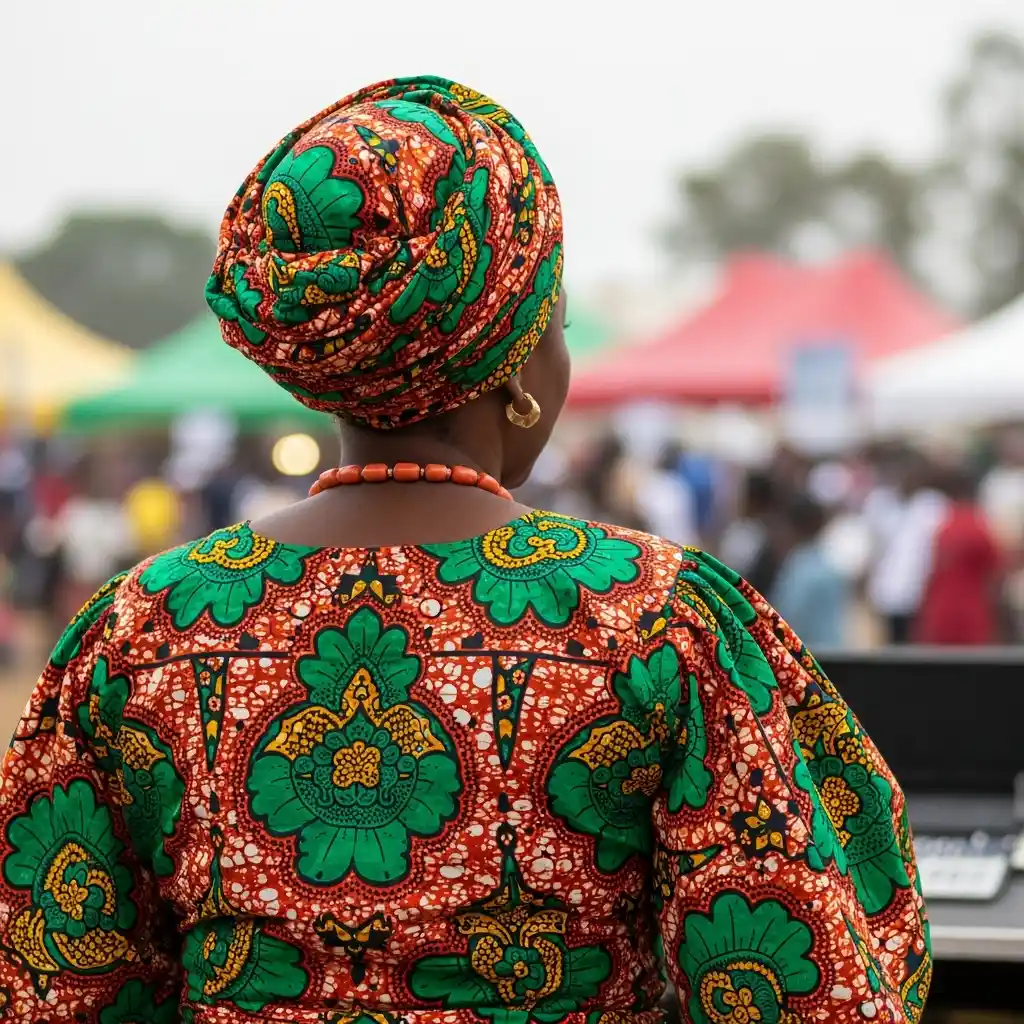
Chigozie Obioma International Booker Prize 2026
Published: 13 April 2026
Chigozie Obioma was on the list again when it came out on April 7, 2026, a familiar name among writers from Argentina and South Korea and Germany all looking for that prize for fiction brought into English. You hear about these things quietly, maybe over a cup of tea, when someone mentions a name you know has landed somewhere important. It felt like a small, proper celebration for people who care about books here, and Lola Shoneyin from the Ake Arts and Book Festival called it a win for African stories the very next day. He had done this before in 2019 with An Orchestra of Minorities, a book that went far and reached the National Book Award in the United States, so his new one walking the same ground where old myths meet the modern street made a certain kind of sense.
The real prize
The official money is £50,000, split between the writer and the translator, but the real prize is something else entirely. It is eyes on the page from places that might not have looked before, a chance for a story from Nigeria to sit at a much bigger table. Winners like Olga Tokarczuk found new readers everywhere, and for a writer from here, it quietly changes the whole conversation. Eleanor Catton is leading the judges this year and called the list daring in the official announcement, so the panel with people from five countries has a hard job picking just one.
Between two worlds
He teaches writing at the University of Nebraska-Lincoln, living between there and here, and his work takes a kind of time you do not see often. Chigozie Obioma digs into history and the stories of the Igbo world with a patient hand, and his first book, The Fishermen, won awards back in 2015 and even became a play in the United Kingdom. People remembered it, and this new book that made the list for 2026 feels familiar in the very best way, a family story with the weight of old tragedy that early readers say is built with deep care.
A global shortlist
Six books made the cut from Nigeria, Argentina, South Korea, Germany, Sweden, and Japan, with two of the writers having won before. The book from Argentina talks about memory under a dictatorship, and the one from South Korea looks at loneliness in a digital age, with the judges liking the way they all used language. You can see the whole list online, of course, and they will say who won on May 21, 2026, in London with a live show for everyone to watch.
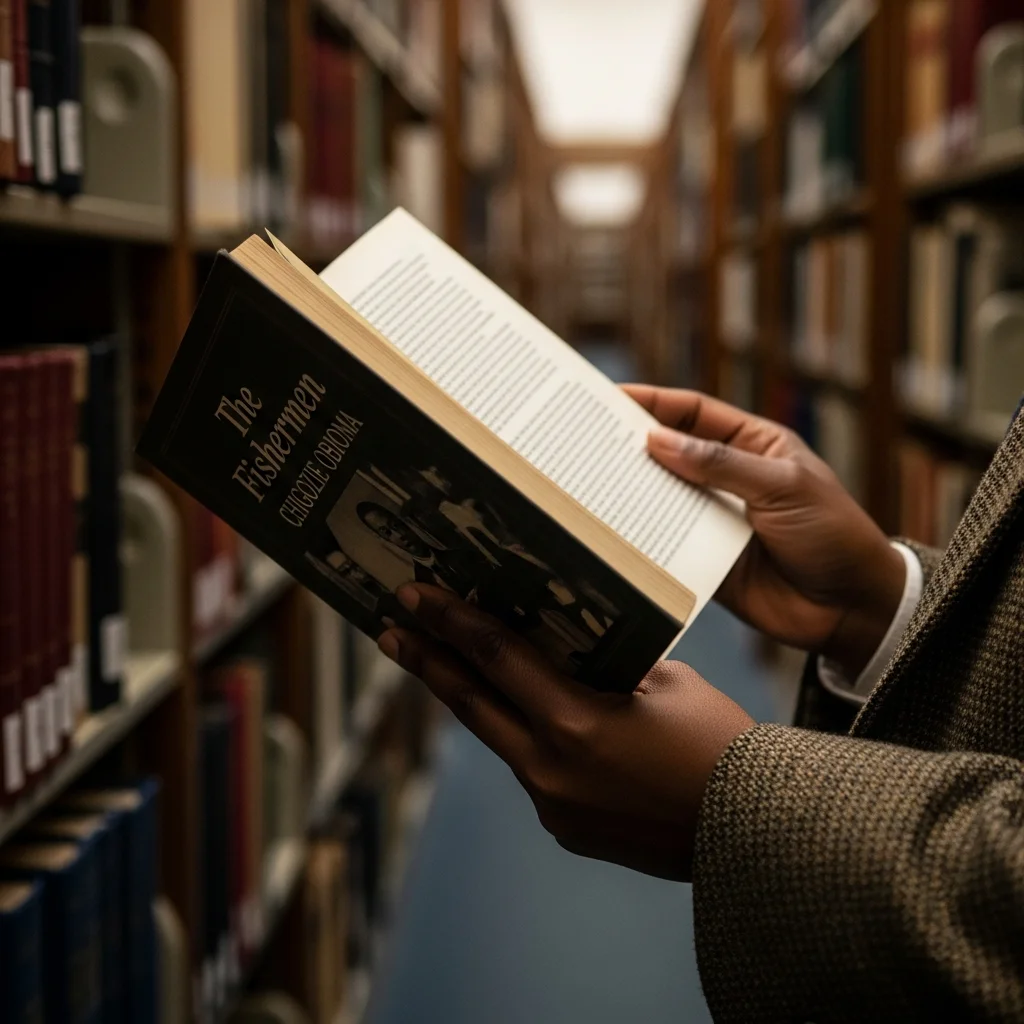
Like Obioma’s words, old books hold worlds. Nebraska light finds a page (Digital Illustration: GoBeyondLocal).
Where stories live
Seeing him do well like this makes you think about where books are born, because the big publishing houses are mostly in Europe and North America. Many African writers you know are with Penguin Random House or HarperCollins, and it is simply harder here where print runs for literary books are down. The Nigerian Publishers Association said so in its 2025 report, noting it costs a lot and schools buy textbooks instead of novels, but people are reading in a different way. A group called Worldreader says downloads of African novels on its app went up by 40% between 2024 and 2025, with young readers using their phones for everything.
The numbers change
Winning changes the numbers in a dramatic way, with sales for the 2023 winner, Time Shelter, jumping over 800% in a single week according to Nielsen BookScan. If Obioma wins, shops here will want the book immediately but often cannot get award winners fast enough due to duties and shipping delays. The applause happens overseas before the book arrives, and Adekunle Adewuyi from Rovingheights Bookstore talked about this problem recently, explaining how people want the book now while the system tells them to wait.
A good time for it
This nomination comes at a very good time when the world is looking at African stories again and streaming services want to make shows from books. Festivals are booking more voices from here, and in Nigeria, where the arts always need more of everything, a big win like this tells a different story. It says work from here can stand anywhere, and the Minister of Information, Mohammed Idris, sent congratulations on April 8 with a statement about supporting creative work and recent changes to the law. A nice gesture.
The translator’s art
This prize is special because it honors the translator too, saying a book in translation is a real partnership, though for Obioma who writes in English it is a different matter. So many great stories in Yoruba or Hausa or Igbo have not been translated at all, and the prize reminds people that translation is its own art. It asks publishers to bring those stories out, and Granta magazine did an issue on African writing in translation in 2025 where Helon Habila saw progress but said translators still need more help, suggesting grants as a start.
Marking the date
They will name the winner at a dinner in London on May 21, reading from the books after the judges have argued until the last minute, and you never know what will happen. People here have the date marked already because win or not, being on the list is its own kind of victory that goes in the record books for Nigerian writing. The last person with Nigerian roots to win was Bernardine Evaristo in 2019, and if Obioma wins it would feel different since he lives in both worlds in a way that matters.
Finding the book
The book is out in hardcover and as an ebook with the big online shops having it, while in Nigeria places like Laterna Ventures and Glendora are trying to get copies as fast as they can. Some public libraries might get it through donations because the Lagos State Library Board has a rule to stock books by Nigerian authors that get award nods, and reading it before the announcement is a very good idea. You get to be part of the talk then and see for yourself what exactly caught the judges’ eyes in the first place.
Before the crown
Prizes are funny things that pick one book on one day, but the real thing is the work a writer does over years, the books that make you think and feel and see a place anew. The light from the Booker will help people find his older books and might make a young person in Onitsha start writing, which is the quiet part of the prize that lasts. So we wait for May while the judges have their hard job, and the rest of us have some very good books to read in the meantime.
‘The shortlist presents a constellation of stories that map the human experience with rare brilliance. Each book is a world unto itself.’
– Eleanor Catton, 2026 International Booker Prize judging panel chair, speaking on April 7, 2026.
In conversation with two-time Booker Prize finalist, Chigozie Obioma about his Biafran war novel – Relevant coverage on this topic.




Advocacy
Folake Olowofoyeku Stars in American Sitcom on Nigerian Family Life
Folake Olowofoyeku leads a Nigerian family onto American primetime. It is a quiet revolution in your living room, a familiar story told for a whole new world.

Folake Olowofoyeku Stars in American Sitcom on Nigerian Family Life
Published: 12 April, 2026
You turn on the television
You turn on the television in America and there they are, a whole Nigerian family living their lives right there in primetime with Folake Olowofoyeku at the center of it all. You have to smile. It is a strange and wonderful thing to see the familiar rhythms of home played out for a whole new audience on the other side of the world, a quiet little earthquake in the landscape of what gets to be called mainstream that arrived in the 2025-2026 season. It feels less like a calculated bet and more like someone finally opened a window and let a fresh, complicated breeze into a stuffy room.
A familiar strangeness
The premise is simple enough, just a family trying to make it work in a new place. The magic is in the details, the small cultural collisions that happen when tradition meets a different kind of daily life. For anyone watching from Lagos or Abuja, the experience is a mix of recognition and gentle surprise because you know these people and you have sat in their parlours. The fact that a major network decided this was a story worth telling says something about how the world is tilting, ever so slightly, on its axis. Variety wrote about the greenlight in 2025, noting the sudden industry hunger for diaspora stories, and The Hollywood Reporter chimed in about the search for content with global resonance. That is just a fancy way of saying they have finally noticed there is an audience out here, waiting to be seen.
The woman in the middle
Folake Olowofoyeku carries the whole thing on her shoulders, playing a woman forever navigating the space between two worlds, a feeling anyone who has ever left home understands in their bones. She does it with a warmth that makes you forget you are watching a performance. She came to this from Bob Hearts Abishola, another show that dipped its toes into Nigerian life, but this time she is the anchor and the centre of gravity around which all the family chaos orbits. She told Deadline in 2026 about the quiet responsibility of getting it right, working with writers and consultants to make sure the jollof tasted like jollof and the proverbs landed where they should. The difference between something that feels true and something that feels like a costume is often found in those tiny, almost invisible details.
Why now, why here
The entertainment business runs on signals, and for years now the signals coming out of Nigeria have been impossible to ignore. From Burna Boy selling out arenas to Chimamanda’s books on every bestseller list, it was only a matter of time before television executives in Los Angeles started paying proper attention. They look at numbers, these people, and the numbers from the National Bureau of Statistics show the film and music sector back home pushing past N1 trillion. That is a number that makes even the most sceptical studio head sit up and take notice. A PwC report in 2025 called African entertainment exports a key growth area, which is the dry, corporate way of saying the world is finally ready to listen. Television, always a little slower than music or books, is finally catching up.
The audience weighs in
The reviews talked about comedy and cultural specificity, which is what critics say when they are impressed but do not want to sound too impressed. The real conversation happened back home, on Twitter spaces and in the pages of Premium Times, where every accent and set decoration was picked apart with the intensity of a forensic examination. A writer for ThisDay in 2026 put it nicely, saying Nigerian viewers have an expert eye for authenticity, making any misstep feel like a personal affront. That same fierce scrutiny means people are watching, really watching, and in the world of television, that is the only currency that truly matters.
The arithmetic of culture
Let us be clear about one thing. A thirty-minute network sitcom costs a small fortune to make, with a mountain of money spent on writers and lights and actors, so the decision to make this one was not an act of charity but a cold calculation about viewers and advertising dollars. The growing Nigerian diaspora in America and Britain and Canada represents a tidy, targetable market. If the show catches on, the potential for international sales and streaming deals is the kind of thing that makes accountants very happy indeed. It is the old story where culture opens the door, but business decides whether to build a house there, and in this case, the numbers added up just enough for someone to take a chance.
Built on a Nollywood foundation
This show did not appear out of thin air because it stands on the shoulders of decades of work by the Nollywood machine. That machine built the audience and honed the storytelling instincts and proved, against all odds, that Nigerian narratives could travel. The technicians and writers moving between Lagos and Hollywood today learned their craft in that relentless, creative chaos. Even the Federal Ministry of Information and Culture has tried, in its own way, to fan the flames of this creative export, which makes sense because when the world sees your talent, it starts to see you differently.
One story among many
One television show about one family cannot possibly speak for a country of over 250 ethnic groups, and nobody with any sense expects it to. The hope, the quiet hope, is that it acts as a doorstop, holding open a space for other stories from Enugu or Kano to follow. The entertainment business is brutally pragmatic, so a hit show means more pitches get heard while a show that struggles means the door swings shut again, at least for a little while.
“We are at a point where the world is hungry for our stories, but the hunger comes with a specific menu. The challenge is to feed that appetite while also expanding it.”
– Bayo Akinfemi, Media Analyst, in The Guardian, March 2026.
The conversation back home
You find the usual mixed reactions, as you should, with some people celebrating the simple fact of visibility and others dissecting the compromises made for an American audience. The beautiful thing is that the debate itself is a sign of a sophisticated viewership that refuses to be passive. The online forums light up after each episode, arguing over the pidgin and the artwork on the walls, and this active participation, this sense of ownership, is perhaps the show’s most significant achievement.
Who gets to tell it
Who writes the jokes matters as much as who delivers them. The slow, gradual increase of African writers in American writers’ rooms is a shift that changes what ends up on the screen, though it is still far too small. Initiatives by streaming platforms to cultivate diverse talent are trying to build a pipeline. The long-term health of these stories depends not just on star actors but on the people shaping the narrative from the inside, from the very first draft.
Following the numbers
The specific ratings are a closely guarded secret, as they always are, but the trends reported by Nielsen in 2025 show more and more people seeking out international and diaspora stories. The purchasing power of that audience runs into the hundreds of billions of dollars, a figure that gets any marketer’s attention. Back in Nigeria, with internet penetration past 40% according to the Nigerian Communications Commission, the show finds its audience through satellites and streams. It often arrives just hours after it airs across the ocean, shrinking the world one episode at a time.
What comes next
This is a milestone, not a finish line, and the show’s fate will be decided by the cold calculus of viewer retention and critical buzz in a brutally competitive landscape. For creators back home, it serves as a living case study, showing how to take a locally-rooted story and shape it for a global platform. It is a masterclass in translation that the next generation will undoubtedly learn from.
“This is about normalizing our presence in global popular culture. It is about a family that happens to be Nigerian dealing with problems every family understands.”
– Folake Olowofoyeku, interview with The Hollywood Reporter, February 2026.
The ripple effect
Success abroad has a funny way of lifting all boats at home because it raises the profile of the entire industry. It sometimes attracts the kind of international interest that leads to new collaborations and opportunities. The partnerships between Nollywood and Hollywood have been growing, driven by mutual commercial curiosity, and a hit sitcom with a Nigerian heart could very well grease the wheels for more integrated projects that pull talent from both sides of the Atlantic.
Just watch
So here is what you do. You watch the thing, engaging with it and critiquing it and celebrating it, because your viewership, whether from a balcony in Surulere or an apartment in London, is the only metric the industry truly understands and fears. The landscape is shifting, and Nigerian stories have a seat at the table in a way that was not true a decade ago, with this show being both a product of that shift and a test of its strength. We are all watching a Nigerian family on American television, and the world is watching with us. The final measure will not be in ratings or reviews but in the genuine laughter it pulls from your chest and the real conversations it starts around your own table. That is the quiet power of any good story, no matter where the family inside it calls home.
Advocacy
Pearlena Igbokwe Leads NBC Universal Content Strategy
You might be watching something tonight with a familiar logo. Pearlena Igbokwe runs the place that made it, overseeing a global content empire from a quiet office. Her story connects Lagos to…

Pearlena Igbokwe and the Quiet Power of Saying Yes
Published: 12 April, 2026
You might be watching something tonight. A drama. A comedy. Something you stumbled upon while scrolling past a hundred other options. The credits will roll past with a familiar logo, the one with the globe, and you will not think twice about it. Pearlena Igbokwe runs the place that made that show. She is the Chairman of Universal Studio Group. That means she oversees the creative and business operations for all the television production studios owned by NBC Universal, and her decisions ripple outward into living rooms in America and Europe and Asia and, eventually, maybe, more deliberately, into yours. It is a big job. A very wide one. She seems fine with it.
That title means something
The title Chairman, Universal Studio Group is not ceremonial. It means she oversees four major television production studios. Universal Television. UCP. Universal International Studios. Universal Television Alternative Studio. These are the engines that produce shows you have actually heard of, like The Equalizer and Suits, according to a report in Variety that tracked the studio output. Her leadership extends to development and production and the financial performance of this entire division, which is a polite way of saying she decides what gets made and what does not.
The studio group creates series for the parent company platforms and sells content to other distributors, so a show made by Universal Television might appear on NBC in America on a Tuesday night and then on a network in Europe or Africa months later, dubbed or subtitled, depending on the market. The global strategy under her watch determines where these stories go and who pays for them. And how much. And whether they get a second season.
The path to that office
Pearlena Igbokwe built a career in television over three decades. That is a long time to stay in any industry, let alone one that eats people alive and spits them out with a development deal and a vague promise to catch up soon. She started at Showtime. Moved to ABC. Landed at NBC in 2011 when she became President of Universal Television. Then she got the big promotion. She was named to lead the entire Studio Group in 2020, a year when most people were just trying to remember where they left their masks.
She was born in Lagos. Moved to the United States as a child. She belongs to a generation of Nigerian professionals who attained leadership roles in global industries not by accident but by being better than the competition and twice as persistent. Her presence in such a position signals possibilities. It says something without having to say it. Funny world. It rewards the stubborn ones.
What global content strategy means
Global content strategy is not just selling American shows abroad, though that is certainly part of it and a very profitable part at that. It means sourcing stories and talent and production partnerships from around the world and weaving them into a single portfolio that makes sense to someone sitting in an office in Los Angeles while also making sense to someone sitting on a couch in Mumbai. Universal International Studios, a unit she manages, operates local production companies in the United Kingdom, Spain, and Australia according to a report from Deadline, and these hubs develop original programming for their regions and for the international market simultaneously.
The strategy responds to audience fragmentation. Viewers now choose from hundreds of platforms and nobody watches the same thing at the same time anymore, so a successful studio group must feed multiple outlets with a constant supply of compelling series. It must balance expensive, high-profile projects that win awards and generate buzz. It must also produce cost-effective, reliable performers that pay the bills. Igbokwe and her team make those decisions daily. Over coffee. Over Zoom. Over spreadsheets that would make your eyes glaze over.
“Our studios are the engine for the entire television portfolio. We have to be prolific, we have to be excellent, and we have to be financially disciplined.”
– Pearlena Igbokwe, Chairman, Universal Studio Group, in an interview with Deadline, 2025.
Prolific. Excellent. Financially disciplined. That is the tightrope. Most people fall off.
The Nigerian reality in this picture
Now consider the media landscape in Nigeria. Local producers create a vast amount of film and television content known as Nollywood, an industry built on hustle and improvisation and the stubborn belief that stories matter even when the budget does not match the ambition. It faces challenges. Formal distribution remains patchy. International monetization is a puzzle that many have tried to solve and few have cracked completely.
A major studio group like Universal represents both a potential partner and a distant gatekeeper. A deal with such an entity offers access to global funding and distribution networks that could transform a local production into something that travels far beyond its original audience. But direct partnerships remain limited. While Nigerian stories gain global attention through platforms like Netflix and Amazon Prime, most large American studios have yet to establish significant local production arms in Nigeria. The focus for groups like Universal International Studios remains on established markets in Europe and other English-speaking territories where the infrastructure is familiar and the legal frameworks are predictable.
This leaves a gap. A quiet one. But a gap nonetheless.
How the money flows
The business model relies on a mix of financing that sounds complicated until you see it in action. A studio funds a pilot. Then a series order. Then it licenses the show to a network or streamer for a fee. That fee may cover only part of the cost. Sometimes most of it. Sometimes barely half. The studio retains ownership and bets on future profits from international sales, syndication, and streaming residuals, a model that requires significant upfront capital and a great deal of patience and a stomach for risk that would make most people queasy.
For a show like Suits, which found a massive new audience on Netflix years after its initial run ended, the long-tail revenue became substantial. Unexpected. Delightful for the accountants. The Universal Studio Group benefits from that library of older shows that keep generating money while everyone sleeps, and Igbokwe oversees a portfolio that includes both new productions and valuable legacy series. She manages the balance. New risks. Old reliables. The math never stops.
The streaming revolution changed everything
The rise of direct-to-consumer streaming forced every studio to adapt or die, and NBCUniversal launched Peacock and created an internal buyer for the Studio Group content. Igbokwe division now produces exclusive series for Peacock while continuing to sell to competitors like Netflix or Amazon. That is a dual mandate. It requires careful navigation. You are selling to your rivals while also feeding your own platform. Awkward conversations happen. Everyone pretends they are normal.
Streaming also increased demand for volume. Platforms need a constant pipeline of new series to retain subscribers who will cancel the moment they finish the one show they signed up to watch. This benefits a large production studio with the scale to deliver multiple projects annually. But it also increases competition for top writing and acting talent. It drives up costs. The executive in charge must manage these inflationary pressures while delivering hits. No pressure.
According to a 2025 NBC Universal Press Release, the Universal Studio Group had over 50 series in production across broadcast, cable, and streaming that year. The slate included dramas and comedies and unscripted formats and things that defy easy categorization. Each series involves hundreds of people. Complex logistics. Multimillion-dollar budgets. A single delay can ripple outward and affect entire schedules. Success depends on the performance of these shows. Ratings matter. Awards matter. Critical acclaim matters. A streak of underperforming series damages relationships with talent and buyers. The pressure is relentless. It never takes a day off.
The international piece of the puzzle
Universal International Studios expanded its footprint carefully and deliberately. The UK arm called Working Title Television produced the acclaimed series The Great, a show about Russian history that somehow became a global hit. In Spain, the studio developed local-language dramas for European broadcasters. This local-for-global strategy allows the group to tap into creative talent pools outside Los Angeles and develop stories with innate international appeal.
Global audiences now appreciate content from other cultures provided the storytelling is universal enough to cross borders. A Spanish thriller finds viewers worldwide on streaming services. A UK period drama travels. A Korean survival drama becomes a phenomenon. Igbokwe oversight of these international studios positions NBC Universal to compete in this borderless content environment. Not a small thing. The world is watching everything now.
“Our goal is to find the best storytellers, wherever they are, and give them the resources to make their vision a reality for a worldwide audience.”
– Pearlena Igbokwe, speaking at the MIPCOM conference, 2025.
Wherever they are. That phrase is doing a lot of work. It includes Lagos in theory. In practice, the infrastructure needs to catch up.
Where Nigeria fits into this global map
Nigerian creators have global ambitions. Producers and directors in Lagos and Enugu and Port Harcourt aspire to see their work on international platforms, reaching audiences who may never have heard a Nigerian accent outside of a movie. But the path often involves independent sales or one-off deals that do not build lasting institutional relationships. A structured partnership with a major studio group like Universal remains an aspirational model. It would provide sustained investment. Production expertise. Guaranteed distribution. The kind of backing that turns a single project into a pipeline.
The infrastructure for such partnerships continues to develop. Nigerian production values rise each year. The cameras are better. The sound is cleaner. The stories are sharper. International co-production treaties and tax incentives could make local production more attractive to foreign studios who are always looking for ways to reduce costs without reducing quality. The success of Nigerian music and literature on the world stage suggests a ready audience exists for its screen stories. Afrobeats conquered the world without asking permission. Nigerian novels win international prizes. The missing link is often the business framework. The unglamorous paperwork. The legal clarity. The reliable electricity. The things that make a studio executive in Los Angeles feel comfortable signing a cheque.

A single file sits ready for review, its manila surface hinting at the decisions held within. Somewhere in a stack like this, a show is born or buried (Digital Illustration: GoBeyondLocal)
The leadership style that makes it work
Colleagues describe Igbokwe management as collaborative and decisive. In an industry known for volatility and oversized egos and people who confuse volume with conviction, navigating that environment requires a blend of creative instinct and financial acumen. You have to know when to trust your gut. You also have to know when to look at the numbers and admit your gut was wrong.
Her longevity in the role through corporate restructuring and market shifts indicates an ability to adapt and deliver consistent results. That is no small feat. Executives come and go in Hollywood like seasons. She has stayed. Her position also carries symbolic importance as one of the few Black executives leading a major Hollywood studio division. Her decisions influence hiring. Storytelling diversity. Whose faces appear on screen and whose voices shape the narratives. The projects she greenlights shape cultural conversations that extend far beyond the spreadsheet. This aspect matters. It cannot be quantified. But it matters.
What happens next in the industry
The media industry faces consolidation. Mergers and acquisitions reshape the competitive landscape every few years, and companies that were rivals become colleagues and then rivals again in a dizzying dance. Streaming services adjust their strategies. They now prioritize profitability over subscriber growth at any cost, which is a fancy way of saying the free money era is over and everyone has to actually make things people want to watch. This affects the budgets available for content licensing and production. A studio group leader must anticipate these shifts. Guide the creative pipeline accordingly. Hope the projections hold.
New technologies like artificial intelligence present both opportunities and disruptions. AI might help with editing or scheduling or generating first drafts of things that humans will later fix. It might also threaten the livelihoods of writers and actors and below-the-line workers who have spent years mastering crafts that machines are now learning in hours. The role will evolve to encompass managing these technological changes while protecting the human creativity at the core of storytelling. The executive who balances innovation with tradition will likely find success. Or not. The industry does not come with guarantees.
For the Nigerian creative with a great idea
The direct line to Universal Studio Group runs through established channels. Nigerian producers typically engage with international studios via independent distributors or sales agents or through the local offices of global streaming platforms that have set up shop in Lagos. Building a track record with high-quality, commercially successful local content remains the strongest calling card. Nobody returns a call based on potential alone. They return calls based on proof.
Understanding the business model of a studio group helps. These entities seek intellectual property they can own and exploit across multiple territories and over many years, extracting value from a single idea in ways the original creator might never have imagined. A pitch must demonstrate that potential. Show an understanding of the global audience, not just the local market. The story must travel. It must mean something to someone in Chicago or Berlin or Tokyo while still being true to where it came from. That is the trick. Few master it.
The quiet power of saying yes
Pearlena Igbokwe occupies a pivotal seat in the entertainment industry. She controls a significant portion of the television content that reaches hundreds of millions of viewers around the world, and her decisions affect careers and shape culture and generate billions in revenue. It is a role that blends art and commerce and logistics, executed at the highest level with a calm that suggests she has seen enough to know what matters and what does not.
For observers in Nigeria, her career offers a case study in global executive leadership. It shows the pathways that exist. It also shows the distance still to travel for the local industry to fully integrate into that system, to move from being a market that receives content to being a market that creates it for the world. The conversation continues. One story at a time. One yes at a time. And somewhere in an office in Los Angeles, a woman from Lagos is deciding what the world will watch next.
Publication Date: April 08, 2026. This article is based on publicly available corporate announcements, industry reports, and verified media profiles from 2025-2026.
Advocacy
Bayo Ogunlesi and the Global Airport Deal
A Lagos boy sold his company for $12.5 billion and now owns airports. His story shows what Nigeria could do, if only the bridge between need and money was stronger.

Bayo Ogunlesi and the Global Airport Deal
Published: 08 April, 2026
The man who bought the airports
You should know about Bayo Ogunlesi. He sold his company for $12.5 billion, which is a lot of money by any measure. His firm was called Global Infrastructure Partners, and the asset management giant BlackRock bought it. The story made headlines from London to Lagos when the Financial Times broke it in 2024. The deal handed over control of airports like London Gatwick and Edinburgh, so a boy from Nigeria ended up owning the terminals where millions of people start their holidays. Funny world.
From Lagos to London terminals
It all started in Lagos, where Bayo Ogunlesi was born in 1953. He went to King’s College, Lagos, then headed off to Oxford and Harvard. His path led him to Wall Street. He started at a law firm, moved to Credit Suisse First Boston, and climbed high. In 2006, he helped start Global Infrastructure Partners with a simple idea: buy things people always need, like airports and ports, and the money comes in slow and steady.
The first big buy was London City Airport that same year, then came the big one. A group he led bought London Gatwick Airport for £1.455 billion, as the BBC reported back in 2009, and an empire was born. The portfolio grew to include a 50.01% piece of Edinburgh Airport, a big share in an Italian high speed rail company, plus ports and energy assets. The plan was to make these places run better and handle more people, and it worked.
The headline deal
Then came January 2024 when BlackRock said it was buying the whole company. Bloomberg confirmed the price at about $12.5 billion in cash and stock, a very big number. Bayo Ogunlesi joined the BlackRock board and now runs their infrastructure division. The deal meant BlackRock got its hands on $100 billion in assets, and all those airports changed owners on paper.
“This transaction is a testament to the success of GIP’s dedicated investment strategy and team.”
– Statement from Global Infrastructure Partners, January 2024.
The deal closed later in 2024. For the average person flying out of Gatwick, nothing changed. The coffee still cost too much and the queues were still long. But in the world of money, it was a landmark: a Nigerian had built something so good the biggest player in the game wanted to buy it.
What it means for you
This story is about more than one man. It shows how the world pays for the things we all use, because airports and roads need crazy amounts of money that governments often do not have. So private firms step in, using investor cash and promising to make things efficient. Not everyone likes this, since some say it puts things we all need in the hands of people who just want profit, and ticket prices can go up.
Now look at home. The main airports in Lagos and Abuja are run by the government, with the Federal Airports Authority of Nigeria in charge. They have tried letting private people run parts of them, but results have been mixed. Murtala Muhammed International Airport in Lagos handled about 7 million passengers in 2023, while Gatwick, under his firm’s care, handled over 40 million that same year. You feel the difference when you travel. You know you do.
The puzzle at home
Let us be clear: Nigeria needs a lot of work on its basic systems. A 2020 government plan said the country needs over $3 trillion by 2043, yet the budget for 2026 sets aside only about N2.18 trillion for infrastructure. That is a small drop in a very big bucket. Private money is not just nice. It is essential. The success of Bayo Ogunlesi shows a Nigerian mind can play this global game.
But playing it here is harder. Investors want rules that do not change, they want to know the law will work, and they want stable returns. These are not always easy to find in the economy of Nigeria. The Nigerian Investment Promotion Commission said in 2025 that policy inconsistency is a big worry. So a Nigerian can buy airports over there, but doing it here is a different story. The need is huge and the money is out there, yet the bridge between them is often made of shaky planks.
Building something real
Bayo Ogunlesi did not get rich from oil, nor did he make quick trades. He built a business on physical things: concrete, steel, jet bridges. That is a lesson for a place often focused on what comes out of the ground, because real value is in owning and running the systems that make life work. His firm’s method was simple: buy something that is not doing well, make it run better, put money into expanding it, and wait. This takes patience and knowing how things actually work.
Think about the ports in Lagos. Apapa and Tin Can Island are famous for traffic jams. A plan like his would mean spending big on new facilities, better roads, and digital systems, with the money coming from moving more goods smoothly. The model works in ports all over the world. The question is whether things here allow that kind of slow, smart investment to grow. The history of port deals gives you a clue. A cautious one.
“Infrastructure is a long term game. You have to be willing to invest, wait, and manage the asset through cycles.”
– Commentary from a GIP managing director in The Economist, 2023.
Where the plan gets bumpy
Nothing is perfect, and private ownership of things we all need has risks. A firm like BlackRock wants returns for its clients: pension funds, insurance companies. And that goal can bump against what the public needs. If an airport needs a costly safety upgrade that will not make more money, will it happen? In a bad economy, will maintenance be cut to keep profits up? These are real questions.
In the United Kingdom, a regulator tries to balance investor returns with fair prices for flyers, though the system has critics. Airlines often grumble about high fees at Gatwick, and the debate never ends. For Nigeria, more private help for airports would need strong, clear rules. The track record of regulators in various parts of the economy of Nigeria does not fill you with hope. Not really.
What to take from it
So here we are. A son of Nigeria now leads infrastructure investing for the world’s biggest money manager. You can be proud, and you can also learn. The first lesson is that making things work better matters. Buying is just step one, and the value is in the fixing. The second lesson is about size, since his firm pooled money from big investors to buy things no single person could afford, and Nigeria needs ways to pool cash for its own projects.
The third lesson is about people. Bayo Ogunlesi is a product of a global path, and Nigeria loses so much of its best talent to places like London and New York. Making a place where that talent can build world class things at home is the real test. The government of Nigeria talks about working with the private sector, but the reality on the ground shows a gap. From power cuts to bad roads. A wide one.
Look at your airport
For a simple takeaway, go to your nearest airport. Look at the terminal. Watch the security line. Check the flight screens. Now think about airports elsewhere. The difference is the gap, and closing it needs more than government money. It needs a setup that attracts smart, patient private investment, regulators who get both business and public service, and caring about the small details that big plans often forget.
The story of Bayo Ogunlesi shows Nigerians can play at the top of global finance. The unfinished work is to use that skill on the runways and terminals here. The need is obvious, the money is out there in the world, but building the bridge is the hard part. The success of one man over there highlights what could happen over here. The next part of this story will be written by those who take the model and make it work where it matters most. Right here.

Chigozie Obioma International Booker Prize 2026

Jidenna Pan African Sounds Latest Musical Project 2026

Hakeem Oluseyi Brings Astrophysics to Classrooms Worldwide

NANS Diaspora Nigerian Students Eastern Europe

Nnamdi Asomugha From NFL Cornerback to Hollywood Producer

Folake Olowofoyeku Stars in American Sitcom on Nigerian Family Life

Pearlena Igbokwe Leads NBC Universal Content Strategy

Bayo Ogunlesi and the Global Airport Deal

Skepta Opens Creative Hub for Young People in North London

Bronze Head Returned Home to Benin City After a Century in Britain

Abike Dabiri Erewa Calls for Diaspora Women in Nigerian Politics

NUSA Nigerian Culture Parade Takes Over New York City Streets

Internet Sovereignty: Why Some Countries Want Their Own Separate Internet

The Story Of The Nigerian Who Helped Build Global Internet Systems

Nigerian Hackers: The Global Fraud Story and Its Fallout

Forgotten Satellites Defy Silence, Beaming Signals for Decades

Your Digital Store in Nigeria and the Reality of Domain Expiration

The Phone Stay So Quiet: An Investigation into Nigeria’s Silent Customer Lines

The Business That Died: A Nigerian Case Study in Refusal to Adapt

Hiding Your Business From People With Money

How Nollywood Grew Without Government Support

Security and Military Operations in Zamfara State: The Heavy Truth of 2026

Nigeria Produces 67 Percent Global Yam Output

Malaria Vaccination Cuts Child Deaths in Half in Northwest Nigeria
 Digital Sovereignty2 months ago
Internet Sovereignty: Why Some Countries Want Their Own Separate Internet
- Technology & Innovation2 months ago
The Story Of The Nigerian Who Helped Build Global Internet Systems
- Crime2 months ago
Nigerian Hackers: The Global Fraud Story and Its Fallout
- Space Technology2 months ago
Forgotten Satellites Defy Silence, Beaming Signals for Decades
- Business2 months ago
Your Digital Store in Nigeria and the Reality of Domain Expiration
- Maritime2 months ago
The Phone Stay So Quiet: An Investigation into Nigeria’s Silent Customer Lines
- Business2 months ago
The Business That Died: A Nigerian Case Study in Refusal to Adapt
- Business2 months ago
Hiding Your Business From People With Money