Border Security
UK-Nigeria Partnership Accelerates Removal of Individuals Without Legal Status
A new UK-Nigeria agreement creates a fast-track system for removing individuals without legal status. Signed during a state visit, it hinges on data sharing and aims to turn policy into plane tickets…

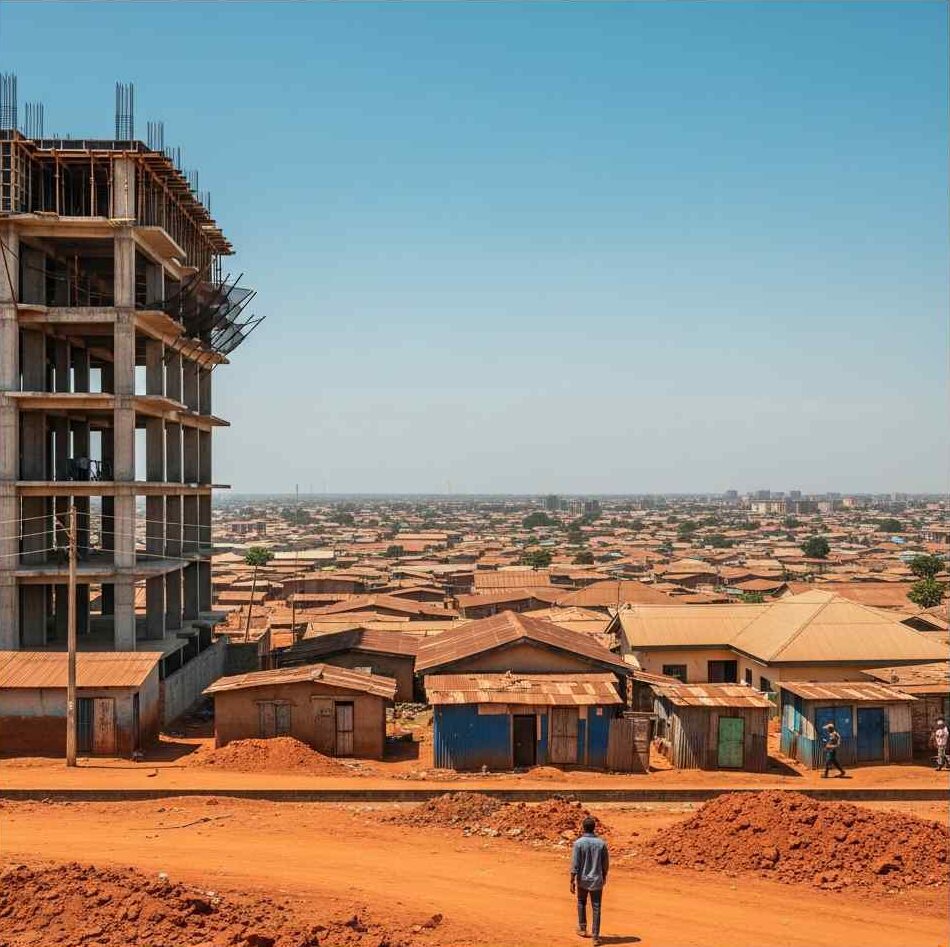
UK-Nigeria Partnership Accelerates Removal of Individuals Without Legal Status
Published: 21 March, 2026
March 18–19, 2026 were just two days on a calendar until they became something else entirely. They marked the state visit of President Tinubu to the United Kingdom, and in the quiet rooms where such things are decided, a new partnership was signed. It was a formal agreement between two governments with one clear objective: to accelerate the removal of individuals without legal status from Britain. The paper was crisp, the signatures were official, and the mechanism was entirely new.
The Paper and the Practice
How do you turn a political promise into a plane ticket? That is the question at the heart of this arrangement. The core of it is enhanced data sharing between the UK Home Office and the Nigerian High Commission in London, creating a dedicated fast-track. Crucially, Nigeria now agrees to recognize “UK Letters” as valid for removal, which kills the old bottleneck of waiting for Emergency Travel Certificates. For the UK government, this is progress on a persistent headache, and they reported 1,150 enforced returns of Nigerian nationals in the year ending September 2025. The new system aims to push that number up, because total UK removals since the 2024 election have already hit nearly 60,000.
A Deal Built on Data
Joint UK-Nigeria Fusion Cell, where Nigerian officials now sit with Home Office caseworkers to confirm identities for removal. Their job also involves targeting organized crime, fake sponsorships, and various scams under a three-year plan, with the goal of slashing processing time. A late 2025 pilot showed it could work, according to a joint statement in January 2026, and the deal was finally sealed during that state visit. It includes service level agreements where Nigeria commits to providing travel documents within an agreed timeframe, which is the kind of detail that makes bureaucrats nod in approval.“Anyone who abuses our systems, breaks our laws, or tries to cheat their way into Britain will be stopped and removed. Today’s agreement is another step in our mission to restore order to the border.”
– UK Minister for Immigration, Statement, March 19, 2026
Parallel to this, the UK Home Office has expanded its digitized case management to flag Nigerian cases eligible for fast-track based on criteria like exhausted asylum claims. It is a system designed for efficiency, and you can almost hear the quiet hum of servers processing the data.
The View from Abuja
Nigeria frames this within broader bilateral relations, with officials citing collaboration on security and trade as the foundation. The agreement was signed by Dr. Olubunmi Tunji-Ojo, Nigeria’s Minister of Interior, and the UK Home Secretary, and the incentive for Abuja appears to be smoother legal migration pathways. The deal references continued dialogue on visas for students and professionals, which Premium Times noted in February 2026 is the carrot. But there is always a catch, because any returns policy depends entirely on the receiving state’s capacity. Nigeria’s immigration bureaucracy faces well-documented constraints, and the new Fusion Cell demands consistent, high-level attention from Nigerian officials in London, so the question becomes whether they can sustain it.
Who Faces the Fast-Track?
The partnership prioritizes specific categories, with the main focus on individuals with finally refused asylum claims and foreign national offenders who have served UK prison sentences. Nigeria is consistently a top nationality for such deportations, and disputed identity cases, a historic source of delay, now go to the Fusion Cell first with the aim of resolution in weeks rather than months.
“Our cooperation with the United Kingdom is comprehensive. While we work to ensure the dignified return of those who have overstayed, we are equally focused on enhancing opportunities for lawful migration for the vast majority of Nigerians who wish to study, invest, and contribute abroad.”
– Ambassador Sarafa Tunji Isola, Nigerian High Commissioner to the UK, The Cable, January 2026
The process excludes unaccompanied minors and those with outstanding appeals, while legal challenges under the Human Rights Act also suspend it. These are the safeguards written into the document, the small print that lawyers will scrutinize.
The Legal Framework
Removals still operate within the existing UK legal framework where people keep the right to a lawyer and to lodge new appeals, but charities like Detention Action and the Refugee Council are watching closely. Their concern is whether a drive for speed compromises fair assessment, even though the Home Office says it only streamlines administration for cases with no lawful basis and that the legal thresholds for asylum remain unchanged. This brings us to the core tension, because a faster process looks efficient on a dashboard while the test is in individual cases where the line between a refused claim and a genuine fear is perilously thin.
The Numbers
Consider the scale for a moment. In the year ending September 2025, Nigeria was the seventh highest country for UK asylum applications with 2,964 main applicants and a grant rate of 29%. That leaves a significant pool for appeals or removal, and the 1,150 enforced returns that year included both asylum cases and offenders. The new deal targets more volume in less time, and success will be measured by reducing the average days between final decision and removal, though the Home Office has internal targets it hasn’t published.
A Template for Others
This agreement is a template, and the UK government wants similar deals with other major origin countries, making Nigeria with its volume the flagship. The model requires a cooperative state apparatus, which makes deals with unstable or hostile nations far harder, and for Nigeria the calculus balances public opinion, citizen welfare, and the benefits of being a cooperative partner on a global issue. Wait, it gets more complex, because cooperation on returns often becomes a diplomatic bargaining chip where visa access, trade terms, and security assistance can be part of an unspoken exchange even when statements focus only on immigration.
The Next Flight Out
The immediate effect is a more predictable, accelerated process for those whose claims have definitively failed, meaning the limbo period may shorten considerably. For legal aid lawyers and NGOs, the pace just increased and preparing fresh claims faces tighter deadlines if removal is imminent, though the deal may deter some migrants while economic desperation and security threats often outweigh rational calculation. For the average Nigerian business traveler or student, the direct impact is minimal because the agreement is separate from standard visa policy, even if the climate of cooperation might help processing times incrementally.
“Our monitoring indicates a marked increase in the pace of documentation verification for Nigerian nationals. The critical issue remains ensuring that this administrative efficiency does not outpace the capacity for proper legal scrutiny in each case.”
– A spokesperson for Detention Action, Press Release, March 2026
The Infrastructure of Return
Efficient removal needs more than a signature, requiring planes, escorts, and reception protocols. The UK Home Office charters dedicated flights often grouping nationalities, and the partnership includes commitments on reception in Nigeria handled by the National Agency for the Prohibition of Trafficking in Persons and others. The logistical chain is complex and expensive, but faster verification makes it more cost-effective for the Home Office, because you can have the best data-sharing system while the physical act of return still depends on a seat on a plane and a team to manage the journey.
Track the Flights
The most tangible sign will be the departure board, as observers monitor the schedule of charter flights for removals. An increase in frequency to Lagos or Abuja with higher passenger counts will signal operational success, though this data emerges through reporting and FOI requests. Scrutiny also focuses on treatment during removal, since reports of restraint or distress can trigger investigations and affect the entire program’s sustainability. The agreement exists on paper, but its real-world meaning unfolds at airport departure gates under the watch of monitors and the relentless gaze of media scrutiny.
The Long Shadow
Bilateral migration agreements cast long shadows, and the UK-Nigeria partnership of 2026 will influence diplomatic relations for years as its outcome becomes a case study. For thousands of Nigerians in the UK with precarious status, it introduces a new variable making the path from overstaying to a removal flight more direct. The UK government achieves a political objective while the Nigerian government secures a framework for dialogue and positions itself as a responsible actor, but the individual caught in the middle experiences it as a definitive end. The efficiency of the state when fully mobilized is a formidable force, and this partnership is the mechanism to mobilize it more swiftly, because signed documents establish intent while the coming months reveal capacity.







Border Security
Inter-Agency Fusion and the Fight for Nigeria’s Security Data
A new platform aims to connect Nigeria’s security agencies on one screen. The technology is funded and ready, but old habits of secrecy and spotty infrastructure in the field pose the real challenge….

Inter-Agency Fusion and the Fight for Nigeria’s Security Data
Published: 17 March, 2026
N85 billion is a lot of money to spend on a conversation. That was the amount approved in the 2025 budget for something called national security coordination, with a good chunk of it meant to get the army, the police, and the spies to talk to each other properly. The idea is simple enough on paper. You take a police report from Maiduguri, some army signals intelligence, and a flagged bank transaction, and you put them all on the same digital screen. For the officer on the ground in Katsina, that simple idea is the difference between a successful operation and walking into an ambush with only half the story.
The promise of a shared screen
They call it a fusion cell, and its job is to oversee this data integration between all the big players. The theory suggests a beautiful, synchronized dance of information. A joint patrol in Zamfara gets a single, clear brief minutes before they roll out, instead of a confusing stack of paper files from four different headquarters that might even contradict each other. Early reports said the platform helped arrest 15 suspected financiers by connecting financial dots with call records and field reports. It sounds like the kind of sleek, modern solution you see in movies, where everything lights up on a giant map and the bad guys are neatly pinpointed.
The problem with trust
The technology, it turns out, is the easy part. The real obstacle is something far older and more stubborn than any software. It is institutional culture, the deep-seated habit of guarding information like personal treasure. A detective views his informant network as his own career capital, and a signals officer protects his methods like state secrets. Sharing data on a common platform can feel like giving away your leverage, your reason for being important in the room. A survey found that 58% of mid-level officers worried shared intelligence would be credited to another agency, hurting their own chances for promotion. So what happens? The shiny new platform can become an empty shell, filled with outdated or sanitized information while the real intelligence stays locked in old, closed networks.
“The greatest weapon against terrorism is not a rifle, it is a byte of timely, accurate information shared with the right unit at the right time.”
– Maj. Gen. Adamu Laka, Coordinator, National Counter-Terrorism Centre, February 2026.
When the network fails
Then there is the ground truth, which has a way of mocking the best-laid plans from Abuja. These advanced platforms assume you have constant, high-speed internet. The reality in many operational areas involves poor network coverage and power that comes and goes as it pleases. A forward base in Southern Kaduna might rely on a single satellite phone. Trying to upload a large forensic file or real-time drone footage to a central cloud server from there is not just difficult, it is a physical impossibility. The government knows this, of course. The 2026 budget includes N25 billion for 500 portable, solar-powered comms hubs for remote areas. Whether those hubs arrive and work will decide if this fusion cell serves the entire force or just becomes a fancy toy for desk officers in the capital.
Following the money first
Maybe the answer is not to try and connect everything at once. Maybe it is to start with one thing, one high-value thread you can pull on. Focus all that energy and technology exclusively on integrating financial intelligence related to terrorism financing. Get the financial intelligence unit, the secret police, and the fraud squad on one dashboard that just follows the money. A narrow focus like that could build trust by delivering a clear, tangible win, like frozen accounts or arrested financiers. It creates a success story, a template. It is a way to acknowledge the immense complexity of the task while still taking a concrete step forward. The work of connecting everyone on a single screen continues, funded and possible, waiting for trust to catch up with technology.
Border Security
Border Technology Requires Investing in Surveillance Equipment to Monitor Remote Frontier Areas
Nigeria’s border stretches over 4,000 kilometers, much of it porous and unmonitored. The solution involves technology—drones, sensors, cameras—but the investment competes with everything else. It’s…
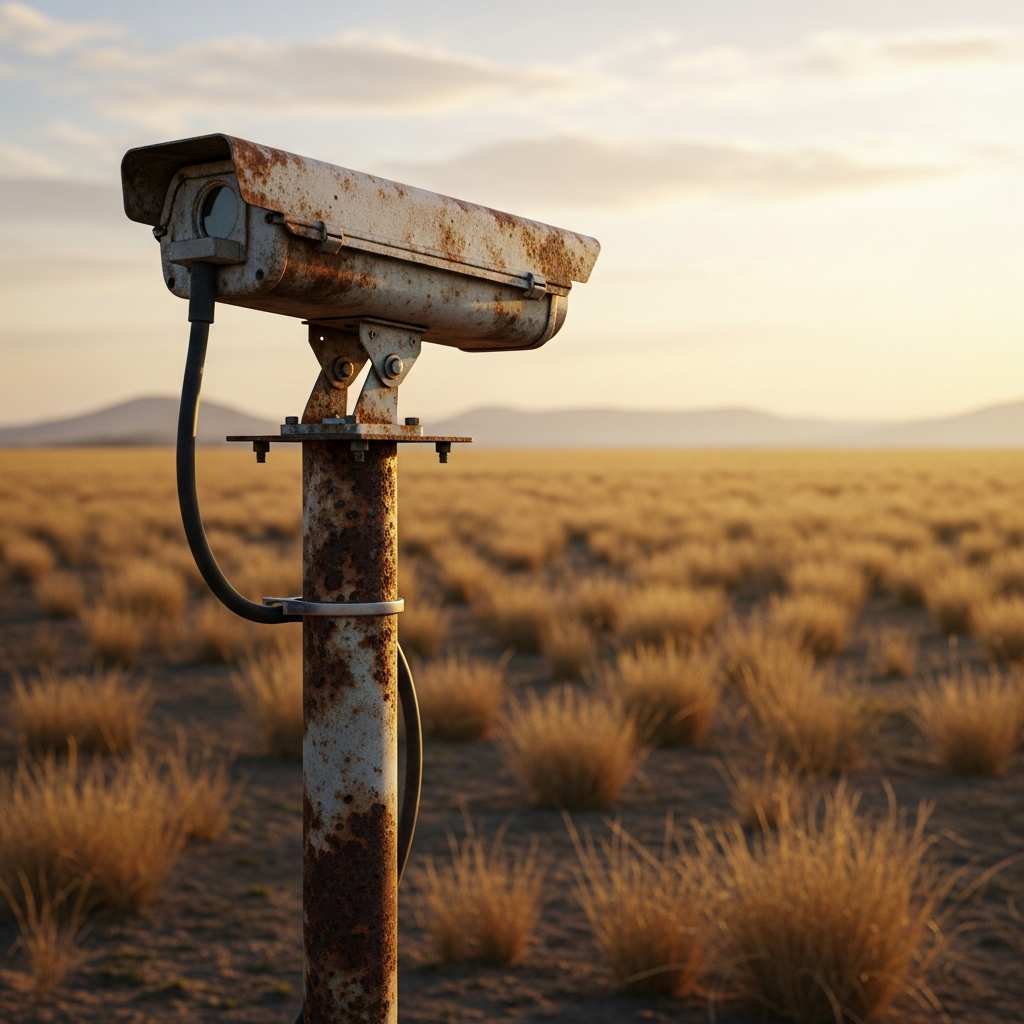
Border Technology Requires Investing in Surveillance Equipment to Monitor Remote Frontier Areas
Published: 17 March, 2026
Four thousand and forty-seven kilometers is a long line to hold. That is the official length of the border of Nigeria, a distance roughly equal to driving from Lagos all the way to Algiers. A recent report from the Nigeria Immigration Service quietly notes that about 1,500 kilometers of that line is considered porous and largely unwatched. The government has set aside N5.93 trillion for defense and security in the 2026 budget, a number so large it almost loses meaning. The specific funds for border technology and surveillance infrastructure are somewhere inside that sum, like a single grain of sand on a very long beach.
The view from the edge
You have a country flanked by instability, with the Sahel region burning to the north and the Gulf of Guinea teeming with activity to the west. The official response often involves patrols and temporary closures, but the physical reality involves vast, empty spaces where a handful of personnel monitor territories the size of small countries. The Comptroller-General of the Nigeria Customs Service, Adewale Adeniyi, framed the challenge quite plainly earlier this year. He said manpower alone will never be enough.
“The future of border management lies in technology. We are transitioning from a manual, labor-intensive process to an automated, intelligence-driven system. This shift is non-negotiable for national security and economic prosperity.”
– Adewale Adeniyi, Comptroller-General, Nigeria Customs Service, February 2026.
The argument for technology is straightforward enough. Drones, cameras, and sensors provide constant eyes where there are none, generating data on movement so that security agencies can deploy their limited people with some precision. A 2024 pilot project in Katsina State proved the point, using drone surveillance to identify and disrupt 27 illegal crossing points in just three months. It was a neat model, a proof of concept. Scaling that model across the entire country, however, is the multi-billion naira question nobody has fully answered.
The money problem
Investment in border technology competes with everything else, from salaries and subsidies to the national debt. The 2026 Appropriation Act allocates funds to large infrastructure projects, and a fraction of that could finance a national surveillance grid. The political will to spend on invisible infrastructure, rather than visible roads and bridges, requires a separate calculation entirely. Procurement adds another layer of complexity, given the mixed history of government tech acquisitions where systems arrive with great fanfare only for maintenance contracts to lapse and training to fail. A 2023 investigation found billions of Naira worth of security gear bought over a decade was simply inoperable due to neglect, which means any new investment must include a sustainable plan for upkeep that effectively doubles the long-term cost.
Data without people
High-tech gear generates terabytes of data every single day, and without analysts to interpret those feeds, they are about as useful as a library with no readers. The Nigeria Customs Service has roughly 15,000 officers while the Nigeria Immigration Service has about 25,000, numbers that are essentially static. Data from a full surveillance network would grow exponentially, creating a need not just for cameras but for a dedicated Border Surveillance and Data Command Centre staffed by data scientists. This creates a secondary funding need for the salaries of skilled technicians, a human gap that a national talent training initiative might one day fill if it were focused in the right direction.
“Technology is a force multiplier, but it is not a silver bullet. It must be embedded within a broader strategy of community engagement, regional cooperation, and economic development in border regions. A camera cannot negotiate, it can only observe.”
– Dr. Kabiru Adamu, Security Analyst, January 2026.
Life on the line
Communities along the frontier depend on cross-border trade that often operates outside official channels, and a heavy-tech lockdown without economic alternatives would simply crush them. Informal cross-border trade with neighboring countries was worth over $4 billion yearly before the last major closure. A smart system should facilitate legitimate trade while filtering illicit activity, which means integrating surveillance with streamlined processing at official posts. There is a prerequisite for all this, of course, which is a secure digital ID system that allows for reliable biometric verification because without it, surveillance systems can track movement but cannot reliably tell you who is moving.
A logical start
The path forward has a logical, if ambitious, starting point. The government could commission and publicly release a National Border Surveillance Technology Blueprint, a document that would map every kilometer and classify the terrain to specify the tech needed for each segment. It would provide a transparent, phased budget for acquisition, installation, training, and maintenance over five years, moving the conversation from abstract advocacy to a concrete and costed plan. This blueprint would create a baseline for accountability, allowing citizens to track year by year how many kilometers of porous border became monitored. In a country where grand plans often dissolve, a simple public map with measurable goals is a small and doable action. The security of the nation depends on knowing who and what crosses its lines on the map, and in 2026, that knowledge is fundamentally digital. The real investment is not just in cameras and drones, but in the sovereign and sustained capability to see.
Border Security
Regional Cooperation as a Military Imperative for Nigeria
Borders are lines on maps, but threats ignore them. Nigeria’s military now works with neighbours out of necessity, not just policy. From Lake Chad to the Gulf of Guinea, joint operations and shared…
Regional Cooperation as a Military Imperative for Nigeria
Published: 17 March, 2026
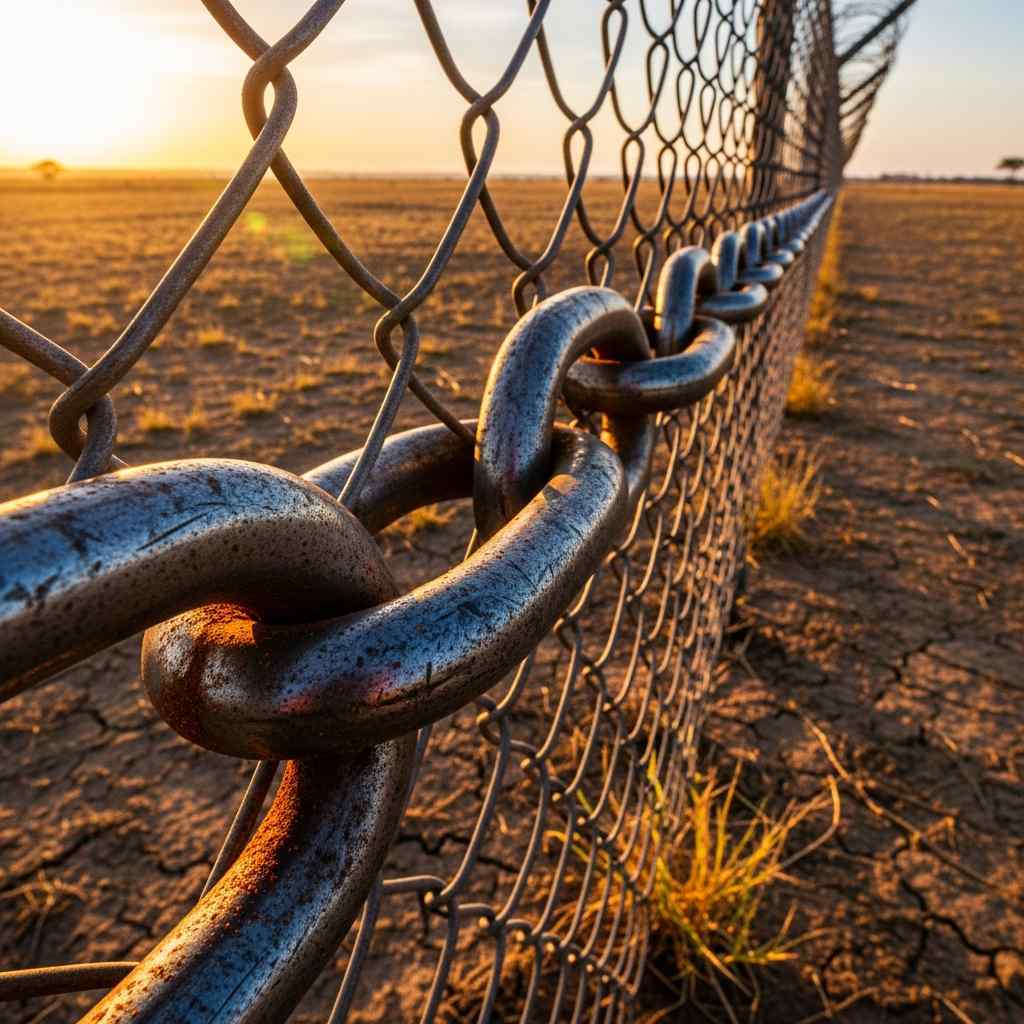
Three hundred thousand personnel, drones, attack helicopters, armored vehicles. The military of Nigeria deployed all of it over the past fifteen years, building what looked like a formidable national force. Yet the threats multiplied anyway, slipping across lines drawn long ago by people who never walked the land. The 2026 defence budget tells a different story now, with funding buried in the line items for joint exercises with neighbours. What was theory a decade ago has become daily routine, a quiet admission that the idea of a purely national defence is gone.
The map insurgents use
The official map of West Africa shows 16 countries. The map used by insurgents and traffickers shows one contiguous zone. Threats move along ancient trade routes, not modern checkpoints, treating borders as minor inconveniences. A soldier in Borno might watch a drone feed from an aircraft operated by the air force of Niger, while in Lagos, a naval officer coordinates with counterparts from Ghana and the Benin Republic. This is the unglamorous, necessary reality. The collapse of state authority in the Sahel, in Mali and Burkina Faso, created a vacuum that groups like Jama’at Nusrat al-Islam wal-Muslimin happily filled. For Nigeria, this means the threat is no longer confined to the Northeast. Banditry in the Northwest links to dynamics in the Niger Republic, and piracy in the Gulf of Guinea demands a response covering the waters of multiple states. The Chief of Defence Staff, General Christopher Musa, stated it plainly in 2025.
“The enemy we face recognizes no sovereignty. Our response, therefore, must be collective.”
– General Christopher Musa, Chief of Defence Staff, 2025.
A laboratory on the lake
The most established framework for this collective response is the Multinational Joint Task Force around Lake Chad. Troops from Nigeria, Niger, Chad, and Cameroon operate there, with an operational headquarters that rotates to force constant integration. They share real-time surveillance data from drones and conduct joint border patrols, though sometimes with incompatible radios. The trouble, as always, is funding. Member states are sometimes slow to pay, so the force leans heavily on the European Union and other partners. Yet it stands as the primary regional military answer to a regional problem, admitting a hard truth. No single country can secure its own shoreline, let alone the entire lake.
“We have moved from occasional meetings to a permanent fusion of effort. The terrorist in Diffa is the same as the terrorist in Dikwa. Our operations reflect that reality.”
– A senior Nigerian officer serving with the MNJTF, December 2025.
Pirates and shared corridors
Maritime security tells a similar story of enforced togetherness. The Gulf of Guinea accounts for most global kidnappings for ransom at sea. Nigeria has the largest navy, with new vessels like the NNS Kada, but a strong national navy has limits in international waters. The response is the Yaoundé Architecture, a coordination network linking navies across the region. In 2025, this coordination was credited with a 40% drop in piracy incidents. The economics compel it. Over 90% of the trade of Nigeria by volume moves by sea, and attacks spike insurance costs for everyone. A pirate arrested by the navy of Ghana may have intelligence on a cell in the Niger Delta. As Rear Admiral Y.B. Wambai said, a safe corridor off Cotonou makes the corridor off Lagos safer. You succeed together or you fail separately.
The Sahelian puzzle
Then there is the hardest test, the Sahel coup belt. Mali, Burkina Faso, Niger. These nations, now under juntas, expelled French forces and turned to Russia’s Wagner Group. ECOWAS suspended them and threatened intervention, but that threat collapsed. Here is the dilemma. Nigeria shares a 1,608-kilometer border with Niger. Instability there fuels banditry in Sokoto, Kebbi, Katsina. Yet formal military cooperation with the junta is politically untenable. It gets more complex. Security sources say communication between field commanders across the border continues anyway, focused on specific threats like fleeing terrorists. This is cooperation by necessity, messy and unofficial, where a former ally becomes a partner of a rival power but remains a geographical fact that cannot be ignored.
The machinery of talking
Cooperation needs infrastructure, and it is being built. The National Counter-Terrorism Centre in Abuja fuses intelligence. The annual Exercise Obangame Express trains Gulf of Guinea navies. In February 2026, the air forces of Nigeria and Ghana conducted joint combat training. These mechanisms face familiar obstacles. Bureaucracy slows intelligence sharing. Donated equipment from the United States or the United Kingdom often has different technical standards. Linguistic differences cause friction. Funding is a perpetual issue. Much of it relies on the personal relationships between commanders, which is a fragile foundation for a long-term strategy.
“The maps in our operations room now have layers from four different countries. Seeing the entire chessboard changes how you move your pieces.”
– Colonel D. B. Ali, Nigerian Army, January 2026.
The argument for a fortress Nigeria has intuitive appeal. It suggests control. The past fifteen years have demonstrated its fallacy. A battalion cannot pursue a target into another sovereign state without invitation. A warship cannot permanently station in the waters of a neighbour. Regional cooperation is the mechanism that extends reach and legitimacy, turning a line on a map from a barrier into a bridge. The alternative is a permanent state of reaction, and the cost of isolation is measured in continued bloodshed. The most immediate step might be for the National Assembly to hold a public hearing, to move the discussion from security circles into the public domain. After all, the security of the region depends on the understanding and will of the people it is meant to protect.

Ancient Rock Art Traditions Endure in Igbara Oke Caves

Palm Wine Tapper Climbs Same Tree That Killed His Father in Ozoro

Hunter Hears Dead Brother Whistle in Ganye Forest Mystery

Farmer Plants Yam That Grows Downward to Water Table in Drought

She Kept Asking and They Kept Moving Her in Nigeria

Global Food Prices Rose 2.4% in March 2026

Chigozie Obioma International Booker Prize 2026

Jidenna Pan African Sounds Latest Musical Project 2026

Hakeem Oluseyi Brings Astrophysics to Classrooms Worldwide

NANS Diaspora Nigerian Students Eastern Europe

Nnamdi Asomugha From NFL Cornerback to Hollywood Producer

Folake Olowofoyeku Stars in American Sitcom on Nigerian Family Life

Internet Sovereignty: Why Some Countries Want Their Own Separate Internet

The Story Of The Nigerian Who Helped Build Global Internet Systems

Nigerian Hackers: The Global Fraud Story and Its Fallout

Forgotten Satellites Defy Silence, Beaming Signals for Decades

The Phone Stay So Quiet: An Investigation into Nigeria’s Silent Customer Lines

Your Digital Store in Nigeria and the Reality of Domain Expiration

The Business That Died: A Nigerian Case Study in Refusal to Adapt

Hiding Your Business From People With Money

How Nollywood Grew Without Government Support

Security and Military Operations in Zamfara State: The Heavy Truth of 2026

Moniepoint Business Account Requirements Nigeria for SMEs 2026

Comedy Industry in Nigeria and Its Economic Contribution

 Digital Sovereignty8 months ago
Internet Sovereignty: Why Some Countries Want Their Own Separate Internet
- Technology & Innovation8 months ago
The Story Of The Nigerian Who Helped Build Global Internet Systems
- Crime8 months ago
Nigerian Hackers: The Global Fraud Story and Its Fallout
- Space Technology8 months ago
Forgotten Satellites Defy Silence, Beaming Signals for Decades
- Maritime8 months ago
The Phone Stay So Quiet: An Investigation into Nigeria’s Silent Customer Lines
- Business8 months ago
Your Digital Store in Nigeria and the Reality of Domain Expiration
- Business8 months ago
The Business That Died: A Nigerian Case Study in Refusal to Adapt
- Business8 months ago
Hiding Your Business From People With Money