Entertainment & Media
How Nollywood Grew Without Government Support
Nollywood’s foundation was poured long before any government blueprint. It grew through street-level distribution, private loans, and global streaming deals—a story of pure, stubborn self-reliance.


How Nollywood Grew Without Government Support
Published: 01 March, 2026
1992 was the year a certain video cassette began circulating in markets across the country. The film Living in Bondage was made for about $12,000, a sum so small it would barely cover catering for a modern production, and not a single kobo of it came from any government office. That simple fact established a pattern which would define an entire industry for decades, a pattern of looking inward and toward the people rather than upward toward any ministry. Filmmakers turned to the private distribution networks centered on Alaba Market, a grassroots system that slipped films into millions of homes across Africa without ever needing a single state-funded cinema screen.
It is a curious thing to consider now, in 2026, as the government formalizes a ₦1.5 billion creative fund. The foundation of this global giant was poured and set long before any official blueprint was drawn, built on a philosophy that was purely and stubbornly self-made.
The Money Came From the Street
For a very long time, the official film fund was a beautiful idea that did not exist. The money had to come from somewhere else, and it did. The shift into what they called New Nollywood was financed by Nigerian banks and private equity firms who saw an opportunity where the state saw only risk. The Bank of Industry launched a ₦1 billion Nolly Fund, which was structured as a commercial loan, not a grant. This created a fascinating pressure. Filmmakers had to think like businesspeople, prioritizing stories that audiences would actually pay to see because they needed to repay the debt.
You can contrast that with the cultural subsidies common in Europe, where art is often treated as a public good to be preserved. Here, art became a commercial product to be sold. Partnerships with private cinema chains like FilmOne created the Billion Naira Club, built around stars like Funke Akindele. By 2025, the box office revenue hit a record ₦15.6 billion, a number driven by what the market wanted, not by any cultural directive from above.
A New Kind of Patron
The digital age only deepened this independence, introducing a new kind of patron from thousands of miles away. Global streaming platforms like Netflix and Amazon Prime Video arrived with their checkbooks, dealing directly with creators and completely bypassing the old, creaky channels of government bureaucracy. Between 2016 and 2023, Netflix alone invested over $25 million in original Nigerian content, providing a kind of liquidity and global platform that local agencies had never managed to offer.
This came with its own set of rules, of course. The direct-to-creator model meant competing on a global stage without a safety net. At the 2026 Berlin film festival, Nigerian producers were praised for their commercial literacy, a survival skill polished by decades in a high-risk environment. That reality, the constant need to swim or sink, is what ultimately forged Nollywood into a lean and remarkably responsive machine.
The Bill for Doing It Alone
Such a massive feat, however, was never going to be cost-free. The most glaring invoice has always been piracy, a crisis that emerged precisely because there was no strong government framework to protect intellectual property. It drained an estimated ₦300 billion from the sector every year, a staggering sum lost to digital theft. Stakeholders at a recent Lagos film summit pointed out the painful irony: the industry grew in spite of the government, but it now needs the government to enact specific policies to safeguard what it built.
This brings everyone to a curious new chapter. The evolution from sheer volume to lasting value requires a different kind of support, things like the proposed Lagos Film City to bring down production costs. The spirit, though, remains fiercely independent. Veterans often remind anyone who will listen that Nollywood was born in the streets and fed by the people, a long, long time before anyone in an office took notice.

Entertainment & Media
Nnamdi Asomugha From NFL Cornerback to Hollywood Producer
Nnamdi Asomugha left the bright lights of the NFL for a producer’s chair, finding stories that need telling with a quiet plan and the discipline of a different game.

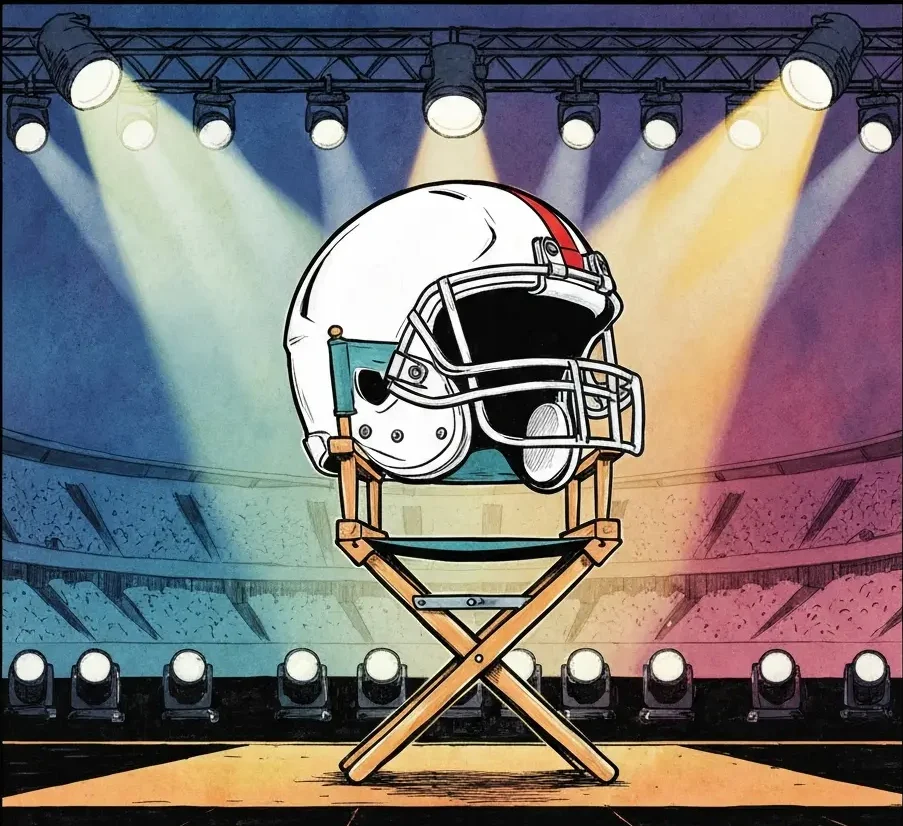
Nnamdi Asomugha From NFL Cornerback to Hollywood Producer
Published: 08 April, 2026
The morning after the game
When a man spends 11 years chasing wide receivers across a field and makes something like $53 million in the process, you think you have all his story. Nnamdi Asomugha played for the Oakland Raiders and the Philadelphia Eagles and he was very good, but then he stopped. He didn’t fade away. He started a film company that Variety wrote about in 2024, and his company made a movie about Shirley Chisholm with Regina King directing. A strange pivot. A beautiful one.
The quiet plan
Most athletes don’t know what to do when the cheering stops and the structure vanishes because the adrenaline fades and it’s a hard thing. Nnamdi Asomugha was thinking about it while he was still playing, studying business at the University of California, Berkeley and building a foundation. His wife, Kerry Washington, acts, and The Hollywood Reporter mentioned that in 2025. It helps to have someone who knows the terrain, of course.
What a producer does
His company, Asomugha Productions, doesn’t act but finds stories that need to be told and then finds the money to tell them, putting the right people in a room for a different kind of game. The stories have weight, like Shirley about the 1972 presidential run or Crown Heights about a wrongful imprisonment, which Deadline covered in 2023.
“We look for stories that need to be told, stories that have impact and resonance.”
– Nnamdi Asomugha, to The Hollywood Reporter, 2025.
Finding the money is its own quiet drama where you need millions, and for Shirley it was about $20 million according to IndieWire in 2024. You talk to studios and investors and make deals, which is a very long conversation that requires a particular kind of patience.
A Nigerian story
His parents came from Nigeria, and this matters because in many Nigerian families success has a short and familiar list with doctor, lawyer, and engineer. This story isn’t on that list. It’s a different kind of win that the diaspora watches, and they see Nnamdi Asomugha and filmmaker Andrew Dosunmu with pride in it. Back home, Nollywood makes over 2,500 films a year, as the National Film and Video Censors Board said in 2025, but their problems are about money and distribution. The scale in Hollywood is different. The game is the same.
Most ideas die
This is the quiet truth of it because most films never get made and scripts sit in drawers while money never appears, which is why it’s called development hell. Nnamdi Asomugha worked on the Shirley film for years, getting permission from the family and finding a writer before he needed a director. Regina King said yes after reading the script, as Entertainment Weekly wrote in 2024, and the film went to Netflix in March 2024. People liked it. That’s the win, and it means you chose right.
The team builder
A good producer builds a team with a director, cinematographer, and cast who all need to want the same film while you also watch the money and the clock. Trust is everything. People work with you because they believe you can finish the job, and his reputation from football helps because discipline travels.
“He runs his set like a team. There is a clarity of purpose and a respect for everyone’s role.”
– A crew member from the set of Shirley, to Variety, 2024.
Then you have to find an audience by partnering with Netflix or a theater chain, which is the last play and the final pass.
Hollywood money
Hollywood is a project economy where you get fees and maybe a piece of the profits if there are any, but the accounting is creative. Big studios like Warner Bros. fund the huge films while independents patch money together from investors and tax breaks. Now streaming companies change everything, and Netflix, Amazon, and Apple pay big money upfront, as Bloomberg talked about in 2025. It makes the risk smaller. Slightly.
Same game, different field
Think about it because a football game and a film premiere are both judged by millions in one night where preparation matters but teamwork matters more. Leading a locker room and leading a film set aren’t so different when you have talented people you must point in one direction. The career span is short, too, and the average NFL career is about 3 years, as the NFL Players Association confirmed in 2025. In film, you’re only as good as your last project, so you’re always looking for the next job. Building a company is how you stay in the game.
What comes next
Asomugha Productions has more stories in the drawer because you have to keep a pipeline, and one film isn’t a career. People say the company likes stories from Africa and the African-American experience, which makes sense. After Black Panther, the world remembered there was an audience, and television is next with limited series for streamers. A crowded space. A good reputation gets you in the door.
He is not the only one
Other athletes have done it, like LeBron James with his company and former NFL player Matthew Cherry who won an Oscar, because they use their fame and their discipline. They hire people who know the business. The trick is to be more than a name on the door, and Nnamdi Asomugha goes to the meetings and looks at the budgets. He learned that in school. He uses it.
The long game
So here is a man who planned his exit before the game was over and built a company that tells important stories, which is how Shirley made it to Netflix. That’s a touchdown in that league. In Nigeria, people nod because they know this story where preparation meets opportunity. The children of the diaspora are writing new lists from the field to the studio. A quiet pivot. A good story.
Entertainment & Media
Broda Shaggi Recuperating After Sango-Ota Shooting Incident
Broda Shaggi is recovering in hospital after a prop gun fired on set under the Sango-Ota bridge. The incident has reignited the perennial conversation about safety standards and costs in Nigeria’s…
Broda Shaggi Recuperating After Sango-Ota Shooting Incident
Published: 27 March, 2026
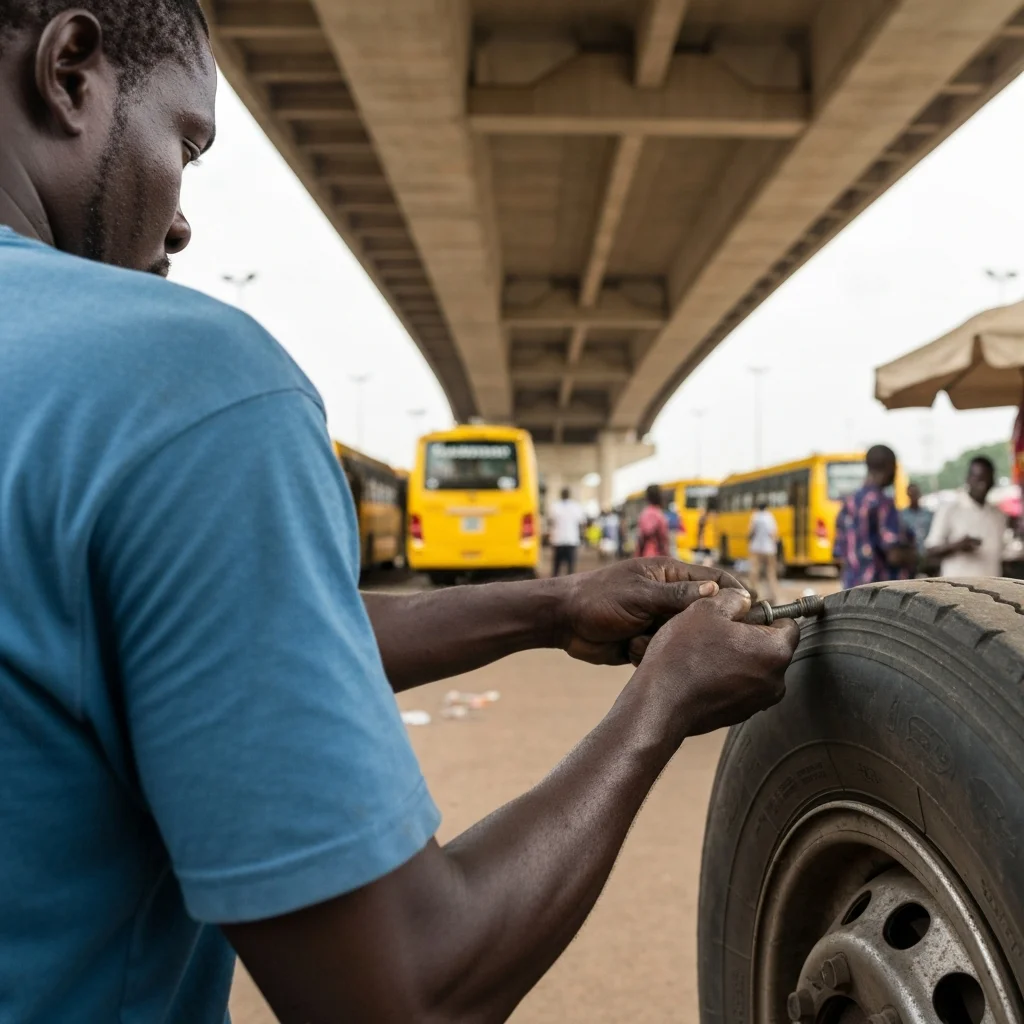
The Sango-Ota bridge in Ogun State is a place where many things happen, but on Sunday, March 8, 2026, it became the scene of something no one expected. Under its concrete span, while filming a comedy skit, a prop firearm that was not supposed to fire did exactly that, hitting Samuel Perry in the thigh. The man everyone calls Broda Shaggi was rushed to a clinic in Alakuko for emergency first aid before being moved to Duchess Hospital in Ikeja for more specialized care, and now he rests there while the questions begin.
The Call to the Police
When the hospital called the Lagos State Police Command about a man with a gunshot wound, detectives went to confirm who it was. They found a popular actor in a hospital bed, and the story started to spread. People are still asking how it happened, wondering about the chain of events that led a prop to become a real danger.
Messages from the Bed
Broda Shaggi has been sending messages to his fans from his hospital room, calling the whole thing a sad accident and thanking people for the quick medical help. He wants everyone to know he is stable.
“I am fine and the doctors are taking good care of me. I thank everyone for the love and prayers. This was a sad accident, but I am getting better.”
– Samuel Perry (Broda Shaggi), March 2026 statement.
The Usual Talk
Actors Guild of Nigeria has rules about using certified armorers for weapon scenes, but many independent skit makers and smaller producers work without them. A proper pyrotechnician can ask for more than ₦500,000 in a single day, which is a lot of money when you are trying to make a film.What the Guild Says
Emeka Rollas, the President of the Actors Guild of Nigeria, says the guild is looking into what happened under that bridge because the safety of actors should come first. The tricky part is that thousands of small productions operate outside the formal guild system where rules are just suggestions you can ignore.
“The safety of our members is paramount. We will engage all stakeholders to ensure standard operating procedures are established and enforced. No actor should fear for their life while telling a story.”
– Emeka Rollas, President of the Actors Guild of Nigeria, March 26, 2026 press release.
Guns for Hire
If you want to use a real gun in a Nigerian film, you need a permit from the Nigerian Police Force for a decommissioned weapon and you buy blank ammunition from licensed dealers. The process involves many offices and takes time, so some productions use replicas or unregulated props to avoid the hassle. A prop master told Vanguard last year that training is not consistent and many people learn the job as they go without any formal safety lessons, which is how you get accidents waiting to happen.
The Cost of Being Careful
Think about the numbers for a minute. A certified safety specialist can cost over ₦500,000 per day, but the average budget for a direct-to-streaming Nollywood film is between ₦20 million and ₦50 million. Adding that specialist eats a big chunk of the money, so producers work with very thin margins and rarely buy insurance for mid-budget projects. They make a calculation between being safe and being able to finish the film at all, which is a funny kind of math where trying to save money can end up costing you more if someone gets hurt.
Recovery Time
The doctors say Broda Shaggi will need several weeks to rest before he can go back to his busy life, so his team has postponed all his upcoming work. This whole incident reminds everyone that filming in public spaces like under a bridge comes with its own set of risks that need proper planning, and right now people are just happy he is getting better. The bigger talk about making sets safer and regulating prop weapons is still happening on social media where everyone has an opinion, but opinions do not stop bullets.
Looking in the Mirror
Social media blew up with concern for the actor and calls for the government to step in and regulate the film industry more, which is a conversation you hear about many workplaces in the creative sector of Nigeria. The National Film and Video Censors Board checks what you see on screen but not how you make it, and changing that would need new laws. The board did put out a statement wishing Broda Shaggi a quick recovery, but they did not say anything about new rules, which tells you where the priority lies.
A Simple First Step
Entertainment & Media
Comedy Industry in Nigeria and Its Economic Contribution
Laughter in Nigeria is now a multi-billion naira business. From sold-out arena shows to viral social media skits, comedy has built a structured industry that employs thousands and generates serious…
Comedy Industry in Nigeria and Its Economic Contribution
Published: 01 March, 2026
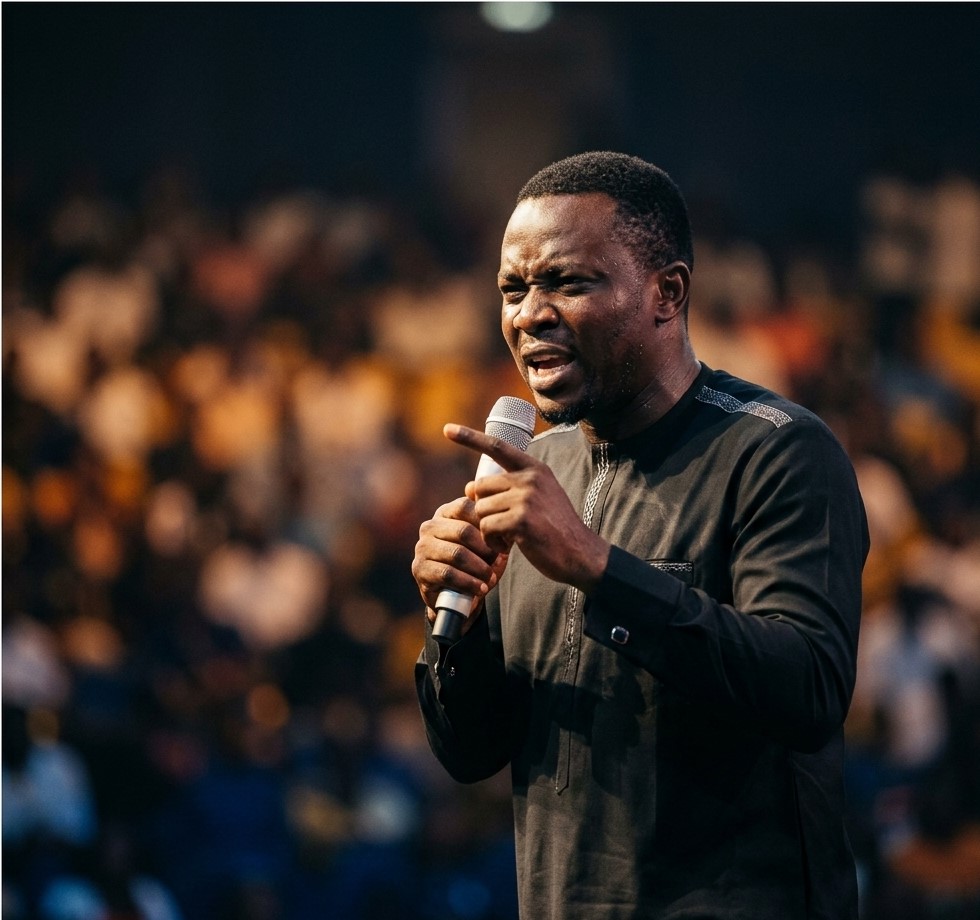
Billions of naira is a phrase you do not often associate with a joke. It sounds like the punchline to a story about government contracts or oil money, not something you would hear after a comedian walks off stage. Yet that is exactly where the conversation about Nigerian comedy has landed these days, moving quietly from church halls and campus nights into spreadsheets and economic reports. The laughter has been counted, and it turns out to be worth a great deal.
The Numbers Behind the Laughter
While the National Bureau of Statistics has not yet tallied the final figures for 2025, the shape of the industry is clear enough from the outlines. Live comedy has become a significant revenue generator, according to analyses like the PwC Nigeria Entertainment & Media Outlook. The money flows in from ticket sales that can rival concert prices, from corporate bookings where a top comedian fee might dwarf a bank manager salary, and from the steady operations of comedy clubs across the country. It is a structured business now, with measurable output and thousands of people depending on it for their livelihood, from the performers themselves to the writers, videographers, and event staff who make the shows happen.
Three Layers of Funny
The industry has settled into distinct tiers, as described by insiders and outlets like Channels Television. At the very top are The Headliners, names like Ali Baba, AY Makun, Basketmouth, and Bovi who have national recognition and often reinvest their earnings into production companies. Then there is The Working Class, hundreds of comedians who earn their primary income from weddings, corporate events, and smaller shows, with those in commercial hubs like Lagos seeing the most action. Finally, there is the vast and noisy layer of The Digital Content Creators, thousands of young Nigerians creating skits for social media, a small percentage of whom successfully turn their online followings into a living, democratizing access to an audience without needing a physical stage in Lagos first.
Spillover Effects
The economic activity does not stop at the venue door. For every major show, there is a ripple effect through transportation, food and drink vendors, fashion, and hospitality, creating temporary employment for hundreds per production. Vanguard News and Nairametrics have noted how these events contribute value-added tax from ticket sales and income tax from the more formal entities, adding quietly to government revenue. The club scene in Lagos, investigated by Arise News, provides another steady stream, employing permanent staff and offering a consistent platform for mid-level talent while supporting local micro-entrepreneurs who set up shop outside.
New Money, Old Problems
Of course, growth brings its own complications. BusinessDay has pointed out the structural hurdles that remain. Intellectual property is a constant headache for digital creators who see their work reposted without permission. Payment cycles can be unpredictable, leaving performers waiting on clients. The costs of production, from venue rentals to equipment, keep rising and can eat into the profits of a live show. And there is the matter of talent development, which largely happens through trial and error in the absence of any formal training structure for aspiring comedians.
Beyond the Border
The influence of Nigerian comedy has also become an export product. CNBC Africa reported that comedians regularly tour for diaspora audiences in the UK, USA, and Canada, generating foreign exchange and navigating the complex logistics documented by outlets like Premium Times. The connection to Nollywood adds another dimension, with comedians like AY producing successful films and actress-producers like Funke Akindele, often in comedic roles, driving some of the highest box office numbers in Nigerian cinema history. The line between a live punchline and a cinematic story has blurred into a profitable collaboration.
What Comes After the Punchline
The industry thrives precisely because of its low barrier to entry and its sharp reflection of the Nigerian experience. To protect this growth, stakeholders like the Association of Nigerian Comedians have suggested ideas such as a digital registry for content to help establish intellectual property ownership. It is a sign of an industry thinking about its future, not just its next joke. The laughter continues in Lagos clubs and on digital screens, providing a necessary lens for society, but it is no longer just about the jokes. It has become a significant economic pillar, quietly supporting thousands of livelihoods one laugh at a time.

Ancient Rock Art Traditions Endure in Igbara Oke Caves

Palm Wine Tapper Climbs Same Tree That Killed His Father in Ozoro

Hunter Hears Dead Brother Whistle in Ganye Forest Mystery

Farmer Plants Yam That Grows Downward to Water Table in Drought

She Kept Asking and They Kept Moving Her in Nigeria

Global Food Prices Rose 2.4% in March 2026

Chigozie Obioma International Booker Prize 2026

Jidenna Pan African Sounds Latest Musical Project 2026

Hakeem Oluseyi Brings Astrophysics to Classrooms Worldwide

NANS Diaspora Nigerian Students Eastern Europe

Nnamdi Asomugha From NFL Cornerback to Hollywood Producer

Folake Olowofoyeku Stars in American Sitcom on Nigerian Family Life

Internet Sovereignty: Why Some Countries Want Their Own Separate Internet

The Story Of The Nigerian Who Helped Build Global Internet Systems

Nigerian Hackers: The Global Fraud Story and Its Fallout

Forgotten Satellites Defy Silence, Beaming Signals for Decades

The Phone Stay So Quiet: An Investigation into Nigeria’s Silent Customer Lines

Your Digital Store in Nigeria and the Reality of Domain Expiration

The Business That Died: A Nigerian Case Study in Refusal to Adapt

Hiding Your Business From People With Money

How Nollywood Grew Without Government Support

Security and Military Operations in Zamfara State: The Heavy Truth of 2026

Moniepoint Business Account Requirements Nigeria for SMEs 2026

Comedy Industry in Nigeria and Its Economic Contribution
 Digital Sovereignty8 months ago
Internet Sovereignty: Why Some Countries Want Their Own Separate Internet
- Technology & Innovation8 months ago
The Story Of The Nigerian Who Helped Build Global Internet Systems
- Crime8 months ago
Nigerian Hackers: The Global Fraud Story and Its Fallout
- Space Technology8 months ago
Forgotten Satellites Defy Silence, Beaming Signals for Decades
- Maritime8 months ago
The Phone Stay So Quiet: An Investigation into Nigeria’s Silent Customer Lines
- Business8 months ago
Your Digital Store in Nigeria and the Reality of Domain Expiration
- Business8 months ago
The Business That Died: A Nigerian Case Study in Refusal to Adapt
- Business8 months ago
Hiding Your Business From People With Money