Transportation & Infrastructure
Okrika Community Receives New Landing Jetty with Passenger Waiting Hall
The new landing jetty in Okrika, Rivers State, includes a passenger waiting hall. This article examines the project’s impact on water transport and local commerce.

Okrika Community Receives New Landing Jetty with Passenger Waiting Hall
Published: 12 March, 2026
Imagine balancing on a narrow, muddy plank with a bag of goods, the tide lapping at your feet, just to board a boat. For thousands in Okrika, that was the daily commute. Now, a concrete pier and a roofed hall stand where the eroded bank once was. According to the Executive Chairman of Okrika Local Government Council, Hon. Akuro Tobin, this new landing jetty aims to bring order to that chaos (Okrika Local Government Council, 2026).
Local government authorities confirmed the project was under construction, with completion targeted for the first half of 2026. Its role is to decongest those informal, hazardous docking points (Okrika Local Government Secretariat, 2026).
What led to this

The facility includes mooring bollards and a waiting area. This replaces a system where passengers boarded wooden boats directly from the bank. The design provides a stable platform—a critical consideration for elderly commuters and traders moving goods.
As The Guardian noted in February 2026, photographs show a concrete pier extending from the shore, with the hall on land adjacent to the road.
Community leaders were blunt. They described the previous conditions as hazardous, especially during the rains. People balanced on planks. The new hall offers shelter from sun and rain, a basic amenity that was simply absent. A report by BusinessDay on infrastructure in the Niger Delta argued such projects address critical mobility gaps for riverine populations (BusinessDay, 2025).

Funding and Execution Timeline
Project records indicate the jetty is a flagship project under the Okrika Local Government Council, spearheaded by the Executive Chairman, Hon. Akuro Tobin. The Public Bid Opening for the Kalio-Ama Landing Jetty occurred on October 30, 2025.
But there is a catch. As of mid-February 2026, the project had moved beyond the mobilization phase, with construction well underway. The total contract value was N280 million. Analysts from Nairametrics point out the cost per unit of community impact for such jetties is often high due to complex marine engineering (Nairametrics, 2025).
The project is being executed by the Okrika Local Government Council. The finish line is the first half of this year.
What this means
Okrika’s economy lives on the water. People and goods move to Port Harcourt and other islands. The new jetty creates a designated point. Boat operators and traders expect it to reduce chaos. A representative from the Okrika Market Women Association told Vanguard the hall allows for orderly queuing and protects perishable goods (Vanguard, 2026).
Trip times may decrease marginally. More significant is the potential for scheduled services. The informal boat operators’ union has begun discussing a rudimentary timetable—a practice impossible with scattered embarkation points. This organizational shift could bring predictability to daily travel, as This Day observed (This Day, 2026).
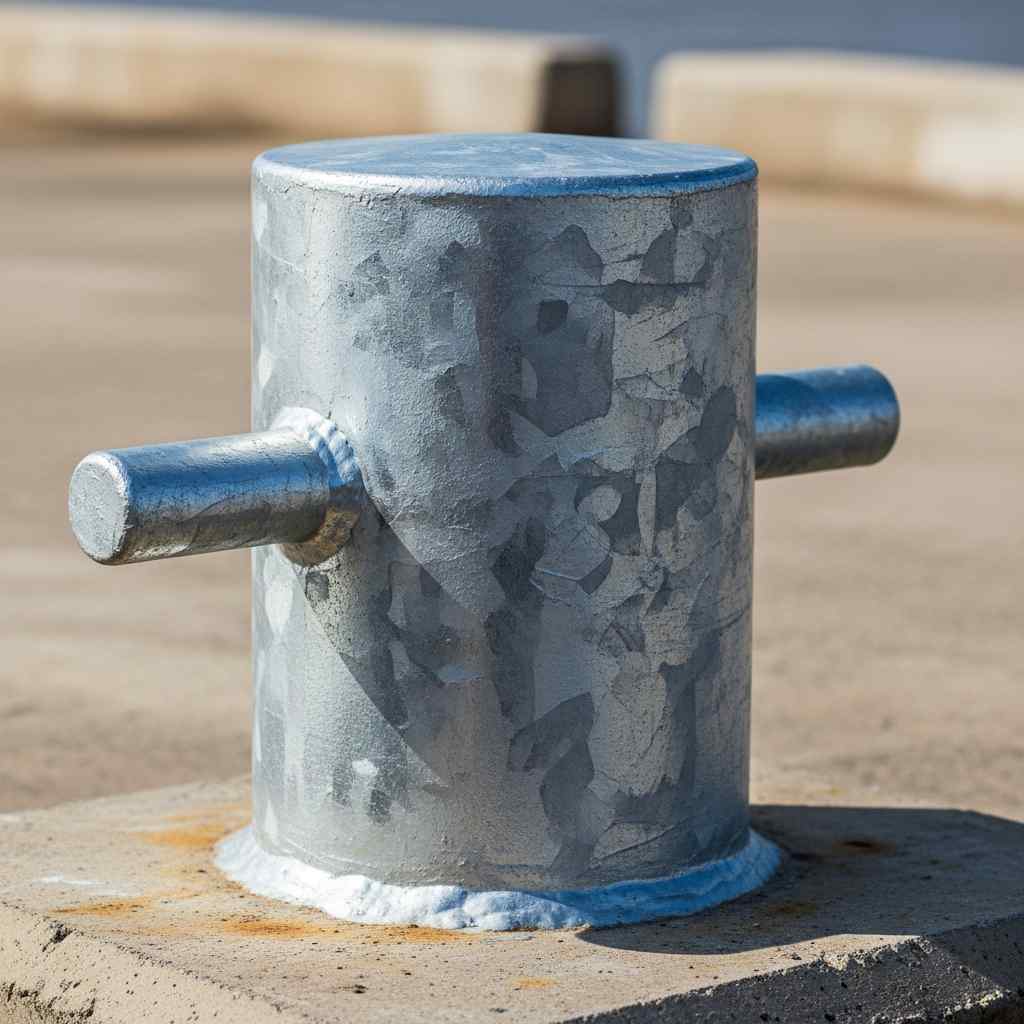 A new galvanized steel mooring bollard on a jetty pier.
Safety and Regulatory Considerations
The primary advertised benefit is safety. The National Inland Waterways Authority (NIWA) has banned loading at informal jetties. Enforcement is weak. A designated jetty provides a focal point for inspections. The Nation reported in 2026 that NIWA officials in Port Harcourt confirmed plans for routine checks on life jackets and boatworthiness at the new site.
Maritime safety records for the region are grim. Incidents involving capsized boats are often linked to overcrowding and poor boarding. A stable jetty with clear boundaries makes managing numbers easier. The waiting hall also prevents overcrowding on the pier itself. The project aligns with broader federal goals to improve waterway safety, as Leadership Newspaper noted in 2025. The goals are just inconsistently applied.
Maintenance and Sustainability Questions
This brings us to the perennial problem. The long-term functionality depends on a maintenance plan. The handover document will assign routine upkeep to the Okrika Local Government Council. Council officials acknowledge the challenge of funding this from their allocation.
A local government engineer cited the corrosive marine environment as a constant threat, requiring periodic painting and repair (Daily Trust, 2026).
Community stewardship models are under discussion. The boat operators’ union proposed a small levy per trip. The success of such arrangements in other parts of the Niger Delta has been mixed. They often fail without strong institutional backing. The durability of this investment will test local governance capacity, a reality Blueprint Newspapers highlighted in 2025.
Comparative Infrastructure in the Niger Delta
Contrast this with the wider region. Infrastructure is uneven. Some Local Government Areas have multiple modern jetties. Others have none. A 2025 survey by the Niger Delta Development Commission (NDDC) noted functional public jetties serve less than 40% of major water transport routes.
Disparity often correlates with political influence.
In Rivers State, similar projects have been completed in Abonnema, Degema, and Bonny. The Bonny model includes a larger terminal. The Okrika structure is more modest. Analysts observe these projects frequently follow a political cycle, with completions clustered near elections. The Okrika project’s timeline doesn’t fit that pattern precisely, Arise News reported in 2026.
The Human Element and Daily Use
For daily commuters, the experience of waiting has changed. The hall offers benches, a concrete floor, and protection. A woman who travels daily to Port Harcourt to sell fish noted the difference for her and her children. The physical improvement is tangible. Wait, it gets more complex. Ancillary services like clean water or sanitation are absent from the design.
The rhythm of activity has started to formalize. Boat operators park orderly. Passengers line up inside. This order replaces shouting and jostling. The change is subtle but significant for the social management of a shared resource. It shows how physical infrastructure can influence social organization.
A Public Maintenance Log
Here is a single, actionable step. Secure a public maintenance ledger at the jetty office. Record every repair, cleaning, and inspection with dates, costs, and responsible parties. Transparency creates accountability.
It lets community members see when work was last done. It empowers them to ask questions. The ledger requires only a notebook and a commitment to regular entries. That is a minimal investment for sustaining a multimillion-naira asset.



Transportation & Infrastructure
Rescue Boats Arrive in Yobe After River Tragedy Kills 30
Rescue boats reach Yobe State following a fatal boat accident on the Nguru-Gashua waterway. The delivery aims to prevent future tragedies on Nigeria’s inland waterways.
Rescue Boats Arrive in Yobe After River Tragedy Kills 30
Published: 12 March, 2026
Twelve new boats arrived in Damaturu in March 2026. They were a direct, costly answer to a single question: what happens when a community has nothing to throw into the water when a boat goes down? The capsizing on the Nguru-Gashua waterway claimed 30 lives just weeks before, as reported by Quality Times. The handover ceremony followed intense pressure. It exposed a chronic deficit in maritime emergency response across the north.
The facts from NIWA were stark. An overloaded wooden vessel, designed for far fewer, was carrying 52 people. Search operations recovered 30 bodies. Local divers and fishermen rescued the rest. The official toll, confirmed by Yobe SEMA in Leadership, continues to be 30.
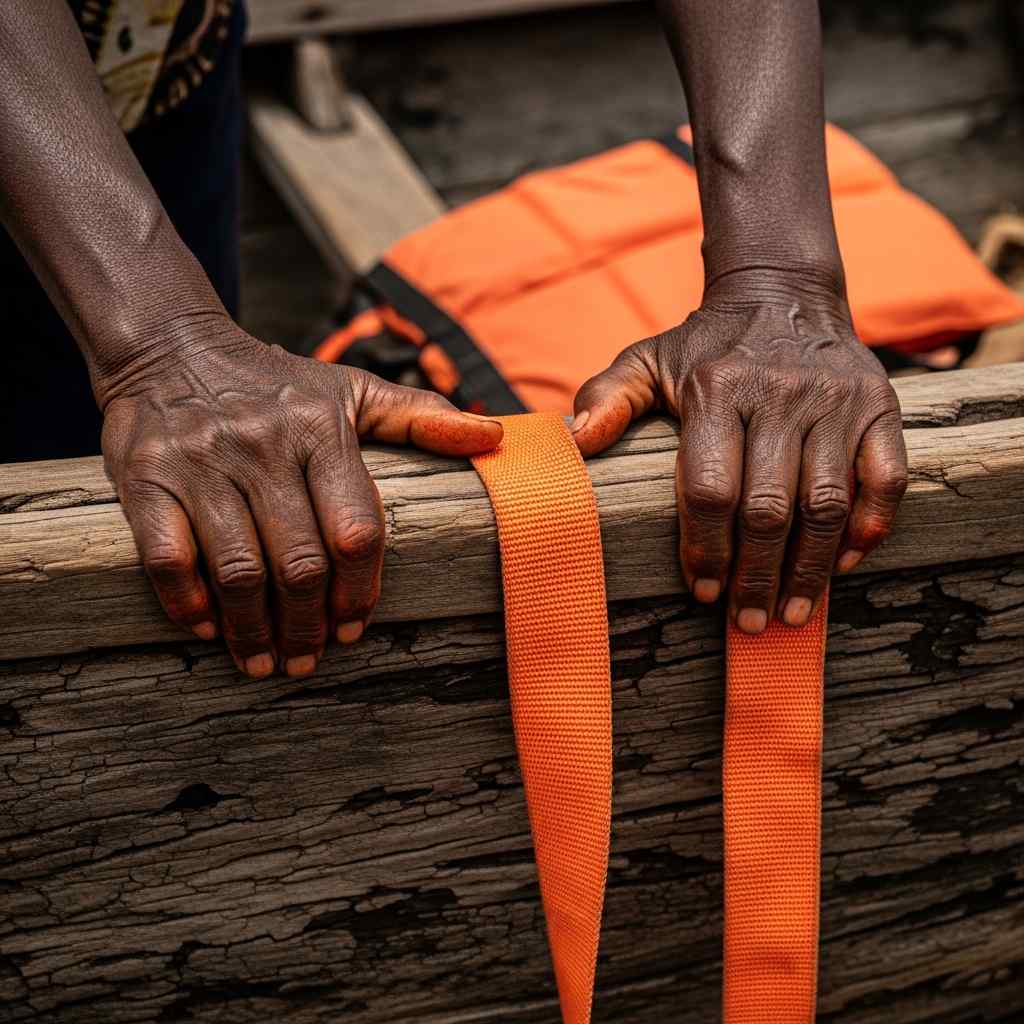
Governor Mai Mala Buni ordered an immediate review of water transport rules. The government moved fast, procuring the 12 rescue boats and 200 life jackets. The speed surprised many. Hon. Abdullahi Bego, the State Commissioner for Information, stated at the handover: “The provision of these boats is a commitment to prevent a repeat of this painful loss. Our waterways must be safe for commerce and travel.”
The Nigerian Inland Waterways Authority pledged technical support. But the trouble is, as Engineer John Dauda, NIWA’s Area Manager in Yobe, told The Nation, accidents stem from overloading and ignored weather warnings. The authority lacks the patrol vessels to enforce the rules on remote routes.
This was not an isolated event. It fits a brutal pattern. River transport is a critical, cheaper alternative to terrible roads. But safety infrastructure here gets pennies compared to roads and railways. A 2025 NIMASA report, cited by BusinessDay, found less than 15% of passenger boats on inland waterways carry adequate life-saving equipment. The report highlighted a severe shortage of proper rescue assets. Most responses rely on local fishermen and their canoes. This ad-hoc system fails in poor visibility or strong currents.
The new assets are rigid-hulled inflatable boats. They are more stable than wooden canoes. The Yobe State Government plans to station them along the Komadugu Yobe river system, as Blueprint noted. Nguru, Gashua, and Geidam local authorities will host them. Each boat requires a crew of three. The state, with NIWA, started training 36 personnel from the fire service and local vigilante groups. Dr. Mohammed Goje, Executive Secretary of Yobe SEMA, put it plainly: “A boat in a warehouse saves no one. We are training locals who know these waters to man them, so response time is minutes, not hours.”
But there is a catch. Investment often only follows tragedy. The national focus is on roads and air. The budget for the safety of inland waterways is a fraction of that for federal roads. This disparity persists even though waterways serve millions. Contrast this with the potential. A 2025 World Bank assessment noted the economic potential of inland waterways for moving bulk goods. That same assessment flagged safety as the primary constraint on increase.
Wait, it gets more complex. Procurement is just the start. Maintaining engines, buying fuel, repairing hulls, all need a dedicated annual budget. Many states struggle with these operational costs after the initial fanfare. The boats need secure docking. They also need a way to be called. Many riverine areas have poor mobile networks. A complementary investment in radio communication is necessary. The current plan lacks details on this.
Some argue preventing accidents requires equal focus on enforcement. Stationing officials at major jetties to monitor passenger counts would address root causes. That requires political will to potentially disrupt livelihoods during bad weather.
So what happens next? Residents in Gashua are cautiously optimistic. They recall promises that faded. Community leaders stress the boats must operational, not locked away. The tragedy has spurred local action. A coalition in Nguru now plans weekly safety campaigns at the main jetty. They volunteer to count passengers. This community ownership is a positive development.
The Federal Ministry of Transportation has referenced the Yobe model for a national safety framework. A draft policy from 2025 proposed a levy on waterway users to fund rescue services. It faces debate.
This brings us to a single, immediate fix. State governments and NIWA should mandate one thing: no passenger boat departs a major jetty without a life jacket for every person on board. The distribution by Yobe of 200 jackets is a start. This rule is simple. It is easy to monitor. It directly impacts survival rates. Enforcement could begin at the busiest jetties. Boat operators would adapt. This small fix addresses the most common factor in drowning deaths. It creates a culture of safety from the ground up.
The arrival of twelve boats in Yobe is a reactive step. Its achievement depends on sustained funding, community integration, and a parallel commitment to prevention. The memory of the 30 lives lost demands this becomes a permanent fixture, not a temporary salve.
Transportation & Infrastructure
Water Safety in Nigeria: The Night Sailing Ban and a Region’s Risky Lifeline
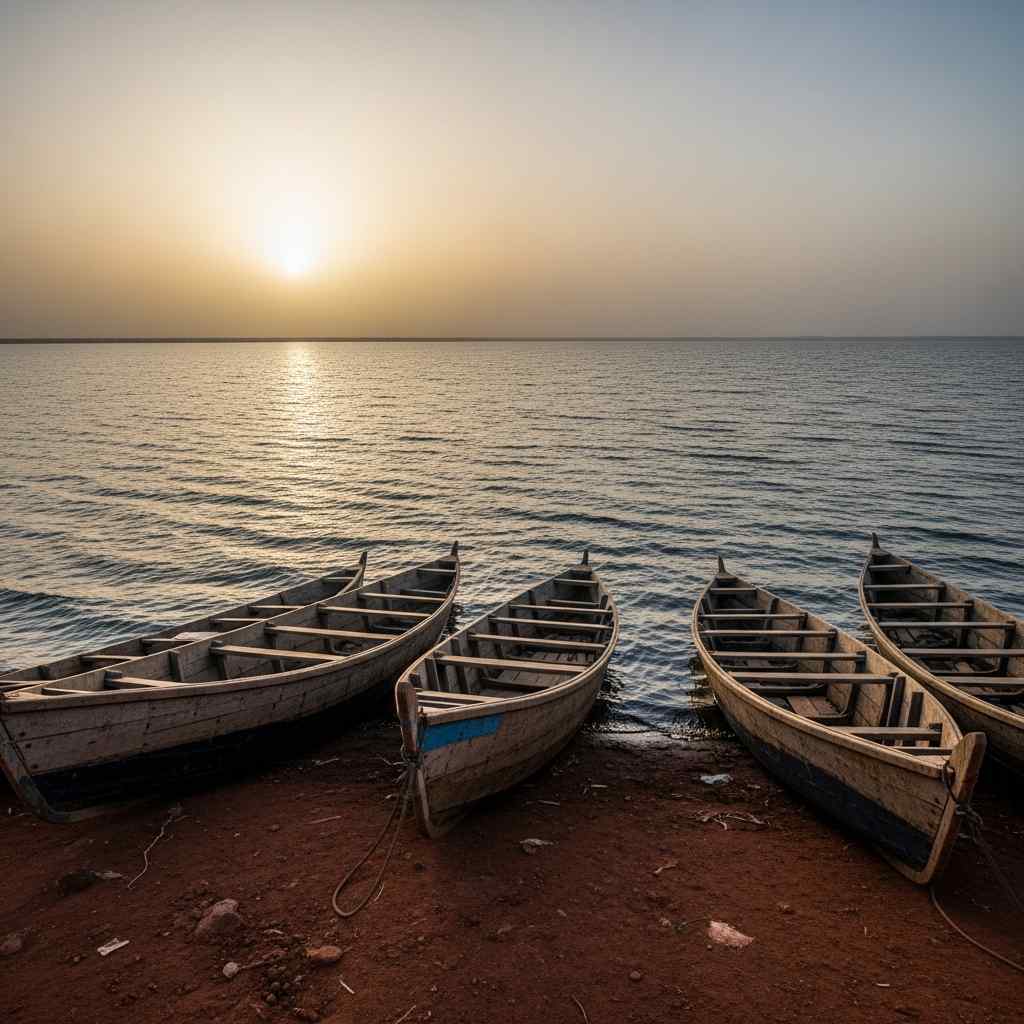
Water safety in Nigeria’s northeast faces a critical test as the NEDC issues a formal warning against night sailing on Lake Chad and inland waterways to reduce drownings.
Water Safety in Nigeria: The Night Sailing Ban and a Region’s Risky Lifeline
Published: 12 March, 2026
How do you ban a necessity? The North East Development Commission (NEDC) issued a directive in February 2026 banning night travel on rivers and Lake Chad. The warning followed a series of deadly boat mishaps, including a January 2026 tragedy on the Yobe/Kumadugu River that claimed 29 lives. This is the official response to a permanent crisis for communities with no roads.
Here is the thing. For thousands in Borno, Adamawa, and Yobe states, a wooden canoe is the only bus available. The commission knows this. The ban simply acknowledges a system that fails daily.
When the River is Your Only Road
You find the reality in places like Baga and Doro in Borno. A network of earth roads became unusable after more than a decade of conflict. The Lake Chad Basin shrank by about 90% since the 1960s, according to the United Nations Environment Programme (UNEP). This environmental collapse created new, unpredictable waterways.
Farmers, traders, and families use these channels. A trip that took 30 minutes by road now takes 3 hours by boat. People travel at night to reach markets at dawn or to avoid the scorching daytime heat. The night sailing ban asks them to choose between economic survival and physical survival.
“The waterways remain the only means of movement and livelihood for our people. But traveling at night, without life jackets, in overloaded boats, is a huge risk we must address.”
— Mohammed Alkali, Managing Director of the NEDC, in a statement on February 18, 2026.
The commission cited overloading, poor boat conditions, and zero safety equipment as the main dangers. A source within the National Inland Waterways Authority (NIWA) told Premium Times that a significant percentage of passenger boats on these routes lack registration or safety checks. Specific numbers are difficult to verify.
The Numbers Behind the Warning
Official data on boat accidents in Nigeria is fragmented. The National Bureau of Statistics (NBS) does not categorize inland waterway mishaps separately from general transport accidents. The real picture comes from local reports and humanitarian agencies.
The United Nations Office for the Coordination of Humanitarian Affairs (OCHA) documented at least 14 major fatal boat incidents in the northeast between January 2024 and December 2025. These accidents claimed more than 250 lives. The actual figure is likely higher.
The January 2026 tragedy on the Yobe/Kumadugu River became the immediate catalyst. A boat carrying 52 passengers struck submerged tree trunks at approximately 7:35 p.m., capsizing in darkness. 29 lives were lost, including women and children. Survivors reported the vessel had no lights and no life jackets.
Another major incident in August 2025 in Shani LGA, Borno, left 3 dead and 17 rescued. A separate capsizing in Sokoto State claimed 22 lives around the same period.
As The Guardian Nigeria reported in March 2026, the NEDC presented a total budget proposal of N244.06 billion for the 2026 fiscal year. The exact percentage of the total federal budget this represents requires verification. Only a fraction of this allocation is for water transport safety.
Why a Simple Ban Might Miss the Mark
The directive makes logical sense. Visibility drops at night. Rescue operations are harder to mount. But policy meets reality on the water.
For a fisherman in Dikwa, the best catch happens at dawn. He must set out in darkness. A trader from Maiduguri needs to get to markets near Cameroon’s border early. She travels overnight. The ban assumes the existence of an alternative.
There is no alternative. The Multinational Joint Task Force (MNJTF) deems some roads in the region unsafe due to remnant insurgent activity. The state of rural roads is poor. BusinessDay reported in 2025 that Borno state has a road network deficit exceeding 70%.
So the ban becomes another rule people navigate around. Compliance depends on the urgency of the and the perceived risk of enforcement, which is low.
“We know it is dangerous. But if I do not go at night, my fish will spoil. I have no refrigerator. What choice do I have?”
— Mallam Ibrahim, a fisherman on Lake Chad, speaking to a Vanguard correspondent in March 2026.
The Bigger Picture of Water Safety in Nigeria
The northeast crisis is a severe symptom of a national condition. Water safety in Nigeria operates on a spectrum of neglect. The National Inland Waterways Authority (NIWA) has a mandate covering over 10,000 kilometers of waterways. Its capacity for regulation and enforcement is limited.
Contrast this with the commercial south. Passengers crowd into ferries in Lagos without life jackets. The Lagos State Waterways Authority (LASWA) records show boat accidents in 2025, with fatalities. Specific numbers require verification from LASWA’s official records. The causes remain familiar: overloading, reckless driving, and unseaworthy vessels.
In February 2026, the Institute for Legislative and Democratic Studies (NILDS) pushed for stronger penalties for night sailing and overloading, recommending amendments to the NIWA Act to empower local enforcement. The proposal is currently before the National Assembly.
Wait, it gets more complex. The federal government launched a Nigerian Ports Authority (NPA) electronic manifest system for major ports. This system has little reach into the informal, rural passenger boat networks that move the majority of people. The digital transition in transport safety is a Lagos and Port Harcourt phenomenon.
A 2024 report by the World Bank on inland waterway transport in Africa placed Nigeria low on safety regulatory frameworks. The report cited a “significant gap between policy and implementation.”
What Could Make a Difference?
The NEDC ban is a necessary first step. It creates official awareness. The next steps require moving beyond bulletins.
One idea involves simple, low-cost technology. Local boat operators’ unions could maintain a basic, phone-based trip logging system. Before departure, the boat captain messages a registered number with passenger count and destination. This creates a digital manifest and alerts authorities if a boat fails to report arrival.
The NEDC or state governments could subsidize the distribution of life jackets and handheld waterproof lights to boat operators. Making this equipment available for rent with each ticket would integrate safety into the cost of travel.
Community-led safety committees in riverine areas have a role. These committees, trained by the National Emergency Management Agency (NEMA), could conduct basic boat condition checks and advocate against overloading. They understand the local rhythms and pressures better than any official from Abuja.
As Leadership newspaper reported in January 2026, the Adamawa state government partnered with a local NGO to train 40 community volunteers in first aid and water rescue. This model is replicable.
A Path Forward on the Water
The situation presents a difficult equation. People need to move. The environment is hazardous. The regulatory state is weak.
Authorities could designate and publicize official daytime travel windows for specific high-risk routes. They could couple this with a small subsidy for boat operators who adhere to the schedule, offsetting potential lost income from night trips.
Investment in short, critical road segments to connect the most isolated riverine communities to existing road networks would reduce water dependence over time. The 2026 budget of the Ministry of Works includes provisions for northeast reconstruction. Targeting water-adjacent communities would have a direct impact.
Insurance companies could develop micro-insurance products for boat passengers. A small premium added to the transport fare would provide some financial compensation for families in the event of an accident. This would formalize a segment of the transport economy.
“Safety on water is not about grand policies alone. It is about providing a life jacket, a whistle, and a reason for the boat driver to care. We start from there.”
— Dr. Fatima Akilu, a humanitarian policy analyst, in a March 2026 interview with The Cable.
The Unspoken Rule of Survival
In the end, the people of the northeast will continue to use the waterways. The NEDC ban adds a layer of official concern to a daily risk calculation. The real test is whether this ban translates into tangible support that makes daytime travel more viable and safe travel more possible.
The data shows a persistent, preventable loss of life. The economic pressures pushing people onto night boats remain strong. Water safety in Nigeria, especially in the conflict-affected northeast, is a story of neglected infrastructure meeting human resilience.
So here we are. A government agency does its job by issuing a ban. The people do their job by surviving. Bridging that gap requires more than words on a page. It needs life jackets on bodies, lights on boats, and roads where water is the only path.
. (Digital Illustration: GoBeyondLocal)<. (Digital Illustration: GoBeyondLocal)f. (Digital Illustration: GoBeyondLocal)i. (Digital Illustration: GoBeyondLocal)g. (Digital Illustration: GoBeyondLocal)c. (Digital Illustration: GoBeyondLocal)a. (Digital Illustration: GoBeyondLocal)p. (Digital Illustration: GoBeyondLocal)t. (Digital Illustration: GoBeyondLocal)i. (Digital Illustration: GoBeyondLocal)o. (Digital Illustration: GoBeyondLocal)n. (Digital Illustration: GoBeyondLocal) . (Digital Illustration: GoBeyondLocal)c. (Digital Illustration: GoBeyondLocal)l. (Digital Illustration: GoBeyondLocal)a. (Digital Illustration: GoBeyondLocal)s. (Digital Illustration: GoBeyondLocal)s. (Digital Illustration: GoBeyondLocal)=. (Digital Illustration: GoBeyondLocal)". (Digital Illustration: GoBeyondLocal)w. (Digital Illustration: GoBeyondLocal)p. (Digital Illustration: GoBeyondLocal)-. (Digital Illustration: GoBeyondLocal)e. (Digital Illustration: GoBeyondLocal)l. (Digital Illustration: GoBeyondLocal)e. (Digital Illustration: GoBeyondLocal)m. (Digital Illustration: GoBeyondLocal)e. (Digital Illustration: GoBeyondLocal)n. (Digital Illustration: GoBeyondLocal)t. (Digital Illustration: GoBeyondLocal)-. (Digital Illustration: GoBeyondLocal)c. (Digital Illustration: GoBeyondLocal)a. (Digital Illustration: GoBeyondLocal)p. (Digital Illustration: GoBeyondLocal)t. (Digital Illustration: GoBeyondLocal)i. (Digital Illustration: GoBeyondLocal)o. (Digital Illustration: GoBeyondLocal)n. (Digital Illustration: GoBeyondLocal)". (Digital Illustration: GoBeyondLocal)>. (Digital Illustration: GoBeyondLocal)<. (Digital Illustration: GoBeyondLocal)/. (Digital Illustration: GoBeyondLocal)f. (Digital Illustration: GoBeyondLocal)i. (Digital Illustration: GoBeyondLocal)g. (Digital Illustration: GoBeyondLocal)c. (Digital Illustration: GoBeyondLocal)a. (Digital Illustration: GoBeyondLocal)p. (Digital Illustration: GoBeyondLocal)t. (Digital Illustration: GoBeyondLocal)i. (Digital Illustration: GoBeyondLocal)o. (Digital Illustration: GoBeyondLocal)n. (Digital Illustration: GoBeyondLocal)>. (Digital Illustration: GoBeyondLocal)

Your Driver’s Licence is Now a National ID
Published: 01 March, 2026
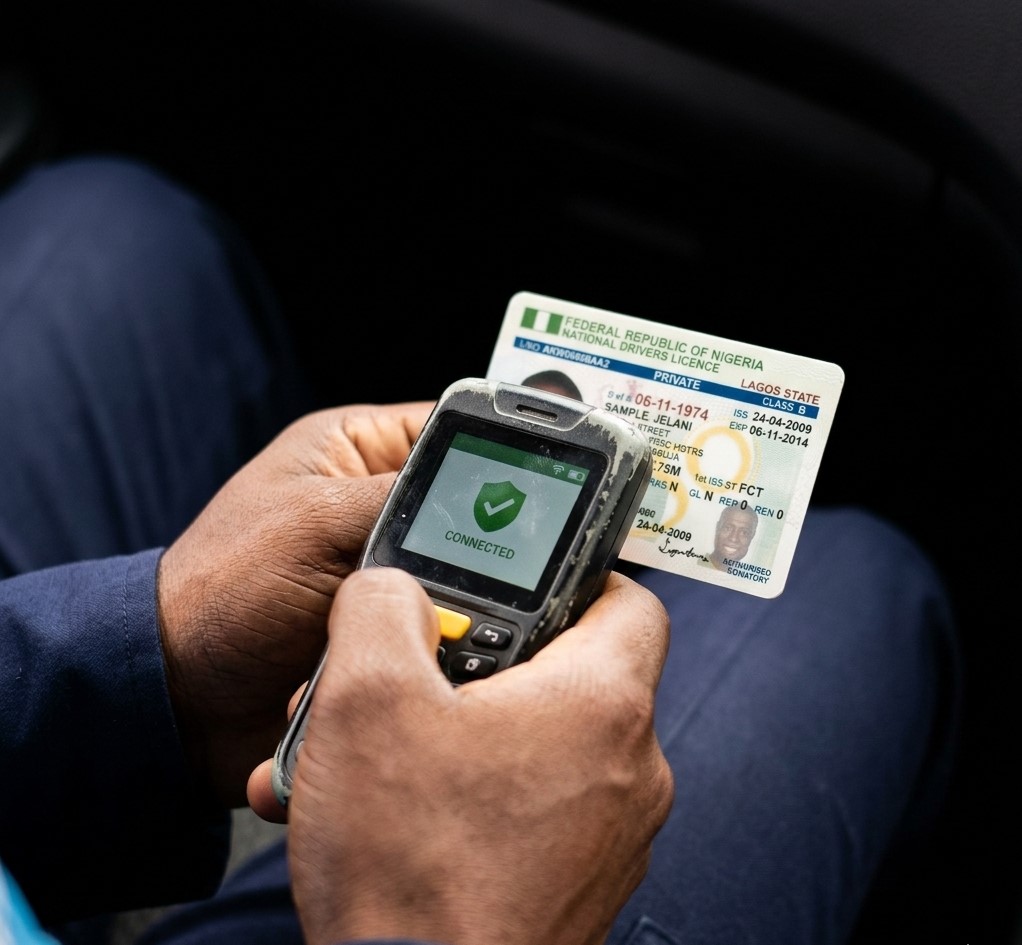
That plastic card in your wallet? It’s no longer just proof you can drive. It is now your identity. The partnership between the Federal Road Safety Corps and the National Identity Management Commission has moved from talk to action. Their databases are now syncing. As official reports confirmed in early 2026, this integration allows real-time verification. When an FRSC officer processes your licence, the system pings the NIMC database to check your National Identification Number. The aim is to kill off paper trails and manual checks. But there is a catch. News outlets reported the FRSC has intensified enforcement. Your valid licence is still recognised. Yet, if it lacks a verified NIN, expect delays at renewal. The push for total data harmony is here. Security analysts see the logic. The NIN requirement is a bulwark against identity theft. With every licence tied to biometrics in the national database, using aliases is far harder. The system is designed to flag discrepancies in your face or details. This supports the broader digital identity agenda. Your licence is a reliable ID, but only if the NIN data matches perfectly. A name mismatch can trigger a temporary hold.
What This Means for You Behind the Wheel
Financial and tech analysts broke down the practical effects in recent 2026 reviews. Three shifts affect every driver. First, License Renewal Now Requires NIN Verification First. You cannot renew without a verified NIN. The FRSC system queries NIMC during your application. A biometric match lets you proceed. A mismatch—like a name spelling difference—pauses everything. You must then visit a NIMC enrollment centre to update your records. This has sparked a rush on their offices. Citizens with legacy errors, like using nicknames on one document, are forced to synchronise. Second, Traffic Offences Now Link to Your Identity. A violation is tied to your NIN. This improves enforcement. Before, records were fragmented by state. Now, your driving history is accessible nationwide. It encourages compliance. Penalties follow you, not just your physical card. Third, Third-Party Verification Becomes Faster. Banks or employers can check licence authenticity through an integrated portal. As noted in reports, financial institutions increasingly accept the licence for account opening post-verification. It reduces the document burden for citizens.
The system uses NIMC protocols to handle the volume. Licence data sits with the FRSC, but verification checks the NIMC database. The main technical hurdle? Standardising name formats between two legacy systems. This brings us to the friction. Discrepancies in dates of birth or maiden names cause most failures. Women who changed surnames after marriage often must update their NIMC records. NIMC provides modification services, but they involve fees and waiting.
The Unresolved Gaps
Industry reports identify clear hurdles. Network Dependencies are critical. The system needs both FRSC and NIMC servers online. Downtime on either side forces manual checks, causing delays. There is a Correction Backlog. The volume of people seeking data sync has created long waiting times for appointments, especially in cities. During this wait, your ability to renew a licence is limited. Then there’s Rural Access. Drivers outside urban centres often travel to cities for both NIMC updates and FRSC renewals. This adds a logistical cost to simple compliance.
What You Can Do Today
Verify Your NIN Details Early. Visit the NIMC self-service portal or a centre. Confirm your name and date of birth match your other documents. Start corrections *before* your licence expires. Check Your License Status Online. The FRSC portal can show a “NIN mismatch” flag on your file. Use it before heading to an office. Maintain Clear Records. Keep your NIN slip and licence in good condition. A faded barcode can fail at a checkpoint. A clear digital photo on your phone helps, but it doesn’t replace the physical card. Use Official Complaint Channels. The FRSC has helpdesk lines for integration issues. For persistent technical errors, lodge a report with your NIN and licence number. The road ahead? The goal is for this digital bridge to mature into a background utility. It should simplify, not complicate, the lives of Nigerian road users. Whether it gets there is the real test.

Osimhen Award for Turkey Footballer of the Year After Stellar Season

World Cup Qualification Miss for Super Eagles as DR Congo Takes Final Spot

How to Register Vehicle at FRSC and Get Number Plate Nigeria

Plateau Security Cameras Tinubu Deploys 5000 Digital Units

Jos Massacre Update Governor Mutfwang Reveals NDLEA Impersonation

Nasarawa Communal Attack Leaves Eleven Dead in Udege

Onyejeocha Resignation as Labour Minister Marks Political Shift

How to Check a Land Title at Alausa Land Registry Before You Pay

Local Herbal Drink Side Effects and Popular Brands in Nigeria

Dark Skin Skincare for Nigerian Weather and Glow

Refurbished iPhone 13 Prices in Computer Village Market in 2026

Mini Importation Tips for Nigeria Duty-Free China Goods in 2026

Internet Sovereignty: Why Some Countries Want Their Own Separate Internet

The Story Of The Nigerian Who Helped Build Global Internet Systems

Nigerian Hackers: The Global Fraud Story and Its Fallout

Forgotten Satellites Defy Silence, Beaming Signals for Decades

Your Digital Store in Nigeria and the Reality of Domain Expiration

The Phone Stay So Quiet: An Investigation into Nigeria’s Silent Customer Lines

The Business That Died: A Nigerian Case Study in Refusal to Adapt

Hiding Your Business From People With Money

How Nollywood Grew Without Government Support

Comedy Industry in Nigeria and Its Economic Contribution

Nigeria Produces 67 Percent Global Yam Output

Security and Military Operations in Zamfara State: The Heavy Truth of 2026
 Edutech Portal2 months ago
Internet Sovereignty: Why Some Countries Want Their Own Separate Internet
- Edutech Portal2 months ago
The Story Of The Nigerian Who Helped Build Global Internet Systems
- Edutech Portal2 months ago
Nigerian Hackers: The Global Fraud Story and Its Fallout
- Edutech Portal2 months ago
Forgotten Satellites Defy Silence, Beaming Signals for Decades
- Edutech Portal2 months ago
Your Digital Store in Nigeria and the Reality of Domain Expiration
- Edutech Portal2 months ago
The Phone Stay So Quiet: An Investigation into Nigeria’s Silent Customer Lines
- Edutech Portal2 months ago
The Business That Died: A Nigerian Case Study in Refusal to Adapt
- Edutech Portal2 months ago
Hiding Your Business From People With Money