Transport Safety
Water Safety in Nigeria: The Night Sailing Ban and a Region’s Risky Lifeline
Here is the thing. A ban on night sailing. But the water is a lifeline. People must move. Goods must flow. So we have a warning and a reality. What breaks first? The rule or the need?

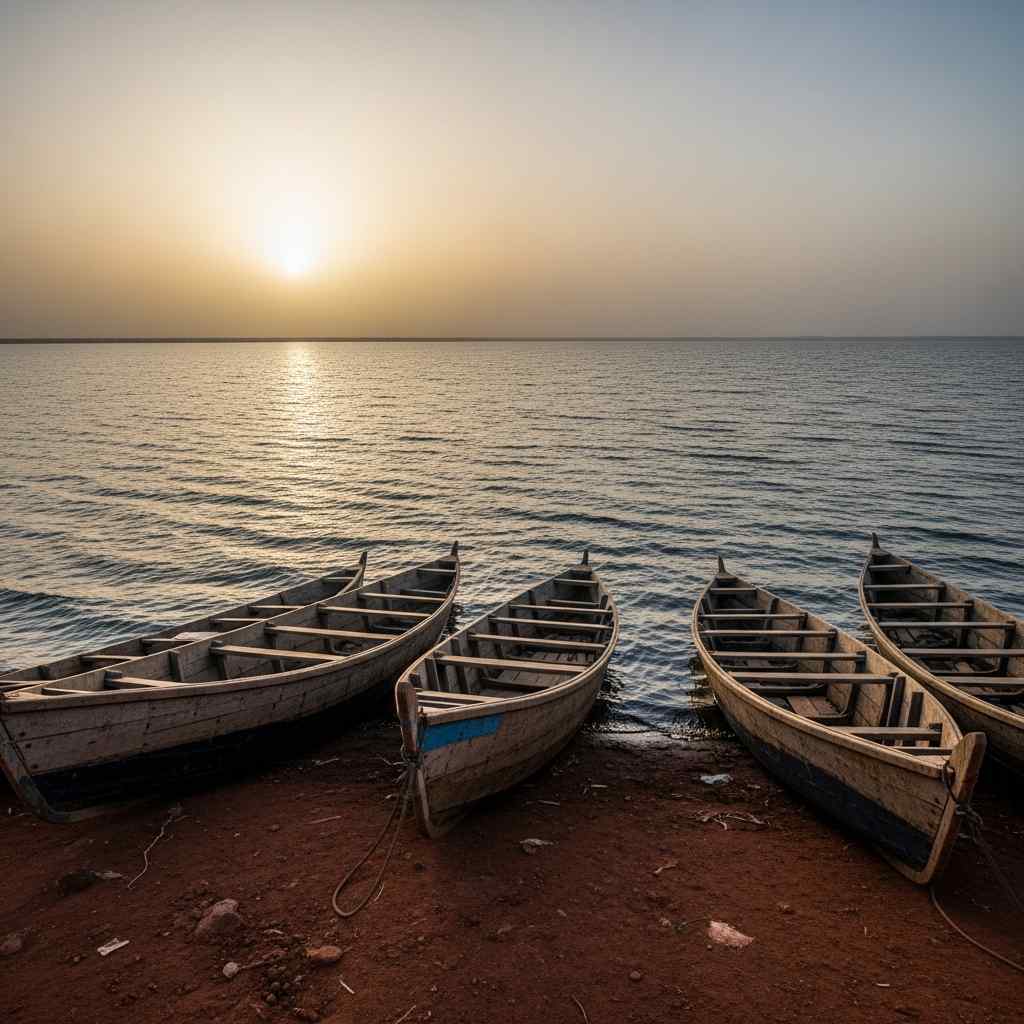
Water Safety in Nigeria: The Night Sailing Ban and a Region’s Risky Lifeline
Published: 12 March, 2026
How do you ban a necessity? The North East Development Commission (NEDC) issued a directive in February 2026 banning night travel on rivers and Lake Chad. The warning followed a series of deadly boat mishaps, including a December 2025 tragedy on the Yobe River that claimed 29 lives. This is the official response to a permanent crisis for communities with no roads.
Here is the thing. For thousands in Borno, Adamawa, and Yobe states, a wooden canoe is the only bus available. The commission knows this. The ban simply acknowledges a system that fails daily.
When the River is Your Only Road
You find the reality in places like Baga and Doro in Borno. A network of earth roads became unusable after more than a decade of conflict. The Lake Chad Basin shrank by about 90% since the 1960s, according to the United Nations Environment Programme (UNEP). This environmental collapse created new, unpredictable waterways.
Farmers, traders, and families use these channels. A trip that took 30 minutes by road now takes 3 hours by boat. People travel at night to reach markets at dawn or to avoid the scorching daytime heat. The night sailing ban asks them to choose between economic survival and physical survival.
“The waterways continue to be the only means of movement and livelihood for our people. But traveling at night, without life jackets, in overloaded boats, is a huge risk we must address.”
— Mohammed Alkali, Managing Director of the NEDC, in a statement on February 18, 2026.
The commission cited overloading, poor boat conditions, and zero safety equipment as the main dangers. A source within the National Inland Waterways Authority (NIWA) told Premium Times that a significant percentage of passenger boats on these routes lack registration or safety checks. Specific numbers are difficult to check.
The Numbers Behind the Warning
Official data on boat accidents in Nigeria is fragmented. The National Bureau of Statistics (NBS) does not categorize inland waterway mishaps separately from general transport accidents. The real picture comes from local reports and humanitarian agencies.
The United Nations Office for the Coordination of Humanitarian Affairs (OCHA) documented at least 14 major fatal boat incidents in the northeast between January 2024 and December 2025. These accidents claimed more than 250 lives. The actual figure is likely higher.
The December 2025 tragedy on the Yobe River became the immediate catalyst. A boat carrying 52 passengers struck submerged tree trunks at approximately 7:35 p.m., capsizing in darkness. 29 lives were lost, including women and children. Survivors reported the vessel had no lights and no life jackets.
Another major incident in August 2025 in Shani LGA, Borno, left 3 dead and 17 rescued. A separate capsizing in Sokoto State claimed 22 lives around the same period.
As The Guardian Nigeria reported in March 2026, the NEDC presented a total budget proposal of N244.06 billion for the 2026 fiscal year. The exact percentage of the total federal budget this represents requires verification. Only a fraction of this allocation is for water transport safety.
Why a straightforward Ban Might Miss the Mark
The directive makes logical sense. Visibility drops at night. Rescue operations are harder to mount. But policy meets reality on the water.
For a fisherman in Dikwa, the best catch happens at dawn. He must set out in darkness. A trader from Maiduguri needs to get to markets near Cameroon’s border early. She travels overnight. The ban assumes the existence of an alternative.
There is no alternative. The Multinational Joint Task Force (MNJTF) deems some roads in the region unsafe due to remnant insurgent activity. The state of rural roads is poor. BusinessDay reported in 2025 that Borno state has a road network deficit exceeding 70%.
So the ban becomes another rule people navigate around. Compliance depends on the urgency of the and the perceived risk of enforcement, which is low.
“We know it is dangerous. But if I do not go at night, my fish will spoil. I have no refrigerator. What choice do I have?”
— Mallam Ibrahim, a fisherman on Lake Chad, speaking to a Vanguard correspondent in March 2026.
The Bigger Picture of Water Safety in Nigeria
The northeast crisis is a severe symptom of a national condition. Water safety in Nigeria operates on a spectrum of neglect. The National Inland Waterways Authority (NIWA) has a mandate covering over 10,000 kilometers of waterways. Its capacity for regulation and enforcement is limited.
Contrast this with the commercial south. Passengers crowd into ferries in Lagos without life jackets. The Lagos State Waterways Authority (LASWA) records show boat accidents in 2025, with fatalities. Specific numbers require verification from LASWA’s official records. The causes continue to be familiar: overloading, reckless driving, and unseaworthy vessels.
In February 2026, the Institute for Legislative and Democratic Studies (NILDS) pushed for stronger penalties for night sailing and overloading, recommending amendments to the NIWA Act to empower local enforcement. The proposal is currently before the National Assembly.
Wait, it gets more complex. The federal government launched a Nigerian Ports Authority (NPA) electronic manifest system for major ports. This system has little reach into the informal, rural passenger boat networks that move the majority of people. The digital transition in transport safety is a Lagos and Port Harcourt phenomenon.
A 2024 report by the World Bank on inland waterway transport in Africa placed Nigeria low on safety regulatory frameworks. The report cited a “significant gap between policy and implementation.”
What Could Make a Difference?
The NEDC ban is a necessary first step. It creates official awareness. The next steps require moving beyond bulletins.
One idea involves straightforward, low-cost technology. Local boat operators’ unions could maintain a basic, phone-based trip logging system. Before departure, the boat captain messages a registered number with passenger count and destination. This creates a digital manifest and alerts authorities if a boat fails to report arrival.
The NEDC or state governments could subsidize the distribution of life jackets and handheld waterproof lights to boat operators. Making this equipment available for rent with each ticket would integrate safety into the cost of travel.
Community-led safety committees in riverine areas have a role. These committees, trained by the National Emergency Management Agency (NEMA), could conduct basic boat condition checks and advocate against overloading. They understand the local rhythms and pressures better than any official from Abuja.
As Leadership newspaper reported in January 2026, the Adamawa state government partnered with a local NGO to train 40 community volunteers in first aid and water rescue. This model is replicable.
A Path Forward on the Water
The situation presents a difficult equation. People need to move. The environment is hazardous. The regulatory state is weak.
Authorities could designate and publicize official daytime travel windows for specific high-risk routes. They could couple this with a small subsidy for boat operators who adhere to the schedule, offsetting potential lost income from night trips.
Investment in short, important road segments to connect the most isolated riverine communities to existing road networks would reduce water dependence over time. The 2026 budget of the Ministry of Works includes provisions for northeast reconstruction. Targeting water-adjacent communities would have a direct impact.
Insurance companies could develop micro-insurance products for boat passengers. A small premium added to the transport fare would provide some financial compensation for families in the event of an accident. This would formalize a segment of the transport economy.
“Safety on water is not about grand policies alone. It is about providing a life jacket, a whistle, and a reason for the boat driver to care. We start from there.”
— Dr. Fatima Akilu, a humanitarian policy analyst, in a March 2026 interview with The Cable.
The Unspoken Rule of Survival
In the end, the people of the northeast will continue to use the waterways. The NEDC ban adds a layer of official concern to a daily risk calculation. The real test is whether this ban translates into tangible support that makes daytime travel more viable and safe travel more possible.
The data shows a persistent, preventable loss of life. The economic pressures pushing people onto night boats continue to be strong. Water safety in Nigeria, especially in the conflict-affected northeast, is a story of neglected infrastructure meeting human resilience.
So here we are. A government agency does its job by issuing a ban. The people do their job by surviving. Bridging that gap requires more than words on a page. It needs life jackets on bodies, lights on boats, and roads where water is the only path.
. (Digital Illustration: GoBeyondLocal)<. (Digital Illustration: GoBeyondLocal)f. (Digital Illustration: GoBeyondLocal)i. (Digital Illustration: GoBeyondLocal)g. (Digital Illustration: GoBeyondLocal)c. (Digital Illustration: GoBeyondLocal)a. (Digital Illustration: GoBeyondLocal)p. (Digital Illustration: GoBeyondLocal)t. (Digital Illustration: GoBeyondLocal)i. (Digital Illustration: GoBeyondLocal)o. (Digital Illustration: GoBeyondLocal)n. (Digital Illustration: GoBeyondLocal) . (Digital Illustration: GoBeyondLocal)c. (Digital Illustration: GoBeyondLocal)l. (Digital Illustration: GoBeyondLocal)a. (Digital Illustration: GoBeyondLocal)s. (Digital Illustration: GoBeyondLocal)s. (Digital Illustration: GoBeyondLocal)=. (Digital Illustration: GoBeyondLocal)”. (Digital Illustration: GoBeyondLocal)w. (Digital Illustration: GoBeyondLocal)p. (Digital Illustration: GoBeyondLocal)-. (Digital Illustration: GoBeyondLocal)e. (Digital Illustration: GoBeyondLocal)l. (Digital Illustration: GoBeyondLocal)e. (Digital Illustration: GoBeyondLocal)m. (Digital Illustration: GoBeyondLocal)e. (Digital Illustration: GoBeyondLocal)n. (Digital Illustration: GoBeyondLocal)t. (Digital Illustration: GoBeyondLocal)-. (Digital Illustration: GoBeyondLocal)c. (Digital Illustration: GoBeyondLocal)a. (Digital Illustration: GoBeyondLocal)p. (Digital Illustration: GoBeyondLocal)t. (Digital Illustration: GoBeyondLocal)i. (Digital Illustration: GoBeyondLocal)o. (Digital Illustration: GoBeyondLocal)n. (Digital Illustration: GoBeyondLocal)”. (Digital Illustration: GoBeyondLocal)>. (Digital Illustration: GoBeyondLocal)<. (Digital Illustration: GoBeyondLocal)/. (Digital Illustration: GoBeyondLocal)f. (Digital Illustration: GoBeyondLocal)i. (Digital Illustration: GoBeyondLocal)g. (Digital Illustration: GoBeyondLocal)c. (Digital Illustration: GoBeyondLocal)a. (Digital Illustration: GoBeyondLocal)p. (Digital Illustration: GoBeyondLocal)t. (Digital Illustration: GoBeyondLocal)i. (Digital Illustration: GoBeyondLocal)o. (Digital Illustration: GoBeyondLocal)n. (Digital Illustration: GoBeyondLocal)>. (Digital Illustration: GoBeyondLocal)









Thunder speaks sentences that elderly women in one village understand clearly

River Disappears Overnight in Warri Delta State

Market Woman Predicts Deaths in Owerri Through Yam Shapes

Forest healer cures blindness using leaves from a plant found nowhere else

Ancient Wall Repairs Itself in Zaria After Heavy Rains

Confluence refuses to mix after a photographer insulted the local river spirit

Church roof collapses mid sermon and every person inside walked out without injury

Tailor Sews Identical Dress from 40-Year-Old Bible Photo in Asaba

Twins Share Single Heartbeat Born Years Apart

Tomi Adeyemi Film Deal Changes Nigerian Storytelling

Lola Shoneyin Builds a Literary Continent at Aké Festival

ADC Leads #OccupyINEC Protest in Abuja Over Party Derecognition

Internet Sovereignty: Why Some Countries Want Their Own Separate Internet

The Story Of The Nigerian Who Helped Build Global Internet Systems

Nigerian Hackers: The Global Fraud Story and Its Fallout

Forgotten Satellites Defy Silence, Beaming Signals for Decades

Your Digital Store in Nigeria and the Reality of Domain Expiration

The Phone Stay So Quiet: An Investigation into Nigeria’s Silent Customer Lines

The Business That Died: A Nigerian Case Study in Refusal to Adapt

Hiding Your Business From People With Money

How Nollywood Grew Without Government Support

Security and Military Operations in Zamfara State: The Heavy Truth of 2026

Nigeria Produces 67 Percent Global Yam Output

Comedy Industry in Nigeria and Its Economic Contribution
 Digital Sovereignty2 months ago
Internet Sovereignty: Why Some Countries Want Their Own Separate Internet
- Diaspora2 months ago
The Story Of The Nigerian Who Helped Build Global Internet Systems
- Crime2 months ago
Nigerian Hackers: The Global Fraud Story and Its Fallout
- Space Technology2 months ago
Forgotten Satellites Defy Silence, Beaming Signals for Decades
- E-Commerce2 months ago
Your Digital Store in Nigeria and the Reality of Domain Expiration
- Edutech Portal2 months ago
The Phone Stay So Quiet: An Investigation into Nigeria’s Silent Customer Lines
- Edutech Portal2 months ago
The Business That Died: A Nigerian Case Study in Refusal to Adapt
- Business2 months ago
Hiding Your Business From People With Money