Security Analysis
The Unseen Frontline: How Humanitarian Crises Breed Security Threats
Here is the thing. Crises push people out. They leave behind empty spaces. So here we are. Who moves into those spaces? The answer is often trouble. It fills the vacuum the state cannot. This is the unseen frontline.

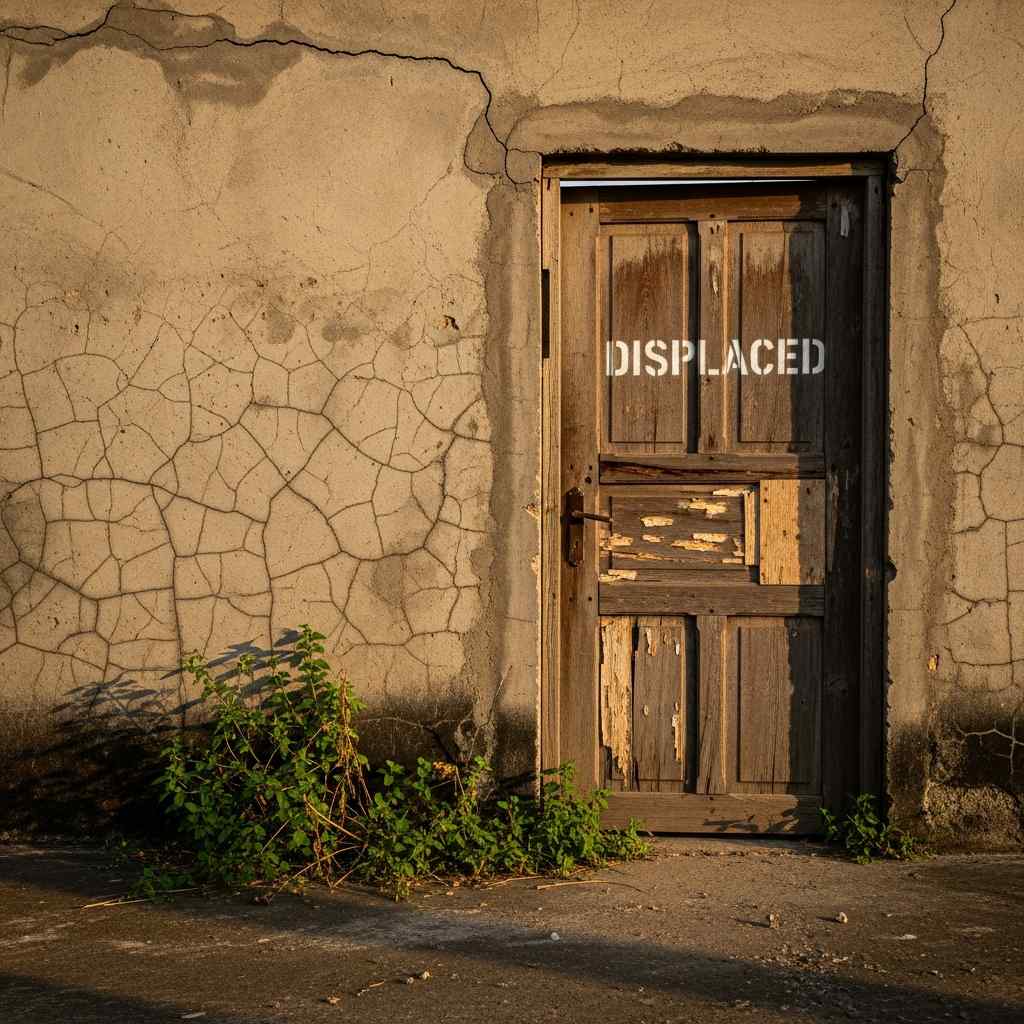
The Unseen Frontline: How Humanitarian Crises Breed Security Threats
Published: 17 March, 2026
Think of a nation within a nation. A record 3.6 million people now live as internally displaced persons across Nigeria. That figure, from the International Organization for Migration December 2025 report, is a permanent, mobile population. It forms a parallel geography of vulnerability that intersects directly with the fragile security architecture of the state.
The trouble has multiple, interlocking drivers. Conflict remains the primary engine. In the North East, the fourteen-year insurgency involving Boko Haram and its splinter groups continues to uproot communities. Attacks cause flight. Flight creates security vacuums that enable further attacks. As UN OCHA reported for December 2025, a staggering 2.4 million people remained displaced across Borno, Adamawa, and Yobe states alone.
Contrast this with the North West and North Central zones. Here, armed banditry and farmer-herder conflicts generate waves of displacement, but without the centralized camp structures of the North East. Families scatter. They place immense, often invisible pressure on local infrastructure. The National Emergency Management Agency struggles to track them.
Then there is the threat multiplier, climate change. Prolonged drought and unpredictable rainfall degrade farmland and pasture. A farmer who loses his harvest may have to move. A herder whose cattle have no water must find it elsewhere. These climate-driven migrations collide with settled communities. The conflict that sparks then triggers more displacement. It is a self-perpetuating cycle.
The Consequences
Large-scale displacement creates spaces with weak state authority. Where formal law enforcement retreats, other actors fill the void. For insurgent groups like the Islamic State West Africa Province, these ungoverned spaces offer sanctuary to regroup and plan.
But there is a catch. The camps themselves become targets. They concentrate trauma and poverty, making them fertile ground for infiltration and recruitment. Armed groups find purpose-seeking young men there. They may use the camps as logistical nodes. Places designed for protection morph into security liabilities.
The strain on host communities breeds a different instability. A town absorbing 50,000 newcomers buckles. Jobs vanish. Rents soar. Food prices spike. Resentment builds. This social tension creates fertile ground for communal violence. The fabric frays.
“The lines between humanitarian response and security stabilization have blurred completely. You cannot address one without the other. A hungry, displaced population is a population vulnerable to exploitation by any armed actor promising food or protection.” A senior analyst with the Institute for Security Studies, Abuja, February 2026.
Economic desperation fuels criminal economies. Stripped of livelihoods, displaced persons turn to illegal logging or unsafe artisanal mining. These grey-area activities are often controlled by syndicates. The informal economy expands, and with it, opportunities for corruption.
The Policy Response
Nigeria operates a dual-track system. The military and police focus on kinetic operations. Agencies like NEMA and international partners focus on aid. Coordination is a persistent challenge. A military operation can displace thousands without a humanitarian corridor. Aid convoys get attacked on vast, insecure roads.
The budgetary reality constrains everything. Funds exist but compete with countless priorities. The 2026 Appropriation Act earmarked money for the Ministry of Humanitarian Affairs and Poverty Alleviation. The scale of need dwarfs it. As UN OCHA noted, the appeal for the 2025 Nigeria response plan was for $1.1 billion. Donor fatigue is real.
This brings us to a fundamental mismatch. Most humanitarian funding cycles last twelve months. They pay for food and temporary shelters. But displacement here is protracted. Many families have been in camps for five, seven, ten years. The response remains emergency relief. Investment in durable solutions, permanent housing, local integration, sustainable livelihoods, is limited.
Why This Matters for the Whole Country
The security implications do not stay contained. They ripple outward. Migration routes from conflict zones lead to Abuja, Lagos, Port Harcourt. This internal migration changes urban demographics and strains infrastructure. The security challenge migrates with the people.
Wait, it gets more complex. Food security connects directly to national stability. The breadbasket Middle Belt experiences significant displacement from farmer-herder conflict. When farmers flee, planting seasons are missed. Output falls. This contributes to food price inflation that affects everyone. The World Food Programme warned in March 2026 that over 25 million people in Nigeria could face acute hunger by mid-year, with conflict and displacement as key drivers. Hungry populations are unstable populations.
The legitimacy of the state suffers. When citizens flee and the government cannot protect them or provide a dignified return, trust erodes. This creates space for non-state actors to pose as alternative providers. It fuels youth disillusionment. That has consequences for the democratic project itself.
“We are treating a chronic condition with emergency medicine. You give paracetamol for a headache that comes from a brain tumor. The tumor is the failure to resolve the conflicts and create economic opportunity that would allow people to stay home or return home with dignity.” A program director for a Nigerian peacebuilding CSO, Kaduna, January 2026.
A Look at the Numbers
The data is a map of pressure points. The IOM Displacement Tracking Matrix for November 2025 recorded displacements across 2,133 locations. Borno State hosted the most, followed by Yobe, Zamfara, Sokoto, and Katsina. These are not just statistics. They are 2,133 potential flashpoints where resources are stretched and criminal groups find opportunity.
The demographic breakdown matters. The same IOM report shows 52 percent of the displaced are children. A childhood spent in a camp, without consistent education or safety, shapes a worldview. It creates a cohort with limited attachment to the state. The security implications of this lost generation will manifest for decades.
Protection metrics reveal specific failures. Reports from agencies like the UNHCR consistently highlight elevated risks for women and girls, gender-based violence, exploitation. These are profound human security failures. When the state cannot protect the most vulnerable within its borders, its fundamental authority is questioned.
The International Dimension
This crisis exists in a regional context. Movements across borders into Niger, Cameroon, and Chad occur. These cross-border flows complicate regional security cooperation. Insurgents exploit porous borders. The Multinational Joint Task Force operates with this fluidity as a constant backdrop.
International humanitarian law often clashes with security operations. The principles of distinction and proportionality become incredibly difficult to apply where armed groups embed themselves within displaced populations. Military commanders face impossible choices. Civilian casualties fuel the cycle.
The donor community exerts influence through funding priorities. This external influence can distort the national response, pulling resources toward media-friendly crises while leaving slower-burning situations underfunded. The agenda is never fully set in Abuja.
So What Can Actually Be Done?
The first step is to stop treating displacement as purely humanitarian. The Presidential Committee on the Repatriation, Return, and Resettlement in the North East is a start, but its mandate is limited. A whole-of-government is necessary. The office of the National Security Adviser should analyze displacement data as a primary security indicator.
Invest in durable solutions. Fund permanent housing in secure locations, not just tarpaulins. Create vocational training and micro-credit schemes in camps and host communities. Ensure displaced children get certified education. The 2023 National IDP Policy exists. Its implementation requires political will.
Strengthen local governance. Town councils and Local Government Authorities are on the front lines. They need direct budget support and capacity building to manage the influx, mediate tensions, and deliver services. Empowering local actors is more sustainable than top-down interventions from the federal capital.
Every state government should mandate a live, public dashboard. Track new arrivals in each LGA, health facility capacity, and staple food prices. Feed it with data from local authorities and market unions. This transparency tool would help target resources. It would give early warning of pressures before they boil over. It would create a shared set of facts. The technology exists. The need is acute. The action is doable.
The management of internal displacement is now a core national security function. The 3.6 million displaced Nigerians are not just victims. They are a population in motion whose trajectory will shape the stability of the federation for years. The camps are pressure cookers within the body politic. A security strategy that overlooks the humanitarian crises unfolding within the borders of the country is built on sand. The truth is heavy. It is visible on the roads out of conflict zones, in overcrowded classrooms, and in the eyes of a generation growing up without a home.
Senate Tackles Boko Haram Humanitarian Crisis RootsTV Nigeria. (Digital Illustration: GoBeyondLocal)






River Disappears Overnight in Warri Delta State

Market Woman Predicts Deaths in Owerri Through Yam Shapes

Forest healer cures blindness using leaves from a plant found nowhere else

Ancient Wall Repairs Itself in Zaria After Heavy Rains

Confluence refuses to mix after a photographer insulted the local river spirit

Church roof collapses mid sermon and every person inside walked out without injury

Tailor Sews Identical Dress from 40-Year-Old Bible Photo in Asaba

Twins Share Single Heartbeat Born Years Apart

Tomi Adeyemi Film Deal Changes Nigerian Storytelling

Lola Shoneyin Builds a Literary Continent at Aké Festival

ADC Leads #OccupyINEC Protest in Abuja Over Party Derecognition

Opay vs Palmpay for International Payments in Nigeria 2026

Internet Sovereignty: Why Some Countries Want Their Own Separate Internet

The Story Of The Nigerian Who Helped Build Global Internet Systems

Nigerian Hackers: The Global Fraud Story and Its Fallout

Forgotten Satellites Defy Silence, Beaming Signals for Decades

Your Digital Store in Nigeria and the Reality of Domain Expiration

The Phone Stay So Quiet: An Investigation into Nigeria’s Silent Customer Lines

The Business That Died: A Nigerian Case Study in Refusal to Adapt

Hiding Your Business From People With Money

How Nollywood Grew Without Government Support

Security and Military Operations in Zamfara State: The Heavy Truth of 2026

Nigeria Produces 67 Percent Global Yam Output

Comedy Industry in Nigeria and Its Economic Contribution

 Digital Sovereignty2 months ago
Internet Sovereignty: Why Some Countries Want Their Own Separate Internet
- Diaspora2 months ago
The Story Of The Nigerian Who Helped Build Global Internet Systems
- Crime2 months ago
Nigerian Hackers: The Global Fraud Story and Its Fallout
- Space Technology2 months ago
Forgotten Satellites Defy Silence, Beaming Signals for Decades
- E-Commerce2 months ago
Your Digital Store in Nigeria and the Reality of Domain Expiration
- Edutech Portal2 months ago
The Phone Stay So Quiet: An Investigation into Nigeria’s Silent Customer Lines
- Edutech Portal2 months ago
The Business That Died: A Nigerian Case Study in Refusal to Adapt
- Business2 months ago
Hiding Your Business From People With Money