Politics
Fani-Kayode Says Opposition Has Collapsed – A 2026 Reality Check
APC’s Femi Fani-Kayode claims the opposition has collapsed. Is it true? We analyze 2026 electoral data, party registers, and youth trends to find the reality.

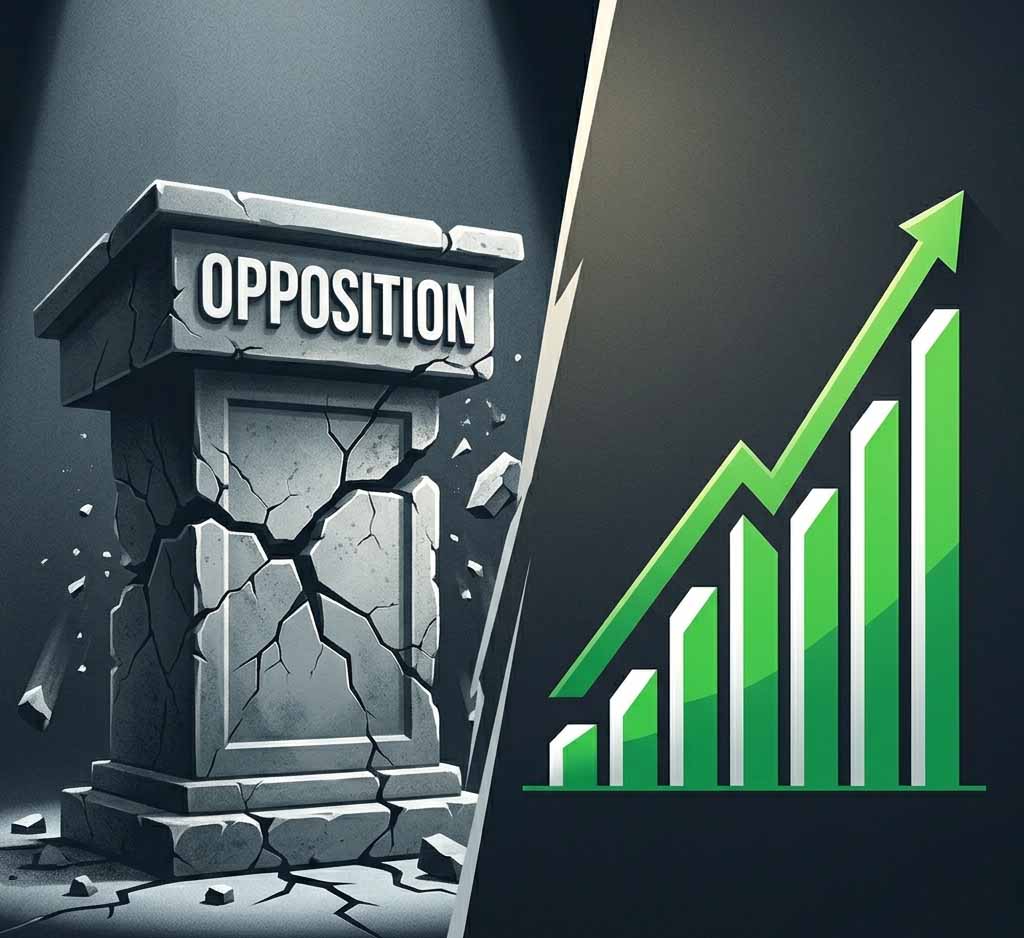
Fani-Kayode Says Opposition Has Collapsed – A Reality Check for 2026
Published: 27 March, 2026
The statement by Femi Fani-Kayode about opposition collapse exists as politically persuasive from a ruling party chieftain. It requires examination against the institutional and electoral data available for 2026. The health of democracy in Nigeria depends on more than declarations from political actors.
The Weight of a Political Statement
Femi Fani-Kayode serves as an Ambassador-designate and APC chieftain. He made the claim about opposition collapse during a media appearance in March 2026. His role makes the statement a strategic communication for the ruling party.
Political rhetoric in Nigeria often aims to shape public perception ahead of elections. The statement coincides with early positioning for the next electoral cycle. It frames the APC as the only viable political entity.
What the Party Registration Numbers Show
The Independent National Electoral Commission maintains the official register of political parties. According to the INEC list updated in February 2026, Nigeria has 21 registered political parties. This number represents an increase from previous years through new registrations.
The commission deregistered 74 parties between 2020 and 2023 for failure to meet constitutional requirements. Two new parties gained registration in February 2026. The current 21 parties hold legal recognition to contest elections.
The Financial Muscle of Opposition Parties
Party strength has a direct correlation with financial capacity. The 2025 report from the Independent Corrupt Practices and Other Offences Commission highlighted disparities. Ruling party structures often benefit from greater access to state resources and patronage networks.
Opposition parties like the Peoples Democratic Party face internal financial challenges. Leadership disputes within the PDP have affected its fundraising capabilities. The party struggled to clear salary arrears for staff in 2025 according to reports in Premium Times.
“The opposition exists in name only. They have no structure, no funding, and no clear agenda for Nigeria.” – Femi Fani-Kayode, Ambassador-designate and APC Chieftain, March 2026 statement to journalists.
Electoral Performance as the True Measure
The 2023 general elections provide the most recent nationwide data. The APC won the presidential election with 8.79 million votes. The PDP candidate secured 6.98 million votes according to INEC certified results.
Seven opposition parties won gubernatorial elections across different states. The Labour Party controls 1 state. The New Nigeria Peoples Party governs 2 states.
Opposition parties hold 163 seats in the National Assembly. This represents 45% of the total 360 House of Representatives seats. They occupy 50 of the 109 Senate seats.
The Voter Registration Picture for 2026
INEC commenced the Continuous Voter Registration exercise for the 2027 cycle in 2025. The preliminary report for Q4 2025 showed 2.1 million new registrations. 58% of these new registrants fell within the 18-34 age bracket.
Young voters traditionally demonstrate less attachment to established party structures. Their voting patterns in 2023 showed support for opposition candidates in urban centers. This demographic reality suggests space for opposition growth.
Internal Democracy Within Parties
The quality of internal party processes affects external viability. The APC conducted its national convention in 2025 with minimal contention. The PDP postponed its own convention twice due to leadership crises.
Smaller parties like the Social Democratic Party have held regular congresses. The SDP elected new national officers in January 2026. These internal processes matter for party cohesion and public perception.
Media Access and Public Visibility
Opposition voices maintain presence in the Nigerian media landscape. Newspapers like Vanguard and The Nation regularly feature opposition critiques. Television stations host opposition figures on political discussion programs.
Social media platforms provide direct communication channels bypassing traditional gatekeepers. Opposition politicians use platforms like X and Facebook to reach millions. This digital space is contested rather than dominated by one side.
“A multi-party system requires institutional support, not just the existence of multiple parties. INEC’s funding and independence remain critical for 2027.” – Prof. Mahmood Yakubu, INEC Chairman, February 2026 address at Chatham House.
The Legal and Constitutional Framework
The 1999 Constitution guarantees freedom of association. Section 221 provides for the registration of political parties. The Electoral Act 2022 sets the rules for party operations and elections.
The judiciary has intervened to protect opposition rights in multiple instances. In 2024, the courts reinstated some deregistered parties. This legal framework creates space for opposition existence regardless of political statements.
Civil Society as a Democratic Check
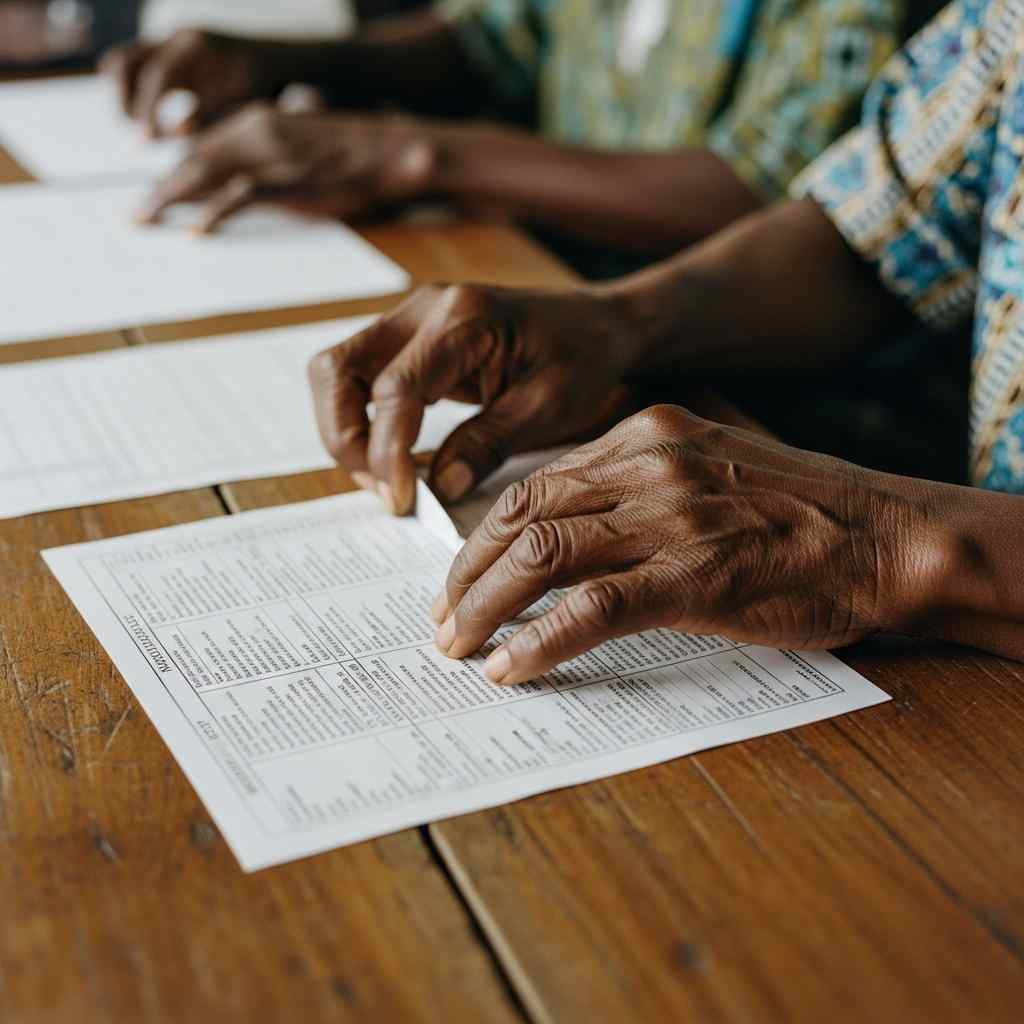
Organizations like the Transition Monitoring Group and Yiaga Africa monitor political processes. Their reports provide independent assessment of the political environment. The TMG pre-election report for 2026 noted concerns about party financing imbalances.
These groups advocate for electoral reforms that benefit all parties. They push for transparency in campaign funding and equal media access. Their work creates accountability mechanisms beyond partisan politics.
Regional Variations in Party Strength
Opposition viability differs across the 36 states. The South-East shows stronger opposition presence with the Labour Party controlling Abia state. The North-East has the NNPP governing Kano state.
The South-West is an APC stronghold with all states under its control. The South-South has mixed governance with 3 PDP states among 6. This geographic distribution contradicts a narrative of total collapse.
What History Teaches About Political Declarations
Similar claims about opposition demise surfaced in 2014. The then-ruling PDP declared the APC a failed project. One year later, the APC won the presidential election.
Political fortunes in Nigeria have shown cyclical patterns. Dominant parties face internal pressures over time. Opposition movements coalesce around specific issues or personalities.
The Economic Context of Political Engagement
The state of the economy of Nigeria influences political participation. While inflation has cooled from its 2024 peak to roughly 15.1% in early 2026, the cost of living is a primary driver of political discontent. Economic hardship can generate protest votes against incumbent parties.
Unemployment is elevated, particularly among youth. According to the Nigeria Labour Force Survey conducted by the National Bureau of Statistics, youth unemployment stood at 6.5% in Q4 2025. However, underemployment, which measures those working fewer hours than desired, is significantly higher and contributes to the broader sense of economic anxiety.
International Perspectives on Nigerian Democracy
The European Union Election Observation Mission issued its final report on the 2023 elections. It noted improvements in electoral administration but highlighted six priority areas. These included the need for more transparent results collation and publication.
The United States Department of State country report on human rights for 2025 covered political participation. It documented instances of intimidation against opposition figures. It also noted the legal framework allows for multi-party competition.
“Our democracy has faced bigger challenges than political rhetoric. The institutions matter more than the statements. Voters will decide based on performance, not pronouncements.” – Senator Iyorchia Ayu, former PDP National Chairman, January 2026 interview with Channels Television.
The Institutional Infrastructure for Elections
INEC operates 8,809 registration centers across Nigeria. The commission deployed 176,846 polling units for the 2023 elections. These structures serve all political parties equally under the law.
The 2026 budget allocation for INEC stands at N40 billion. This represents 0.3% of the total N26 trillion federal budget. Adequate funding for electoral administration benefits the entire political system.
Looking Toward 2027
The next general elections will occur in February 2027. Political parties have begun preliminary preparations. The PDP established a 37-member committee to review its 2023 performance.
New political alliances might emerge before the elections. The 2022 Electoral Act allows for coalition building. Opposition parties can form alliances to present a stronger challenge.
A Reality Check on the Ground
Visit any motor park or market in Nigeria. You hear criticisms of all political parties. The idea that citizens have no alternatives contradicts daily conversations.
Nigerians complain about fuel prices, electricity tariffs, and security challenges. They hold the ruling party responsible for these issues. This creates natural political space for opposition voices.
Where the Data Leads
The statement that Fani-Kayode says opposition has collapsed functions as political messaging. Electoral data, party registration numbers, and governance structures tell a more complex story. Opposition parties hold governorships, legislative seats, and maintain legal recognition.
They face significant challenges in funding, organization, and unity. The ruling APC enjoys advantages of incumbency and broader resources. The democratic system however includes multiple competing actors.
Check the Voter Register
Verify your registration status on the INEC digital platform. Participate in the continuous voter registration exercise. Your PVC is the ultimate counter to any political narrative.
Democracy requires active citizens more than perfect institutions. The quality of opposition depends partly on the choices voters make. The ballot box in 2027 will provide the definitive answer about opposition relevance.
Political statements aim to shape reality. Data provides a useful corrective to rhetoric. The conversation about democracy continues beyond any single declaration.






Politics
Delegates at Eagle Square The 2026 APC Convention Arithmetic
Delegates at Eagle Square in 2026 will decide the APC flagbearer. This analysis breaks down the costs, logistics, and political calculations for securing 7,000 votes.
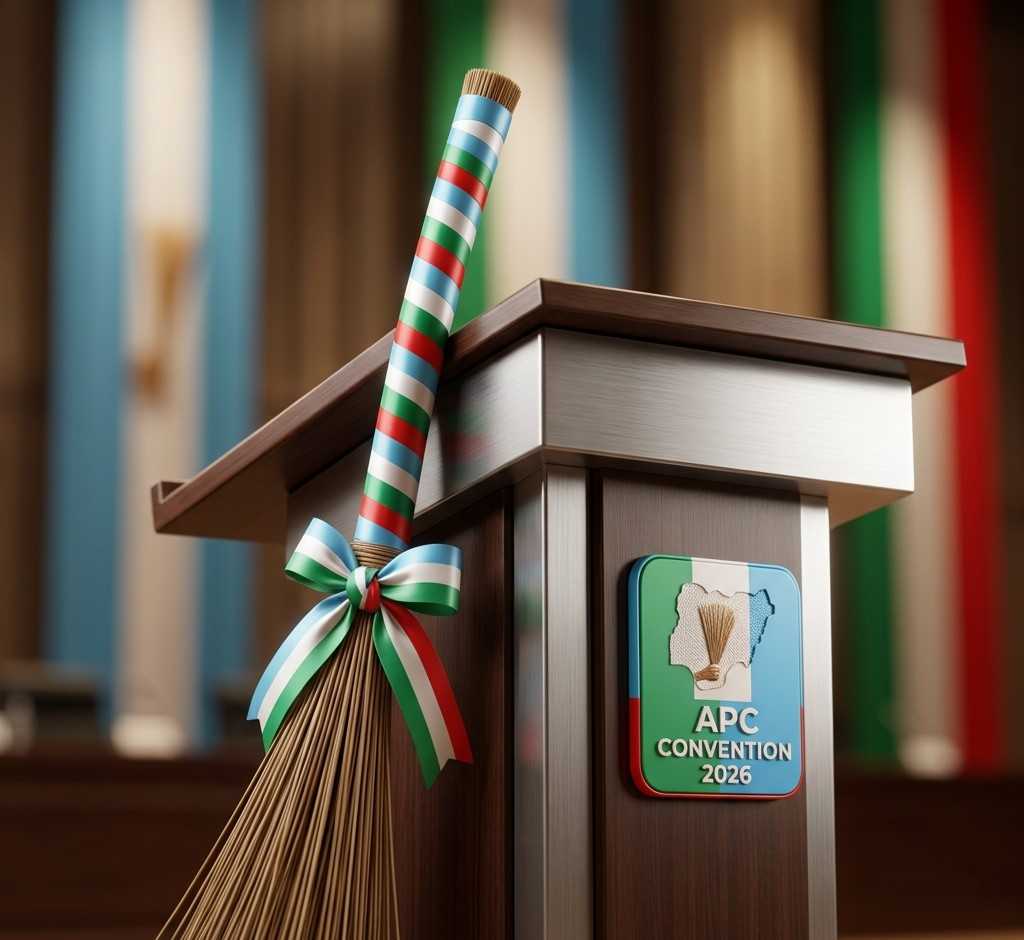
Delegates at Eagle Square: The 2026 APC Convention Arithmetic
Published: 24 March, 2026
How do you get 8,000 people to say your name at the same time? That is the simple, brutal question facing every presidential hopeful in the All Progressives Congress. The stage was set when INEC published the final list of parties for the 2027 elections in December 2025. As Premium Times noted, the internal contests began immediately. The party will now hold its national convention at Eagle Square in Abuja during March 2026. To win, an aspirant needs a simple majority from approximately 8,000 accredited delegates.
The Price of a Delegate’s Handshake
Securing delegates at Eagle Square starts with a financial transaction. But there is a catch. The convention happens as the official exchange rate hovers around N1,357 to the dollar in early 2026. The national minimum wage was recently increased. This is the economic backdrop, as reported by BusinessDay.
Past conventions set the baseline. An analysis of the 2022 APC primary showed massive logistical and inducement costs. Those figures have escalated. A presidential campaign now routinely budgets billions for delegate outreach alone. The Cable detailed this in 2025.
The spending doesn’t stop at the gate. It covers transport, hotels, and food for delegates coming from all 36 states and the Federal Capital Territory. The money comes from personal wealth, business allies, and political godfathers. Vanguard estimated in 2025 that a serious bid likely exceeds N100 billion.
More Than Money: The Structure of Influence
Money alone is not enough. The delegate list comes from a rigid party structure. The APC constitution from 2022 states the national convention has statutory and elected delegates. Statutory delegates include the president, governors, and National Assembly members. Elected delegates come from local government and state congresses.
Control rests with state governors and party chieftains. A governor who delivers his state’s bloc holds immense power. The calculation for an aspirant involves negotiating with these brokers. The support of a governor like Babajide Sanwo-Olu of Lagos or Umar Bago of Niger State means hundreds of guaranteed votes. Leadership newspaper covered this in 2025.
Wait, it gets more complex. The delegate selection process itself is a battleground. Factions fight to install loyalists as elected delegates. This pre-convention struggle often decides the outcome. An aspirant without strong allies in at least 24 states faces an impossible task. The real contest happens weeks before the buses arrive. ThisDay emphasized this point in 2025.
“The convention is a coronation, not an election. The real work is done in the states, in the local government party secretariats, where the lists are compiled.” – A former APC national organizing secretary, speaking anonymously in December 2025.
The Golden Ticket: Every accreditation badge represents a fraction of the power required to tilt the convention arithmetic. (Digital Illustration: GoBeyondLocal)
Logistics: Moving 8,000 People to a Decision
Gathering the delegates at Eagle Square is an operational nightmare. The APC national secretariat, led by National Chairman Prof. Nentawe Yilwatda, handles accreditation and seating. They use a digital system to manage delegate identification and prevent impersonation. This system had glitches during the 2022 convention. The Nation reported on the upgrades in 2025.
Security is paramount. The Nigeria Police Force and the Department of State Services deploy thousands. They secure the Eagle Square perimeter and manage dignitaries. The Inspector-General of Police announces a full security plan for Abuja before the convention. Daily Trust covered this in 2025.
Accommodation strains the city. Delegates fill hotels from the Central Business District to the airport road. Campaigns book entire blocks months ahead. The Federal Capital Territory Administration watches prices to prevent exploitation. The convention provides a temporary boost to Abuja’s economy. Nairametrics analyzed this effect in 2025.
The Digital Layer and the Cash Reality
Technology adds a new variable. The APC’s digital membership drive passed 50 million registered members in 2025. This database should inform delegate selection. In theory, it brings transparency. In practice, old patronage networks still dominate. The APC Digital Directorate Report from 2025 shows the gap.
Mobile banking and fintech ease fund movement. They offer an alternative to physical cash, which is risky. The Central Bank of Nigeria‘s cashless policy pushes financiers toward digital transfers. These transactions leave a faint trail, unlike envelopes of cash. The CBN reiterated this policy in 2025.
Social media campaigns target delegates directly. Aspirants use WhatsApp, Instagram, and Facebook Live to present their platforms. This digital outreach supplements physical meetings. It creates a perception of modern campaigning. The core mechanics, however, stay analog. Punch explored this duality in 2025.
A Test of the Party’s Unity
The convention is a referendum on cohesion. The APC governs at the federal level and in 20 states as of early 2026. A contentious primary threatens that. So party leadership pushes for a consensus candidate. This pressure intensifies if the incumbent finishes a second term. The INEC State of Parties Report for 2025 outlined this dynamic.
The zoning principle is potent. The party’s unwritten rule rotates the presidency between north and south. With President Bola Tinubu, a southerner, in office, the 2027 ticket is widely expected to go north. This reality narrows the field before the first delegate gets a call. As The Guardian noted in 2025, it’s the first filter.
Opposition parties watch closely. The Peoples Democratic Party schedules its own convention for later in 2026. A fractured APC convention, with claims of imposition or bribery, gives the opposition powerful ammunition. The APC’s image of unity matters for the general election that follows. The PDP Secretariat is waiting, as reported in 2025.
“The convention is where we demonstrate that we are a disciplined party. The outcome must reflect the will of the majority, and the process must be beyond reproach. That is the standard we set for ourselves.” – Festus Keyamo, Minister of Aviation and Aerospace Development and APC stalwart, in an interview with Channels Television in February 2026.
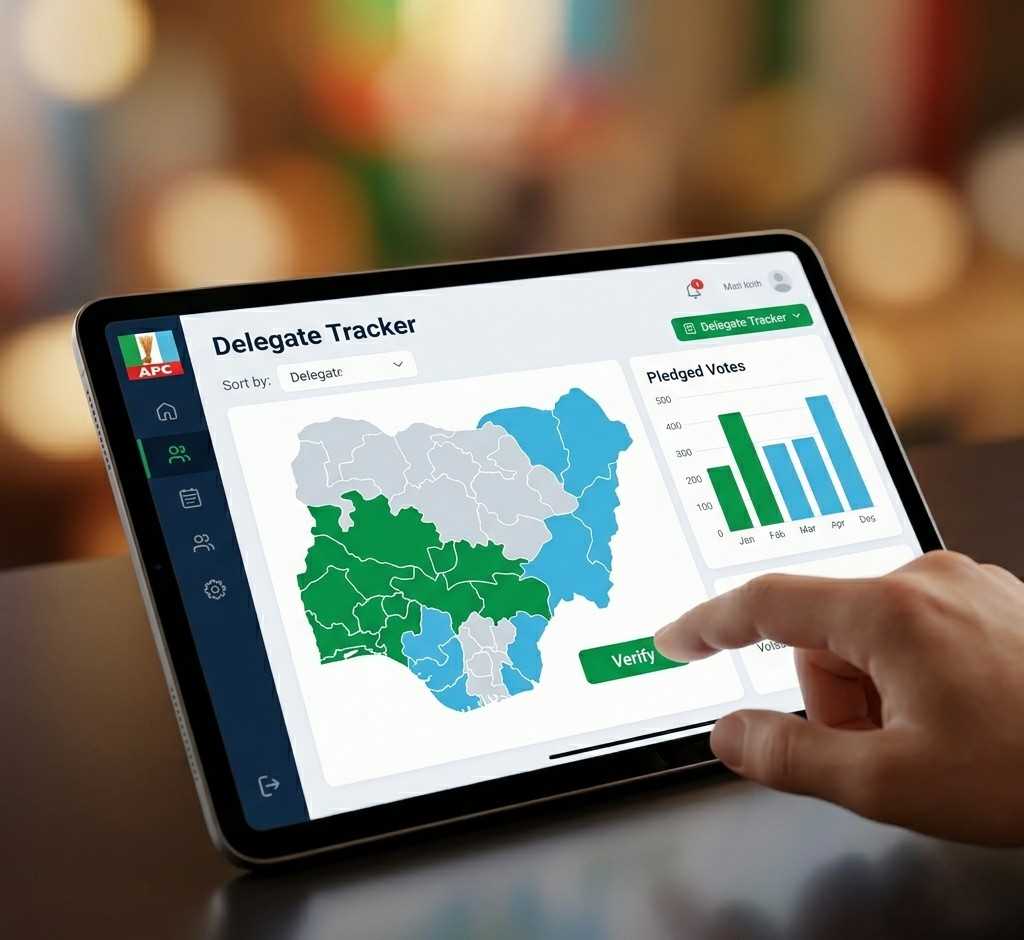
Data Over Drama: In 2026, the real convention battle is won on encrypted dashboards and real-time voter mapping. (Digital Illustration: GoBeyondLocal)
The Eagle Square Equation
Success needs a multi-dimensional strategy. Money is the entry ticket. Structural control through governors builds the vote base. A compelling national narrative, tied to zoning, provides legitimacy. Flawless logistics ensure pledged votes materialize in the square.
The final calculation balances these elements. An aspirant with unlimited funds but no structural support becomes just a fundraiser. A candidate with strong backing but limited national appeal will struggle later. The winner masters all three: money, machinery, and message.
The drama unfolds on live television. The real story is written months before, in quiet meetings and strategic alliances. The delegates at Eagle Square cast votes as individuals. They arrive as products of a complex political ecosystem.
What a Serious Aspirant Does Tomorrow
A serious aspirant starts a delegate census now. This project maps every statutory delegate and identifies likely elected delegates from each local government. The team assigns a point person for each delegate cluster. This database becomes the campaign’s most guarded asset.
Open a dedicated logistics office in Abuja. This office, separate from campaign headquarters, handles only delegate accommodation, transport, and accreditation. It works with trusted agents to block-book facilities. It sets up a help desk for delegates in trouble.
Schedule a private meeting with every APC state governor. The agenda goes beyond asking for support. It involves understanding the governor’s own political needs. A smart aspirant integrates these needs into a broader governing agenda, trading future cooperation for present support.
The financial team establishes multiple, discreet channels for moving resources. It uses trusted associates in different zones to manage local disbursements. It keeps a clear, flexible budget with a big contingency fund for last-minute negotiations.
The media team develops a simple, repeating message for delegates. This message emphasizes electability, party unity, and gratitude. It avoids complex policy debates. It circulates through closed social media groups and one-on-one calls from respected surrogates.
These steps seem basic. Many aspirants neglect them for grand rallies and newspaper ads. The convention rewards granular, painstaking preparation over theatre. The work is tedious, expensive, and operates outside public view. It is the only reliable path to the nomination.
The Eagle Square convention is a marketplace. The currency is naira, influence, and promises. The 8,000 delegates are both customers and commodities. They wield momentary power in a system that quickly reverts to its established hierarchies. Understanding this is the first step. The second is accepting its costs. The final step is executing a plan with military precision, leaving little to the chaos of the convention floor.

Staged Kidnapping Case Reveals Family Extortion Trend in Nigeria

Fani-Kayode Says Opposition Has Collapsed – A 2026 Reality Check

Broda Shaggi Recuperating After Sango-Ota Shooting Incident

Terrorists Kill in Nigeria as 2,266 Die in Six Months

Multinational Exodus in Nigeria Deepens with N94 Trillion Loss

Food Crisis Looms in Nigeria as Climate Change Devours Farm Yields

Dangote Refinery Helpless as Fuel Price Hikes Defy Local Production

Deadly Diseases in Nigeria Meningitis Diphtheria Cholera Outbreaks

Lassa Fever Spreads in Nigeria to 18 States as Response Gaps Emerge

Ibadan Tanker Explosion in Nigeria Leaves Two Dead After Horror Crash

Petrol Hits N1,400/Litre in Nigeria as Global Conflict Disrupts Supply

Horror in Kano Sand Pit Collapse Buries People Alive

Internet Sovereignty: Why Some Countries Want Their Own Separate Internet

The Story Of The Nigerian Who Helped Build Global Internet Systems

Nigerian Hackers: The Global Fraud Story and Its Fallout

Forgotten Satellites Defy Silence, Beaming Signals for Decades

Your Digital Store in Nigeria and the Reality of Domain Expiration

The Phone Stay So Quiet: An Investigation into Nigeria’s Silent Customer Lines

The Business That Died: A Nigerian Case Study in Refusal to Adapt

Hiding Your Business From People With Money

Comedy Industry in Nigeria and Its Economic Contribution

How Nollywood Grew Without Government Support

Nigeria Produces 67 Percent Global Yam Output

Nigeria’s Economic Shift: From Oil to the Creative Economy

 Edutech Portal1 month ago
Internet Sovereignty: Why Some Countries Want Their Own Separate Internet
- Edutech Portal1 month ago
The Story Of The Nigerian Who Helped Build Global Internet Systems
- Edutech Portal1 month ago
Nigerian Hackers: The Global Fraud Story and Its Fallout
- Edutech Portal1 month ago
Forgotten Satellites Defy Silence, Beaming Signals for Decades
- Edutech Portal1 month ago
Your Digital Store in Nigeria and the Reality of Domain Expiration
- Edutech Portal1 month ago
The Phone Stay So Quiet: An Investigation into Nigeria’s Silent Customer Lines
- Edutech Portal1 month ago
The Business That Died: A Nigerian Case Study in Refusal to Adapt
- Edutech Portal1 month ago
Hiding Your Business From People With Money