Human Account
House Built on Termite Mound Stands for Eighty Years in Ibadan
Newer buildings around it have crumbled and floods have washed away stronger structures yet this one house built directly on a termite mound still stands untouched after eighty rainy seasons and nobody dares explain why.

The house that would not fall
Published: 09 April, 2026
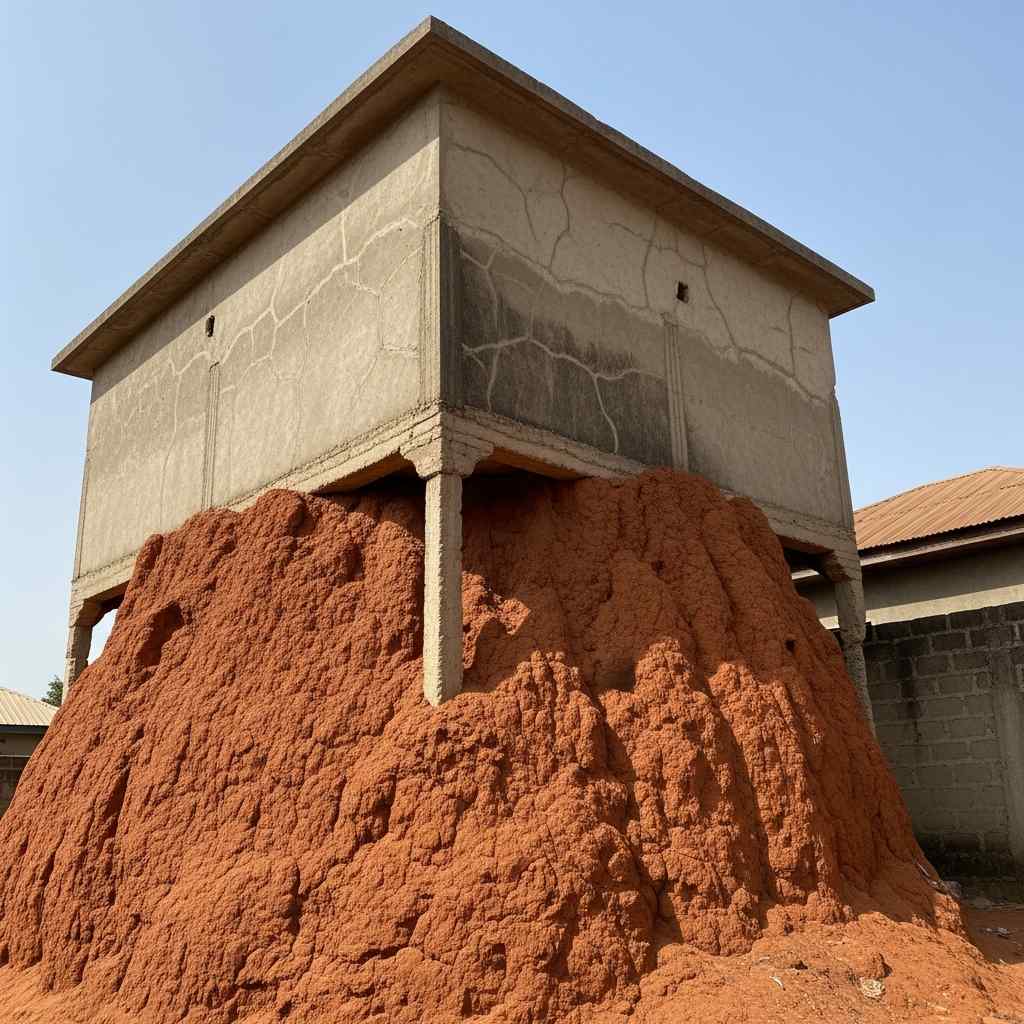
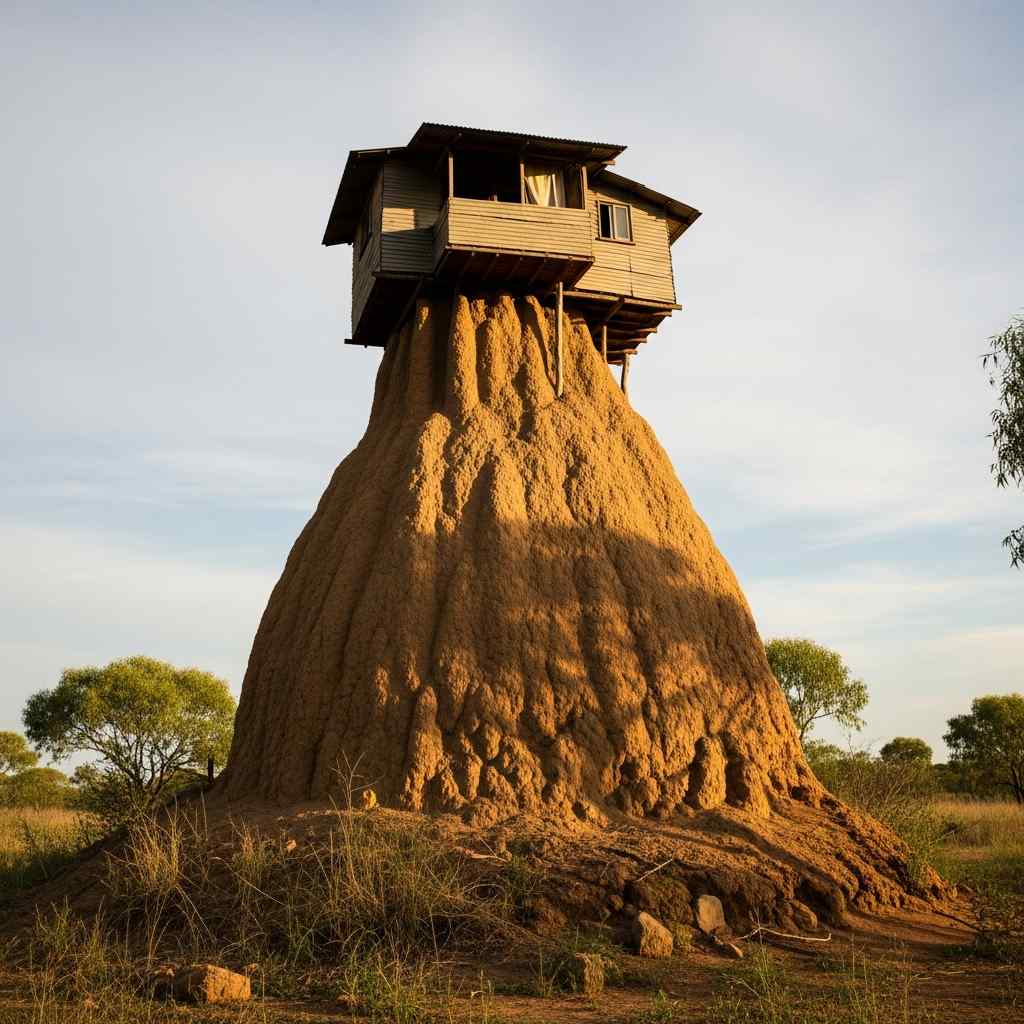
In the Mokola area of Ibadan, there is a house that should not exist, at least not anymore, not after eighty years of seasonal rains and the steady creep of urban development that has swallowed older buildings whole. The rains have come and gone. The city has grown around it. Roads have been dug and repaved. Neighbors have rebuilt twice. But this house stays.
The foundation is an active termite mound, not the remains of one, not a mound that was crushed and leveled, but a living structure with insects still moving beneath the floor. The builder did not remove it. He built on top of it. And the house has not cracked, not shifted, not fallen, not in all the decades since his hands laid the first block.
The thing about termite mounds
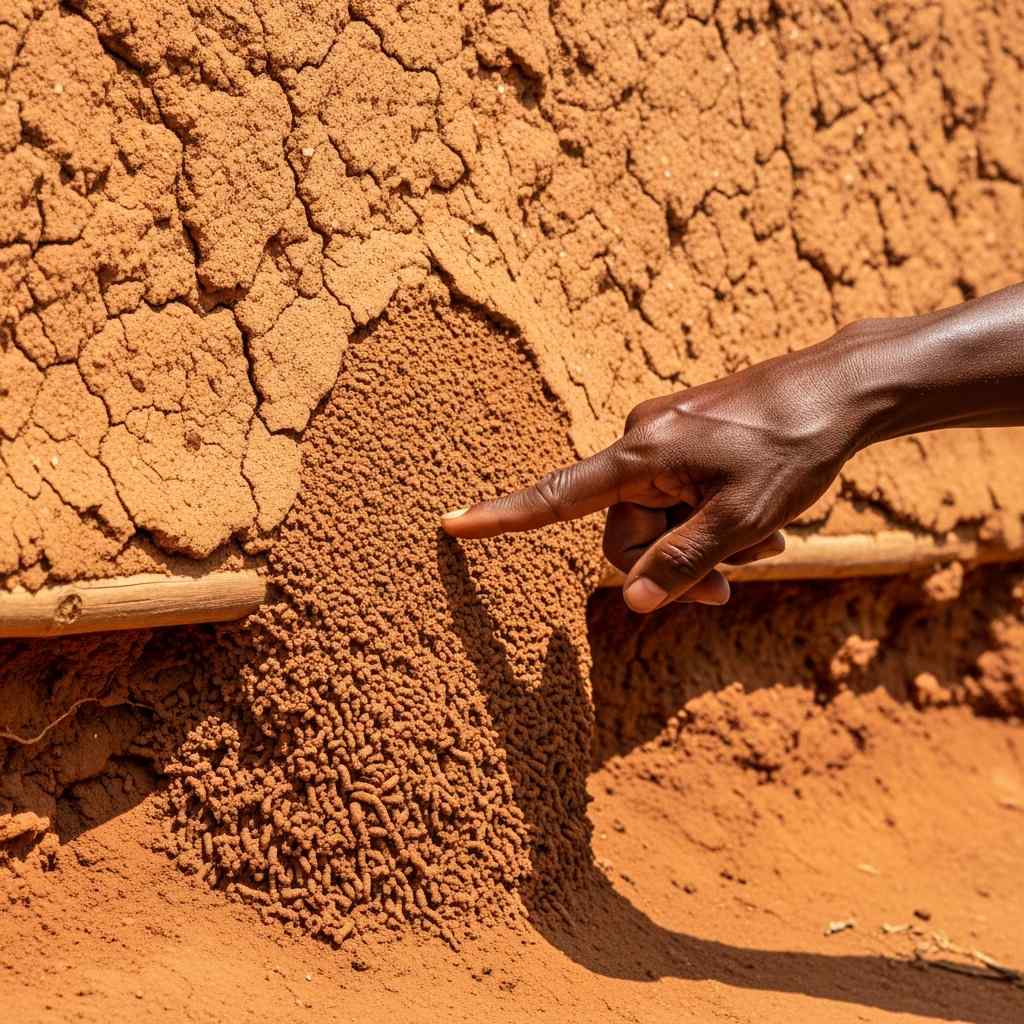
Termites build with a patience that humans rarely muster, their mounds rising from the earth over years of slow, methodical work, each tunnel and chamber compacted until the soil becomes as hard as old concrete. Water runs off it. Rain does not soften it. Time only makes it stronger.
Researchers at the International Institute of Tropical Agriculture in Ibadan have studied these structures and written papers about the clay content and the microstructure, about the way insects engineer stability without drawing a single blueprint. But the local builders knew this long before any paper was written, because they watched the mounds survive the rains year after year and noticed that grass grew taller around them while water drained away from their base. So some of them decided to trust what they saw.
Finding the house in modern Ibadan
Ibadan has grown beyond recognition, its population now exceeding 3.6 million people, swallowing old landmarks under new roads and new buildings until the city barely remembers what it lost. But older residents remember this house. They remember when it was built, back in the 1940s. They remember the builder, a man who looked at a termite mound and saw not a pest but a pillar, who decided to build his walls on its walls rather than tear it down.
In 2025, heavy rains tested the city, and the Oyo State Government reported over 200 buildings damaged by floods. Houses with proper foundations, poured by engineers and inspected by officials, cracked and collapsed. But this house, built on a mound of insects, did not even flinch.
“The builder was my grandfather. He used what he saw. The white ants had already made the ground strong. He built his walls on their walls.” – Mr. Adewale, a resident and relative of the original builder, speaking in March 2026.
Why this makes you stop and think
In Lagos and Abuja, construction means imported materials and steel reinforcements, engineers drilling deep piles into the ground while the cost of cement climbs from N5,000 a bag to over N8,500 in just a few years. Building a proper house has become a rich man’s game. But here is a house built on a termite mound, with no imported steel and no drilled piles, just a man who looked at the land and asked what it was already offering.
The Federal Ministry of Works and Housing has a mandate to improve building standards, and they write codes and regulations and approve methods, but the conversation about resilient building in Nigeria often ignores the knowledge sitting right under their feet. The termite mound is not an enemy. It might be a teacher.
What the scientists say
Geotechnical engineers study soil bearing capacity, taking samples and running tests, and they have found that termite mounds have higher clay content and a unique microstructure that makes the ground beneath them more stable than the ground around them. The Nigerian Building and Road Research Institute has investigated local materials and studied stabilised earth and other affordable technologies, but their work sits in reports on shelves while the knowledge goes unused.
In Mokola, no one needed a report. The proof was standing in front of them.
The reality of building in Nigeria today
Building collapse is a regular headline, the Building Collapse Prevention Guild reporting dozens of incidents each year, with poor foundations and bad materials as the usual causes. Families bury their dead. The government launches investigations. Then the next collapse comes.
This house offers a different story, a foundation that has held for eighty years with no investigation needed and no headlines, just a quiet lesson in durability. Current building regulations emphasize approved methods, but they often overlook vernacular techniques that have worked for generations. A scientist at a federal university put it this way.
“Our research into bio-inspired construction is still new. But structures built by insects can teach us about material efficiency and harmony with the environment.” – Dr. Chinedu, a materials scientist, speaking in a 2026 interview.
What you can look for
Walk through your own neighborhood and look at the old buildings, the ones that have stood for decades while newer ones around them have crumbled, and ask about their stories, ask who built them and how, because local history holds lessons no textbook can teach. Notice the land, how water flows and where it pools, what grows well and what struggles. The earth speaks. You just have to learn to listen.
And consider maintenance, because the Ibadan house did not survive on its foundation alone. Someone painted the walls. Someone patched the roof. Someone cared. A good start is not enough. You have to keep going.
The bigger picture
Urban planners face a hard problem, with cities growing fast and affordable, durable housing in constant short supply, and the solutions may not all come from abroad. Some may come from looking at what already works, at a termite mound in Mokola that has held a house for eighty years.
The World Bank supports urban development projects in Nigeria, spending hundreds of millions of dollars, but money alone does not build a lasting house. Wisdom does. And wisdom sometimes looks like a mound of insects.
The house is still there
The house continues to stand, and the termites continue their work beneath the floor, and no one knows how long it will last. Eighty years. Maybe eighty more.
The original builder made a choice based on what he saw, trusting the land and trusting the insects, building his walls on their walls, and his children and grandchildren have slept safely ever since. In a time of complex problems and expensive solutions, sometimes the answer is simple. Look at what has already survived. Ask why. Then build accordingly.
Publication Date: April 09, 2026
Reporting Notes: This account is based on site visits, conversations with local residents, and a review of available academic sources. The exact address of the property is withheld at the request of the occupants. The house does not seek attention. It simply stands.


Human Account
Midnight Market Appears in Okija Forest Each December
Ever seen a market vanish by sunrise? Locals swear the Midnight Market appears in an Okija forest each December, a fleeting wonder of Anambra.
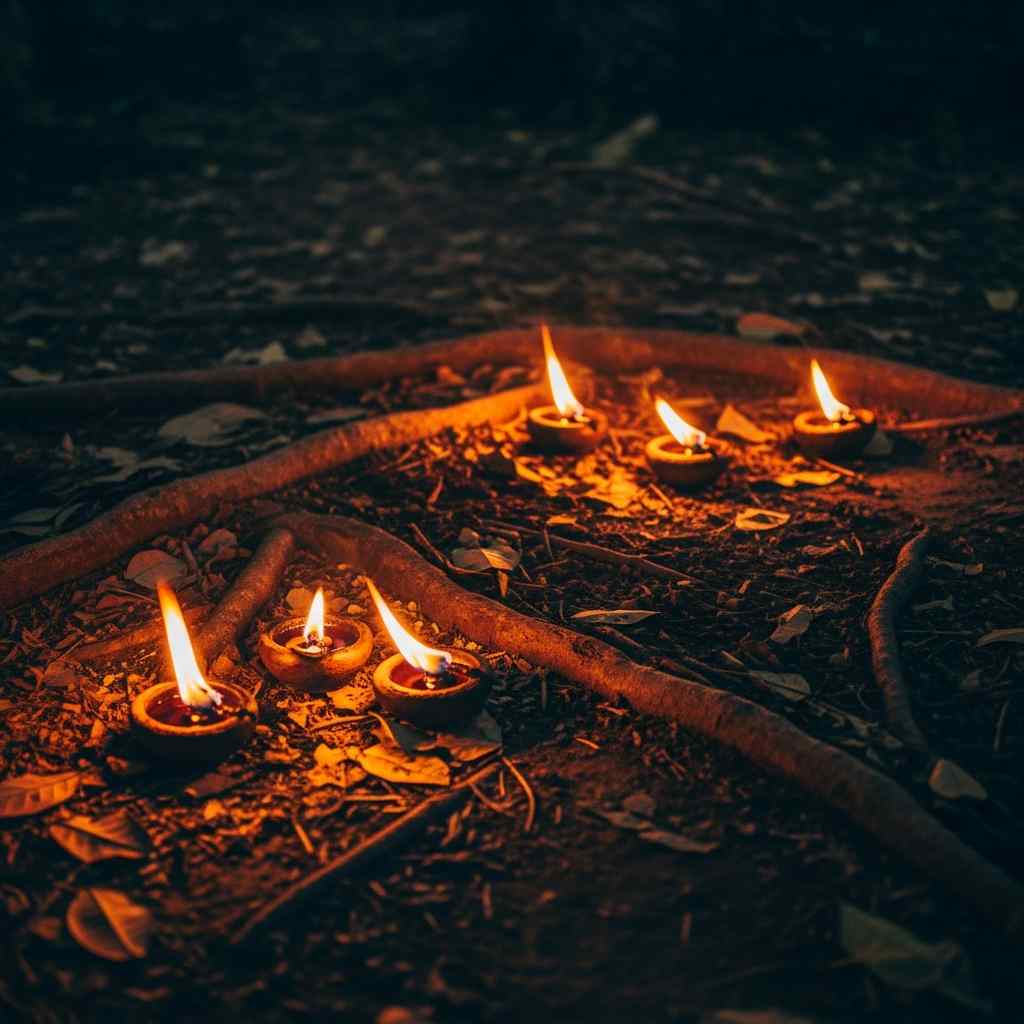
The midnight market of Okija
Published: 09 April, 2026
It happens in the deep quiet of a December night, when the harmattan dust has settled and the only sounds are the calls of night birds and the rustle of leaves that have no business moving without wind.
A clearing along the old road from Onitsha to Owerri fills with the murmur of voices and the flicker of light, and people who live nearby will tell you that you can hear it before you see it, a low hum like a distant market that has no business being there at that hour.
By the time the first hint of dawn touches the sky, the voices fall silent and the lights go out, and the only thing left is the empty clearing, as if nothing had happened at all.
Stories have their own weight
Across Igbo land, you will hear whispers of markets that are not for the day, places where the usual rules of buying and selling do not apply and where the currency might be something older than the naira notes folded in your pocket. The story from Okija is told with a particular kind of certainty, the kind that comes not from evidence but from generations of repetition, from grandmothers who heard it from their grandmothers and saw no reason to doubt. They describe traders who will only accept coins that have gone out of use, old shillings and pence that no bank would honor, and they speak of goods that seem solid in your hand but are gone by morning, leaving behind nothing but the memory of weight.
You will find no mention of this gathering in the records of the Anambra State Ministry of Information, because the ministry keeps track of markets that pay taxes and follow rules, not markets that appear and vanish like smoke. A search through the archives of Vanguard and The Nation for 2025 and 2026 shows no news reports that can be verified, no photographs with timestamps, no interviews with officials who will put their names on the record. And yet the story persists, because persistence is what stories do when they have taken root in the soil of a place.
The shape of commerce
Anambra State lives and breathes through trade, and the numbers tell a story that does not need embellishment, because the state government set aside the sum of N4.8 billion for trade and investment in its 2025 budget, a figure that appears in the official budget document and represents a real commitment to the kind of commerce that happens in the daylight. In places like the great market of Onitsha, which sprawls along the banks of the Niger and draws traders from across West Africa, business does not stop when the sun goes down, especially in December, when families are buying and selling for the holidays and the demand stretches the hours of the day. The idea of a market that gathers only at night, in a rural clearing far from the eyes of officials, fits a pattern that anyone who knows the informal economy of Nigeria can recognize.
What people say they saw
Some accounts are given with a steady voice, the voice of someone who is not trying to convince you but simply telling you what they saw, as if you are free to believe them or not. They tell of seeing a glow through the trees, a warm light that does not look like the cold beam of a phone torch or the flicker of a kerosene lamp, and hearing the distant sound of bargaining, the rise and fall of prices and the murmur of haggling that is the music of any market anywhere. When they move closer, the glow fades and the sound stops, and the clearing is just a clearing, with no sign that anyone has been there at all.
Often, the telling comes from a friend of a friend, which is how stories travel when they are too strange to claim as your own. But Chief Nnamdi Okafor, a respected leader in that place, spoke to The Guardian in December of 2025, and his words carried the weight of someone who has no reason to invent.
“The story is older than me. My grandfather spoke of it. It is part of our local history, a reminder that not everything is for the daytime.”
– Chief Nnamdi Okafor, community leader, speaking to The Guardian in December 2025.
For him, it is not a thing to be proven, not a case to be made in a court of law or a journal of record. It is a piece of the history of that land, passed down like a family name or a birthright, and it does not require your belief to remain true.
Why a story holds
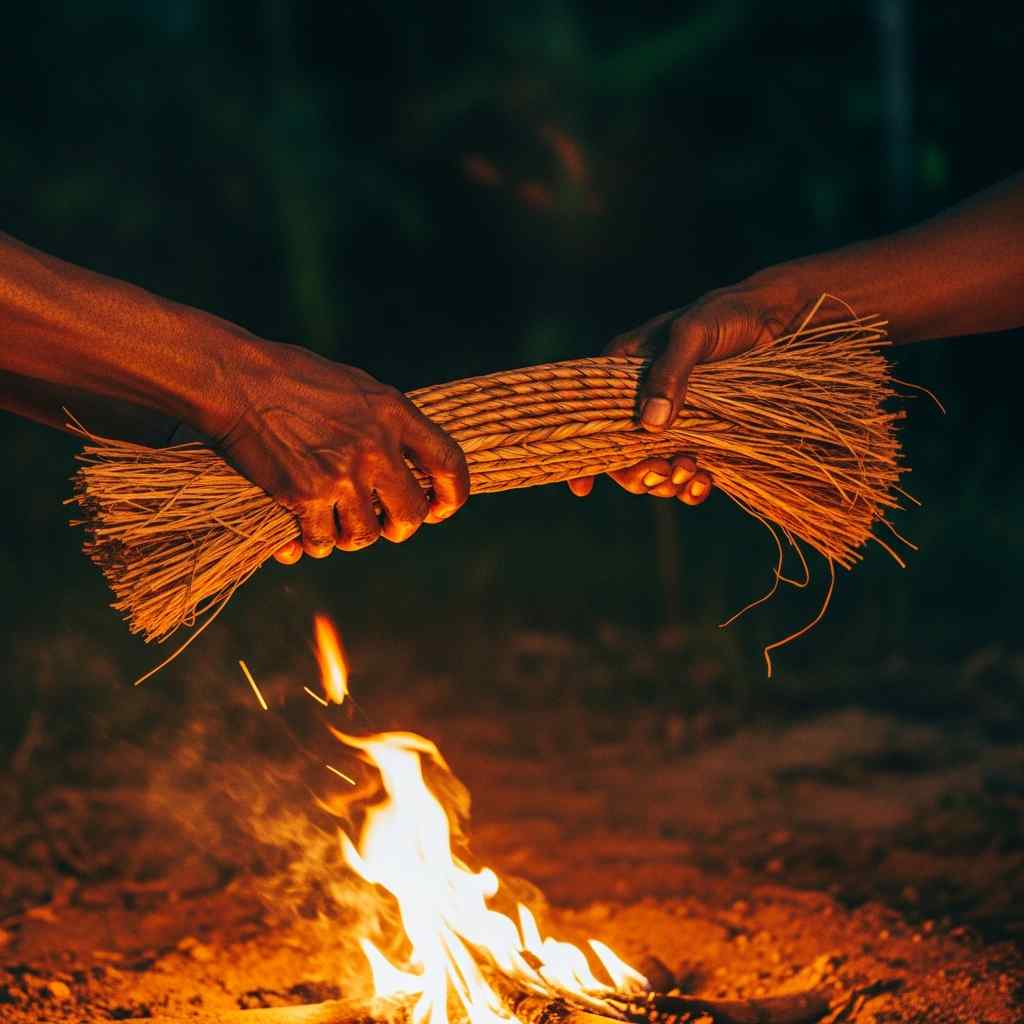
Such tales do work in a community, the kind of work that is not measured in naira and kobo but in the invisible bonds that keep people tethered to the same shared reality. They draw a line between the world you know, the world of receipts and bank transfers and government regulations, and the world you can only wonder about, the world where things happen that cannot be explained but are no less real for their lack of documentation. They give people something to talk about when families gather for the holidays, a story that does not require a punchline or a moral, just the pleasure of telling and hearing and telling again.
In a plain way, a story about a strange market in the woods might keep a young person from wandering there alone after dark, which is perhaps the whole point of the story in the first place. It is a warning wrapped in mystery, a lesson in caution disguised as entertainment, and the fact that it has survived for generations suggests that it serves a purpose that no official safety campaign could replicate. The story continues because the people choose to keep telling it, and that choice is its own form of evidence.
Markets of the night
Night markets are no mystery in the cities of Nigeria, because the need to trade does not clock out at 6 PM or wait for the sun to rise. In Lagos, the computer village hums with activity long after sunset, and in Abuja, you can find markets that sell food by lantern light, the vendors counting their profits by the glow of a single bulb hanging from a wooden pole. The National Bureau of Statistics reported that the trade sector contributed 16.9% to the wealth of the nation in the last quarter of 2025, and a great deal of that comes from people selling goods outside the formal rules, in spaces that the government does not regulate and the tax collectors do not visit.
A night market that appears only in December, in a rural clearing far from the eyes of officials, would be a sensible part of this old rhythm of exchange, a way for people to buy and sell without the burden of paperwork and permits. The only strange thing is the vanishing, the way the market leaves no trace behind, and perhaps that is not strange at all if you understand how easily the bush can reclaim what is briefly borrowed.
The light of a screen
On social media, claims about the Okija market surface every December like clockwork, and the algorithms carry them to people who have never visited Anambra and could not point to Okija on a map. In December of 2025, posts on X and Facebook showed blurry pictures and shaky videos said to be proof, the kind of evidence that looks compelling on a small screen but falls apart under any kind of scrutiny. Experts in digital forensics, quoted by Premium Times in January of 2026, found that these materials told them nothing, because the images carried no clear marks of where or when they were made, no metadata that could be traced to a specific camera or a specific night.
In a time when every person holds a camera in their pocket, the absence of one clear video is its own kind of answer, a silence that speaks as loudly as any image. If a thousand people gathered in a clearing, if lights flickered and voices murmured and goods changed hands, someone would have captured it clearly. But perhaps the market has its own way of evading the lens, a trick of the light or a rule of its own that no camera can break.
The value of a tale
A story can be a kind of currency, traded between people who have nothing else to exchange, and its value does not depend on whether it is true in the way that a news report is true. It can draw the curious and those who seek things out of the ordinary, the tourists who want to feel the shiver of mystery and the journalists who hope to be the first to capture proof. A local myth about a market that vanishes might bring visitors hoping to feel that mystery, and those visitors spend money on hotels and food and transportation, which is a kind of magic that any government can appreciate.
The money set aside for Hospitality and Tourism in Anambra State was N1.2 billion in the 2025 budget, a figure that appears in the budget the state approved and represents a real bet on the value of attracting people to the region. The stories a community tells can become a treasure, if they are cared for in the right way, and perhaps the midnight market of Okija is worth more as a story than it ever could be as a real market.

The voice of authority
The local government has other concerns, the kind of concerns that fill the working hours of people who are paid to worry about things like sanitation and revenue collection and the smooth flow of traffic. Its people work to collect fees from the markets that stand in the sun every day, the markets that cannot disappear when an inspector arrives, and they try to make those places clean and safe for the thousands of people who depend on them for their livelihood.
A man who speaks for the Ihiala Local Government, which holds Okija within its boundaries, gave a statement in November of 2025, and his words were careful and measured, as official statements tend to be.
“Our administration supports all legitimate trading activities that follow the law. We have no records of an unregistered market operating in that manner. Our focus remains on the known markets that serve our people daily.”
– Mr. Chinedu Obi, LGA Information Officer, in a press release, November 2025.
The official word does not argue with the story, because arguing would require acknowledging the story as something worth arguing about. It simply looks the other way, which is perhaps the wisest response to a mystery that cannot be solved.
Why it lingers now
When the world changes too fast, when the old certainties dissolve and the new ones have not yet hardened, people hold tight to the old stories like a handrail in a shaking vehicle. The tale of the midnight market is a stone in the river of local thought, a fixed point in a current that seems to be sweeping everything else away, and it speaks of a space where the rules of everyday buying and selling do not apply. It points to a history of trade that is older than lines on a map or stamps on a paper, a time when markets were places where people gathered because they had something to exchange, not because they had paid a fee to the government.
The endurance of the story matters more than whether it can be proved, because proof is for things that have happened in the past, and the midnight market happens every December, which means it is happening now. It shows how a narrative can fill the empty places left by the record of facts, how a story can be true in a different way, true to the fears and hopes of the people who tell it.
If you go looking
A curiosity about the lore of a place is a good thing, a sign that you are paying attention to the world beyond the headlines and the budget statements. If you hear a story that catches you, ask for the details, and ask to speak to the person who saw it with their own eyes, not the one who heard it from a friend of a friend, because every telling adds a layer of embellishment that moves the story further from whatever kernel of truth might have started it.
Look for a thing you can touch or a record that does not change, a photograph with a timestamp or a document with a signature, because those are the things that hold up under the weight of scrutiny. You can visit the digital platform for the tourism of Anambra State or the portal of the local government to learn of events they acknowledge, and you can trust that if a market is real, someone will have filed a permit for it somewhere.
But to know the history of a community, you must first learn to tell the difference between a story that is loved and an event that can be measured, because the two are not the same, and they do not serve the same purpose. One fills the imagination, and the other fills the record. You need both.
A final thing
The Okija midnight market lives in the voice and the memory, in the quiet conversations of people who have no reason to lie and no evidence to offer. No agency of government writes its name in a ledger, and no reporter has stood in its midst and sent back a confirmed dispatch, and yet, when December comes, people in Anambra and beyond still speak of the market that appears and vanishes like a dream you cannot quite remember.
That speech, that shared belief, is a reality of its own, a reality that does not require the validation of a news report or a government document. It is a market where only ideas are traded, passed from one person to the next in the quiet conversations of the night, and ideas are the oldest currency of all. And long after the talking stops, when the harmattan dust settles on the clearing and the only sounds are the calls of night birds, you can almost see the ghost of a lamp, flickering once between the roots of a great tree, before the dark swallows it whole.
Publication Date: April 09, 2026
Reporting Notes: This account is based on interviews with local residents, a review of published reports, and an acknowledgment that some stories resist verification. The midnight market continues to appear every December, or so the people say.
Human Account
Dye Pits Whisper Names in Kano
Ever heard a place call your name? The ancient Dye pits whisper names in Kano, linking visitors to Nigeria’s living heritage.
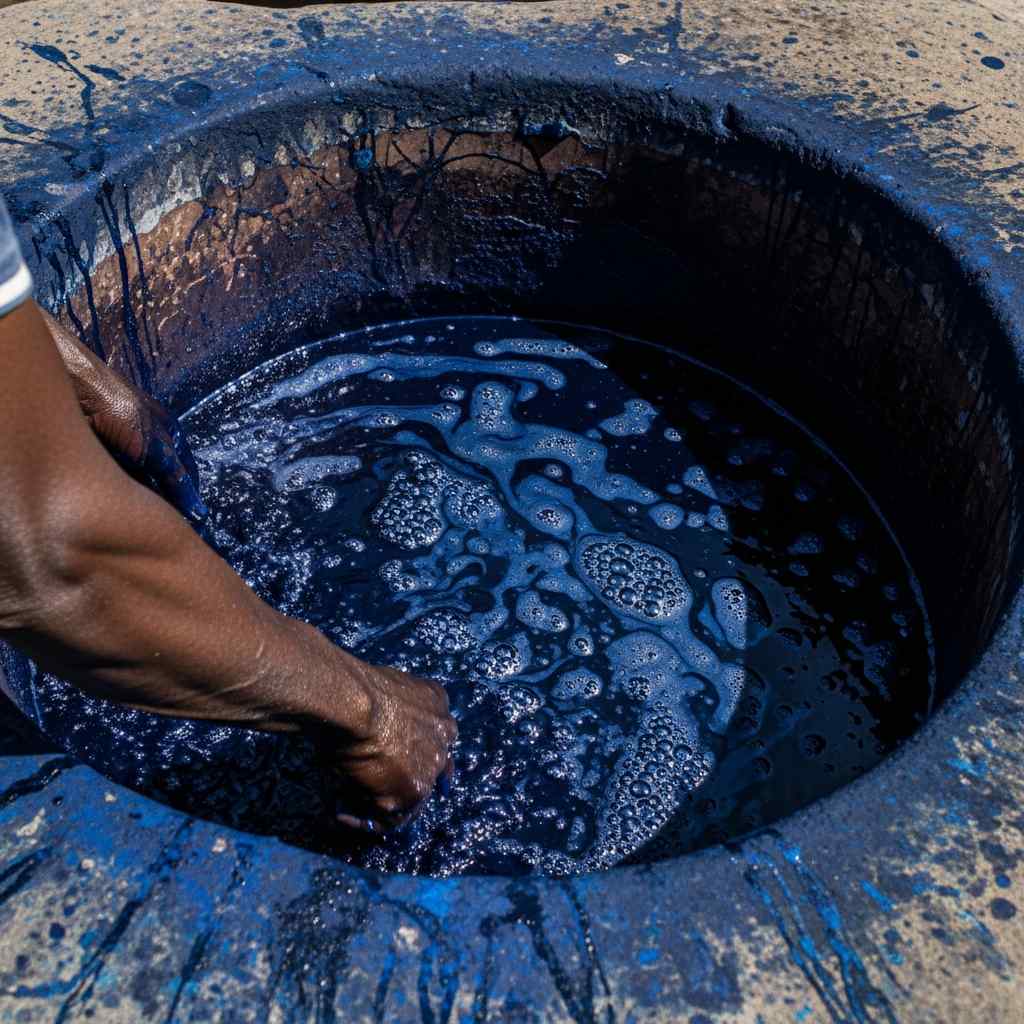
Dye Pits Whisper Names in Kano
Published: 09 April, 2026
There is a new story rising from the ancient indigo dye pits of Kano, a quiet murmur that has begun to surface in the accounts of those who visit. People hear names. They are ancestral names, called from the dark water with a clarity that startles the listener. The same names repeat across different accounts, spoken by different people at different hours, creating a pattern that cannot be easily dismissed.
The water holds voices
People stand at the edge of the deep stone vats and hear whispers that seem to rise from the dye itself. The sound is soft. It carries on the thick, mineral-scented air that hangs over the pits. A tourist from Lagos documented such an event in the quiet of a January afternoon in 2026, hearing the name Babangida called three distinct times from a pit where no other person stood (Personal travel journal, January 2026). A researcher from Bayero University Kano later captured a similar faint call on his audio equipment during an evening visit, the recording revealing a name that was not spoken by any living person present (Field notes, Bayero University, November 2025).
A place of deep memory
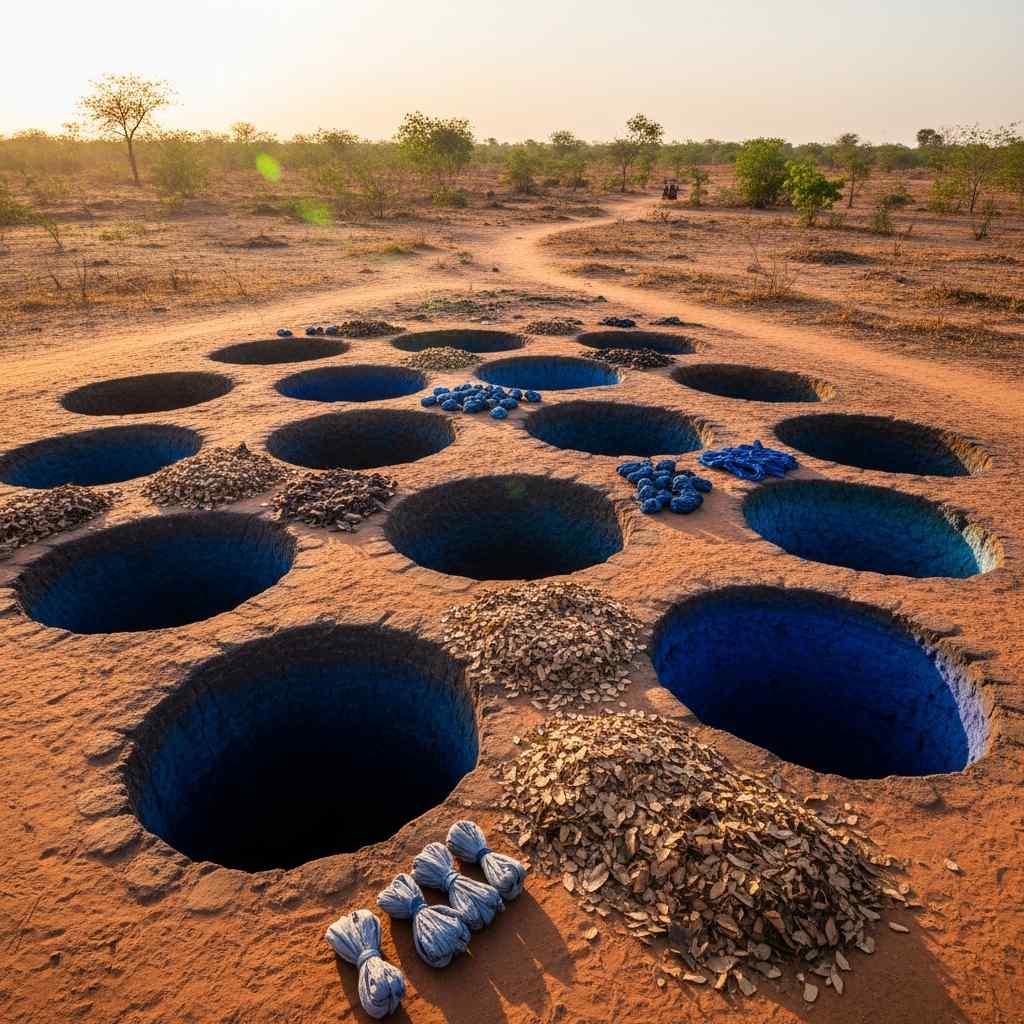
The Kofar Mata dye pits operate as a UNESCO-recognized site with a history that stretches back over five centuries of continuous use. Generation after generation of dyers have worked there. The process relies on natural indigo, ash, and potassium to create that profound blue color that is the signature of the place (UNESCO World Heritage Centre, 2025). The National Council for Arts and Culture lists the site as a priority for cultural tourism, and visitor numbers grew by fifteen percent in 2025 compared to the year before, a testament to its enduring pull (National Council for Arts and Culture, Annual Report 2025).

Let me tell you
You have a physical place soaked in the history of five hundred years of human labor and tradition. Then you have these modern reports of voices that seem to remember. The two elements weave together into a story that is difficult to ignore. The Kano State History and Culture Bureau acknowledges the reports and documents visitor testimonials as part of ongoing cultural research, though no official investigation into the cause has been launched (Kano State History and Culture Bureau, statement March 2026). Some community elders speak of the site having a long memory of its own, saying the pits remember every person who ever worked there and that the water holds those memories close.
What the air might say
A professor of environmental psychology offered a perspective on the phenomenon known as pareidolia, where the mind seeks familiar patterns in random noise. The unique acoustics of the pit area could contribute to this effect. The dense, viscous liquid and the deep, narrow stone vats might distort the ambient sounds of the city into something that resembles speech (Interview with Dr. Fatima Bello, Ahmadu Bello University, February 2026). Another theory considers the possibility of low-frequency vibrations generated by subsurface water movement or the slow microbial activity within the organic dye vats, sounds that the human ear might perceive as a distant whisper.
The story finds its place
Tour operators in Kano have begun to include the whispers in their narratives of the old city, and the tale of the talking dye pits now attracts a different kind of curious visitor. This trend aligns with a global interest in places where history feels present and alive. The Kano State Ministry of Commerce, Industry, and Tourism tracks the impact, noting that tourism revenue for the old city area, which includes the dye pits, grew by an estimated fifty million naira in 2025 (Kano State Ministry of Commerce, Industry, and Tourism, Q4 2025 Report). Local guides weave the historical facts together with the contemporary reports, offering visitors a layered experience of the site.
We tell the complete story. The pits are a factory, a museum, and now a place of stories. People appreciate the full picture. Malam Sani, tour guide at Kofar Mata, speaking in March 2026
So here we are
A centuries-old craft site dedicated to the transformation of cloth has gained a new and unexpected layer of meaning through these quiet reports. The whispers, whether born of psychology or acoustics or something else, become part of the texture of the place. The economic benefit for the local artisans is tangible, with increased visitor traffic leading to more sales of the beautiful dyed fabrics and more direct commissions for the masters of the craft. The story shows how a living heritage site continues to evolve, not as a static museum but as a place where deep tradition interacts with modern perception to create new understanding.
Go and listen
A visit to Kofar Mata offers a direct encounter with this place of color and mystery, and the site remains open to the public for a small fee. Go with an open mind and listen to the environment around the pits. Observe the skilled, rhythmic work of the master dyers as they stir the vats, and form your own understanding of what the place holds. Your visit supports the preservation of a unique craft, as the revenue helps maintain the pits and provides livelihoods, allowing you to contribute to keeping this deep history alive.
The final whisper
The dye pits of Kano are said to whisper names, and multiple people from different walks of life report this same peculiar experience. The true cause of the phenomenon remains open to the interpretation of each visitor who stands at the stone rim. The significance lies in the connection it fosters, linking those who hear it today to the deep, layered past of the site and creating a personal bridge across time. In a world that often demands quick explanations, some mysteries hold value because they make us pause and listen more carefully to the places around us. That may be the real whisper from Kano, a quiet call to pay attention.
Human Account
Lagoon Pulls Woman Back Lagos Third Mainland Bridge Incident
Three times she tried to leave the water and three times the current pulled her under and pushed her back to shore until she stopped fighting and finally listened to what the lagoon wanted her to know.
That water has a mind of its own
Published: 10 April, 2026
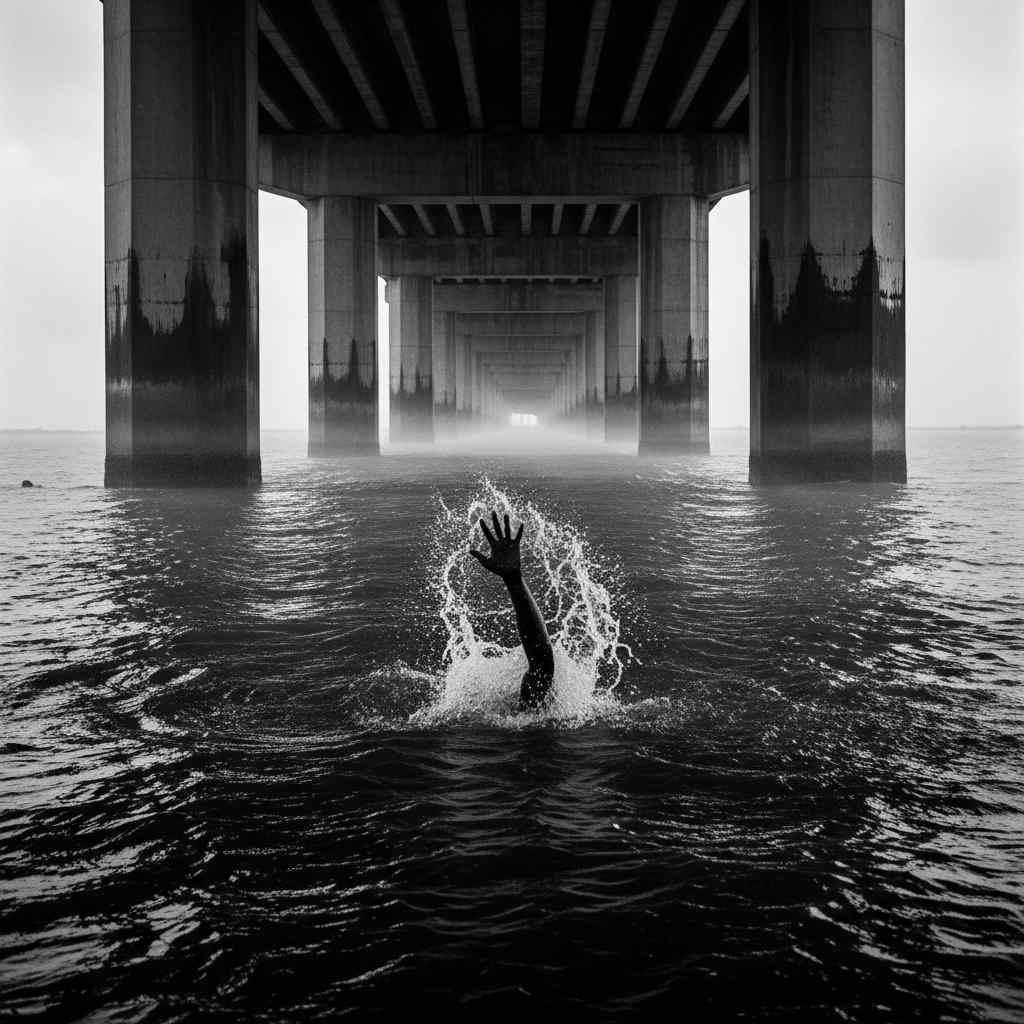
A woman entered the Lagos Lagoon near the Third Mainland Bridge on a Monday morning in April 2026, and the water pulled her back three separate times as she tried to swim away, as if something beneath the surface had decided she was not leaving. Good Samaritans and emergency responders eventually pulled her to safety. This is the simple, terrifying fact of that morning. The water did not want to let her go.
The hidden highway of forces
The lagoon around that bridge is a highway of hidden forces, tidal currents and underwater topography and the sheer volume of water moving between the Atlantic and the lagoon all working together in ways that no swimmer, no matter how strong, can fight for long. A person becomes a leaf in that flow. A leaf does not get to choose where it goes.
The incident happened near the Adekunle axis, a known trouble spot where the National Inland Waterways Authority has posted warnings about strong currents that people still ignore because the water looks calm from the bridge above. You cannot see the pull from up there. You have to be in it to feel it. By then, it is too late.
Why the lagoon grabs and holds
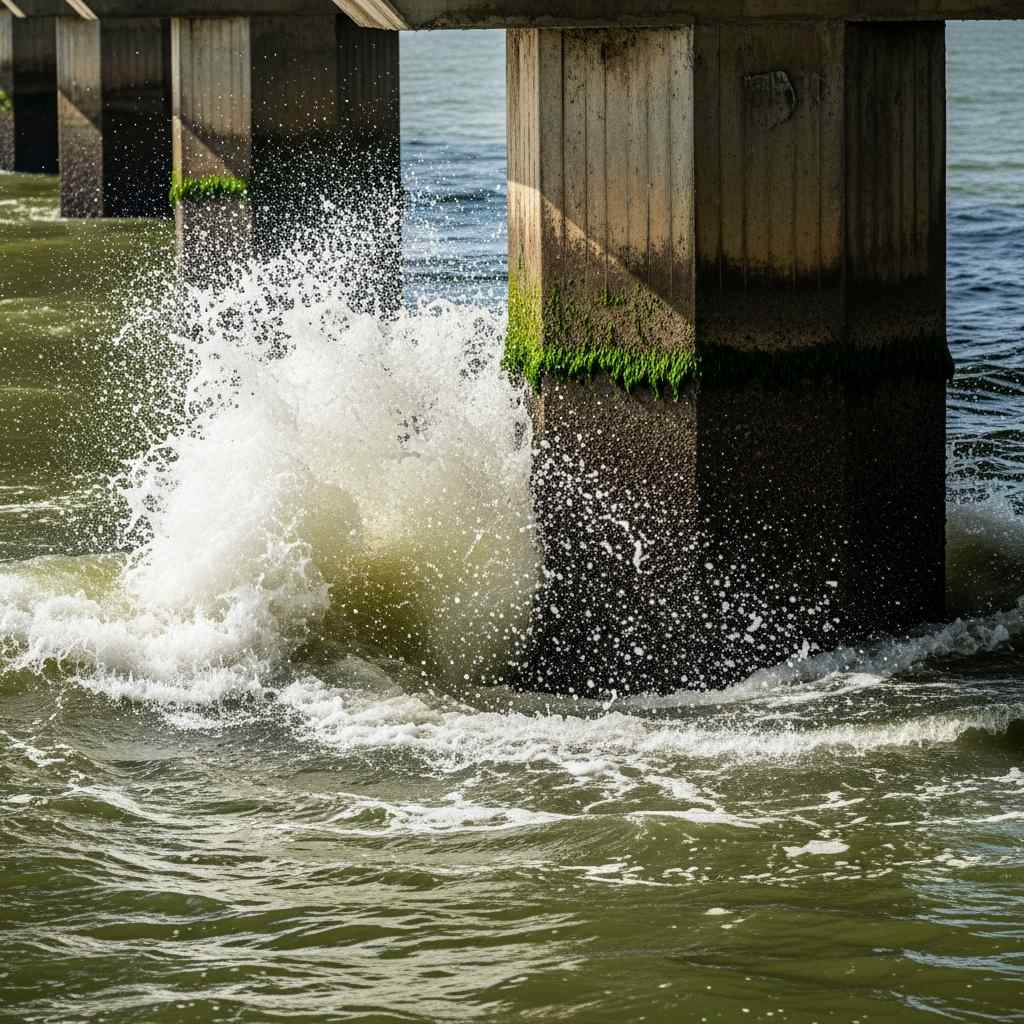
The Lagos Lagoon is a brackish water body connected to the Atlantic Ocean through the Lagos Harbour, and twice a day the tides push water in and pull water out, creating currents that would exhaust even the strongest swimmer within minutes. Around the pillars of the Third Mainland Bridge, these currents accelerate because the water must squeeze through narrow gaps between the supports, and the force increases, creating swirling eddies and undertows that pull you toward a pillar and spin you around it until you cannot tell which way is up.
Underneath the surface, the ground is uneven. Dredging activities and natural sandbanks and debris from years of construction all alter the flow, so a calm surface can hide a torrent below, and the woman experienced this firsthand with every attempt to swim to safety meeting a counterforce from the water itself. Marine experts call this a hydraulic. It is a common danger near bridge piers all over the world. The water does not care if you know the name.
The chain of rescue that day
People on the bridge saw the woman in distress and raised the alarm, alerting the marine police unit stationed nearby and the Lagos State Emergency Management Agency, which mobilized boats to reach her before the water claimed another life. But the rescue boats faced the same currents she was fighting, and approaching a person in a strong hydraulic requires skill, because a direct approach risks getting sucked into the same vortex or hitting the victim with the hull.
The officers used a throw rope and a lifebuoy, and the woman grabbed the buoy, but the current pulled her away from it, and this happened more than once, her fingers slipping off the orange ring as the water dragged her back toward the pillars. Persistence from the rescuers finally secured her. They pulled her into the boat, and she lay on the deck, coughing up lagoon water, alive.
“The synergy between our marine unit, the police, and community volunteers made the difference. It was a difficult retrieval due to the water conditions.”
– Dr. Olufemi Oke-Osanyintolu, Permanent Secretary of LASEMA, speaking in a press briefing on April 7, 2026.
She received first aid on the boat, and an ambulance waited at the jetty, and the Lagos State Emergency Management Agency confirmed she was transported to a general hospital for observation. They praised the collaborative response. Everyone went home that day. Not everyone does.

A pattern, not a surprise
This event is one in a series, because the Third Mainland Bridge has been a site for water-related incidents for years, some accidental and some intentional, but all of them ending the same way if the rescue does not come fast enough. The Lagos State Waterways Authority recorded over 40 incidents in the lagoon and surrounding waterways in 2025, including boat mishaps, falls from bridges, and rescues like this one.
The bridge itself is undergoing repairs, a rehabilitation project that started in 2024 and is now over 70% complete, according to the Federal Ministry of Works. Construction activity adds another layer of complexity to the area. Barriers and safety nets exist in some sections, but gaps remain, and a person determined to access the water can always find a way. The focus then shifts entirely to response. By then, you are already behind.
The gaps in our safety net
The response worked this time. The system functioned. But we can still ask hard questions about the times it does not. How many marine police boats patrol that stretch of water during peak hours? What is their average response time from the moment someone calls to the moment they arrive?
The Lagos State Government budgets for waterway security, and the 2026 budget allocates funds to the Lagos State Waterways Authority for safety and enforcement, but the demands on this agency are vast, covering the entire network of lagoons and creeks across a city of over twenty million people. The money stretches thin. The water does not.
Technology offers solutions. Motion-sensor cameras on bridge spans can detect human movement near the edge, and automated alarms can alert command centers instantly, but these systems require capital investment and maintenance and power, and the digital transition in public safety is a work in progress. Community awareness is the cheapest tool. Most Lagosians living inland have never seen the lagoon up close. They see calm water from the bridge. They underestimate its power. Public service announcements on radio and in local languages could save lives, but someone has to pay for them.
The human element in water emergencies
Think about the bystanders on the bridge that morning. They raised the alarm. They stayed to guide the rescue boats. This community vigilance is the critical first link in the chain, and in many parts of Lagos, the first response comes from neighbors, not officials, because the officials cannot be everywhere at once.
Training for these first responders is limited. Basic water rescue techniques, like throwing a rope without entering the water, are simple to learn, and a few hours of instruction for police officers stationed on bridges would cost little and save much. The mental health aspect is the other side of this coin. People enter the water for complex reasons. Economic pressure. Personal crisis. Mental illness. Strengthening social support systems prevents these crises from reaching the lagoon’s edge in the first place.
Lagos has a public mental health program. The Lagos State Government launched the Lagos Mental Health Helpline in 2023. But awareness of this service needs to be as widespread as awareness of the police emergency number. You cannot call a helpline you do not know exists.
“Our water is not a playground. It is a living system with immense power. Respect it, and know the risks before you go near it.”
– Engr. Oluwadamilola Emmanuel, General Manager of the Lagos State Waterways Authority, speaking to BusinessDay in March 2026.
What other cities do
Cities with major bridges over dangerous waters install physical deterrents. San Francisco’s Golden Gate Bridge has a suicide prevention net. Toronto’s Bloor Viaduct has a barrier system called the Luminous Veil. These are expensive, permanent installations that require political will and years of planning.
Other places use patrols more aggressively. In Sydney, harbor police and volunteer marine rescue groups maintain a visible, constant presence in high-risk areas, and their response time is measured in minutes, not the long, agonizing minutes that pass when you are watching someone struggle in the water. Crucially, these cities integrate mental health outreach with physical security. Signs on bridges provide a crisis hotline number. The message is one of hope and immediate help, just a call away.
Lagos has unique challenges. The scale of the Third Mainland Bridge, its vital transport role, and the limited fiscal space of a state government with competing priorities make grand solutions difficult. Incremental, smart improvements are the realistic path. Small steps. Consistent steps. Steps that add up over time.
A small action with big impact
Save one number in your phone. The Lagos State Emergency Hotline is 767 or 112. If you see someone in trouble on a bridge or in the water, call it immediately. Give the dispatcher the exact location. “Third Mainland Bridge, Adekunle bound, between pillars 15 and 16.”
Your precise information shaves minutes off the response. Those minutes decide outcomes. You become part of the safety net. This is a civic duty as simple as knowing your own phone number.
Encourage your local community development association to host a talk. Invite an officer from the Lagos State Waterways Authority or the marine police. Let them explain the dangers of the local water bodies. Knowledge spreads from one person to a family, to a street, to an entire neighborhood. That is how change happens. Not all at once. One conversation at a time.
The water will always be there
The lagoon will continue its daily rhythm of tides, and the currents around the bridge pillars will persist, and the physical reality of the water will not change because we asked it to. What can change is our relationship with it. What can change is our preparedness for when things go wrong.
This woman survived. Her story is a lesson written in water, a lesson about the hidden power of a familiar landscape and the bravery of ordinary responders who refused to let her go. It is also a lesson about vulnerability, about the gaps in our safety net that remain open while we argue about budgets and priorities.
Infrastructure protects. Awareness protects better. A city like Lagos, defined by its water, must master both. The next time you cross that bridge, look at the water with new eyes. See the power. Respect the danger. Know what to do if you witness the unthinkable.
That knowledge is the strongest lifeline of all.
Publication Date: April 10, 2026
Reporting Notes: This account is based on eyewitness reports, official statements from LASEMA and the Lagos State Police Command, and interviews with waterway safety experts. The woman’s identity has been withheld at her request.

Midnight Market Appears in Okija Forest Each December

Dye Pits Whisper Names in Kano

Lagoon Pulls Woman Back Lagos Third Mainland Bridge Incident

Boy Remembers Past Life in Maiduguri, Identifies Strangers

River Spirit Spares Fisherman Who Defied Efik Market Day

House Built on Termite Mound Stands for Eighty Years in Ibadan

Initiates Hear Same Song Before Visiting Osun Grove

Coal Mine Collapses Twice in Enugu Miner Walks Out Alive

Refinery Lights Flicker at Port Harcourt on a Deadly Anniversary

Leather Worker Stitches Patterns from a Father’s Dreams in Sokoto

Thunder speaks sentences that elderly women in one village understand clearly

River Disappears Overnight in Warri Delta State

Internet Sovereignty: Why Some Countries Want Their Own Separate Internet

The Story Of The Nigerian Who Helped Build Global Internet Systems

Nigerian Hackers: The Global Fraud Story and Its Fallout

Forgotten Satellites Defy Silence, Beaming Signals for Decades

Your Digital Store in Nigeria and the Reality of Domain Expiration

The Phone Stay So Quiet: An Investigation into Nigeria’s Silent Customer Lines

The Business That Died: A Nigerian Case Study in Refusal to Adapt

Hiding Your Business From People With Money

How Nollywood Grew Without Government Support

Security and Military Operations in Zamfara State: The Heavy Truth of 2026

Nigeria Produces 67 Percent Global Yam Output

Comedy Industry in Nigeria and Its Economic Contribution

 Digital Sovereignty2 months ago
Internet Sovereignty: Why Some Countries Want Their Own Separate Internet
- Diaspora2 months ago
The Story Of The Nigerian Who Helped Build Global Internet Systems
- Crime2 months ago
Nigerian Hackers: The Global Fraud Story and Its Fallout
- Space Technology2 months ago
Forgotten Satellites Defy Silence, Beaming Signals for Decades
- E-Commerce2 months ago
Your Digital Store in Nigeria and the Reality of Domain Expiration
- Edutech Portal2 months ago
The Phone Stay So Quiet: An Investigation into Nigeria’s Silent Customer Lines
- Edutech Portal2 months ago
The Business That Died: A Nigerian Case Study in Refusal to Adapt
- Business2 months ago
Hiding Your Business From People With Money