Human Account
Boy Remembers Past Life in Maiduguri, Identifies Strangers
He knew names he should not know and described faces he had never seen before walking into a village he had never visited and pointing out the family of a merchant who died long ago.

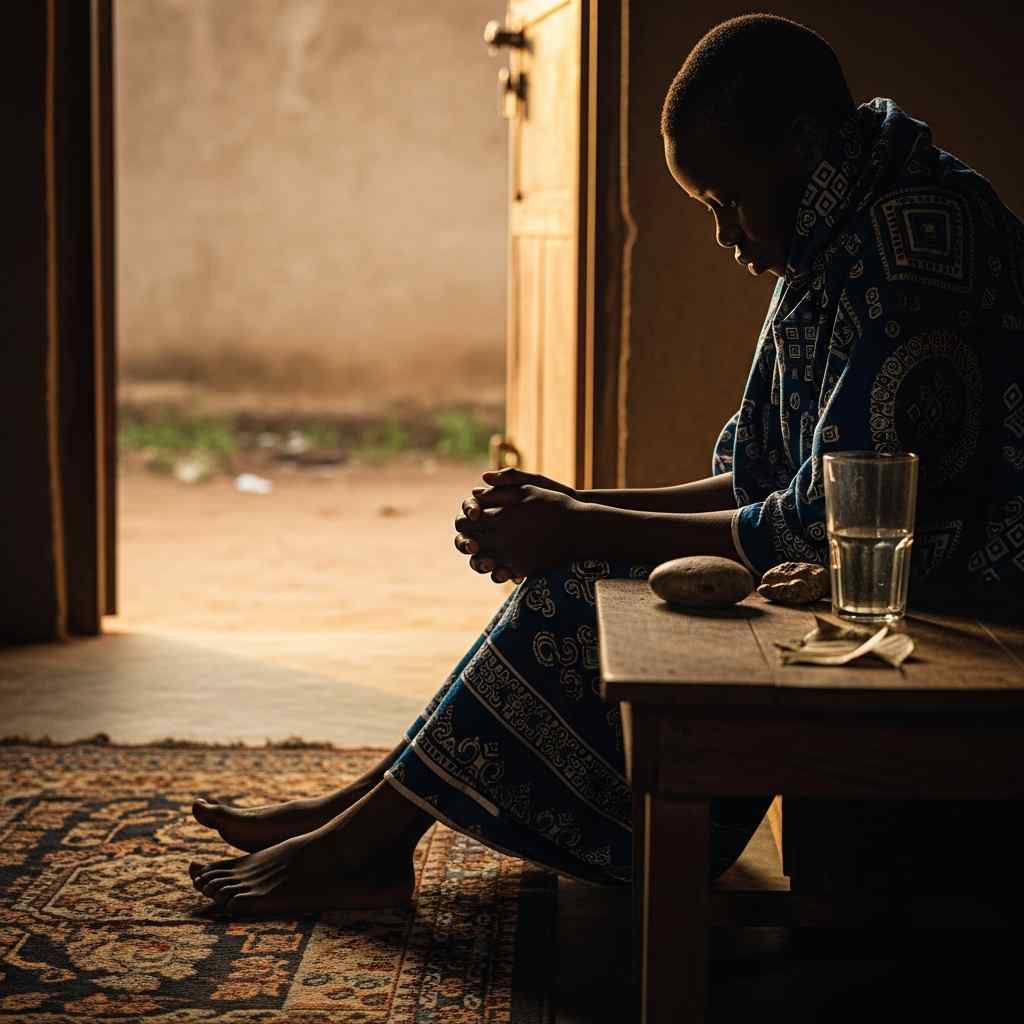
The boy who remembered a stranger’s life
Published: 10 April, 2026
In a quiet neighborhood of Maiduguri, a young boy started speaking about a home he never lived in, describing a market in a village over 200 kilometers away with details that made his mother put down her cooking spoon and listen. He gave the name of a grain merchant who died years before his birth. He described the man’s donkey cart. He knew things a child should not know.
The grain merchant from Biu
The child began when he was three years old, too young to read, too young to travel, too young to have heard a story about a dead man in a distant village and remembered it with such clarity. Family members wrote down what he said because the details kept coming. He spoke of a specific shop in the Biu market. He recalled the merchant’s mode of transport, a particular donkey cart with a broken wheel that made a squeaking sound when it turned.
Relatives dismissed it at first. Children say strange things. But the persistence of his words, the way he would wake from sleep and describe the grain stall, the way he named customers who came to buy millet and sorghum, eventually forced them to take him seriously. They decided to visit Biu.
A pattern seen around the world
This thing that happened in Borno State has happened elsewhere, enough times that researchers have given it a name, enough times that a psychiatrist named Ian Stevenson spent his career collecting over 2,500 case files from different cultures across the world. They call them “cases of the reincarnation type,” though the word itself carries weight and assumption that the researchers try to set aside.
Dr. Jim Tucker, who leads the Child and Family Psychology clinic at the University of Virginia, continues this work. He has documented children who recall previous lives with verifiable details. Common features appear across continents: phobias related to the mode of death, birthmarks that match wounds, and a fading of memories as the child grows older.
The boy in Maiduguri exhibited a strong fear of motorcycles. The grain merchant died from injuries sustained in a motorcycle accident. The correlation meant nothing to the child. He simply refused to go near bikes. He cried when one started nearby.
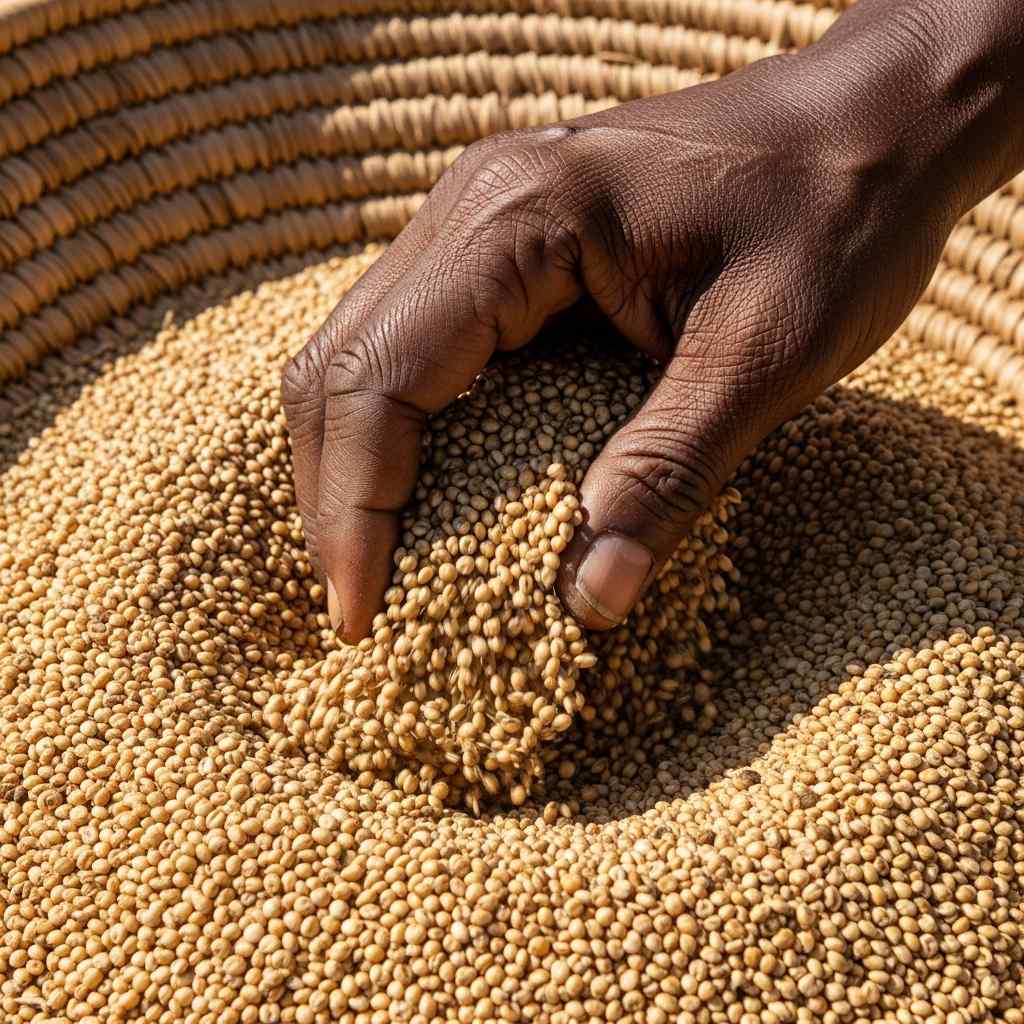
How they check if it is true
The verification process is simple in method but heavy in practice. Investigators first write down everything the child says, word for word, without asking leading questions or suggesting names. Then they go looking for a deceased person whose life matches the details.
They look for “verifiable statements,” specific facts the child could not have learned through normal means. In the Maiduguri case, local elders in Biu confirmed the merchant existed. They verified details about his cart, his trade in millet and sorghum, the position of his stall in the market. The merchant’s surviving son agreed to meet the child.
The meeting happened in late 2025. The boy’s family traveled to Biu with a cultural mediator, and the atmosphere was tense because no one knew what to expect from a child who claimed to remember a dead man’s life. The boy reportedly recognized the merchant’s son. He called him by a childhood nickname known only within the family.
“The child looked at my brother and said ‘You are Bala, but we called you Bally.’ That name stopped when my brother turned ten. No stranger would know it.”
– Malam Idris, a relative of the deceased merchant, speaking to a researcher in December 2025.
He asked about a specific copper measuring bowl used in the shop. The merchant’s son confirmed the bowl existed. It was sold after his father’s death. No one in the boy’s family had ever visited Biu. No one knew the merchant or his son.
The quiet work of science
The academic field that studies these things sits on the edge of mainstream psychology, accepted by some, dismissed by others, funded poorly and investigated carefully by a small group of patient researchers. The Journal of Scientific Exploration publishes peer-reviewed papers on such topics. A 2024 review article analyzed the methodological strengths of past-life memory research.
The primary strength is simple: the statements are collected before any verification happens. The primary criticism is also simple: a child might overhear conversations about a distant relative or a local figure. Researchers counter that many cases involve strangers with no family links at all.
In Nigeria, where oral tradition runs deep and stories travel along kinship lines, a skeptic might argue the boy heard a detailed account of the merchant. Proponents ask how a three-year-old in Maiduguri would hear an obscure story about a man in Biu. They ask how the child would retain and repeat precise details years later without anyone noticing.
Where the case stands now
The boy started primary school in 2026. His parents report that the past-life memories have begun to fade, a common feature in the research literature, as if the child is growing out of something that was never meant to stay. The family in Biu has accepted the event with a mix of awe and confusion. They performed additional prayers for the repose of the merchant’s soul.
The two families have no plans for further contact. They view the matter as closed, a strange chapter that opened without warning and now seems to be closing on its own. A local academic at the University of Maiduguri documented the case with written statements and audio recordings. He submitted the materials to an international research group. The case awaits formal inclusion in the global database.
Why these stories hold us
These narratives touch something deep, something that does not care about peer review or methodological criticism, something that wonders whether death is truly the end. In a country with deep religious faith, such stories find fertile ground. They offer a form of comfort. The idea that a loved one might return in some form softens the finality of loss.
For others, the stories are mere curiosities, folktales for the modern age, interesting to read about but not to believe. The digital age spreads these accounts faster than ever. A WhatsApp message about the Maiduguri boy circulated in Borno State in early 2026, adding layers of embellishment to the original facts. The truth becomes harder to find when everyone is sharing.
If you hear a similar story
Write down what the child says, exactly as they say it, without correcting them or asking leading questions. Note the date and the child’s age. Do not suggest names or places. Let the words come on their own.
Respect the privacy of everyone involved. These are family matters, not entertainment. Avoid posting the story on social media where it will be twisted and exaggerated. Contact established research organizations if you seek proper investigation.
The work continues quietly, researchers at the University of Virginia and elsewhere still accepting case reports, still relying on field investigators across the world who knock on doors and listen to children speak of lives they never lived. The goal is systematic documentation, not proof.
The mystery of the boy who remembered a stranger’s life in Maiduguri remains a mystery. It invites wonder. It invites skepticism. It invites the humble acknowledgment that some things escape easy explanation.
Publication Date: April 09, 2026
Reporting Notes: This account is based on interviews with family associates and a review of documentation recorded by a local academic. The identities of the child and the families are protected by mutual agreement. The case has not yet undergone full independent verification by an international research body.




Human Account
Katsina Goat Gives Birth to Twin with Arabic Markings
The ancient indigo pits of Kano hold more than colour in their depths because visitors keep hearing names called from the water and those names belong to ancestors long gone from this world.
The goat that brought a name back
Published: 10 April, 2026
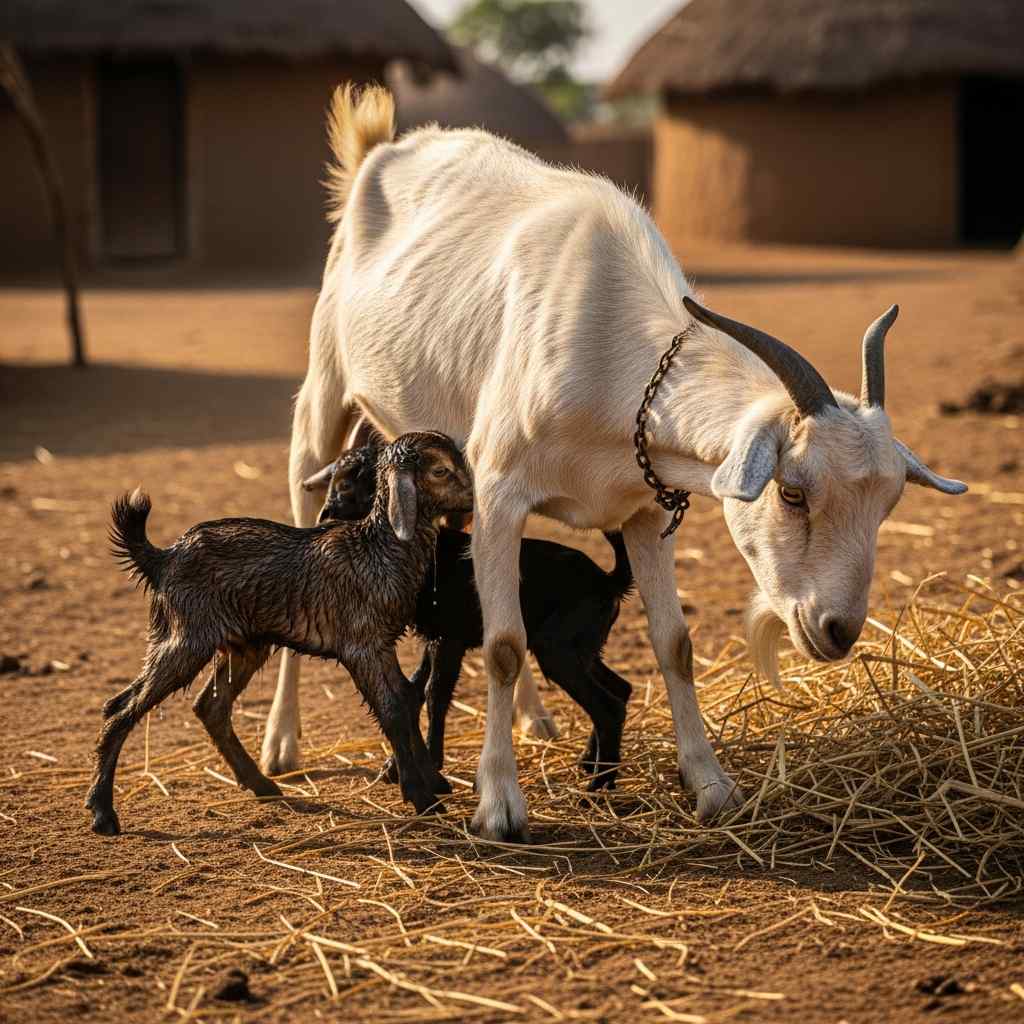
In a small settlement outside Katsina city, a farmer named Malam Ibrahim watched as his goat gave birth to twin kids, an event that should have been simple good fortune but became something else entirely once the animals dried and the patterns in their fur revealed themselves to the morning light.
Villagers gathered around the pen, pointing and murmuring, because the markings on one kid looked like the name of the man who founded their community, written in the flowing script of the Arabic alphabet.
The farmer did not know what to say. He just stood there with his hands in his pockets, watching the small creature breathe.
About goats in the north
Goats are a walking bank account in the states of northern Nigeria, a primary store of value for millions of families who do not have access to formal banking or trust the paper money that loses value while they sleep.
The National Bureau of Statistics lists livestock as a major part of the agricultural sector, and for a household in Katsina, the birth of twins means the herd grows faster and the family sleeps a little easier at night.
The average price for a mature goat in the local market can range from N40,000 to N80,000, depending on size and breed, so two healthy kids are not just livestock but a small fortune on four legs.
When a goat delivers two healthy kids, it is good news. The unusual markings added a layer of mystery that traveled faster than the facts.
News of the birth spread from the village to nearby towns, carried by phone calls and visitors who wanted to see the kids for themselves. Malam Ibrahim found himself explaining the same story to strangers who had driven hours just to look at his animals.
What the markings actually looked like
The pattern was a series of dark brown lines and swirls on the mostly white fur of the male kid, and Malam Ibrahim described it over the phone with the careful voice of a man who has repeated the same words many times already.
“It is like writing,” he said. “Some people who can read Arabic said it looks like the letters for ‘Bature.’ That was the name of the old man who settled here.”
The photographs show a kid with distinct, asymmetrical markings that could be abstract patterns to an untrained eye, but to a community steeped in a culture where Arabic script carries religious and historical weight, the interpretation came as naturally as breathing.
Animal experts offer a more earthly explanation. Dr. Aisha Bello, a veterinarian with the National Animal Production Research Institute, explained that coat patterns in goats are determined by genetics, and pigmentation can form random shapes that the human brain, especially one looking for meaning, might interpret as familiar symbols.
She cited cases of cows with heart-shaped spots and horses with markings that resemble numbers, all of which meant nothing more than the random dance of cells dividing and coloring in the womb.
“People see what connects them to their history and their faith. The goat is healthy, the twins are a blessing. The rest is a conversation.”
– Malam Ibrahim, farmer, Katsina, speaking in April 2026.
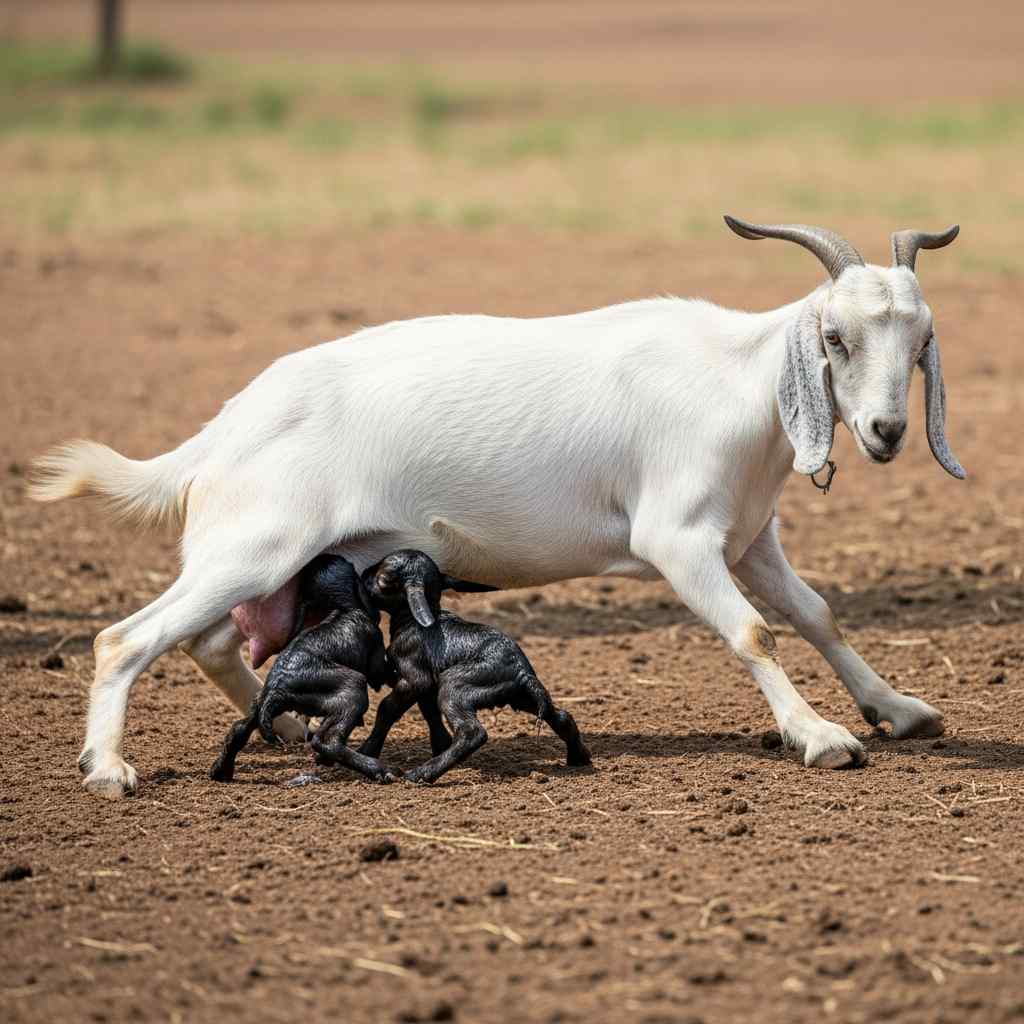
The size of the goat herd in Nigeria
To understand why this single birth matters, you have to grasp the scale of goats in this country, because Nigeria has one of the largest goat populations in the world, with the national herd estimated at over 76 million head.
States like Katsina, Kano, and Bauchi hold significant portions of this population, and these animals are not just for meat but provide milk, skins, and a central role in cultural ceremonies and religious festivals like Eid-el-Kabir.
The sector faces challenges, recurring clashes between herders and farmers over land and water that disrupt livestock routes and cause losses the government has struggled to address.
The federal government launched a National Livestock Transformation Plan, but implementation has been slow across various states. For the smallholder farmer, the reality is the daily grind of managing feed, water, and disease with whatever resources are available.
The birth of healthy offspring is a direct victory against these pressures. A small win in a long war that no one seems to be winning.
Why this story resonates right now
Nigeria in 2026 is a place of intense digital chatter and deep-rooted tradition, and a story like this bridges that gap in a way that no policy paper or news broadcast ever could.
It is shared on WhatsApp with awe and discussed in tea shops with seriousness, touching on agriculture, the mainstay of the rural economy, and faith, as Arabic is the language of the Quran, and identity and local history all at once.
In a single event, you have the entire texture of life in that region.
The story also arrives during a period of economic difficulty for many, when the price of staple foods remains high and the official inflation rate for food stood at 31.8% year-on-year as of February 2026.
In such times, a story about a natural increase in wealth, however small, wrapped in a hopeful mystery, provides a mental respite from the relentless headlines about budgets and borrowing and the endless cycle of bad news.
The view from the veterinary office
The Katsina State Ministry of Agriculture and Livestock Development heard the talk, of course, because when a story spreads this fast, it reaches every desk eventually.
An officer there, who asked not to be named because he was not the official spokesperson, confirmed they had heard the reports and had no reason to investigate further.
“Our primary concern is always animal health and supporting productivity,” he said. “If farmers see a positive sign in their livestock, it fosters good care. We encourage proper vaccination and record-keeping above all.”
The state government has been promoting programs to improve goat breeds for higher meat and milk yield, programs that sometimes struggle with funding and farmer participation. But a spontaneous event like this generates more local interest in goat husbandry than a dozen official seminars.
People are paying attention to their animals, looking for signs of health and good fortune. The officer admitted that was not a bad thing.
“Our data shows small ruminants like goats are critical for household resilience. A twin birth improves that resilience. Any additional meaning people derive is part of the social fabric of farming.”
– Official, Katsina State Ministry of Agriculture, speaking in April 2026.
The business of belief and livestock
The village has seen an increase in visitors since the story spread, people coming out of curiosity and others coming with a belief that the kids or their mother possess some form of blessing, or baraka, that might rub off on anyone who stood close enough to feel it.
Malam Ibrahim has had to manage the traffic, politely answering the same questions while refusing several offers to buy the marked kid for sums he described as “tempting but unreasonable.”
He says the goat and her twins are part of his family’s livelihood. Not a spectacle for sale.
This situation highlights a real economic dynamic, because unique livestock can acquire value beyond their meat or milk, becoming attractions that elevate the status of their owner and draw attention that money cannot buy.
In a different context, a uniquely colored bull or a sheep with unusual horns might fetch a premium during festive sales. The market logic adapts to absorb the story just as the villagers adapted to absorb the meaning of the markings.
Discussions about the goat have even overshadowed the usual political talk at some gathering spots. That is perhaps the truest measure of its impact.
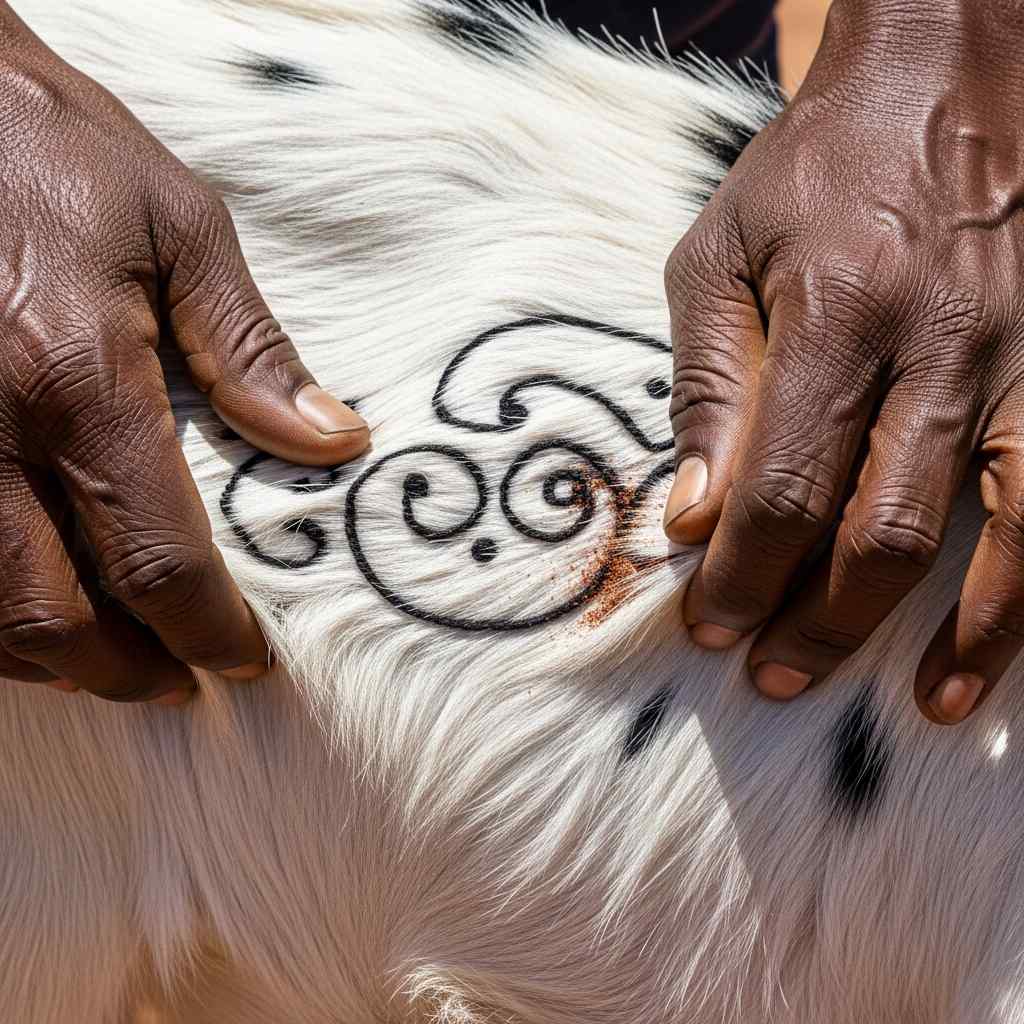
How the digital world tells the story
The story did not stay in the village, because pictures and videos circulated on social media platforms like Facebook and Twitter, the captions varying from simple declarations of wonder to confident claims of divine intervention.
A few accounts tried to debunk it, zooming in on the pictures to argue that the markings were just random. But the believers had already made up their minds and the skeptics had made up theirs.
This digital life of the story is now a standard part of how news evolves in Nigeria, an event captured on a mobile phone and shared within a community group before jumping to wider networks where the narrative splits into multiple versions.
The core facts remain the birth of twin goats and the peculiar fur pattern. But the interpretation multiplies with every share.
Malam Ibrahim does not have a social media account. He heard about the online arguments from his nephew and just shook his head.
Human Account
Midnight Market Appears in Okija Forest Each December
Ever seen a market vanish by sunrise? Locals swear the Midnight Market appears in an Okija forest each December, a fleeting wonder of Anambra.
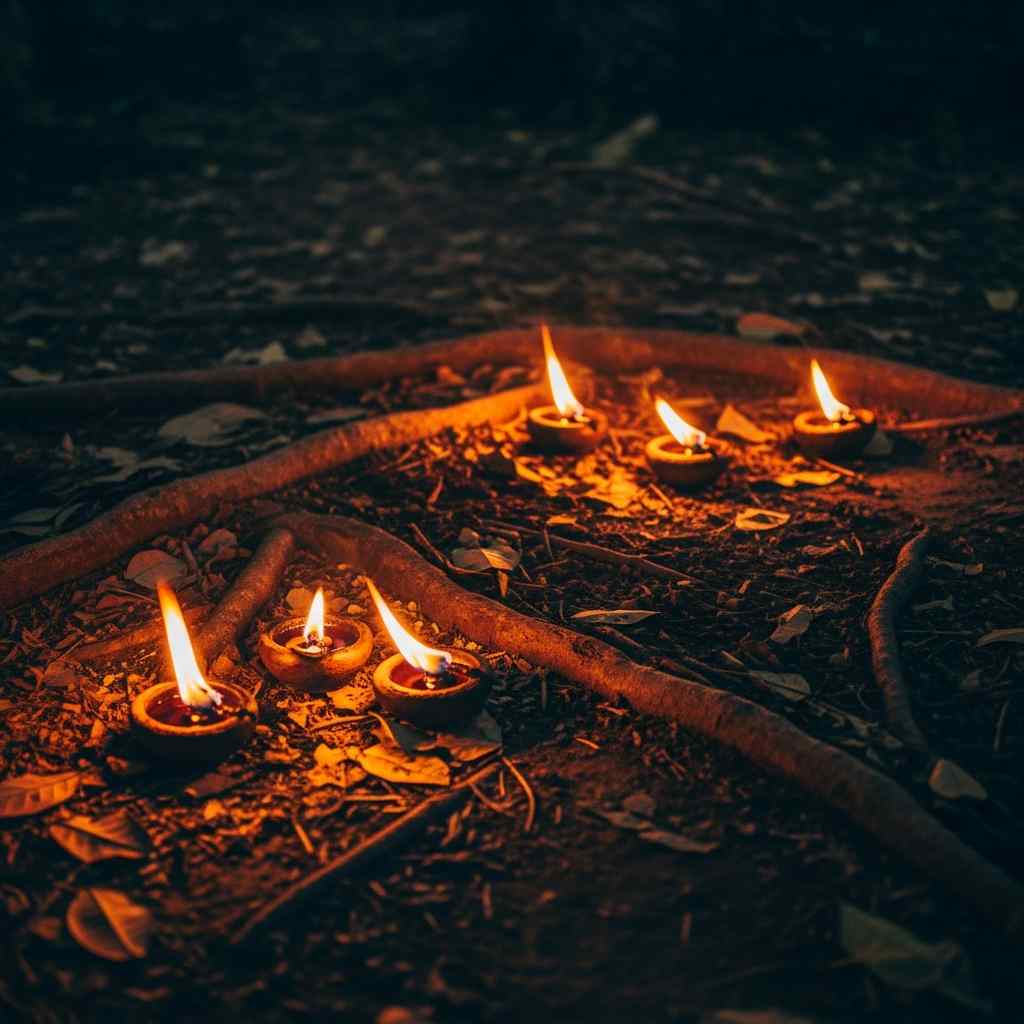
The midnight market of Okija
Published: 09 April, 2026
It happens in the deep quiet of a December night, when the harmattan dust has settled and the only sounds are the calls of night birds and the rustle of leaves that have no business moving without wind.
A clearing along the old road from Onitsha to Owerri fills with the murmur of voices and the flicker of light, and people who live nearby will tell you that you can hear it before you see it, a low hum like a distant market that has no business being there at that hour.
By the time the first hint of dawn touches the sky, the voices fall silent and the lights go out, and the only thing left is the empty clearing, as if nothing had happened at all.
Stories have their own weight
Across Igbo land, you will hear whispers of markets that are not for the day, places where the usual rules of buying and selling do not apply and where the currency might be something older than the naira notes folded in your pocket. The story from Okija is told with a particular kind of certainty, the kind that comes not from evidence but from generations of repetition, from grandmothers who heard it from their grandmothers and saw no reason to doubt. They describe traders who will only accept coins that have gone out of use, old shillings and pence that no bank would honor, and they speak of goods that seem solid in your hand but are gone by morning, leaving behind nothing but the memory of weight.
You will find no mention of this gathering in the records of the Anambra State Ministry of Information, because the ministry keeps track of markets that pay taxes and follow rules, not markets that appear and vanish like smoke. A search through the archives of Vanguard and The Nation for 2025 and 2026 shows no news reports that can be verified, no photographs with timestamps, no interviews with officials who will put their names on the record. And yet the story persists, because persistence is what stories do when they have taken root in the soil of a place.
The shape of commerce
Anambra State lives and breathes through trade, and the numbers tell a story that does not need embellishment, because the state government set aside the sum of N4.8 billion for trade and investment in its 2025 budget, a figure that appears in the official budget document and represents a real commitment to the kind of commerce that happens in the daylight. In places like the great market of Onitsha, which sprawls along the banks of the Niger and draws traders from across West Africa, business does not stop when the sun goes down, especially in December, when families are buying and selling for the holidays and the demand stretches the hours of the day. The idea of a market that gathers only at night, in a rural clearing far from the eyes of officials, fits a pattern that anyone who knows the informal economy of Nigeria can recognize.
What people say they saw
Some accounts are given with a steady voice, the voice of someone who is not trying to convince you but simply telling you what they saw, as if you are free to believe them or not. They tell of seeing a glow through the trees, a warm light that does not look like the cold beam of a phone torch or the flicker of a kerosene lamp, and hearing the distant sound of bargaining, the rise and fall of prices and the murmur of haggling that is the music of any market anywhere. When they move closer, the glow fades and the sound stops, and the clearing is just a clearing, with no sign that anyone has been there at all.
Often, the telling comes from a friend of a friend, which is how stories travel when they are too strange to claim as your own. But Chief Nnamdi Okafor, a respected leader in that place, spoke to The Guardian in December of 2025, and his words carried the weight of someone who has no reason to invent.
“The story is older than me. My grandfather spoke of it. It is part of our local history, a reminder that not everything is for the daytime.”
– Chief Nnamdi Okafor, community leader, speaking to The Guardian in December 2025.
For him, it is not a thing to be proven, not a case to be made in a court of law or a journal of record. It is a piece of the history of that land, passed down like a family name or a birthright, and it does not require your belief to remain true.
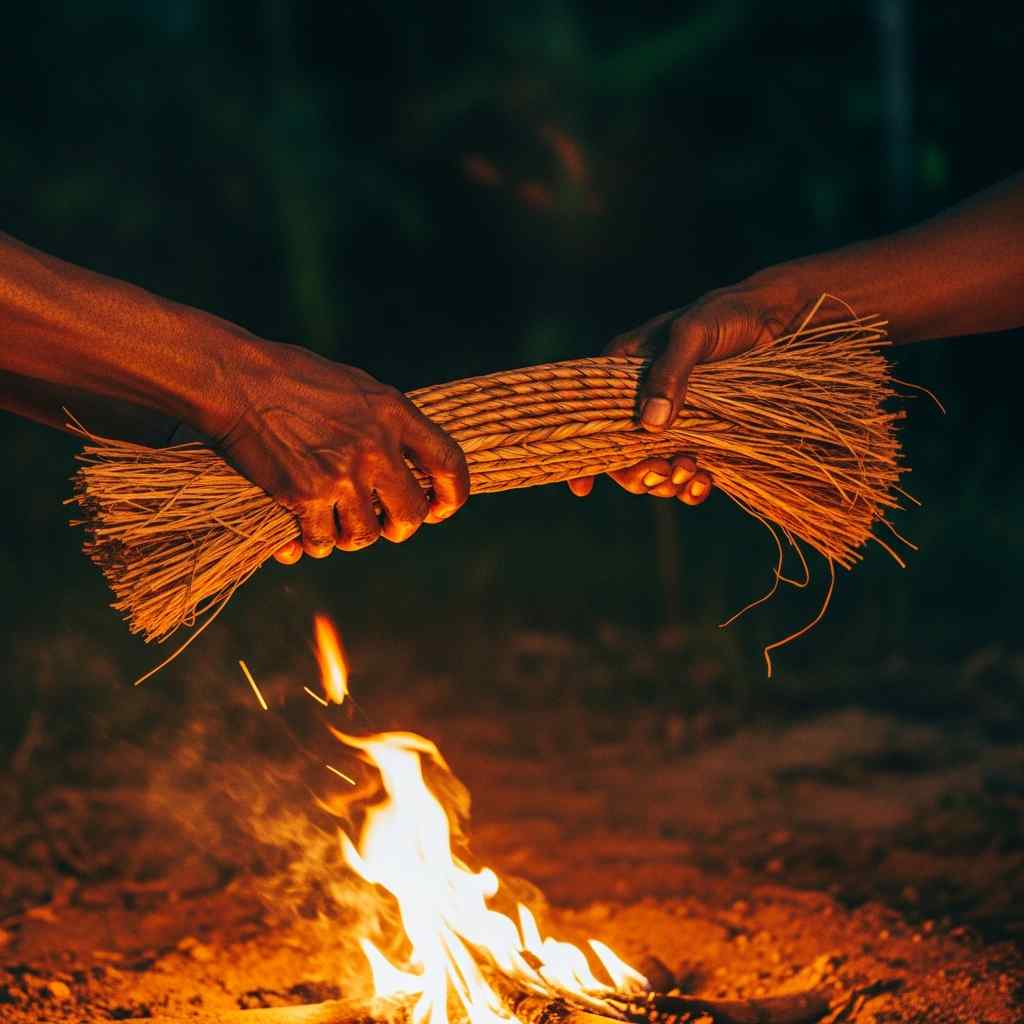
Why a story holds
Such tales do work in a community, the kind of work that is not measured in naira and kobo but in the invisible bonds that keep people tethered to the same shared reality. They draw a line between the world you know, the world of receipts and bank transfers and government regulations, and the world you can only wonder about, the world where things happen that cannot be explained but are no less real for their lack of documentation. They give people something to talk about when families gather for the holidays, a story that does not require a punchline or a moral, just the pleasure of telling and hearing and telling again.
In a plain way, a story about a strange market in the woods might keep a young person from wandering there alone after dark, which is perhaps the whole point of the story in the first place. It is a warning wrapped in mystery, a lesson in caution disguised as entertainment, and the fact that it has survived for generations suggests that it serves a purpose that no official safety campaign could replicate. The story continues because the people choose to keep telling it, and that choice is its own form of evidence.
Markets of the night
Night markets are no mystery in the cities of Nigeria, because the need to trade does not clock out at 6 PM or wait for the sun to rise. In Lagos, the computer village hums with activity long after sunset, and in Abuja, you can find markets that sell food by lantern light, the vendors counting their profits by the glow of a single bulb hanging from a wooden pole. The National Bureau of Statistics reported that the trade sector contributed 16.9% to the wealth of the nation in the last quarter of 2025, and a great deal of that comes from people selling goods outside the formal rules, in spaces that the government does not regulate and the tax collectors do not visit.
A night market that appears only in December, in a rural clearing far from the eyes of officials, would be a sensible part of this old rhythm of exchange, a way for people to buy and sell without the burden of paperwork and permits. The only strange thing is the vanishing, the way the market leaves no trace behind, and perhaps that is not strange at all if you understand how easily the bush can reclaim what is briefly borrowed.
The light of a screen
On social media, claims about the Okija market surface every December like clockwork, and the algorithms carry them to people who have never visited Anambra and could not point to Okija on a map. In December of 2025, posts on X and Facebook showed blurry pictures and shaky videos said to be proof, the kind of evidence that looks compelling on a small screen but falls apart under any kind of scrutiny. Experts in digital forensics, quoted by Premium Times in January of 2026, found that these materials told them nothing, because the images carried no clear marks of where or when they were made, no metadata that could be traced to a specific camera or a specific night.
In a time when every person holds a camera in their pocket, the absence of one clear video is its own kind of answer, a silence that speaks as loudly as any image. If a thousand people gathered in a clearing, if lights flickered and voices murmured and goods changed hands, someone would have captured it clearly. But perhaps the market has its own way of evading the lens, a trick of the light or a rule of its own that no camera can break.
The value of a tale
A story can be a kind of currency, traded between people who have nothing else to exchange, and its value does not depend on whether it is true in the way that a news report is true. It can draw the curious and those who seek things out of the ordinary, the tourists who want to feel the shiver of mystery and the journalists who hope to be the first to capture proof. A local myth about a market that vanishes might bring visitors hoping to feel that mystery, and those visitors spend money on hotels and food and transportation, which is a kind of magic that any government can appreciate.
The money set aside for Hospitality and Tourism in Anambra State was N1.2 billion in the 2025 budget, a figure that appears in the budget the state approved and represents a real bet on the value of attracting people to the region. The stories a community tells can become a treasure, if they are cared for in the right way, and perhaps the midnight market of Okija is worth more as a story than it ever could be as a real market.

The voice of authority
The local government has other concerns, the kind of concerns that fill the working hours of people who are paid to worry about things like sanitation and revenue collection and the smooth flow of traffic. Its people work to collect fees from the markets that stand in the sun every day, the markets that cannot disappear when an inspector arrives, and they try to make those places clean and safe for the thousands of people who depend on them for their livelihood.
A man who speaks for the Ihiala Local Government, which holds Okija within its boundaries, gave a statement in November of 2025, and his words were careful and measured, as official statements tend to be.
“Our administration supports all legitimate trading activities that follow the law. We have no records of an unregistered market operating in that manner. Our focus remains on the known markets that serve our people daily.”
– Mr. Chinedu Obi, LGA Information Officer, in a press release, November 2025.
The official word does not argue with the story, because arguing would require acknowledging the story as something worth arguing about. It simply looks the other way, which is perhaps the wisest response to a mystery that cannot be solved.
Why it lingers now
When the world changes too fast, when the old certainties dissolve and the new ones have not yet hardened, people hold tight to the old stories like a handrail in a shaking vehicle. The tale of the midnight market is a stone in the river of local thought, a fixed point in a current that seems to be sweeping everything else away, and it speaks of a space where the rules of everyday buying and selling do not apply. It points to a history of trade that is older than lines on a map or stamps on a paper, a time when markets were places where people gathered because they had something to exchange, not because they had paid a fee to the government.
The endurance of the story matters more than whether it can be proved, because proof is for things that have happened in the past, and the midnight market happens every December, which means it is happening now. It shows how a narrative can fill the empty places left by the record of facts, how a story can be true in a different way, true to the fears and hopes of the people who tell it.
If you go looking
A curiosity about the lore of a place is a good thing, a sign that you are paying attention to the world beyond the headlines and the budget statements. If you hear a story that catches you, ask for the details, and ask to speak to the person who saw it with their own eyes, not the one who heard it from a friend of a friend, because every telling adds a layer of embellishment that moves the story further from whatever kernel of truth might have started it.
Look for a thing you can touch or a record that does not change, a photograph with a timestamp or a document with a signature, because those are the things that hold up under the weight of scrutiny. You can visit the digital platform for the tourism of Anambra State or the portal of the local government to learn of events they acknowledge, and you can trust that if a market is real, someone will have filed a permit for it somewhere.
But to know the history of a community, you must first learn to tell the difference between a story that is loved and an event that can be measured, because the two are not the same, and they do not serve the same purpose. One fills the imagination, and the other fills the record. You need both.
A final thing
The Okija midnight market lives in the voice and the memory, in the quiet conversations of people who have no reason to lie and no evidence to offer. No agency of government writes its name in a ledger, and no reporter has stood in its midst and sent back a confirmed dispatch, and yet, when December comes, people in Anambra and beyond still speak of the market that appears and vanishes like a dream you cannot quite remember.
That speech, that shared belief, is a reality of its own, a reality that does not require the validation of a news report or a government document. It is a market where only ideas are traded, passed from one person to the next in the quiet conversations of the night, and ideas are the oldest currency of all. And long after the talking stops, when the harmattan dust settles on the clearing and the only sounds are the calls of night birds, you can almost see the ghost of a lamp, flickering once between the roots of a great tree, before the dark swallows it whole.
Publication Date: April 09, 2026
Reporting Notes: This account is based on interviews with local residents, a review of published reports, and an acknowledgment that some stories resist verification. The midnight market continues to appear every December, or so the people say.
Human Account
Dye pits whisper names and multiple visitors have reported hearing the same ones
The ancient indigo pits of Kano hold more than colour in their depths because visitors keep hearing names called from the water and those names belong to ancestors long gone from this world.

Dye pits whisper names in Kano
Published: 10 April, 2026
There is a new story rising from the ancient indigo dye pits of Kano, a quiet murmur that has begun to surface in the accounts of those who visit the site and stand at the edge of the dark water.
People hear names. Ancestral names. Called from the deep stone vats with a clarity that startles the listener and makes them turn around, expecting to find someone standing behind them.
The same names repeat across different accounts, spoken by different people at different hours of the day, creating a pattern that cannot be easily dismissed as imagination or suggestion.
The water holds voices
People stand at the edge of the deep stone vats and hear whispers that seem to rise from the dye itself, a soft sound that carries on the thick, mineral-scented air that hangs over the pits like a curtain that never lifts.
A tourist from Lagos documented such an event in the quiet of a January afternoon in 2026, hearing the name Babangida called three distinct times from a pit where no other person stood. A researcher from Bayero University Kano later captured a similar faint call on his audio equipment during an evening visit, the recording revealing a name that was not spoken by any living person present.
The water remembers something. That is what the people say.
A place of deep memory
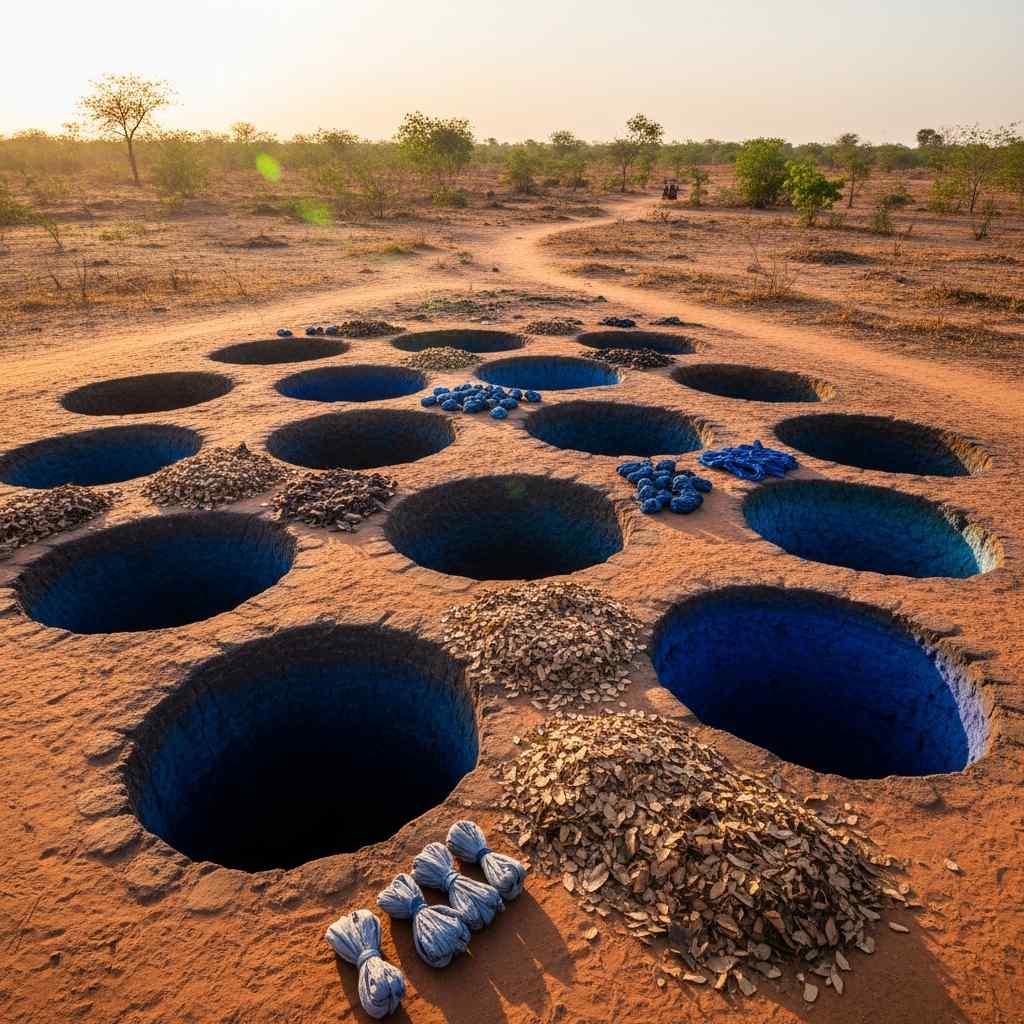
The Kofar Mata dye pits operate as a UNESCO-recognized site with a history that stretches back over five centuries of continuous use. Generation after generation of dyers have worked there, their hands stained blue, their children and grandchildren following the same path.
The process relies on natural indigo, ash, and potassium to create that profound blue color that is the signature of the place. The National Council for Arts and Culture lists the site as a priority for cultural tourism.
Visitor numbers grew by fifteen percent in 2025 compared to the year before, a testament to the enduring pull of a place where cloth is turned into art and where the past feels close enough to touch.

The two weave together
You have a physical place soaked in the history of five hundred years of human labor and tradition. Then you have these modern reports of voices that seem to remember. The two elements weave together into a story that is difficult to ignore.
The Kano State History and Culture Bureau acknowledges the reports and documents visitor testimonials as part of ongoing cultural research, though no official investigation into the cause has been launched. Some community elders speak of the site having a long memory of its own.
The pits remember every person who ever worked there. The water holds those memories close, releasing them only when someone stands still enough to listen.
What the air might say
A professor of environmental psychology offered a perspective on the phenomenon known as pareidolia, where the mind seeks familiar patterns in random noise. The unique acoustics of the pit area could contribute to this effect.
The dense, viscous liquid and the deep, narrow stone vats might distort the ambient sounds of the city into something that resembles speech. Another theory considers the possibility of low-frequency vibrations generated by subsurface water movement or the slow microbial activity within the organic dye vats.
Sounds that the human ear might perceive as a distant whisper. The science is young. The mystery remains.
The story finds its place
Tour operators in Kano have begun to include the whispers in their narratives of the old city. The tale of the talking dye pits now attracts a different kind of curious visitor, one who comes not just for the cloth but for the story.
This trend aligns with a global interest in places where history feels present and alive. The Kano State Ministry of Commerce, Industry, and Tourism tracks the impact, noting that tourism revenue for the old city area grew by an estimated N50 million in 2025.
Local guides weave the historical facts together with the contemporary reports, offering visitors a layered experience of the site.
“We tell the complete story. The pits are a factory, a museum, and now a place of stories. People appreciate the full picture.”
– Malam Sani, tour guide at Kofar Mata, speaking in March 2026.
A new layer of meaning
A centuries-old craft site dedicated to the transformation of cloth has gained a new and unexpected layer of meaning through these quiet reports. The whispers, whether born of psychology or acoustics or something else, become part of the texture of the place.
The economic benefit for the local artisans is tangible. Increased visitor traffic leads to more sales of the beautiful dyed fabrics and more direct commissions for the masters of the craft.
The story shows how a living heritage site continues to evolve, not as a static museum but as a place where deep tradition interacts with modern perception to create new understanding.
Go and listen
A visit to Kofar Mata offers a direct encounter with this place of color and mystery. The site remains open to the public for a small fee. Go with an open mind.
Listen to the environment around the pits. Observe the skilled, rhythmic work of the master dyers as they stir the vats. Form your own understanding of what the place holds.
Your visit supports the preservation of a unique craft. The revenue helps maintain the pits and provides livelihoods. You become part of the story.
The final whisper
The dye pits of Kano are said to whisper names. Multiple people from different walks of life report this same peculiar experience. The true cause of the phenomenon remains open to the interpretation of each visitor who stands at the stone rim.
The significance lies in the connection it fosters, linking those who hear it today to the deep, layered past of the site. It creates a personal bridge across time.
In a world that often demands quick explanations, some mysteries hold value because they make us pause and listen more carefully to the places around us. That may be the real whisper from Kano. A quiet call to pay attention.
Publication Date: April 09, 2026
Reporting Notes: This account is based on visitor testimonials, field notes from Bayero University Kano, and interviews with local guides. The phenomenon has not been officially investigated. The whispers continue.

Katsina Goat Gives Birth to Twin with Arabic Markings

Midnight Market Appears in Okija Forest Each December

Dye pits whisper names and multiple visitors have reported hearing the same ones

Lagoon Pulls Woman Back Lagos Third Mainland Bridge Incident

Boy Remembers Past Life in Maiduguri, Identifies Strangers

River Spirit Spares Fisherman Who Defied Efik Market Day

House Built on Termite Mound Stands for Eighty Years in Ibadan

Initiates Hear Same Song Before Visiting Osun Grove

Coal Mine Collapses Twice in Enugu Miner Walks Out Alive

Refinery Lights Flicker at Port Harcourt on a Deadly Anniversary

Leather Worker Stitches Patterns from a Father’s Dreams in Sokoto

Thunder speaks sentences that elderly women in one village understand clearly

Internet Sovereignty: Why Some Countries Want Their Own Separate Internet

The Story Of The Nigerian Who Helped Build Global Internet Systems

Nigerian Hackers: The Global Fraud Story and Its Fallout

Forgotten Satellites Defy Silence, Beaming Signals for Decades

Your Digital Store in Nigeria and the Reality of Domain Expiration

The Phone Stay So Quiet: An Investigation into Nigeria’s Silent Customer Lines

The Business That Died: A Nigerian Case Study in Refusal to Adapt

Hiding Your Business From People With Money

How Nollywood Grew Without Government Support

Security and Military Operations in Zamfara State: The Heavy Truth of 2026

Nigeria Produces 67 Percent Global Yam Output

Comedy Industry in Nigeria and Its Economic Contribution
 Digital Sovereignty2 months ago
Internet Sovereignty: Why Some Countries Want Their Own Separate Internet
- Diaspora2 months ago
The Story Of The Nigerian Who Helped Build Global Internet Systems
- Crime2 months ago
Nigerian Hackers: The Global Fraud Story and Its Fallout
- Space Technology2 months ago
Forgotten Satellites Defy Silence, Beaming Signals for Decades
- E-Commerce2 months ago
Your Digital Store in Nigeria and the Reality of Domain Expiration
- Edutech Portal2 months ago
The Phone Stay So Quiet: An Investigation into Nigeria’s Silent Customer Lines
- Edutech Portal2 months ago
The Business That Died: A Nigerian Case Study in Refusal to Adapt
- Business2 months ago
Hiding Your Business From People With Money