Digital Health
Nigeria Hypertension Risk: Urban Diets and Exercise Extend Lives
Here is the thing. Blood pressure rises in Lagos and Abuja. Urban diets and little movement make it worse. So what changes? The data from 2026 points to simple shifts. Food choices. Daily walks. They extend lives. The risk can be managed.

Nigeria Hypertension Risk: Urban Diets and Exercise Extend Lives
Published: 25 March, 2026
Thirty-five per cent of adults. That was the scale of the crisis in Nigeria just last year. Hypertension is the major killer. But first-quarter data for 2026 suggests a shift is happening in the cities. Deliberate changes in kitchens and on sidewalks are starting to bend a deadly curve. They are adding years to urban lives.
The trouble is, the baseline was a disaster. Urban life built a perfect trap: greasy fast food and desk-bound roles, a breeding ground for strokes. The Federal Ministry of Health reported on March 12, 2026, that an estimated 35 per cent to 40 per cent of adults in 2025 had high blood pressure. We built a health system for malaria and childbirth. For decades, we left this chronic crisis to fester.
The Heavy Truth About Urban Pressure
So what changed? Look first to the kitchen. A quiet, pragmatic revolution is underway. It is less about formal diets, more about substitution. Health concerns and cost are the main drivers. A general trend of Nigerians reducing consumption of processed foods is now evident.
People are returning to swallows like amala and eba, but with more vegetable soups and less oily stews, said Dr. Chioma Nwakanma, a public health nutritionist in Lagos. The awareness is sinking in.
The data from our community screenings in Surulere and Ikeja shows a 15% lower prevalence of stage 2 hypertension among adults who report high vegetable consumption, compared to those who do not. The message about reducing palm oil and salt is getting through, one kitchen at a time, Dr. Chioma Nwakanma, interview with The Guardian, February 2026.
Supermarket aisles confirm it. Sales of low-sodium stock cubes and salt substitutes have seen significant increase. This change is driven by urbanites who have received a hypertension diagnosis. Reactive at first. Then it becomes a habit.
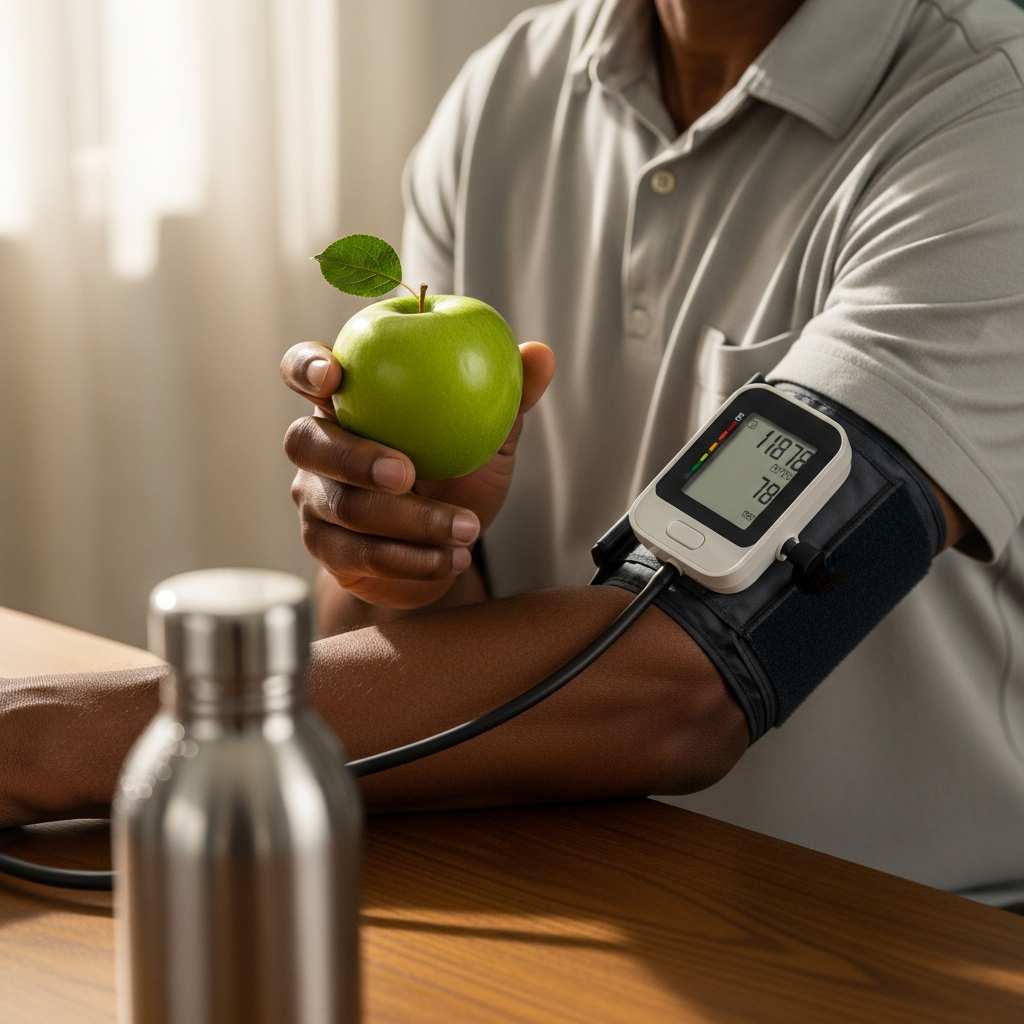
A professional monitors their health while incorporating fresh fruit into their daily routine. (Digital Illustration: GoBeyondLocal)
The Streets Are for Walking Again
Now look outside. Exercise is ceasing to be a foreign concept. The most significant change is the normalization of walking. In Abuja, Millennium Park and the green areas in Maitama are filled with walkers at dawn. In Lagos, the state government cleanup of sidewalks in Ikoyi and Victoria Island has made walking less hazardous.
Organized running clubs have exploded. The Access Bank Lagos City Marathon took place on Saturday, February 14, 2026. Kenyan runner Ezra Kipchumba Kering won the 42km race with a time of 2:11:55. From this flagship event to weekly park runs in Port Harcourt, running is now social. Corporate wellness programs add another layer. Companies are investing in employee health initiatives.
The Numbers Start to Tell a New Story
This brings us to the impact. Preliminary data is showing results. An interim by the Nigeria Centre for Disease Control in 2026 points to a stabilization, even a slight decline, in hypertension rates among urban adults under 50. The national burden remains critically high, but the urban curve is flattening.
Contrast this with the World Bank data for 2023, which put average life expectancy at approximately 54.5 years. The lifestyle modifications in cities are directly preventing cardiovascular events.
Our models suggest the lifestyle modifications in cities, less dietary salt, more aerobic activity, are directly preventing cardiovascular events. For every 10% increase in reported moderate exercise in a population, we see a correlating 2-3% drop in hypertension-related hospital admissions. The link is evident, Prof. Ibrahim Danjuma, African Journal of Medicine, December 2025.
Why This Might Not Be Enough
But there is a catch. This progress is fragile and concentrated. It lives among the educated, middle-class urban population. The urban poor, in crowded estates with limited access to fresh food and safe spaces, continue to be extremely vulnerable. For them, the risk is unchanged or worsening.
Government policy has been slow. A bill to amend the excise duty framework for Sugar-Sweetened Beverages is currently before the Senate. Sponsored by Senator Ipalibo Harry Banigo, it seeks to increase the Basic Health Care Provision Fund from 1% to 2% of consolidated revenue. Advocates are pushing for a 50% retail levy. The current N10 tax has become negligible due to inflation.

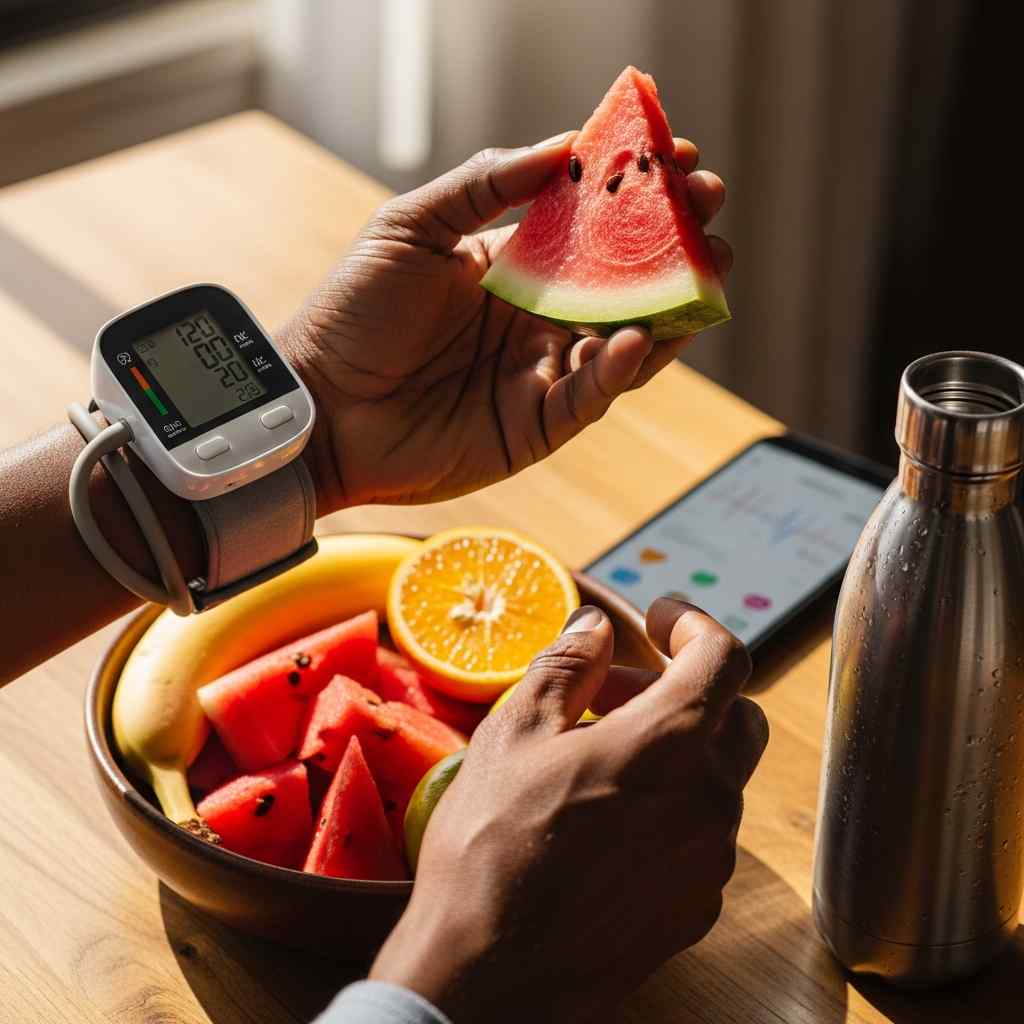
A composition health tools, a blood pressure monitor, fresh fruit, water, and fitness tracking, representing proactive lifestyle management. (Digital Illustration: GoBeyondLocal)
The Policy That Could Change the Game
One policy could change the game. It is simple: mandatory hypertension screening at every primary health contact. Go to a clinic for malaria, get your blood pressure checked. Bring a child for immunization, get your blood pressure checked. This opportunistic screening model is cost-practical. It creates massive data.
Wait, it gets more complex. The reality of primary healthcare centers tells a revealing story. According to NCDC-backed research from March 2026, while 98% of urban Primary Healthcare Centers have working blood pressure apparatus, only 24% have the clinical guidelines to treat the patients they diagnose. This readiness gap is the missing link.
The Lagos State Government piloted opportunistic screening in 2024. The 2025 evaluation showed a 300% increase in new hypertension case detection in one year. It linked 65% of those newly diagnosed to care. Scaling this nationally would require training and simple equipment. The investment is modest compared to the cost of treating strokes.
Your Next Move This Week
For you, the action is personal and immediate. The most practical step is to know your own numbers. A blood pressure check takes two minutes. It is often free at pharmacy outlets in major cities.
Make that check this week. If the reading is high, that information is power. It starts a conversation. It motivates one less stock cube in the pot, one more serving of vegetables. It justifies a 30-minute walk. The entire national change is built on millions of decisions like that one. The data proves those decisions are now adding years to lives in the cities. The task is to make that truth spread beyond the city limits.
Kenya’s Ezra Kering Wins 2026 Lagos Marathon , Channels Television. (Digital Illustration: GoBeyondLocal)











Abike Dabiri Erewa Calls for Diaspora Women in Nigerian Politics

Midnight Market Appears in Okija Forest Each December

Dye pits whisper names and multiple visitors have reported hearing the same ones

Lagoon Pulls Woman Back Lagos Third Mainland Bridge Incident

Boy Remembers Past Life in Maiduguri, Identifies Strangers

River Spirit Spares Fisherman Who Defied Efik Market Day

House Built on Termite Mound Stands for Eighty Years in Ibadan

Initiates Hear Same Song Before Visiting Osun Grove

Coal Mine Collapses Twice in Enugu Miner Walks Out Alive

Refinery Lights Flicker at Port Harcourt on a Deadly Anniversary

Leather Worker Stitches Patterns from a Father’s Dreams in Sokoto

Thunder speaks sentences that elderly women in one village understand clearly

Internet Sovereignty: Why Some Countries Want Their Own Separate Internet

The Story Of The Nigerian Who Helped Build Global Internet Systems

Nigerian Hackers: The Global Fraud Story and Its Fallout

Forgotten Satellites Defy Silence, Beaming Signals for Decades

Your Digital Store in Nigeria and the Reality of Domain Expiration

The Phone Stay So Quiet: An Investigation into Nigeria’s Silent Customer Lines

The Business That Died: A Nigerian Case Study in Refusal to Adapt

Hiding Your Business From People With Money

How Nollywood Grew Without Government Support

Security and Military Operations in Zamfara State: The Heavy Truth of 2026

Nigeria Produces 67 Percent Global Yam Output

Comedy Industry in Nigeria and Its Economic Contribution

 Digital Sovereignty2 months ago
Internet Sovereignty: Why Some Countries Want Their Own Separate Internet
- Diaspora2 months ago
The Story Of The Nigerian Who Helped Build Global Internet Systems
- Crime2 months ago
Nigerian Hackers: The Global Fraud Story and Its Fallout
- Space Technology2 months ago
Forgotten Satellites Defy Silence, Beaming Signals for Decades
- E-Commerce2 months ago
Your Digital Store in Nigeria and the Reality of Domain Expiration
- Edutech Portal2 months ago
The Phone Stay So Quiet: An Investigation into Nigeria’s Silent Customer Lines
- Edutech Portal2 months ago
The Business That Died: A Nigerian Case Study in Refusal to Adapt
- Business2 months ago
Hiding Your Business From People With Money