Devotional
Jesus Is Enough Lyrics Tkeyz ft Steve Hills Meaning
So here we are. Another gospel song tops the charts. Jesus Is Enough by Tkeyz and Steve Hills. What is the real talk behind these lyrics? It is not just a melody. It is a declaration. We break it down.


The Song That Says What Many Nigerians Feel
Published: 30 March, 2026
The single Jesus Is Enough by Tkeyz featuring Steve Hills has become a fixture in Nigerian worship spaces. The popularity of the song rests on a direct lyrical statement about divine sufficiency. This idea finds a specific resonance in a national context where material lack defines daily reality for millions. The lyrics present a theological position with immediate social implications.
Breaking Down the Core Message
The title phrase Jesus Is Enough functions as the central thesis of the song. The lyrics repeat this declaration, building a case for contentment rooted in spiritual relationship rather than material acquisition. The song argues that fulfillment comes from a source outside the prevailing economic system. This message offers a direct challenge to a culture increasingly defined by consumer aspiration.
Lines about peace and satisfaction point to an internal state the song attributes to faith. The music supports this with a steady, uplifting melody that contrasts with lyrical acknowledgments of struggle. The collaboration between Tkeyz and Steve Hills blends contemporary Afrobeats-infused gospel with a more traditional worship sensibility. This musical fusion helps the message reach a broad audience across generational and denominational lines.
Why This Message Connects Now
The economy of Nigeria gives the message of the song a sharp relevance. The National Bureau of Statistics reported headline inflation eased to 31.7% for February 2026 (National Bureau of Statistics, 2026). However, food inflation rose to 37.9% in February, driven by the cost of staples like yam flour and beans, placing renewed pressure on household budgets. In this environment, a proclamation that Jesus Is Enough speaks to a profound need for stability that transcends financial markets.
Unemployment, particularly among youth, continues as a major national challenge. A report by the World Bank issued a stark warning of a looming job crisis, noting that 1 billion young people globally will enter the workforce over the next decade to compete for only 325 million available slots (World Bank, 2023). For many young Nigerians facing this mathematical scarcity of opportunity, the assertion of sufficiency in Christ provides a counter-narrative to a society that often measures worth by employment status or wealth.
The song also connects to a deep historical tradition of faith as a cornerstone of resilience in Nigeria. From colonial periods to military regimes and economic crises, religious belief has provided a framework for enduring hardship. Jesus Is Enough taps into this enduring cultural stream. It modernizes a timeless theme for an audience navigating digital distractions and globalized pressures.
The Theology Behind the Phrase
The lyrical content draws from specific Christian doctrinal positions. The concept of the grace of God being sufficient is a central theme in New writings, particularly in the letters of Paul. The song echoes passages like 2 Corinthians 12:9, where divine strength is perfected in human weakness. This theological grounding gives the lyrics depth beyond a simple feel-good statement.
The message avoids a prosperity gospel framework that directly links faith to financial blessing. Instead, it posits that Christ himself constitutes the primary reward and source of contentment. This distinction is significant in a Nigerian gospel music scene where material blessing is a frequent lyrical theme. The song offers a corrective or alternative focus on spiritual rather than tangible outcomes.
This theology has practical implications. It encourages a reorientation of desire and ambition. The song suggests that seeking first a spiritual kingdom can reorder personal priorities amidst societal pressure to acquire and consume. For listeners, this can translate into a form of psychological resilience, a way to maintain dignity and hope when material circumstances are bleak.
A Cultural Artifact in a Time of Scarcity
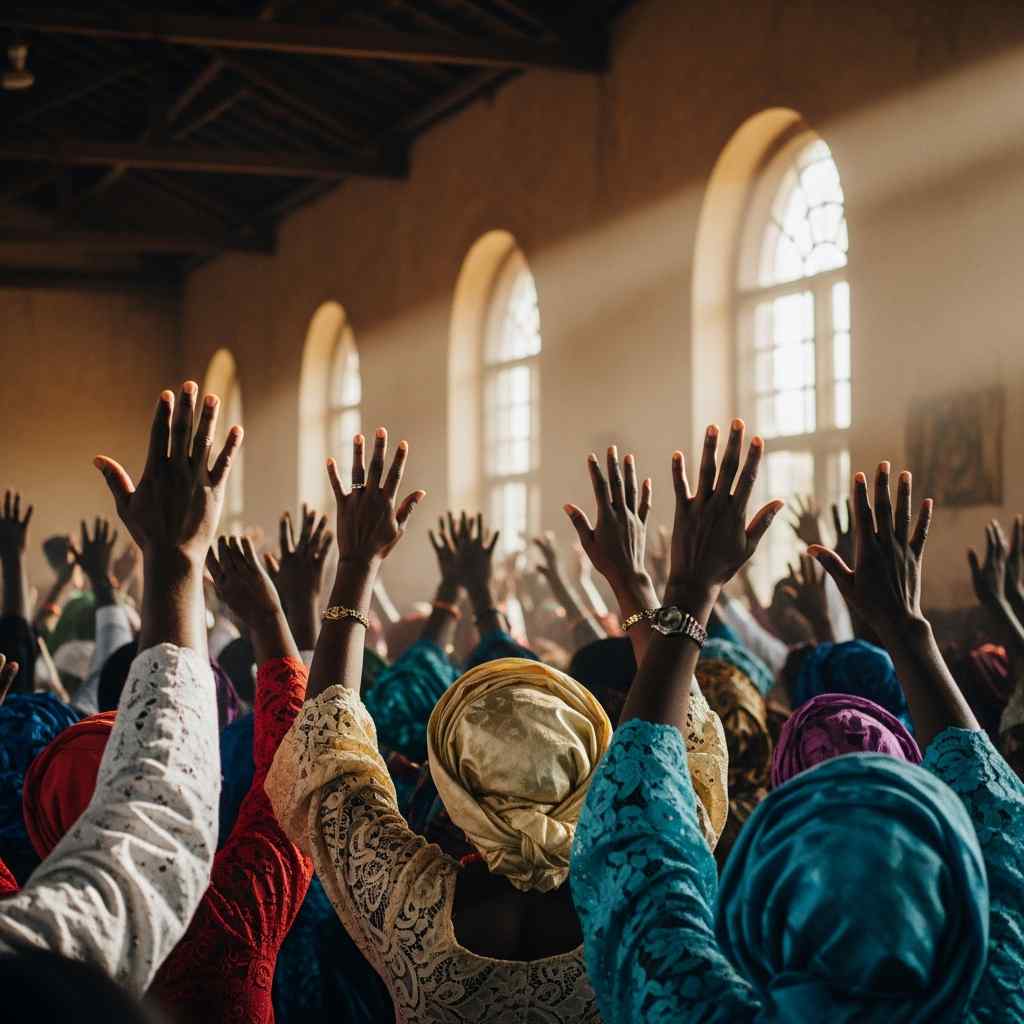
Music in Nigeria always reflects the social moment. The rise of Jesus Is Enough coincides with a period of significant economic strain. The song provides a language for expressing faith and fortitude. It becomes a communal anthem in churches and fellowship groups, a shared declaration in the face of shared struggles.
The production quality of the track matches international gospel and worship standards. This professional sound signals that Nigerian gospel music can compete on a global stage while addressing local realities. Artists like Tkeyz and Steve Hills operate within a sophisticated industry that includes streaming, video production, and international tours. Their work demonstrates how faith-based art navigates both ministry and marketplace.
You hear the song in diverse settings: in mega-churches in Lagos, in smaller congregations in the interior, on commercial radio, and on personal playlists. Its widespread appeal shows how a simple, well-crafted message about spiritual sufficiency meets a widespread cultural need. The song gives voice to a quiet conviction that sustains many people through daily difficulties.

Listen With New Ears
Hearing Jesus Is Enough as merely a worship song misses its fuller significance. It is a cultural statement, a theological argument, and a psychological tool. The next time the song plays, pay attention to the context. Is it in a crowded bus where passengers are squeezed together? Is it in a quiet room where someone is praying for a job? The meaning of the lyrics expands in these spaces.
The collaboration itself is part of the message. Tkeyz represents a younger, contemporary sound, while Steve Hills brings a seasoned, ministerial depth. Their partnership models a unity across generations within the faith community. It suggests that the message of sufficiency is for everyone, regardless of age or musical taste. The song builds a bridge.
Ultimately, the power of the lyrics lies in their defiant simplicity. Against a backdrop of lack, they declare fullness. In a climate of anxiety, they proclaim peace. The song does not ignore reality. It proposes a different framework for interpreting and enduring that reality. For millions of listeners, that proposal makes all the difference.
Where the Music Leads
The enduring popularity of Jesus Is Enough points to a sustained demand for art that addresses core human needs with spiritual clarity. Other artists will likely explore similar themes of contentment and identity in Christ. The success of this track validates a market for gospel music that prioritizes doctrinal substance alongside musical quality.
For the individual listener, the song invites a personal audit. What does enough mean for you? Where do you look for satisfaction when systems fail or opportunities shrink? The lyrics offer a specific answer, one rooted in a two-thousand-year-old tradition that continues to find fresh expression on the streets of Abuja, Port Harcourt, and Kano. The music gives that ancient answer a new rhythm.
The conversation about sufficiency, faith, and resilience continues. Jesus Is Enough is one voice in that conversation, a voice amplified by airplay and streams. Its true measure, however, is in the quiet moments where its words become a prayer, a comfort, or a source of strength for someone navigating the complexities of life in Nigeria today. That is where the meaning becomes real.
TKeyz ft SteveHills : "Oluwatosin (Jesus Is Enough)" Lyrics, Translation and Meaning , Relevant coverage on this topic.











River Disappears Overnight in Warri Delta State

Market Woman Predicts Deaths in Owerri Through Yam Shapes

Forest healer cures blindness using leaves from a plant found nowhere else

Ancient Wall Repairs Itself in Zaria After Heavy Rains

Confluence refuses to mix after a photographer insulted the local river spirit

Church roof collapses mid sermon and every person inside walked out without injury

Tailor Sews Identical Dress from 40-Year-Old Bible Photo in Asaba

Twins Share Single Heartbeat Born Years Apart

Tomi Adeyemi Film Deal Changes Nigerian Storytelling

Lola Shoneyin Builds a Literary Continent at Aké Festival

ADC Leads #OccupyINEC Protest in Abuja Over Party Derecognition

Opay vs Palmpay for International Payments in Nigeria 2026

Internet Sovereignty: Why Some Countries Want Their Own Separate Internet

The Story Of The Nigerian Who Helped Build Global Internet Systems

Nigerian Hackers: The Global Fraud Story and Its Fallout

Forgotten Satellites Defy Silence, Beaming Signals for Decades

Your Digital Store in Nigeria and the Reality of Domain Expiration

The Phone Stay So Quiet: An Investigation into Nigeria’s Silent Customer Lines

The Business That Died: A Nigerian Case Study in Refusal to Adapt

Hiding Your Business From People With Money

How Nollywood Grew Without Government Support

Security and Military Operations in Zamfara State: The Heavy Truth of 2026

Nigeria Produces 67 Percent Global Yam Output

Comedy Industry in Nigeria and Its Economic Contribution


 Digital Sovereignty2 months ago
Internet Sovereignty: Why Some Countries Want Their Own Separate Internet
- Diaspora2 months ago
The Story Of The Nigerian Who Helped Build Global Internet Systems
- Crime2 months ago
Nigerian Hackers: The Global Fraud Story and Its Fallout
- Space Technology2 months ago
Forgotten Satellites Defy Silence, Beaming Signals for Decades
- E-Commerce2 months ago
Your Digital Store in Nigeria and the Reality of Domain Expiration
- Edutech Portal2 months ago
The Phone Stay So Quiet: An Investigation into Nigeria’s Silent Customer Lines
- Edutech Portal2 months ago
The Business That Died: A Nigerian Case Study in Refusal to Adapt
- Business2 months ago
Hiding Your Business From People With Money