Delta State
Governor Sheriff Oborevwori Opens a Road, and a Debate on Riverine Development
Governor Sheriff Oborevwori opens a road. A big one. Thirty-one kilometres. It should be good news. But here is the thing. It opens more than a road. It opens a debate. What does development mean for riverine areas? Is this enough? So here we are.


Governor Sheriff Oborevwori Opens a Road, and a Debate on Riverine Development
Published: 19 March, 2026
What does a road cost? For Governor Sheriff Oborevwori’s administration in Delta State, the price tag for the new 31-kilometre Ohoror-Bomadi Road was N78 billion. The commissioning on March 18, 2026, was a spectacle of promise. But this is more than asphalt. It is a direct land link slicing through two major riverine local government areas, replacing a history of complete dependence on boats.
The change is immediate. Travel time between the communities has collapsed from over two hours by water to about thirty minutes by vehicle, as Vanguard reported. Farmers in Bomadi can now move fish and plantain to markets without watching them spoil. Local traders already report a 40% drop in transport costs, according to field interviews compiled by BusinessDay in 2026.
This brings us to the terrain. Building in the riverine Niger Delta is a specialised fight against soft, waterlogged earth. The contractor, Setraco Nigeria Limited, used sand filling and stone base to stabilise the road. The trouble is, that N78 billion represents a huge chunk of the state’s capital. The 2026 budget allocated N235 billion for all capital expenditure.
“This road is more than bitumen and asphalt. It is a pathway for commerce, for education, for healthcare. It brings our riverine communities into the mainstream of the state’s economy.”
– Governor Sheriff Oborevwori, at the commissioning ceremony, March 18, 2026.
Why does the timing matter now? The administration is approaching its mid-point. Infrastructure in neglected areas forms the core of its political story, a promise from the 2023 campaign. Contrast this with the federal push. The 2026 national budget allocates N1.42 trillion to the Ministry of Works. State governments feel the pressure to show tangible, complementary projects.
The economic argument is straightforward. Bomadi Local Government Area is a fishing hub. Before, much of the catch spoiled. Now, refrigerated trucks have a direct route. A 2025 study by the Nigerian Institute of Transport Technology estimated efficient transport could boost riverine farmers’ income by up to 60%. The logic is simple: lower costs mean higher profits and more production.
But there is a catch. A brutal one. Maintenance. The region’s heavy rainfall and high water table destroy roads. A road built in 2024 can fail by 2027. The state has a plan: a N500 million annual maintenance allocation for the first three years. Observers note such dedicated funds often get reallocated when fiscal pressures mount.
Wait, it gets more complex. Security. New roads in remote areas can attract criminals setting up illegal checkpoints. The Guardian noted in February 2026 the state’s plan to deploy a special security patrol from the Delta State Security Command. Its long-term effectiveness is an open question.
So what is really happening? This road is one piece of a larger plan. The Oborevwori administration has flagged off or completed 17 major road projects since 2023, as Premium Times recorded. The strategy connects agricultural zones to urban markets. This aligns with National Bureau of Statistics data showing agriculture contributes over 25% to Delta State’s GDP. Better logistics directly impact output.
“Infrastructure is the skeleton upon which economic growth is built. Without it, plans for diversification and poverty reduction remain mere documents.”
– Dr. Eugene Uzum, Director, Centre for Public Policy Research, speaking to Leadership Newspaper in February 2026.
The human element is profound. A pregnant woman in Bomadi needing urgent care at the General Hospital in Ohoror now has a chance. Schoolchildren have a safer alternative to dangerous canoe rides. A community leader, Chief Owei Jones, told Vanguard the road “makes us feel like we are part of the state.” That sentiment of inclusion is a powerful outcome no spreadsheet captures.
Then comes the funding question, always lingering. Delta State’s revenue is volatile. Its internally generated revenue for 2025 was N85 billion, against a total budget over N700 billion. The gap is filled by shaky federal allocations. Sustaining this infrastructure rollout requires sharp debt management. The state’s debt stock stood at N272 billion by December 2025. The government insists its borrowing is sustainable and tied to revenue-generating projects.
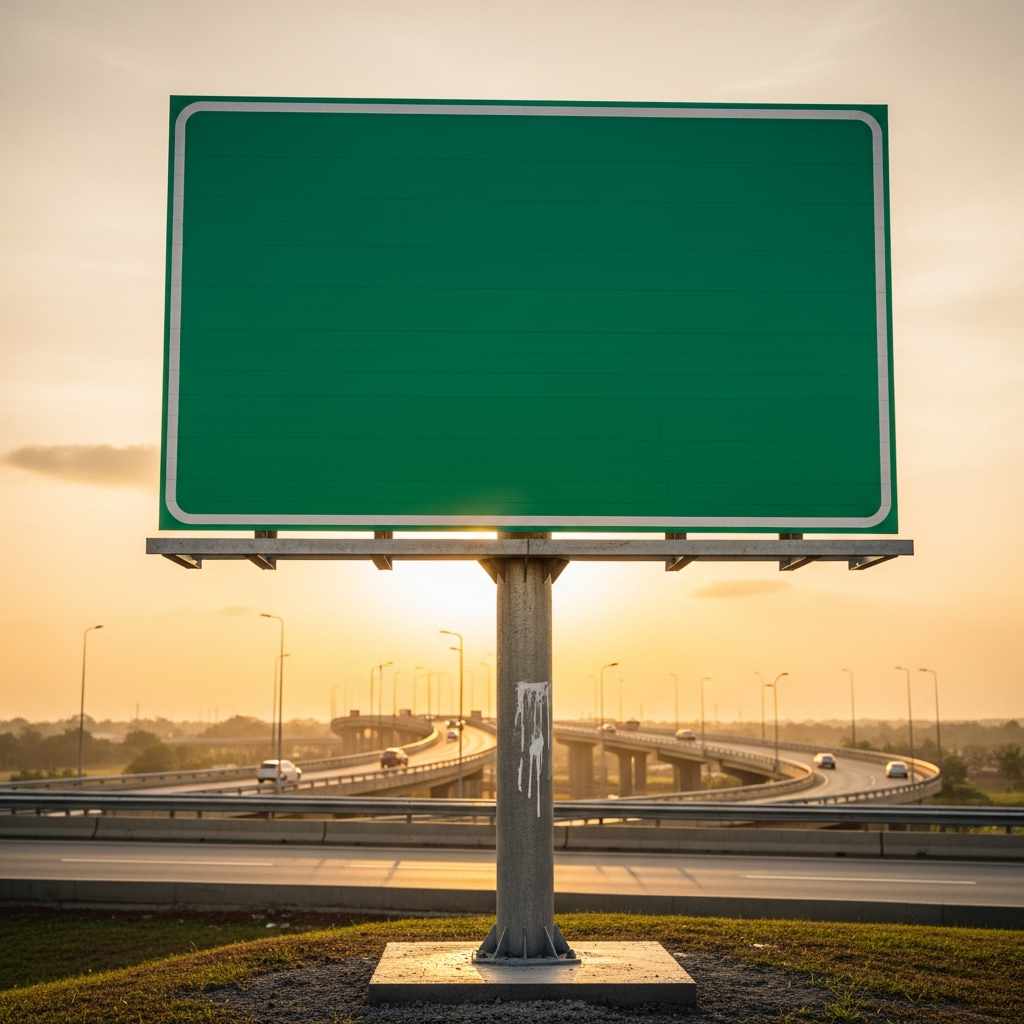
Where do things stand? The project demonstrates a model. It created over 1,200 temporary jobs. The design included essential drainage, a feature often omitted elsewhere. Involving community leaders from the start likely saved time and cost by heading off disputes.
What happens next? The commissioning is a milestone, not a finish line. Maintenance and security are the real work. For the Oborevwori administration, this road becomes a reference point. Its condition in 2027 will judge the commitment to sustainable development. It challenges the fatalistic view that riverine communities are condemned to isolation.
Here is a practical step. Residents can form a community monitoring group. Meet quarterly with the State Ministry of Works. Report potholes, blocked drains, security concerns. This feedback loop creates accountability. It worked on the Lagos-Ibadan expressway. It turns a government project into a communal one.
The tarmac is real. The reduced travel time is measurable. The hope is palpable. The enduring test for Governor Sheriff Oborevwori and the people of Delta State is to ensure this road remains open, safe, and productive. That is the harder project. It continues long after the commissioning ribbons are cut.
Media Unveiling Of Governor Sheriff Oborevwori As Delta Man Of The Year 2024 Award – Charles Kosipre. (Digital Illustration: GoBeyondLocal)








Delta State
Warri as Delta’s Potential Capital Gains Akpabio Backing for Anioma State
Here is the thing. Warri could become the capital. Akpabio backs Anioma State. So the map might be redrawn. What does this mean for Delta? The conversation has started.
Warri as Delta’s Potential Capital Gains Akpabio Backing for Anioma State
Published: 28 March, 2026
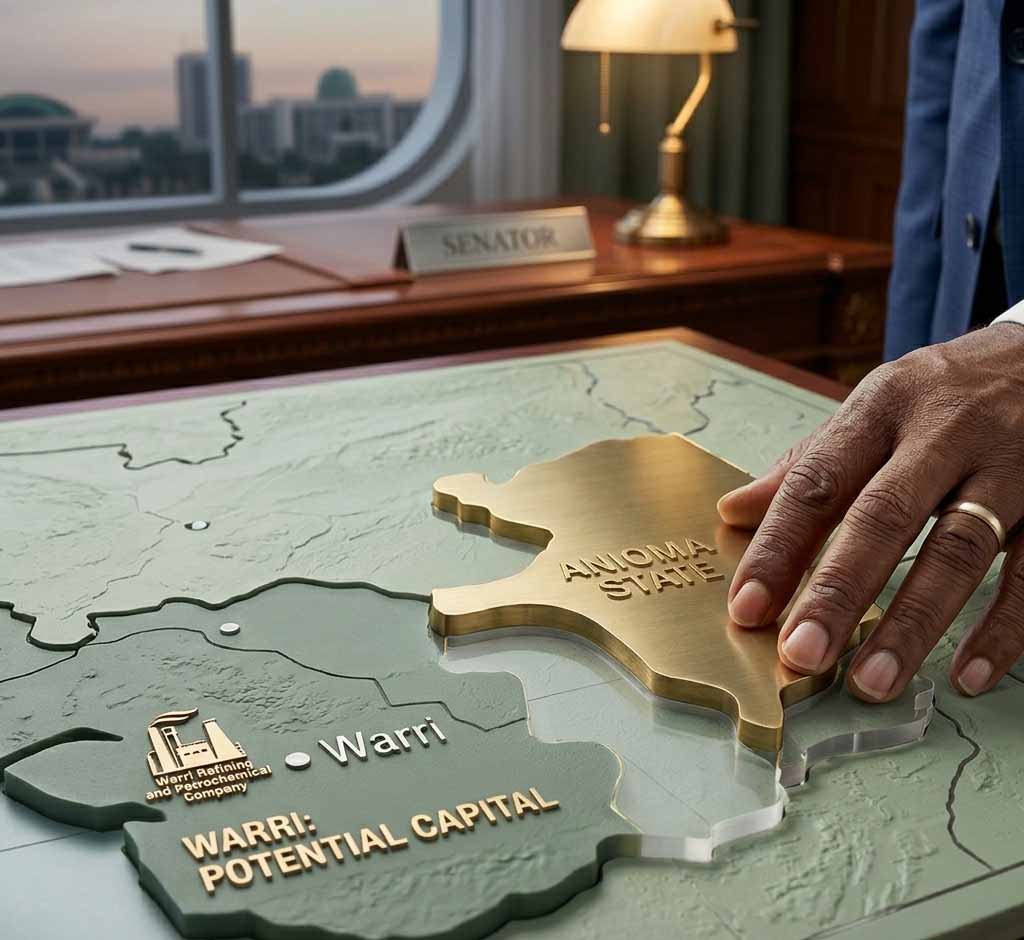
The Senate President, Godswill Akpabio, has thrown his weight behind a plan to carve Anioma State out of Delta. The catch? Warri as Delta’s potential capital is the central trade. Akpabio declared this during the APC South-South Zonal Congress in Asaba on March 25, 2026, as Premium Times reported. With that, a decades-old demand landed squarely on the 10th National Assembly’s desk, carrying implications that would fundamentally alter the identity of the existing Delta State.
A Political Promise Decades in the Making
This agitation started in the 1990s. The argument is simple: the current Delta State, with its 25 local government areas, is too big. The proposed Anioma State would take the Igbo-speaking Delta North Senatorial District. According to a 2025 Vanguard report, what remains, Delta South and Central, would form a new, smaller Delta State. Its proposed capital? Warri. For residents of Asaba, the current capital, this prospect raises concerns about the future of a city that has grown into a thriving administrative and commercial hub over decades.
Senator Ned Nwoko (Delta North) formally presented the Anioma State creation bill in June 2024, making him the primary sponsor. Akpabio framed his support constitutionally. He pointed to the work of the Deputy President of the Senate, Barau Jibrin, who leads the committee reviewing the 1999 Constitution. But there is a catch. Creating a state requires a local referendum, a two-thirds majority in the National Assembly, and approval from 24 state legislatures, The Nation noted in March 2026.
“The request for the creation of Anioma State is a valid one. I am in support of it. The Deputy President of the Senate is already working on the issue of state creation as part of the constitutional review.” – Godswill Akpabio, President of the Senate, March 2026 (Premium Times).
The Economic Logic Behind Warri as Capital
Why Warri? The logic is economic. The city is the commercial engine of the south. It hosts the Warri Refining and Petrochemical Company and is a major oil and gas hub. Data from the National Bureau of Statistics is clear: the Delta South district, where Warri sits, contributes over 40% of the state’s revenue (NBS, 2025 Q4 Report).
Moving the capital from Asaba in the north to Warri would place the government nearer the money. But Asaba is in the proposed Anioma territory. This brings us to the cost. A 2025 BusinessDay report showed the Delta government budgeted N15 billion for capital projects in Asaba. Building a new government seat in Warri would demand a similar, if not larger, investment, resources that some argue could be better used for development across the existing state.
The Constitutional Hurdles Are Immense
Akpabio’s support gives momentum. The trouble is the constitution. Section 8(1) of the 1999 Constitution sets a brutal path. First, the request must be supported by a two-thirds majority of members representing the area in the Senate, House of Representatives, State Assembly, and Local Government Councils.
Second, a referendum must be approved by at least two-thirds of the people in the area where the demand originated. This means the people of Delta North, and indeed the broader Delta population, would have the final say. Third, the new state must be approved by a simple majority of all State Houses of Assembly (at least 24 states). Finally, it requires a two-thirds majority vote in both the Senate and the House of Representatives. No new state has been created since 1996, when General Sani Abacha formed Bayelsa, Ebonyi, Ekiti, Gombe, Nasarawa, and Zamfara. Every democratic attempt has failed on these terms, suggesting the high bar is intentional.
“The issue of state creation is on the front burner. The committee is collating all requests, including that of Anioma. We are committed to a thorough and fair process.” – Barau Jibrin, Deputy President of the Senate and Chairman of the Constitution Review Committee, February 2026 (The Guardian).
Stirring the Pot of Niger Delta Politics
This proposal reshuffles the political deck. Senator Ned Nwoko is pushing for Anioma to become the 6th state of the South-East, addressing the regional imbalance where the South-East currently has five states. In the Niger Delta Development Commission (NDDC) context, adding Anioma would increase membership from the current nine states (Abia, Akwa Ibom, Bayelsa, Cross River, Delta, Edo, Imo, Ondo, Rivers) to ten. It also creates a new, predominantly Igbo state in the South-South.
Wait, it gets more complex. Current Delta State power rotates among Urhobo, Itsekiri, Ijaw, and Igbo groups. Making Warri the capital of a smaller Delta State consolidates power in the Urhobo and Itsekiri south. Some analysts warn this could spark tensions with the Ijaw in the riverine areas. The politics of the 13% oil derivation fund, confirmed by the Revenue Mobilisation Allocation and Fiscal Commission in 2025, adds another layer. For many Deltans, the fear is that a divided state would weaken the collective bargaining power that currently amplifies the region’s voice on national matters.
What a Capital Move Would Mean for Warri
For Warri residents, this brings hope. The city has decayed for years despite its economic weight. Becoming a capital would flood the city with government ministries and personnel. It would boost real estate. It would pressure the government to fix roads, power, and water.
But there is a catch. Governance in Nigeria moves slowly. You need more than a designation. You must build government houses, legislative complexes, and quarters for civil servants. A 2025 Punch report noted that relocating a capital takes years and huge money, just as Lagos found moving from Lagos Island to Ikeja. For Asaba, which has invested heavily in its status as the capital, the prospect of losing that designation raises questions about what becomes of the infrastructure and institutions built over a generation.
The Road From Here
Next, the Senate Committee on Constitution Review takes over. It must consolidate over 20 state creation requests from across Nigeria. Public hearings will follow. Then comes drafting amendments. The National Assembly‘s own schedule pushes this timeline to late 2026 at least.
Success hinges on a national bargain. Lawmakers from other regions must back Anioma to get support for their own interests later.. Akpabio’s endorsement, from a former South-South governor, carries serious weight in those backroom talks, though it remains to be seen whether the people of Delta will embrace a proposal that fundamentally alters the state they have built together.
Track the Committee’s Public Hearings
The process includes public hearings. Citizens can submit memoranda or attend. The schedule is published on the National Assembly digital platform and in newspapers. It is the most direct way to influence the outcome.
Local politics in Delta will now intensify. Expect lobbying, town halls, and media campaigns. The stance of the Delta State Governor and the state legislature becomes critical. Their support, or opposition, can make or break this long before any national vote. For many in Delta, the coming months will be a time to weigh the costs of division against the promise of new states.
Akpabio’s declaration has transformed Warri as Delta’s potential capital from a local issue into a national one. It ties the fate of the city to constitutional amendment and state creation. The path from an endorsement to a new capital in Warri is long. It is expensive. It is deeply uncertain. For the people of Asaba and the broader Delta community, the question is whether the cost of restructuring outweighs the value of the state they already have.
NDDC Unveils New Governance Structure at 2026 Management Retreat – The Niger Delta Development Commission discusses its reform agenda, providing context for the region’s development and political landscape. (Digital Illustration: GoBeyondLocal)

Thunder Speaks Sentences on the Jos Plateau

River Disappears Overnight in Warri Delta State

Market Woman Predicts Deaths in Owerri Through Yam Shapes

Forest healer cures blindness using leaves from a plant found nowhere else

Ancient Wall Repairs Itself in Zaria After Heavy Rains

Confluence refuses to mix after a photographer insulted the local river spirit

Church roof collapses mid sermon and every person inside walked out without injury

Tailor Sews Identical Dress from 40-Year-Old Bible Photo in Asaba

Twins Share Single Heartbeat Born Years Apart

Tomi Adeyemi Film Deal Changes Nigerian Storytelling

Lola Shoneyin Builds a Literary Continent at Aké Festival

ADC Leads #OccupyINEC Protest in Abuja Over Party Derecognition

Internet Sovereignty: Why Some Countries Want Their Own Separate Internet

The Story Of The Nigerian Who Helped Build Global Internet Systems

Nigerian Hackers: The Global Fraud Story and Its Fallout

Forgotten Satellites Defy Silence, Beaming Signals for Decades

Your Digital Store in Nigeria and the Reality of Domain Expiration

The Phone Stay So Quiet: An Investigation into Nigeria’s Silent Customer Lines

The Business That Died: A Nigerian Case Study in Refusal to Adapt

Hiding Your Business From People With Money

How Nollywood Grew Without Government Support

Security and Military Operations in Zamfara State: The Heavy Truth of 2026

Nigeria Produces 67 Percent Global Yam Output

Comedy Industry in Nigeria and Its Economic Contribution


 Digital Sovereignty2 months ago
Internet Sovereignty: Why Some Countries Want Their Own Separate Internet
- Diaspora2 months ago
The Story Of The Nigerian Who Helped Build Global Internet Systems
- Crime2 months ago
Nigerian Hackers: The Global Fraud Story and Its Fallout
- Space Technology2 months ago
Forgotten Satellites Defy Silence, Beaming Signals for Decades
- E-Commerce2 months ago
Your Digital Store in Nigeria and the Reality of Domain Expiration
- Edutech Portal2 months ago
The Phone Stay So Quiet: An Investigation into Nigeria’s Silent Customer Lines
- Edutech Portal2 months ago
The Business That Died: A Nigerian Case Study in Refusal to Adapt
- Business2 months ago
Hiding Your Business From People With Money