Citizen Services
How to Register for NHIS health insurance using NIN Nigeria
You have your NIN. Now you want health insurance. So here we are. How do you register for NHIS with that NIN? It is not as hard as they say. This guide shows you.

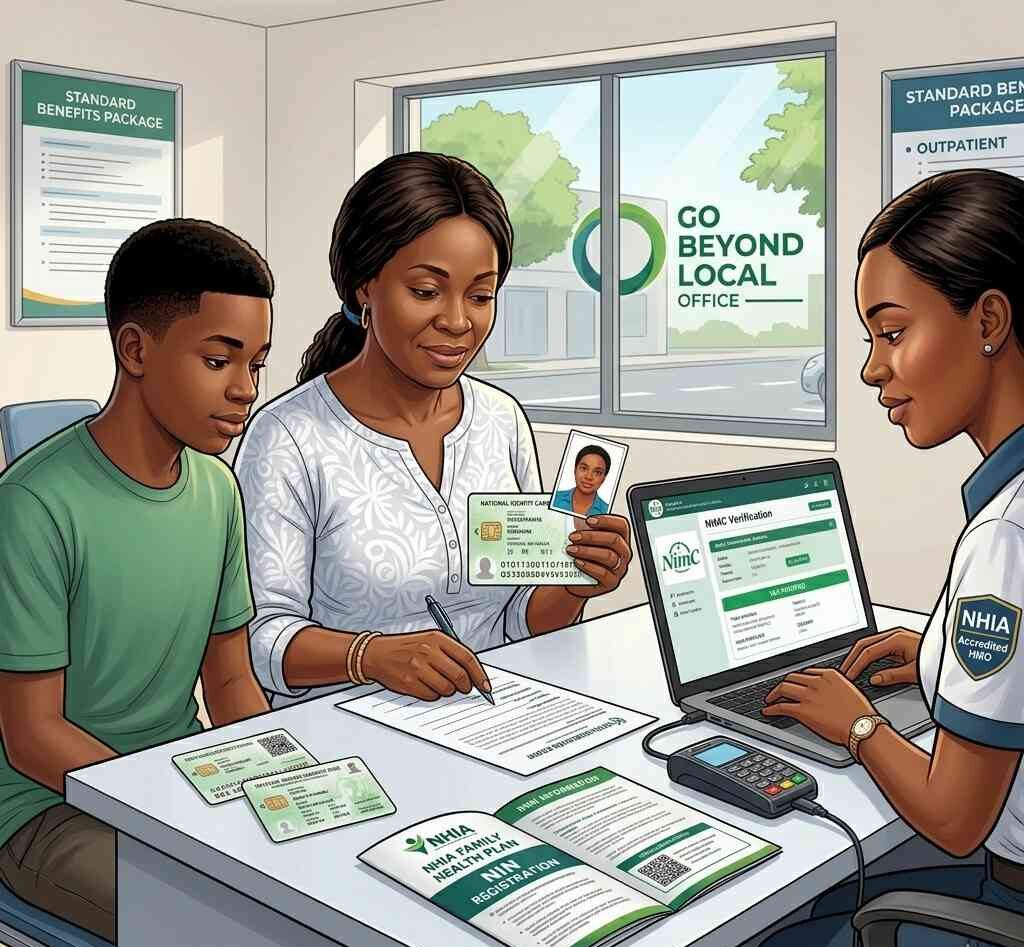
How to register for NHIS health insurance using NIN Nigeria
Published: 02 April, 2026
The National Health Insurance Authority requires a valid National Identity Number for every registration. This rule started in 2024. The policy aims to create a central database for all beneficiaries. The database prevents fraud and duplicate enrollments.
Here is the thing. You need your NIN to join the scheme. The government made this mandatory. The National Identity Management Commission and the NHIA now share data directly.
The Two Documents You Must Have Ready
You need your NIN slip or card. You also need a recent passport photograph. The photograph must have a white background. Some Health Maintenance Organizations ask for a utility bill. The bill proves your address.
For a family plan, you need the NIN for your spouse. You need the NIN for each child under eighteen years. The NHIA defines a family as a principal enrollee, a spouse, and up to four biological children. Children above eighteen years require separate registration.
“The integration of NIN with NHIS is a cornerstone for achieving universal health coverage. It ensures every Nigerian has a unique identifier in the health system.” – Prof. Mohammed Sambo, former Executive Secretary, National Health Insurance Scheme, in an interview with Premium Times on December 10, 2024.
Gather these documents before you start. A missing NIN for one child stops the entire process. The system validates each number in real time.
Where to Begin Your Registration
You have three main options. You can visit an accredited HMO office. You can use the official NHIA e-enrollment portal. You can also register through your employer if you work in the formal sector.
The e-enrollment portal is https://enrolment.nhia.gov.ng. The portal opened for public use in 2023. You create an account with your email and phone number. The portal then prompts you to enter your NIN.
According to a report by BusinessDay in March 2025, the portal processed over 500,000 direct enrolments in its first year. The NHIA plans to integrate the portal with the NIMC backend fully by the end of 2026.
Linking Your NIN to the NHIS Database
This is the core technical step. On the portal, you enter your eleven-digit NIN. The system cross-checks this number with the NIMC database. It pulls your registered details automatically. These details include your full name, date of birth, and photograph.
You verify the details are correct. Any discrepancy requires a visit to an NIMC enrollment center. You cannot proceed with wrong details. The system rejects duplicate NIN entries for different people.
A 2025 performance report from the NHIA showed that 15% of enrollment attempts failed due to NIN data mismatches. The most common issue was a difference between the name on the NIN slip and the name used for registration.
Choosing a Health Maintenance Organization
After your NIN validates, you select an HMO. The NHIA accredits over 70 HMOs across Nigeria. Your choice depends on your location and the hospitals you prefer. Each HMO has a network of healthcare providers.
Research the HMOs available in your state. Ask about their hospital network. Check if your preferred clinic or hospital is part of their list. You can change your HMO during an annual window period.
The regulatory framework allows this choice. The NHIA publishes a list of accredited HMOs on its digital platform. The list updates quarterly.
Selecting a Healthcare Provider
Your chosen HMO presents a list of primary healthcare providers. You pick one clinic or hospital close to you. This provider becomes your first point of contact for any health issue. They refer you to secondary or tertiary hospitals if needed.
The provider must be within the HMO network. You can change your primary provider once every year. The process involves a formal request to your HMO.
According to data from the National Bureau of Statistics in 2025, 65% of enrollees choose a primary provider within a five-kilometer radius of their home. Proximity matters for access.
Adding Your Family Members to the Plan
For the family plan, you add dependents. You enter the NIN for your spouse. You enter the NIN for each child. The system validates each one. You upload their passport photographs. The photograph specification is the same for all members.
The system generates a unique identification number for each family member. This number is different from the NIN. It is the NHIS identification number. You receive an NHIS family ID card.
The card contains a QR code. Healthcare providers scan this code to confirm your eligibility. The card lists all covered family members.
Understanding the Contribution Amount
You pay a monthly or annual contribution. The amount for the formal sector is a percentage of your basic salary. For informal sector enrollees, the NHIA sets a fixed rate. The rate for a standard family plan is reviewed periodically.
As of the latest NHIA circular in January 2026, the recommended annual premium for an informal sector family plan ranges from N45,000 to N60,000. The exact amount depends on the HMO and the benefits package selected.
You pay this contribution directly to your HMO. The HMO then pays the healthcare providers on a capitation basis. The system is designed to protect families from catastrophic health spending.
“The family health plan is the most popular package. It offers the best value for households by pooling risk across multiple family members under a single premium.” – Dr. Kelechi Ohiri, Director-General of the NHIA, speaking at a health financing forum covered by The Guardian on February 18, 2026.
What the Standard Benefits Package Covers
The package covers outpatient care. It covers inpatient care. It covers maternity care for up to four live births. It covers consultations. It covers diagnostic tests. It covers prescribed medications listed on the NHIS essential drug list.
The package excludes cosmetic surgery. It excludes prosthetic devices. It excludes treatments for advanced cancers requiring overseas care. The NHIA reviews the benefits package every year.
A 2025 review by Punch newspapers indicated that the drug list covers about 85% of common ailments presented in primary care clinics. Some enrollees pay out-of-pocket for drugs outside this list.
Receiving Your NHIS Family ID Card
After successful registration and payment, your HMO issues the ID cards. The process takes between two to four weeks. Some HMOs offer digital ID cards through mobile apps immediately. The physical card gets delivered to your address or the HMO office.
The card has an expiry date. You renew your registration before this date. Renewal involves confirming your details are still correct and paying the next premium.
Keep this card safe. You present it at your primary healthcare provider. You also present it during referrals to secondary hospitals.
Using Your Insurance at a Hospital
Visit your chosen primary healthcare provider. Present your NHIS ID card at the reception. The hospital verifies your status online through the HMO portal. You receive care without immediate cash payment for covered services.
For drugs, the hospital dispenses from its stock. If a drug is out of stock, you might receive a prescription to buy outside. This situation sometimes leads to out-of-pocket spending.
The system works well in hospitals with strong HMO partnerships. In others, you hear stories of delays or requests for unofficial fees. The NHIA has a grievance redress mechanism for such cases.
When You Need to Make a Complaint
Contact your HMO first. Every HMO has a dedicated client service unit. If the issue remains unresolved, escalate it to the NHIA. The NHIA has a department for complaints and compliance.
You can file a complaint via email, phone call, or a visit to the NHIA office. The authority tracks complaints and sanctions erring HMOs or healthcare providers.
Data from the NHIA annual report for 2025 shows the authority received over 12,000 complaints. About 70% were resolved within sixty days. The most common complaints involved drug availability and waiting times.
The Reality of Access and Quality
Enrollment gives you financial protection. The quality of care depends on your chosen provider. Some hospitals have dedicated NHIS desks and smooth processes. Others struggle with the system.
Urban centers tend to have better-equipped providers in the network. Rural areas face challenges with provider availability. The government is working to accredit more primary health centers in rural locations.
The scheme represents a move towards structured healthcare financing. The integration with NIN brings order to the process. The success for your family depends on choosing the right HMO and the right hospital from the start.
Check Your NIN Status Today
Dial *346# on the mobile number linked to your NIN. The system sends your NIN to you via SMS. If you have lost your NIN slip, this is the fastest way to retrieve the number. You need this number before any other step.
Visit the NIMC digital platform if the USSD code fails. You can also visit an enrollment center for help. Resolving NIN issues first saves you time during NHIS registration.
The process has its steps. The requirement is straightforward. Your NIN is your key to joining the national health insurance scheme for your family.









Citizen Services
How to get birth certificate for child in Nigeria 2026
So here we are. Your child needs a birth certificate. The process for 2026. What do you do? Where do you start? This is the official way. The National Population Commission way. Documents, fees, timelines. Let us talk about it.

How to get birth certificate for child in Nigeria 2026
Published: 02 April, 2026
The National Population Commission registers about three million births each year. According to a 2025 report by Premium Times, this number leaves millions of children without a legal identity. A birth certificate remains the first right of a child.
Why a birth certificate matters more than you think
You need this document for school enrollment. You need it for a passport application. The National Identity Management Commission requires it for the National Identification Number. According to a 2025 report from Vanguard, a 2025 report by the United Nations Children’s Fund showed that 57% of children under five in Nigeria lack birth registration. According to the UNICEF Nigeria Country Office in 2025, this creates a population of invisible citizens.
The process for how to get birth certificate for child in Nigeria 2026 involves one primary agency. The National Population Commission operates as the sole legal body for birth registration. The commission maintains offices in all 774 local government areas. According to the National Population Commission in 2026,
The official body in charge of your child’s identity
The National Population Commission holds the mandate. The commission operates under the Births, Deaths etc. (Compulsory Registration) Act of 1992. This law makes registration compulsory within 60 days of a birth. The 1992 Federal Republic of Nigeria Official Gazette details these provisions. Registration after this window becomes a ‘late registration’.
The commission launched a digital registration platform in 2023. The platform allows for electronic data capture at registration centers. According to the National Population Commission in 2023, some local government offices still use manual registers. The digital system aims to phase out paper-based records.
“The birth certificate is the first legal acknowledgment of a child’s existence. It is the foundation upon which all other rights are built.”
, Dr. Nasir Isa Kwarra, Chairman, National Population Commission, in a January 2026 statement.
Where you must go to register a birth
You visit the National Population Commission office in your local government area. Each local government area hosts at least one registration center. Major hospitals and primary health centers often have designated registration points. The commission lists these centers on its digital platform.
You can locate your nearest center using the commission’s online directory. According to the National Population Commission Portal in 2026, urban centers like Lagos and Abuja have more offices. Rural areas may have one center serving multiple communities.
The documents you need to gather
You present a proof of birth notification from the hospital or a sworn affidavit. You provide a valid identification document for the parent or informant. The National Population Commission accepts a driver’s license, an international passport, or a national ID card. You need the marriage certificate of the parents if available.
The commission requests the immunization card for the child. Two passport photographs of the child are required for late registration. For children born outside a hospital, a letter from the village head or a religious leader serves as proof. According to the 2025 National Population Commission Guidelines,
What happens if you lost the hospital notification
You obtain a sworn affidavit from a court of law. The affidavit declares the fact, date, and place of birth. You present this affidavit with the other required documents. The registration officer will process the application as a late registration.
The step by step process at the registration center
You submit all documents to the registration officer. The officer verifies the documents and enters the details into the system. The officer captures biometric data for the child if the system is available. You receive an acknowledgment slip with a tracking number.
The officer issues a temporary birth certificate immediately in some centers. The standard waiting period for the laminated certificate is two weeks. As BusinessDay reported in 2025, you return to the center to collect the certificate. Some state offices offer courier services for a fee.
How much money you should prepare
Birth registration within the first 60 days is free by law. Late registration attracts a statutory fee. The official fee for late registration is N2,000. According to the National Population Commission in 2025, some centers charge additional fees for affidavit processing or photography.
The fee for a replacement of a lost certificate is N5,000. Expedited processing services may cost extra. You receive an official receipt for any payment made. Always request this receipt.
“We have eliminated all illegal fees for birth registration. Any parent asked to pay for a standard registration within the legal window should report to our headquarters.”
, Mr. Bimbola Salu-Hundeyin, former NPC Director of Vital Registration, speaking to The Guardian in November 2025.
When you register a birth after the deadline
Late registration follows a different procedure. The law defines late registration as after 60 days but before the child turns 18. Registration after age 18 requires a court order. The process involves more stringent verification.
You provide additional documents like school records or baptismal cards. The registration officer may interview the parents or guardians. The commission cross-checks the information with local records. The entire process takes longer than standard registration.
The new digital options available in 2026
The National Population Commission operates a web portal for status checks. You enter the tracking number from your acknowledgment slip. The portal shows the stage of your certificate production. Some state offices send SMS notifications upon completion.
The commission piloted a mobile registration app in 2024. The app allows community registrars to capture data in remote areas. According to a 2024 report by Nairametrics, full national rollout faces infrastructure challenges. Internet connectivity in rural areas remains a barrier.
The reality of technology on the ground
Digital systems work in state capitals and urban LGAs. Many rural registration centers rely on paper forms. Data from paper forms undergo manual entry at zonal offices. This creates delays and potential for errors.
Correcting a mistake on the certificate
You apply for an amendment at the same registration center. You provide documentary evidence for the correct information. A court affidavit often supports the correction request. The commission charges a fee for amendments.
The process for a name change requires a newspaper publication. You publish a change of name notice in a national daily. You submit the publication with a sworn affidavit to the commission. The commission issues a new certificate with the correct details.
What to do if the certificate gets lost
You apply for a replacement at the original registration center. You provide the child’s details and the original registration number if available. You present an affidavit of loss from a court. You pay the prescribed replacement fee.
The commission retrieves the original record from its database. The process for issuing a replacement takes about four weeks. The new certificate carries a ‘Replacement’ watermark. It holds the same legal validity as the original.
Why some parents still avoid registration
Distance to registration centers poses a problem. A 2025 survey by Punch found that 30% of rural respondents cited distance as a barrier. Awareness levels low in some communities. Cultural practices sometimes delay naming ceremonies beyond the registration window.
Perceived complexity of the process discourages others. Stories of unofficial fees create hesitation. The commission runs periodic mass registration campaigns to address these gaps. These campaigns often partner with local governments and NGOs.
A simple action you take today
Visit the National Population Commission digital platform. Use the ‘Locate a Center’ tool. Find the address and contact for your local government office. Call ahead to confirm their operating hours and document requirements.
Gather every required document in a file. Include original copies and photocopies. Plan your visit for a weekday morning. Arriving early helps you avoid long queues.
The long term value of this small booklet
A birth certificate secures a child’s future. It unlocks education and healthcare services. It provides protection against child marriage and trafficking. It establishes citizenship and nationality.
The process for how to get birth certificate for child in Nigeria 2026 is straightforward on paper. The experience on the ground varies with location and resources. Persistence yields that green booklet. That booklet opens doors for a lifetime.
Registration numbers improve each year. The digital transition continues slowly. The goal remains universal registration. Every child counts.
How to obtain a birth certificate in Nigeria (national population commission) NPC
Citizen Services
How to get police character certificate online 2026
You need that police character certificate. For 2026. The process is online now. So here we are. What do you require? Where do you pick it up? This is the guide.

The Nigeria Police Force processed over 1.2 million requests for the Police Character Certificate in 2025. The figure is drawn from the official data portal, as reported by the Nigeria Police Force in 2026. The certificate remains a mandatory document for visa applications, job placements, and academic admissions abroad. The shift to a digital application system started years ago, but the process still generates questions.
What this certificate is and why you need it
Published: 02 April, 2026
A Police Character Certificate, or PCC, is an official document issued by the Nigeria Police Force. It states that the holder has no criminal record within the country. Foreign embassies, potential employers overseas, and educational institutions require it as proof of good conduct. According to a 2025 report by Premium Times, the certificate is valid for six months from its issue date for most international purposes. You apply for it when you have a specific need, like a visa application. The process moved online to centralize applications and reduce physical visits to police stations.
The official digital platform is your starting point
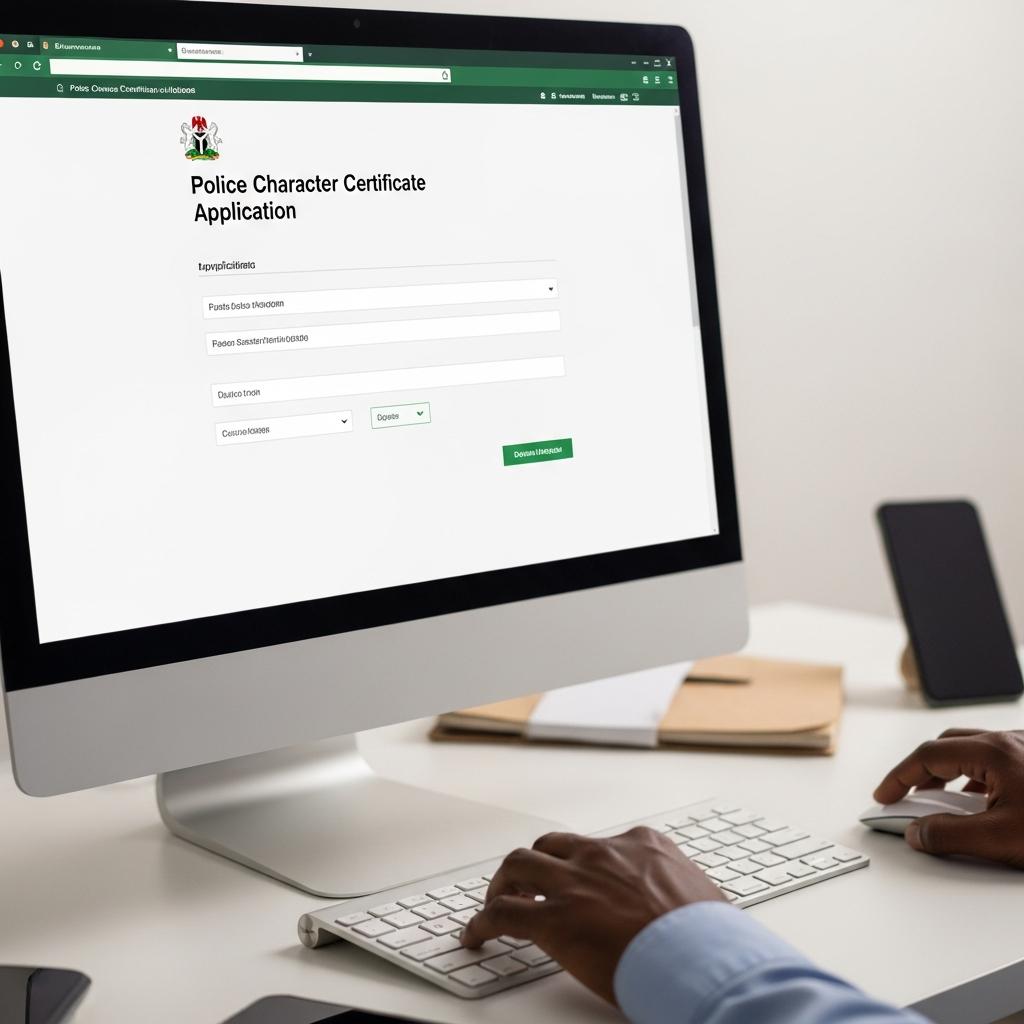
All applications originate from a single portal. The official digital platform is https://certificate.npf.gov.ng. This platform is operated by the Nigeria Police Force. Any other digital platform claiming to offer the service is fraudulent.
You create an account on this portal using a valid email address and phone number. The system sends a verification code to complete the registration. The portal guides you through the entire application process, from form filling to payment.
Gather these documents before you click apply
Preparation prevents delays. You need digital copies of several documents ready for upload. The first is a recent passport photograph with a white background. The second is a scan of the data page of your international passport.
For Nigerian applicants without a passport, the platform accepts the National Identity Number slip or a driver’s license. You also need a utility bill or bank statement as proof of address. As Vanguard reported in 2025, the document must show your name and a Nigerian address dated within the last three months.
Filling the online form demands accuracy
The application form on the portal asks for personal details. You must provide your full name exactly as it appears on your passport or ID. The system cross-checks this information with the document you upload. Any mismatch causes the application to fail.
You enter your date of birth, place of birth, and residential address in Nigeria. The form requires details of your parents, including their full names and hometowns. You list all addresses where you have lived in Nigeria for the past five years. Accuracy here is critical for the police verification process.
Payment happens on the portal with a bank card
The application fee is fixed. As of March 2026, the cost for the standard processing of a Police Character Certificate is N15,000. You make this payment online using a debit or credit card. The portal integrates with a secure payment gateway.
Receipt of payment is generated automatically on the platform. You print this receipt for your records. The payment covers the cost of processing, verification, and issuance of the certificate. There are no additional official fees at the point of collection.
Your application triggers a background check
After submission and payment, your application enters the verification queue. Officers from the Force Criminal Investigation Department (FCID) review the details. They conduct a background check against police databases across the states you listed.
This stage takes time. According to the Nigeria Police Force in 2026, the official service standard for standard processing is 14 working days. The timeline assumes all submitted information is correct and verifiable. Applications with errors or missing data face longer delays.
You get a notification when the certificate is ready
The portal updates the status of your application. You log into your account to check progress. Statuses move from ‘Application Received’ to ‘Under Review’ to ‘Approved for Collection‘. When approved, the system sends an email and SMS notification.
The notification includes a unique reference number and the designated collection center. You cannot collect the certificate without this approval alert. The collection center is usually the police command in the state matching your primary residential address.
Collection points are in every state command
You collect the physical certificate from a specific police formation. For most applicants, this is the Criminal Records Office at the State Police Command headquarters. In Lagos, collection is at the Force Criminal Investigation Department (FCID) annex in Alagbon Close, Ikoyi.
In the Federal Capital Territory, collection is at the FCID headquarters in Area 10, Abuja. The notification you receive specifies the exact address. You must go in person with original identification. A representative can collect on your behalf with a signed letter of authorization and their own valid ID.
Take these items with you for collection
Walk into the collection center with the right documents. Carry the original passport or ID you used for the application. Bring a printed copy of the application payment receipt. Have the printed notification of approval with the reference number.
For collection by a representative, add the signed letter of authorization and the representative’s original photo ID. The officer at the desk will verify these documents before handing over the certificate. You check the details on the certificate for any errors before leaving the premises.
What happens if your application gets delayed
Some applications take longer than the stated 14 working days. Common reasons include incomplete address history, a name mismatch with official records, or a high volume of applications. The first step is to check the application status on the portal.
If the status remains ‘Under Review’ beyond the timeline, you use the help desk function on the portal. You quote your application reference number. According to a 2025 report in The Guardian, the police advise against visiting collection centers to inquire about pending applications, as the processing is centralized.
Expedited processing exists for a higher fee
The portal offers an expedited service for urgent needs. This fast-track option guarantees processing within 72 hours of application submission. The fee for expedited processing was N30,000 as of the first quarter of 2026.
You select this option at the point of payment on the portal. The same verification checks apply, but the application receives priority in the queue. This service is useful for applicants with imminent travel deadlines or job offer expirations.
The system has improved but faces pressure
The online portal represents a significant upgrade from the old manual system. It brings transparency to payment and tracking. The volume of applications, however, tests the system’s capacity. According to BusinessDay in 2025, over 100,000 applications are submitted each month.
Network downtime on the portal occurs occasionally, usually during peak application periods. Applicants sometimes report difficulties uploading documents due to file size limits. The police IT unit advises using compressed file formats and stable internet connections during submission.
A simple step to avoid the biggest headache
Double-check every single detail on the form before you hit submit. The most common cause of rejection is a simple typo. A letter ‘O’ typed instead of a number ‘0’ in a passport number. A middle name omitted.
Compare the information on your screen with the physical documents in your hand. Do this twice. A five-minute review saves weeks of delay from a rejected application. This step costs nothing but attention.
The certificate is just one part of your
Receiving the Police Character Certificate means you have cleared a major hurdle. You have a document that proves your clean record in Nigeria. Frame it within the broader context of your visa or application process.
Embassies and institutions require other documents alongside the PCC. These include academic transcripts, employment letters, and financial statements. The PCC is a critical component, but it functions as part of a complete package. Its acquisition moves you closer to your goal.
The digitization of this service is a work in progress. It delivers efficiency while wrestling with the scale of demand. The applicant who is meticulous with details, patient with timelines, and vigilant against fraud navigates the process successfully. Simon Kolawole, April 2026
How to Obtain Your Nigerian Police Character Certificate Online (New Updates for the Diaspora)
Citizen Services
How to apply for driver’s license renewal online Nigeria FRSC portal
Your driver license is talking to your NIN. The FRSC portal says you can renew online. But does it work? Here is the thing. The process has steps. Fees. Tests. So here we are. A guide for 2026.

According to the FRSC Annual Report, the year 2024 saw approximately 2 million driver license applications. A significant portion of these were renewals. The official position states that driver license renewal online in Nigeria involves a digital portal. The reality on the ground includes visits to government offices and capture centers.
You need a digital foundation first
Published: 02 April, 2026
The entire renewal process depends on two numbers. You require a valid Bank Verification Number and a National Identification Number. The FRSC integrated these systems in 2022 to create a central database.
Without these numbers, the online portal remains inaccessible. The FRSC states this integration prevents multiple license issuance to one individual (Official FRSC Bulletin, January 2026).
Check your license expiry date early
Driver licenses in Nigeria expire after three years for private vehicles and one year for commercial vehicles. The FRSC recommends starting the renewal process three months before the expiry date.
This early start accounts for system delays and appointment scheduling. A license with a lapsed validity attracts extra penalties during renewal.
The online portal is your starting point
Visit the official digital platform of the Federal Road Safety Corps. Navigate to the license renewal section. This portal is the same platform used for fresh applications.
You will select the ‘Renewal’ option and enter your existing driver license number. The system pulls your data from the central database using your BVN and NIN.
Payment happens on the portal
The portal generates a fee invoice for you. As of April 2026, the standard renewal fee for a private driver license is N10,450. This figure includes all statutory charges according to the FRSC fee schedule.
You make payment electronically on the platform. Accepted methods include debit cards and bank transfers. The system issues a transaction receipt and a temporary license slip upon successful payment.
“The digital payment integration has reduced cash handling at our centers. It brings accountability to the process,” stated the FRSC Corps Marshal in an official bulletin released in February 2026.
Then you go offline to a capture center
Here is the thing. The online application only completes the first half. You must visit a physical Driver License Centre or an accredited state licensing office. You book an appointment for this visit on the same FRSC portal.
At the center, officials will capture your biometric data. This includes a fresh photograph, fingerprints, and a digital signature. You present the printout of your temporary license slip and your payment receipt.
What you carry to the capture center
Bring the original copy of your expired driver license. Carry a printout of the temporary license slip from the portal. Have your payment transaction receipt ready.
You also need a valid form of identification. A national ID card, an international passport, or a voter card suffices. The officials will verify these documents against the data on the portal.

Driver at the wheel. A driver’s license is required to legally operate a vehicle (Digital Illustration: Go Beyond Local).
The test requirement is a point of discussion
The official FRSC guideline mentions a potential retest for drivers renewing licenses. According to an FRSC circular issued in February 2026, a retest is mandatory if your license has been expired for more than one year. For licenses expired less than one year, the retest requirement is at the discretion of the state licensing authority.
The FRSC headquarters issued this circular to standardize the practice across all states. Prior to 2026, enforcement varied significantly between Lagos, Kano, and Rivers states.
A report by Premium Times in December 2025 noted inconsistencies in test application. The FRSC has since moved to address these variations.
The test format for those who take it
The test is usually a computer-based theory examination. It covers the Highway Code, road signs, and basic vehicle maintenance knowledge. The test happens at the same licensing center after biometric capture.
You receive your result immediately. A pass mark allows the production process for your new card to proceed. A failure requires a retake after a stipulated period.
Your new card arrives later
After successful data capture and any required test, the center submits your application for production. The FRSC produces the physical cards at a central printing facility.
The collection process is not instantaneous. The official timeline for card production and delivery to the state center is six to eight weeks. Many applicants experience longer waits.
“We are working with the Nigerian Security Printing and Minting Company to reduce the production backlog. The target is a four-week turnaround by the end of 2026,” a director at the FRSC licensing department told The Guardian in January 2026.
You track your card online
Use the application tracking feature on the FRSC portal. Enter your application reference number to check the status. The status moves from ‘Processing’ to ‘Produced’ to ‘Dispatched’ to ‘Ready for Collection’.
You receive an SMS notification when your card arrives at the state center where you did your capture. You return to that center with your temporary license slip and ID to collect the plastic card.
The system has friction points
Network failures can disrupt the online payment process. Server downtime on the FRSC portal is a common complaint from applicants. These glitches cause delays and frustration.
The appointment scheduling system at capture centers sometimes shows no available slots for weeks. This bottleneck forces applicants to visit centers without appointments, leading to long queues.
A 2025 survey by Nairametrics found that 65% of respondents cited portal instability as a major hurdle in the renewal process.
State variations add complexity
While the FRSC sets the national policy, state motor licensing authorities operate the capture centers. This division creates variations in service delivery and additional fees.
Some state authorities charge a separate processing fee on top of the FRSC fee. The level of organization at capture centers differs from Lagos to Kano to Rivers State.
Your temporary license is valid
The temporary license slip you print from the portal is a legal document. It serves as proof of a valid application while you wait for the plastic card. Law enforcement agencies accept it during routine checks.
This temporary license has a validity period, usually 60 days. If your plastic card does not arrive within this period, you can request an extension at the FRSC office.
What if you lost your old license
The process for renewal with a lost license is similar. You start on the online portal but select the ‘Replacement’ option. You will need to provide a police report or a sworn affidavit confirming the loss.
The system still retrieves your data using your BVN and NIN. The fee for a replacement is higher than a standard renewal. Applicants should check the FRSC portal for the current replacement fee, as rates are subject to review.
Start with a personal audit
Open the FRSC portal on a day you have patience. Have your BVN, NIN, and expired license number written down. Check the expiry date on your current license to know your timeline.
Allocate a budget for the official fee and potential incidental expenses. Understand that the process blends online convenience with physical verification. This hybrid model defines many government digital services in Nigeria.
The move towards full digital licensing continues. The FRSC proposed a fully digital driver license accessible via a mobile app in its 2026-2030 strategy document. For now, the plastic card and the online portal work together.
DMV Written Test Questions and Answers | Driving Test Questions and Answers

River Disappears Overnight in Warri Delta State

Market Woman Predicts Deaths in Owerri Through Yam Shapes

Forest healer cures blindness using leaves from a plant found nowhere else

Ancient Wall Repairs Itself in Zaria After Heavy Rains

Confluence refuses to mix after a photographer insulted the local river spirit

Church roof collapses mid sermon and every person inside walked out without injury

Tailor Sews Identical Dress from 40-Year-Old Bible Photo in Asaba

Twins Share Single Heartbeat Born Years Apart

Tomi Adeyemi Film Deal Changes Nigerian Storytelling

Lola Shoneyin Builds a Literary Continent at Aké Festival

ADC Leads #OccupyINEC Protest in Abuja Over Party Derecognition

Opay vs Palmpay for International Payments in Nigeria 2026

Internet Sovereignty: Why Some Countries Want Their Own Separate Internet

The Story Of The Nigerian Who Helped Build Global Internet Systems

Nigerian Hackers: The Global Fraud Story and Its Fallout

Forgotten Satellites Defy Silence, Beaming Signals for Decades

Your Digital Store in Nigeria and the Reality of Domain Expiration

The Phone Stay So Quiet: An Investigation into Nigeria’s Silent Customer Lines

The Business That Died: A Nigerian Case Study in Refusal to Adapt

Hiding Your Business From People With Money

How Nollywood Grew Without Government Support

Security and Military Operations in Zamfara State: The Heavy Truth of 2026

Nigeria Produces 67 Percent Global Yam Output

Comedy Industry in Nigeria and Its Economic Contribution

 Digital Sovereignty2 months ago
Internet Sovereignty: Why Some Countries Want Their Own Separate Internet
- Diaspora2 months ago
The Story Of The Nigerian Who Helped Build Global Internet Systems
- Crime2 months ago
Nigerian Hackers: The Global Fraud Story and Its Fallout
- Space Technology2 months ago
Forgotten Satellites Defy Silence, Beaming Signals for Decades
- E-Commerce2 months ago
Your Digital Store in Nigeria and the Reality of Domain Expiration
- Edutech Portal2 months ago
The Phone Stay So Quiet: An Investigation into Nigeria’s Silent Customer Lines
- Edutech Portal2 months ago
The Business That Died: A Nigerian Case Study in Refusal to Adapt
- Business2 months ago
Hiding Your Business From People With Money