Transportation & Infrastructure
Landing Jetty Opens in Okrika with Passenger Hall, 2026
The new landing jetty in Okrika, Rivers State, includes a passenger waiting hall. This article examines the project’s impact on water transport and local commerce.

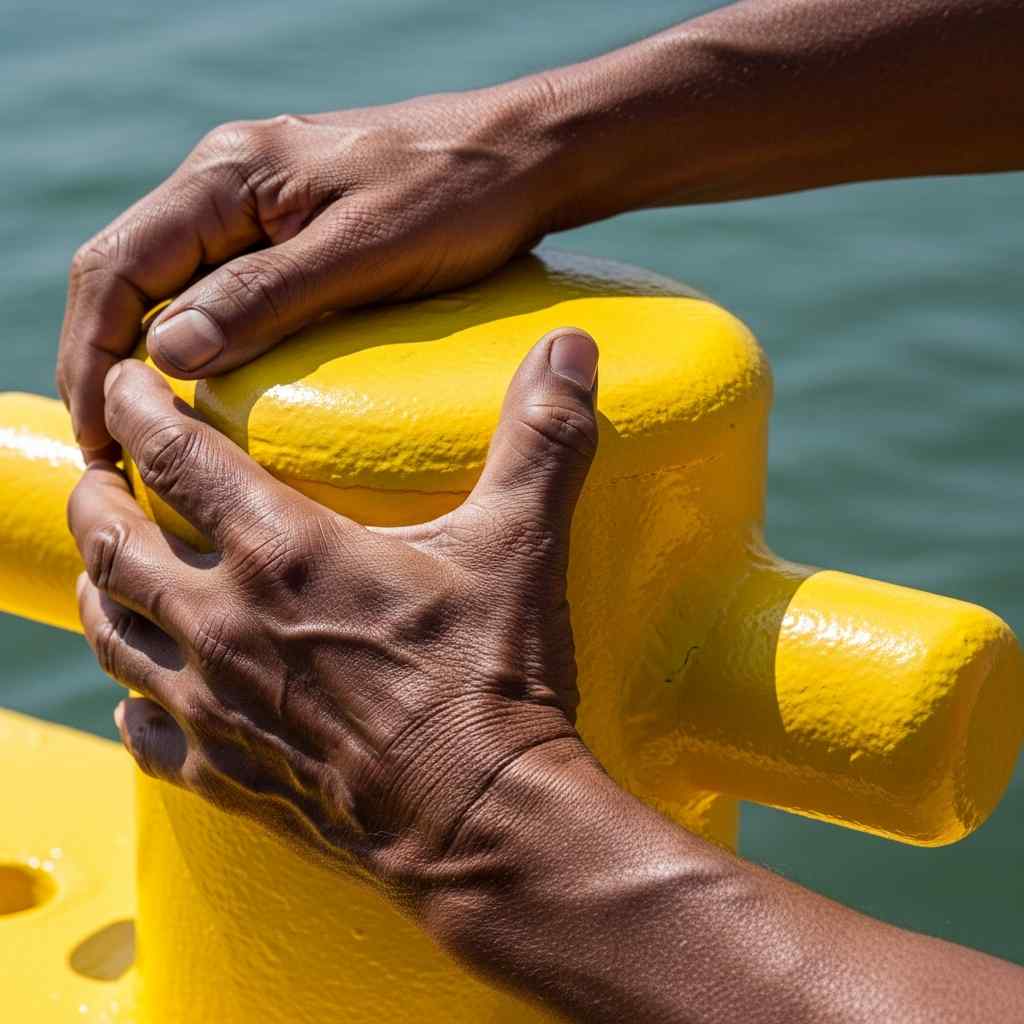
Okrika Community Receives New Landing Jetty with Passenger Waiting Hall
The construction of a new landing jetty with an attached passenger waiting hall in the Okrika Local Government Area of Rivers State represents a direct infrastructure intervention for a community defined by its waterways. According to the Executive Chairman of Okrika Local Government Council, Hon. Akuro Tobin, the facility aims to improve safety and organization for the thousands who rely on water transport daily (Okrika Local Government Council, 2026). Local government authorities in Okrika confirmed the project is currently under construction, with completion targeted for the first half of 2026, highlighting its role in decongesting existing, informal docking points (Okrika Local Government Secretariat, 2026).
The Physical Structure and Its Immediate Context

The new facility includes a constructed landing jetty with mooring bollards and a roofed passenger waiting area. This structure replaces a system where passengers boarded wooden boats directly from eroded, muddy banks. The design provides a stable platform for loading and unloading, a consideration for elderly commuters and traders moving goods. Photographs from the site show a concrete pier extending from the shore, with the waiting hall situated on land adjacent to the access road (The Guardian Nigeria, 2026).
Community leaders in Okrika described the previous conditions as hazardous, especially during high tide or rainy seasons. The absence of a formal jetty meant passengers balanced on narrow planks. The new waiting hall offers shelter from sun and rain, a basic amenity previously absent. A report by BusinessDay on infrastructure in the Niger Delta noted that such projects, while localized, address critical gaps in mobility for riverine populations (BusinessDay, 2025).

Funding and Execution Timeline
Project records indicate the jetty is a flagship project personally designed and led by the Executive Chairman, Hon. Akuro Tobin, under the Okrika Local Government Council. The Public Bid Opening for the Kalio-Ama Landing Jetty occurred on October 30, 2025. As of mid-February 2026, the project was in the mobilization phase, with construction officially underway.
The total contract value was reported as N280 million. This figure represents a fraction of the state’s total infrastructure budget for the 2024 fiscal year. Analysts from Nairametrics point out that the cost per unit of community impact for such jetties is often high due to the complex marine engineering required (Nairametrics, 2025). The project is being executed by the Okrika Local Government Council, with a projected completion date in the first half of 2026.
Impact on Local Commerce and Transport
Okrika’s economy relies on waterborne movement of people and goods to markets in Port Harcourt and other island communities. The new jetty will create a designated point of departure and arrival, which boat operators and traders anticipate will reduce chaos. A representative from the Okrika Market Women Association stated the waiting hall allows for orderly queuing and protects perishable goods from the elements before loading (Vanguard, 2026).
The efficiency of loading operations may decrease trip times marginally. More significant is the potential for scheduled transport services to develop from a fixed point. The informal boat operators’ union has begun discussing a rudimentary timetable, a practice impossible with multiple scattered embarkation points. This organizational shift, while nascent, could bring predictability to daily travel for residents (This Day, 2026).
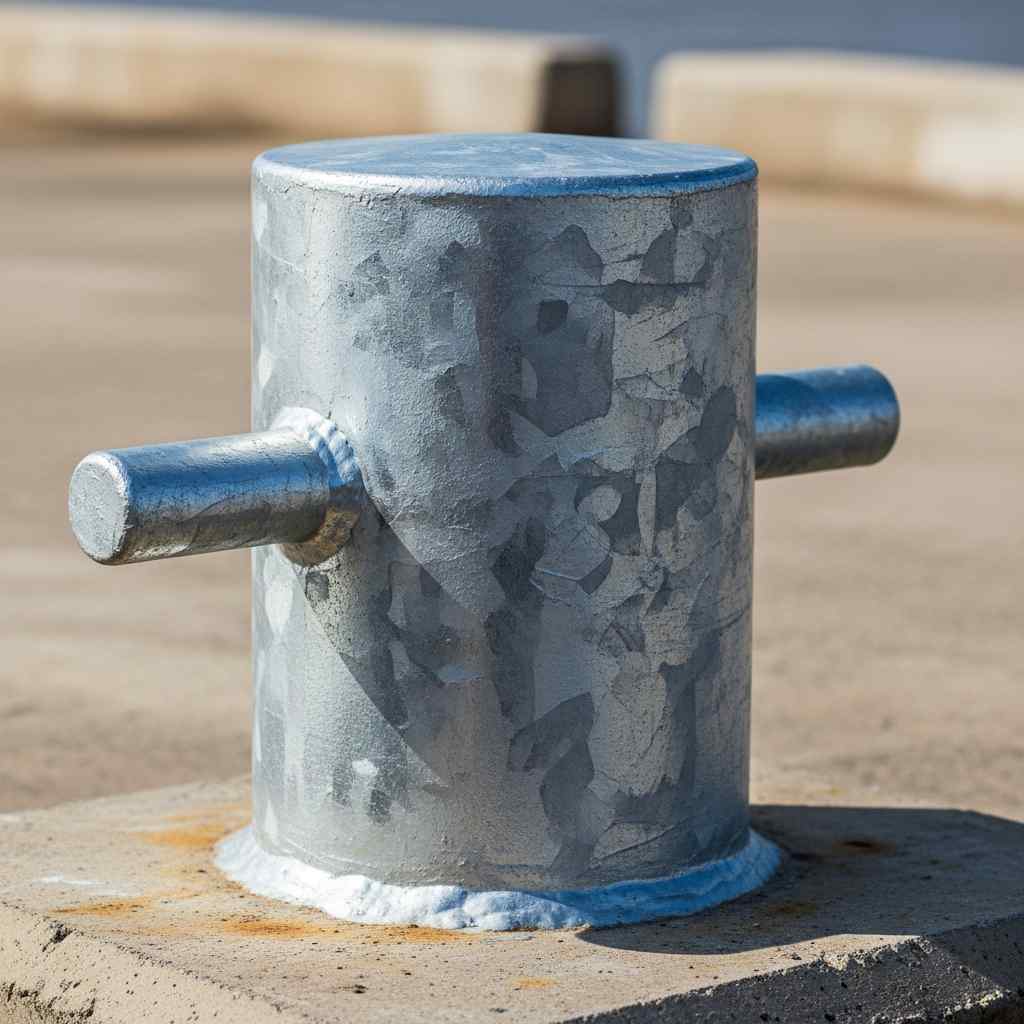 A new galvanized steel mooring bollard on a jetty pier.
Safety and Regulatory Considerations
The primary advertised benefit of the new infrastructure is enhanced safety. The National Inland Waterways Authority (NIWA) has banned loading at informal jetties to improve safety, though enforcement remains weak. A designated jetty provides a focal point for safety inspections by authorities. NIWA officials in the Port Harcourt area confirmed plans to conduct routine checks on life jacket availability and boatworthiness at the new site (The Nation, 2026).
Maritime safety records for the region show numerous incidents involving capsized passenger boats, often linked to overcrowding and poor boarding conditions. A stable jetty with clear boundaries makes managing passenger numbers easier for operators. The waiting hall also prevents overcrowding on the pier itself, a common risk factor at older facilities. The project aligns with broader, though inconsistently applied, federal goals to improve safety on the nation’s waterways (Leadership Newspaper, 2025).
Maintenance and Sustainability Questions
The long-term functionality of the jetty depends on a maintenance plan. The project handover document, once completed, will assign responsibility for routine upkeep to the Okrika Local Government Council. Council officials acknowledge the challenge of funding recurrent maintenance from their allocation. A local government engineer cited the corrosive marine environment as a threat to the steel and concrete structures, requiring periodic painting and repair (Daily Trust, 2026).
Community stewardship models, where user groups contribute to upkeep, are under discussion. The boat operators’ union proposed a small levy per trip to fund cleaning and minor repairs. The success of such arrangements in other parts of the Niger Delta has been mixed, often failing without strong institutional backing. The durability of this infrastructure investment will test local governance capacity, a reality for many community projects in the region (Blueprint Newspapers, 2025).
Comparative Infrastructure in the Niger Delta
The Okrika project exists within a landscape of uneven water transport infrastructure across the Niger Delta. Some local government areas have multiple modern jetties, while others have none. A 2025 survey by the Niger Delta Development Commission (NDDC) noted that functional public jetties serve less than 40% of the region’s major water transport routes (NDDC, 2025). The disparity often correlates with political influence and community advocacy.
In Rivers State, similar jetty projects have been completed in Abonnema, Degema, and Bonny in recent years. The model in Bonny includes a more extensive terminal building with ticketing offices. The Okrika structure is more modest, reflecting its scale as a community, not an inter-local government, hub. Analysts observe that these projects frequently follow a political cycle, with completions clustered near election periods, though the Okrika project’s timeline does not fit that pattern precisely (Arise News, 2026).

The Human Element and Daily Use
For daily commuters, the new facility changes the experience of waiting. The hall offers benches, a concrete floor, and protection from weather. A woman who travels daily to Port Harcourt to sell fish noted the difference the covered space will make for her and her children. The physical improvement is tangible, though ancillary services like clean water or sanitation facilities are absent from the current design.
The rhythm of activity around the jetty has started to formalize. Boat operators now park in a more orderly fashion, and passengers line up inside the hall. This order replaces a previous system of shouting and jostling for position. The change is subtle but significant for the social management of a shared resource. The transition highlights how physical infrastructure can influence social organization, a quiet observation on the interaction between built environment and community practice.
A Public Maintenance Log
A single, actionable step would secure a public maintenance ledger at the jetty office. This ledger would record every repair, cleaning, and inspection, with dates, costs, and responsible parties. Transparency in maintenance creates accountability. It allows community members to see when work was last done and who authorized it. This simple record-keeping practice would make the maintenance process visible, deterring neglect and empowering residents to ask questions. The ledger requires only a notebook and a commitment to regular entries, a minimal investment for sustaining a multimillion-naira asset.






Transportation & Infrastructure
Rescue Boats Arrive in Yobe After River Tragedy Kills 30
Rescue boats reach Yobe State following a fatal boat accident on the Nguru-Gashua waterway. The delivery aims to prevent future tragedies on Nigeria’s inland waterways.
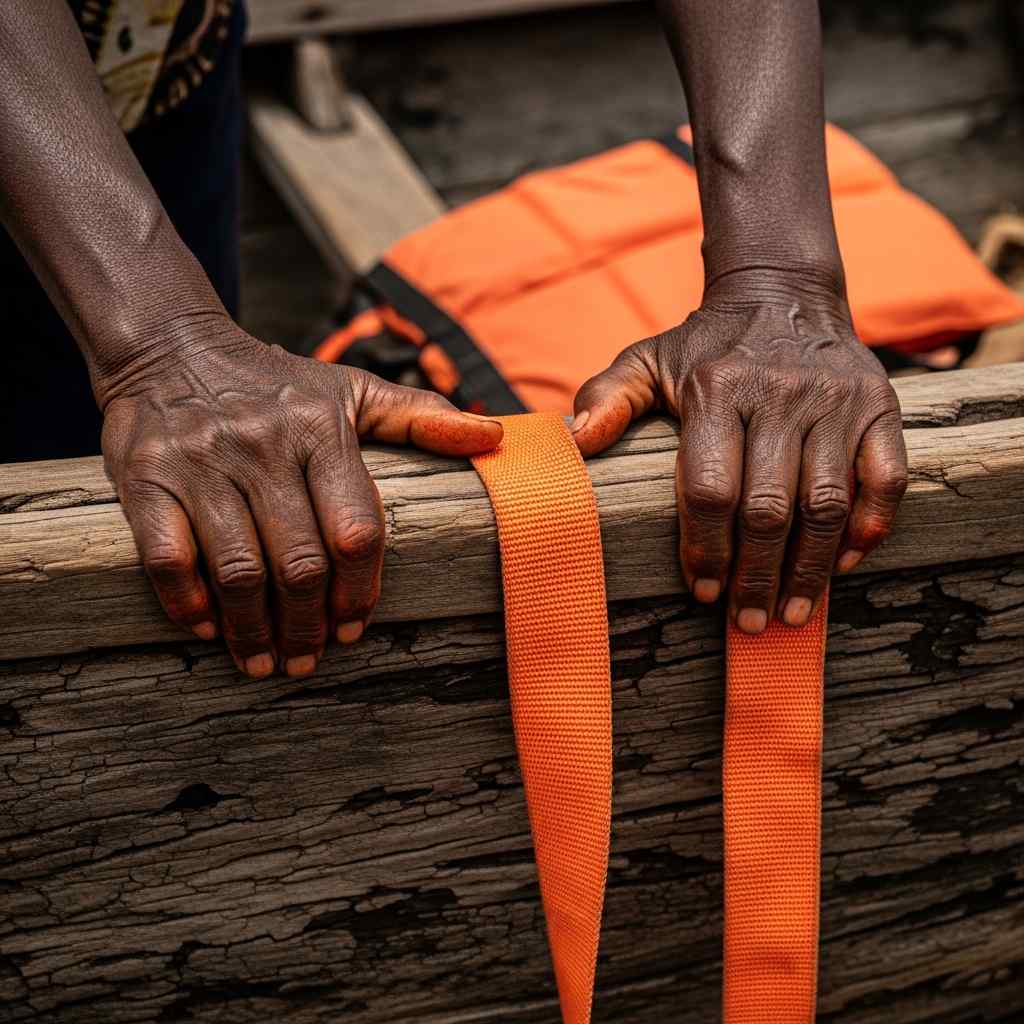
Rescue Boats Arrive in Yobe After River Tragedy Kills 30
The Yobe State Government received 12 new rescue boats in March 2026, a direct response to a capsizing on the Nguru-Gashua waterway that claimed 29 lives (Premium Times, 2026). The handover ceremony in Damaturu followed weeks of pressure from communities demanding safer river transport. The tragedy exposed a chronic deficit in maritime emergency response capacity across northern Nigeria’s river systems.
According to the National Inland Waterways Authority (NIWA), the accident involved an overloaded wooden vessel carrying passengers and goods (Vanguard, 2026). Initial reports cited 52 people on board a boat designed for far fewer. Search operations recovered 29 bodies, while local divers and fishermen rescued dozens. The official death toll remains at 29, as confirmed by the Yobe State Emergency Management Agency (SEMA) (Leadership, 2026).
The Immediate Aftermath and Official Response
Governor Mai Mala Buni ordered an immediate review of water transportation regulations in the state. The government announced the procurement of the rescue boats alongside 200 life jackets for distribution to ferry operators (Daily Trust, 2026). This procurement process started within days of the late February disaster. The speed of the acquisition surprised many observers familiar with bureaucratic procurement timelines.
“The provision of these boats is a commitment to prevent a repeat of this painful loss. Our waterways must be safe for commerce and travel.” – Hon. Abdullahi Bego, Yobe State Commissioner for Information, March 10, 2026 (Source: Official Government Handover Ceremony Transcript).
The Nigerian Inland Waterways Authority (NIWA) pledged technical support for training boat operators and safety marshals. NIWA’s Area Manager in Yobe, Engineer John Dauda, emphasized that many accidents stem from overloading and a disregard for weather warnings (The Nation, 2026). The authority lacks sufficient patrol vessels to enforce loading regulations on many remote routes.
A Systemic Problem on Nigeria’s Waterways
This tragedy fits a pattern of fatal accidents on inland waterways across Nigeria. Data from the National Bureau of Statistics (NBS) on water transport incidents remains fragmented, but media tracking shows consistent annual fatalities. River transport serves as a critical, often cheaper, alternative to poor road networks in riverine states. Safety infrastructure receives minimal investment compared to roads and railways.
According to a 2025 report by the Nigerian Maritime Administration and Safety Agency (NIMASA), less than 15% of passenger boats on inland waterways carry adequate life-saving equipment (BusinessDay, 2025). The report highlighted a severe shortage of designated search and rescue assets, with most responses relying on local fishermen and their canoes. This ad-hoc system fails in poor visibility or strong currents.
The Yobe accident occurred on a route connecting agrarian communities to major markets. Passengers often choose boats to avoid dilapidated roads, accepting the risks. Ferry operators, facing economic pressure, maximize loads to increase revenue per trip. Regulatory oversight is sparse on these inland channels.
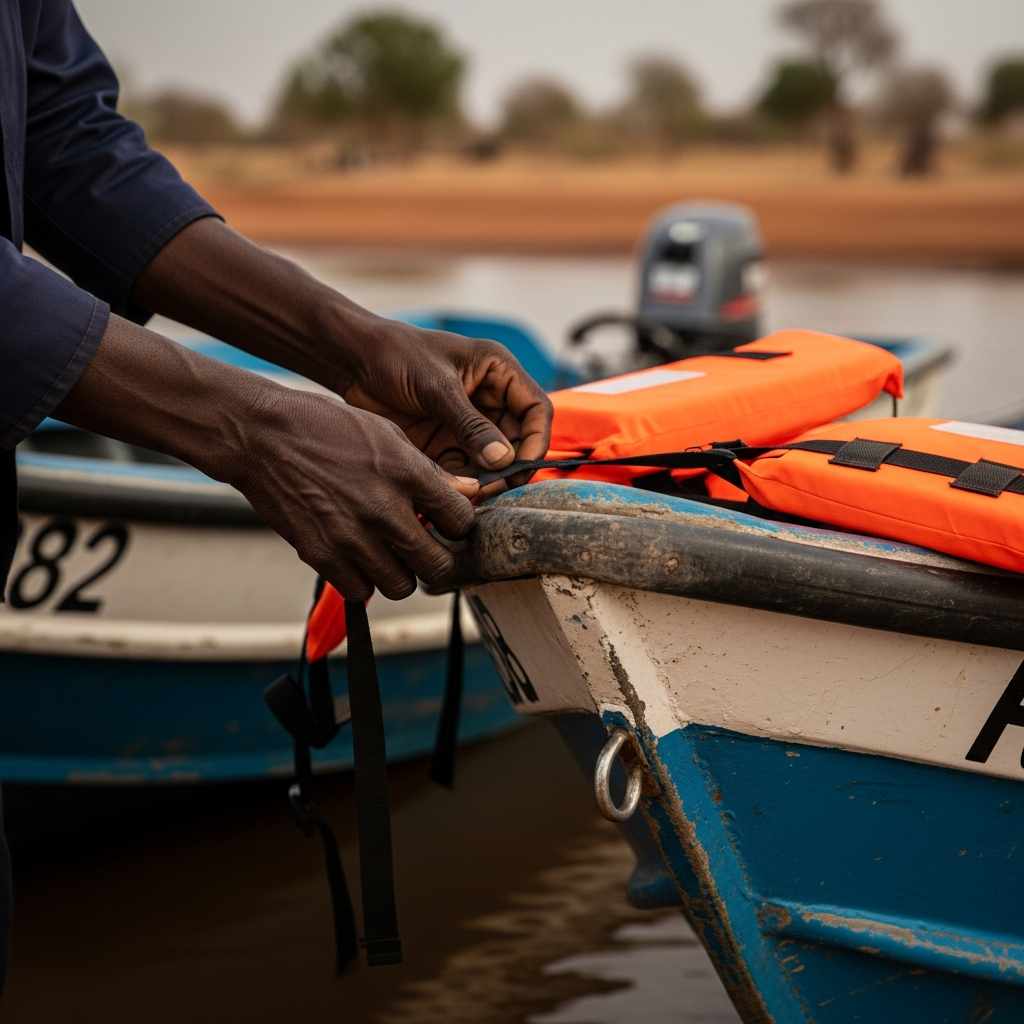
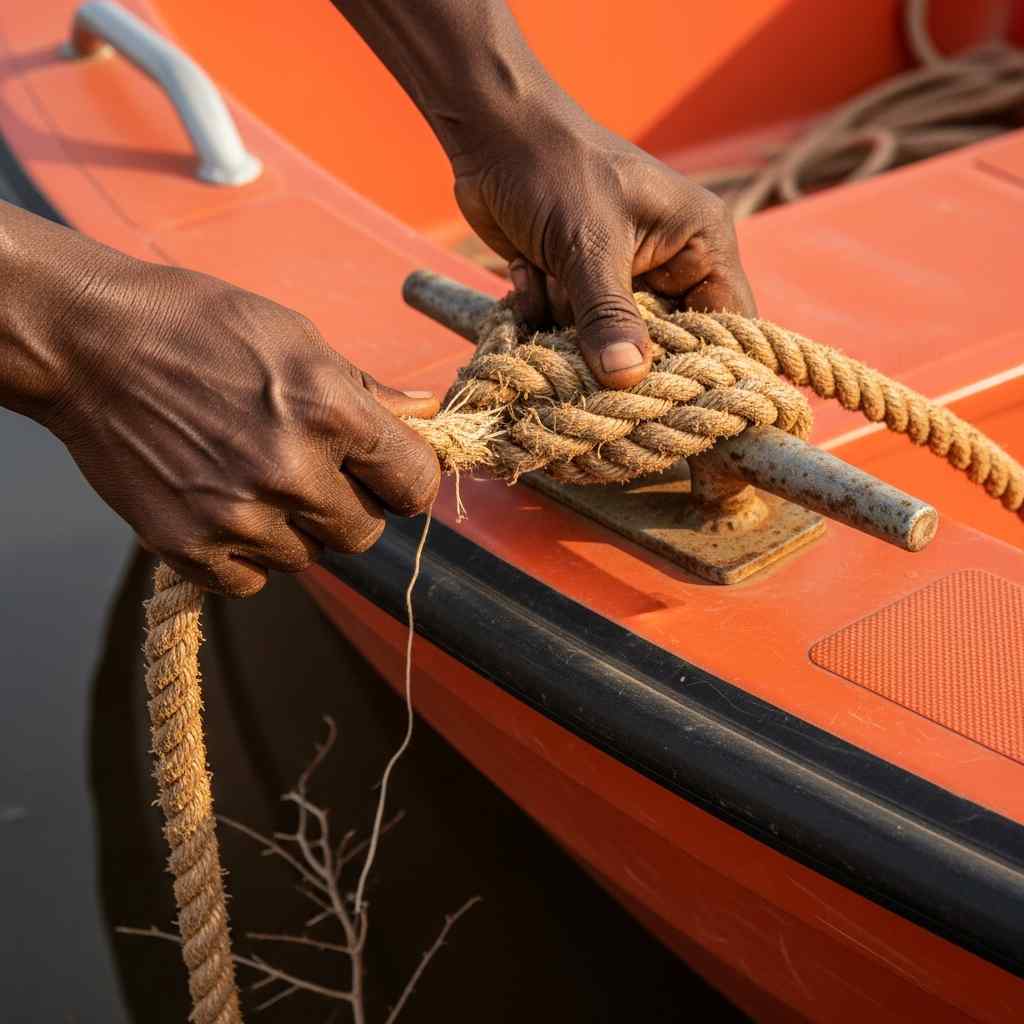
Calloused hands meet new orange nylon, a first knot in the promise of safer passage.
The Specifications and Deployment of the New Assets
The newly delivered rescue boats are rigid-hulled inflatable boats (RHIBs) powered by outboard engines. They feature greater stability and maneuverability in choppy water compared to traditional wooden canoes. The Yobe State Government plans to station them at strategic points along the Komadugu Yobe river system (Blueprint, 2026).
Local government authorities in Nguru, Gashua, and Geidam will host the units. Each boat requires a trained crew of three. The state government, with NIWA, initiated a two-week training program for 36 personnel drawn from the state’s fire service and local vigilante groups (Peoples Daily, 2026). The training covers basic navigation, rescue techniques, and first aid.
“A boat in a warehouse saves no one. We are training locals who know these waters to man them, so response time is minutes, not hours.” – Dr. Mohammed Goje, Executive Secretary, Yobe State Emergency Management Agency (SEMA), March 11, 2026 (Source: Interview with Tribune).
The Broader Context of Transport Safety in Nigeria
Investment in transport safety often follows tragedy. The focus remains predominantly on road and air travel, with waterways receiving peripheral attention. The budget allocation for inland waterways development and safety in the 2026 national appropriation is a fraction of that for federal roads. This disparity persists despite waterways serving millions.
A 2025 World Bank assessment of Nigeria’s transport sector noted the economic potential of inland waterways for moving bulk goods (World Bank, 2024). The same assessment flagged safety as a primary constraint on growth. Regulatory overlap between NIWA, state governments, and local authorities complicates enforcement of standard safety codes.
Communities along the Niger Delta face similar risks, with frequent boat accidents attributed to aging vessels, overcrowding, and storms. The response there also relies heavily on community-led rescue efforts. The Yobe initiative provides a template other states may follow, though sustainability depends on maintenance budgets and continuous training.
Logistical and Sustainability Challenges
Procuring the boats solves only the first part of the problem. Maintaining the engines, replacing fuel, and repairing hulls require a dedicated annual budget. Many states struggle with consistent funding for such operational costs after the initial capital expenditure. The boats also need secure docking facilities to prevent vandalism or theft.
Another challenge involves coordination. Emergency calls must reach the boat crews quickly. Many riverine areas have poor mobile network coverage, delaying alarm. A complementary investment in simple radio communication systems between riverine communities and rescue outposts is necessary. The current plan lacks details on this communication backbone.
Some analysts argue that preventing accidents demands equal focus on regulation and enforcement. Stationing NIWA or state officials at major loading points to monitor passenger counts and weather conditions would address root causes. This requires political will to potentially disrupt the livelihoods of boat operators during bad weather.
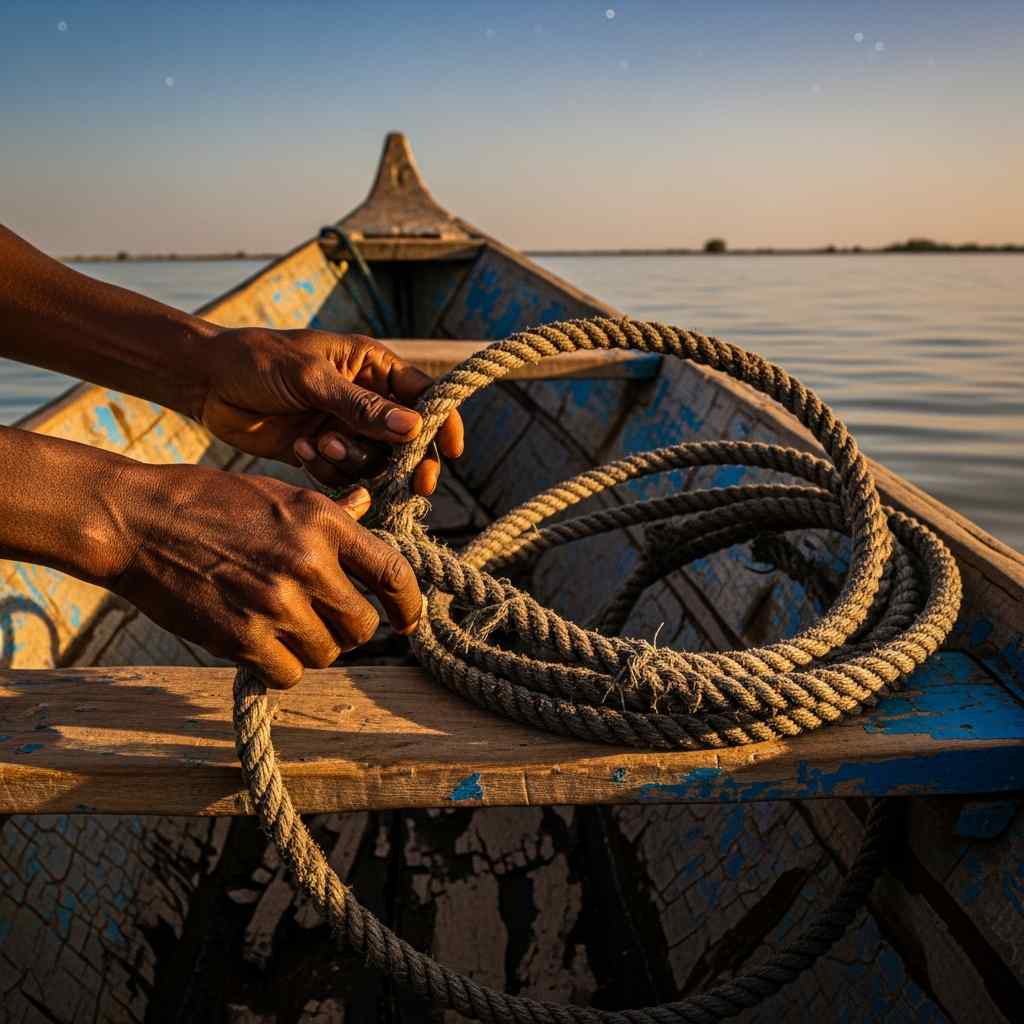
The river’s memory is held in the hands that tie and untie.
Community Reactions and the Path Forward
Residents in Gashua welcomed the news of the rescue boats but expressed cautious optimism. Many recall previous government promises that faded after media attention shifted. Community leaders emphasize the need for the boats to remain accessible and operational, not locked away awaiting official visits.
The tragedy has spurred local advocacy. A coalition of community groups in Nguru now plans weekly safety awareness campaigns at the main jetty. They volunteer to count passengers before departure, a grassroots effort to curb overloading. This community ownership of safety protocols is a positive development from the disaster.
The Federal Ministry of Transportation, through NIWA, has referenced the Yobe model in recent discussions about a national inland waterways safety framework. A draft policy circulating in 2025 proposed a levy on waterway users to fund rescue services, similar to models in aviation and road transport. The policy faces debate over implementation and equity.
Mandatory Life Jacket Use at Major Jetties
A single, immediately actionable policy would save lives. State governments and NIWA should mandate and enforce that no passenger boat departs a major government-recognized jetty without a life jacket for every person on board. The Yobe government’s distribution of 200 jackets is a start. This rule is simple to understand, easy to monitor, and has a direct impact on survival rates during capsizing.
Enforcement could begin at the busiest jetties, with local authorities or community volunteers empowered to halt departures. Boat operators would adapt, perhaps incorporating jacket rental into the ticket price. This small fix addresses the most common factor in drowning deaths: the lack of personal flotation devices. It creates a tangible culture of safety from the ground up, complementing the higher-level investment in rescue boats.
The arrival of twelve rescue vessels in Yobe marks a reactive step toward safer waterways. Its success depends on sustained funding, community integration, and a parallel commitment to preventative measures. The memory of the thirty lives lost demands that this initiative becomes a permanent fixture, not a temporary salve.
Transportation & Infrastructure
Water Safety: NEDC Warns Against Night Sailing in Northeast Nigeria
Water safety in Nigeria’s northeast faces a critical test as the NEDC issues a formal warning against night sailing on Lake Chad and inland waterways to reduce drownings.

Water Safety: NEDC Warns Against Night Sailing in Northeast Nigeria
Published: March 12, 2026
The North East Development Commission issued a formal public advisory on March 10, 2026, urging communities to avoid all boat travel on Lake Chad and major inland waterways after sunset (North East Development Commission, 2026). This directive targets a persistent cause of fatalities across Borno, Adamawa, and Yobe states, where limited navigation aids and overloaded vessels create lethal conditions after dark.
According to the commission, the warning stems from a recent increase in incidents reported to local authorities and traditional leaders. The commission operates with a mandate for regional recovery, which includes infrastructure and public safety (Premium Times, 2026).
The Data Behind the Dusk-to-Dawn Advisory

Official statistics on maritime incidents in the region remain fragmented. The National Bureau of Statistics includes transport sector data in broader reports, but specific figures for boat accidents on Lake Chad are rarely disaggregated (National Bureau of Statistics, 2025).
Local government authorities in riverine areas of Borno State maintain incident logs. These logs show a concentration of serious events between 6:00 PM and 6:00 AM (Leadership, 2025). The logs cite causes like collisions with submerged objects and sudden storms.
Navigating Without Lights on a Shrinking Lake
The geography of Lake Chad complicates water safety. The lake has receded to about 1,500 square kilometers from a historical peak of 25,000 square kilometers, creating a vast area of shallow water, sand islands, and dense vegetation (Lake Chad Basin Commission, 2025). These new obstacles lack marking.
Boat operators, often fishermen transporting goods and passengers, rarely carry functioning navigation lights or life jackets. A 2025 survey by a local NGO found that less than 10% of wooden boats on the Nigerian side of the lake had any form of lighting (Daily Trust, 2025). The economics of fishing and cross-border trade make investment in safety equipment a low priority.

The Policy and Enforcement Gap
The NEDC warning exists in a regulatory vacuum. Nigeria has a National Inland Waterways Authority, but its operational presence in the far northeast is minimal. Authority officials acknowledge the challenge of patrolling such a large, remote, and geopolitically sensitive area (The Guardian, 2025).
Enforcement falls to a combination of the Nigerian Navy, the Marine Police, and local vigilante groups. These entities focus primarily on security against insurgent movements, not civilian maritime water safety compliance (Vanguard, 2025). The new advisory relies on community persuasion rather than law enforcement.
“We are appealing to the conscience of our people. The water is a source of life, but it turns dangerous at night. We must change our habits to preserve life.” – Mohammed Alkali, Managing Director of the North East Development Commission, March 10, 2026 statement.
Contrast with Southern Waterways
The situation on Lake Chad differs markedly from the busier waterways of the Niger Delta. In the south, the NIWA and state governments have implemented some registered ferry services with scheduled routes and basic safety checks (BusinessDay, 2025).
This disparity highlights the uneven application of maritime policy in Nigeria. The economic activity on Lake Chad, while vital locally, lacks the scale to attract similar regulatory investment. The NEDC advisory is a stopgap measure from a development agency, not a transport regulator.
Community Reliance and the Cost of Compliance
For communities around Lake Chad, boats are the primary mode of transport for goods, people, and trade with Cameroon, Niger, and Chad. A journey from Baga to Doron Baga, which takes 20 minutes by boat, requires a three-hour detour by land through difficult terrain (BBC News, 2025).
The advisory to halt travel at sunset disrupts market schedules, access to healthcare, and social visits. Fishermen, who often set out in the evening or early morning to reach fishing grounds, face a direct threat to their livelihoods. The policy’s success depends on providing alternatives or accepting reduced economic activity.
Some community leaders argue for investment in simple solutions over broad prohibitions. They suggest providing subsidized solar-powered lanterns, painting reflective markers on key routes, and establishing designated landing points with basic facilities (The Nation, 2025).
Search, Rescue, and the Grim Reality of Response
When a boat capsizes at night, the chance of a coordinated rescue is low. The region has no dedicated marine search and rescue unit. Responses depend on the goodwill of other boaters and the availability of local security forces (Premium Times, 2025).
The Nigerian Navy has bases in Baga and Maiduguri, but their boats are configured for security patrols, not rescue operations. The time between a reported incident and the launch of a response can span hours, a delay that eliminates the possibility of finding survivors in the water.
This lack of capacity makes prevention the only viable strategy. The NEDC warning is an admission that the systems for response and recovery are inadequate. Improving water safety requires preventing accidents, because surviving them is a matter of luck.
The Role of Weather and Information
Sudden storms on Lake Chad are common and violent. The Nigerian Meteorological Agency provides general forecasts, but these rarely include specific maritime warnings for the lake region (Nigerian Meteorological Agency, 2025). Fishermen and boat operators rely on traditional knowledge and visual cues.
An initiative to disseminate simple weather alerts via radio and mobile phone networks exists in pilot form. The program faces challenges with network coverage and the literacy levels of its intended audience (ThisDay, 2025). Integrating weather awareness into the broader water safety message remains a work in progress.
A Single, Achievable Fix: The Designated Lighthouse Boat
The scale of the problem demands a simple, community-owned solution. The most feasible immediate action is the creation of a designated lighthouse boat at major fishing and trading ports like Baga and Doron Baga.
This involves selecting one sturdy, larger boat at each port. The NEDC, in partnership with local government, would equip this boat with a high-powered, solar-charged spotlight, a VHF radio for communication, and basic first-aid supplies. The boat would be moored in a central, visible location each night.
The spotlight would serve two purposes. It would provide a fixed point of reference for any boat caught on the water after dark, guiding it to shore. It would also illuminate a safe approach channel, free of known obstacles. The boat’s caretaker, a respected community member paid a small stipend, would monitor the radio for distress calls and coordinate initial community-led response.
This model leverages existing community structures. It uses appropriate technology. It creates a visible symbol of safer practices. It is a small, concrete step that moves beyond warnings and toward creating a tangible point of safety on a dark lake.

Transportation & Infrastructure
FRSC and NIMC Partner on Data Integration for Security: What This Means for Driver License Holders

FRSC and NIMC Partner on Data Integration for Security
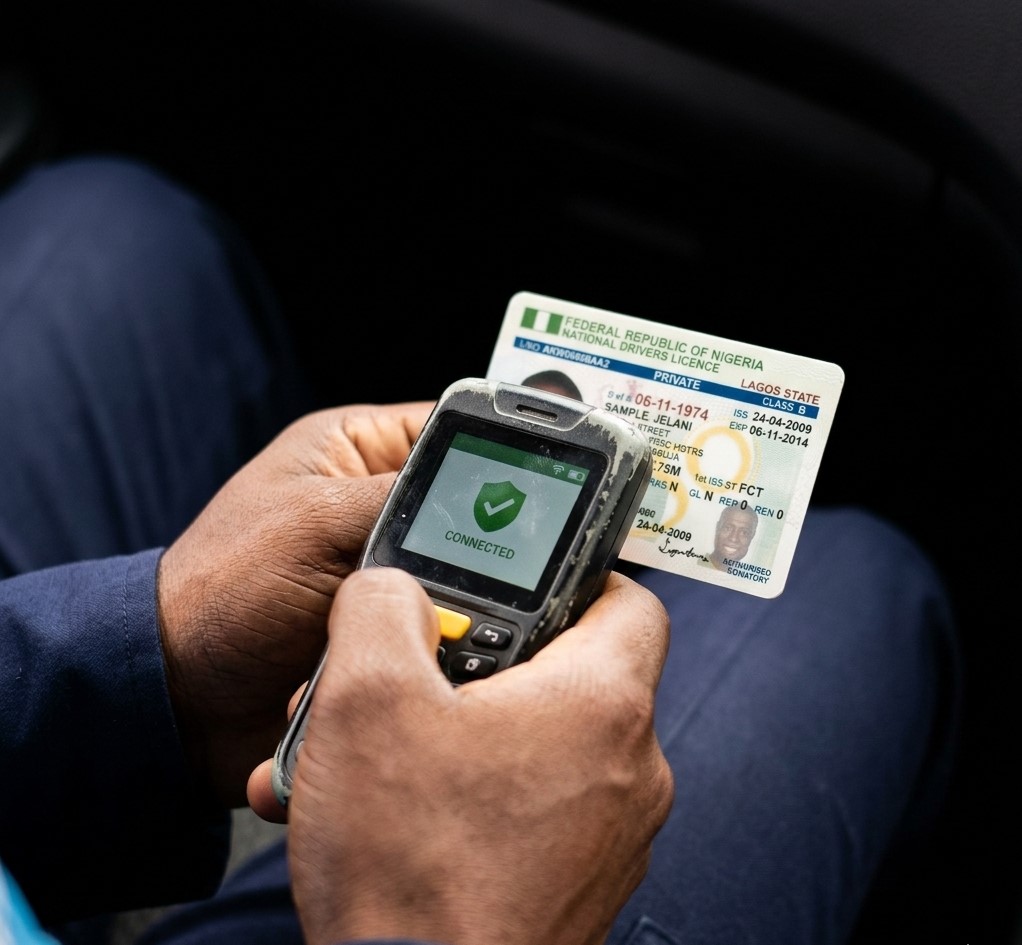
A driver license is no longer just proof that you can handle a vehicle on Nigeria’s roads. It is now an identity document that carries your National Identification Number (NIN) within its digital record. The partnership between the Federal Road Safety Corps and the National Identity Management Commission has transitioned from policy discussions to active database synchronization.
According to official reports, the ongoing integration allows both agencies to share verification data. This means when an FRSC officer processes your license, the system checks that your NIN matches the license details. This synchronization aims to reduce the need for physical paper printouts and manual verification steps.
The Weight of This Connection
News outlets reported in early 2026 that the FRSC has intensified the enforcement of NIN linkage for all driver licenses. While valid licenses continue to be recognized, those without verified NIN data may face delays or restrictions during renewal or verification. The push for total data harmony reached a major milestone with the ongoing implementation phase.
Security analysts have analyzed the implications of this move. The NIN requirement acts as a safeguard against identity theft and the use of fraudulent licenses. Since every license is tied to biometric data in the national database, the ability to use aliases or mismatched identities has been significantly curtailed. The system is designed to flag discrepancies in physical characteristics or facial data.
The integration supports the broader digital identity agenda. Your driver license functions as a reliable identity card, provided the NIN data matches. Any significant discrepancy between your name on both databases may lead to a temporary hold on the record until corrected.
What Changes for License Holders
Financial and tech analysts broke down the practical effects of this integration in recent 2026 reviews. Three major shifts affect every driver:
License Renewal Now Requires NIN Verification First
You cannot renew your license without a verified NIN. The FRSC system queries the NIMC database during the application process. If your biometric data matches, the process continues. If the system detects a mismatch—such as name spelling differences or conflicting dates of birth—the application is paused. You must visit a NIMC enrollment center to update your records before the FRSC can proceed.
This requirement has increased activity at NIMC offices across the country. Citizens with legacy data errors are now required to update their information. Common issues include the use of shortened names or nicknames on one document that do not appear on the other, leading to system rejections until the records are synchronized.
Traffic Offences Now Link to Your Identity
When a traffic violation is recorded, the system links the offense to your unique identity via the NIN. This shift improves enforcement capabilities by ensuring that driving histories are consistent. Previously, records were often fragmented by state; digital integration ensures that a driver’s history is accessible to authorized officers regardless of where the license was issued.
Your driving history now follows you across every state. This encourages better compliance with road safety laws, as penalties and points are tied to the individual rather than just the physical card.
Third-Party Verification Becomes Faster
Banks, employers, and other agencies can verify driver license authenticity through an integrated portal. News reports have noted that financial institutions increasingly accept the driver license for account opening when NIN verification is successful. This reduces the number of separate documents a citizen must provide for routine services.
The Technical Reality on Ground
The system uses NIMC verification protocols to handle high volumes of requests. While license data is managed by the FRSC, verification checks query the NIMC database to ensure the NIN is valid. The main technical hurdle has been the standardization of name formats and data fields between the two legacy systems.
Common Challenges
Discrepancies in dates of birth or maiden names remain the most frequent causes of verification failure. Women who have changed their surnames after marriage often find they must update their NIMC records to match their current driver license. While NIMC provides services for data modification, these updates often involve administrative fees and processing times.
Unresolved Gaps
Industry reports identify a few remaining hurdles:
Network Dependencies
The system requires both FRSC and NIMC servers to be online. If either network experiences downtime, digital verification can be delayed, forcing officers to rely on temporary manual checks.
Correction Backlog
Due to the volume of people seeking to synchronize their data, waiting times for correction appointments can be lengthy in urban centers. During this period, citizens may find their ability to renew licenses limited.
Rural Access
Drivers in rural areas often have to travel to city centers for both NIMC updates and FRSC renewals, adding a logistical cost to the process of staying compliant.
What Citizens Can Do Right Now
Verify Your NIN Details Early
Visit the NIMC self-service portal or a center to confirm your name and date of birth match your other official documents. Initiate any necessary corrections before your license expires to avoid a lapse in your driving credentials.
Check Your License Status Online
The FRSC provides an online portal to check license validity. Using this tool can help you identify if there is a “NIN mismatch” flag on your file before you head to an office for renewal.
Maintain Clear Records
Ensure your NIN slip and license are in good condition. Faded barcodes can cause scanning failures at verification points. Keeping a clear digital photo of your documents on your phone can serve as a helpful reference, though it does not replace the physical card.
Use Official Complaint Channels
The FRSC maintains helpdesk lines for integration issues. If you experience persistent technical errors during verification, use these official channels to lodge a report with your NIN and license number.
Looking Ahead
As the digital bridge between FRSC and NIMC matures, the goal is for the system to become a background utility that simplifies, rather than complicates, the lives of Nigerian road users.

Education Funding Fails 8.3 Million Nigerian Children Out of School

Federal Allocations Rise, Yet 10 States Plan N4.28 Trillion Borrowing Spree

Displaced Persons: Security Agencies Guard Aid Distribution in Nigeria

Rescue Boats Arrive in Yobe After River Tragedy Kills 30

Multiple Taxation and Decay Strangle Lagos Trade Fair

Water Safety: NEDC Warns Against Night Sailing in Northeast Nigeria

Recurrent Spending: Kaduna LGAs Allocate N91 Billion in 2026 Budget

LGA Allocations Rise as Rural Communities Wait for Development

Infrastructure Development: Okrika LGA Presents N11.9 Billion Budget

Landing Jetty Opens in Okrika with Passenger Hall, 2026

The Night Bandits Came: How One Nigerian Community Fought Back

Real Estate Tax in Nigeria: The 2026 Clarity Imperative

Internet Sovereignty: Why Some Countries Want Their Own Separate Internet

How One Misplaced Dot Broke a Bank Login Page

The Untold Story Of The Nigerian Who Helped Build Global Internet Systems

Nigerian Hackers: The Global Fraud Story and Its Fallout

Forgotten Satellites Defy Silence, Beaming Signals for Decades

Do Not Allow Your Digital Store to Shut Down: The Exact Dates That Kill Websites

The “Village People” Aren’t Blocking Your Sales; Your Bad SEO Is.

The Business That Died because the Owner Refused to “Go Beyond.”

Why Are You Hiding Your Business From People With Money?

How Digital Maps Help Police Find Crime Spots

How Nollywood Grew Without Government Support

Why Criminal Gangs Target Base Transceiver Stations
 Edutech Portal4 weeks ago
Internet Sovereignty: Why Some Countries Want Their Own Separate Internet
- Digital Hustle4 weeks ago
How One Misplaced Dot Broke a Bank Login Page
- Edutech Portal4 weeks ago
The Untold Story Of The Nigerian Who Helped Build Global Internet Systems
- Edutech Portal4 weeks ago
Nigerian Hackers: The Global Fraud Story and Its Fallout
- Edutech Portal4 weeks ago
Forgotten Satellites Defy Silence, Beaming Signals for Decades
- Edutech Portal4 weeks ago
Do Not Allow Your Digital Store to Shut Down: The Exact Dates That Kill Websites
- Edutech Portal4 weeks ago
The “Village People” Aren’t Blocking Your Sales; Your Bad SEO Is.
- Edutech Portal4 weeks ago
The Business That Died because the Owner Refused to “Go Beyond.”