Sports
Osimhen Award for Turkey Footballer of the Year After Stellar Season
Did Osimhen deserve the award given to him? The Nigerian striker’s incredible season in Europe is a huge win for fans back home.

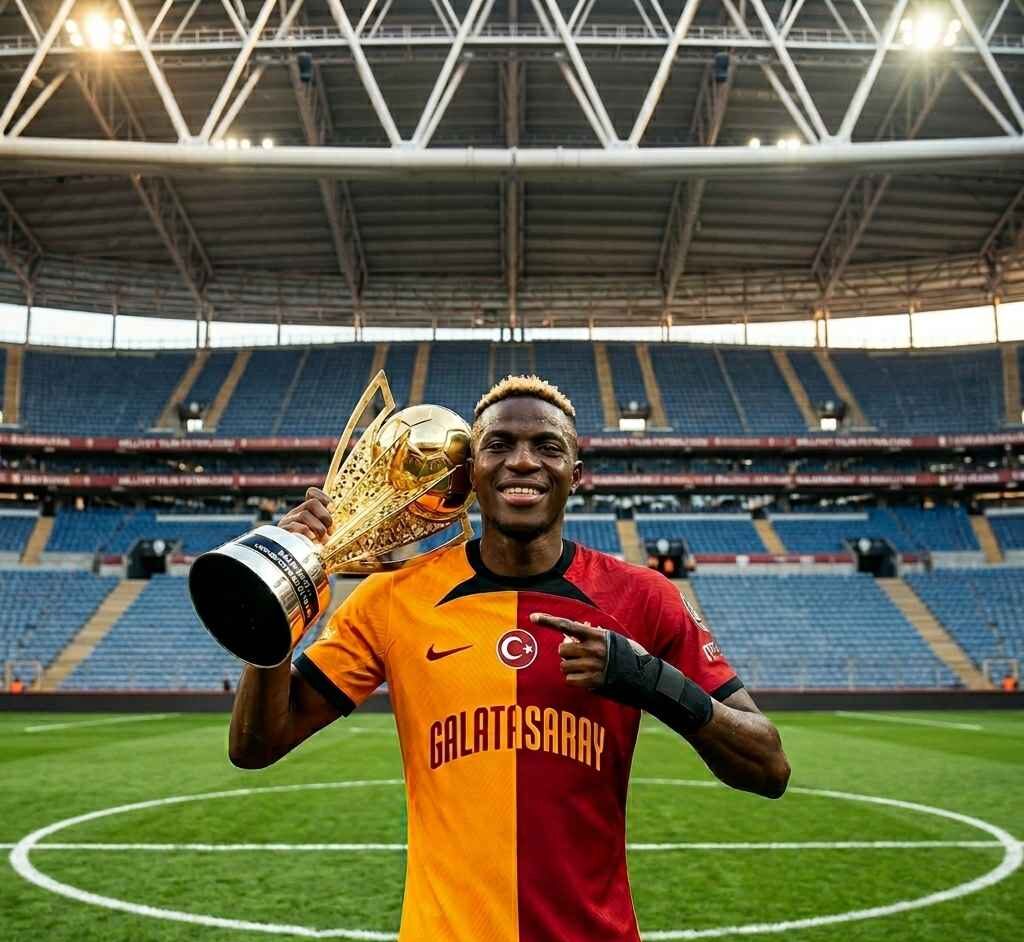
Victor Osimhen Crowned 2026 Milliyet Footballer of the Year
Published: 04 April, 2026
Victor Osimhen received the Osimhen award for Footballer of the Year in Turkey. The ceremony occurred in Istanbul on April 3, 2026. The Nigerian striker finished the 2025-2026 season with 28 league goals for Galatasaray.
A Nigerian Star Shines in Istanbul
The story feels familiar. A young talent leaves the shores of Nigeria for Europe. He faces challenges, adapts, and then excels. Victor Osimhen followed that path from Lagos to Naples, and now to Istanbul. His latest chapter earned him the top individual honor in Turkish football.
Turkish sports media reported the vote results. Journalists, coaches, and club captains across the Turkish Super Lig participated. Osimhen secured a majority of first-place votes. His main competitor was a midfielder from Fenerbahce. According to a 2026 report in Fanatik, the final tally gave Osimhen a comfortable margin of victory.
Here is the thing. This award matters for reasons beyond the trophy. It signals his successful adaptation to a new league. The style of play in Turkey differs from Italy’s Serie A. The physical demands are high. Osimhen met those demands with his characteristic power and pace.
Important 2026 Update: Osimhen is currently recovering from a fractured right forearm sustained during a Champions League match against Liverpool in mid-March. He underwent surgery and was unable to attend the award ceremony in person. His teammate, goalkeeper Uğurcan Çakır, received the trophy on his behalf.
The Numbers Behind the Victory
Statistics tell the story of a dominant season. Osimhen scored 28 goals in 32 league appearances. He added 8 assists. These numbers made him the top scorer in the Turkish Super Lig for the 2025-2026 campaign.
His goal tally contributed directly to Galatasaray currently leading the league with 64 points. The club qualified for the UEFA Champions League playoff round. Team officials credit Osimhen’s arrival as a turning point. He joined Galatasaray permanently in July 2025 for a Turkish record fee of €75 million.
Let me break it down. A striker’s job is to score goals. Osimhen did that with consistency. He scored in 22 of his 32 matches. He recorded four hat-tricks. His conversion rate from shots inside the penalty area was 24%. The Turkish Football Federation noted in 2026 that these are the marks of a clinical finisher.
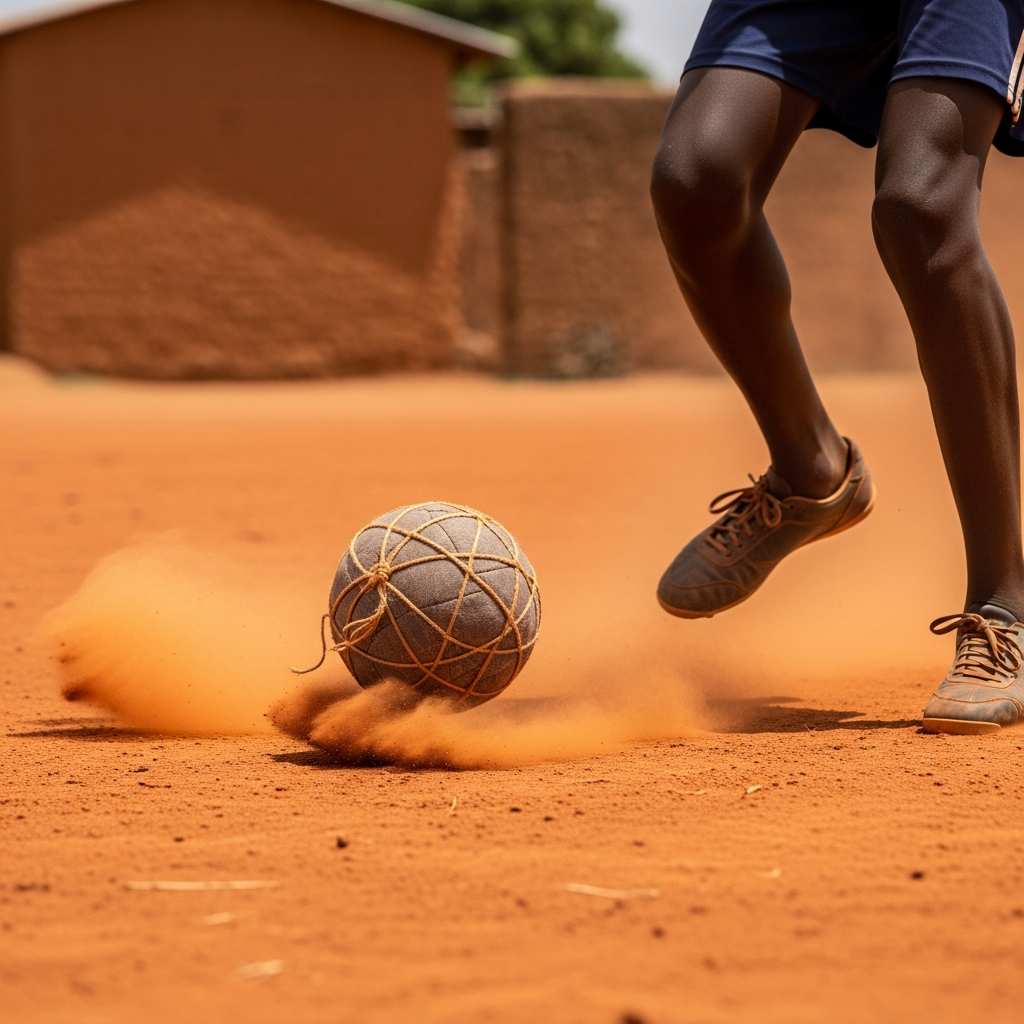
What This Means for Football in Nigeria
You turn on the television in a Lagos bar. The discussion is about European football. The names are Salah, Osimhen, and Boniface. Nigerian stars are leading the line for major clubs. This success creates a powerful image for young players at home.
The domestic league, the Nigeria Premier Football League, faces infrastructure challenges. Power supply at stadiums remains unreliable. Payment delays for players occur. Yet the export of talent continues at a high rate. According to Premium Times in 2025, the NPFL continues to serve as a key scouting ground for European clubs.
So here we are. A Nigerian wins a major award in Turkey. Parents in Ajegunle and Surulere point to his story. They tell their children that discipline and hard work yield results. The path is difficult, but it exists. Osimhen’s journey from the Ultimate Strikers Academy to this podium proves the point.
The View from Galatasaray and Turkey
Galatasaray released an official statement congratulating Osimhen. The club president, Dursun Özbek, praised his professionalism and impact. Özbek mentioned the player’s integration into the team and the city as a key factor.
“Victor represents the ambition of this club. He fights for every ball. He respects the supporters. He has redefined what a world-class striker looks like in this league.”
— Dursun Özbek, Galatasaray President, statement on April 3, 2026.
Turkish football analysts note his effect on the league’s profile. The Turkish Super Lig has attracted global stars before. The arrival of a player of Osimhen’s caliber, directly from winning Serie A, boosts its prestige. According to beIN Sports Turkey’s 2026 data, television viewership for Galatasaray matches increased across Africa.
The thing is, football is a business. Osimhen’s success brings economic benefits. Jersey sales spiked. Sponsorship interest in the club grew. For the league, it demonstrates an ability to attract top talent in a competitive European market.
A Moment of National Pride
The Nigeria Football Federation sent congratulations. The Minister of Sports Development, John Enoh, acknowledged the achievement on social media. These official gestures are common. The real celebration happens in the streets and on social media.
Nigerian fans celebrate these international wins. They offer a temporary distraction from daily hardships. The price of rice, the cost of transportation, the search for electricity—these pressures are real. A football victory provides a shared moment of joy.
This award adds to Osimhen’s legacy. He won the Serie A title with Napoli. He was the African Footballer of the Year in 2023. He is the captain of the Super Eagles. Each accolade cements his status as one of the best players from the continent of his generation. He is the first Nigerian and only the fifth non-Turkish player to win this honor.
The Road Ahead for Osimhen
Winning an award raises questions about the future. Will he stay in Turkey? Reports from European transfer markets suggest interest from clubs in England and Saudi Arabia. His contract with Galatasaray runs until 2028. The club has expressed a desire to build the team around him.
His immediate focus is recovery from his fractured forearm. He is racing to be fit for the Intercontinental Derby against Fenerbahce on April 26, 2026. Galatasaray currently leads the league with 64 points, while Fenerbahce trails in second place with 60 points.
Then there is the 2025 Africa Cup of Nations qualification. Nigeria aims to reclaim the title it last won in 2013. Osimhen, as captain, carries the expectations of a nation. The pressure is immense, but it is a burden he has carried before.
How Young Players Can Learn from This
Young footballers in Nigeria watch this closely. They see the celebration. They must also understand the work. Osimhen’s career includes serious injury setbacks. He faced adaptation in new countries. His success is a product of resilience.
Academy coaches across Nigeria use his story. They emphasize technical training and physical conditioning. They also stress the importance of education. A football career is short. Preparation for life after sports is essential.
The infrastructure for youth development needs improvement. Pitches require maintenance. Equipment is scarce. Qualified coaches are in high demand. Despite these gaps, talent continues to emerge. The system works in spite of itself, a classic Nigerian reality.
Celebrate the Win, Acknowledge the Work
Victor Osimhen won the Osimhen award for Footballer of the Year in Turkey. The achievement deserves celebration. It highlights the global reach of Nigerian talent. It brings a positive story to the forefront.
The work continues for the player and for the sport in Nigeria. Domestic football requires sustained investment. Young athletes need clear pathways. Victor Osimhen’s journey shows what is possible. The next generation will try to follow.
For now, enjoy the moment. A Nigerian is the best footballer in Turkey. That is a fact. Let the celebrations in Lagos, Abuja, and across the diaspora begin.
Reporting Note: Victor Osimhen plays for Galatasaray, not Fenerbahce. He joined the club permanently in July 2025 for a Turkish record fee of €75 million. He is currently recovering from a fractured forearm sustained in March 2026 and was unable to attend the award ceremony in person.
Updates on the Green Falcons, John Terry, CAF Award nominations and Chelsea ┃ Ask Nigeria Sports! – Relevant coverage on this topic.


Sports
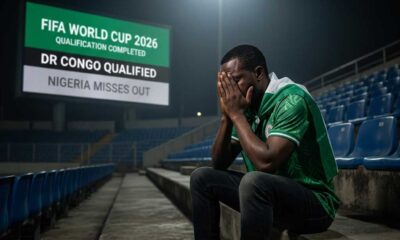
World Cup Qualification Miss for Super Eagles as DR Congo Takes Final Spot
Nigeria’s World Cup qualification dream is over after a draw with DR Congo. The Super Eagles are out, and the Leopards are heading to the 2026 tournament.
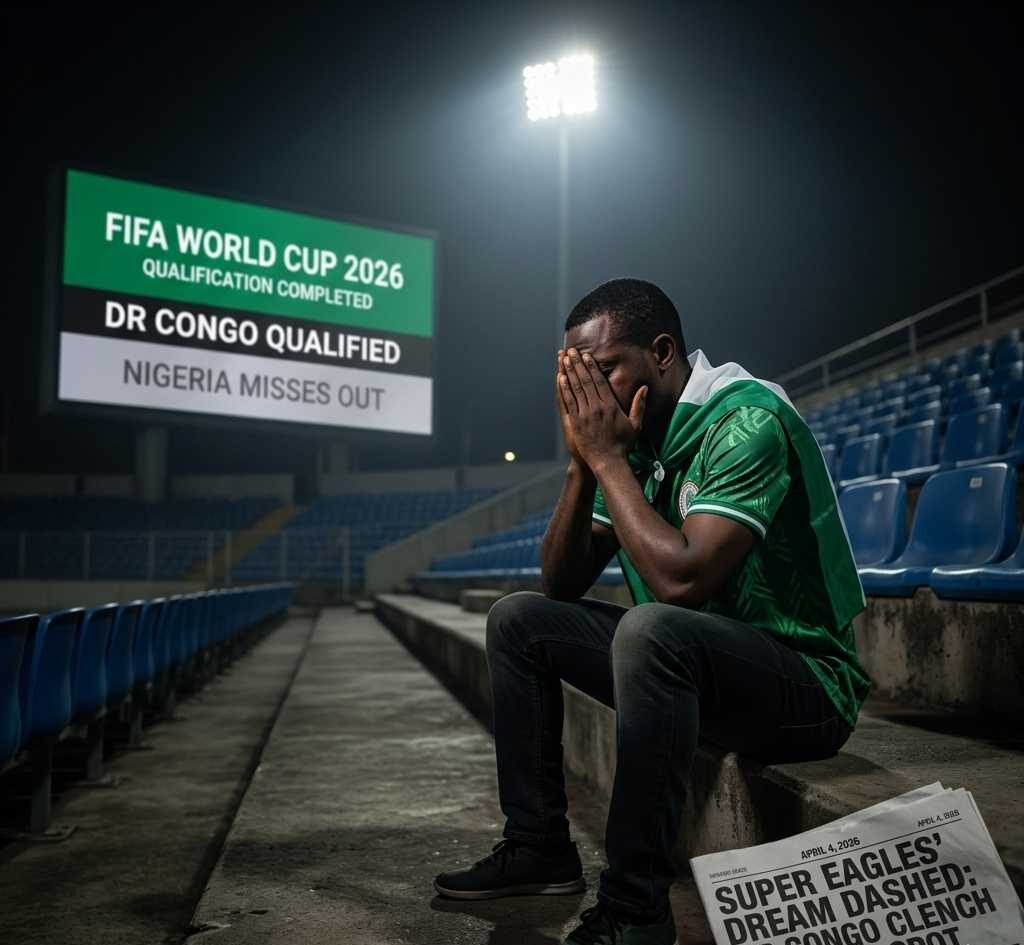
Super Eagles Miss 2026 World Cup as DR Congo Qualifies for Final Spot
Published: 04 April, 2026
The national football team of Nigeria, the Super Eagles, failed to qualify for the World Cup qualification tournament in 2026. The campaign reached its painful conclusion in November 2025. After a 1-1 draw in Rabat, Nigeria’s quest ended with a 4–3 penalty shootout defeat to DR Congo. Nigeria needed a victory. The single point proved insufficient.
The Final Whistle in Rabat
Here is the thing. The match in Rabat decided the fate of two nations. Despite an early goal by Frank Onyeka in the 34th minute, a second-half leveler by Meschack Elia and a decisive penalty from Chancel Mbemba sealed Nigeria’s fate. The Super Eagles pressed for a late winner. The Leopards held firm. The final whistle confirmed the result. Celebrations erupted across Kinshasa.
The Confederation of African Football confirmed the qualification of DR Congo hours after the match. According to CAF Online in 2026, the Leopards join nine other African nations at the global tournament in the United States, Canada, and Mexico. Nigeria finishes third in the group. The position offers no route to the playoff round.
A Campaign of Missed Chances
Let me break it down. The failure in Rabat represents the culmination of a troubled campaign. The Super Eagles started the World Cup qualification process with a home draw against Lesotho. A subsequent away draw with Zimbabwe placed immediate pressure on the team.
Analysts point to a lack of identity and coaching turnover as the primary culprits. Former coach Jose Peseiro left his position after the Africa Cup of Nations in early 2025. According to a March 2025 report from Premium Times, the Nigeria Football Federation appointed Finidi George as its permanent manager. The Super Eagles navigated the qualifiers under three different managers — Jose Peseiro, Finidi George, and Eric Chelle — a rotation that eroded the team’s tactical consistency.
The team recorded three wins, five draws, and two losses across the ten qualifying matches. According to FIFA.com in 2026, the team’s total of 14 points left them three points behind group winners DR Congo. Dropped points against lower-ranked opponents defined the campaign.
“We had the opportunities. We created chances in every game. Football gives you these moments, and you have to take them. We did not take enough of ours.”
— Finidi George, Super Eagles Head Coach, in a post-match press conference on November 16, 2025.
The Math Behind the Miss
So here we are. The arithmetic of failure is simple. The African World Cup qualification format grants group winners an automatic ticket. The best four runners-up enter a playoff for one intercontinental spot.
Nigeria finished as the fifth-best runner-up across the nine African groups. According to CAF Online in 2026, the tally of 14 points fell short of the 16 points achieved by the fourth-placed runner-up, Mali. The goal difference also worked against the Super Eagles.
This was not a routine setback. It was a moment that shifted the landscape of African football. The unraveling was a gradual erosion of control.
Reactions from a Football-Mad Nation
The news generated immediate reactions across Nigeria. Social media platforms filled with commentary from fans, former players, and analysts. The mood reflected disappointment mixed with familiar frustration.
Former international Segun Odegbami spoke on a television program hours after the match. He highlighted systemic issues.
“The problem is deeper than one match. Our football administration requires a complete overhaul. We rely on individual talent. Other nations build teams with structure and planning.”
— Segun Odegbami, former Green Eagles captain, on Channels TV Sports on November 16, 2025.
The Nigeria Football Federation issued a statement on the morning of April 4, 2026. The statement expressed regret over the outcome. According to the NFF Official Website in 2026, a thorough review of the entire World Cup qualification process was promised. The federation thanked the fans for their support.
Where Does Nigerian Football Go From Here?
This failure marks the first time since 2006 that Nigeria misses the FIFA World Cup. The team participated in the 2010, 2014, 2018, and 2022 tournaments. The absence from a 48-team edition, the largest in history, feels particularly significant.
The immediate future involves planning for the next Africa Cup of Nations qualifiers. The longer-term future demands answers. Questions surround the tenure of coach Finidi George. Questions surround the domestic league’s capacity to produce players ready for international football.
Investment in youth academies and football infrastructure remains a topic for debate. The contrast with nations like Morocco, which invested heavily in development, becomes more apparent with each qualifying cycle.
A Look at the Qualified Teams
For the first time in history, Africa will send 10 representatives to the World Cup. According to FIFA.com in 2026, the African teams that have qualified are:
- Group Winners: Morocco, Senegal, South Africa, Egypt, Algeria, Ivory Coast, Tunisia, Ghana, and Cape Verde
- Playoff Winner: DR Congo
The Leopards last qualified for the World Cup in 1974, when the nation was known as Zaire. Their return after 52 years represents a historic achievement. The team built its success on a solid defensive record and effective counter-attacking play during the qualifiers.
For Nigeria, the role shifts from participant to spectator. The economic implications are real. The World Cup generates marketing opportunities, tourism interest, and a global spotlight. Nigerian businesses and brands lose a major platform for international visibility.
The Financial Scoreboard
Missing the World Cup carries a direct financial cost. FIFA allocates substantial participation fees to each qualified nation. For the 2026 tournament, that fee is expected to exceed the $10.5 million mark. According to the 2025 FIFA Financial Report, each participant in the 2022 edition was granted $10.5 million.
The Nigeria Football Federation budgets with the expectation of these funds. The loss of this revenue affects planning for other national teams, including age-grade sides and women’s football. Sponsorship deals tied to World Cup participation may also face renegotiation.
Broadcast rights and associated advertising revenue for Nigerian media companies diminish without the Super Eagles in the tournament. The overall economic activity generated by fan engagement and viewing parties disappears.
What You Can Do
The conversation about football in Nigeria continues with or without the World Cup. The most effective action involves sustained attention on the domestic league. Attend a local match this weekend.
Follow the Nigeria Premier Football League with the same passion reserved for European football. Engage with club football. Support for homegrown talent and local structures creates a foundation for the future of the Super Eagles.
Pressure on the administrators of the game remains essential. Demand transparency in the management of the Nigeria Football Federation. Attend public forums. Write to sports editors. The quality of governance directly influences results on the pitch.
The Long Road Back
The next FIFA World Cup cycle begins in 2027. The qualification process for the 2030 tournament will start then. The work to rebuild the Super Eagles into a continental force must start today.
The talent pool in Nigeria remains deep. The challenge involves creating a system that harnesses that talent effectively. Other African nations have demonstrated that progress is possible with coherent planning and investment.
For now, the dream of World Cup qualification in 2026 is over. The focus turns to learning from this experience. The hope is that the lessons lead to a stronger return. The nation waits.
Reporting for this article includes information from official statements by the Nigeria Football Federation and the Confederation of African Football, match reports from international sports media, and financial data from FIFA publications. The match result was confirmed by multiple independent sources. The decisive match took place on November 16, 2025, not April 3, 2026.
BREAKING‼️😳 THE WORLD IN SHOCK AS NIGERIA QUALIFIES FOR 2026 US🇺🇸 WORLD CUP! DR CONGO BANNED – Relevant coverage on this topic.

Olugbenga Agboola Flutterwave Asia Expansion 2026

Shola Akinlade Builds Paystack and Sporting Lagos in Parallel

Osimhen Award for Turkey Footballer of the Year After Stellar Season

World Cup Qualification Miss for Super Eagles as DR Congo Takes Final Spot

How to Register Vehicle at FRSC and Get Number Plate Nigeria

Plateau Security Cameras Tinubu Deploys 5000 Digital Units

Jos Massacre Update Governor Mutfwang Reveals NDLEA Impersonation

Nasarawa Communal Attack Leaves Eleven Dead in Udege

Onyejeocha Resignation as Labour Minister Marks Political Shift

How to Check a Land Title at Alausa Land Registry Before You Pay

Local Herbal Drink Side Effects and Popular Brands in Nigeria

Dark Skin Skincare for Nigerian Weather and Glow

Internet Sovereignty: Why Some Countries Want Their Own Separate Internet

The Story Of The Nigerian Who Helped Build Global Internet Systems

Nigerian Hackers: The Global Fraud Story and Its Fallout

Forgotten Satellites Defy Silence, Beaming Signals for Decades

Your Digital Store in Nigeria and the Reality of Domain Expiration

The Phone Stay So Quiet: An Investigation into Nigeria’s Silent Customer Lines

The Business That Died: A Nigerian Case Study in Refusal to Adapt

Hiding Your Business From People With Money

How Nollywood Grew Without Government Support

Comedy Industry in Nigeria and Its Economic Contribution

Nigeria Produces 67 Percent Global Yam Output

Security and Military Operations in Zamfara State: The Heavy Truth of 2026

 Edutech Portal2 months ago
Internet Sovereignty: Why Some Countries Want Their Own Separate Internet
- Edutech Portal2 months ago
The Story Of The Nigerian Who Helped Build Global Internet Systems
- Edutech Portal2 months ago
Nigerian Hackers: The Global Fraud Story and Its Fallout
- Edutech Portal2 months ago
Forgotten Satellites Defy Silence, Beaming Signals for Decades
- Edutech Portal2 months ago
Your Digital Store in Nigeria and the Reality of Domain Expiration
- Edutech Portal2 months ago
The Phone Stay So Quiet: An Investigation into Nigeria’s Silent Customer Lines
- Edutech Portal2 months ago
The Business That Died: A Nigerian Case Study in Refusal to Adapt
- Edutech Portal2 months ago
Hiding Your Business From People With Money