Security & Crime
Banditry, Kidnapping and Military Operations in Zamfara: The Situation in 2026

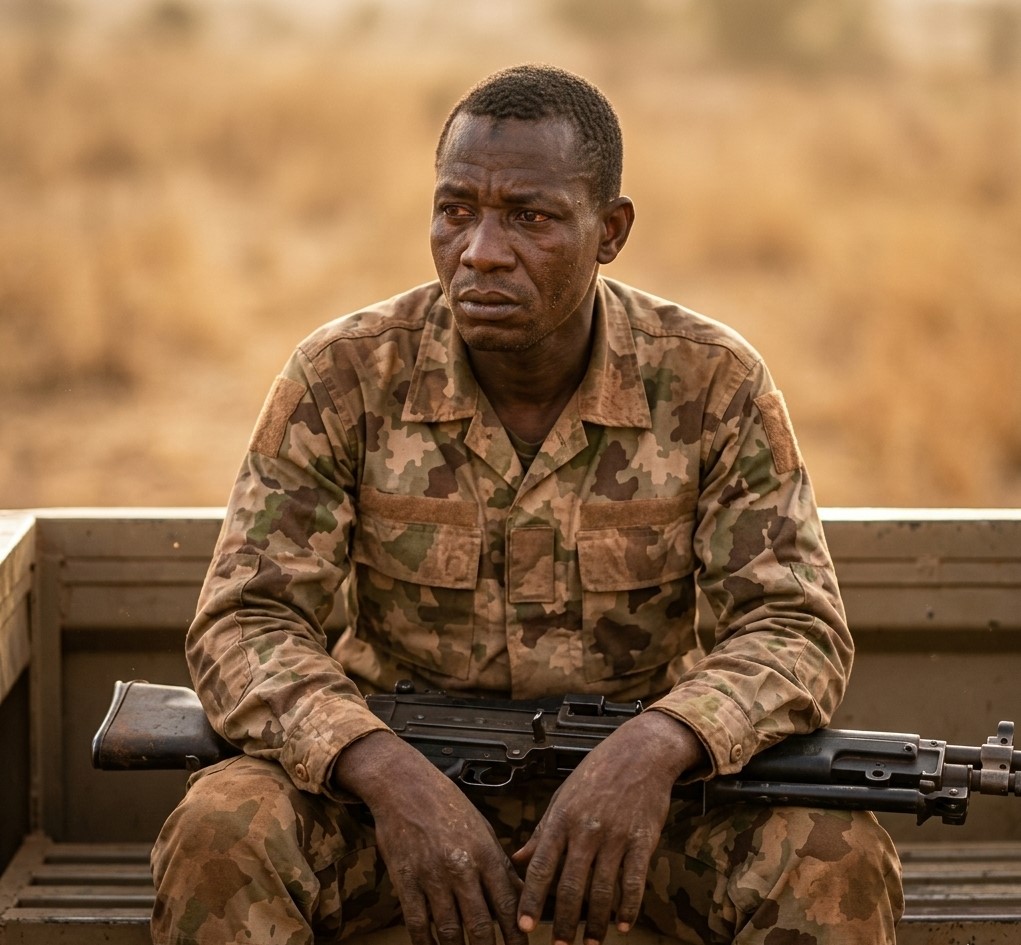
Security and Military Operations in Zamfara State
The road from Gusau to Dansadau runs through 80 kilometres of tension. Every tree line could hide observation. Every village could hold informants. Every convoy moves with eyes scanning the scrubland where bandits have held sway for years. The military offensive in Zamfara has shifted from sweeping operations to targeted strikes, but the bandits have also changed their methods.
According to reports from March 2026, military operations in Zamfara have entered a phase focused on dismantling bandit logistics rather than chasing groups through the forest. This shift follows intelligence indicating that bandits now frequently avoid direct confrontation with troops and instead rely on ambush tactics and rapid dispersal.
The Current Military Posture
The Nation reported in February 2026 that Operation Fansan Yamma coordinates military activities in Zamfara and neighbouring states. The operation combines ground troops, air assets, and intelligence units working from forward operating bases. Current operations prioritize operational security, often withholding public announcements until after strikes occur to maintain the element of surprise.
Vanguard News documented a major operation in Maru local government area on February 23, 2026. According to sources, military aircraft conducted precision strikes on identified bandit camps while ground troops moved to block escape routes. The operation led to the recovery of several motorcycles and a cache of weapons. Military sources confirmed that intelligence for the strikes often involves collaboration with local informants.
BusinessDay analysed the economic weight of these operations. Reports from March 2026 state that the Zamfara State government continues to allocate a significant portion of its security funding to logistics support for military operations, covering fuel, food, vehicle maintenance, and accommodation for troops. This is independent of the federal funding dedicated to the Defense budget.
Bandit Tactics in 2026
Daily Trust published reports in early March 2026 detailing how bandits have adapted to military pressure. Findings show that many bandit groups now operate in smaller units of 10 to 15 fighters instead of the large, permanent camps seen in previous years. These smaller units move constantly, attempting to reduce their visibility to aerial surveillance.
ThisDay Live reported that kidnapping for ransom persists as a primary revenue source for these groups. Analysis suggests that high sums in ransom payments were demanded across Zamfara, Katsina, and Kaduna states during the first two months of 2026. Negotiations for the release of victims often remain complex and prolonged.
The Guardian Nigeria confirmed through military sources that some bandit groups have attempted to use commercial drones for surveillance of military positions. These drones allow them to track troop movements in real time. In response, military counter drone units have been deployed to high priority locations to neutralize these threats.
Channels Television aired footage in late February showing the destruction of bandit logistics bases in the Kuyanbana Forest area. The footage showed motorcycles and fuel dumps destroyed by air strikes. Military spokespersons emphasized that disrupting fuel and food supplies is a priority to limit bandit mobility.
Civilian Life Under the Operations
Arise News interviewed residents of Bagega town in Zamfara for a March 2026 documentary. A community leader described the daily reality: “Farming is now done in groups. No one goes to the farm alone. If you hear shooting, you run toward the town, not away from it. We sleep dressed because you never know when you will need to move.”
Premium Times documented the situation in Dansadau, a town that has faced repeated challenges. Residents have formed community vigilance groups that work with military intelligence. These groups provide information on movements but typically operate without standard military weaponry. The military has provided communication equipment to facilitate this information flow.
The Nation reported on March 2, 2026, that thousands of internally displaced persons (IDPs) from Zamfara reside in camps in Gusau and surrounding towns. While the exact number fluctuates, the State Emergency Management Agency (SEMA) has noted that funding and supply constraints make it difficult to provide adequate shelter and food for all displaced families.
Vanguard News featured a woman in Maradun local government who lost her husband to violence in January 2026. She continues to farm to support her three children. “The soldiers come and go,” she told reporters. “The bandits also come and go. We remain. We must eat. We must farm. We have no choice.”
The Intelligence War
BusinessDay reports indicate that military intelligence gathering in Zamfara now utilizes a mix of electronic signals and informant networks. Security agencies monitor communication patterns in identified forest areas. When unusual activity is detected, air assets are deployed for reconnaissance to confirm targets.
Daily Trust reported that bandits have responded by changing mobile devices frequently and using human messengers on foot for sensitive communication. This tactic slows their coordination but is intended to make electronic surveillance more difficult. Military sources admit that bridging intelligence gaps remains a significant task.
The Guardian Nigeria confirmed that some bandit groups have recruited individuals with knowledge of local terrain and vigilante tactics. These individuals provide guidance on avoiding aerial detection and setting ambushes. While military operations have neutralized several commanders, leadership structures within these groups often reorganize quickly.
ThisDay Live quoted a security analyst who described the conflict as a “grinding war” of attrition. The military works to secure vast rural areas, while bandits exploit the thick forest cover. The result is a difficult environment for civilians caught in the middle of ongoing security efforts.
The Specific Challenge of Kidnapping
Channels Television analysed kidnapping patterns in Zamfara for their February 2026 programming. Data shows that many incidents occur along major transit routes. Travellers on the Gusau to Funtua road have been identified as being at high risk. Tactics often involve blocking roads with debris to force vehicles to stop.
Premium Times documented an incident on February 15, 2026, when multiple vehicles were stopped on the Dansadau road and passengers were taken. Military response arrived following the alert, but the victims had already been moved into the forest. Efforts to secure their release often take weeks of sensitive negotiation.
Arise News reported that some victims are held for several months. Bandits frequently demand high ransoms, causing families to sell assets like land and cattle to raise the funds. Tragic outcomes, including deaths in captivity, have been reported by sources speaking to Vanguard News during February 2026.
The Nation interviewed a released victim in March 2026. The trader from Gusau spent over 40 days in captivity. “They fed us once daily. Rice and water. They moved us every few days. Sometimes we walked all night. I still do not know where they kept us. The forest looks the same everywhere.”
Military Gains and Limitations
ThisDay Live reported that military operations dismantled over 20 bandit camps in February 2026. This represents a period of intensified activity. However, military sources acknowledge that dismantled camps are sometimes re established in different forest locations within weeks.
The Guardian Nigeria noted the high cost of the conflict. Between January and February 2026, dozens of security personnel lost their lives in Zamfara operations. While bandit casualties are estimated to be significantly higher, independent verification in the deep forest remains difficult. Civilian casualties also remain a grave concern during this period.
BusinessDay noted that military operations face logistical hurdles. Vehicles require constant repair due to the rough terrain, and fuel must be transported over long, dangerous distances. These factors can impact the speed and duration of sustained operations in the deep bush.
Vanguard News reported that the military has established new forward operating bases in local government areas like Anka and Bukkuyum. These bases are intended to allow for faster response to distress calls. Response times have reportedly improved in the immediate vicinity of these bases.
The Road to Dansadau
The Dansadau road serves as a clear indicator of the security situation. A journey that should take 90 minutes often takes significantly longer due to security checks and precautionary pauses to scan the landscape for threats. Convoys must remain alert for the possibility of mined road sections or ambushes.
A soldier stationed along the route, speaking anonymously, noted: “We know this road. Every bend. Every village. But they watch us. We watch them. Some days, we find them. Some days, they find us.” This highlights the constant state of vigilance required by troops on the ground.
In Dansadau market, traders often close their stalls early. By late afternoon, the market clears as residents prioritize getting home before sunset. A local trader explained that the risks associated with being on the road after dark are too high, forcing the community to adjust their lives around the security clock.
The military operations continue, the bandits adapt, and the civilians endure. The road remains open but guarded. The soldiers continue to monitor the tree line while the people look forward to a time when such high levels of security are no longer necessary.
One Small Fix Before the Clouds Break
Establishing dedicated communication channels for farmers in high risk areas could significantly bolster security. Premium Times reporting shows that most farming communities have access to mobile phones. A system allowing farmers to report suspicious movements directly to a military command center could improve intelligence and decrease response times.
This does not require new infrastructure, as mobile networks cover much of the region. The necessity lies in creating a formal protocol for reporting and ensuring that callers receive feedback when their information is utilized. If local populations see that their reports lead to direct action, trust in security agencies increases and bandit freedom of movement decreases.
While such a system is not a total solution for banditry, it would make the forest less hospitable for criminal groups. For the farmers who must venture into their fields every day, knowing that a direct line to security forces exists could provide a vital sense of support and safety.

Security & Crime
How the Niger Coup Affected Nigeria’s Security Architecture: Border Closures and Military Realignments
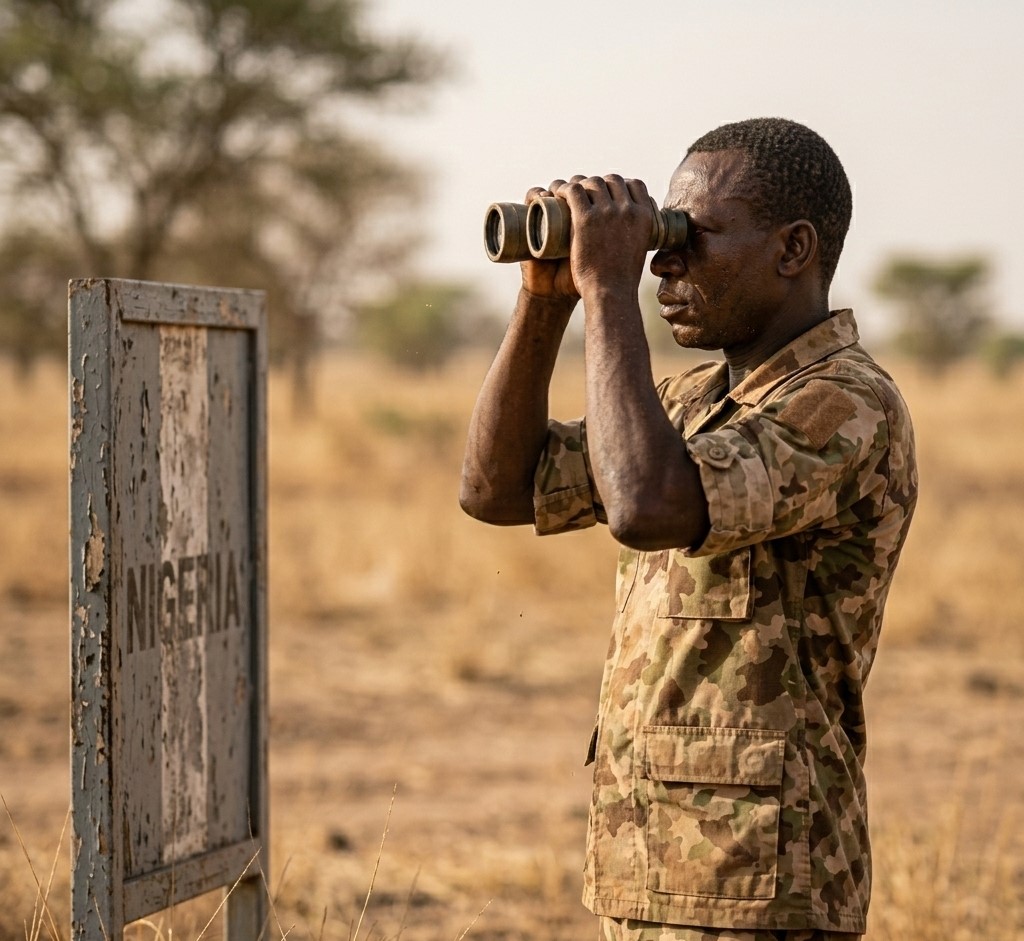
Security Realities on the Nigeria-Niger Border Following the 2023 Coup
The security landscape of West Africa shifted significantly following the events in Niamey in mid-2023. What was once a managed frontier became a complex diplomatic and security challenge. Intelligence sharing slowed, and the joint patrols that once defined the border’s security framework faced unprecedented hurdles.
Premium Times and global outlets reported on July 26, 2023, that General Abdourahamane Tchiani moved to depose President Mohamed Bazoum. In the aftermath, the Economic Community of West African States (ECOWAS), led by Nigeria, imposed strict sanctions. This led to a suspension of standard military cooperation, impacting a framework that had been built over decades.
According to research by the International Crisis Group, Nigeria and Niger share a border of approximately 1,500 kilometres. While official diplomatic channels saw a period of deep silence, the reality on the ground remained fluid as local communities continued to navigate the historic ties that bind the two nations.
The Impact on Intelligence and Coordination
Reports from The Guardian Nigeria and other defense analysts in late 2023 indicated a significant disruption in surveillance data sharing. Previously, Nigerien forces provided critical monitoring of movements from the broader Sahel region, which acted as an early warning system for Nigeria’s northern states.
Military analysts noted that the Agadez region in Niger has long been a transit point for migration and potential insurgent movement. The withdrawal of coordinated intelligence cells meant that the human networks established to track these threats faced a period of fragmentation.
The Multinational Joint Task Force (MNJTF), which coordinates actions between Nigeria, Niger, Chad, and Cameroon, saw its operational harmony tested. While the force continued its mission against remnants of Boko Haram and ISWAP, the political friction in Niamey made high-level strategic coordination more difficult than in previous years.
Border Realities and Community Economics
Vanguard News and Daily Trust documented the immediate economic hardship following the border closure in August 2023. Major trading hubs like Illela in Sokoto and Maigatari in Jigawa saw a sharp decline in activity. For generations, these markets served as the heartbeat of the regional economy.
The closure didn’t just stop trucks; it affected small-scale traders. Reuters highlighted how families with members on both sides of the line were separated, affecting social ceremonies and traditional rites. By September 2023, the International Organization for Migration (IOM) recorded thousands of individuals moving back across the border as economic opportunities dried up.
Shifting Security Threats
Security analysts have observed how non-state armed groups attempt to exploit gaps in state cooperation. Without synchronized “hot pursuit” agreements, insurgent groups can attempt to use the border as a tactical shield, moving across the line to evade engagement from either side.
Data from the Armed Conflict Location & Event Data Project (ACLED) showed a rise in banditry and insurgent activity in the Sahel during this period of political instability. The HumAngle media group reported that Nigerian troops often had to exercise extreme caution near the frontier to avoid diplomatic incidents with the new authorities in Niger.
A military source noted that the lack of coordination allows criminal elements to rest and refit in areas where state presence is thin. Re-establishing these security protocols remains a priority for regional stability in 2026.
Diplomatic Shifts and ECOWAS Sanctions
Following the July 30, 2023 summit, ECOWAS imposed a series of measures, including the freezing of assets and the closure of land and air borders. Bloomberg reported that these measures significantly impacted Niger’s energy sector, as a large portion of its electricity was historically supplied by Nigeria.
By 2024 and 2025, the geopolitical alignment of the region changed. Niger, along with Mali and Burkina Faso, formed the Alliance of Sahel States (AES) and announced their intention to withdraw from ECOWAS. This prompted a pivot toward new international partners, altering the traditional defense partnerships that Nigeria had relied upon for decades.
Current Situation in 2026
In early 2026, the border situation remains a point of high expenditure for the Nigerian government. Defense budgets have been adjusted to maintain a more permanent presence along the northern frontier to compensate for the reduction in collaborative patrolling. While some humanitarian corridors have been established, the full restoration of pre-2023 trade volumes has yet to occur.
BusinessDay reports that the cumulative loss in cross-border trade is substantial, impacting the livelihoods of millions in the northern belts of Nigeria and the southern regions of Niger. However, informal trade continues, driven by the necessity of survival in these border communities.
The Role of Local Communities
Local vigilante groups and traditional leaders have stepped up to provide a level of grassroots security. In many villages, informal “early warning” systems have been created where residents use local knowledge to track suspicious movements and alert their neighbors.
Policy experts at Chatham House suggest that empowering these civilian observation networks could be a low-cost method to improve border security. These networks bypass high-level diplomatic freezes because they rely on the existing social fabric of the border regions.
The formal “digital bridge” of state-to-state data sharing may be under repair, but the human connections between Nigeria and Niger remain the most resilient part of the regional architecture. Strengthening these community ties is vital for long-term peace.

Digital Citizen Engagement Platforms for States Today: What Works and What Citizens Actually Experience

INEC 2027 Timetable and What It Means for Political Parties: Full Breakdown of Dates and Deadlines

Comedy Industry in Nigeria and Its Economic Contribution: How Laughter Became Big Business

Why Rent in Ikoyi and Banana Island Costs N180 Million Per Year: Verified Prices and Market Reality

How the Niger Coup Affected Nigeria’s Security Architecture: Border Closures and Military Realignments

Banditry, Kidnapping and Military Operations in Zamfara: The Situation in 2026

Makoko Demolitions and Over 80,000 Residents at Risk: The Facts on Ground

Construction and Real Estate Sector Outlook 2026 in Nigeria: Prices, Policies, and What Tenants Face

Why Healthcare Workers Keep Getting Infected With Lassa Fever: The 2026 Reality

Nigeria Produces 67 Percent Global Yam Output – FG Says: The Numbers Behind the Tuber

FRSC and NIMC Partner on Data Integration for Security: What This Means for Driver License Holders

How Nollywood Grew Without Government Support

Internet Sovereignty: Why Some Countries Want Their Own Separate Internet

How One Misplaced Dot Broke a Bank Login Page

The Untold Story Of The Nigerian Who Helped Build Global Internet Systems

Nigerian Hackers: The Global Fraud Story and Its Fallout

Forgotten Satellites Defy Silence, Beaming Signals for Decades

Do Not Allow Your Digital Store to Shut Down: The Exact Dates That Kill Websites

The “Village People” Aren’t Blocking Your Sales; Your Bad SEO Is.

The Business That Died because the Owner Refused to “Go Beyond.”

Why Are You Hiding Your Business From People With Money?

Entertainment as the Next Hope for Nigeria After Oil: What the Numbers Really Show
Why Healthcare Workers Keep Getting Infected With Lassa Fever: The 2026 Reality
FRSC and NIMC Partner on Data Integration for Security: What This Means for Driver License Holders
 Edutech Portal2 weeks ago
Internet Sovereignty: Why Some Countries Want Their Own Separate Internet
- Digital Hustle2 weeks ago
How One Misplaced Dot Broke a Bank Login Page
- Edutech Portal2 weeks ago
The Untold Story Of The Nigerian Who Helped Build Global Internet Systems
- Edutech Portal2 weeks ago
Nigerian Hackers: The Global Fraud Story and Its Fallout
- Edutech Portal2 weeks ago
Forgotten Satellites Defy Silence, Beaming Signals for Decades
- Edutech Portal2 weeks ago
Do Not Allow Your Digital Store to Shut Down: The Exact Dates That Kill Websites
- Edutech Portal2 weeks ago
The “Village People” Aren’t Blocking Your Sales; Your Bad SEO Is.
- Edutech Portal2 weeks ago
The Business That Died because the Owner Refused to “Go Beyond.”