Real Estsate
Cheapest Building Materials in Nigeria for 2026 House Projects
Cheapest building materials in Nigeria for 2026 include sandcrete blocks, bamboo, and stabilized earth. This guide lists current prices and sources for residential construction on a budget.

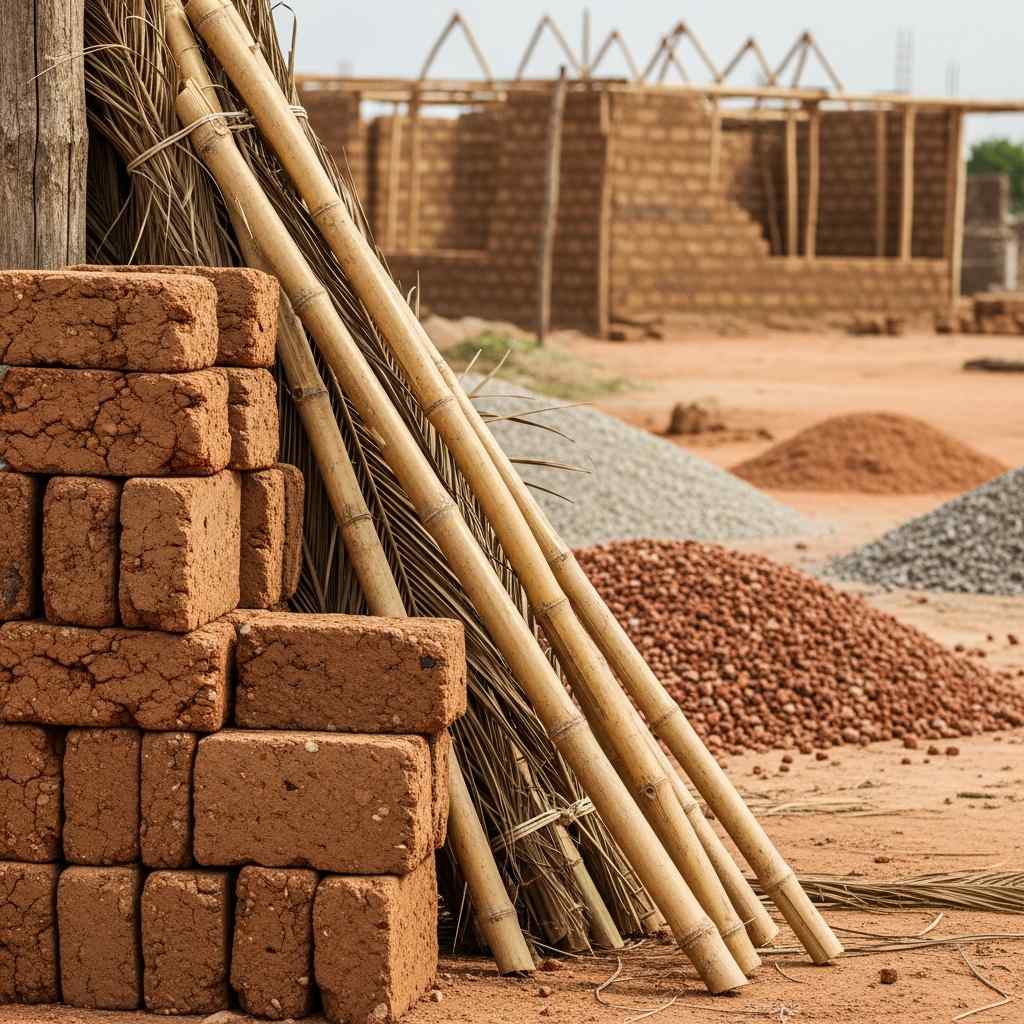
A bag of cement sold for an average of N7,500 in the first quarter of 2026. This price is the starting point for any conversation about building a house in the country. The search for cheapest building materials in Nigeria is a daily calculation for millions.
The foundation of cost is local material
Published: 31 March, 2026
Here is the thing. The most affordable materials are those you find close to the site. Transport adds a major layer of expense. A lorry load of sharp sand that costs N80,000 in Ogun State can double by the time it reaches a site in Lagos due to logistics and levies.
The National Bureau of Statistics tracks this in its construction materials report. The average price for a tonne of sharp sand across 36 states was N31,500 in December 2025. River sand averaged N35,000 per tonne. These are the literal building blocks of any budget.
You see the logic. A builder in Rivers State uses more river sand. A builder in Kano uses more laterite. The material under your feet often presents the first savings.
Sandcrete blocks still rule the market
Walk through any building site from Port Harcourt to Sokoto. You will see stacks of sandcrete blocks. They are the dominant walling material because the production process is simple. The recipe is just cement, sand, and water.
The price for a standard 9-inch block fluctuates wildly. In Abuja, prices ranged from N450 to N550 per block in early 2026. In Lagos, the range was N480 to N600. The variation depends on the cement content and the location of the block industry.
A report by BusinessDay in February 2026 quoted block makers in Ota. They linked price changes directly to weekly cement costs. The lesson is straightforward. Monitor cement prices to predict block costs.
Bamboo has entered the conversation
Let me break it down. Bamboo is a grass that grows rapidly in southern and central Nigeria. It is a renewable resource. Research institutes like the Forestry Research Institute of Nigeria have promoted its use for scaffolding, roofing, and even structural frames.
The cost advantage is significant. A long bamboo pole suitable for scaffolding can cost between N500 and N1,500. Compare that to a steel scaffold tube. The initial outlay is lower. The material is lighter, which reduces labour costs during handling.
Professor Abdullahi Onilude, a researcher with FRIN, discussed this in a 2025 seminar. He stated treated bamboo has a lifespan exceeding 25 years for construction purposes. The treatment process to prevent insect attack adds to the cost but remains economical.
“The perception that bamboo is a poor man’s material is outdated. With modern treatment and engineering, it is a viable, low-cost structural option for residential buildings.”
Professor Abdullahi Onilude, Forestry Research Institute of Nigeria, 2025.
Laterite and stabilized earth make a comeback
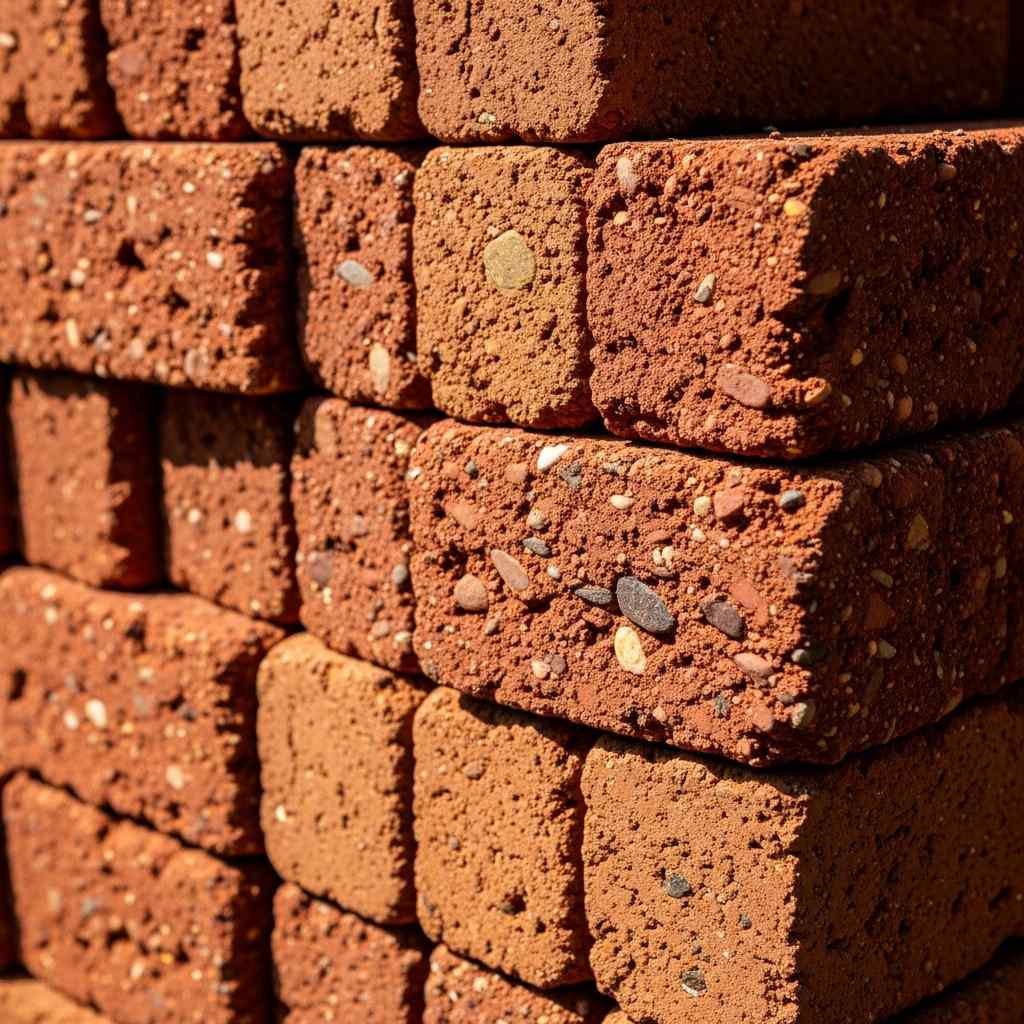
So here we are. Before cement blocks, people built with earth. The method is experiencing a revival under terms like ‘rammed earth’ or ‘compressed stabilized earth blocks’. CSEBs use local soil mixed with a small amount of cement or lime.
The primary cost is the soil, which is often free on-site. The stabilizer, like cement, constitutes about 5-10% of the mix. A hydraulic press machine forms the blocks. The machine represents the main capital cost, but community cooperatives or enterprising individuals often own one.
A study published in the Nigerian Journal of Technology in 2025 analyzed costs. It found CSEB walls could be 30% cheaper than sandcrete block walls for a single-story building. The thermal insulation properties are superior, reducing future spending on cooling.
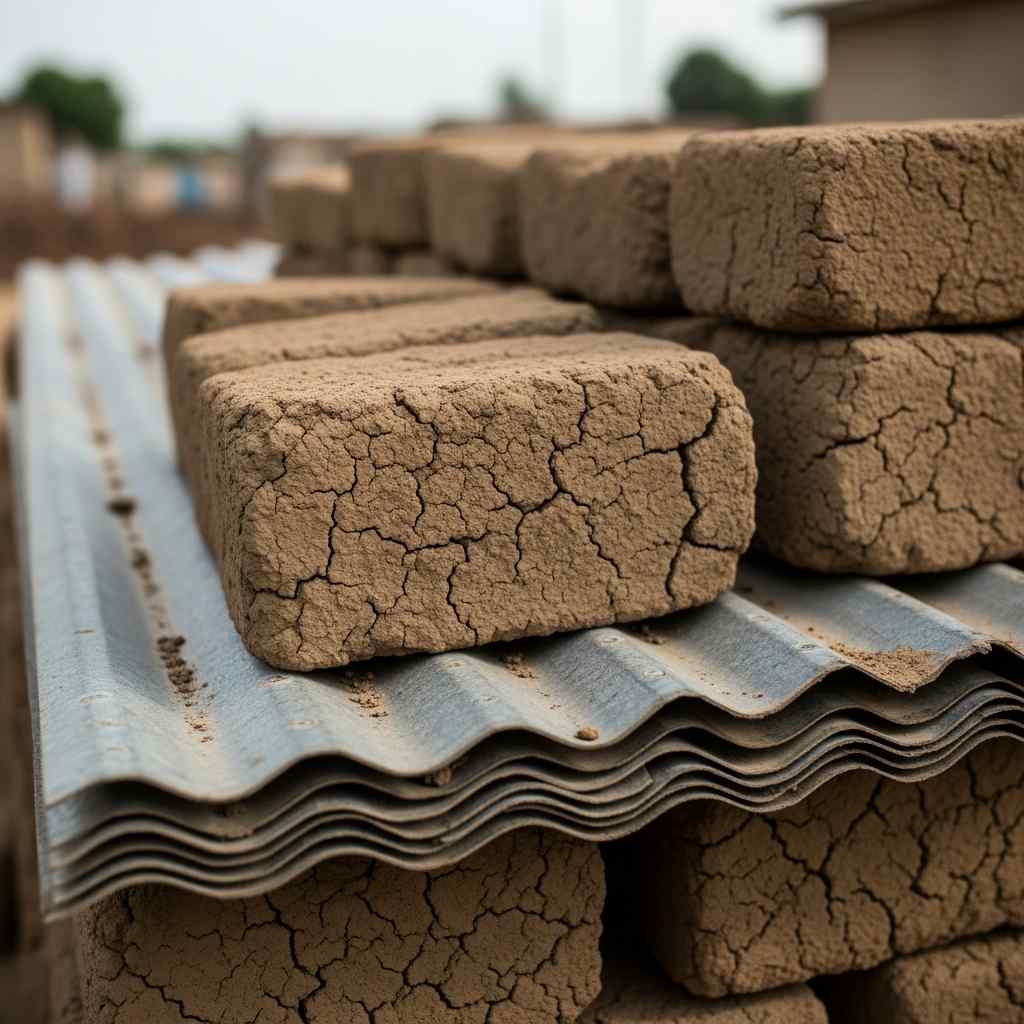
Corrugated iron sheets for roofing
Look at the rooftops in any Nigerian suburb. You will see a sea of corrugated iron sheets, often called ‘zinc’. They are popular because they are lightweight, easy to install, and relatively cheap. The price depends on gauge thickness and coating.
Data from market surveys in January 2026 show prices. A standard 0.55mm gauge, stone-coated sheet sold for about N4,800 per square meter. A simpler, galvanized sheet of the same gauge was about N3,200 per square meter. Aluminium sheets are more expensive.
The lifespan is a factor. A quality stone-coated sheet can last 40 years. A basic galvanized sheet may start rusting in 10 to 15 years without maintenance. The cheaper upfront cost requires this long-term consideration.
Where timber fits in the budget
Timber for roofing, door frames, and windows is a major budget line. The price is a function of wood type, treatment, and dimension. Local hardwoods like iroko and mahogany are durable but expensive due to scarcity.
Softwoods and imported pine are common for roof rafters. A 2″ x 4″ piece of treated pine, 12 feet long, sold for between N2,500 and N3,500 in early 2026. Prices are higher in the south where demand from coastal construction is strong.
The Ministry of Environment and state forestry departments issue regulations on logging. These regulations affect supply and price. A builder in Benue State has easier access to timber than a builder in Borno State. Transport costs define the final price at the site.
The cement question is unavoidable
You cannot discuss building materials without cement. It is the binder for blocks, mortar, and concrete. As stated, the average price was N7,500 per 50kg bag in Q1 2026. This is a national average with wide disparities.
In some northern states, prices reached N8,200 due to transport from southern factories. The Cement Manufacturers Association of Nigeria releases production data. Local production capacity exceeds 60 million metric tonnes annually. Logistics and distribution explain the price differences, not scarcity.
Premium Times reported in March 2026 that the federal government was reviewing the national cement policy. The goal is to address price disparities. For now, the price at the depot closest to you is the price that matters.
Compare prices in your own area
The most effective step is a local market survey. Prices in the Mushin market in Lagos differ from prices in the Ogige market in Nsukka. A call to three block moulders, two timber sellers, and a major hardware store gives a reliable picture.
Create a simple table. List each material, the unit, and the price from three different suppliers. This exercise takes an afternoon. It reveals the actual cost in your specific location. It also introduces you to potential suppliers.
This local knowledge protects you from inflated quotes. A contractor might claim a bag of cement costs N8,500. Your survey shows the prevailing price is N7,800. You have a basis for negotiation before the first block is laid.
Consider the total cost, not just the unit price
A cheap material that requires expensive skilled labour to install loses its advantage. Bamboo is inexpensive, but a carpenter familiar with bamboo joinery may charge more. Laterite blocks are cheap, but a bricklayer used to sandcrete may work slower with them.
Factor in durability. A roofing sheet that lasts 15 years instead of 40 years means a replacement cost down the line. That future expense is part of the total cost of the building. The cheapest option today may incur higher costs tomorrow.
The National Building Code recommends standards for material use. While adherence is sometimes lax, the code provides a reference for durability and safety. A material that fails quickly or compromises safety has a high ultimate cost.
Blend materials for strength and savings
Modern construction often uses a hybrid . Load-bearing walls might use sandcrete blocks. Internal partition walls could use lighter, cheaper materials like bamboo board or plasterboard. The roof structure could combine timber trusses with bamboo purlins.
This method optimizes the budget. It uses stronger, more expensive materials where they are structurally essential. It uses lighter, cheaper materials for non-load-bearing functions. The overall cost reduces without sacrificing integrity.
Architects and builders with experience in sustainable design promote this . It requires more planning at the design stage. The payoff is a functional house built within a realistic budget, using the cheapest building materials in Nigeria where they make sense.
Your next move is a market visit
Gather current prices from your local suppliers this week. Start with the basic list: cement, sand, granite, blocks, roofing sheets, and timber. Speak with the sellers. Ask about price trends for the last six months. Their insight is as valuable as the quoted price.
With this information, you can draft a preliminary bill of quantities. You will understand which materials offer real value in your area. You move from general advice to specific, actionable data for your project. This is the foundation of cost control.
The dream of building a house persists despite economic pressures. Knowledge of material costs turns that dream into a feasible plan. The prices change, but the principle remains. The most affordable material is often the one sourced wisely, with full awareness of the local market reality.
I Thought Building A Refinery Was Suppose To Be Everyone’s Pride In Nigeria – Dangote





Real Estsate
Difference Between a C of O and a Governor’s Consent in Nigeria
Difference between a C of O and a Governor’s Consent explained for Nigerian property owners. Understand the legal hierarchy, costs, and process for securing your land title in 2026.
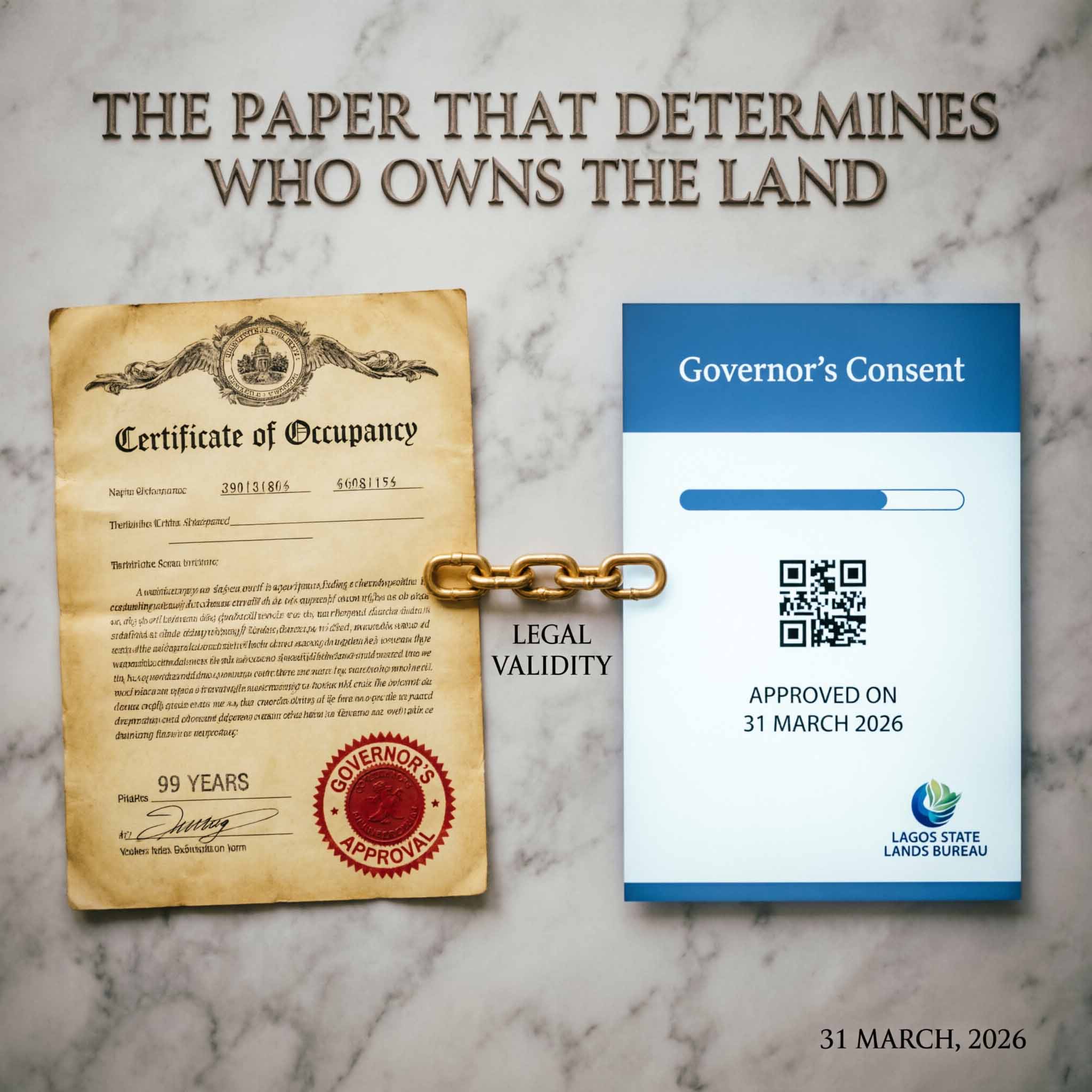
The Paper That Determines Who Owns the Land
Published: 31 March, 2026
The difference between a C of O and a Governor’s Consent is ownership rights and the legal standing of a property transaction. A Certificate of Occupancy originates from the government, while a Governor’s Consent validates a transaction between individuals on land already held under a C of O.
Let Me Break It Down For You
Think of land ownership like a family tree. The Certificate of Occupancy sits at the top as the original parent. The Governor’s Consent acts as the official permission for a child to carry the family name forward. Without that consent, the family line breaks in the eyes of the law.
This distinction matters for anyone buying land or a building. The wrong document leaves you with a beautiful property you cannot legally claim. The right one gives you peace of mind and a defendable asset.
What Exactly is a Certificate of Occupancy?
A Certificate of Occupancy is a land title document issued by a state governor. It serves as proof that the government allocated a specific parcel of land to an individual or corporate entity. The document grants a statutory right of occupancy for a term of 99 years. This term, however, is not indefinite. A buyer must check the unexpired residue of the 99-year term, as properties nearing expiration require renewal applications to maintain the full statutory rights.
The Land Use Act of 1978 vests all land within a state territory in the governor. The governor holds the land in trust for the people. A C of O represents the formal grant of rights to use that land. It is the primary evidence of title for virgin land allocations from the government.
“The Certificate of Occupancy is the root of title emanating from the Governor. It is the alpha document.” – A Senior Official at the Lagos State Ministry of Physical Planning and Urban Development, in an interview with BusinessDay in March 2026.
Only the state governor possesses the legal authority to issue this document. In Lagos State, for example, the Lands Bureau oversees the application and issuance process. The document contains details like the grantee, the plot size, the location, and the specific conditions of the occupancy.
And What is This Governor’s Consent?
A Governor’s Consent is an official approval required for any transaction involving land already held under a Certificate of Occupancy. The transaction could be a sale, a gift, a mortgage, or a long-term lease exceeding a certain period, often five years.
The requirement stems from Section 22 of the Land Use Act. The law states that the holder of a statutory right of occupancy shall not alienate his right without the consent of the governor first had and obtained. Alienation means to transfer or assign the interest in the land.
You already own the land with a C of O. You wish to sell it to another person. The law requires you to seek the governor’s permission for that sale. The consent process involves an application, payment of a fee, and verification that the transaction meets state regulations.
“The consent process is a stamp of authority on the transaction. It updates the government land registry and validates the new owner.” – Chuka Nwosu, a property lawyer, speaking to Vanguard in February 2026.
The Legal Hierarchy: Which One Comes First?
The Certificate of Occupancy exists as the foundational title. The Governor’s Consent operates one level downstream. You must have a valid C of O before you can apply for a Governor’s Consent for a transaction.
Imagine building a house. The C of O is the land and the foundation. The Governor’s Consent is the approval you get to add a new floor or sell the entire structure. You cannot get consent for a property that lacks a root C of O, unless the land falls under a deemed grant or other rare exceptions.
This hierarchy protects the integrity of land records. It prevents the sale of disputed or government-acquired land without official oversight. The system aims to create a chain of title, though the reality on the ground often differs.
Who Issues These Documents and How?
The state governor, through the relevant ministry or lands bureau, issues both documents. The process for each differs significantly in its starting point and purpose.
For a Certificate of Occupancy, the process often begins with an application for a plot of land from the government. After allocation and payment of the premium, the state surveys the land and prepares the C of O. The timeline varies wildly, from months to years, depending on the state bureaucracy.
For a Governor’s Consent, the process starts with a completed transaction between two parties. The buyer and seller submit a joint application with the sale agreement, the original C of O, tax clearance certificates, and other documents. The state assesses a consent fee, which is a percentage of the property value.
In Lagos, the government launched an e-platform to track applications. A 2025 report by Premium Times noted that manual processing still causes major delays, with some applications pending for over 24 months.
The Cost Factor: What You Pay For Each
The financial implications separate these two processes. A Certificate of Occupancy involves paying a land premium, survey fees, and registration charges. These costs are typically fixed or based on the size and location of the plot.
The Governor’s Consent fee is an ad-valorem charge. It is calculated as a percentage of the property value or the consideration stated in the transaction document. Rates differ by state. In Lagos State, the actual consent fee was harmonized in early 2026 to 1.5%. However, the total perfection cost, which includes the consent fee, Capital Gains Tax (2%), Stamp Duty (0.5%), and Registration Fee (0.5%), adds up to 4.5% of the property value. For high-value areas, this total cost reaches the percentage figures commonly cited in market discussions.
Ogun State revised its consent fee to a flat rate of 2.5% in late 2025 to encourage more transactions and formalize its land market, as reported by The Nation. The total perfection cost often represents the single largest transaction expense after the property price itself.
Why You Cannot Ignore Governor’s Consent
Many buyers complete a sale with just a signed deed of assignment and the original C of O. They skip the consent process to avoid the fee and the hassle. This decision creates a legal vulnerability.
A property transaction without the required Governor’s Consent is deemed invalid. The new buyer acquires no legal title, only an equitable interest. The seller remains the legal owner in the eyes of the government of the state.
This situation becomes problematic when the buyer tries to sell the property again, use it as collateral for a loan, or when the original seller engages in fraudulent double sales. Banks will not grant mortgages without perfected title, which includes the Governor’s Consent.
“About 70% of property disputes we handle involve issues with imperfect title, often the lack of Governor’s Consent. It is the most common legal defect in Nigerian real estate.” – Adeola Akinwumi, Partner at a Lagos-based law firm, quoted in Punch in December 2025.
The Reality of Processing These Documents
The theory of land administration in Nigeria meets the practice of bureaucracy. Applicants face long delays, requests for additional documents, and opaque processes. The promise of digital platforms has improved transparency in some states, but physical visits and follow-ups remain the norm.
In Abuja, the Federal Capital Territory Administration introduced a timeline of 90 days for consent processing in 2025. A review by Daily Trust in early 2026 found average processing times still exceeded 120 days for straightforward applications.
The delay and cost push many transactions into the informal market. This informal market weakens the government’s ability to plan cities, collect property taxes, and maintain a reliable land registry. It is a cycle that perpetuates itself.
A Practical Scenario: Buying a House in Lagos
You find a house in Ikeja you want to buy. The seller shows you a Certificate of Occupancy issued in 2010. You agree on a price of N150 million. Here is what you must do.
First, verify the authenticity of the C of O at the Lands Bureau. Confirm the seller is the named grantee and that no government acquisition or litigation affects the land. Then, after payment, you and the seller execute a deed of assignment.
The critical next step is applying for Governor’s Consent. With the total perfection cost estimated at 4.5% of the property value, the expense comes to N6.75 million. Once granted, the consent is endorsed on the deed of assignment and registered. The original C of O is now held by you, the new owner, with the consent as proof of the valid transfer.
Without that step, the house in Ikeja legally belongs to the seller, regardless of your payment or the deed you hold.
What Land Owners and Buyers Should Do Today
Check your property documents. If you have a C of O from a previous owner, look for the Governor’s Consent endorsing the transfer to you. If it is missing, begin the process to regularize it. The cost increases with time, as perfection fees are based on current property values.
Before purchasing any land or building, hire a lawyer to conduct a full due diligence. The lawyer will search the land registry and confirm the status of the C of O and any previous consents. This search reveals encumbrances, liens, or disputes.
Budget for the total perfection cost as part of your acquisition expenses. View it as a non-negotiable component of the purchase price, like stamp duty. Factor in the time for processing, which can affect your relocation or development plans.
The Path to a Clearer Land Market
The difference between a C of O and a Governor’s Consent is a technical one, but its understanding is fundamental to wealth preservation. The confusion around these documents fuels countless conflicts and traps capital in dead assets.
State governments bear responsibility for simplifying processes and reducing delays. The move toward digital land registries, as seen in parts of Lagos and Kaduna, offers hope. A transparent, efficient system encourages compliance and unlocks the economic potential of real estate.
For the ordinary Nigerian, knowledge is the first defense. Knowing which document you have, and which one you need, is the start of securing your piece of earth.
Understanding the Basic Land Title Document in Nigeria
Real Estsate
How to Avoid Land Disputes in Nigeria Essential Verification Steps
How to avoid land disputes in Nigeria with current verification steps. Learn from a journalist and policy analyst about land searches, C of O checks, and navigating family land issues in 2026.
How to Avoid Land Disputes in Nigeria: A 2026 Guide
Published: 31 March, 2026
Land disputes fill the dockets of courts across the 36 states of Nigeria, and according to a 2025 report in Vanguard, property cases alone constitute over 65% of civil suits in the Lagos State Judiciary. The financial cost runs into billions of naira annually, a drain on resources for families and investors. The emotional toll is immeasurable. Here is the thing. Many of these conflicts are preventable. The process for how to avoid land disputes in Nigeria involves a series of deliberate, verified steps. It demands moving beyond a simple receipt from a seller. Let me break it down.
Start with the Land Itself, Not the Papers
You see a plot of land. It looks good. The area is developing. The first instinct is to discuss price. That instinct is a primary reason people lose money. Your first visit should be for observation, not negotiation. Visit the site at different times of the day. Observe the activity on and around the land. Are there structures, crops, or signs of occupation by someone other than the person selling to you?
Engage neighbors in casual conversation. A simple greeting can yield information about the history of the plot. Neighbors often know if the land is subject to a family tussle or if multiple people have laid claim to it. This informal intelligence is invaluable. It costs nothing but time. According to a 2025 report in Premium Times, the Ogun State Ministry of Lands and Housing cautions that buyers eager to close a deal most frequently neglect the step of physical verification.
The Search at the Lands Registry is Your Lifeline
After physical verification, your next stop is official. Every state has a Lands Registry or Bureau of Lands. This is where all legitimate transactions are recorded. You must conduct a search on the land. The seller should provide the details you need: the survey plan number, the registered title number, or the parcel number.
A proper search reveals the true owner of record. It shows any encumbrances. These encumbrances could be a mortgage, a court injunction, or a prior government acquisition. The fee for this search is typically between N5,000 and N25,000, depending on the state. It is the best money you will ever spend. A lawyer or a registered agent can facilitate this process. According to a 2026 report in This Day, the Lagos State Land Bureau processed over 42,000 land search applications in 2025, underscoring its critical role.
“The document a buyer holds is only as good as the search that validates it. A Certificate of Occupancy without a clean search result is just a fancy piece of paper.”
, Barr. Adekunle Salami, Property Law Practitioner, in an interview with BusinessDay, March 2026.
Understand the Hierarchy of Land Documents
Not all land papers carry the same weight. People throw around terms like “C of O” and “Governor’s Consent.” You need to know what they mean. The Certificate of Occupancy is issued by the state government. It is a leasehold title, typically for 99 years. It signifies that the government recognizes the holder as the legal occupant.
A Registered Survey Plan is the blueprint of the land. It is signed by a licensed surveyor and registered with the office of the state surveyor general. A Deed of Assignment or Conveyance is the document that transfers interest in land from one party to another. The Governor’s Consent is the mandatory approval required from the state governor for any subsequent sale or transfer after the initial C of O is issued. Failure to obtain this consent renders a sale invalid. The Land Use Act of 1978 vests all land in the territory of a state in the governor of that state.

Family Land Requires Extra Layers of Caution
A large portion of disputes arises from family land. The head of the family sells a parcel. Later, other family members emerge to challenge the sale. They claim they were not consulted. The law requires the consent of all principal members of the family for a valid sale. How do you verify this?
Request a family resolution. This is a document signed by the head of the family and principal members. It should be witnessed and, ideally, sworn before a court. Meet with more than just the person presenting themselves as the head. Engage other elders if possible. Conduct a search at the local government of the family to see if the family has a registered trustee. According to a 2025 report in The Guardian, the Supreme Court of Nigeria has repeatedly nullified sales of family property conducted without the required consent of all necessary members.
Beware of Government Acquired Land
This is a major pitfall. The federal or state government may have acquired land for public purposes like road expansion, building a school, or an industrial layout. This acquisition is often gazetted. The original owners may still be on the land. They may decide to sell it, presenting old documents. A buyer builds, and then the government comes with bulldozers.
Your land search at the state registry should reveal if the land falls under any “global acquisition” or has a “committed” status. Some states have digital platforms showing acquired areas. For instance, the Lagos State Geographic Information System allows some level of online verification. Always confirm with the relevant Ministry of Works or Physical Planning Authority. According to a 2026 report in Punch, disputes over lands within its right of way have already been exposed by the planned Lagos-Calabar Coastal Highway.
“Acquisition notices are published in official government gazettes. A buyer who fails to check these publications is buying a lawsuit alongside the land.”
, Official from the Federal Ministry of Works and Housing, statement in February 2026.
Use Professionals, But Verify Their Work
You need a lawyer. You need a surveyor. This is non-negotiable. However, the reality in Nigeria includes professionals who cut corners. Hire a lawyer with a proven track record in property law. Ask for references. Your lawyer should personally accompany you or a trusted representative to the lands registry to conduct the search. Do not just receive a report.
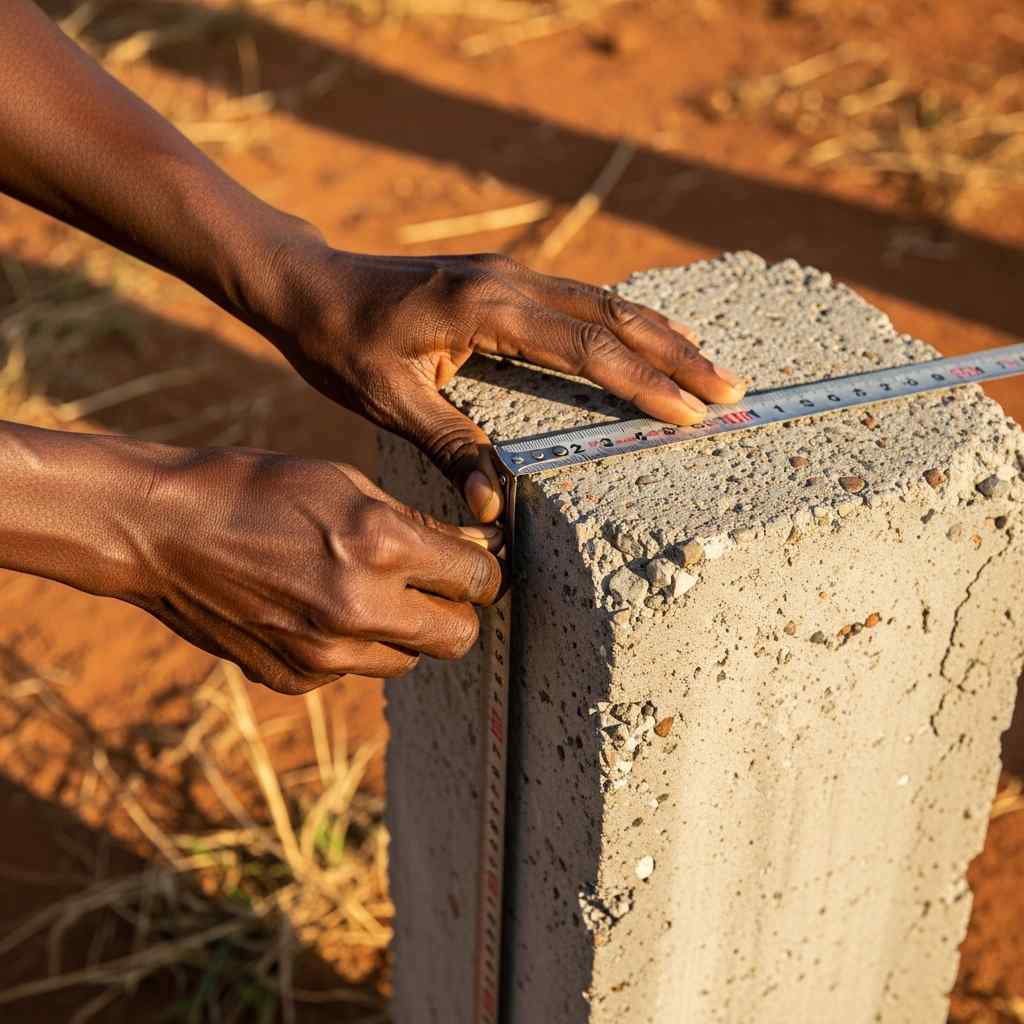
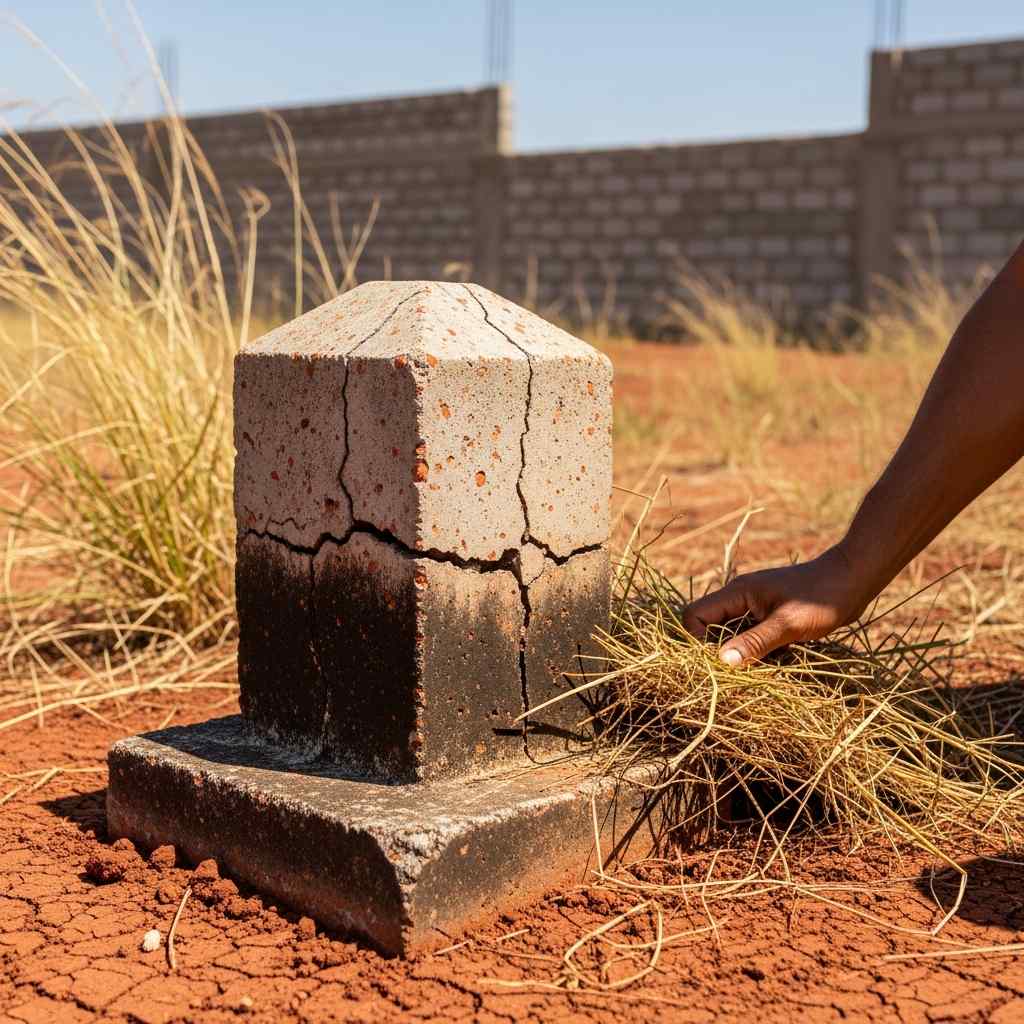
Your surveyor must be registered with the State Branch of the Nigerian Institution of Surveyors. The surveyor should physically go to the site to beacon the land, using the coordinates from the registered survey plan. This exercise confirms the land you are paying for matches the paper description. It also deters “land shaving,” where a seller carves out extra plots from adjacent lands. According to a 2026 report in The Nation, the Surveyors Council of Nigeria disbarred 12 practitioners the previous year for professional misconduct involving fraudulent land surveys.

The Payment Process is Part of the Security
How you pay matters. Avoid bulk cash payments. Use bank transfers or manager’s cheques. Make payments in stages, tied to the completion of specific verification milestones. For example, a first payment after a satisfactory physical verification and meeting with family heads. A larger payment after a clean land search and surveyor’s verification. The final payment upon the execution of the deed and the initiation of the Governor’s Consent process.
Ensure every payment is documented with a receipt that clearly states the purpose. The receipt should reference the land description and the stage of the transaction it covers. This creates a audit trail. It also provides leverage if the seller develops a change of heart midway through the process. Financial forensics in land dispute cases often rely on these payment trails.
What to Do After You Complete the Purchase
Your work continues after you take possession. Immediately commence the process for perfecting your title. If you bought the land with a C of O, you must apply for the Governor’s Consent. This process involves submitting the signed Deed of Assignment, the original C of O, and other forms to the state lands bureau. It attracts a fee, usually a percentage of the property’s value.
Once consent is granted, you must register the deed at the lands registry. This registration inserts your name into the official record as the new owner. Finally, you may need to apply for a new C of O in your name. This entire perfection process can take months, even years, in some states. You must follow it through. An unperfected title is weak and difficult to use as collateral or sell forward. According to a 2026 report in Leadership, the Abuja Geographic Information Systems department reduced the title perfection timeline to an average of 90 days by 2025.
Make One Verification Call Today
You have the information. The steps are defined. The complexity of the system in Nigeria causes many people to freeze. They proceed with hope instead of due diligence. Do not be that person. If you are considering a land purchase, or are already in discussions, pause. Take one action from this list today.
Call a lawyer you trust and ask about their experience with land searches. Visit the site again with a focus on speaking to neighbors. Look up the contact for the lands registry of your state. One step starts the process. The cost of that step is always less than the cost of a land dispute. The peace of mind that comes with a verified, properly documented property is a tangible asset. In the property market of Nigeria, that peace is the ultimate luxury.
The system is imperfect. Bureaucracy exists. Delays are certain. Yet, the framework for securing your interest exists. Using it demands patience and resources. The alternative is a multi-year court case with an uncertain outcome. The choice is straightforward.
Legal Steps to Verify Land Documents Before Purchase in Nigeria
Real Estsate
Build a 3-Bedroom Bungalow in Nigeria on a Budget
Build a 3-bedroom bungalow in Nigeria on a budget with current 2026 cost data and practical steps. This guide uses verified prices and contractor advice for quality construction.
You Can Build a 3-Bedroom Bungalow in Nigeria on a Budget
Published: 31 March, 2026
The average cost to build a 3-bedroom bungalow in Nigeria on a budget ranges from N15 million to N25 million as of early 2026, depending on location and finish. This figure comes from a market survey of contractors and material dealers across Lagos, Abuja, and Port Harcourt (BusinessDay, 2026). The price excludes land and professional fees. Many people think building a house requires endless money. The reality is different with proper planning.
First, Understand the Money You Need
Budgeting starts with current prices. Cement sells for about N7,500 per 50kg bag. A bundle of 12mm iron rods costs about N450,000. These are January 2026 prices from major distributors (Nairametrics, 2026). A detailed bill of quantities is essential. You list every item from foundation blocks to door handles. This document prevents surprise expenses.
Allocate a contingency fund of 15% to 20% of your total budget. Price fluctuations continue to be a constant feature of the economy of Nigeria. The National Bureau of Statistics reported construction material inflation at over 30% year-on-year in 2025 (National Bureau of Statistics, 2025). Your budget must absorb these shocks.
Your Land is the Foundation of Everything
Land cost varies wildly. A plot in a developing area of Ogun State might cost N2 million. A similar plot in Lekki Phase 1 could exceed N50 million (PropertyPro.ng Market Report, 2026). The location determines your final building cost. Choose areas with lower land rates to free capital for construction.
Due diligence is non-negotiable. Verify the land title with the state government lands bureau. A Certificate of Occupancy or a Governor’s Consent provides the strongest proof of ownership. Engage a lawyer to conduct a search. This step avoids costly legal battles that stop construction for years.
Design Smart to Save Millions
A simple rectangular plan costs less than a complex design with many corners. Every corner adds to the foundation and roofing complexity. An architect can design a functional 3-bedroom layout within 900 to 1,200 square feet. This size optimizes space and reduces material use. The focus is on efficient use of every square foot.
Incorporate cross-ventilation to reduce future spending on air conditioning. Position windows to catch prevailing breezes. Use high ceilings in living areas for natural cooling. These design choices lower long-term energy costs. They make the house more comfortable in a climate with frequent power outages.
Getting Your Building Plan Approved
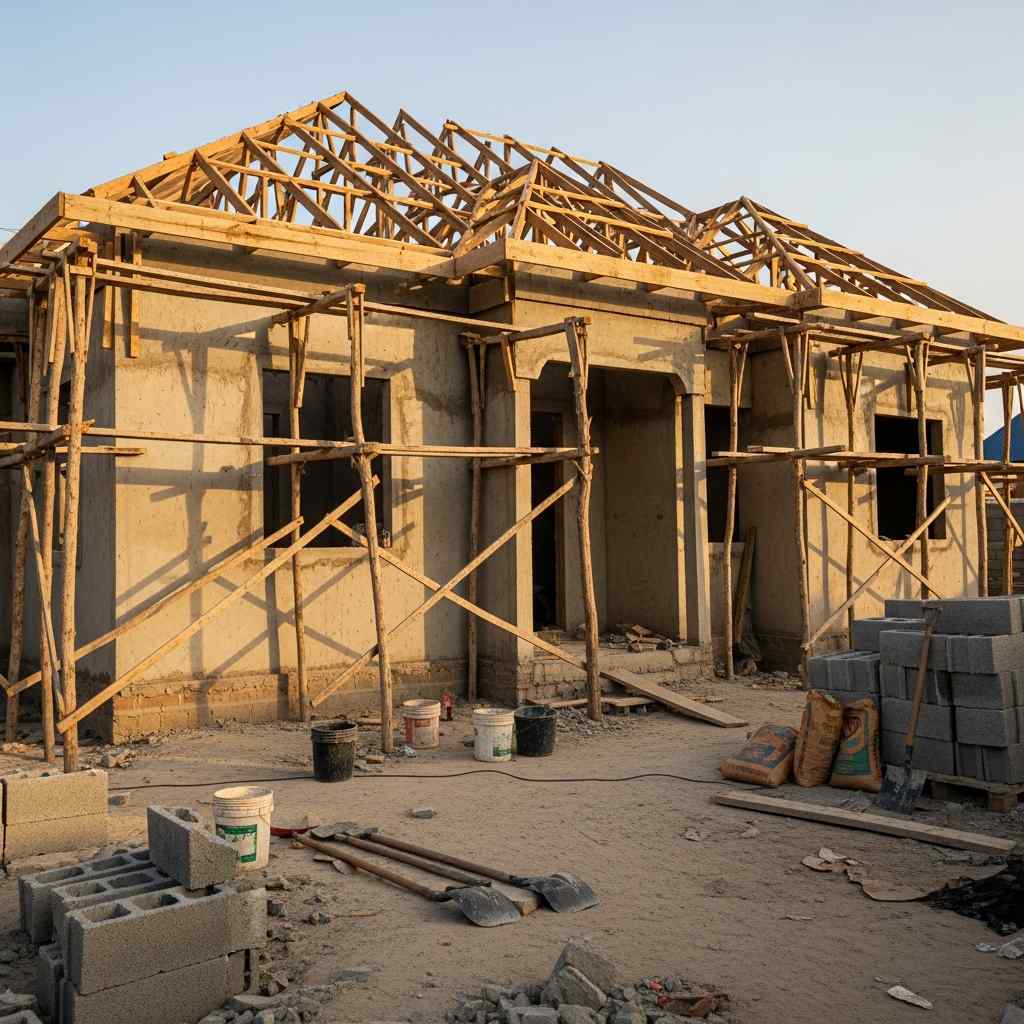
Every state has a physical planning authority. You submit your architectural drawings, survey plan, and land documents for approval. The process includes payment for assessment and development levies. In Lagos State, the fee for a residential plan can range from N150,000 upwards, depending on value (Lagos State Physical Planning Permit Authority, 2026). Approval prevents the government from demolishing your structure.
Engage a registered surveyor and architect. Their seals on the documents are mandatory for submission. The approval process might take 8 to 12 weeks. Starting construction without this permit is a major risk. Many buildings face demolition because owners bypassed this stage.
Choosing Between a Contractor and Direct Labor
Hiring a main contractor offers convenience. The contractor manages laborers, material procurement, and timelines. The cost is higher. A common rate is 20% to 30% of the total project cost as supervision fee. You must vet the contractor’s previous projects. Visit sites they completed at least two years prior.
The direct labor method involves hiring artisans yourself. You pay a mason, carpenter, plumber, and electrician separately. This eliminates the contractor’s margin. It demands your time for daily supervision and material purchase. You become the project manager. Many people save 15% to 25% using this method, but it requires deep involvement.
“The biggest budget drain is lack of supervision, not material cost. A homeowner who visits the site daily will spot waste and correct mistakes early.” , Bimbo Onakoya, Registered Builder and Contractor, in an interview with The Guardian, February 2026.
The Real Cost of Foundation and Structure
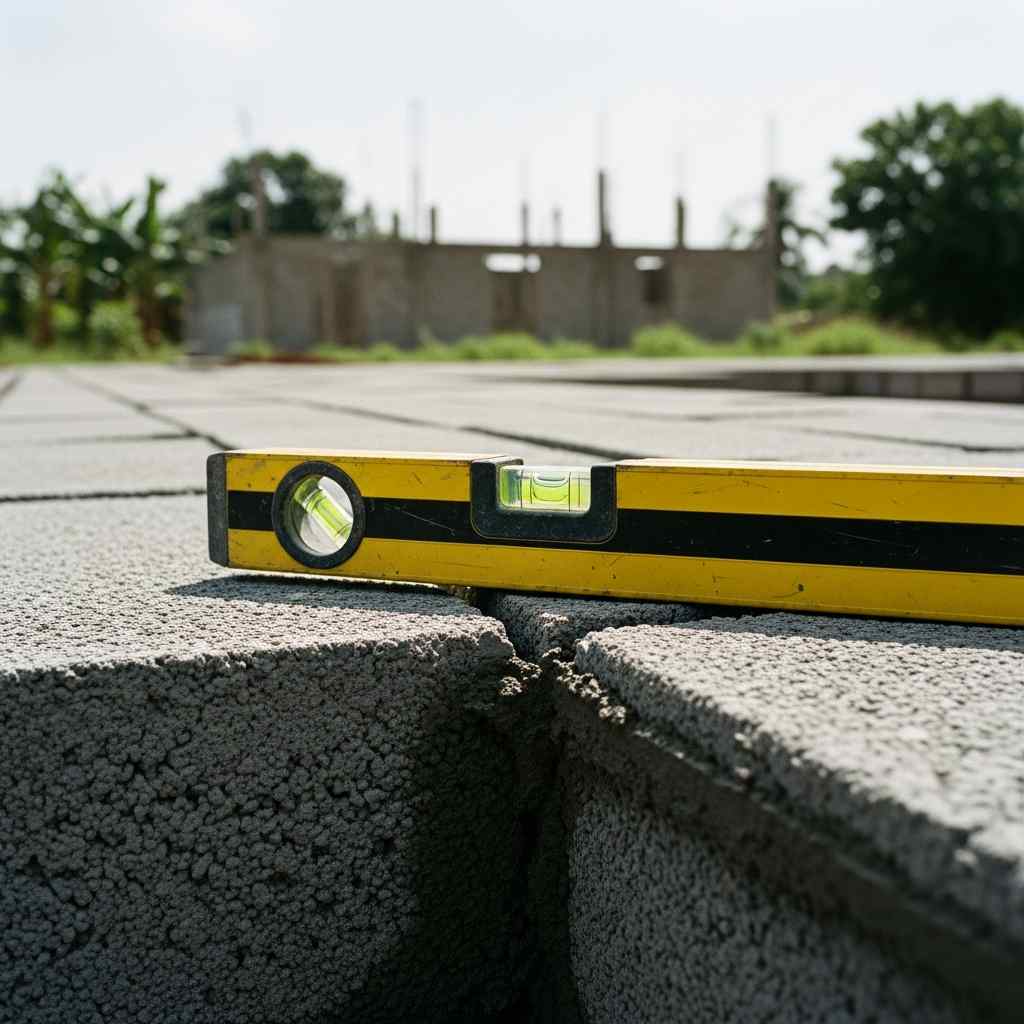
Foundation work consumes a large part of the budget. For a standard bungalow, expect to use about 100 trips of sharp sand, 50 trips of granite, and over 250 bags of cement for the foundation and blockwork to lintel level. These estimates are for medium soil conditions (Nigerian Institute of Building, 2025). Soil testing determines the depth and type of foundation.
Use quality materials for the structure. Substandard iron rods or cement compromise building integrity. Purchase materials from reputable distributors with receipts. Store cement in a dry place. Cover iron rods to prevent rust. These steps protect your investment from the start.
Roofing and Closing In the Building
Long-span aluminum roofing sheets are popular. They are lightweight and durable. A bundle covers about 18 square meters. For a 1,200 square-foot bungalow, you might need 45 to 55 bundles. The price per bundle ranges from N35,000 to N60,000 depending on gauge and brand (Punch Business, 2026). Include the cost of rafters, nails, and labor.
Installing windows and external doors “closes” the building. This allows internal work to proceed during the rainy season. Consider aluminum windows with louvers. They are affordable and provide security. Solid wooden doors for entry points offer better durability than flush doors for external use.
Electrical and Plumbing Work on a Budget
Plan the electrical layout with the electrician before casting the deck. Conduit pipes are embedded in the concrete. This prevents chasing walls later. Use good-quality copper wires from known brands. The price difference between quality and substandard wire is small. The risk of fire from fake wires is high.
For plumbing, use PVC pipes for cold water and PPR pipes for hot water lines. Schedule a central location for the kitchen and bathrooms to reduce pipe runs. This design minimizes material use. Install water storage tanks with a direct line from the borehole or public supply. An overhead tank provides gravity-fed pressure.
Finishing Determines the Final Look
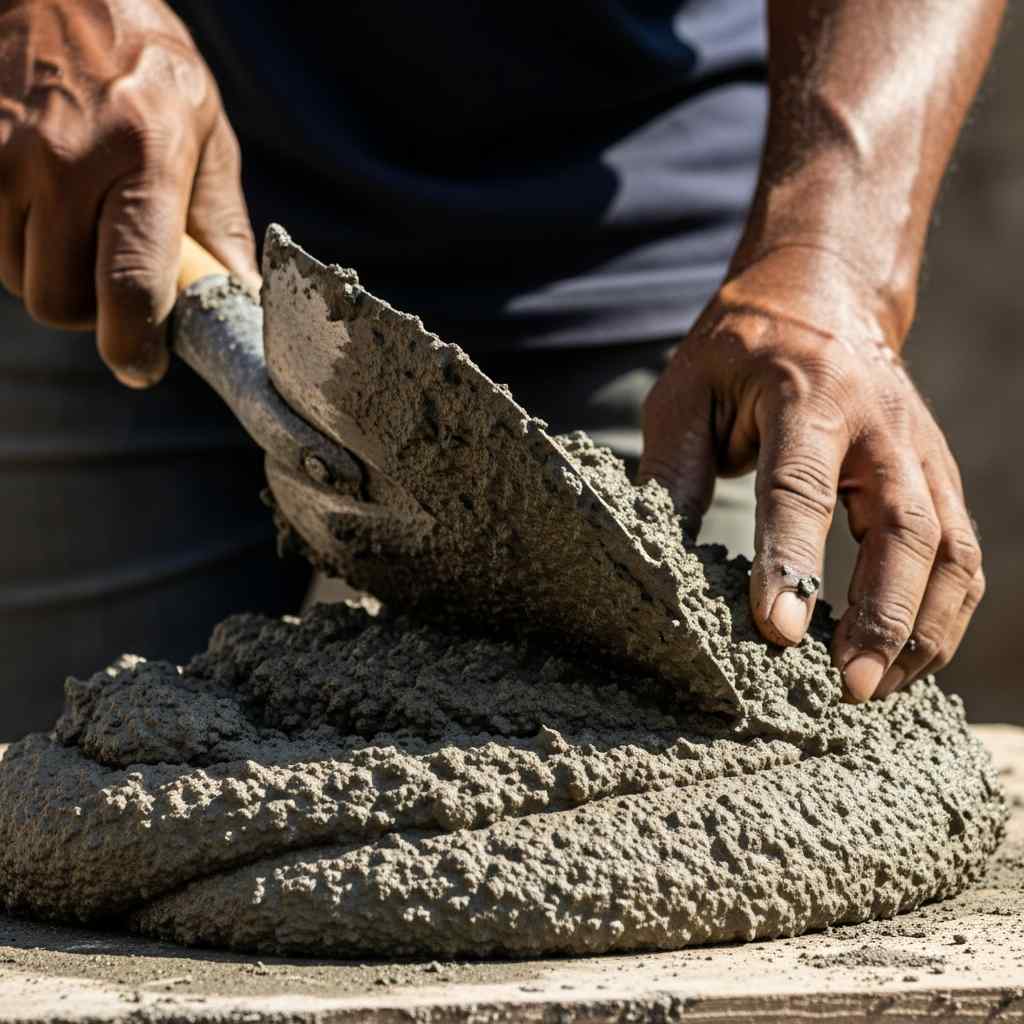
Finishing includes plastering, tiling, painting, and fittings. You can phase this work. Complete and occupy the essential areas first. Use ceramic tiles for floors in wet areas. Consider polished concrete or good-quality screed for living areas as a cost-saving option. The price for a carton of 600mm x 600mm tiles starts from N15,000 (Vanguard Property, 2026).
Painting requires proper surface preparation. Use emulsion for interiors and weather-resistant paint for exteriors. Buy paint from manufacturers or authorized dealers to avoid adulterated products. Good paint improves the appearance and protects the blockwork from the elements.
“Clients who buy materials in phases as work progresses often manage cash flow better than those who buy everything upfront. It reduces theft and price depreciation risk.” , Adeola Hassan, Quantity Surveyor, in a feature for Premium Times, January 2026.
Furniture and Final Touches
Furnishing is a separate budget. Local carpenters can build built-in wardrobes and kitchen cabinets at a lower cost than imported modular systems. Use durable, locally-sourced wood like iroko or mahogany. For other furniture, consider a phased . Prioritize beds, basic seating, and kitchen essentials.
Install security features early. Burglary-proof windows and solid door locks are necessary. A perimeter fence with a gate provides privacy and security. These items are part of the finishing budget. They contribute to the safety and completeness of the home.
A Realistic Timeline from Start to Finish
A well-funded and managed project can complete in 6 to 9 months. The timeline includes design, approval, and construction. Delays come from rain, cash flow problems, or material scarcity. Planning for a 12-month timeline is more realistic. This buffer accommodates the common delays in the construction industry of Nigeria.
Break the project into milestones. Foundation completion, roofing, plastering, and painting are major stages. Release funds according to milestone achievement. This method keeps the project moving and gives you control over expenditure. It payment with visible progress.
Your Next Step is Simple
Visit a building material market this week. Markets like Ogbe in Ilorin, Alaba in Lagos, or Deidei in Abuja offer price transparency. Speak to at least five dealers for each major item. Cement, rods, and roofing sheets are the key items. Write down the prices and brand names.
Then, talk to two or three homeowners who built recently in your area of interest. Ask about their total cost per square meter. Inquire about their challenges. This firsthand information is more valuable than any online estimate. It grounds your budget in the reality of your specific location.
Building a house requires patience and attention. The process tests your resolve. With a plan, a realistic budget, and daily supervision, the keys to your 3-bedroom bungalow built on a budget will be in your hand. The starts with a single step of price discovery.
How much will it cost to build a 3 bedroom bungalow. #construction #buildingengineering

Cheapest Building Materials in Nigeria for 2026 House Projects

Difference Between a C of O and a Governor’s Consent in Nigeria

How to Avoid Land Disputes in Nigeria Essential Verification Steps

Build a 3-Bedroom Bungalow in Nigeria on a Budget

How to Apply for the Lagos State Mortgage Scheme in 2026

How to Block a Stolen Phone in Nigeria Using the IMEI Number

Moniepoint Business Account Requirements Nigeria for SMEs 2026

Cheapest Way to Send Money from Nigeria to Ghana 2026

How to Get a Domiciliary Account in Nigeria 2026 Process

How to get USD virtual card without BVN for Nigerians in 2026

Best Dollar Card for Netflix Nigeria 2026

Jesus Is Enough Lyrics Tkeyz ft Steve Hills Meaning

Internet Sovereignty: Why Some Countries Want Their Own Separate Internet

The Story Of The Nigerian Who Helped Build Global Internet Systems

Nigerian Hackers: The Global Fraud Story and Its Fallout

Forgotten Satellites Defy Silence, Beaming Signals for Decades

Your Digital Store in Nigeria and the Reality of Domain Expiration

The Phone Stay So Quiet: An Investigation into Nigeria’s Silent Customer Lines

The Business That Died: A Nigerian Case Study in Refusal to Adapt

Hiding Your Business From People With Money

How Nollywood Grew Without Government Support

Comedy Industry in Nigeria and Its Economic Contribution

Nigeria Produces 67 Percent Global Yam Output

Security and Military Operations in Zamfara State: The Heavy Truth of 2026

 Edutech Portal2 months ago
Internet Sovereignty: Why Some Countries Want Their Own Separate Internet
- Edutech Portal2 months ago
The Story Of The Nigerian Who Helped Build Global Internet Systems
- Edutech Portal2 months ago
Nigerian Hackers: The Global Fraud Story and Its Fallout
- Edutech Portal2 months ago
Forgotten Satellites Defy Silence, Beaming Signals for Decades
- Edutech Portal2 months ago
Your Digital Store in Nigeria and the Reality of Domain Expiration
- Edutech Portal2 months ago
The Phone Stay So Quiet: An Investigation into Nigeria’s Silent Customer Lines
- Edutech Portal2 months ago
The Business That Died: A Nigerian Case Study in Refusal to Adapt
- Edutech Portal2 months ago
Hiding Your Business From People With Money