Business
Refurbished iPhone 13 Prices in Computer Village Market in 2026
Want a refurbished iPhone 13 in Computer Village? Here’s what you’ll likely pay in 2026 and the key factors that set the price.

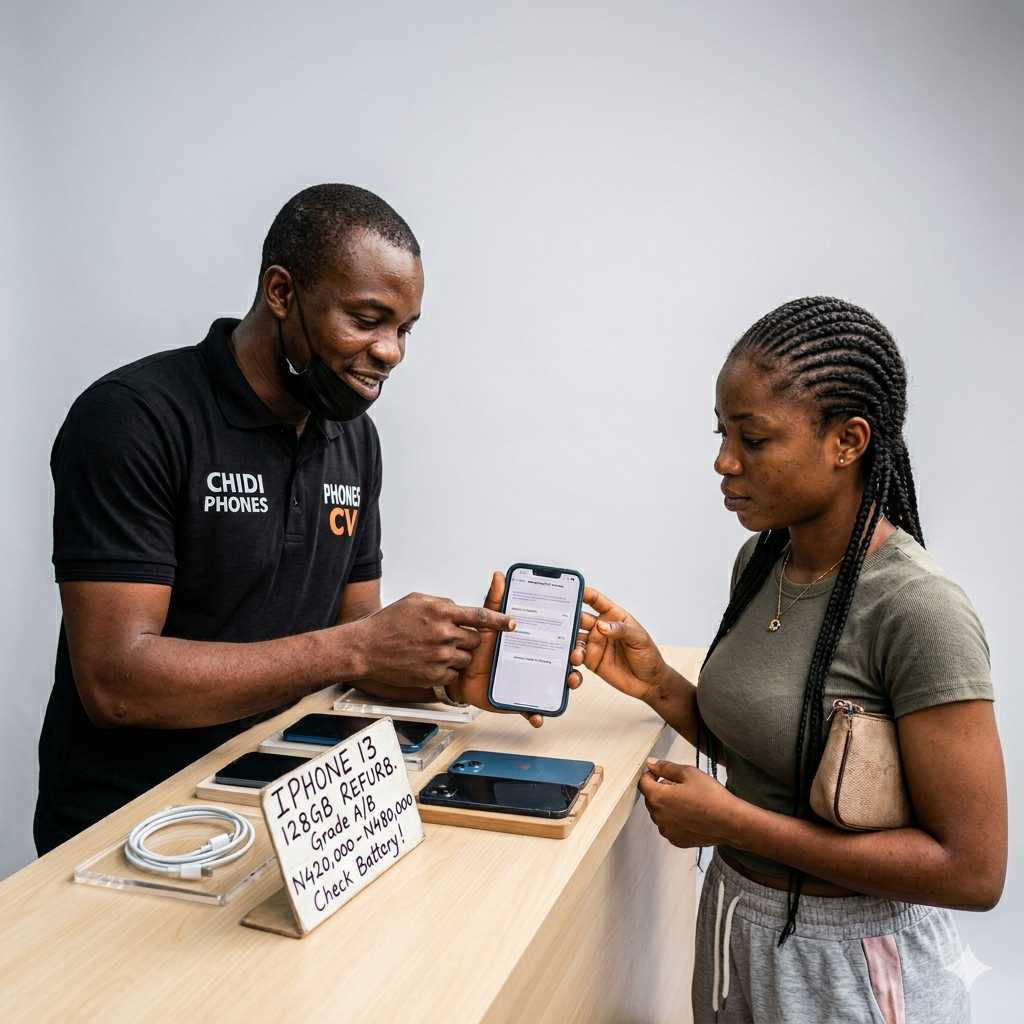
The Price Tag on a Second Chance: Refurbished iPhone 13 in Computer Village
Published: 03 April, 2026
A refurbished iPhone 13 with 128GB storage sells for between N420,000 and N480,000 in Computer Village as of early 2026. The final price depends on the phone’s cosmetic grade, battery health, and the origin of its parts. This range represents a discount of about 40% to 50% from the original retail price when the model launched.
Here is the thing about that price
You walk into a shop in Computer Village with a budget. The seller shows you three refurbished iPhone 13 units. They look identical. The price difference between them can be N70,000. The thing is, you are paying for the phone’s history. A grade A device with original parts commands the highest price. A phone with replaced components costs less.
The market operates on a simple principle. Trust has a direct monetary value. Established shops with warranties charge more. Street vendors and smaller stalls offer lower prices. The difference reflects the buyer’s appetite for risk. A report by Nairametrics in 2025 highlighted how price variations in markets like Computer Village correlate directly with vendor reputation and after-sales service guarantees.
What sellers call ‘refurbished’
Let me break it down. In the context of Computer Village, a refurbished iPhone 13 typically means a used phone imported from markets in Dubai, China, or Europe. Sellers then perform local repairs or part replacements before sale. The National Information Technology Development Agency (NITDA) has guidelines for refurbished electronics. However, enforcement in informal markets remains a challenge.
The grading system is universal. Grade A means minimal scratches. Grade B shows visible wear. Grade C has significant cosmetic issues. Battery health, displayed as a percentage in settings, is a major price factor.
The battery health trap (Critical 2026 warning)
In Computer Village, “Battery Health” is the ultimate bargaining chip.
- 85% – 89%: These are usually original “factory” batteries. They are highly prized for stability.
- 100%: Be cautious. On a model this old (iPhone 13 launched in 2021), a 100% reading often indicates a “boosted” battery or a cheap third-party replacement that may degrade quickly. Savvy 2026 buyers actually distrust a 100% reading on an iPhone 13.
- Below 80%: The phone will trigger “Service” mode. Use this to negotiate at least N30,000 off the asking price to cover a quality replacement.
A study cited by BusinessDay in 2025 noted that battery health accounts for up to 15% of the price negotiation for used smartphones in Nigerian markets.
The supply chain starts overseas
So here we are. The refurbished iPhone 13 you see in Ikeja began its journey in a wholesale market abroad. Lagos serves as the distribution hub for the entire country. Sellers cite factors like the exchange rate and import logistics as primary cost drivers. The Central Bank of Nigeria (CBN) forex policy directly impacts the landing cost of these goods.
Data from the National Bureau of Statistics (NBS) for 2025 shows continued high demand for imported used phones. This demand sustains the complex logistics network feeding Computer Village. The price you pay includes margins for the importer, the wholesaler, and the retail shop. Each link in that chain faces its own costs.
“A customer wants the original screen. If I have it, the price is high. If I use a high-quality copy, I can drop the price by N30,000. Most people choose the copy.”
— Chidi, a phone vendor at Computer Village, in a March 2026 interview.
Storage size changes the game
The 128GB model is the most common. The 256GB variant adds N40,000 to N60,000 to the price. The 512GB model is rare in the refurbished market. Its price becomes a matter of individual negotiation. Buyers with large storage needs often find the premium for higher capacity worthwhile compared to buying cloud storage.
Market surveys conducted by TechCabal in late 2025 confirmed that storage capacity is the second most important spec for Nigerian buyers of used iPhones, after overall physical condition. This preference influences what importers choose to bring into the country.
The battery health report is king
You ask for the price. The seller asks you to check the battery. This ritual defines the transaction. iOS shows a battery health percentage. A percentage above 90% is excellent. Between 80% and 90% is standard. Below 80% means the battery may need replacement soon. Savvy buyers use this number as their main bargaining tool.
Replacement batteries are available. An original-grade replacement costs about N25,000. A lower-quality replacement costs half that amount. The choice between a phone with a weak original battery and a phone with a new replacement battery involves a cost-benefit analysis every buyer makes.
Cosmetic grade: the A, B, and C of it
Grade A looks new. It has no major scratches on the screen or body. Grade B has light scratches, maybe small dents on the frame. Grade C has clear signs of use—deep scratches, noticeable dents. The price drops significantly with each grade. A Grade C phone might sell for N350,000 while a Grade A sells for N450,000.
This grading is subjective. One seller’s Grade B is another seller’s Grade A-. This ambiguity is where disputes arise. Reputable shops use consistent grading. They show the phone under bright light. They point out every flaw before discussing price. This transparency builds trust and justifies a higher price point.
“The grade tells a story. Grade A phones usually come from single owners in Europe. Grade C phones have lived a harder life. We are honest about it because the customer will see it anyway.”
— Funmi, owner of a phone retail shop in Computer Village, March 2026.
A critical 2026 warning: parts pairing
Starting with the iPhone 13, Apple increased “parts pairing.” If the screen or Face ID was replaced by a non-authorized technician in Computer Village, you will see an “Unknown Part” message in Settings > General > About. Always check this before paying.
A phone with an “Unknown Part” message should be significantly cheaper — negotiate at least N50,000 off the asking price. This message indicates that Face ID may not work properly or the screen may not function as intended.
The Nigeria Customs Service and the Standards Organisation of Nigeria (SON) have regulations on electronic component imports. The reality in a vast market like Computer Village is a mix of compliant and non-compliant parts. This mix creates the wide price spectrum buyers encounter.
The warranty determines the final margin
Shops offering a 6-month warranty price their phones higher than those offering a 1-week check period. The warranty typically covers manufacturing defects, not physical damage. This service costs money. The shop factors potential repair costs into its sale price. For the buyer, the warranty is insurance.
According to a 2025 consumer report featured in The Guardian Nigeria, buyers who paid a premium for a warranty from established Computer Village shops reported higher satisfaction rates. They cited the ability to return for minor adjustments without extra charge as a key benefit.
How the exchange rate whispers in your ear
The dollar rate today influences the price of a phone ordered two months ago. Sellers adjust prices based on current forex rates to cover future imports. When the naira weakens, prices in Computer Village rise. When the naira stabilizes, prices may soften slightly. The market reacts to CBN pronouncements in real-time.
Data from the Central Bank of Nigeria on exchange rate volatility in 2025 shows a direct correlation with price fluctuations in markets dealing with imported goods. The refurbished iPhone 13 is a clear example of this macroeconomic effect playing out on a shop counter.
The peak and slow seasons for buying
December is peak season. Prices are firm. Sellers know people have bonuses and want to buy gifts. March to August is often slower. You find more willingness to negotiate. During school holiday periods, demand for mid-range phones increases, which can affect the pricing of older flagship models like the iPhone 13.
Market analysts observing retail patterns, as referenced in a 2025 Punch newspaper article, note that discretionary spending on electronics in Nigeria follows a predictable cycle tied to salary payments, holidays, and the academic calendar.
Check the IMEI, then talk price
Before any money changes hands, check the IMEI. Use a free online service to see if the phone is blacklisted, locked, or has unpaid bills in its country of origin. A clean IMEI is the foundation of the transaction. Sellers expect this check. Reputable sellers have the IMEI displayed. This step prevents the purchase of a useless device.
The Nigerian Communications Commission (NCC) maintains a database for stolen phones. While its primary use is for phones stolen within Nigeria, checking the IMEI provides a basic level of security for the buyer. It is the first action any informed buyer takes.
Ask for the receipt from the last seller
Price negotiations conclude with a request for proof. A genuine seller provides a receipt with the shop’s stamp, the date, the phone’s IMEI, and the warranty terms. This receipt is your only protection. It turns a verbal agreement into a documented transaction. Keeping this receipt safe is as important as keeping the phone safe.
Consumer protection agencies in Lagos State have advocated for this practice. A documented sale makes it easier to resolve disputes. It moves the transaction from the informal to the formal economy, even within the bustling environment of Computer Village.
Your move in the market
Visit three shops. Inspect the same phone grade at each. Write down the prices. Ask about the battery, the parts, and the warranty. Use the lowest quote to negotiate with the shop you prefer. This method takes time but yields the best value. It transforms you from a casual browser into a serious buyer.
The difference between the first price quoted and the final price paid is often a function of the buyer’s demonstrated knowledge. Sellers respect buyers who ask specific questions about battery cycles, part origins, and IMEI status. This respect translates into a better deal.
The market for a refurbished iPhone 13 in Computer Village is a live economics lesson. Supply chains, forex rates, consumer psychology, and technology all meet on a glass display counter. The price is a number. The story behind that number is what you pay for, or what you save on. Understanding the story makes all the difference.
Why the iPhone 13 is still AMAZING in 2025 📱 – Relevant coverage on this topic.




Business
Mini Importation Tips for Nigeria Duty-Free China Goods in 2026
Need mini importation tips for Nigerian businesses? Learn current duty-free rules, shipping from China, and how to avoid customs delays.

Mini Importation Tips for Nigeria Duty-Free China Goods 2026
Published: 02 April, 2026
The Central Bank of Nigeria issues a Form M for every import transaction, and the Nigeria Customs Service collects duties based on a value it determines.
This reality defines the business of bringing goods from China. A person with a small shop in Lagos or a market stall in Onitsha sources products from Alibaba or 1688.com. The process involves more than finding a supplier and making a payment. The journey from a factory in Guangzhou to a customer in Port Harcourt passes through layers of regulation, currency exchange, and logistical hurdles.
Here is the thing. The promise of mini importation tips often centers on finding cheap products. The actual work involves navigating the official requirements of the trade system in Nigeria. Success depends on understanding the rules as they exist today, not as they were described two years ago.
What the law actually says about duty-free imports
The Nigeria Customs Service operates under the Customs and Excise Management Act. The act provides for duty exemptions on certain items. A common misunderstanding involves the value threshold for personal imports.
Major Update as of September 8, 2025: The Nigeria Customs Service officially increased the duty-free threshold for imports to $300. This applies to low-value consignments and is designed to reduce the administrative burden on small-scale personal imports. For commercial imports, which cover most business activities, duties still apply.
The Finance Act of 2023 and subsequent guidelines outline specific exemptions for machinery, agricultural equipment, and medical supplies. The importation of finished consumer goods for resale rarely qualifies for a full duty waiver.
According to a notice from the Nigeria Customs Service in January 2026, all commercial imports require a formal assessment and appropriate duty payment. A business owner importing goods valued at $500 faces a different procedure. The shipment falls under commercial regulations. The owner must process a Form M through an authorized dealer bank. The customs service will assess the goods and apply the correct duty rate, which varies by product category.
The real cost breakdown for a sample shipment
Let us talk about money. You find a supplier for 100 units of a product. The product cost is $200. International shipping to Lagos adds $80. The total cost, Cost Insurance and Freight, becomes $280.
Important: Since your shipment value is below the $300 duty-free threshold, it may qualify for full duty exemption if classified as a personal consignment. However, for commercial shipments above $300, the following calculation applies:
The CIF value forms the basis for the customs duty calculation. Assume the product has a duty rate of 20%. The duty payable is $56. The Nigeria Customs Service also charges a 7.5% Value Added Tax on the sum of the CIF value and the duty. That adds another $25.20. (Nigeria Customs Service Tariff Book, 2026 edition)
Additional charges appear. A 1% Comprehensive Import Supervision Scheme fee applies. Port handling charges, terminal dues, and customs agent fees add to the total. The final landing cost for the $200 goods could exceed $400. This math makes the idea of ‘duty-free’ imports for business a complex proposition.
BusinessDay reported in March 2026 that the average effective tariff for non-oil imports into Nigeria stood at 18.7%. This figure includes all applicable levies and taxes. (BusinessDay, March 2026)
How to legally minimize your customs liability
Proper product classification offers the first line of defense. The Harmonized System code for your goods determines the duty rate. A generic code like ‘plastic articles’ carries a higher duty than a specific code for ‘educational toys’.
Work with a licensed customs agent. A good agent understands the tariff schedule. The agent can advise on the most accurate and favorable HS code for your shipment. This step requires providing the agent with a detailed product description and photographs.
Ensure your proforma invoice from the Chinese supplier is detailed and accurate. The invoice should list each item, its quantity, and its unit price. Vague descriptions like ‘assorted goods’ or ‘electronics’ invite higher assessments from customs officers. A precise invoice supports a precise classification.
Understanding Form Q for small businesses
The CBN has a specific Form Q (or “Small-scale Business Enterprise” Form M) that allows small importers to access up to $20,000 per quarter at the official CBN rate for eligible physical goods. This is a game-changer for mini-importers who previously struggled to access forex through the official window.
Documentation presents a shield. The Central Bank of Nigeria requires the Form M, a valid supplier invoice, a packing list, and a bill of lading or air waybill. Incomplete paperwork causes delays. Delays at the port incur demurrage charges, which increase your costs daily.

Choosing a shipping method that works for you
Air freight delivers speed. A package from China reaches Nigeria in 5 to 10 days. The cost per kilogram remains high. Air freight suits high-value, low-weight items like phone accessories or jewelry. For bulkier, lower-value goods, the economics favor sea freight.
Sea freight takes time. A container ship from Shenzhen to Apapa Port requires 30 to 45 days. The cost per unit drops significantly for larger volumes. Sea freight works for business owners importing cartons of shoes, bundles of fabric, or boxes of kitchenware. You trade time for a lower cost of goods.
A third option exists. Courier companies like DHL, FedEx, and UPS handle door-to-door delivery. Many now operate under Delivered Duty Paid (DDP) procedures, where they handle the clearance and bill you a flat rate per kg, simplifying the process for beginners.
The choice depends on your business model. A person running flash sales on Instagram needs faster inventory turnover. A person supplying a physical store has more time to plan. Each method has a place in the mini importation tips toolkit.
The currency exchange puzzle you have to solve
Chinese suppliers want payment in United States dollars. You have Naira in your Nigerian bank account. The official exchange rate for trade transactions comes from the Central Bank of Nigeria window.
As of April 2026, the NCS exchange rate for duty is no longer static. It is now adjusted almost daily via the B’Odogwu digital system (the 2026 successor to the legacy trade portals) to reflect the Nigerian Autonomous Foreign Exchange Market rates. In early 2026, rates have fluctuated between N1,360 and N1,450 per dollar for customs valuation.
Your bank becomes a partner. You apply for a Form M through the bank. The bank processes the application and provides the forex for the transaction. For small-scale importers, Form Q allows access to up to $20,000 per quarter at the official CBN rate. The entire process happens online through the Trade Monitoring System of the Central Bank. Delays occur when documentation has errors.
Plan for the exchange rate in your costing. Use a conservative estimate for the Naira-to-dollar rate at the time your goods will clear customs, which may be weeks after you place the order. Building a buffer into your selling price protects your profit margin from currency fluctuations.
Finding reliable suppliers you can actually trust
Online platforms like Alibaba and Made-in-China.com host millions of suppliers. A supplier with a ‘Gold Supplier’ badge and trade assurance offers more security. These badges indicate the supplier passed verification checks by the platform.
Request samples before placing a large order. Pay for the samples and the shipping. The sample cost is an investment in quality control. It allows you to inspect the product, test its functionality, and verify its packaging.
Communicate clearly. Specify your requirements for quality, packaging, and labeling. Use simple English. Some suppliers have English-speaking staff. You can also use translation tools. Confirm every detail in writing before making a payment.
Payment methods carry risk. Trade Assurance on Alibaba holds your payment in escrow until you confirm receipt of the goods. Direct wire transfers to a supplier’s bank account offer less protection. Start with small orders to build trust with a new supplier.
What happens when your goods arrive in Lagos
The shipping line or airline notifies you or your agent. Your customs agent retrieves the shipping documents. The agent submits these documents and the Form M to the Nigeria Customs Service for assessment.
Customs examines the shipment. The examination may be physical or via scanning. Officers check the contents against the declared documents. Any discrepancy leads to queries and potential penalties. After assessment, the agent receives a duty bill.
You pay the duty and other charges. Your agent presents the proof of payment to customs. Customs releases the goods. Your agent arranges for trucking from the port or airport to your warehouse or shop.
The entire clearance process takes a minimum of 7 days for a straightforward shipment. Complex shipments or those with documentation issues take longer. Each day at the port adds demurrage charges, which erode your profit.

Avoiding the common traps that catch new importers
Under-declaring the value of goods presents a major risk. Customs officers have reference prices for common items. A declaration of $1 per unit for smartphones invites a detailed inspection and a hefty penalty. Honest valuation, while painful, prevents greater losses.
Mis-describing products to attract a lower duty rate constitutes fraud. The penalty for false declaration includes seizure of the goods, payment of the correct duty plus a fine, and potential prosecution. The short-term gain from cheating never outweighs the long-term risk.
Choosing the cheapest shipping option without insurance is a gamble. Cargo gets lost, damaged, or delayed. Marine insurance, which costs a small percentage of the cargo value, provides financial protection. It is a necessary business expense, not an optional extra.
Failing to factor in all costs leads to underpricing. Many importers calculate only the product cost and shipping. They forget duties, taxes, agent fees, port charges, local transportation, and storage. The selling price must cover every expense and leave a profit.
The one document you should prepare today
Open a dedicated business bank account. Mixing personal and business finances creates confusion. It complicates record-keeping for taxes and makes it difficult to track the true profitability of your import business.
A separate account simplifies everything. You channel all import-related income and expenses through this account. The bank statements provide a clear financial trail. This trail is useful for applying for loans, dealing with tax authorities, and analyzing your business performance.
The account also builds a banking relationship. A consistent transaction history with your bank makes it easier to access trade finance facilities in the future. The bank sees you as a serious business operator.
This step takes an afternoon. Visit your bank with your business registration documents and a valid identification. The process is straightforward. The benefit for your mini importation tips strategy is immediate and long-lasting.
The final word on making this work for you
Importing goods from China to Nigeria is a business of details. The difference between profit and loss lies in understanding duties, choosing reliable partners, and maintaining accurate records. The system has complexities, but it operates on published rules.
Start with a product you understand. Import a small quantity. Learn the process with a manageable risk. Use a licensed customs agent for your first few shipments. Build knowledge and confidence gradually.
The market in Nigeria has demand for quality goods at fair prices. A person who masters the logistics and compliance aspects of importation builds a sustainable business. That business can grow from a single carton to container loads over time.
The journey requires patience and diligence. The rewards exist for those who do the work correctly.
Reporting Notes: This analysis is based on current regulations and data available as of April 2026. Tariff rates and procedures are subject to change by the Nigeria Customs Service and the Federal Ministry of Finance. The $300 duty-free threshold took effect on September 8, 2025. Customs exchange rates are now accessed via the B’Odogwu digital system. Readers should verify specific details with licensed customs agents or the Nigeria Customs Service digital platform before undertaking transactions.
Which Country Is Best For Export | Watch This #importexportbusiness – Relevant coverage on this topic.
Business
POS Business Setup with N100k in Nigeria 2026
Start your POS business setup with just ₦100k. Learn the real costs, registration steps, and how much you can earn daily.

The number of Point of Sale terminals in Nigeria crossed 3 million in 2025. This figure comes from the Nigeria Inter-Bank Settlement System. With the federal government renaming the Electronic Money Transfer Levy to Stamp Duty in January 2026, the digital payment ecosystem is more regulated and robust than ever. A POS business setup remains a primary source of income for hundreds of thousands of people across the country. The Central Bank of Nigeria continues to promote financial inclusion through agent banking networks.
Here is the thing about starting with one hundred thousand naira
Published: 02 April, 2026
You have a hundred thousand naira. The idea of a POS business setup makes sense. You see terminals on every street corner. The demand for cash appears constant. The initial capital covers the essential hardware and some float money. You need a clear plan for the registration, the location, and the daily operations.
A new terminal from a major provider like Moniepoint or OPay costs between N25,000 and N65,000 as of early 2026. These prices are from direct checks with fintech sales agents. The cost depends on the model and the payment plan offered by the company. You receive a device, a thermal printer, and a power adapter.
Your float money is your lifeblood
The remaining capital becomes your float. With N100,000, you might spend N60,000 on the terminal and registration. You have N40,000 left for cash to give to customers. This amount limits your transaction sizes initially. You focus on smaller cash withdrawals and bill payments. You build your float from daily profits over time.
Agent banking guidelines from the Central Bank of Nigeria require registration. You operate as a sub-agent under a licensed super-agent or a bank. The super-agent provides the terminal and the transaction platform. You provide the location and the cash management. The commission structure is a percentage of each transaction value.
Let me break down the official registration process
You avoid the roadside vendors selling registered terminals. You go directly to a licensed super-agent. Companies like Moniepoint, OPay, and FairMoney operate large agent networks. You submit your Bank Verification Number, a passport photograph, and proof of address. The super-agent runs a background check through the Nigeria Inter-Bank Settlement System.
Every agent must be registered on the CBN’s Agent Management System. This system tracks all transactions and helps reduce fraud. The process takes about forty-eight hours for approval.
– A compliance officer at a major super-agent, speaking in March 2026.
You receive a unique agent code upon approval. This code identifies your outlet on the national network. Your operations must use the specific Agent Code 6010 to distinguish business activities from personal merchant transactions. The terminal is configured with this code. You sign an agreement outlining your commissions and responsibilities.
The new “One Principal” rule for 2026
Important update as of April 1, 2026: New CBN guidelines mandate that POS agents can only be registered with one financial institution or super-agent at a time. This exclusivity clause means you can no longer use terminals from multiple companies (like Moniepoint and OPay) at the same stand. This rule aims to streamline operations and improve fraud tracking across the agent banking network.
The reality of location and security
You need a visible, accessible spot. The CBN now requires that you operate from a fixed location defined as “not lower than a kiosk”. A shop front in a market or a residential area works. A table under a shade with a signboard also works. Security is a primary concern. You invest in a metal box for cash. You avoid keeping large amounts overnight. Some agents hire a local security guard for a daily fee.
Data from the National Bureau of Statistics shows high activity in markets and transport parks. A POS business setup in a Lagos market like Alaba or Computer Village handles hundreds of transactions daily. The same applies to areas in Abuja like Wuse Market or in Port Harcourt. Foot traffic translates directly into transaction volume.

So here we are with daily operations and profit
You open by 7 am. You close by 10 pm. Your services include cash withdrawal, cash deposit, bill payments, and airtime purchase. The most frequent transaction is cash withdrawal. A customer withdraws N5,000. You charge a commission of N100. The commission rate is about 2% of the withdrawal amount. This rate is standard across many agent networks in 2026.
You handle 50 transactions on a slow day. You handle 150 transactions on a busy day. The average commission per transaction is around N80. Your daily gross commission ranges from N4,000 to N12,000. You subtract costs for data, electricity, and security. Your net daily profit ranges from N3,000 to N10,000.
Agents in high-density areas report monthly net earnings between N150,000 and N300,000. The business depends on consistent cash availability and network reliability. A network outage means zero income for that period.
– Market survey of POS agents in Ibadan and Kano, BusinessDay, February 2026.
The constant challenge of cash supply
Your N40,000 float runs out quickly. You need a strategy for cash replenishment. You visit your bank branch daily. You withdraw cash using your profits. You maintain a relationship with a bank teller. Some agents use multiple bank accounts to bypass withdrawal limits. The cash scarcity periods in the economy affect this business directly.
You also accept cash deposits from customers. This service helps balance your float. A customer deposits N10,000. You credit their bank account via your terminal. You keep the physical cash. You pay a small commission to the customer sometimes. This practice helps you retain cash for withdrawals.
Understanding 2026 transaction limits
Under the 2026 framework, customers face stricter limits:
- Daily Cash-in/out per customer: N100,000
- Agent Daily Cash-out Limit: N1.2 million
These limits affect how many transactions you can process and how you manage your float throughout the day.
What about the costs people forget?
You budget for data subscription. A terminal uses a SIM card. You spend about N3,000 monthly on data. You budget for electricity. You power the terminal with a small inverter or a generator. You spend about N5,000 monthly on fuel or charging costs. You budget for signage. A good signboard costs N8,000.
You also consider personal security. You avoid flashing large wads of cash. You keep a low profile. You make regular bank deposits to reduce cash on hand. Some agents pay a monthly fee to a local security association. This fee is about N2,000 in many neighborhoods. These costs eat into your profits but are necessary.
The tax question and record keeping
The Lagos State Internal Revenue Service started registering POS agents for tax in 2025. Under the Nigeria Tax Administration Act 2025, all filings must be done electronically via the eTax platform. The deadline for 2025 returns was January 31, 2026. Other states may follow Lagos’s approach.
You keep simple records. A notebook tracks daily transactions, commissions, and expenses. You use a dedicated bank account for the business. This practice simplifies financial tracking. It also helps during tax assessment.
Your super-agent provides a transaction statement monthly. This statement shows total transaction value and your commissions. You use this statement as a primary record. You maintain records for at least five years. Good record keeping helps you understand your business growth. It also prepares you for any regulatory checks.

The future of this business beyond cash
The Central Bank of Nigeria pushes for more electronic transactions. The cashless policy continues. A POS business setup must adapt. You offer more bill payment services. You pay for electricity, television subscriptions, and government fees. You offer fund transfer services. These services attract commissions too.
Some agents partner with micro-insurance companies. They sell insurance products through their terminals. Others act as aggregation points for e-commerce deliveries. The terminal becomes a hub for multiple financial services. This diversification protects income during periods of low cash transaction volume.
“The agent network is the bedrock of financial inclusion. We see agents evolving into mini-banks, offering loans, savings, and insurance. The POS terminal is just the starting point.”
– Director of Payments, Central Bank of Nigeria, speaking at a fintech conference in January 2026.
How you scale from one terminal
You run one terminal successfully for six months. You save your profits. You buy a second terminal. You hire an attendant to manage the first location. You open a second location in a different area. You use the same registration process with your super-agent. You now manage a small network.
Scaling requires more float capital. You need N200,000 in float for two active terminals. You build this capital from retained earnings. You maintain consistent cash supply across both locations. You train your attendant on basic security and customer service. Your business grows from a sole proprietorship to a micro-enterprise.
Your first move tomorrow morning
Visit the office of a licensed super-agent. Choose one with a strong reputation for quick settlements. Moniepoint, OPay, and FairMoney have offices in major cities. Take your BVN printout, a passport photo, and a utility bill. Ask about the current terminal prices and commission structure. Complete the registration forms.
Allocate your N100,000 budget:
- N60,000 for the terminal and registration
- N35,000 as your opening float
- N5,000 for a simple signboard and initial data subscription
Find a secure, high-traffic location that meets the CBN’s “not lower than a kiosk” requirement. Start operations the same day your terminal is activated. Your first customer arrives within minutes.
Reporting Notes: This guide uses current price quotes from fintech sales agents and super-agent compliance guidelines as of Q1 2026. Transaction volume estimates are based on surveys of active agents in three states. Regulatory context is drawn from the latest CBN circulars on agent banking, including the April 1, 2026 exclusivity clause.
16 Places To Invest Your First 500k In Nigeria | Dr Olumide Emmanuel | Olumide Emmanuel Sermons – Relevant coverage on this topic.

Olugbenga Agboola Flutterwave Asia Expansion 2026

Shola Akinlade Builds Paystack and Sporting Lagos in Parallel

Osimhen Award for Turkey Footballer of the Year After Stellar Season

World Cup Qualification Miss for Super Eagles as DR Congo Takes Final Spot

How to Register Vehicle at FRSC and Get Number Plate Nigeria

Plateau Security Cameras Tinubu Deploys 5000 Digital Units

Jos Massacre Update Governor Mutfwang Reveals NDLEA Impersonation

Nasarawa Communal Attack Leaves Eleven Dead in Udege

Onyejeocha Resignation as Labour Minister Marks Political Shift

How to Check a Land Title at Alausa Land Registry Before You Pay

Local Herbal Drink Side Effects and Popular Brands in Nigeria

Dark Skin Skincare for Nigerian Weather and Glow

Internet Sovereignty: Why Some Countries Want Their Own Separate Internet

The Story Of The Nigerian Who Helped Build Global Internet Systems

Nigerian Hackers: The Global Fraud Story and Its Fallout

Forgotten Satellites Defy Silence, Beaming Signals for Decades

Your Digital Store in Nigeria and the Reality of Domain Expiration

The Phone Stay So Quiet: An Investigation into Nigeria’s Silent Customer Lines

The Business That Died: A Nigerian Case Study in Refusal to Adapt

Hiding Your Business From People With Money

How Nollywood Grew Without Government Support

Comedy Industry in Nigeria and Its Economic Contribution

Nigeria Produces 67 Percent Global Yam Output

Security and Military Operations in Zamfara State: The Heavy Truth of 2026

 Edutech Portal2 months ago
Internet Sovereignty: Why Some Countries Want Their Own Separate Internet
- Edutech Portal2 months ago
The Story Of The Nigerian Who Helped Build Global Internet Systems
- Edutech Portal2 months ago
Nigerian Hackers: The Global Fraud Story and Its Fallout
- Edutech Portal2 months ago
Forgotten Satellites Defy Silence, Beaming Signals for Decades
- Edutech Portal2 months ago
Your Digital Store in Nigeria and the Reality of Domain Expiration
- Edutech Portal2 months ago
The Phone Stay So Quiet: An Investigation into Nigeria’s Silent Customer Lines
- Edutech Portal2 months ago
The Business That Died: A Nigerian Case Study in Refusal to Adapt
- Edutech Portal2 months ago
Hiding Your Business From People With Money