Agriculture
Nigeria Produces 67 Percent Global Yam Output – FG Says: The Numbers Behind the Tuber

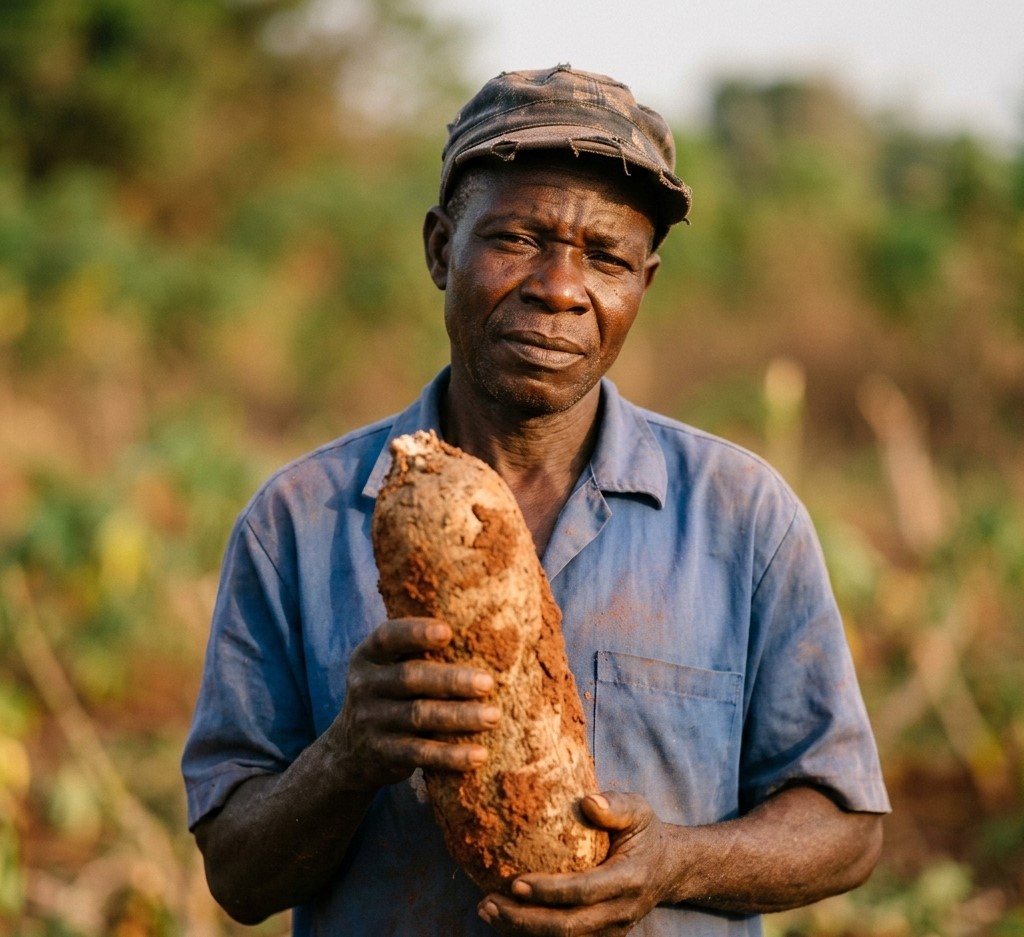
Nigeria Produces 67 Percent Global Yam Output
The world eats yam, and Nigeria provides the vast majority of every tuber consumed globally. The Federal Ministry of Agriculture and Food Security announced in early 2026 that Nigeria’s yam production remains the backbone of global supply, consistently accounting for over 65 percent of total world output. This data follows recent agricultural assessments across the 36 states.
According to reports from Abuja, the Ministry disclosed these numbers highlighting the 2025 farming season. The data includes yam production from the primary “Yam Belt”—Benue, Taraba, Niger, Oyo, and Ebonyi States, which continue to lead national production volumes.
A senior official at the ministry told Vanguard News that recent harvests show a steady increase in output. This growth persisted despite ongoing security concerns in certain farming regions and the high cost of essential inputs like fertilizer and mechanized labor.
The Weight of Global Leadership
BusinessDay analyzed what these percentages mean in actual volume. Nigeria typically produces between 50 million and 53 million metric tonnes of yam annually. With the global total hovering around 75 to 80 million metric tonnes, Nigeria’s contribution dwarfs that of other producers like Ghana, Côte d’Ivoire, and Benin Republic combined.
Recent agricultural reviews place this in a historical context. Over the last decade, Nigeria’s share of the global market has stayed dominant, though experts note that yield per hectare remains a challenge. While Nigeria produces the most volume, farmers in neighboring Ghana often achieve higher efficiency per square meter due to concentrated soil management techniques.
The Nation reported that the Food and Agriculture Organization (FAO) monitors these trends through its local offices. The FAO supports the ministry in improving data collection methods to ensure Nigerian agricultural statistics meet international reporting standards.
The Farmer Behind the Number
Channels Television visited rural communities in Benue State to speak with the farmers behind these massive statistics. In areas near Otukpo, farmers describe a disconnect between record-breaking national figures and their personal economic reality.
“We hear the big numbers on the radio,” one farmer noted, “but we still struggle with the same old problems: bad roads and a lack of storage.” During the peak of the rainy season, many rural tracks become impassable, leaving high-quality tubers to spoil before they can reach urban buyers.
Arise News documented similar infrastructure gaps across the middle belt. While production numbers are rising, the logistics of moving those yams to market remain a significant bottleneck for smallholder farmers.
Nairametrics analyzed the price gap between the farm and the city. A tuber sold at a low price in Taraba often triples in cost by the time it reaches a retail market in Lagos. Most of this value is captured by transporters and middlemen who manage the risks of the road, leaving the farmer with thin margins.
The States That Feed the Nation
Agricultural surveys break down the 2025/2026 production by state:
Benue State remains the “Food Basket,” contributing the highest percentage of national yam output. The fertile Benue Valley supports a long planting season from November through the following autumn.
Taraba State is a close second. Its riverine geography along the Benue tributaries provides the consistent moisture required for large, healthy tubers.
Niger State is famous for the “Lariboko” variety. This type is highly valued for its long shelf life, making it a favorite for traders who transport yams over long distances.
Oyo and Ebonyi States contribute significantly as well. Oyo supplies much of the “Efuru” variety found in Southwest markets, while Ebonyi’s smallholder farmers are known for intensive cultivation on smaller plots.
The Export Question
BusinessDay raised a critical point: if Nigeria produces the vast majority of the world’s yams, why aren’t export earnings higher? Much of Nigeria’s yam is consumed locally as a staple food.
According to Vanguard News, unofficial cross-border trade remains a challenge. Large quantities of Nigerian yams are often transported to neighboring countries, where they are sometimes re-exported under different labels. This results in other nations capturing the foreign exchange value that should belong to Nigerian producers.
The Oracle—a term often used for industry insights—notes that while Ghana has made strides in processing yam into flour and value-added products, Nigeria still exports mostly raw tubers. Expanding the local processing industry is seen as the next major step for the sector.
The Storage Reality
Nairametrics highlighted that traditional yam barns remain the primary storage method. While effective for short-term use, these structures are vulnerable to pests. Experts estimate that post-harvest losses due to rot and rodents can reach 20 to 30 percent of the total harvest.
Arise News interviewed researchers from the National Root Crops Research Institute (NRCRI). They emphasized that while modern storage solutions exist, they are often too expensive for the average farmer. Reducing these losses would be equivalent to increasing production without planting a single new hectare.
The Varieties and Their Uses
Premium Times documented the primary varieties found in Nigerian markets:
White Yam (Dioscorea rotundata) is the most popular, used primarily for “pounded yam” due to its superior texture and starch content.
Yellow Yam (Dioscorea cayenensis) has a longer growing period and contains more carotenoids, giving it a distinct color and nutritional profile.
Water Yam (Dioscorea alata) is often used for specialized local dishes. It is more resilient in some soil types but is generally less preferred as a daily staple compared to white yam.
Price Trends in 2026
Market reports from March 2026 show significant price variations across the country:
| Market | Average Price per Tuber |
|---|---|
| Mile 12, Lagos | N2,800 – N3,500 |
| Wuse, Abuja | N2,500 – N3,200 |
| New Market, Enugu | N1,800 – N2,200 |
| Local Market, Benue | N800 – N1,200 |
The Way Forward
Farmers have expressed that their primary needs are not just higher production targets, but better market access. The Federal Government has signaled a shift toward “Value Chain Interventions,” which include improving rural feeder roads and supporting cooperatives with better storage equipment.
Nairametrics suggested that simple, low-cost interventions—such as community-based pest control and standardized weights and measures—could significantly increase the income that stays with the farmer. By focusing on these “small fixes,” Nigeria can ensure its global dominance in yam production translates into better livelihoods for the people in the fields.
The 65+ percent global share is a point of pride, but the real success of the 2026 season will be measured by how much of that harvest actually reaches the consumer’s plate and the farmer’s bank account.


Construction and Real Estate Sector Outlook 2026 in Nigeria: Prices, Policies, and What Tenants Face

Why Healthcare Workers Keep Getting Infected With Lassa Fever: The 2026 Reality

Nigeria Produces 67 Percent Global Yam Output – FG Says: The Numbers Behind the Tuber

FRSC and NIMC Partner on Data Integration for Security: What This Means for Driver License Holders

How Nollywood Grew Without Government Support

Entertainment as the Next Hope for Nigeria After Oil: What the Numbers Really Show

How One Misplaced Dot Broke a Bank Login Page

Nigerian Hackers: The Global Fraud Story and Its Fallout

Internet Sovereignty: Why Some Countries Want Their Own Separate Internet

Forgotten Satellites Defy Silence, Beaming Signals for Decades

The Untold Story Of The Nigerian Who Helped Build Global Internet Systems

Why Are You Hiding Your Business From People With Money?
Internet Sovereignty: Why Some Countries Want Their Own Separate Internet
How One Misplaced Dot Broke a Bank Login Page
The Untold Story Of The Nigerian Who Helped Build Global Internet Systems
Nigerian Hackers: The Global Fraud Story and Its Fallout
Forgotten Satellites Defy Silence, Beaming Signals for Decades

The “Village People” Aren’t Blocking Your Sales; Your Bad SEO Is.

The Business That Died because the Owner Refused to “Go Beyond.”
Why Are You Hiding Your Business From People With Money?
Entertainment as the Next Hope for Nigeria After Oil: What the Numbers Really Show
FRSC and NIMC Partner on Data Integration for Security: What This Means for Driver License Holders
Why Healthcare Workers Keep Getting Infected With Lassa Fever: The 2026 Reality
Nigeria Produces 67 Percent Global Yam Output – FG Says: The Numbers Behind the Tuber
 Edutech Portal2 weeks ago
Internet Sovereignty: Why Some Countries Want Their Own Separate Internet
- Digital Hustle2 weeks ago
How One Misplaced Dot Broke a Bank Login Page
- Edutech Portal2 weeks ago
The Untold Story Of The Nigerian Who Helped Build Global Internet Systems
- Edutech Portal2 weeks ago
Nigerian Hackers: The Global Fraud Story and Its Fallout
- Edutech Portal2 weeks ago
Forgotten Satellites Defy Silence, Beaming Signals for Decades
- Edutech Portal2 weeks ago
The “Village People” Aren’t Blocking Your Sales; Your Bad SEO Is.
- Edutech Portal2 weeks ago
The Business That Died because the Owner Refused to “Go Beyond.”
- Edutech Portal2 weeks ago
Why Are You Hiding Your Business From People With Money?