Technology
How One Misplaced Dot Broke a Bank Login Page


A bank login page is more than just a simple screen on a website. It is the secure doorway that allows customers to reach their online accounts. Every time someone enters their username and password, the page serves as the bridge that connects the user with their money. When this page works perfectly, people enjoy smooth access. When it fails, confusion rises, and trust is shaken. What many do not know is that even a small detail, as tiny as a dot in computer code, can decide whether this door remains open or completely shut. There was a day when one misplaced dot broke a bank login page and locked out thousands of customers.
In daily life, a dot may look ordinary, simply ending a sentence. But in programming, a dot carries a higher weight. It links commands, guides actions, and connects pathways inside the code. Every dot has a position where it belongs. If that dot shifts, the whole meaning of the code changes. When the dot sits correctly, the instructions flow smoothly, and systems stay strong. But when it stands in the wrong place, the connection breaks, and the page collapses. This was exactly what happened in that bank login page error. A small misplaced dot blocked access and turned the page into a wall instead of a door.
When customers tried to log in, the page rejected every password, even when the details were correct. Error messages flashed, and people believed their accounts had been blocked. In truth, the accounts were safe, but the login script had lost its way. The misplaced dot confused the code, stopping it from speaking with the main server. What seemed like a massive cyber-attack was nothing more than a hidden syntax error. This error was small in size but great in effect. It proves once again that even a tiny seed can grow into a tree that affects many lives. In the same way, one symbol in the wrong place affected thousands of customers in one day.
The technical team of the bank was forced into action. They began a deep review of the code, reading line after line like scribes searching for a missing mark. At last, they found it. A single dot stood in the wrong place. It looked harmless, but it was the stone in the engine. Once the dot was moved back into its correct position, the entire bank login page came alive again. Customers could access their accounts, and the noise of fear began to fade. That correction, though small, restored confidence. It is a clear picture of how a little mistake can block the path, and a little correction can restore the light.
For developers and financial institutions, this case shines a light on three truths. First, it shows the necessity of code review. When more than one pair of eyes checks the script, hidden faults are easily discovered. The misplaced dot slipped through the first check, but a second review could have stopped the crisis before it began. Second, it reveals the value of a testing environment. This is a space where the system can be tested with fake accounts before it meets real customers. If the login page had gone through stronger testing, the dot would have been caught in silence. Third, it proves that every small detail matters in digital security. While banks build firewalls and strong encryption to fight hackers, they must also protect against simple human mistakes. A misplaced dot costs nothing to fix but can cost everything in customer trust.
For ordinary users, this story uncovers the hidden world behind every online banking login. People see only a clean page where they type details, but behind that page is a chain of codes stretching like an invisible ladder. If even one step on that ladder breaks, the climb becomes impossible. Customers should understand that many errors come from technical mistakes, not always from hackers. This knowledge reduces panic and allows patience while systems recover. But for the bank staff, the story is a strong call that the trust of the people rests on their attention to detail. When they watch carefully over every line of code, they protect not just data but also peace of mind.
The world of computing has seen many similar cases. Programmers call such mistakes bugs in software. Some are small, like this misplaced dot, while others are larger, like missing blocks of instructions. Yet both small and large bugs can shut down big systems. History records failures in air traffic control, hospital records, and government websites caused by such mistakes. Each time, people faced delays, stress, and fear until the error was corrected. The misplaced dot in the bank login page is only one example, but it is a sharp signal that technology is both powerful and fragile. The smallest detail carries weight, and carelessness carries a price.
The solution lies in discipline. Developers must write code with patience, treating every symbol with respect. Banks must insist on quality checks, demanding code reviews as part of their daily culture. Automated scanning tools exist today that can identify misplaced symbols and prevent errors. Regular updates and reviews make systems stronger. Training new programmers to value accuracy ensures the future remains secure. Just as a faithful servant proves trustworthy in little things, programmers who are faithful in small marks protect the greater system. In technology, faithfulness in details is not an option, it is the foundation.
This story also brings out the importance of humility in technology. The error was not a mighty attack from the outside. It was a human mistake from within. Accepting that mistakes will happen encourages the building of safety nets. Backup systems, error logs, and fallback pages are like guards that catch the fault before it spreads. When banks respect these measures, customers enjoy steady access, and confidence grows stronger. A working bank login page may appear simple on the surface, but behind it is a constant war against errors. Every line of code is part of that battle, and every symbol is a soldier.
The truth is clear. In life and in code, little things matter. Just as a spark can light up a forest, so can a misplaced dot stop an entire system. The day a dot broke a bank login page, thousands of customers were locked out. Yet the day it was corrected, peace was restored. This is the reality of technology, that strength lies in details, and confidence is built on discipline. Banks that guard their systems with careful eyes will continue to hold the trust of their people. Developers that respect every symbol will continue to create systems that stand firm. And customers who understand the hidden structure behind the screen will face errors with calm hearts, knowing that sometimes the smallest fix brings the greatest relief.
In conclusion, one misplaced dot was enough to break a bank login page. The dot changed the meaning of the code, blocked the server connection, and locked out thousands of customers. Yet, the solution was simply to place it back where it belonged. The story carries a strong signal for developers, banks, and customers alike. It proves that small details in digital banking security can have large effects in reality. When banks respect details, customers enjoy trust. When developers respect symbols, systems remain alive. And when everyone values accuracy, technology continues to serve with strength and stability.


The Smallest Change That Will Affect All Digital Operations
This content will focus on the critical role of precise and tested digital infrastructure, where a small error can lead to wide-reaching outages. Your organization will gain understanding about the importance of rigorous technical assurance.
Understanding Critical Code Interdependency
The functioning of the global internet platform relies on many small, connected parts. These parts are often small pieces of open-source code that many large systems use. You may think of this structure as a massive, complex building where one simple block can support a heavy load across multiple floors.
In one verifiable instance, the deletion of an 11-line code package from a common JavaScript registry, npm, affected thousands of software projects globally (Source: Quartz, March 2016). That package, called left-pad, was a basic function used by other, much larger software components. Without this simple function, major websites and applications could not properly update or function for a time. Your business will be protected from reliance on such unknown, single-point failures when projects are developed with rigorous dependency review.
Preventing Widespread Digital Service Disruption
Recent history shows that minor configuration changes or small coding issues can stop key internet services. In October 2025, for example, an automated DNS configuration error within one major cloud provider’s database service led to widespread service failures that affected many well-known websites and applications (Source: AWS, October 2025). The root cause was not a complex attack, but an error in system operation.
These incidents confirm that every line of code and every configuration rule will carry a system-wide effect. Your service delivery will include a focus on reducing these points of failure. Your customers will experience more reliable access when the underlying digital arrangement is clear and redundant. Go Beyond Local will apply this necessary focus to the arrangement of your digital assets.
The Economic Effect of Digital Downtime
When critical services stop, the economic effect is immediate and large. Downtime is not only a technical difficulty; it will mean a stop to commerce and communication.
- A majority of enterprise-level IT leaders have reported that 94% of enterprises experienced an IT outage over a three-year period (Source: LogicMonitor, 2023).
- For many enterprises, the hourly cost of downtime will exceed $1 million (Source: Queue-it, 2023).
The cost does not only come from lost revenue. It will also include lost productivity, the cost of regulatory fines, and expenses for system recovery. In 2023, independent data showed that internet outages and degradations caused monthly losses of over $1 million for 51% of reporting companies (Source: Help Net Security, July 2025). Your business will avoid this exposure by establishing highly resilient systems from the start.
Building Digital Projects That Will Stay Functional
Go Beyond Local will assist with digital infrastructure projects to help your operations stay online. This approach will involve the following functional features:
- Review of Dependencies: Go Beyond Local will conduct an expert review of every external code package used in your project to identify and reduce any hidden, single-point dependencies.
- Redundant System Arrangement: The design will include multiple paths and fallbacks so that if one component fails, the overall service will continue to operate.
- Clear Configuration Protocols: The implementation will use only the necessary and fully tested configuration settings to prevent inadvertent activation of error conditions.
- Capacity for Immediate Recovery: The digital architecture will provide the ability to restore service quickly and directly following any unexpected interruption.
This methodical work will establish a platform for your operations that is built on stable, literal code and clear operational requirements.
Your Assurance Through Literal Technical Standards
A professional approach to digital development will remove unverified components and complicated systems that increase risk. Go Beyond Local can provide systems that function predictably.
You will gain access to technical standards that promote longevity and stability. This dedication to exact, literal technical work will ensure that your future platform is not dependent on a few lines of code from an unverified source. The objective is continuous operation without unexpected service breaks.
Contact Go Beyond Local today to discuss your project requirements.
Your Partner for Smart Digital, Creative & Publishing Solutions.
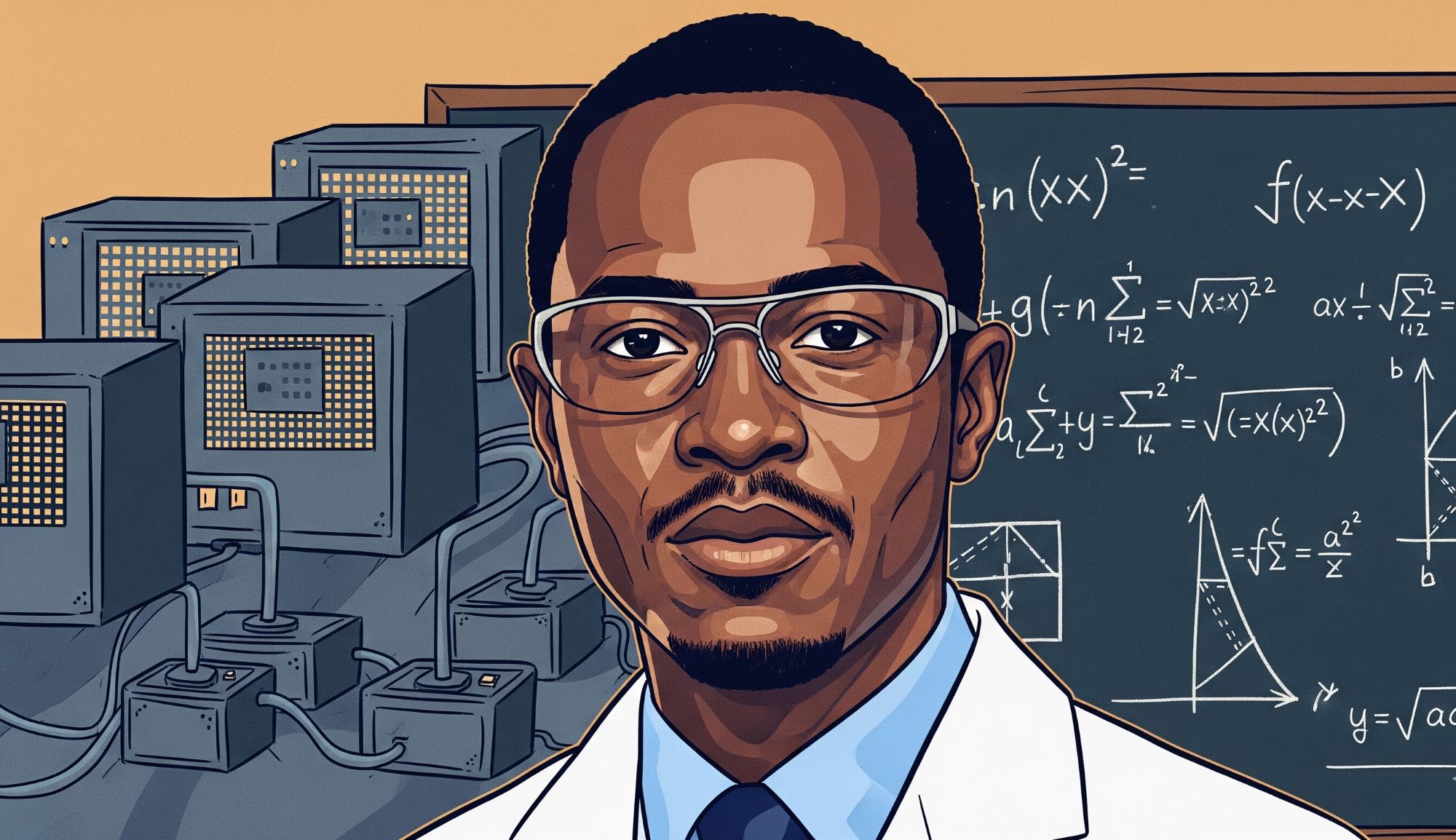
Many people grow up hearing that the internet was built in America or Europe. They hear of Silicon Valley, great universities, and global technology companies. Yet, very few hear that a Nigerian name stands among the early builders of the systems that carry the internet today. That name is Philip Emeagwali. Born in Akure, Nigeria, in 1954, his passion in mathematics and computer science brought him into the history of global internet systems.
When most people talk about the internet, they imagine websites, mobile phones, or social media platforms. But before those modern forms appeared, there had to be foundations. Engineers and scientists had to create methods to make information move from one point of the earth to another. That foundation is mathematics, coding, and high-performance computing. This is where Emeagwali left his mark. He worked on solving problems of oil research, massive data movement, and connectivity. By solving such problems, he created knowledge that later became essential for internet technology development.
His story begins in the classroom. As a child in Nigeria, Emeagwali was known as “the calculating boy” because of his uncommon ability in mathematics. Mathematics became his passion, and that passion led him out of Nigeria to study abroad. In the United States, he sharpened his skills in engineering and mathematics. These tools became the lamp that guided his path. The road was not simple. There were struggles of money, cultural barriers, and distance. Yet, his focus was firm.
One of the most important breakthroughs of his career came in the late 1980s. He worked on a model of using many small computers to solve one big problem together. This is called parallel computing. Instead of one giant computer carrying the weight, thousands of smaller processors each carried a part. Like a colony of bees building a hive, the work was shared. This changed the direction of computing. It made it possible to move and process large amounts of data at great speed. Without this principle, the global internet system we know today would have been much slower.
In 1989, the world recognized his work when he won the Gordon Bell Prize. This award is one of the highest in computer science. He earned it by using over 65,000 processors to solve complex oil field equations. Oil companies rely on such data to locate resources beneath the earth. Yet, beyond oil, his breakthrough carried a greater message: that large computer systems could be linked, and by linking, they could process massive information faster. This very idea later supported the backbone of the internet, where millions of computers and servers now work together across the world.
Some have debated how far his discoveries directly contributed to the internet. But no debate removes the fact that his parallel computing research contributed to the future. It gave scientists confidence that building a world of fast data exchange was possible. In a time when African names were almost absent in the world of science, his name stood tall. His victory was a testimony that wisdom can rise even from unlikely places. It was like David facing Goliath, showing that intellect empowered by discipline can move mountains.
The internet is not the product of one man, one company, or one government. It is a web of contributions. Universities, research centers, and private innovators each gave their part. Yet, every system needs pioneers. The internet depends on speed, networks, and connection across millions of points. Parallel computing makes these things real. Without it, the progress would have been slower, the cost would have been higher, and the world would have waited longer.
Emeagwali did not stop at winning awards. He became a speaker and teacher. He told his story to students in Africa and abroad. He told them that Nigerians also contribute to global knowledge. His story became a seed of hope. It taught young Africans that science is not reserved for other continents, but open to every nation that will work and learn. His life showed that wisdom is given by God without partiality. Those who seek it with diligence will always find.
Looking at internet history, researchers point to many milestones. There was the shift from single computer systems to computer networks. There was the development of speed through parallel systems. And there was the linking of local networks into global networks. Within these milestones, the contribution of Philip Emeagwali is visible. It shows that Nigeria has a place in internet history. Too often, the story of Silicon Valley dominates. But history is incomplete if African names are left out.
Recognition is another lesson this story teaches. Many African inventors have been overlooked. Yet, every builder deserves their place in the record. By highlighting the Nigerian role, history becomes balanced. It teaches children that Africans also stand in the temple of inventors. To leave out such names is to dim the light of truth. But truth is best told when every hand is counted.
This story also ties to national pride. Nigeria is today one of the largest internet markets in Africa, with over 100 million users. Businesses, schools, and ministries depend on it daily. Knowing that a Nigerian helped lay part of the early foundation adds dignity to this daily reality. It is not only a tool borrowed from abroad, it is a system in which one of Nigeria’s own had a share in the roots.
Globally, the internet has moved far beyond what the early builders could imagine. But even as the tree grows tall, the seed remains the starting point. The work of Emeagwali in parallel computing is one of those seeds. It cannot be erased, because it opened a road others would later walk.
If one young boy in Akure could rise to global science by education, then millions of Nigerian children can do the same. Nations that invest in schools and learning will raise inventors. Nations that ignore education will lack the tools for development and innovation. Knowledge is the key that unlocks wealth. The people who carry it cannot be destroyed by ignorance.
Even though some critics question his legacy, the record of his prize and his research remains. And that record is enough to stand the test of history. For a Nigerian in a foreign land, to be counted among the best computer scientists of his generation is a testimony. History will always remember him as part of the builders.
The Nigerian internet history carries names like Philip Emeagwali because the internet is not one voice but many. Today, Africa is rising in digital growth. Banking, farming, health, and education now move through internet power. It is an encouragement to know that Africans helped plant this seed. It is a call for leaders to support young scientists and researchers, so that Africa will not only consume knowledge but also create it.
This story of knowledge, determination, and impact shows that Nigerians can stand on global stages. It shows that education is the lamp that lights invention and that Africa has builders in the library of science. And above all, God gives wisdom for the service of humanity.
The life of Philip Emeagwali is proof that Nigerians have contributed to global internet systems. His award-winning parallel computing research placed him among pioneers. For Nigeria, this is a heritage of pride. For the world, it is a message that wisdom is given to every nation. As the internet continues, the story of the Nigerian who helped build it must never be forgotten.

How Forgotten Satellites Still Beam Signals To Earth
Many people believe that once a satellite ends its mission, it becomes silent forever. That thought is not fully accurate. Even after decades, forgotten satellites still beam signals to Earth. Their voices may be faint, their rhythm irregular, but they still speak. This shows that works of human hands may endure far beyond their intended time, just like seeds that lie hidden and spring forth in their own season.
A satellite is a machine placed in orbit to send and receive data. Modern living depends heavily on these machines. They guide communication, navigation, weather studies, and scientific observation. When a satellite is fresh, engineers monitor it every day. They collect signals, send commands, and ensure smooth operations. As years pass, some lose power while others give way to newer technology. These are called forgotten satellites, yet forgotten does not mean lifeless.
Many satellites still remain in orbit, circling the Earth faithfully. Their solar panels continue to gather sunlight. When that light touches their circuits, small portions of power awaken old systems. That is why a forgotten satellite still beams signals to Earth. The tones may be weak, but sensitive equipment on Earth can still capture them.
In 1965, the United States launched a satellite named LES-1. It failed early and was declared useless. Engineers turned their eyes away, but almost 48 years later, amateur operators heard signals from it again. In 2013, that old machine sang once more. Its solar panels had preserved strength enough to power its radio. This story echoes that what men leave aside, heaven may still keep alive for a season.
There are other stories of old weather satellites waking when sunlight strikes them in just the right way. Some retired navigation satellites still send simple radio beacons. To the ordinary ear, these sounds are noise. To scientists, they are treasure. Every signal carries information about how machines endure in space and how materials face the harshness of radiation, heat, and cold.
The reason many of these satellites survive so long is because the space environment slows down decay. On Earth, machines rust and break quickly due to air and water. In orbit, the main threats are radiation and temperature changes. If a satellite was built with strong design, certain parts may keep functioning for decades. Solar energy is the key. As long as panels collect light, signals may still travel down to Earth.
These signals also provide testing ground for radio receivers. Operators on Earth sometimes direct their antennas at such satellites to capture faint tones. This practice sharpens listening technology for deep space missions, where signals from far planets are also very weak. It is like training the ear to hear whispers in a noisy crowd.
Old satellites also carry history. Their signals reflect the thinking of the time they were made. When engineers hear a tone from the 1960s, they are echoed back to early designs and limited tools of that age. Each signal is like the voice of an old friend, teaching how knowledge has grown from seed to tree.
Records of such satellites are kept by space agencies. Lists show which satellites are active, silent, or partly alive. Amateur groups also share reports whenever they pick signals. With modern internet, these discoveries spread quickly across the world. Scientists then confirm and celebrate that a satellite still breathes faintly in space.
There are also challenges. A forgotten satellite is no longer under command. Engineers cannot redirect it or control its orbit. It becomes part of space debris. This debris can cross paths with active satellites. Space agencies watch carefully to prevent collisions. Even so, the weak signals remain echoes that strength may still flow from vessels long abandoned.
The story of forgotten satellites carries deep lessons. Machines of men may seem finished, yet many endure. Just as human effort fades, divine purpose continues. A satellite still beaming after fifty years reveals endurance, patience, and hidden strength. These are qualities worth embracing in daily living.
From a scientific side, these signals help plan for future missions. Engineers study why certain circuits lasted so long. The knowledge guides them to build tougher machines for tomorrow. Materials that resist radiation and designs that save energy become new standards. In this way, a forgotten satellite still beams signals to Earth and continues to serve the progress of science.
Such discoveries also show global unity. Scientists in Africa, America, Europe, and Asia all share findings. A signal from a forgotten satellite becomes a joint testimony across borders. The sky has no boundaries, and its wisdom is open to all who look upward.
Students also gain inspiration. When young people learn that a satellite from 1965 still transmits, they see the power of endurance. Teachers use such examples in classrooms to stir fresh interest in science. They learn that technology is not only about today but also about lessons from the past and seeds of the future.
As the number of satellites in orbit increases each year, some will retire early while others will last for decades. Some will sleep and then rise again when sunlight awakens them. Each of them becomes part of the great circle of knowledge. Each signal is a message, however faint, echoing that nothing hidden stays silent forever.
Forgotten satellites still beam signals to Earth because solar energy revives their circuits, space slows their decay, and radio tones continue to whisper across the heavens. These signals preserve history, advance science, and inspire human hearts. They stand as witnesses that endurance is possible, and what appears finished may still serve a purpose.

Sales expert knowledge: When a Client Knows.

Conversion rate optimization: Get More Calls.

The Writing on the Wall for the Digital Age

Chasing a Digital Truth Across the Globe

Tech Secrets Hiding in the High Speed Lines

How One Digital Footprint Search Changed Everything

The Silent Code That Connected a Global Cyber Plot

A Digital Forensic Trail Leading Far Beyond the Screen

The Day the Global Network Caught Fire

WhatsApp marketing tips: Stop Annoying Groups.

Social media reach: Why Buying Fans is Bad.

Social media engagement: Stop Boring Content.

Internet Sovereignty: Why Some Countries Want Their Own Separate Internet

How One Misplaced Dot Broke a Bank Login Page

The Smallest Change That Will Affect All Digital Operations

The Untold Story Of The Nigerian Who Helped Build Global Internet Systems

Nigerian Hackers: The Global Fraud Story and Its Fallout

Forgotten Satellites Defy Silence, Beaming Signals for Decades

Do Not Allow Your Digital Store to Shut Down:

Nigeria Enter One Chance? Insecurity and Sachet Economy in 2026

Implement Local SEO Fixes for Lagos: Beat Google Maps Competitors

Core Web Vitals Checklist: How to Achieve a Near-Perfect Score on Mobile Devices

Stop Being Busy, Start Being Productive – Focus on What Matters to Achieve Success

The “Village People” Aren’t Blocking Your Sales; Your Bad SEO Is.
 Technology5 months ago
Internet Sovereignty: Why Some Countries Want Their Own Separate Internet
- Technology3 months ago
The Smallest Change That Will Affect All Digital Operations
- Technology5 months ago
The Untold Story Of The Nigerian Who Helped Build Global Internet Systems
- Security First5 months ago
Nigerian Hackers: The Global Fraud Story and Its Fallout
- Technology5 months ago
Forgotten Satellites Defy Silence, Beaming Signals for Decades
- E-Commerce3 months ago
Do Not Allow Your Digital Store to Shut Down:
- World on Fire1 month ago
Nigeria Enter One Chance? Insecurity and Sachet Economy in 2026
- Technical Guide3 months ago
Implement Local SEO Fixes for Lagos: Beat Google Maps Competitors