Technical Guide
The N5 Million Mistake: Why You Should Never Save Client Data in a Notebook


Many business owners in Nigeria believe a physical notebook is the safest place for a list of names and numbers. This habit feels natural because paper does not need a battery or a data plan. However, a small book can cause a massive loss of money. One rainstorm or one misplaced bag can wipe out years of work. Many people realize this truth only after a disaster happens.
A notebook is a physical object that can easily vanish. If a fire starts or a person leaves a bag in a taxi, the information is gone forever. There is no backup for a handwritten page. When you lose that book, you lose the link to the people who pay for your services. This loss is why some people call it the N5 Million Mistake. It represents the cost of lost sales and the price of starting from zero.
The High Cost of Paper Records
A notebook lacks any form of security. Anyone who picks up the book can read the phone numbers and addresses of your customers. This situation creates a big risk for the privacy of the people who trust you. In Nigeria, laws now exist to protect the data of individuals. If the private details of a client become public because of your notebook, you might face legal trouble. A fine or a lawsuit can reach millions of Naira very quickly.
Searching for information in a book takes too much time. You must flip through many pages to find one name. This slow process makes you look less professional during a call. When you use digital tools, you find what you need in one second. Speed helps you serve people better. It also helps you keep your mind clear for big decisions.
Digital Storage Gives You Peace of Mind
Choosing to store details on a computer or a phone changes the way you work. These systems keep your data safe in the cloud. Even if your phone falls into water, your list stays safe. You can log in from another device and see all your records. This safety allows you to focus on expansion instead of worrying about a lost bag.
Modern tools allow you to see patterns in your sales. A notebook only shows you a list. A digital system shows you which person buys most often. This knowledge helps you send the right message to the right person. You can increase your income when you understand the habits of your customers. This level of insight is hard to get from a paper record.
Organizing for Future Success
Success requires a system that can expand. A notebook has a fixed number of pages. When it is full, you must buy another one. This makes it hard to track long-term history. Digital systems scale with you. They can hold thousands of names without taking up space in your office. You can share this list with your team members so everyone works with the same facts.
Trust is the foundation of any business in Lagos or Abuja. When a customer sees that you handle their details with modern tools, their trust increases. It shows that you value their privacy. It also shows that you are ready for big contracts. Many large companies will refuse to work with you if your record-keeping is poor. Moving away from paper is a step toward becoming a major player in the market.
Protecting the Future of Your Company
The risk of a notebook is too high for any serious person. Many small businesses fail because they lose their records. They cannot call their old clients to ask for more work. They cannot send a happy birthday message to build a bond. These small actions keep a business alive. Without a digital backup, these actions are impossible.
You can start small with a simple spreadsheet or a free app. These tools are easy to use. They teach you the discipline of digital work. As your income increases, you can move to more advanced systems. The goal is to ensure that no single accident can destroy your hard work. Safety is the most important part of business management.
The Core Web Vitals Checklist: How to Achieve a Near-Perfect Score on Mobile Devices
In today’s digital economy, the speed and responsiveness of your website are are fundamental requirements for appearing in search results. Google mandates adherence to Core Web Vitals (CWV) metrics, particularly for mobile experiences. A low score on these metrics directly hinders your discoverability and affects user satisfaction. Honestly, you must consider that optimizing your site for CWV is the most essential step toward high performance.
This post will walk you through five crucial technical adjustments you need to implement. When these elements are properly configured, your website achieves the performance rating necessary to overcome the speed challenges inherent in mobile browsing across Nigeria and globally.
Understanding the Essential Performance Focus
It is important to understand that Core Web Vitals measure three specific aspects of user experience: loading, interactivity, and visual stability. These are not arbitrary metrics; they represent how a human being perceives your site’s functionality.
The focus is paramount:
- Loading: Measured by Largest Contentful Paint (LCP). This is the time it takes for the largest element (usually an image or block of text) on your page to become visible. A slow LCP means the user waits too long to see the primary content.
- Interactivity: Measured by First Input Delay (FID). This tracks the time from when a user first interacts with your page (e.g., clicks a button) to when the browser actually responds. A high FID means the user experiences lag.
- Visual Stability: Measured by Cumulative Layout Shift (CLS). This monitors unexpected shifts of page elements while the page is still loading, preventing users from clicking what they intend to click.
To achieve a near-perfect mobile score, you must address each of these three areas with technical precision.
1. Address LCP: Prioritize the Critical Rendering Path
The Largest Contentful Paint (LCP) often presents the biggest challenge. To gain a strong score, you must deliver the largest content element—usually a hero image or headline text block—in under 2.5 seconds.
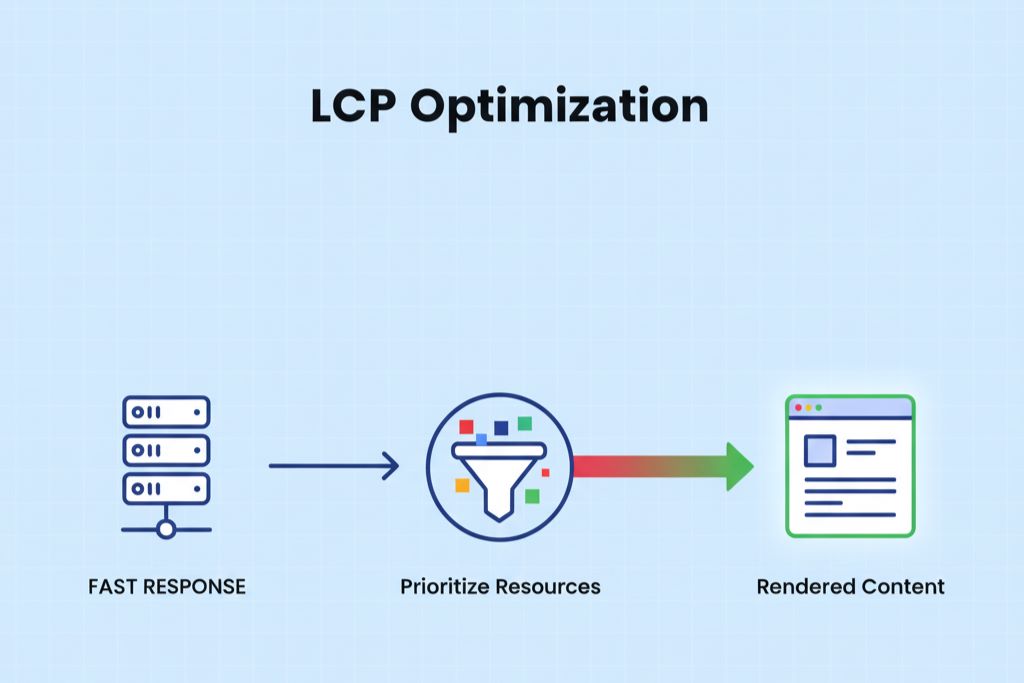 You must implement these steps to improve your LCP:
- Server Response Optimization: Ensure your server response time is swift. This means leveraging quality hosting infrastructure. Go Beyond Local can assist in evaluating and configuring high-speed hosting solutions available for your region.
- Resource Prioritization: Identify and defer the loading of any non-essential Cascading Style Sheets (CSS) or JavaScript files that appear before the main content. Only the absolute minimum code required to render the LCP element should be loaded first.
- Image Compression and Sizing: The largest image on your page should be served in the correct dimensions for the device and heavily compressed. Use modern formats like WebP where possible, as they offer superior compression.
When you optimize the critical rendering path, the user sees the primary page content rapidly, leading to an immediate improvement in the LCP score.
2. Overcome FID: Break Up Long JavaScript Tasks
You get the point, yes? When the browser is busy processing a massive block of JavaScript code, it cannot respond to user input. That lag is what generates a poor First Input Delay (FID).
To overcome this difficulty, the main thread needs to be available quickly. We now need to ensure the following:
- Code Splitting: Divide large JavaScript bundles into smaller, focused chunks. Load these chunks only when they are needed for a specific function, rather than all at once on initial page load.
- Third-Party Script Management: Limit the number of external scripts (like analytics, ads, or social widgets). When you must use them, load them lazily (only when they enter the viewport) or defer them to run after the main page content is interactive.
- Web Workers: Where heavy processing is mandatory, such as complex data handling, leverage Web Workers. This ensures those processes run in the background, keeping the main browser thread free for immediate user interaction.
Honestly, reducing the amount of time the main thread is blocked is the most direct path to a near-perfect FID score.
3. Mitigate CLS: Reserve Space for Dynamic Elements
Unexpected shifts in the layout (CLS) cause frustration; users click something, and the element moves right as the click registers. This issue often results from dynamic content, like ads or embedded videos, loading without reserved space.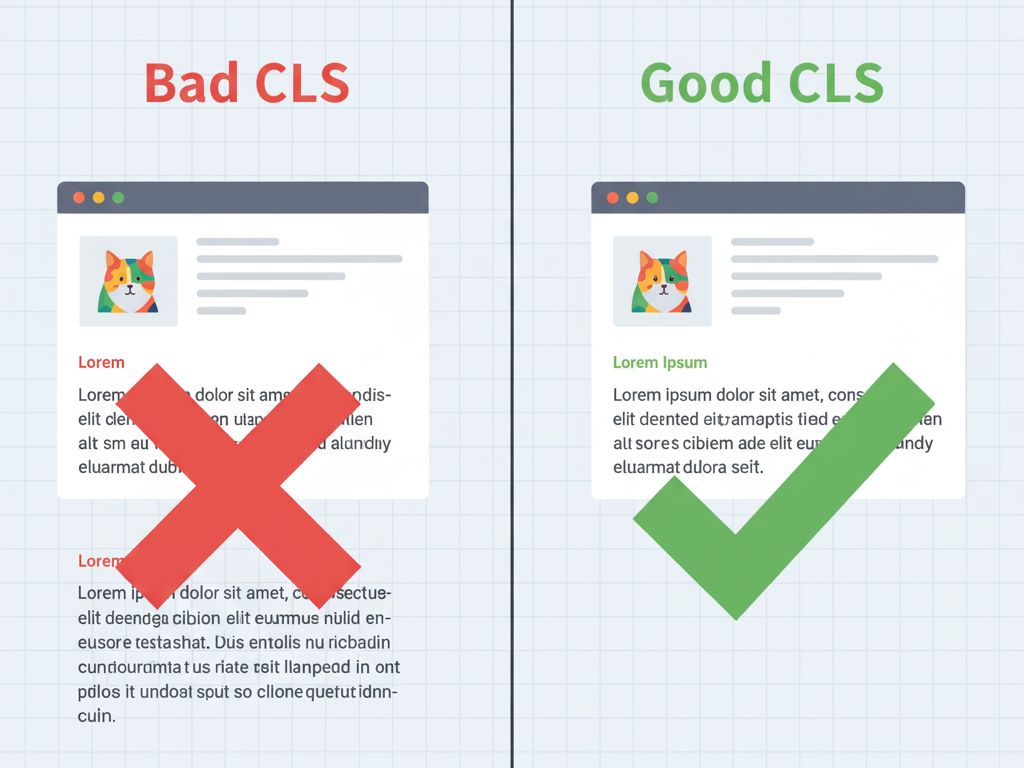
We must address this instability with precision:
- Explicit Dimensions: Always include width and height attributes on images and video elements. This tells the browser exactly how much space to reserve before the content loads, preventing surrounding elements from shifting.
- Font Loading Strategy: Fonts loaded from external sources can cause a shift when the fallback font is suddenly replaced. Use a
font-display: optionalorswapstrategy to manage this transition gracefully, and ensure text stays in place. - Avoid Uninjected Content: Avoid inserting new elements above existing content unless a user action triggers it. This practice forces the entire page to rearrange, which directly increases the CLS score.
When you properly reserve space for all elements, you deliver a stable visual experience, which is crucial for a positive mobile interaction.
4. Leverage Browser Caching for Repeat Visits
It is a known fact that users often return to websites that offer valuable services. For these repeat visits, browser caching is an essential optimization.
Caching instructs the user’s browser to store local copies of static assets (images, CSS, fonts). On a subsequent visit, the browser loads these assets directly from the local device, bypassing the network request. This immediately and drastically reduces the loading time for repeat users, which positively affects all three CWV metrics.
You should focus on caching directives:
- Expiration Headers: Implement appropriate
Cache-Controlheaders on your server to define how long the browser should store static assets. - Asset Fingerprinting: When you update an asset (like a CSS file), ensure its file name changes (e.g.,
styles-v2.css). This forces the browser to fetch the new version while retaining the cache for all other files.
Leveraging this technology helps you maintain high performance, particularly on slower networks prevalent in some parts of the region.
5. Review and Compress CSS for Efficiency
Even after optimizing JavaScript, you need to turn your focus to Cascading Style Sheets (CSS). Unnecessarily large or poorly written CSS files delay rendering and consume valuable network bandwidth.
Honestly, you must reduce the file size of your CSS:
- Minification: Remove all non-essential characters from your CSS files, including comments and white space. This makes the file lighter without changing its function.
- Eliminate Unused CSS: Many templates load code for elements that are never used on the page. Tools are available to identify and remove this dead code, ensuring only necessary styling is loaded. This is a highly effective way to gain faster initial load times.
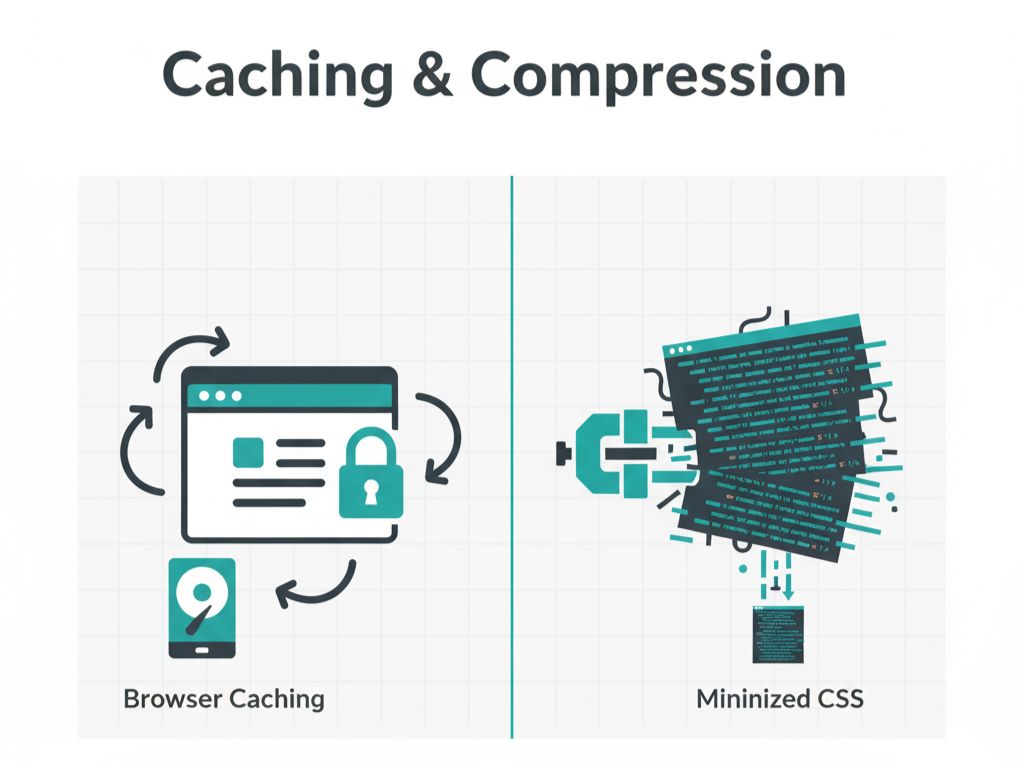 By maintaining efficiency in your stylesheets, you directly support faster rendering and a smoother mobile experience. Go Beyond Local is available to discuss how this level of technical optimization can be applied to your existing platform.
Your Partner for Smart Digital, Creative & Publishing Solutions.

Local SEO for Lagos: 5 Website Arrangement Fixes That Beat Competitors on Google Maps
When your business operates in a competitive market like Lagos, standard search engine optimization (SEO) offers limited value. Your potential customers are looking for you now, and they are often using their phones to search for services “near me.” When your website’s arrangement is faulty, you miss the crucial opportunity to appear prominently on Google Maps and in the local search pack. Honestly, you must consider the technical arrangement of your site as the most vital layer of your local SEO fixes for Lagos.
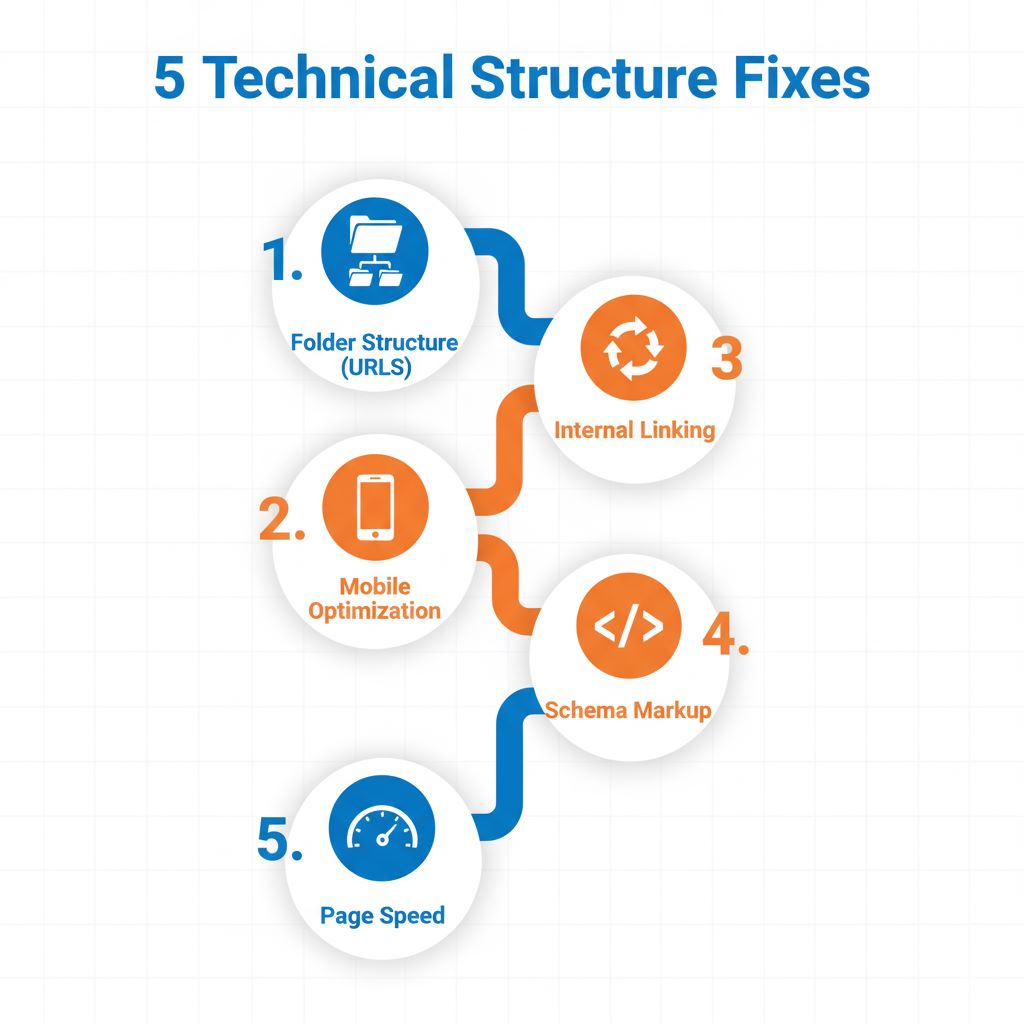
A hand drawn diagram illustrating five precise Local SEO fixes for Lagos website structure.
This post will explore five essential arrangement and configuration steps you can implement today. When these elements are correct, your site establishes the verifiable geographic authority necessary to overcome high local competition.
The Paramount Mandate of Verifiable Local Data
It is important to understand that local ranking is a matter of factual verification, and not just keywords. Google’s system works to present the most relevant and established local entity. When your website gives conflicting signals, the system lacks the confidence to rank your business above others that maintain data fidelity.
Consider the reality within Nigeria. Data from the Nigerian Communications Commission (NCC) consistently shows high mobile internet penetration. When a customer is searching for a service provider, perhaps a law firm in Ikoyi or a caterer in Surulere, they are usually on their phone and require immediate, precise information. When your site arrangement fails to articulate your location clearly, you simply surrender the opportunity.
1. Fix the Core Data Arrangement: NAP Consistency Across Your Digital Footprint
The foundation of any successful local ranking is NAP consistency. NAP stands for Name, Address, and Phone Number. This is a critical arrangement point you need to focus on.
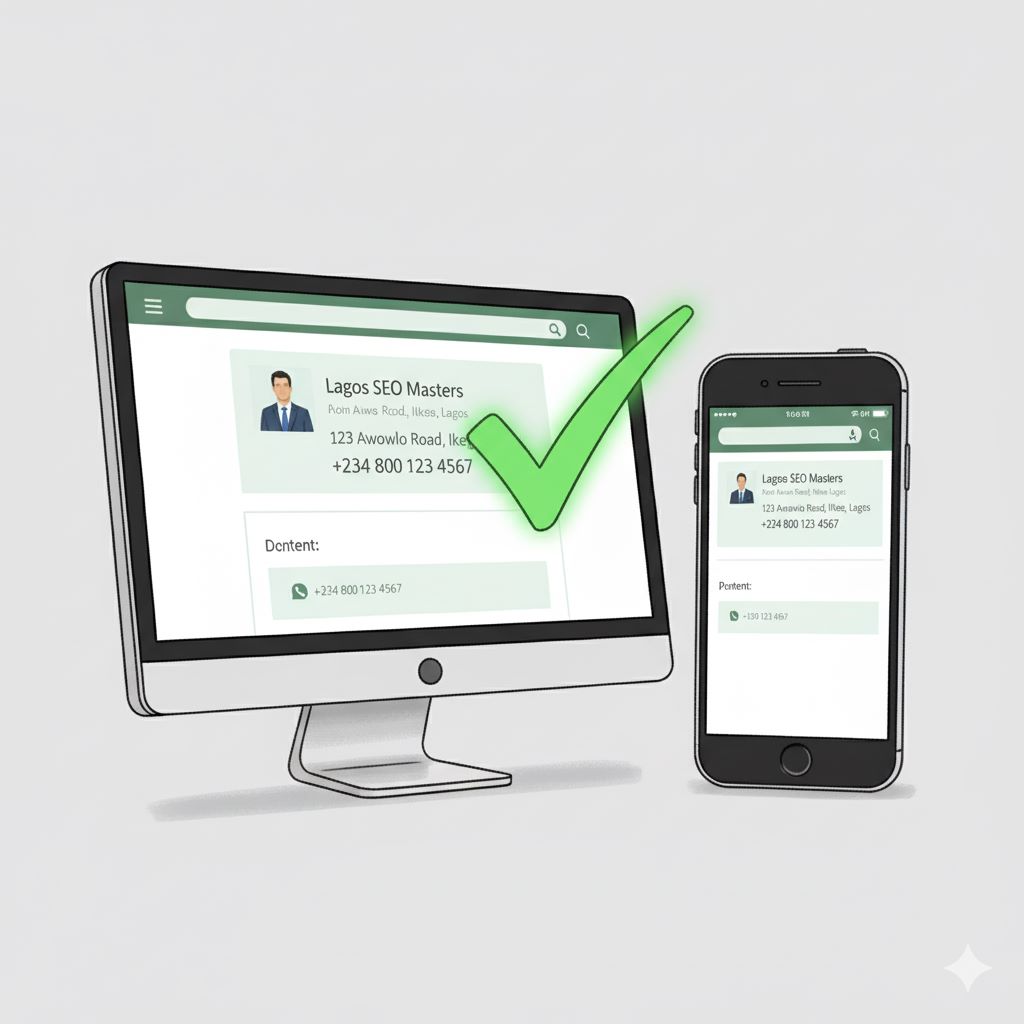
Ensuring Content Consistency on Mobile to master mobile-first indexing for local search.
Everywhere your business appears online, your website, your Google Business Profile (GBP), and third-party directories, the NAP details must be exactly the same. Even small variations, such as using “St.” instead of “Street,” or different phone number formats, introduce ambiguity for Google’s verification system.
You must implement these steps:
- Establish a Master Record: Define the single, formal version of your business name, address, and primary contact number.
- Header and Footer Integration: Ensure the exact Master Record is text-based and visible in the header and footer of every page on your website.
- GBP Synchronization: The address on your website’s contact page must match the address used to verify your business on Google Business Profile, down to the punctuation.
This consistency is a fundamental local SEO fix for Lagos because it confirms that your digital presence references a single, verifiable physical location.
2. Implement the LocalBusiness Schema Markup Arrangement
Beyond having the NAP visible, you need to structure this data in a language search engines can process instantly. This is where LocalBusiness Schema Markup comes in.
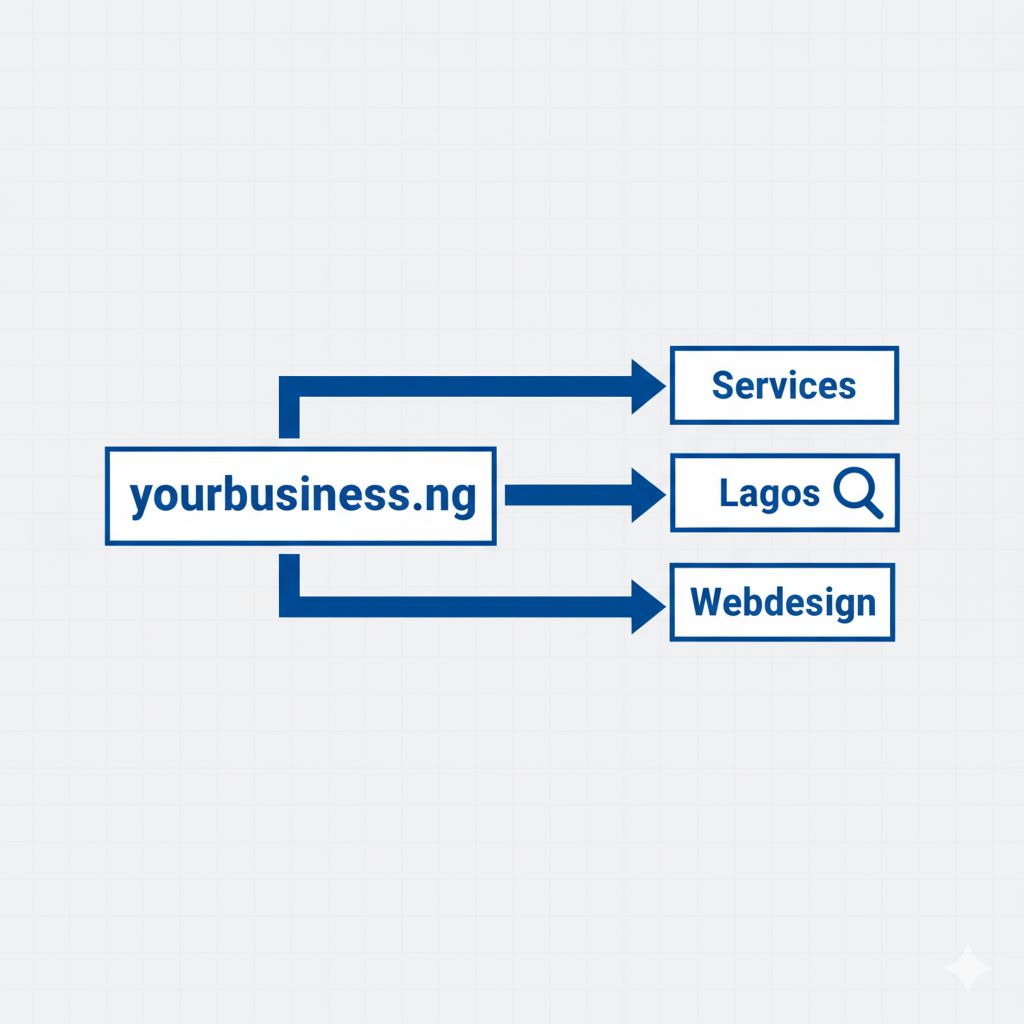
Visualizing the Geo-Specific Subdirectories structure for Local SEO Fixes for Lagos.
This technical arrangement involves placing specific code on your contact pages and your home page. This code explicitly tells search engines: “This is the name of the business, this is its verifiable address, and these are its operating hours.”
You should arrange this information directly, and not rely on Google guessing this information from text alone. We now need to ensure the following fields are accurately captured within the schema code:
@type: (e.g.,LocalBusiness,Organization, or a more specific type likeAttorney)name: The official business name.address: The full, consistent physical address.geo: The latitude and longitude of your physical location (highly precise arrangement).
When this schema is correctly arranged, your website speaks directly to the search engine’s ranking algorithm, boosting the confidence level the engine has in your local identity.
3. Arrange Service Content via Geo-Targeted Service Area Pages
When your business serves all of Lagos, simply listing “Lagos” is too vague. To overcome competitors, you must demonstrate relevance within specific neighborhoods. This is accomplished by arranging geo-targeted service area pages.
A web development firm serving the region, for instance, should have separate, focused pages such as:
- “E-commerce Development for Businesses in Ikeja“
- “Web Application Solutions for Startups in Lekki“
- “Website Maintenance for Organizations in Apapa“
Each of these pages must feature unique, relevant content about the services delivered in that specific locality. The local keyword phrase is used naturally in the headline and throughout the body text, and a map showing the coverage area can be integrated. This content arrangement is a powerful local SEO fix for Lagos because it targets the highly specific user search intent for micro-local areas.
4. Prioritize Mobile Speed and User Arrangement on Entry
You get the point, yes? Most Nigerian consumers are searching on mobile devices. A website that loads slowly or provides a poor mobile user arrangement experiences automatic penalty in local search rankings.
Google prioritizes sites that load quickly because the user experience is paramount. This is a technical arrangement, and not just a design feature.
Focus on these performance elements:
- Image Compression: Ensure all high-resolution images are compressed for rapid mobile loading with clear clarity.
- Server Response: Ensure your hosting environment offers a swift response time, particularly critical for local traffic.
- Clear Mobile Layout: The mobile version of your site must have click-friendly buttons, clear navigation, and legible text, as a poor arrangement here leads to higher bounce rates.
When your website is fast and easily navigable on mobile, you send a direct positive signal to the search engine, which translates to an improved local visibility rating.
5. Optimize Internal Link Arrangement for Geo-Relevance
The way your pages connect internally influences how search engines understand your site’s operational focus. For local SEO, you need to use internal links to connect your geo-targeted pages to your primary contact pages.
This internal link arrangement ensures that the authority of your primary domain flows directly to your localized service pages.
For example:
- On your general “Services” page, link directly to your “Lekki E-commerce Development” page using the anchor text: “Lekki E-commerce Development.”
- On your blog posts, whenever you mention a Lagos locality or industry, link back to the relevant geo-targeted service page.
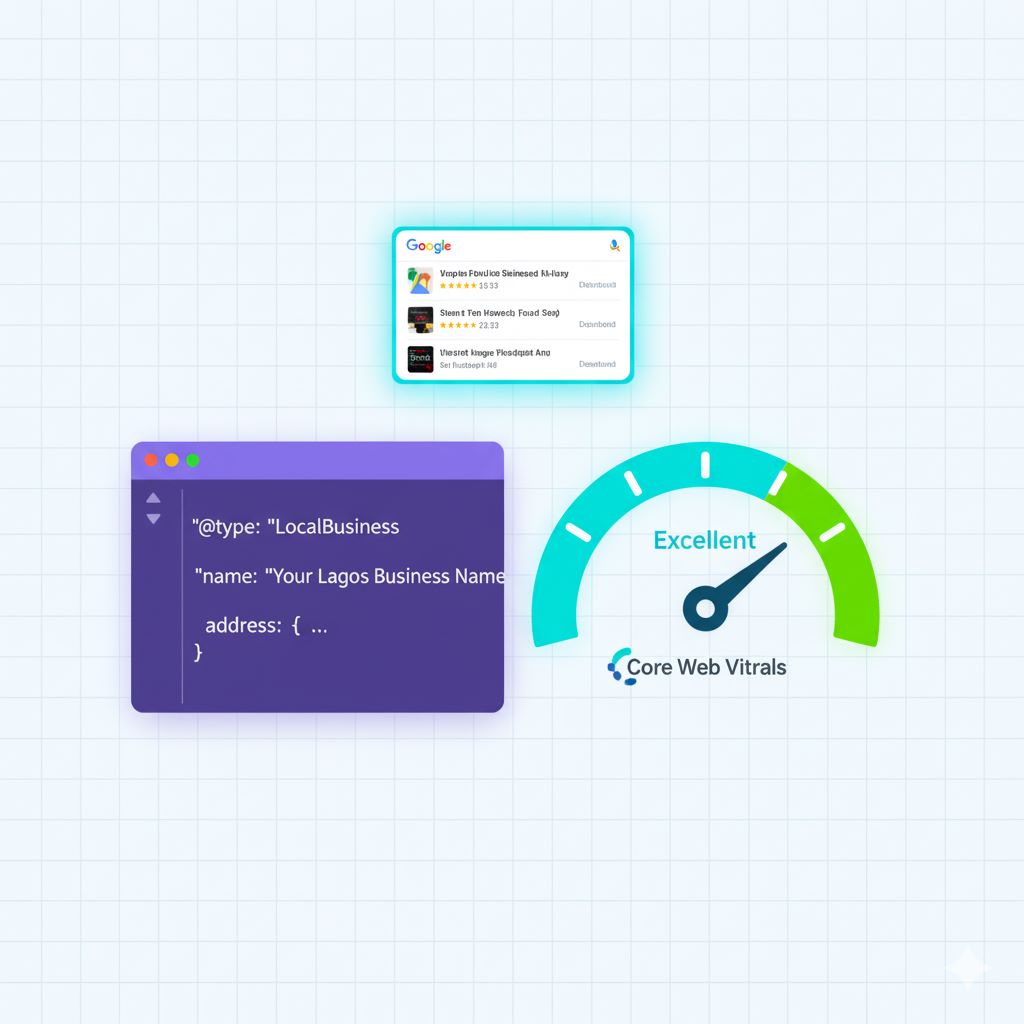
The combined impact of LocalBusiness Schema and high Page Speed on SERP dominance.
This process establishes a tight web of internal references, reinforcing your geo-relevance and making your local SEO fixes for Lagos far more effective.
If you are serious about standing out in this market, you must treat your website’s technical arrangement as a priority. Go Beyond Local is available to discuss how a technically sound, performance-focused website arrangement can deliver the geo-relevance your business requires.
Your Partner for Smart Digital, Creative & Publishing Solutions.

Get more reviews With a 5-Star Review System.

Smart CEOs Use Business data analysis to Win.

Google Maps SEO Switch Boosts Your Calls Fast.

Finally Going Beyond Local.

Online business gain: One Click to Success.

Automated lead systems: Wake to 50 Leads.

Global business mindset: A Local Empire.

Market trend analysis: Find the Next Wave.

Use Business brand visibility to Get Leads.

Local search terms: What 1,000 People Type Now.

The Influence of High Value Phrases on Premium Client Acquisition

1000 Local Searches Analyzed: What People Actually Type

Internet Sovereignty: Why Some Countries Want Their Own Separate Internet

How One Misplaced Dot Broke a Bank Login Page

The Untold Story Of The Nigerian Who Helped Build Global Internet Systems

Nigerian Hackers: The Global Fraud Story and Its Fallout

Forgotten Satellites Defy Silence, Beaming Signals for Decades

The Smallest Change That Will Affect All Digital Operations

Do Not Allow Your Digital Store to Shut Down:

Implement Local SEO Fixes for Lagos: Beat Google Maps Competitors

Core Web Vitals Checklist: How to Achieve a Near-Perfect Score on Mobile Devices

Stop Being Busy, Start Being Productive – Focus on What Matters to Achieve Success

Nigeria Enter One Chance? Insecurity and Sachet Economy in 2026

The “Village People” Aren’t Blocking Your Sales; Your Bad SEO Is.
 Technology4 months ago
Internet Sovereignty: Why Some Countries Want Their Own Separate Internet
- Technology4 months ago
How One Misplaced Dot Broke a Bank Login Page
- Technology4 months ago
The Untold Story Of The Nigerian Who Helped Build Global Internet Systems
- Security First4 months ago
Nigerian Hackers: The Global Fraud Story and Its Fallout
- Technology4 months ago
Forgotten Satellites Defy Silence, Beaming Signals for Decades
- Technology2 months ago
The Smallest Change That Will Affect All Digital Operations
- E-Commerce2 months ago
Do Not Allow Your Digital Store to Shut Down:
- Technical Guide2 months ago
Implement Local SEO Fixes for Lagos: Beat Google Maps Competitors