Revenue Tech
The Coming End of Physical Bank Branch Offices


The Coming End of Physical Bank Branch Offices
A person entering a banking hall today finds fewer open counters than five years ago.
This points to a change in how financial services reach the population.
The heavy iron doors and air-conditioned halls stay, yet the volume of physical transactions moves toward mobile devices.
Digital adoption changes the requirement for brick-and-mortar structures.
Most citizens now perform transfers, bill payments, and airtime purchases without stepping onto bank premises.
This evolution means wider access rather than a reduction in service.
A security guard at a commercial bank in Lagos says, “Oga, the crowd inside the hall reduces weekly. Before, people lined up outside by 8:00 AM, but now, many people only come to the gallery for the ATM.”
This allows bank staff to focus on complex advisory roles rather than routine cash handling.
What the Numbers Show About Digital Banking
Information from the Nigeria Inter-Bank Settlement System (NIBSS) provides grounding for this trend.
In 2024, electronic payment transactions in Nigeria reached a value of 611 trillion Naira.
This amount marks a rise from previous years, showing that the digital space now handles the bulk of national commerce.
NIBSS records show that mobile money operators processed over 100 million transactions within a single month in 2024.
These figures confirm that the reliance on Physical Bank Branches lessens as digital knowledge spreads across the country.
People find ease in managing funds from their homes or markets.
“The move toward a more digital financial space brings more people into the system and lowers running costs for institutions.” — Olayemi Cardoso, Governor of the Central Bank of Nigeria, February 2024
Banks respond to these facts by placing resources in new directions.
Instead of constructing large new buildings, banks put money into server capacity and security measures.
This management method keeps the system able to handle millions of requests at the same time.
Agency Banking as the Local Connection
While Physical Bank Branches become less frequent in city centers, agency banking offers a link to the formal system.
Small shops in local communities now function as miniature financial centers.
This electronic data pathway carries transaction truths from the ground to the decision-makers at the head office.
A trader in Kano explains, “I used to spend 500 Naira on transport to go to the bank branch. Now, the POS operator next to my stall handles my deposits and withdrawals within five minutes.”
This local method saves time and money for millions of small business owners.
Central Bank data indicates there are over 1.9 million POS terminals deployed across Nigeria as of late 2023.
These devices act as spread-out access points, making the traditional branch office less needed for daily cash needs.
The system becomes more effective through this decentralized pattern.
How Digital Records Help Administration
Moving away from physical halls creates clean records for the government and the banks.
Paper files in damp archives give way to safe cloud storage.
This digital identity process allows for speedier checking of identities and faster loan approvals.
When a person applies for a service online, the system identifies their data instantly.
The legal basis for these transactions rests on electronic signatures and biometric checks.
This correct paperwork lowers the chance of mistakes that often occur during hand entry of data.
Banking experts suggest banks save up to 30 percent in running expenses by moving services to the digital space.
These savings permit the growth of lending to small and medium businesses.
The management focus moves from keeping up buildings to making software better.
The Coming Shape of Banking Locations
Future Physical Bank Branches will likely take after advice centers rather than transaction halls.
A person might visit a branch once a year for special guidance or legal signatures.
Most interactions will happen through automated channels that operate twenty-four hours a day.
A branch manager in Abuja states, “We are training our staff to be advisors instead of tellers. The machine handles the cash, while the human handles the relationship and the complex financial planning.”
This professional development lifts the standard of service for all clients.
Rules and guidelines continue to support this technical progress.
The National Information Technology Development Agency (NITDA) and the CBN work together to ensure data protection stays a priority.
This official understanding between agencies guards the interests of all citizens as they move away from physical banking.
Keeping Trust in a Digital Time
The core element of the banking system, whether a branch exists or not, stays trust.
Confirmed identity through the Bank Verification Number (BVN) system ensures that each transaction is genuine.
As of December 2023, over 60 million Nigerians have registered for their BVN.
This database supplies a safe setting for digital growth.
The financial system becomes more open when all movement of funds leaves a trackable record.
This management clarity helps the economy by lowering unrecorded cash movements.
People who take up these new methods find themselves able to manage their funds.
The change in the traditional branch model signals the start of a more open financial future.
The chance for advancement sits in the palm of a person’s hand, through the mobile device that connects them to the wider network.


How Small Business Loans Credit Now Works Without Physical Documents
A bank official identifies the capacity of a trader by looking at a screen rather than a pile of physical land documents.
This shows the current state of financial access in Nigeria.
Modern banking relies on a data-driven identity to determine who receives funding for expansion.
The transition from physical collateral to digital reputation allows more entrepreneurs to participate in the formal economy.
Modern Data Replaces The Heavy Land Title
In previous years, an entrepreneur required a Certificate of Occupancy to secure even a small facility.
Today, Small Business Loans Credit systems rely on the Bank Verification Number (BVN) and the National Identification Number (NIN).
These identifiers link a person to their financial history across multiple institutions.
When a business owner makes a transaction, the credit bureau records the behavior.
This record becomes the legal foundation for future borrowing.
The system evaluates the flow of money through an account to judge the health of a company.
If a shop in Onitsha shows consistent deposits, the software recognizes this as stability.
The software ignores the lack of a brick-and-mortar office and focuses on the verified turnover.
This method brings fairness to the process for those who operate in the digital space.
The Information Pathway Across Systems
There exists an information link that carries truth from the ground to the decision-makers.
This connection ensures that a small business in a remote area receives the same consideration as one in the city.
The data moves through the wire and tells a story of work and proper documentation.
When a citizen maintains a good record, the system responds with opportunity.
Administrators now focus on the improvement of data accuracy.
Each time a person updates their details at the bank, they strengthen their financial identity.
This process creates a path forward for the economy.
A person with a verified identity stands a better chance of securing the resources required for expansion.
Numbers In Financial Data Systems
Reports from the Central Bank of Nigeria show the scale of this change.
In December 2023, credit to the private sector reached 74.9 trillion Naira.
This amount marks a rise from the previous period.
The Credit Bureau Association of Nigeria handles over 30 million unique credit profiles as of April 2024.
These accurate records ensure that the administrative process functions correctly.
The Global Standing Instruction (GSI) policy also protects the system.
It allows a bank to recover a loan from a borrower who has funds in other banks.
This formal agreement reduces the risk of default and encourages lenders to provide more Small Business Loans Credit to the public.
When the risk is lower, the bank finds it easier to say yes to a request.
Authority On Financial Access
Leaders in the financial sector emphasize the importance of these systems for national progress.
“The integration of credit reporting systems is a step toward expanding financial inclusion for small scale enterprises in our country.” — Dr. Olayemi Cardoso, Governor of the Central Bank of Nigeria, 2024
This statement confirms that the government prioritizes the infrastructure that supports lending.
By following international rules, the local banking sector gains the confidence of global investors.
This translates into more liquidity for the local market.
A Future Of Data-Led Expansion
Accessing Small Business Loans Credit depends on how well a person manages their digital profile.
The banks use credit systems to look beyond the immediate cash at hand.
They look at the potential for progress based on past behavior.
This factual reality exists in branches across the nation.
Entrepreneurs should treat their bank statements like a record of their activity.
The proper documentation of sales and expenses provides the evidence the bank seeks.
When the data is clean, the administrative process moves with predictable speed.
This system offers a solution to the old problem of lack of capital for the small business owner.
The Physical Cash is King: Currency That Changes Hands Directly
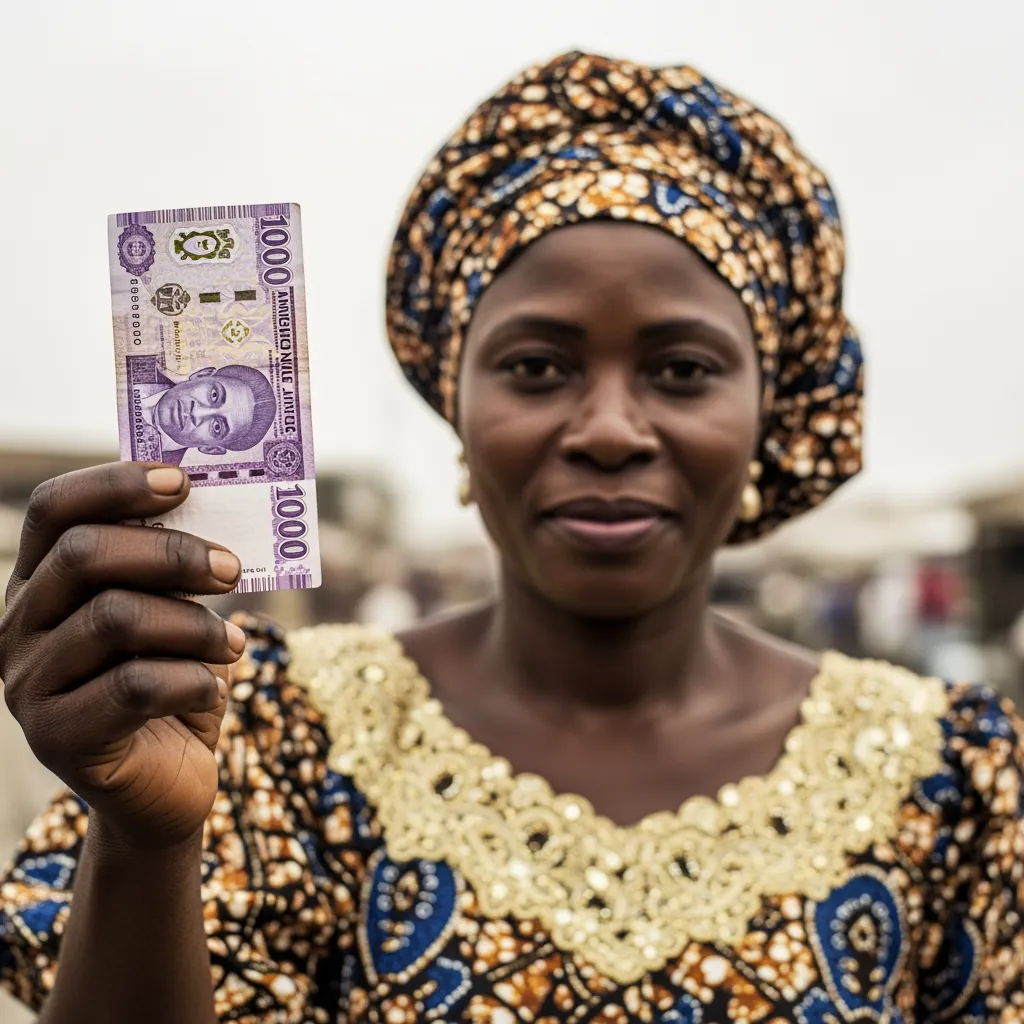
A person holding a 1000 Naira note in a busy market possesses immediate settlement power that electronic screens occasionally delay.
The exchange of paper currency offers a level of certainty that matches the fast pace of local commerce.
This reality persists because physical notes function independently of power grids or network signals.
In many parts of the region, physical cash is king and serves as the primary tool for daily survival and trade.
The World Bank Global Findex 2021 report indicates that 90 percent of retail transactions in sub-Saharan Africa involve physical currency.
This figure highlights the connection between citizens and the tangible economy.
The Speed of Hand to Hand Exchange
Market environments in Lagos and Accra require rapid movements and quick decisions.
A seller receives cash and provides change in a single motion.
This process excludes the wait for a confirmation text message or a bank alert.
His experience reflects why physical cash is king for those who want instant liquidity.
Each transaction in a local market benefits from the immediate finality of paper money.
When a buyer hands over a note, the debt is settled.
This simplicity supports the informal economy, which accounts for approximately 80 percent of employment in the region according to reports from July 2022.
Infrastructure as an Opportunity for Progress
The reliance on physical notes presents an opportunity to expand the financial infrastructure of the region.
While digital systems expand, the physical note provides a backup.
It ensures that trade continues even when technical systems require maintenance.
Her observation points to the utility of currency that functions in remote locations.
The link between paper currency and electronic records serves as a channel that carries truth from the ground to the decision-makers.
This connection allows the government to understand the volume of trade occurring in the informal sector.
It functions as a connection that brings the reality of the market into the administrative records of the state.
The Authority of Physical Value
Central banks in West Africa recognize the importance of maintaining a steady supply of currency to support the economic activity of the people.
The availability of notes ensures that even a person without a smartphone can participate in the economy.
“Cash continues to play a role in our economy, providing a means of exchange for millions of citizens who participate in the informal sector.” — Olayemi Cardoso, Governor of the Central Bank of Nigeria, 2024
This perspective confirms that physical cash stays king in the financial inclusion efforts of the nation.
The goal of the administration is to provide multiple options for payment.
Providing both physical and digital choices empowers the citizen to choose the suitable tool for the moment.
Financial Inclusion Through Hybrid Systems
The expansion of mobile money and agent banking creates a path for physical notes to enter the digital space.
A person takes cash to an agent, and the agent converts it into a digital balance.
This administrative process expands the reach of the banking system.
Data from the Central Bank of Nigeria in December 2022 showed an increase in the number of authorized agents across the country.
These agents serve as the physical points of contact for millions of Nigerians.
They confirm the identity of the person and record the financial transaction with accuracy.
Even in this hybrid model, physical cash is king because it provides the initial entry point required for these modern systems to function.
A person trusts the cash in hand, and that trust extends to the agent who accepts the cash.
This method builds a foundation for a modern economy.
The Future of Trade in West Africa
The economy of West Africa is a space of constant activity and resourceful people.
The use of physical currency is a factual reality that reflects the current requirements of the population.
It provides a safe method for storing value and conducting trade.
As the region pursues economic expansion, the coexistence of cash and digital tools will provide stability.
The principle that physical cash is king persists because it solves immediate problems for the average citizen.
It offers a direct connection to the value of labor and the price of goods.
By acknowledging the use of cash, administrators can design better financial policies.
These policies will support the informal trader and the large corporation alike.
The focus stays on improving the system and providing accurate records for the progress of the nation.

The Honest Kobo: Moving Currency Through Digital Channels
A single coin in a bank vault exists as a physical asset and a digital entry at the same time.
The movement of the Honest Kobo relies on the accuracy of the ledger and the speed of the electronic network.
Accuracy in accounting ensures that funds reach the intended destination without delay.
When the ledger balances, the economy moves forward with confidence.
In 2023, the Central Bank of Nigeria reported a rise in electronic transaction volume.
The NIBSS Instant Payment (NIP) system processed over 600 trillion Naira during that year.
These figures show a move toward electronic value exchange.
This movement requires a legal foundation and accurate records to maintain the integrity of the currency.
A senior teller with fifteen years of experience in the banking sector says, “The ledger must balance before the close of business. A single error in a digit pauses the entire process until the team finds the correction. We look for accuracy in each transaction to ensure the customer receives their value.”
This ensures that the Honest Kobo travels safely across the network.
The Electronic Connection Between Financial Levels
Administrative reasoning dictates that the electronic pathway for data carries truth from the ground to the decision-makers.
This connection between the rural farmer and the urban market exists through a verified identity system.
When a person initiates a transfer, the system confirms the identity through the Bank Verification Number (BVN).
In 2024, data indicates that over 61 million Nigerians possess a BVN, creating a secure environment for trade.
A verification officer in Lagos says, “The BVN must match the NIN. Discrepancies in the names on the database pause the transaction immediately. Once the details match, the Honest Kobo moves with speed to the recipient.”
This administrative process protects the sender and the receiver.
“The integrity of our payment system depends on the adherence to transaction protocols by financial institutions.” — Olayemi Cardoso, Governor of the Central Bank of Nigeria, 2024
Administrative Procedures for Financial Expansion
Expansion of the financial space requires proper documentation and adherence to international rules.
In February 2024, the Financial Action Task Force (FATF) provided updated guidelines for transaction monitoring.
Following these rules allows Nigerian banks to communicate with global networks.
A person using a mobile app to send money relies on these background protocols to ensure their Honest Kobo maintains its value.
Expectations for manual files to move during a public holiday often result in a quiet office.
The electronic system, however, continues to function regardless of the hour.
This constant availability provides citizens with a reliable method to manage their resources.
The expansion of these systems provides opportunities for more individuals to enter the formal economy.
64 percent of the adult population in Nigeria now possesses access to formal financial services according to reports from 2023.
This progress comes from the activity of both the public and private sectors.
By maintaining accurate records, the system builds trust with the public.
Protocols for Instant Value Exchange
Transaction speed depends on the RTGS and NIP channels.
These systems handle different scales of value transfer.
The RTGS system handles high-value transactions with immediate settlement.
This technical process allows large corporations to move funds for administrative purposes without delay.
The Honest Kobo within these systems follows a defined route monitored by the Central Bank.
A supervisor at a clearing house explains, “We monitor each entry for accuracy. The system allows for expansion of trade because the settlement happens in real time. This provides certainty for the merchants.”
This certainty allows for more activity in the marketplace.
Ensuring that the Honest Kobo moves quickly involves regular maintenance of the electronic infrastructure.
The government assigns money to these projects to ensure the network remains in a state of readiness.
As more people use these channels, the economy experiences progress through increased transaction volume.
Final Observations on Currency Movement
The Honest Kobo represents more than a unit of currency.
It represents the formal agreement between the citizen and the state.
By using digital identification, the government recognizes each person within the financial space.
This recognition allows for the improvement of services and the expansion of the tax base.
A person who understands the system moves with confidence.
The instructions provided by the banks help the public navigate the administrative process.
This informed population contributes to the expansion of the national economy through consistent activity.

Small Business Loans Through Advanced Credit Systems

Why Physical Cash is King in West Africa

Paths of the Honest and Fast Kobo

The Coming End of Physical Bank Branch Offices

How One Misplaced Dot Broke a Bank Login Page

Nigerian Hackers: The Global Fraud Story and Its Fallout

Internet Sovereignty: Why Some Countries Want Their Own Separate Internet

Forgotten Satellites Defy Silence, Beaming Signals for Decades

The Untold Story Of The Nigerian Who Helped Build Global Internet Systems

The 1-Star Review That Almost Bankrupted a Bakery

Why Are You Hiding Your Business From People With Money?

The “Village People” Aren’t Blocking Your Sales; Your Bad SEO Is.
Internet Sovereignty: Why Some Countries Want Their Own Separate Internet
How One Misplaced Dot Broke a Bank Login Page
The Untold Story Of The Nigerian Who Helped Build Global Internet Systems
Nigerian Hackers: The Global Fraud Story and Its Fallout
Forgotten Satellites Defy Silence, Beaming Signals for Decades
The “Village People” Aren’t Blocking Your Sales; Your Bad SEO Is.
The 1-Star Review That Almost Bankrupted a Bakery

The Business That Died because the Owner Refused to “Go Beyond.”
Why Are You Hiding Your Business From People With Money?
Why Physical Cash is King in West Africa
The Coming End of Physical Bank Branch Offices
Small Business Loans Through Advanced Credit Systems
 Edutech Portal2 weeks ago
Internet Sovereignty: Why Some Countries Want Their Own Separate Internet
- Digital Hustle2 weeks ago
How One Misplaced Dot Broke a Bank Login Page
- Edutech Portal2 weeks ago
The Untold Story Of The Nigerian Who Helped Build Global Internet Systems
- Edutech Portal2 weeks ago
Nigerian Hackers: The Global Fraud Story and Its Fallout
- Edutech Portal2 weeks ago
Forgotten Satellites Defy Silence, Beaming Signals for Decades
- Edutech Portal2 weeks ago
The “Village People” Aren’t Blocking Your Sales; Your Bad SEO Is.
- Edutech Portal2 weeks ago
The 1-Star Review That Almost Bankrupted a Bakery
- Edutech Portal2 weeks ago
The Business That Died because the Owner Refused to “Go Beyond.”