Business Data
Who Owns Data? Business data privacy Facts.
Business data privacy defines the strength of an operation in the digital space. Information ownership persists as a critical topic for all operators today.


The digital space resembles a busy market where information moves faster than physical goods. Many operators collect details without considering the weight of responsibility. Business data privacy exists as a necessity rather than an option. The matter of who owns the information in the digital space often leads to long debates in the boardroom. It is a reality that information serves as the primary currency of the current era. The collection of names, numbers, and habits provides a map for expansion. However, the ownership of these details often persists with the original provider rather than the collector.
The weight of information in the digital space

Information acts as a sacred trust between a business and its customers. When an individual shares personal details, they grant a license for use, yet they rarely surrender the title of ownership. Many people assume that once data enters a database, the business gains total control. This assumption leads to friction. The legal reality suggests that the individual maintains rights over their personal records. Business data privacy protocols must respect this boundary to avoid legal complications. Large corporations often discover that the data of the customer stays the property of the customer. This distinction creates a complex environment for those handling large volumes of records.
According to reports from global security firms, the average cost of a data breach reached 4.45 million dollars in the previous year. This figure illustrates the heavy price of failing to maintain Business data privacy. The financial implications extend beyond immediate fines. A loss of trust often results in a decline in the yield of the business. Investors look at the record of an organization regarding information safety before committing capital. The safety of these records determines the long-term viability of the operation. High standards in this area lead to a more stable market presence.
The legal status of digital records
Statutory requirements across the globe have shifted the power back to the individual. Laws now require businesses to explain the reason for collecting each piece of information. The law forbids the storage of data without a specific use. This change means that the data of the company must be handled with extreme care. Business data privacy laws emphasize the right of the person to be forgotten. If an individual requests the deletion of their records, the business must comply. This requirement confirms that the business acts only as a custodian rather than an owner.
“Privacy is a fundamental human right.”
— Tim Cook
The words of industry leaders highlight the shift in perception. Privacy used to be a secondary thought, but it now stands at the center of all digital activity. Some operators believe that they can bypass these rules through complex terms of service. Courts frequently rule against such practices. The language used in agreements must be simple and easy to understand. When the terms are hidden in fine print, the consent of the user becomes void. Honesty in communication ensures that Business data privacy standards are met without confusion. This straightforwardness builds a bridge between the business and the public.
The impact of data leaks on business yield

A leak in the system acts like a hole in a bucket. No matter how much water is poured in, the bucket will eventually become empty. Trust holds the market together, and Business data privacy preserves that trust. When information falls into the wrong hands, the reputation of the business suffers. Many people will choose to take their patronage elsewhere. This movement of customers leads to a reduction in the yield of the business. The cost of acquiring new customers after a breach is far higher than the cost of maintaining security. Experienced individuals prioritize the protection of records to ensure the expansion of the business stays on track.
Shoshana Zuboff once made a profound observation about the nature of information in the modern world. She suggested that the power to control information is the power to control the narrative of a person.
“Privacy is the power to selectively reveal oneself to the world.”
— Shoshana Zuboff
This quote reminds all operators that they handle more than just numbers. They handle the identities of people. Respecting Business data privacy is a sign of respect for the individual. Those who treat data as a mere commodity often find themselves facing public backlash. The market rewards organizations that demonstrate a high level of integrity. Maintaining a secure environment for information is a practical way to show this integrity. It is an investment that pays dividends in the form of customer loyalty.
Future considerations for information security
The expansion of digital tools will continue to generate more information. This increase in volume requires a corresponding increase in security measures. Business data privacy will remain a central theme as new technologies emerge. All businesses must prepare for a future where the scrutiny of data practices will increase. The public is becoming more aware of their rights. They demand to know how their information is used and where it is stored. Providing this information through open communication is the best way to maintain a positive relationship with the market.
The path to a secure digital environment involves a commitment to high standards. It requires a shift in mindset from seeing data as an asset to seeing it as a responsibility. The yield of the business depends on this shift. Those who adapt to the new reality will find more opportunities for expansion. Those who cling to old habits will find the environment increasingly difficult. Business data privacy serves as the compass for navigating the complexities of the digital space. It ensures that the business stays on the right side of the law and the right side of public opinion. The facts show that the protection of information is the only way to ensure lasting progress.
In conclusion, the question of who owns data has a clear answer. The individual owns the information, while the business holds it in trust. Maintaining Business data privacy is the duty of all who operate in the digital space. This duty requires constant attention and a commitment to honesty. By following these principles, a business can protect its reputation and ensure its expansion for years to come.






Business Data
Smart CEOs Use Business data analysis to Win.
Business data analysis provides the evidence needed for expansion. Intelligent leaders use factual patterns to stay ahead in the competitive Nigerian market.

The decision to expand a business often feels like a gamble in a volatile economy. Many operators rely on gut feelings or the advice of peers who might lack the full picture. Business data analysis changes this dynamic by providing a factual foundation for each move. While intuition has a place in the initial spark of an idea, the endurance of that idea depends on hard figures. Experienced individuals understand that the market speaks through numbers, even when the noise of the street is loud.
In the Nigerian context, the cost of capital is high. Borrowing from banks or seeking investors requires a level of precision that only Business data analysis can provide. Some operators assume that as long as money enters the drawer, the business is healthy. This assumption is a common pitfall. Tracking the movement of goods and the preferences of buyers reveals where the actual yield exists. Without this evidence, an enterprise is merely reacting to the environment rather than shaping its own progress.
Statistics from various industry reports indicate that data-driven organizations are three times more likely to report significant improvement in decision-making. This reality is visible in the way major retail chains in Lagos manage their inventory. They do not guess what people want; they observe what people buy. By examining the frequency of purchases, these leaders ensure that their shelves stay stocked with high-demand items while shedding the weight of slow-moving stock.
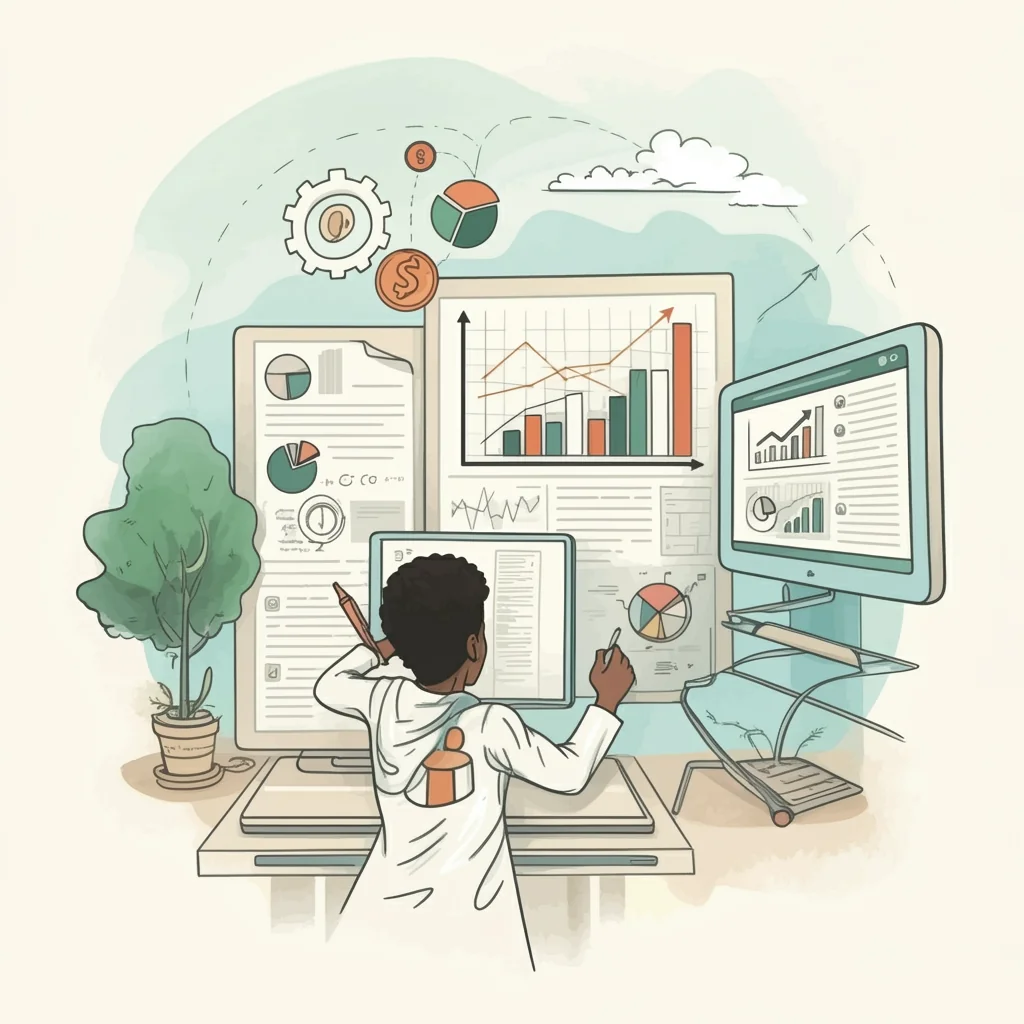
The Evidence of the Ledger and Market Reality
A common observation among seasoned commentators is that many businesses stay small because the owners fear the complexity of their own records. Business data analysis simplifies this complexity by turning a mountain of receipts into a clear map. When an operator knows the exact cost of acquiring a customer, the strategy of the business becomes more focused. This focus is what separates the casual trader from the visionary CEO. The ability to see patterns in the chaos of a busy market is a rare but learnable skill.
In God we trust, all others must bring data.
— W. Edwards Deming
This quotation by W. Edwards Deming highlights a fundamental truth in the corporate world. Trust is a spiritual matter, but evidence is a requirement for the boardroom. In Nigeria, where inflation and currency fluctuations are constant, relying on outdated information is dangerous. The data of the previous month might be irrelevant today. Therefore, the habit of constant Business data analysis is a shield against sudden economic shifts. It allows a leader to pivot with confidence because the numbers support the change.
Identifying Patterns in the Digital Space
The internet has changed how people interact with brands. A website is no longer a static brochure; it is a digital space where every click tells a story. Business data analysis in the digital space allows a company to see where interest is high and where it fades. If many people visit a page but leave without making a purchase, the data suggests a friction point. Perhaps the price is too high or the description lacks clarity. Addressing these specific points leads to a better yield than a general marketing campaign.
Data from the National Bureau of Statistics often shows shifts in consumer spending that can catch an unprepared CEO off guard. For example, a rise in the cost of fuel often leads to an increase in demand for home delivery services. A CEO who uses Business data analysis will spot this trend early. The strategy then shifts to reinforce the delivery arm of the business. This proactive stance is only possible when the leader values facts over assumptions. The progress of the firm stays steady because it moves in harmony with the actual behavior of the public.

The Yield of Financial Discipline
Expansion is the goal of many people in the commercial sector. However, expansion without a foundation of data often leads to a collapse. A CEO must understand the debt-to-equity ratio and the cash flow cycles of the organization. Business data analysis provides a mirror that reflects the true health of the company. It reveals if the expansion is sustainable or if it is a hollow shell. Many individuals find that small, data-backed adjustments yield more profit than large, uncalculated risks.
What gets measured gets managed.
— Peter Drucker
The wisdom of Peter Drucker remains relevant in the modern Nigerian economy. If an operator fails to measure the performance of the staff or the return on an advertisement, management becomes a matter of luck. Luck is an unreliable partner in business. By contrast, Business data analysis offers a predictable path to victory. It ensures that resources go toward activities that produce the highest return. This discipline is the hallmark of a smart leader who intends to stay relevant for decades.
The Future of Decision Making in Nigeria
As the business environment becomes more competitive, the margin for error shrinks. The era of running a large company on a whim is over. All successful leaders now lean heavily on the insights provided by Business data analysis. This practice is accessible to anyone with a ledger and the patience to look for trends. Whether the business operates in the heart of Kano or the busy streets of Port Harcourt, the principles of data stay the same. Facts are neutral and they provide a clear direction for those willing to listen.
The activity within the market provides all the answers a CEO needs. The challenge lies in the willingness to collect and interpret these answers. By committing to Business data analysis, a leader ensures that the vision of the company is grounded in reality. This groundedness is what allows a business to weather the storms of the economy and emerge stronger. The progress of the enterprise becomes a matter of calculation rather than a matter of chance. In the end, the data tells the truth, and the truth is the best tool for winning.
Business Data
1000 Local Searches Analyzed: What People Actually Type
An analysis of 1,000 local searches reveals the gap between business language and how Nigerians actually find services online.

Are businesses in Nigeria talking to themselves while customers look away?
Most business owners in Nigeria are talking to themselves while the public is looking for someone else. The language of the boardroom often fails to match the language of the street, so when a person holds a phone to find a service, the words used are simple and direct.
An analysis of one thousand local searches reveals a massive gap between how businesses describe themselves and how people actually find them. Many operators spend money on fancy words that nobody ever types into a search bar, and this observation shows that the reality of search behavior is far more basic than many people assume.
Why do people search for proximity more than prestige?
The data indicates that the phrase near me dominates the habits of the average person in Lagos or Abuja. People want solutions that are physically close to their current location, so instead of searching for the best legal practitioner in Nigeria, a person will search for lawyers in Ikeja or lawyers near me.
This behavior shows that proximity is a bigger factor than prestige for most individuals. The results of the analysis suggest that people value their time more than the perceived status of a firm, so businesses that ignore their local presence are essentially invisible to these users. The focus stays on the immediate vicinity of the person holding the device.
Is the price of a service the first thing on the mind of a customer?
Another major discovery involves the use of the word cheap or price. Corporate entities often avoid these words because they want to appear high-end, but the analysis shows that a large portion of the population starts their search with a budget in mind.
People type cheap car wash or price of dental cleaning far more often than they type quality car care. The preference for knowing the cost upfront is a dominant trait among Nigerian consumers.
Businesses that hide their pricing or use vague terms like affordable are missing the chance to connect with these seekers. Practicality wins over flowery descriptions in the search bar.
Can landmarks help a business get found on the street?
The use of landmarks and street names is another significant trend in the data. Many people do not know the local government area they are in, but they know the nearest bus stop or a popular building.
Searches like pharmacy near Toll Gate or tailor on Admiralty Way are very common. This level of specificity helps people find businesses that are easy to reach.
Businesses that only list their state or city are too broad for a person who wants to walk or drive a short distance. Including the names of nearby landmarks in the online presence of the business makes it easier for the public to find the physical location.
Why speaking the language of the street works best
Spelling errors and colloquial language also appear frequently in the one thousand searches analyzed. People often type words as they sound or use local slang to describe what they need.
A person might search for mama put instead of local restaurant or mechanic for motor instead of automotive technician. The analysis shows that search engines are smart enough to understand these terms, but businesses are often too stiff to use them.
Staying too formal can lead to a disconnect with the audience. The data suggests that being relatable is more effective than being overly professional in the digital space.
Do businesses know the daily rhythm of their customers?
The timing of searches reveals when people are most likely to need specific services. Many searches for food and entertainment happen in the late afternoon and evening.
Searches for emergency services like plumbers or electricians often happen early in the morning when people discover faults in their homes. Understanding these patterns allows a business to be available when the demand is highest.
The analysis proves that the needs of the public are tied to their daily routines. A business that understands the rhythm of the day can position itself to be the first option that appears.
Is using a common name better than a technical one?
Specific brands are often used as generic terms in the search behavior of many individuals. People might search for Xerox shop when they simply need a photocopy or Indomie when they want any brand of noodles.
This shows the power of brand recognition, but it also shows how people simplify their needs. For a small business, this means that using common terms is better than using technical names.
The data shows that the public prefers words that are easy to remember and easy to type. Complexity is a barrier that keeps potential customers away from a business.
Why the word of a neighbor matters more than a claim
The analysis of these searches also highlights the importance of reviews and ratings. Many people include the word best in their search, but they rely on the opinions of others to confirm it.
A search for best school in Lekki is often followed by a look at the star ratings and comments. The data shows that the public trusts the experiences of other people more than the claims of the business itself.
Maintaining a good reputation among the local community is a vital part of being found online. The feedback of the customers stays visible for a long time and influences future searches.
How mobile phones changed the way people talk to businesses
Mobile devices are the primary tool for these searches, which affects the length of the phrases used. People tend to use shorter phrases or voice search when they are on the move.
A voice search is often a full question like where is the nearest fuel station. The analysis shows that businesses should prepare for these conversational queries.
The way a person speaks is different from the way they type. Adapting to the natural speech of the public is a way to ensure that the business stays relevant in the age of mobile technology.
Is a business providing a solution or just a story?
The final observation from the data is that intent is everything. People search because they have a problem that needs a solution. They are not looking for a story or a mission statement in that moment.
They want to know the location, the price, and the opening hours. The analysis of one thousand searches confirms that the businesses with the most progress are those that provide these answers quickly.
The public rewards simplicity and directness. By focusing on search intent data, a business can stop guessing and start meeting the actual needs of the people in their community.
Business Data
A Business or Just an Expensive Hobby?
A Business or Just an Expensive Hobby?
Look at your bank statement. If the figures look like a horror movie, you are likely funding a lif…

Look at your bank statement. If the figures look like a horror movie, you are likely funding a lifestyle rather than building an asset. Many people in Nigeria carry business cards but own expensive hobbies. Stop lying to your mirror. If the money only moves out of the account, you have a charity for your ego.
Most entrepreneurs confuse activity with productivity. You wake up early, you stay in traffic for three hours, and you shout at staff members. You feel busy. You feel important. However, the bank balance remains stagnant. This is the first sign of a hobby. A professional enterprise exists for one primary reason: the accumulation of profit. Without profit, you are just a person with a very stressful pastime.
The Revenue Illusion
Revenue is vanity. Profit is sanity. Cash is king. You might see millions of Naira passing through the account of the company. You feel like a big player in the sector. But check the margins. If the cost of operation eats every kobo, you are merely a conduit for money. You are paying the landlord. You are paying the electricity company. You are paying the staff. Everyone gets a piece of the pie except the owner of the business.
A real business demands a return on investment. If you put one Naira in, you expect two Naira back. If you put one Naira in and get ninety kobo back, you are participating in a very expensive sport. Hobbyists ignore the math. They focus on the prestige. They love the title of CEO. They enjoy the office in Lekki. But they avoid the spreadsheet. The spreadsheet contains the truth. The truth is often painful.
The Oga Syndrome
Many founders suffer from the need to appear powerful. This need drives them to hire ten people when two people can do the work. It drives them to buy a brand-new SUV while the company lacks working capital. This is the hallmark of a hobbyist. A businessman prioritizes the health of the entity over the comfort of the individual. The entity must breathe. If the owner suffocates the entity to buy designer shoes, the entity will die.
Consider the structure of the organization. Does the work stop when you go on vacation? If the answer is yes, you have a job, or perhaps a very demanding pet. A business is a machine. A machine operates according to a set of rules and systems. It functions while the operator sleeps. If your presence is the only thing keeping the doors open, you are a freelancer with an office. Systems create freedom. Chaos creates a hobby.
The Data Gap
How much does it cost to acquire one customer? If you lack this data, you are gambling. How much is the lifetime value of a client? If this number is a mystery, you are playing a game of chance. Business people live by the numbers. They track every kobo. They know which marketing channel brings the most value. They cut the limbs that fail to produce fruit. Sentiment is for family. Data is for the boardroom.
Hobbyists make decisions based on vibes. They saw a competitor do something, so they did it too. They felt like the logo should be blue, so they changed it. This is child’s play. A professional enterprise uses historical data to predict the future. The data tells you when to scale and when to retreat. It tells you if the product is a winner or a drain on resources. Listen to the numbers. The numbers have no reason to lie to you.
The Cost of Vanity
Social media has ruined the perception of trade. People see pictures of private jets and fancy offices. They think this is the goal. They spend the capital of the firm to look the part. They forget that the most profitable companies often start in a garage or a small room in Yaba. Frugality is a virtue. Waste is a sin against the balance sheet.
Every expense must justify its existence. Does this new desk bring in more revenue? Does this software increase the efficiency of the team? If the answer is negative, keep the money in the bank. A hobbyist spends to feel good. A businessman spends to make more. The difference is subtle but the results are world apart. Protect the capital. The capital is the lifeblood of the operation.
The Pivot to Professionalism
You can change the trajectory of the firm today. Start by auditing every process. Look for the leaks. Where is the money disappearing? Identify the most profitable service and double down on it. Fire the clients that take eighty percent of your time but provide ten percent of your income. Focus is a multiplier. Diffusion is a killer.
Set clear targets for the next quarter. These targets must be financial, not emotional. Aim for a specific profit margin. Aim for a specific reduction in overhead. Hold yourself accountable to these figures. If you miss the mark, analyze the failure. Adjust the strategy. Try again. This is the cycle of a professional. Refinement is constant. Perfection is a myth.
The Final Verdict
Ask yourself: If I tried to sell this company today, would anyone buy it? A buyer looks for a predictable stream of income. They look for a system that works without the founder. They look for clean books and a clear path to profit. If your company is just a collection of your personal skills and a pile of receipts, it has zero value. It is a hobby. Build something that can outlive you. Build something that a stranger would want to own.
The transition from hobby to business is a mental shift. It requires the death of the ego. It requires the birth of a strategist. Put away the toys. Stop the vanity projects. Focus on the core mission of the enterprise. Make money. Everything else is just noise in the air. The market respects results. The market ignores effort without output. Be the person who delivers the output.
Your future self will thank you for the discipline you show today. The bank account will reflect the change in your mindset. The stress of the hustle will transform into the satisfaction of a well-oiled machine. Choose to be a professional. The era of the expensive hobby is over.

Stop High Discounts with Value based pricing.

What People Think: Website user experience.

Free lead generation: Get Leads for Zero Kobo.

Local marketing ideas: Pizza vs Law Firms.

Who Owns Data? Business data privacy Facts.

The True Reason for Google ranking factors.

Local search terms: What 1,000 People Type Now.

Find High intent keywords for Premium Clients.

Use Business brand visibility to Get Leads.

Get more reviews With a 5-Star Review System.

Smart CEOs Use Business data analysis to Win.

Google Maps SEO Switch Boosts Your Calls Fast.

Internet Sovereignty: Why Some Countries Want Their Own Separate Internet

How One Misplaced Dot Broke a Bank Login Page

The Untold Story Of The Nigerian Who Helped Build Global Internet Systems

Nigerian Hackers: The Global Fraud Story and Its Fallout

The Smallest Change That Will Affect All Digital Operations

Forgotten Satellites Defy Silence, Beaming Signals for Decades

Do Not Allow Your Digital Store to Shut Down:

Implement Local SEO Fixes for Lagos: Beat Google Maps Competitors

Core Web Vitals Checklist: How to Achieve a Near-Perfect Score on Mobile Devices

Nigeria Enter One Chance? Insecurity and Sachet Economy in 2026

Stop Being Busy, Start Being Productive – Focus on What Matters to Achieve Success

The “Village People” Aren’t Blocking Your Sales; Your Bad SEO Is.
 Technology4 months ago
Internet Sovereignty: Why Some Countries Want Their Own Separate Internet
- Technology5 months ago
How One Misplaced Dot Broke a Bank Login Page
- Technology4 months ago
The Untold Story Of The Nigerian Who Helped Build Global Internet Systems
- Security First4 months ago
Nigerian Hackers: The Global Fraud Story and Its Fallout
- Technology3 months ago
The Smallest Change That Will Affect All Digital Operations
- Technology4 months ago
Forgotten Satellites Defy Silence, Beaming Signals for Decades
- E-Commerce3 months ago
Do Not Allow Your Digital Store to Shut Down:
- Technical Guide3 months ago
Implement Local SEO Fixes for Lagos: Beat Google Maps Competitors