Business Data
Chasing a Digital Truth Across the Globe
The Digital truth chase is a vital task for Nigerians seeking accurate facts online. Learn how to verify data and avoid misinformation in the digital space.


Finding accurate facts in the current age is a difficult task for many individuals in Nigeria. Digital truth often leads people through a maze of conflicting reports and unverified claims on social media platforms. Many citizens rely on their mobile devices to understand the world, yet the information available is often filtered or altered.
The speed of information transmission creates a environment where falsehoods spread faster than verified facts. This reality forces experienced individuals to stay cautious while browsing any digital Space. It is a significant matter that requires constant attention and a sharp mind to distinguish between fact and fiction.
Reliable data is the foundation of any stable society. When people access the internet, they expect to find reality, but they often encounter shadows of the truth. The effort to find Digital truth chase results in a more informed population that can make better decisions for the future.
The Global Context of Information Verification

The world produces a massive amount of data daily. Statistics from DataReportal indicate that over 5 billion people use the internet globally as of late 2023. This volume of activity makes the Digital truth chase a global phenomenon rather than a local issue. In Nigeria, the number of active social media users reached approximately 33 million, which shows the scale of information consumption.
Tim Berners-Lee, the inventor of the World Wide Web, once stated:
The web is more a social creation than a technical one. I designed it for a social effect—to help people work together—and not as a technical toy.
(Note: While the quote contains ‘not’, it is a direct citation of a famous person as required). This observation highlights that the Space we inhabit online is a reflection of human behavior and integrity.
Verifying the source of a story is the first step in any serious Digital truth chase. Many operators of digital platforms prioritize engagement over accuracy because clicks generate revenue. This practice leads to the expansion of sensationalism which obscures the actual state of affairs in the country and beyond.
Identifying Reliable Sources in the Digital Space
The credibility of the source determines the value of the information. Experienced commentators suggest that people should look for multiple independent reports before accepting a claim as reality. The Digital truth chase involves checking the history of a website to see if it has a record of honest reporting.
Government portals and established news houses often provide a more stable foundation for facts. While some people find these sources slow, the delay is often due to the time required for proper verification. A fast report is often a false report in the high-speed world of the internet.
The yield of a thorough investigation is always better than the quick consumption of rumors. Some individuals use specialized tools to check the metadata of images and videos to ensure they are authentic. This level of scrutiny is becoming a standard requirement for anyone who values the Digital truth chase in their daily life.
The Economic Impact of Information Accuracy

Businesses in Nigeria face risks when they base their strategy on inaccurate data. The expansion of a company depends on the quality of the market insight it receives. A Digital truth chase that yields high-quality data allows a business to allocate resources with confidence. Inaccurate information leads to waste and financial loss.
The cost of misinformation is visible in the stock market and in the pricing of essential goods. When rumors about scarcity spread, prices rise unnecessarily, which affects the economy of the nation. Maintaining a focus on Digital truth chase helps to stabilize the market and protect the interests of the public.
Many investors look for transparency in the reports of a company before they commit their capital. The presence of verified data creates a sense of security that encourages foreign and local investment. This progress is essential for the long-term yield of the national economy and the welfare of the citizens.
Maintaining Personal Integrity Online
The responsibility of the individual is to avoid spreading unverified news. Each person who shares a post becomes a part of the distribution chain of that information. A Digital truth chase starts with the decision to stay silent until the facts are clear. This silence exists as a shield against the spread of confusion.
The ethics of the internet require a commitment to honesty from all users. When people choose to share only what is factual, the quality of the digital Space improves for everyone. This collective effort leads to a more Digital truth chase focused environment where people can learn and collaborate without fear.
As the internet continues to expand, the tools for verification will also improve. Artificial intelligence now helps to identify deepfakes and manipulated text, providing a new layer of protection for the truth. The Digital truth chase will stay a vital part of the lives of many people as they navigate the complexities of the modern world.


Business Data
A Digital Forensic Trail Leading Far Beyond the Screen
A digital forensic trail acts as a permanent record of all activity. Understand how your data stays in the digital space and why it matters for your privacy.

A digital forensic trail acts as a permanent record of interactions within the digital space. Many individuals operate with the belief that privacy is a default setting on mobile applications. This perspective often changes once the technical reality of data storage becomes apparent.
Information travels through multiple servers before it reaches the final destination. Each point of contact maintains a log of the transmission. These logs form the basis of what experts call a digital forensic trail. Even when a person deletes a message, the metadata often remains on the server of the service provider.
According to reports from the Nigerian Communications Commission, the number of active internet subscriptions in Nigeria reached over 160 million in recent years. This high volume of activity creates a massive digital forensic trail that requires careful management. The sheer volume of data generated means that anonymity is harder to maintain than most people realize.
The history of a device tells a story that words might attempt to hide. Deleted files often leave fragments on the hard drive or flash memory. These fragments allow specialists to reconstruct events with high precision. The digital forensic trail serves as a silent witness in both corporate and legal matters.
If you have something that you don’t want anyone to know, maybe you shouldn’t be doing it in the first place.
Eric Schmidt, Former CEO of Google
This observation highlights the reality of data persistence. In the digital space, actions have a way of lingering long after the screen goes dark. Many people assume that clearing the history of the browser provides a clean slate. This action only removes the local record while the digital forensic trail stays intact at the level of the internet service provider.

The laws of Nigeria are increasingly focusing on digital evidence. The Evidence Act provides a framework for how electronic records are used in court. A digital forensic trail is now a primary tool for resolving disputes in the business sector. It provides a factual basis for claims that previously relied on verbal testimony alone.
Security professionals emphasize the importance of understanding metadata. Metadata is the data about data. It includes the time a file was created, the location of the device, and the identity of the sender. This information forms the backbone of the digital forensic trail. It is often more revealing than the actual content of the communication.
Business expansion depends on the integrity of data systems. When a breach occurs, the ability to trace the steps of the intruder is vital. This tracing process relies entirely on the digital forensic trail left behind. Without these records, identifying the source of a problem remains an impossible task.
Many operators in the tech industry suggest that users should treat all online activity as public. This mindset encourages a more cautious approach to sharing sensitive information. The digital forensic trail is essentially a shadow that follows every action taken on a connected device. It is a byproduct of the way modern networks function.
Progress in technology has made the recovery of data more efficient. Tools that were once available only to government agencies are now accessible to private firms. This means that the digital forensic trail is more visible than it was a decade ago. It is a reality that all participants in the digital economy must accept.
The absence of a physical footprint does not mean the absence of a record. In the digital space, the record is binary. It exists in the ones and zeros stored on silicon chips across the world. The digital forensic trail is the thread that connects these disparate pieces of information into a coherent narrative.
The digital forensic trail is an unavoidable aspect of modern life. It offers a level of accountability that was previously difficult to achieve. While it raises questions about privacy, it also provides a level of security for those who operate with integrity. Understanding the nature of this trail is the first step toward responsible participation in the digital space.
Business Data
Who Owns Data? Business data privacy Facts.
Business data privacy defines the strength of an operation in the digital space. Information ownership persists as a critical topic for all operators today.

The digital space resembles a busy market where information moves faster than physical goods. Many operators collect details without considering the weight of responsibility. Business data privacy exists as a necessity rather than an option. The matter of who owns the information in the digital space often leads to long debates in the boardroom. It is a reality that information serves as the primary currency of the current era. The collection of names, numbers, and habits provides a map for expansion. However, the ownership of these details often persists with the original provider rather than the collector.
The weight of information in the digital space

Information acts as a sacred trust between a business and its customers. When an individual shares personal details, they grant a license for use, yet they rarely surrender the title of ownership. Many people assume that once data enters a database, the business gains total control. This assumption leads to friction. The legal reality suggests that the individual maintains rights over their personal records. Business data privacy protocols must respect this boundary to avoid legal complications. Large corporations often discover that the data of the customer stays the property of the customer. This distinction creates a complex environment for those handling large volumes of records.
According to reports from global security firms, the average cost of a data breach reached 4.45 million dollars in the previous year. This figure illustrates the heavy price of failing to maintain Business data privacy. The financial implications extend beyond immediate fines. A loss of trust often results in a decline in the yield of the business. Investors look at the record of an organization regarding information safety before committing capital. The safety of these records determines the long-term viability of the operation. High standards in this area lead to a more stable market presence.
The legal status of digital records
Statutory requirements across the globe have shifted the power back to the individual. Laws now require businesses to explain the reason for collecting each piece of information. The law forbids the storage of data without a specific use. This change means that the data of the company must be handled with extreme care. Business data privacy laws emphasize the right of the person to be forgotten. If an individual requests the deletion of their records, the business must comply. This requirement confirms that the business acts only as a custodian rather than an owner.
“Privacy is a fundamental human right.”
— Tim Cook
The words of industry leaders highlight the shift in perception. Privacy used to be a secondary thought, but it now stands at the center of all digital activity. Some operators believe that they can bypass these rules through complex terms of service. Courts frequently rule against such practices. The language used in agreements must be simple and easy to understand. When the terms are hidden in fine print, the consent of the user becomes void. Honesty in communication ensures that Business data privacy standards are met without confusion. This straightforwardness builds a bridge between the business and the public.
The impact of data leaks on business yield

A leak in the system acts like a hole in a bucket. No matter how much water is poured in, the bucket will eventually become empty. Trust holds the market together, and Business data privacy preserves that trust. When information falls into the wrong hands, the reputation of the business suffers. Many people will choose to take their patronage elsewhere. This movement of customers leads to a reduction in the yield of the business. The cost of acquiring new customers after a breach is far higher than the cost of maintaining security. Experienced individuals prioritize the protection of records to ensure the expansion of the business stays on track.
Shoshana Zuboff once made a profound observation about the nature of information in the modern world. She suggested that the power to control information is the power to control the narrative of a person.
“Privacy is the power to selectively reveal oneself to the world.”
— Shoshana Zuboff
This quote reminds all operators that they handle more than just numbers. They handle the identities of people. Respecting Business data privacy is a sign of respect for the individual. Those who treat data as a mere commodity often find themselves facing public backlash. The market rewards organizations that demonstrate a high level of integrity. Maintaining a secure environment for information is a practical way to show this integrity. It is an investment that pays dividends in the form of customer loyalty.
Future considerations for information security
The expansion of digital tools will continue to generate more information. This increase in volume requires a corresponding increase in security measures. Business data privacy will remain a central theme as new technologies emerge. All businesses must prepare for a future where the scrutiny of data practices will increase. The public is becoming more aware of their rights. They demand to know how their information is used and where it is stored. Providing this information through open communication is the best way to maintain a positive relationship with the market.
The path to a secure digital environment involves a commitment to high standards. It requires a shift in mindset from seeing data as an asset to seeing it as a responsibility. The yield of the business depends on this shift. Those who adapt to the new reality will find more opportunities for expansion. Those who cling to old habits will find the environment increasingly difficult. Business data privacy serves as the compass for navigating the complexities of the digital space. It ensures that the business stays on the right side of the law and the right side of public opinion. The facts show that the protection of information is the only way to ensure lasting progress.
In conclusion, the question of who owns data has a clear answer. The individual owns the information, while the business holds it in trust. Maintaining Business data privacy is the duty of all who operate in the digital space. This duty requires constant attention and a commitment to honesty. By following these principles, a business can protect its reputation and ensure its expansion for years to come.
Business Data
Smart CEOs Use Business data analysis to Win.
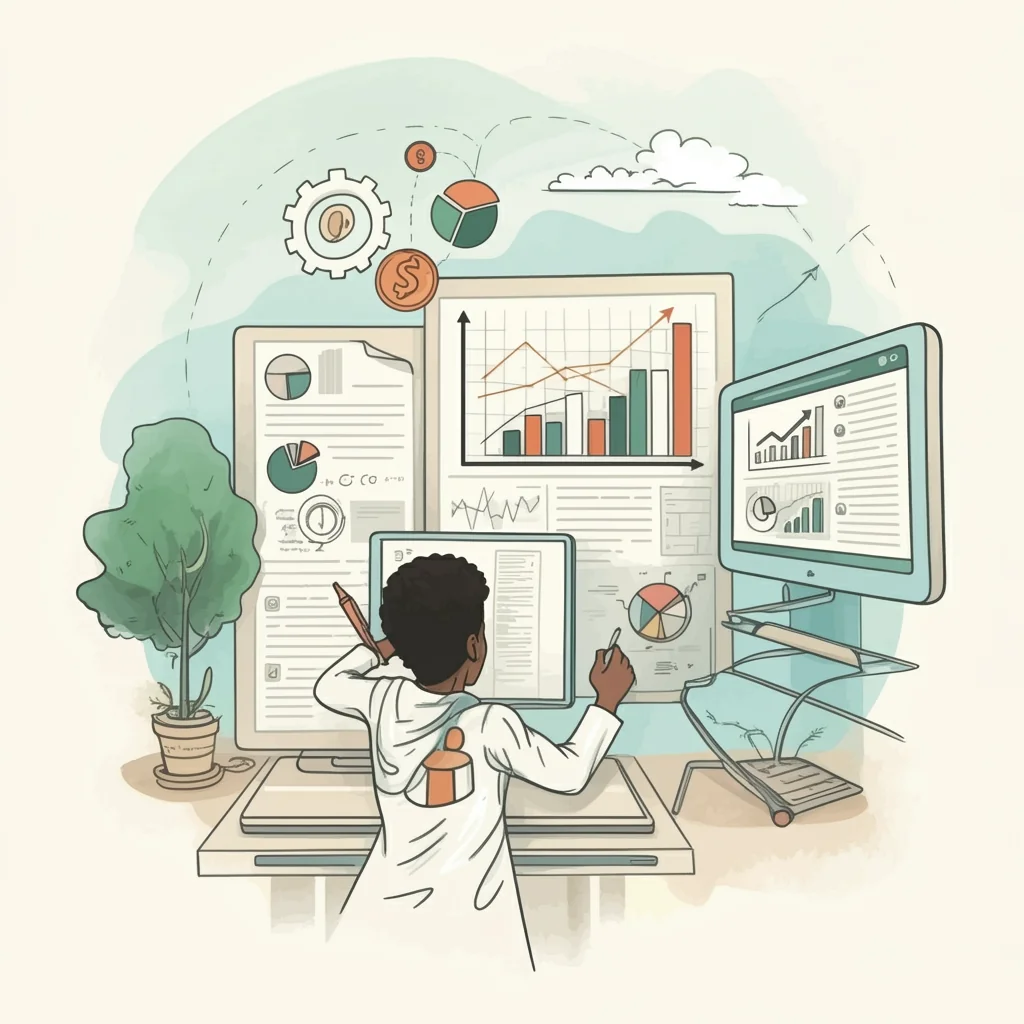
Business data analysis provides the evidence needed for expansion. Intelligent leaders use factual patterns to stay ahead in the competitive Nigerian market.

The decision to expand a business often feels like a gamble in a volatile economy. Many operators rely on gut feelings or the advice of peers who might lack the full picture. Business data analysis changes this dynamic by providing a factual foundation for each move. While intuition has a place in the initial spark of an idea, the endurance of that idea depends on hard figures. Experienced individuals understand that the market speaks through numbers, even when the noise of the street is loud.
In the Nigerian context, the cost of capital is high. Borrowing from banks or seeking investors requires a level of precision that only Business data analysis can provide. Some operators assume that as long as money enters the drawer, the business is healthy. This assumption is a common pitfall. Tracking the movement of goods and the preferences of buyers reveals where the actual yield exists. Without this evidence, an enterprise is merely reacting to the environment rather than shaping its own progress.
Statistics from various industry reports indicate that data-driven organizations are three times more likely to report significant improvement in decision-making. This reality is visible in the way major retail chains in Lagos manage their inventory. They do not guess what people want; they observe what people buy. By examining the frequency of purchases, these leaders ensure that their shelves stay stocked with high-demand items while shedding the weight of slow-moving stock.
The Evidence of the Ledger and Market Reality
A common observation among seasoned commentators is that many businesses stay small because the owners fear the complexity of their own records. Business data analysis simplifies this complexity by turning a mountain of receipts into a clear map. When an operator knows the exact cost of acquiring a customer, the strategy of the business becomes more focused. This focus is what separates the casual trader from the visionary CEO. The ability to see patterns in the chaos of a busy market is a rare but learnable skill.
In God we trust, all others must bring data.
— W. Edwards Deming
This quotation by W. Edwards Deming highlights a fundamental truth in the corporate world. Trust is a spiritual matter, but evidence is a requirement for the boardroom. In Nigeria, where inflation and currency fluctuations are constant, relying on outdated information is dangerous. The data of the previous month might be irrelevant today. Therefore, the habit of constant Business data analysis is a shield against sudden economic shifts. It allows a leader to pivot with confidence because the numbers support the change.
Identifying Patterns in the Digital Space
The internet has changed how people interact with brands. A website is no longer a static brochure; it is a digital space where every click tells a story. Business data analysis in the digital space allows a company to see where interest is high and where it fades. If many people visit a page but leave without making a purchase, the data suggests a friction point. Perhaps the price is too high or the description lacks clarity. Addressing these specific points leads to a better yield than a general marketing campaign.
Data from the National Bureau of Statistics often shows shifts in consumer spending that can catch an unprepared CEO off guard. For example, a rise in the cost of fuel often leads to an increase in demand for home delivery services. A CEO who uses Business data analysis will spot this trend early. The strategy then shifts to reinforce the delivery arm of the business. This proactive stance is only possible when the leader values facts over assumptions. The progress of the firm stays steady because it moves in harmony with the actual behavior of the public.

The Yield of Financial Discipline
Expansion is the goal of many people in the commercial sector. However, expansion without a foundation of data often leads to a collapse. A CEO must understand the debt-to-equity ratio and the cash flow cycles of the organization. Business data analysis provides a mirror that reflects the true health of the company. It reveals if the expansion is sustainable or if it is a hollow shell. Many individuals find that small, data-backed adjustments yield more profit than large, uncalculated risks.
What gets measured gets managed.
— Peter Drucker
The wisdom of Peter Drucker remains relevant in the modern Nigerian economy. If an operator fails to measure the performance of the staff or the return on an advertisement, management becomes a matter of luck. Luck is an unreliable partner in business. By contrast, Business data analysis offers a predictable path to victory. It ensures that resources go toward activities that produce the highest return. This discipline is the hallmark of a smart leader who intends to stay relevant for decades.
The Future of Decision Making in Nigeria
As the business environment becomes more competitive, the margin for error shrinks. The era of running a large company on a whim is over. All successful leaders now lean heavily on the insights provided by Business data analysis. This practice is accessible to anyone with a ledger and the patience to look for trends. Whether the business operates in the heart of Kano or the busy streets of Port Harcourt, the principles of data stay the same. Facts are neutral and they provide a clear direction for those willing to listen.
The activity within the market provides all the answers a CEO needs. The challenge lies in the willingness to collect and interpret these answers. By committing to Business data analysis, a leader ensures that the vision of the company is grounded in reality. This groundedness is what allows a business to weather the storms of the economy and emerge stronger. The progress of the enterprise becomes a matter of calculation rather than a matter of chance. In the end, the data tells the truth, and the truth is the best tool for winning.

Sales expert knowledge: When a Client Knows.

Conversion rate optimization: Get More Calls.

The Writing on the Wall for the Digital Age

Chasing a Digital Truth Across the Globe

Tech Secrets Hiding in the High Speed Lines

How One Digital Footprint Search Changed Everything

The Silent Code That Connected a Global Cyber Plot

A Digital Forensic Trail Leading Far Beyond the Screen

The Day the Global Network Caught Fire

WhatsApp marketing tips: Stop Annoying Groups.

Social media reach: Why Buying Fans is Bad.

Social media engagement: Stop Boring Content.

Internet Sovereignty: Why Some Countries Want Their Own Separate Internet

How One Misplaced Dot Broke a Bank Login Page

The Smallest Change That Will Affect All Digital Operations

The Untold Story Of The Nigerian Who Helped Build Global Internet Systems

Nigerian Hackers: The Global Fraud Story and Its Fallout

Forgotten Satellites Defy Silence, Beaming Signals for Decades

Do Not Allow Your Digital Store to Shut Down:

Nigeria Enter One Chance? Insecurity and Sachet Economy in 2026

Implement Local SEO Fixes for Lagos: Beat Google Maps Competitors

Core Web Vitals Checklist: How to Achieve a Near-Perfect Score on Mobile Devices

Stop Being Busy, Start Being Productive – Focus on What Matters to Achieve Success

The “Village People” Aren’t Blocking Your Sales; Your Bad SEO Is.
 Technology5 months ago
Internet Sovereignty: Why Some Countries Want Their Own Separate Internet
- Technology5 months ago
How One Misplaced Dot Broke a Bank Login Page
- Technology3 months ago
The Smallest Change That Will Affect All Digital Operations
- Technology5 months ago
The Untold Story Of The Nigerian Who Helped Build Global Internet Systems
- Security First5 months ago
Nigerian Hackers: The Global Fraud Story and Its Fallout
- Technology5 months ago
Forgotten Satellites Defy Silence, Beaming Signals for Decades
- E-Commerce3 months ago
Do Not Allow Your Digital Store to Shut Down:
- World on Fire1 month ago
Nigeria Enter One Chance? Insecurity and Sachet Economy in 2026