Uncategorized
Why Criminal Gangs Target Base Transceiver Stations

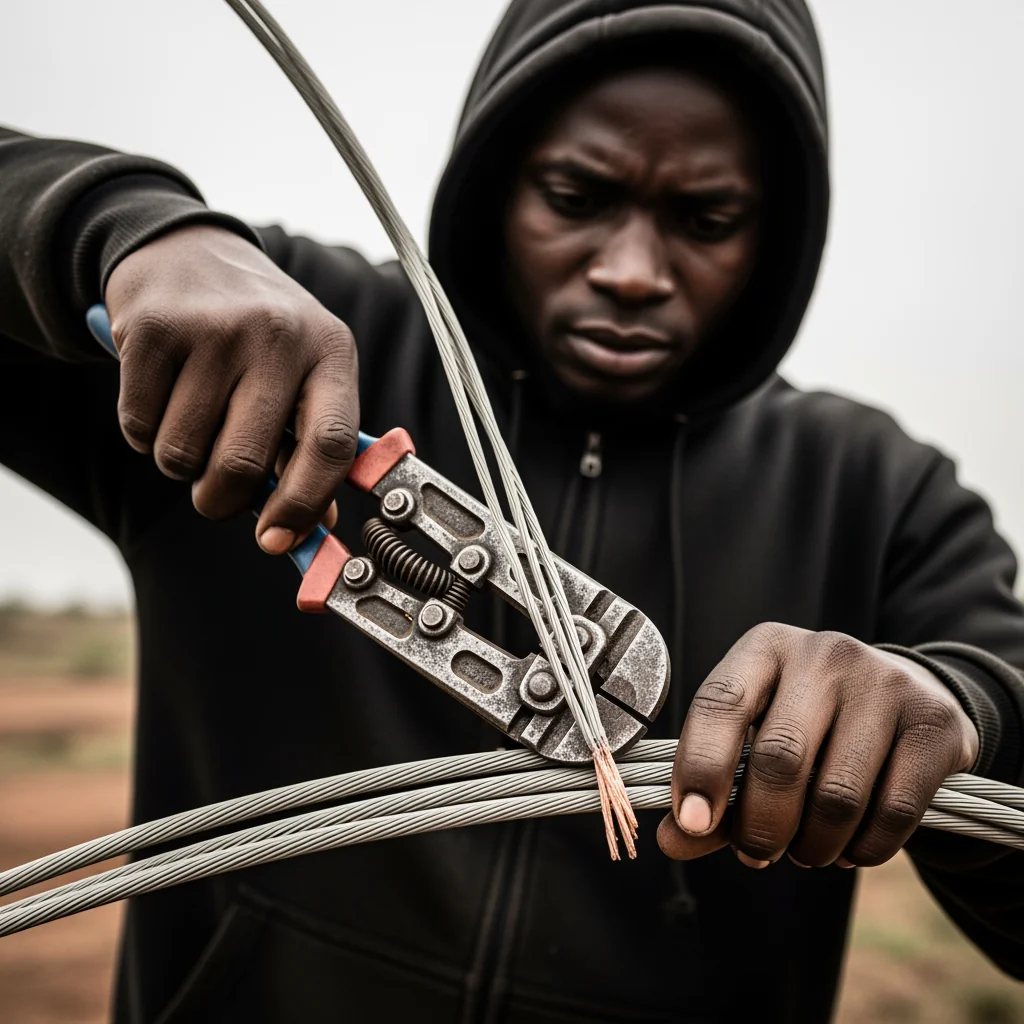
Base Transceiver Station Vandalism interrupts digital commerce and personal communication across Nigeria. This activity involves the unauthorized removal of equipment from telecommunications sites. Criminal groups identify these installations as sources of industrial components with high resale value. The remote nature of many sites provides opportunities for these activities to occur away from immediate observation. The telecommunications sector provides the primary infrastructure for the digital economy in the country. Damage to this infrastructure creates hurdles for banking, emergency services, and daily business operations.
Statistics from the Nigerian Communications Commission (NCC) indicate a high frequency of these incidents. In 2022, the commission recorded 50, 000 cases of infrastructure damage across the federation. These figures highlight the scale of the challenge facing the industry at this time. Each incident requires a technical team to visit the site and perform repairs. Criminal groups prioritize specific items during these raids based on market demand. Lead-acid and lithium-ion batteries are the most frequent targets due to their value in the secondary market. These batteries provide power for local solar systems and backup generators in residential areas. Consequently, a stolen battery from a site finds a ready buyer within a short timeframe. Copper cabling attracts interest from these groups for the metal content. The metal fetches high prices at scrap yards and smelting facilities. Removing these cables causes immediate service opportunity for improvement for the surrounding community. Technical teams must replace the entire length of the stolen material to restore service. Diesel fuel is aher primary target for theft at remote locations. Many sites rely on generators to maintain uptime during power grid fluctuations. The Association of Telecommunications Operators of Nigeria (ALTON) emphasizes the impact of these actions. According to their 2023 report, the industry loses billions of Naira annually to equipment theft and repair.
“The industry continues to witness a rise in the theft of high-value equipment, which hampers the quality of service and discourages further investment in rural areas.” — Engr. Gbenga Adebayo, Chairman of ALTON, October 2023 statement
This statement indicates the reality of operating infrastructure in remote locations. Protecting these assets requires a combination of physical and technical solutions.
Criminals often complete their activities before help arrives at the location. Community involvement provides an additional layer of protection for these assets. Residents living near these installations may report suspicious activity to the local authorities. This collaboration helps to safeguard the services that the community relies upon. An operational network benefits each resident by providing access to the digital world. The designation of telecommunications equipment as Critical National Infrastructure changes the legal landscape. This classification allows for more stringent penalties for those caught damaging or stealing from these sites. The Presidential Order signed in 2024 provides this protection for the industry. It empowers security agencies to treat these activities as threats to national security. This legal framework will discourage some individuals from participating in these activities. It creates a higher risk for those involved in the supply chain of stolen telecommunications parts. Buyers of stolen batteries or copper cables face legal consequences under this order. This targets the demand side of the criminal market effectively.
Technical improvements reduce the incentive for theft of specific components. For example, some batteries now include GPS tracking devices inside the casing. These devices allow law enforcement to locate stolen items after they leave the site. This technology makes the possession of stolen equipment more dangerous for the criminal. Operators use tamper-proof enclosures for sensitive electronics at the top of the towers. These hardened assemblies require specialized tools and extra time to penetrate. Increasing the time required to access the equipment often causes criminals to abandon their attempt. They prefer targets that allow for a rapid exit from the scene. The cost of these security measures adds to the overall expense of network operations. These expenses will influence the pricing of data and voice services for the consumer. Therefore, each citizen has a stake in the protection of these sites. Maintaining the integrity of the network ensures that costs continue at a stable level for the public. Education programs help the public understand the importance of the infrastructure. When people view the equipment as a communal asset, they take more interest in its safety. Local leaders may encourage residents to look out for the towers in their villages and towns. This organic security network complements the formal measures taken by the companies.
Criminal gangs often monitor the movements of site technicians to identify patterns. They learn the schedules for fuel delivery and routine maintenance visits. This intelligence allows them to strike when the site is most vulnerable. Operators must vary their schedules to maintain a lead over these observations. In some cases, gangs use specialized tools like oxy-acetylene torches to cut through steel gates. These operations indicate a high level of planning and coordination among the groups. The presence of an organized market for these parts suggests that professional syndicates manage the logistics. These syndicates move stolen goods across state lines to avoid detection by local police. Cooperation between different security agencies helps to disrupt these supply chains. Sharing intelligence on known buyers and transport routes improves the progress rate of interventions. The Nigeria Police Force and the Nigeria Security and Civil Defence Corps (NSCDC) play lead roles. They conduct raids on suspected warehouses and scrap yards to recover stolen property. Recovered equipment often returns to the operators for refurbishment and reuse. This reduces the total loss, although the cost of repair is high. Base Transceiver Station Vandalism is a challenge that requires constant attention from stakeholders. The evolution of criminal tactics means that security strategies must also evolve. Investing in security technology will provide better protection for the network across the country. This includes the use of artificial intelligence to predict potential hotspots for theft. Data analysis of past incidents reveals patterns in the timing and location of attacks. Security teams use this information to deploy patrols more effectively in high-risk areas. Awareness of these trends allows for measures to be taken.
These efforts aim to ensure that each Nigerian enjoys uninterrupted connectivity. A stable network supports the aspirations of entrepreneurs and students alike. Each piece of equipment on a site serves a specific purpose in the network. When a single component goes missing, the entire system may fail. Understanding why these gangs target the equipment is the first step in stopping them. The value lies in the raw materials and the demand for power storage solutions. As the country moves toward a digital future, the importance of these sites will increase. Protecting them is a collective that involves the government, the operators, and the public. Continuous improvements in technology and policy will lead to a more secure telecommunications environment. Being informed about these issues allows citizens to play their part in protecting infrastructure. Reporting suspicious activity to the NCC toll-free line or local police helps to protect the national interest. The path toward a secure network involves and cooperation among the parties.


A bank login page is more than just a simple screen on a website. It is the secure doorway that allows customers to reach their online accounts. Every time someone enters their username and password, the page serves as the bridge that connects the user with their money. When this page works perfectly, people enjoy smooth access. When it fails, confusion rises, and trust is shaken. What many do not know is that even a small detail, as tiny as a dot in computer code, can decide whether this door remains open or completely shut. There was a day when one misplaced dot broke a bank login page and locked out thousands of customers.
In daily life, a dot may look ordinary, simply ending a sentence. But in programming, a dot carries a higher weight. It links commands, guides actions, and connects pathways inside the code. Every dot has a position where it belongs. If that dot shifts, the whole meaning of the code changes. When the dot sits correctly, the instructions flow smoothly, and systems stay strong. But when it stands in the wrong place, the connection breaks, and the page collapses. This was exactly what happened in that bank login page error. A small misplaced dot blocked access and turned the page into a wall instead of a door.
When customers tried to log in, the page rejected every password, even when the details were correct. Error messages flashed, and people believed their accounts had been blocked. In truth, the accounts were safe, but the login script had lost its way. The misplaced dot confused the code, stopping it from speaking with the main server. What seemed like a massive cyber-attack was nothing more than a hidden syntax error. This error was small in size but great in effect. It proves once again that even a tiny seed can grow into a tree that affects many lives. In the same way, one symbol in the wrong place affected thousands of customers in one day.
The technical team of the bank was forced into action. They began a deep review of the code, reading line after line like scribes searching for a missing mark. At last, they found it. A single dot stood in the wrong place. It looked harmless, but it was the stone in the engine. Once the dot was moved back into its correct position, the entire bank login page came alive again. Customers could access their accounts, and the noise of fear began to fade. That correction, though small, restored confidence. It is a clear picture of how a little mistake can block the path, and a little correction can restore the light.
For developers and financial institutions, this case shines a light on three truths. First, it shows the necessity of code review. When more than one pair of eyes checks the script, hidden faults are easily discovered. The misplaced dot slipped through the first check, but a second review could have stopped the crisis before it began. Second, it reveals the value of a testing environment. This is a space where the system can be tested with fake accounts before it meets real customers. If the login page had gone through stronger testing, the dot would have been caught in silence. Third, it proves that every small detail matters in digital security. While banks build firewalls and strong encryption to fight hackers, they must also protect against simple human mistakes. A misplaced dot costs nothing to fix but can cost everything in customer trust.
For ordinary users, this story uncovers the hidden world behind every online banking login. People see only a clean page where they type details, but behind that page is a chain of codes stretching like an invisible ladder. If even one step on that ladder breaks, the climb becomes impossible. Customers should understand that many errors come from technical mistakes, not always from hackers. This knowledge reduces panic and allows patience while systems recover. But for the bank staff, the story is a strong call that the trust of the people rests on their attention to detail. When they watch carefully over every line of code, they protect not just data but also peace of mind.
The world of computing has seen many similar cases. Programmers call such mistakes bugs in software. Some are small, like this misplaced dot, while others are larger, like missing blocks of instructions. Yet both small and large bugs can shut down big systems. History records failures in air traffic control, hospital records, and government websites caused by such mistakes. Each time, people faced delays, stress, and fear until the error was corrected. The misplaced dot in the bank login page is only one example, but it is a sharp signal that technology is both powerful and fragile. The smallest detail carries weight, and carelessness carries a price.
The solution lies in discipline. Developers must write code with patience, treating every symbol with respect. Banks must insist on quality checks, demanding code reviews as part of their daily culture. Automated scanning tools exist today that can identify misplaced symbols and prevent errors. Regular updates and reviews make systems stronger. Training new programmers to value accuracy ensures the future remains secure. Just as a faithful servant proves trustworthy in little things, programmers who are faithful in small marks protect the greater system. In technology, faithfulness in details is not an option, it is the foundation.
This story also brings out the importance of humility in technology. The error was not a mighty attack from the outside. It was a human mistake from within. Accepting that mistakes will happen encourages the building of safety nets. Backup systems, error logs, and fallback pages are like guards that catch the fault before it spreads. When banks respect these measures, customers enjoy steady access, and confidence grows stronger. A working bank login page may appear simple on the surface, but behind it is a constant war against errors. Every line of code is part of that battle, and every symbol is a soldier.
The truth is clear. In life and in code, little things matter. Just as a spark can light up a forest, so can a misplaced dot stop an entire system. The day a dot broke a bank login page, thousands of customers were locked out. Yet the day it was corrected, peace was restored. This is the reality of technology, that strength lies in details, and confidence is built on discipline. Banks that guard their systems with careful eyes will continue to hold the trust of their people. Developers that respect every symbol will continue to create systems that stand firm. And customers who understand the hidden structure behind the screen will face errors with calm hearts, knowing that sometimes the smallest fix brings the greatest relief.
In conclusion, one misplaced dot was enough to break a bank login page. The dot changed the meaning of the code, blocked the server connection, and locked out thousands of customers. Yet, the solution was simply to place it back where it belonged. The story carries a strong signal for developers, banks, and customers alike. It proves that small details in digital banking security can have large effects in reality. When banks respect details, customers enjoy trust. When developers respect symbols, systems remain alive. And when everyone values accuracy, technology continues to serve with strength and stability.

Why Criminal Gangs Target Base Transceiver Stations

The Coming End of Physical Bank Branch Offices

How One Misplaced Dot Broke a Bank Login Page

Nigerian Hackers: The Global Fraud Story and Its Fallout

Internet Sovereignty: Why Some Countries Want Their Own Separate Internet

Forgotten Satellites Defy Silence, Beaming Signals for Decades

The Untold Story Of The Nigerian Who Helped Build Global Internet Systems

The 1-Star Review That Almost Bankrupted a Bakery

Why Are You Hiding Your Business From People With Money?

The “Village People” Aren’t Blocking Your Sales; Your Bad SEO Is.

The Business That Died because the Owner Refused to “Go Beyond.”
Internet Sovereignty: Why Some Countries Want Their Own Separate Internet
How One Misplaced Dot Broke a Bank Login Page
The Untold Story Of The Nigerian Who Helped Build Global Internet Systems
Nigerian Hackers: The Global Fraud Story and Its Fallout
Forgotten Satellites Defy Silence, Beaming Signals for Decades
The “Village People” Aren’t Blocking Your Sales; Your Bad SEO Is.
The 1-Star Review That Almost Bankrupted a Bakery
The Business That Died because the Owner Refused to “Go Beyond.”
Why Are You Hiding Your Business From People With Money?
The Coming End of Physical Bank Branch Offices
Why Criminal Gangs Target Base Transceiver Stations
 Edutech Portal2 weeks ago
Internet Sovereignty: Why Some Countries Want Their Own Separate Internet
- Digital Hustle2 weeks ago
How One Misplaced Dot Broke a Bank Login Page
- Edutech Portal2 weeks ago
The Untold Story Of The Nigerian Who Helped Build Global Internet Systems
- Edutech Portal2 weeks ago
Nigerian Hackers: The Global Fraud Story and Its Fallout
- Edutech Portal2 weeks ago
Forgotten Satellites Defy Silence, Beaming Signals for Decades
- Edutech Portal2 weeks ago
The “Village People” Aren’t Blocking Your Sales; Your Bad SEO Is.
- Edutech Portal2 weeks ago
The 1-Star Review That Almost Bankrupted a Bakery
- Edutech Portal2 weeks ago
The Business That Died because the Owner Refused to “Go Beyond.”