Devotional
Troubled On Every Side, Yet Not Distressed.
Partake in the endurance of Paul the Apostle, who chained in a Roman dungeon, writes his epistles; though ‘troubled on every side, yet not distressed, persecuted but not forsaken.’

Troubled On Every Side, Yet Not Distressed
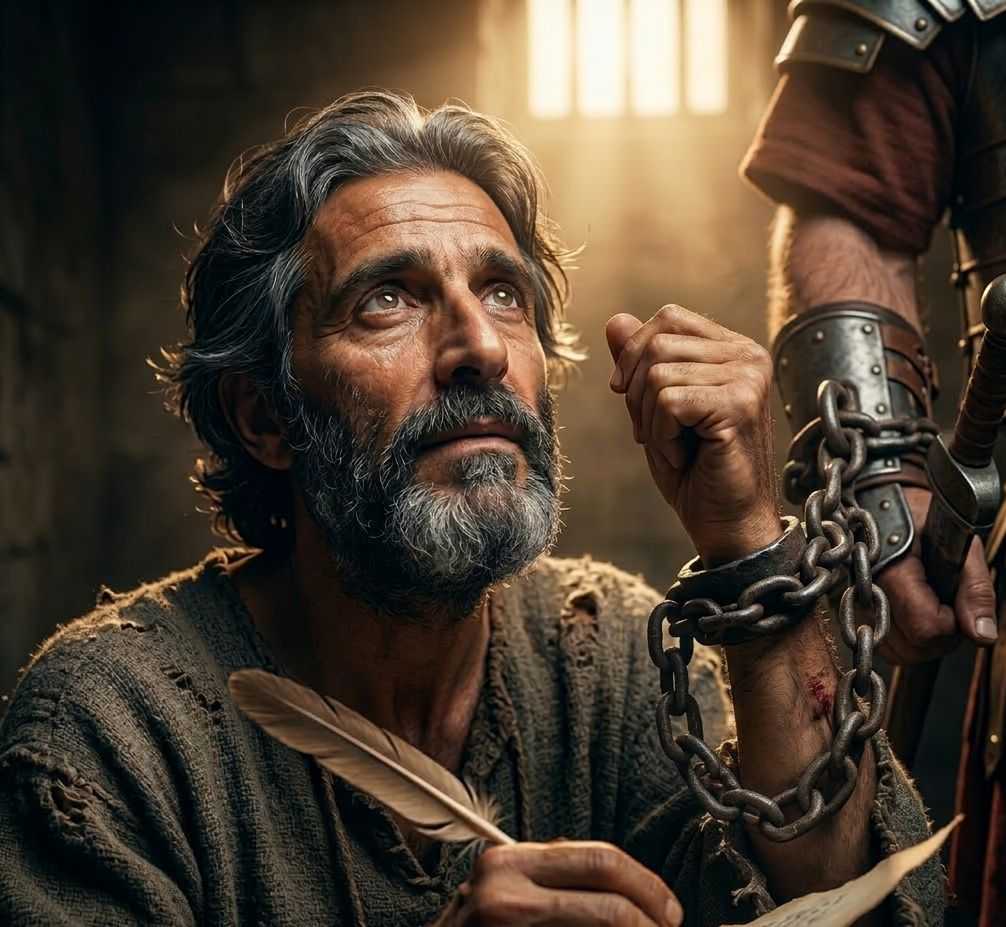
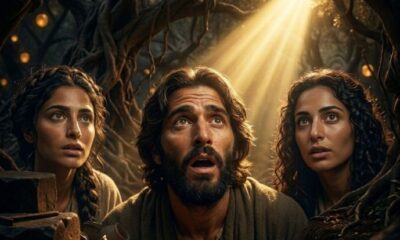
Paul wrote these words from a Roman dungeon. A chain bound his wrist to a soldier. Every few hours, a new guard took the place of the old one, while the iron remain fastened onto his skin. Two years passed in that confinement where he waited for Caesar to hear his case.
News arrived from Corinth. The church he planted there, the people he taught for eighteen months, the ones he led to Christ one by one, were turning against him.
False apostles had entered the assembly, telling the Corinthians that Paul was weak, that his ministration was unimpressive, that he collected money for himself. They said he was no true apostle.
Paul had worked with his hands making tents in Corinth by himself, so no one could feel burdened. He had taught in the synagogue even on Sabbath days. He had been attacked five times in other cities, stoned and left for dead, shipwrecked three times.
Men who never carried any affliction for the sake of the gospel slandered his name, while the church he laboured to build believed them.
He sat in that cell and wrote to them anyway.
“We are troubled on every side, yet not distressed; we are perplexed, but not in despair; Persecuted, but not forsaken; cast down, but not destroyed.” (2 Corinthians 4:8-9)
In the midst of tribulation that surrounded him, he could still breathe, pray, write and trust God.
Perplexed could mean not knowing how things will turn out. Paul did not know if the church would survive. He did not know if he would live or die. He did not know why God allowed these things.
Despair could mean having no way out. Paul always saw a way out, even if that way was through death unto glory.
At his first defence before the Roman court, no man stood with him. They all forsook him. They left him to face the tribulations all alone. But the Lord did not forsake him. He strengthened him.
Paul carried a seal within. He called it a treasure in an earthly vessel. The vessel is clay, easily destroyed. The body, the flesh, the outward man that perishes. But the treasure within is of eternal life that could never be destroyed.
When the vessel is pressured, the treasure shines forth. When the body is cast down, glory arises.
Paul called it light affliction. Could beating, stoning and shipwrecks be light affliction? Could being abandoned and forsaken be light affliction?
Paul weighed these things that were momentary against the glory that was coming. He put the troubles and afflictions on one scale and the glory on the other. The glory outweighed, for Christ is the hope of glory.
So Paul called his troubles momentary. A thousand years is like a day unto the Lord. Paul’s sufferings were a passing shadow compared to the glory ahead.
He wrote,
“Our light affliction, which is but for a moment, worketh for us a far more exceeding and eternal weight of glory.” (2 Corinthians 4:17)
The affliction was working for good, paving the way for glory. All the troubles of this world could never balance the scale.
Paul learned to look away from the things he could see. The chain, the soldiers, the four walls, the reports from Corinth, the slander of false apostles, the abandonment of family and friends and other things around him that anyone could see with the eyes. He looked beyond earthly things.
Rather, he fixed his gaze on things above. He looked up. For help cometh not from the north, south, east nor west but from the Lord.
Looking unto Jesus the author and finisher of our faith; who for the joy that was set before him endured the cross, despising the shame, and is set down at the right hand of the throne of God. (Hebrews 12:2)
The glory. The reward. The throne of grace. The eternal life.
Things earthly eyes could see were temporary. The chain would go off. The soldier would go home. The walls would fall. The false apostles would be exposed. The Corinthians would return or they would not. Either way, heaven and earth shall pass away.
God used Paul to evangelize the reach of the gospel in Damascus, Arabia, Jerusalem, Tarsus, Antioch, Seleucia, Cyprus, Perga, Antioch Pisidia, Iconium, Lystra, Derbe, Philippi, Thessalonica, Berea, Athens, Corinth, Ephesus, Caesarea, and lastly in Rome.
This gospel today came through the persecutions, tribulations and sacrifices of many who laid down their lives selflessly for the redemption of souls. God never forsook them and He will not forsake you.
Troubled on every side? Perplexed? Persecuted? Cast down? Count it all joy, for many are the afflictions of the righteous.
Let Us Pray
Heavenly Father, let the treasure of eternal life shine.
Let light afflictions prepare the way for the glory that will come, now and forever.
In Jesus’ name, Amen!

Devotional
The Sun Stood Still In The Midst Of Heaven
Time itself pauses when the Lord commands the light. The shadows have no place to hide as the heavens yield to a man’s voice. Darkness is delayed, the decree is final, and the victory is inevitable.
The Sun Stood Still In The Midst Of Heaven
Joshua spoke to the Lord in the day when the Lord delivered up the Amorites before the children of Israel. Five kings had come against Gibeon, the city that made peace with Israel, and Joshua marched all night from Gilgal with his mighty men of valor.
The Lord discomfited the Amorites before Israel, slaying them with a great slaughter at Gibeon, chasing them along the way that goeth up to Bethhoron, and smiting them in Azekah and unto Makkedah.
The battle raged across the valley while the Amorites fled before the sword of Israel. Above them the sun climbed higher into the sky. Few hours were left before night fall granting the enemy an escape.
Joshua saw the day slipping away. He saw the enemy scattering into the hills where shadows would hide them. A commander knows the cost of an unfinished victory.
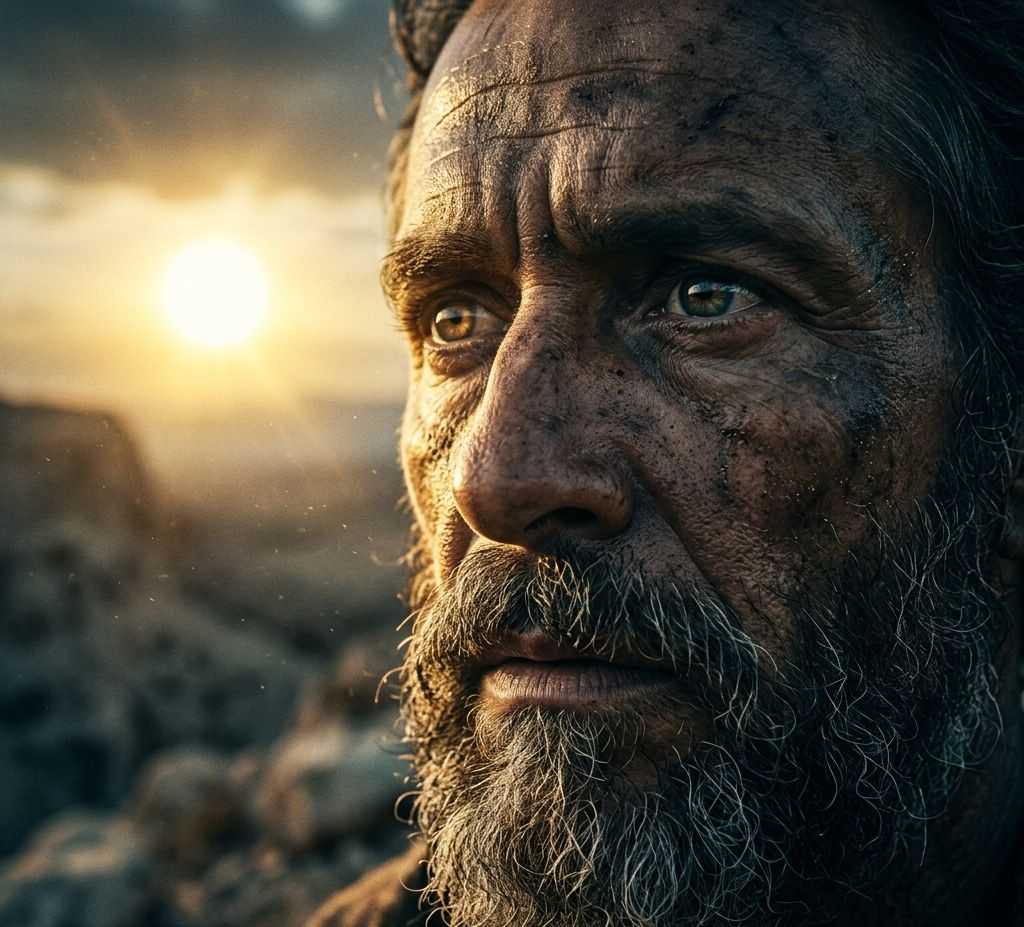
Standing before the men of valor, with the valley stretched out beneath him and the five kings fleeing toward the caves, Joshua opened his mouth. He spoke to the Lord. Then he spoke to the sun.
“Sun, stand thou still upon Gibeon; and thou, Moon, in the valley of Ajalon” (Joshua 10:12 KJV).
“And the sun stood still, and the moon stayed, until the people had avenged themselves upon their enemies. Is not this written in the book of Jasher? So the sun stood still in the midst of heaven, and hasted not to go down about a whole day.” (Joshua 10:13 KJV)
The sun stood still in the sky. The moon held its place over the valley. The sun stayed at the command of a man who spoke with the authority of heaven.
“And there was no day like that before it or after it, that the Lord hearkened unto the voice of a man: for the Lord fought for Israel” (Joshua 10:14 KJV).
Creatures obeyed its Maker. The same voice that said, “Let there be light,” held that light in place at the request of His servant. Joshua asked. The Lord answered. The sun and moon became weapons of war.
The five kings fled to a cave at Makkedah. Joshua commanded great stones rolled before the mouth of the cave, guards set to watch them, and the army pressed on, destroying the Amorites until the victory was complete.
When the slaughter ended, Joshua returned to the cave and brought out the five kings. The sun that stood still witnessed the defeat of kings before the armies of Israel.
The Lord fights for His people. Heaven and earth move at His command. What God did at Gibeon, He did in generations. He bends creation to His will, and gives victory.
Joshua did not fight alone in that day. The Lord cast down great stones from heaven upon the Amorites. More died from the hailstones than from the sword.
Prayer moves the hand that moves the world. Joshua’s voice reached the throne of God, and the throne of God commanded the heavens.
The sun, that great burning light traversing the sky since the fourth day of creation, paused its course. The moon, the lesser light ruling the night, stayed its orbit.
Time itself submitted to the will of the Almighty spoken through the lips of a man who walked in covenant with the Maker of all things.
That day extended beyond all natural limits. A prolonging of light and triumph, an extension of the Lord showing Himself strong on behalf of His people.
The Amorites learned what Egypt learned at the Red Sea. The five kings discovered what Pharaoh discovered beneath the waters.
The God of Israel is Lord.
LET US PRAY
Lord of hosts, fight for the faithful as You did at Gibeon.
In Jesus’ mighty name, Amen!
Devotional
Except the Lord Build the House
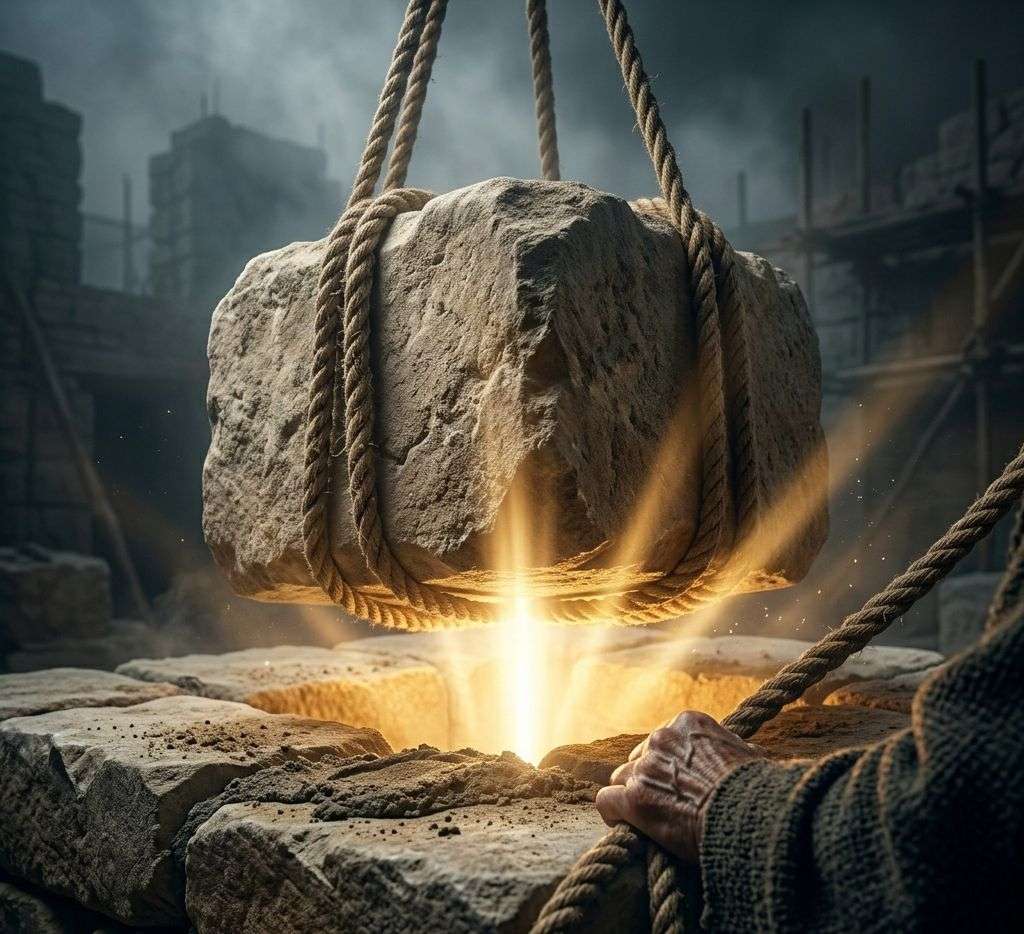
Labor is empty and vanity without the Master Architect. See why the Lord must build the house and keep the city for work to have lasting substance.
Except the Lord Build the House
Nehemiah held the cup in his hand. He stood before King Artaxerxes in the palace at Shushan. The wine was ready to be poured. The king sat on his throne, surrounded by guards and advisors.
Nehemiah had served the king for years, pouring wine with a steady hand and a calm face. But that day, the hand trembled and the face showed sorrow.
The king noticed. “Why is your face sad, seeing you are not sick? This is nothing but sorrow of heart” (Nehemiah 2:2 KJV).
Nehemiah feared greatly. A sad face before the king could mean death. But Nehemiah carried a burden heavier than the fear of punishment.
The walls of Jerusalem lay broken. The gates were burned with fire. The people of God lived in despair, troubled on every side.
Nehemiah had heard the report months earlier. Hanani, one of his brethren, came from Judah with news. “The remnant that are left of the captivity there in the province are in great affliction and reproach. The wall of Jerusalem also is broken down, and the gates thereof are burned with fire” (Nehemiah 1:3 KJV).
Nehemiah sat down and wept. He mourned for days. He fasted and prayed before the God of heaven.
“Except the LORD build the house, they labour in vain that build it.” (Psalm 127:1 KJV)
Did Nehemiah rush to Jerusalem? Did he gather stones and mortar with his own hand first of all? Nah! He went first to the Lord. He confessed the sins of Israel.
He reminded God of His promises. “Remember, I beseech thee, the word that thou commandedst thy servant Moses, saying, If ye transgress, I will scatter you abroad among the nations: but if ye turn unto me, and keep my commandments, and do them; though there were of you cast out unto the uttermost part of the heaven, yet will I gather them from thence, and will bring them unto the place that I have chosen to set my name there” (Nehemiah 1:8-9 KJV).
The king spoke. “For what do you make request?” (Nehemiah 2:4 KJV). Nehemiah prayed to the God of heaven. Then he answered. “If it please the king, and if your servant has found favour in your sight, I ask that you send me to Judah, to the city of my fathers’ tombs, that I may rebuild it” (Nehemiah 2:5 KJV).
The king granted the request. He gave letters for safe passage and timber from the forest.
Nehemiah went to Jerusalem, inspected the walls by night, did not tell anyone what God had put in his heart. Then he said to the people, “You see the distress we are in, how Jerusalem lies waste, and its gates are burned with fire. Come, let us build the wall of Jerusalem, that we may no longer suffer reproach” (Nehemiah 2:17 KJV). The people said, “Let us rise up and build.” They strengthened their hands for this good work.
Sanballat mocked, Tobiah laughed. “What is this thing you are doing? Will you rebel against the king?” (Nehemiah 2:19 KJV). Nehemiah answered, “The God of heaven himself will prosper us. Therefore we, his servants, will arise and build” (Nehemiah 2:20 KJV).
The wall rose higher each day. The workers held a sword in one hand and a trowel in the other. They laboured from the break of dawn until the stars appeared. The enemies plotted to attack, but the Lord disappointed their devices. In fifty-two days, the wall was finished.
The Lord built that house.
LET US PRAY
Lord, let the foundation and blocks be laid, and let the building be completed.
In Jesus’ mighty name, Amen!
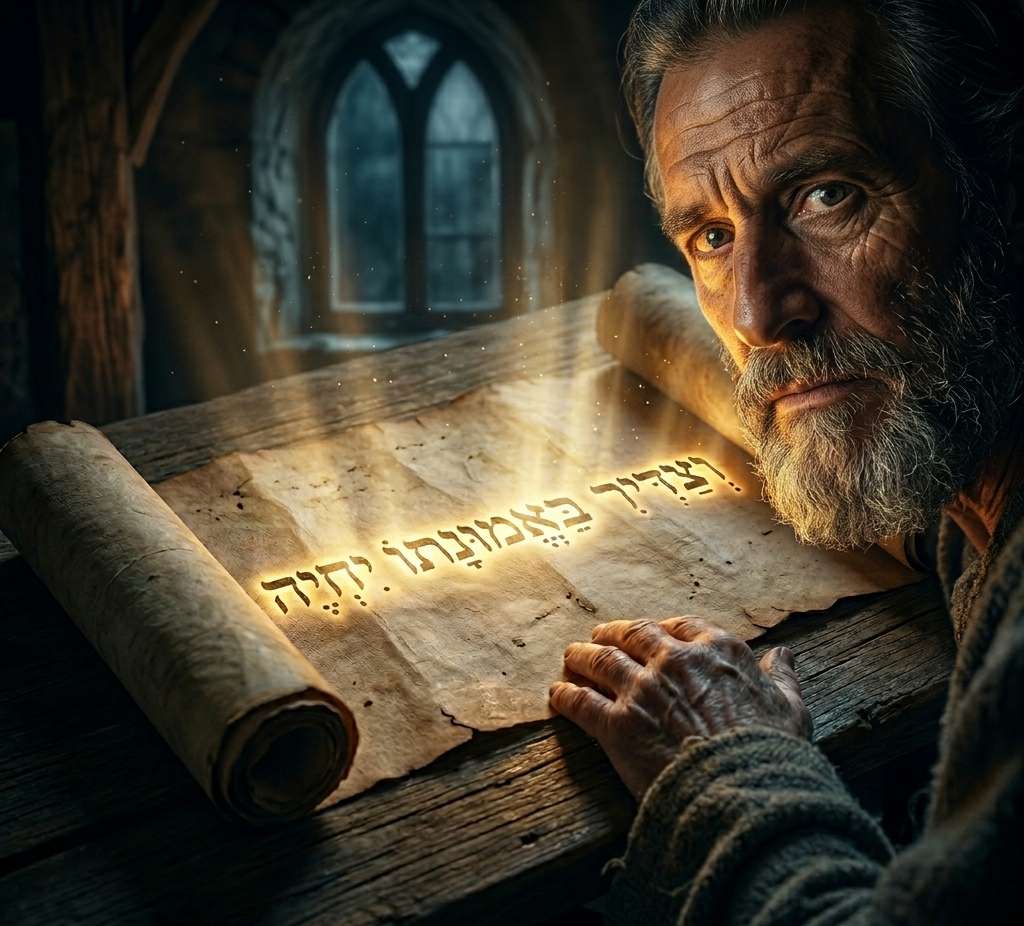
The Just Shall Live by Faith
Habakkuk cried out from the watchtower. Violence and spoiling filled the land. The law was disobeyed, yet judgment did not go forth. The wicked compassed the righteous. Then the Lord answered from His holy temple.
“Behold, his soul which is lifted up is not upright in him: but the just shall live by his faith.” (Habakkuk 2:4 KJV)
This was the word that came to the prophet. A word of life. A declaration of how the righteous would endure until the appointed time. Not by strength. Not by human intellect. By faith.
The soul that sins finds no standing. Only the just find life. Life sustained by faith.
Faith is assurance. Conviction. Substance. The evidence of things not seen. Never a feeling, nor a wish but a spiritual reality. Not by sight. Not by reason.
So then faith cometh by hearing, and hearing by the word of God. (Romans 10:17 KJV)
The just live by the Word of God.
Apostle Paul declared this in Rome. The righteousness of God is revealed from faith to faith. As it is written, “The just shall live by faith.” The wrath of God is revealed against ungodliness. Mercy is revealed to the faithful.
Abraham believed God. It was counted to him for righteousness. He staggered not at the promise of God. Strength came through faith.
In the beginning, God spoke worlds into existence. By faith, the worlds were framed by the word of God. Things which are seen were not made of things which do appear. Faith perceives the invisible.
The shield of faith quenches fiery darts of the wicked. Without faith, it is impossible to please God. He that comes to God must believe that He is. He must believe that He is a rewarder of them that diligently seek Him.
Faith moves mountains. Faith commands the sun to stand still. Faith shuts the mouths of lions. Faith quenches fire. Faith turns weakness into power.
The just walk in this faith through trials, temptations, troubles, and persecutions. The world sees trouble; the just see glory. The world sees lack; the just see provision. The world sees death; the just see resurrection.
Christ is the Author and Finisher of faith. For the joy that was set before Him, He endured the cross. He despised the shame. He sat down at the right hand of the throne of God.
The just live by faith in God. The Son of God loved the church and gave Himself for it. To sanctify and cleanse it. To present it holy and without blemish.
“I am crucified with Christ: nevertheless I live; yet not I, but Christ liveth in me: and the life which I now live in the flesh I live by the faith of the Son of God…” (Galatians 2:20 KJV)
No weapon formed against shall prosper. Every tongue that rises in judgment shall be condemned. This is the heritage of the servants of the Lord.
The just stand fast and the just overcome the world.
For whatsoever is born of God overcometh the world: and this is the victory that overcometh the world, even our faith. (1 John 5:4 KJV)
Victory by faith. Through the life of faith.
LET US PRAY
Lord, increase faith. Let life be lived by Your Word alone.
In Jesus’ mighty name, Amen!

O God, Build Through Me Systems That Serve the People

The Sun Stood Still In The Midst Of Heaven

Except the Lord Build the House

The Number of the Beast

The Just Shall Live by Faith

There is Glory at the break of Day

Heaven Is Not Far Away

Troubled On Every Side, Yet Not Distressed.

Count It All Joy In Diverse Temptations

The Lord Exposes Works Done in The Night

The Tree of Life Man Never Ate From

Many Are The Afflictions Of The Righteous
Many Are The Afflictions Of The Righteous
The Tree of Life Man Never Ate From

Serpent of Delay Against Destiny, Die!

Loose Soul from the Grip of Ancestral Spirits!

Shatter Gates of Brass For More Advancement

Seeds of Setbacks in Business, Die!
Count It All Joy In Diverse Temptations

Invisible Chains on the Ankles, Break by Fire!

If Your Presence Go Not, Carry Us Not

Crown the Year with Goodness, O Lord!

The Power of God Disconnect Umbilical Cord!
The Lord Exposes Works Done in The Night
 Devotional6 months ago
Many Are The Afflictions Of The Righteous
- Devotional6 months ago
The Tree of Life Man Never Ate From
- Asset Recovery7 months ago
Serpent of Delay Against Destiny, Die!
- Asset Recovery7 months ago
Loose Soul from the Grip of Ancestral Spirits!
- Gate Demolition7 months ago
Shatter Gates of Brass For More Advancement
- Gate Demolition7 months ago
Seeds of Setbacks in Business, Die!
- Devotional6 months ago
Count It All Joy In Diverse Temptations
- Asset Recovery7 months ago
Invisible Chains on the Ankles, Break by Fire!