Smart Infrastructure
The Contractor and the Half-Built Bridge of Sighs

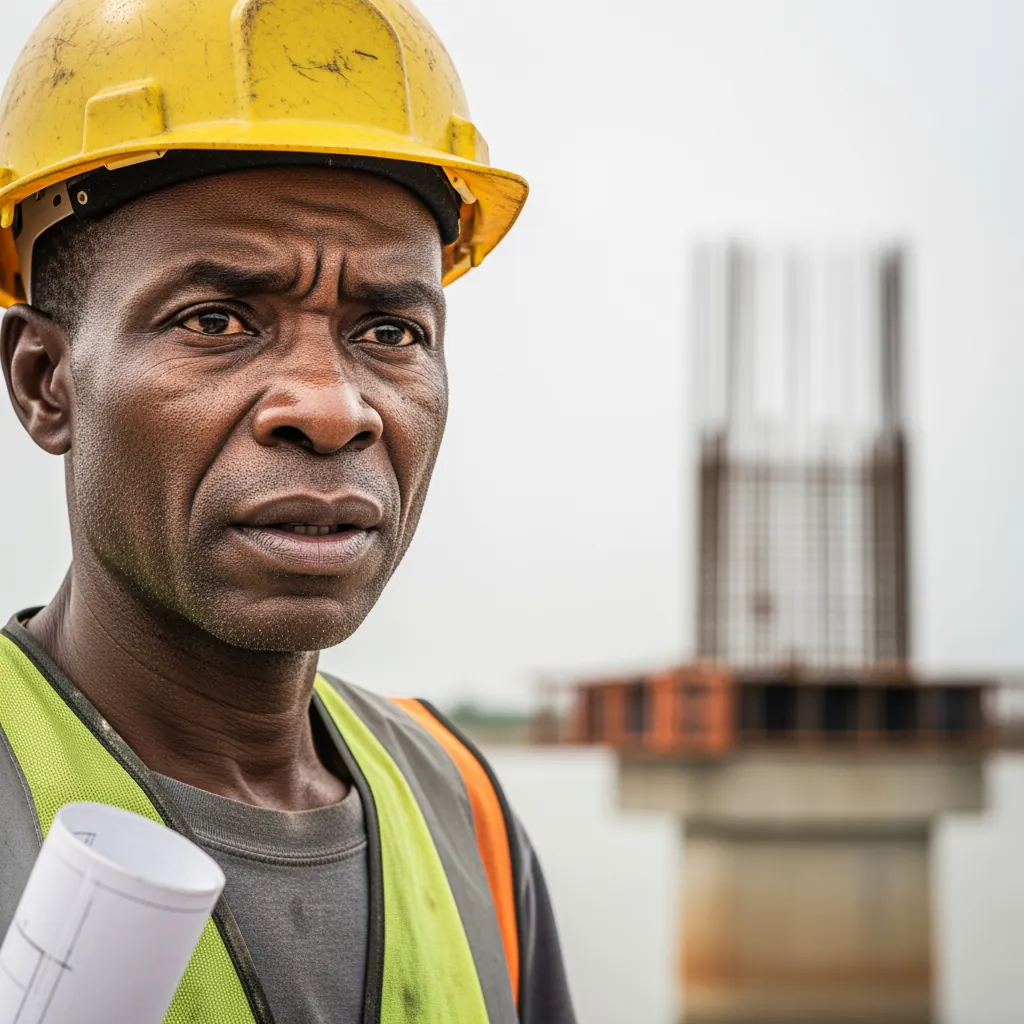
The Contractor and the Half-Built Bridge
A concrete pillar standing in the middle of a river speaks louder than a thousand signed documents. These grey monuments of incompletion define the horizon in many parts of the country. The Contractor and the Half-Built Bridge tells a story of high expectations that met a sudden pause. The sight of rusted iron rods reaching for the sky has become a familiar landmark for the surrounding community.
A fisherman passing underneath the abandoned pillars once muttered: “The bridge stopped growing, but the river keeps flowing. Only one of them remembers movement.”
The Silent Monuments of Incompletion
Projects that halt halfway through production create a specific atmosphere of heavy waiting. The people watch as the cranes depart and the dust settles on the unfinished beams. It is a reality that many Nigerians navigate with a mixture of patience and quiet observation. The cost of waiting for completion often exceeds the initial budget of the project itself.
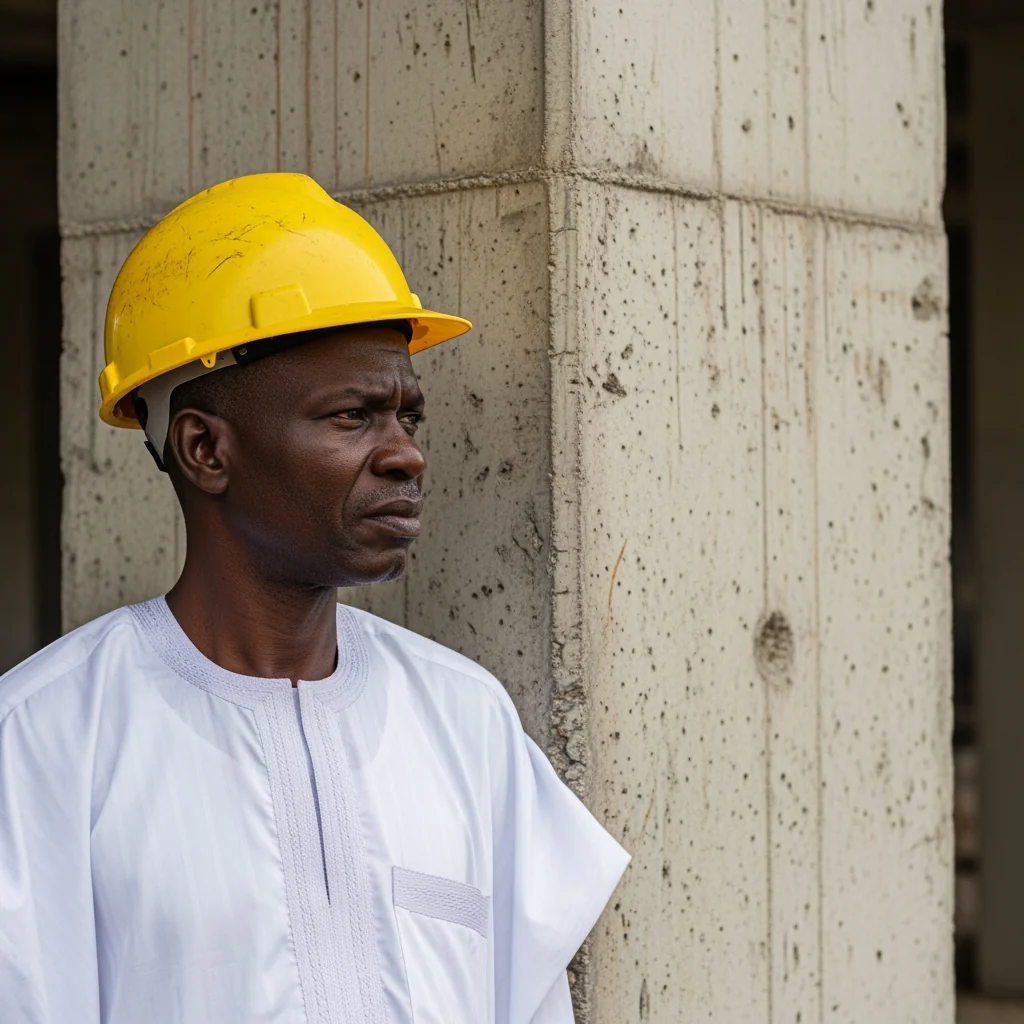
Financial delays often serve as the primary reason for these pauses in activity. When the flow of resources dries up, the cement mixers go silent. Skilled laborers move to other sites, leaving behind a skeletal version of what was promised. The local economy feels the impact as the anticipated movement of goods across the bridge persists as a future possibility rather than a present reality.
A market woman arranging plantains by the riverbank once said: “The ferry man knows my face too well. I was supposed to cross on that bridge two dry seasons ago.” She looked at the concrete pillars and returned to her goods.
Some say iron rods are artistic installations representing the patience of the tax-paying public. Some observers joke that the rust on the metal is merely a natural protective coating for a long-term project. But the weight of the situation is felt by those who must still use the old, dangerous ferry.
The Economics of the Unfinished Beam
Reports from the Nigerian Institute of Quantity Surveyors indicate a staggering number of abandoned projects across the federation. Some estimates place the figure above 50,000 separate sites. Each instance of The Contractor and the Half-Built Bridge represents millions of Naira trapped in a state of inactivity.
A quantity surveyor once explained: “When a project sleeps for one year, the cost wakes up thirty percent higher. The money you budgeted yesterday cannot buy the cement of tomorrow.” This arithmetic creates a bottleneck for regional expansion and limits the movement of people.
“Infrastructure is the most legitimate way to distribute wealth.” — Babatunde Fashola
When a bridge remains a skeleton, the wealth distribution pauses. The yield on investment becomes a negative value as the environment begins to reclaim the site. Erosion eats at the base of the pillars while the community waits for the return of the workers.
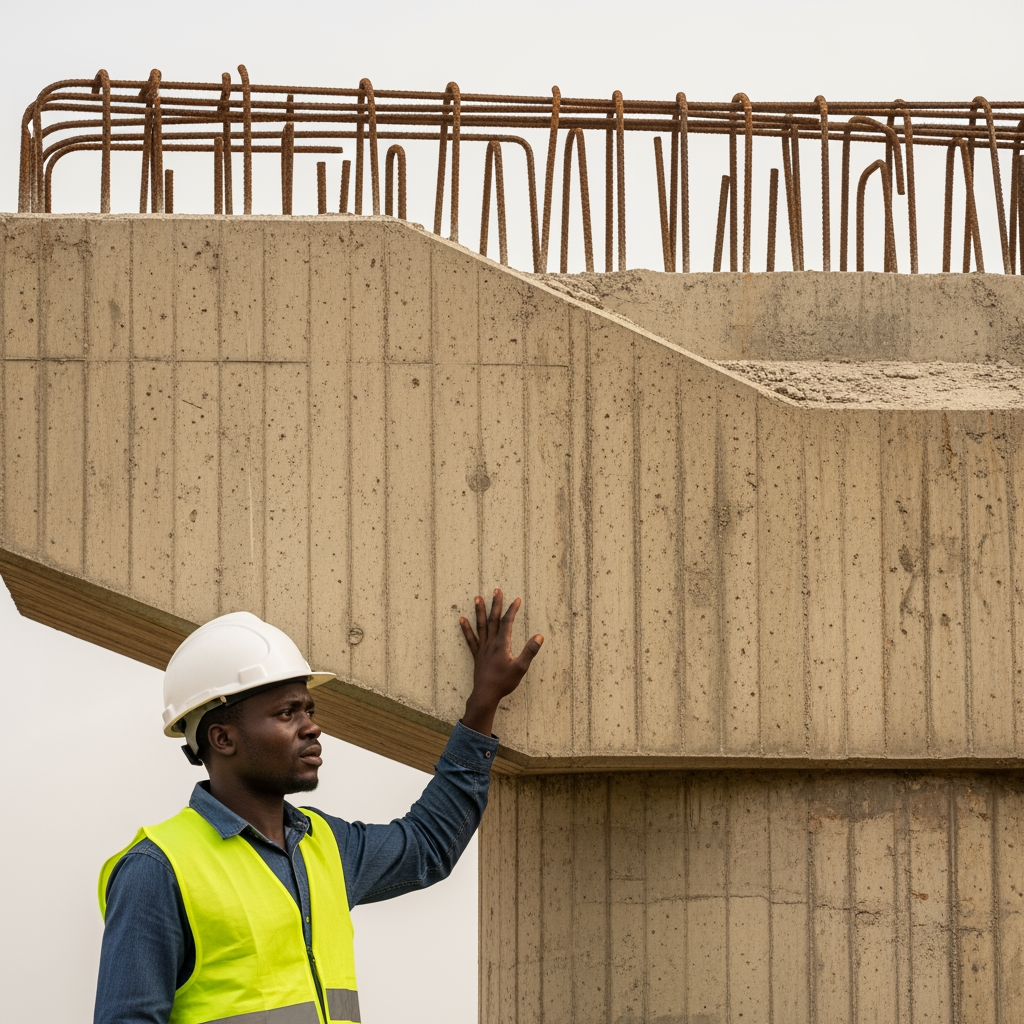
Resources allocated to these sites often suffer from the effects of inflation. A bag of cement purchased two years ago carries a different value today. The renegotiation of contracts becomes a requirement for any movement forward. This creates a cycle where the project becomes more expensive the longer it sits in the sun.
A site supervisor watching over an abandoned project said quietly: “Every rainy season, the river rises higher. The pillars sink lower. Nature does not wait for government approvals.”
Practical Solutions for Completion
Completion requires more than just a desire for progress. It demands a re-evaluation of funding models to ensure that money reaches the site when it is needed. Private-public partnerships offer a potential path for projects that have stalled. These arrangements bring fresh capital and accountability to the construction site.
Transparency in the procurement process ensures that the most capable hands handle the work. The reputation of the firm matters more than the connections it possesses. Many people believe that strict oversight prevents abandonment of future bridges. Monitoring progress through digital tools provides a way for the public to stay informed.
A civil engineer working on site rehabilitation once remarked: “We found the original drawings buried under the site office. The paper was rotting. The design was still solid. Some things only need a second chance.”
Revitalizing these sites brings immediate life to the local space. Small businesses around the construction area find new customers. The expansion of local trade begins the moment the first truck returns to the site. Completion is not just about concrete: it is about restoring the confidence of the people in the system.
The Future of Nigerian Infrastructure
As the sun sets over The Contractor and the Half-Built Bridge, the potential for a better tomorrow persists. The lessons learned from these pauses will shape the construction standards of the future. Each finished bridge stands as a victory over the silence of abandonment.
An elderly man who has watched three bridges remain unfinished in his lifetime said: “My father waited for one bridge. I have waited for three. My son may wait for none if they finish what they start.”
The path forward involves finishing what was started before moving to the next big idea. Nigeria possesses the talent and the stone to complete every single project. The will to execute must match the scale of the ambition. When the final slab is laid, the sigh of the community transforms into a cheer of progress.
The bridge then fulfills its purpose of connecting people and creating new opportunities for trade. Infrastructure serves as the backbone of national activity and deserves the focus of the best minds. The sight of a completed bridge is a testament to what is possible when vision meets resource management.
The people will continue to watch the horizon, waiting for the day the gap in the concrete disappears.
The Market Fire and the Silent Alarm
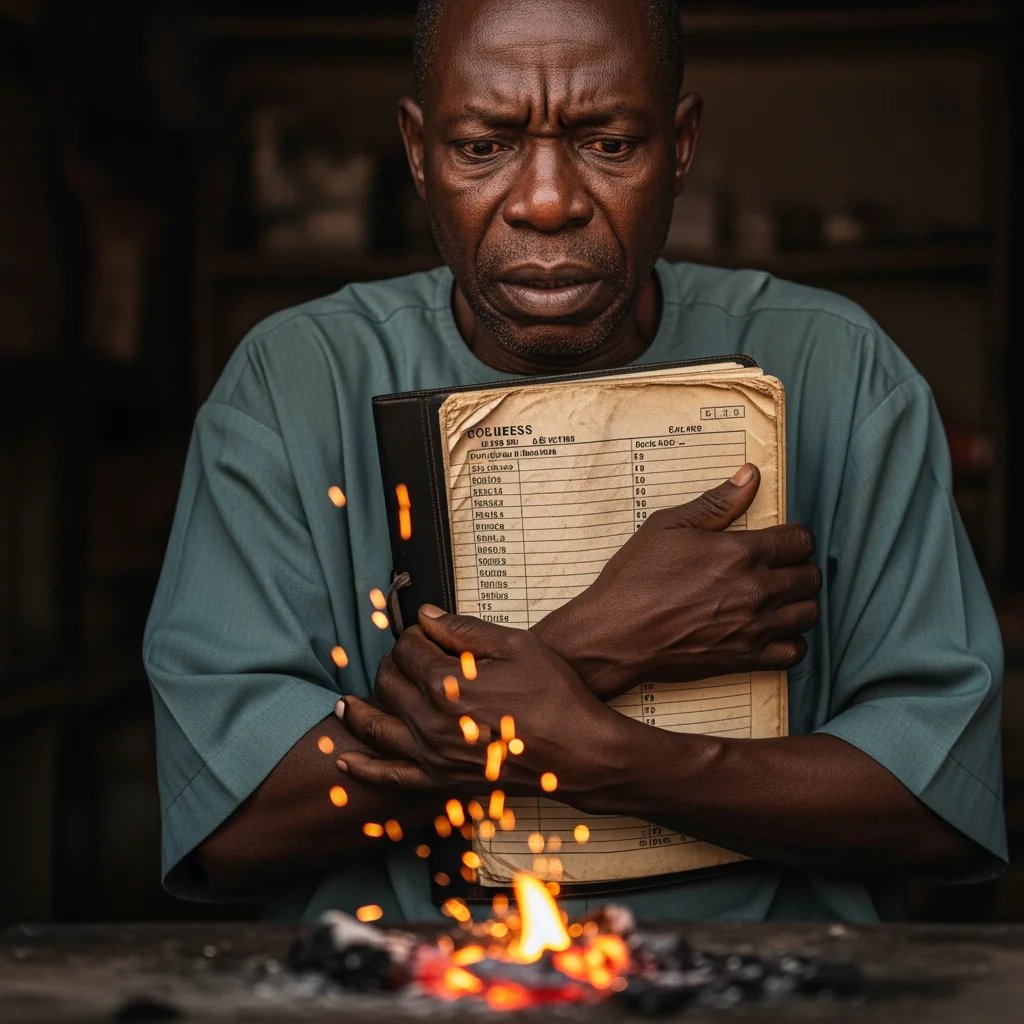
Smoke rises before the first scream echoes through the stalls. The Market Fire and the Silent Alarm signals a collapse in the technical defense of our commerce. Fire consumes wealth while the bells keep silent.
A trader who lost his goods last year said: “I heard the crackling. I waited for the siren. The siren waited for someone to press a button that no one installed.”
Physical security often takes priority in the mind of the trader. Padlocks and iron bars guard the front door while the ceiling harbors a sleeping threat. Electrical faults begin in the dark hours. The system meant to alert the guard functions without power.
Maintenance culture in multiple hubs has dwindled over the years. A smoke detector requires a battery to function. Without a battery, the plastic shell offers a false sense of protection. Some operators assume the equipment functions for a long duration.
Nigeria loses billions of Naira annually through these infernos. The Federal Fire Service reports thousands of calls each year. Most calls arrive after the flames have claimed the roof. The Market Fire and the Silent Alarm highlights the gap between having a tool and using a tool.
The cost of a functioning alarm system is small compared to the loss of a warehouse. Insurance companies look for evidence of active prevention. A silent alarm during a critical moment creates a void in the claim process. Reputation suffers when safety seems like an afterthought.
The Sound of Financial Ruin
Financial progress depends on the preservation of assets. A single spark can erase a decade of hard work in minutes. The heat melts the metal and turns the concrete to dust. The Market Fire and the Silent Alarm is a story of missed warnings.
Early detection buys time for the responders. Time determines if the shop burns or if the fire dies early. Multiple plazas lack a central monitoring system. Each shop owner functions as a solitary island of risk.
“The protection of commercial assets requires technical engagement rather than reactive panic. We must prioritize the installation and maintenance of functional alert systems to safeguard our economic hubs.” — Dr. Olufemi Oke-Osanyintolu
Modern infrastructure requires constant power to maintain safety. Solar backups can keep the alarms active during blackouts. Reliance on the national grid often leaves the system dead at the worst hour. Safety must exist outside the limitations of general utility.
A shop owner in Lagos once said: “The day the fire came, the light went. The alarm went with it. Now I have solar on the roof and a siren that sleeps only when I sleep.”
The expansion of a business must include the expansion of its safety net. Buying more stock without upgrading the fire suppression system invites trouble. Many people wait for a setback before they value a siren.
Technical Gaps in Commercial Hubs
Heat sensors and smoke detectors serve as the eyes of the building. When these eyes close, the building becomes a trap. The Market Fire and the Silent Alarm occurs because the link between the sensor and the siren has broken.
Dust often clogs the sensors in open markets. Regular cleaning ensures the device can breathe. A dirty sensor will fail to trigger when the smoke begins to swirl. Some operators cover the detectors to avoid false alerts from cooking.

Training the staff is as important as the hardware. A siren provides a warning but humans must take action. Fire drills help the people move with purpose. Chaos increases the damage when the alarm finally sounds.
A market association secretary said: “We bought the detectors. We installed them. Nobody told us they need cleaning. Now we have a schedule and a man who climbs with a ladder every month.”
Investment in smart technology provides a path forward. Systems can now send a text message to the owner. This digital bridge connects the shop to the home. Technology ensures the owner knows about the smoke before the building burns.
Building a Shield of Awareness
A culture of safety creates a stable environment for trade. Customers feel more secure in a building with visible safety signs. The Market Fire and the Silent Alarm can become a memory through collective action.
Market associations can fund a central fire station within the hub. This ensures a response within the first five minutes. Water hydrants must have pressure and accessibility. A fire truck is useless without a path to the flame.
A fire service officer explained: “We arrive fast when the roads are clear. But if the hydrant has no water, we are spectators. The market burns while we watch.”
Professional inspection of electrical wiring prevents the majority of fires. Overloaded sockets and cheap cables cause the most damage. Replacing old wires is a form of insurance. Some people see this as an expense rather than a protection.
The future of our markets depends on our ability to listen to the silent warnings. The Market Fire and the Silent Alarm serves as a lesson for the wise. Prevention leads to the best results for the long term.
A trader who installed a new system said: “I sleep now. Before, I dreamed of smoke. Now the siren will wake me before the fire can find my goods.”
Expansion of commercial spaces requires a new mindset. Safety is a component of the business plan. Without a plan for fire, the business plan is incomplete. Many successful traders now lead the way in safety adoption.
The digital bridge connects every detector to every phone. The market watches itself even when the owners sleep. The silent alarm finds its voice through technology and maintenance. The smoke still rises sometimes. But now the bells answer.

The Scholarship That Never Left Asaba for the Youth
Administrative gravity in Delta State possesses a unique weight that pulls all financial opportunities toward the center. The paper trail of academic funding often circles the government offices like a hawk, refusing to land in the hands of the rural student. Local reality suggests that a file in the capital moves with the speed of a snail on a rainy Monday.
A student from Burutu once said: “They announced the scholarship on radio. I travelled to Asaba three times. The only thing I received was the dust of the road.”
The Scholarship That Never Left Asaba represents a wall between the treasury and the village school. Many students in the hinterlands of the state view these funds as mythical creatures. They hear the radio announcements but see only silence in their bank accounts.

The Capital Bottleneck
Concentrating resources within a single city creates a massive barrier for those living in distant local governments. The physical presence of the applicant often serves as the only key to unlocking the vault. Without a relative in the capital, a student finds the process opaque and exhausting.
This system favors the urban dweller while the brilliant minds in the creeks face exclusion. Government officials frequently speak about decentralization, yet the power to sign the final check resides in a few specific rooms. The Scholarship That Never Left Asaba becomes a phrase that defines the frustration of the disconnected youth.
A mother in Ughelli once asked: “My son scored 320 in JAMB. The boy in Asaba scored 240 and got the scholarship. Where did the remaining 80 marks go?” The question received no answer.
As the late Nelson Mandela once observed:
“Education is the most powerful weapon which you can use to change the world.”
In the context of the Delta youth, that weapon lacks ammunition when funding fails to arrive. The cost of transportation to the capital consumes the very funds the student hopes to receive.
The Digital Space and the Physical Barrier
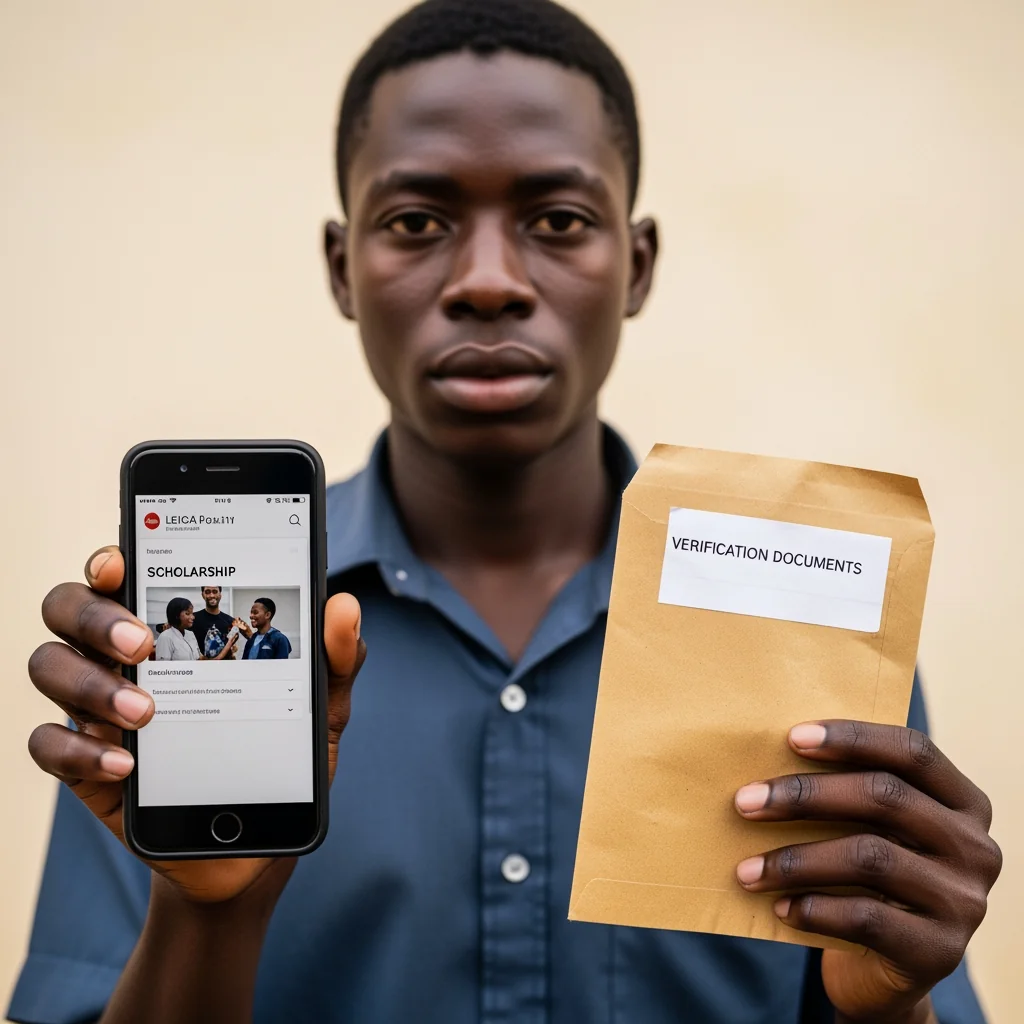
The digital space promised to bridge the gap between the student and the funder. Application portals exist, yet the final verification requires a physical appearance in the capital city. This requirement creates a paradox where the student spends their last savings on a bus ride to a crowded government office.
The digital portal serves as a mere invitation to a physical struggle. Experienced individuals observe that the system rewards stamina over academic merit. Only those with the means to travel can pursue the promise of financial aid.
A youth corps member serving in Bomadi remarked: “I applied online in five minutes. The portal said ‘successful’. Then they asked me to come to Asaba for ‘physical verification’. The bus fare was more than the application fee.”
“The youth of today are the leaders of tomorrow, but they must be prepared today.”
These words from various Nigerian leaders highlight the intent of the state. However, the execution of these plans often hits a brick wall at the city limits.
The digital bridge must extend beyond.
Expansion of the distribution network will ensure that the funds reach the intended targets. Establishing satellite offices in each senatorial district removes the burden from the student.
The state will see a significant increase in participation when the process moves closer to the people. Decentralization is the only cure for the stagnation of these academic grants. Each student deserves a fair chance to access the wealth of the state.
A local government chairman once suggested: “If the money cannot go to the village, bring the verification to the village. Let the student spend their transport fare on books, not on buses.”
Removing the centralized chokehold allows for a more balanced distribution of intellectual progress. The Scholarship That Never Left Asaba must become a memory of a less efficient era. The future of the state depends on the successful disbursement of resources to every corner of the map.
The Localized Funding
When funds circulate within the local communities, the economic activity of the entire state sees a positive shift. Students spend their stipends on textbooks and local services, fueling the economy of their hometowns. The yield of this investment is a more educated workforce ready to contribute to the state.
The progress of the youth is the progress of the nation. Some operators suggest that a mobile payment system could bypass the need for physical visits. This modern solution would ensure that The Scholarship That Never Left Asaba finally travels to the villages.
A beneficiary of a decentralized program said: “They verified me in Warri. The money entered my account the same week. I bought my textbooks and still had transport fare left. That is how it should work.”
Transparency in the selection process will build trust between the government and the governed. When the youth see their peers receiving aid, their faith in the system grows stronger. The goal is a future where the location of a student does not determine their access to opportunity.
Delta State possesses the capacity to lead this change in the South-South region. Final observations indicate that the desire for education is high among the youth. The only missing piece is the consistent flow of the promised financial support. By addressing the physical barriers, the state will ensure that The Scholarship That Never Left Asaba reaches the hands of those who will build the future.

A Road That Exists Only on Paper
The map of the federation contains lines of ink that the tires of a heavy truck will never find. These blueprints represent a promise of movement while the earth below them offers only the silence of the bush. Administrative files often hold the only records of infrastructure projects in the region. The reality of the traveler involves dust and detours while the document in the office describes smooth asphalt. This phenomenon defines the gap between the budget and the physical world.
A driver who has navigated the same route for twenty years once said: “In the ministry, they call it a highway. Behind my steering wheel, I call it a gamble. The paper says one thing. The pothole says another.”

The Weight of Ink and the Absence of Stone
Many people in the administrative sector understand the weight of a signature. A pen stroke can create a highway in the minds of the public. The physical realization of A Road That Exists Only on Paper is a different matter. Thousands of kilometers of mapped routes exist within the ledgers of the Ministry of Works. These routes appear in annual reports as completed phases of national development.
The soil of the hinterland tells a story that requires attention. Grass expands where tractors should have carved a path for commerce. Some operators within the construction industry refer to these as ghost paths. They are the artifacts of a system that values the completion of a file over the completion of a bridge.
The financial output for these projects often reaches billions of Naira. The physical return is frequently invisible to the eye of the citizen. According to data from the Infrastructure Concession Regulatory Commission, the infrastructure stock of Nigeria stands at roughly 35 percent of the Gross Domestic Product. This figure highlights the massive deficit in the physical environment.
A retired surveyor who mapped roads for thirty years said: “I drew lines for places I never visited. The government wanted paper. The people wanted stone. I gave the government what it asked for.”
The expansion of the economy relies on the movement of goods. When the path for these goods is A Road That Exists Only on Paper, the cost of transport rises for the common man. The farmer pays the price. The trader pays the price. The consumer pays the price. The ink on the map does nothing to reduce the fare.
The Economic Shadow of Virtual Infrastructure
“The progress of the people is tied to the quality of the roads, and the gap between the budget and the physical reality represents a challenge for the expansion of the economy.”
This observation by a former minister of works reflects a deep-seated reality. Plans for roads often circulate in the corridors of power for decades. These plans serve as placeholders for future activity. In the meantime, the farmers in the rural areas fail to move their produce to the urban markets. The lack of a physical connection creates a barrier to the expansion of wealth.
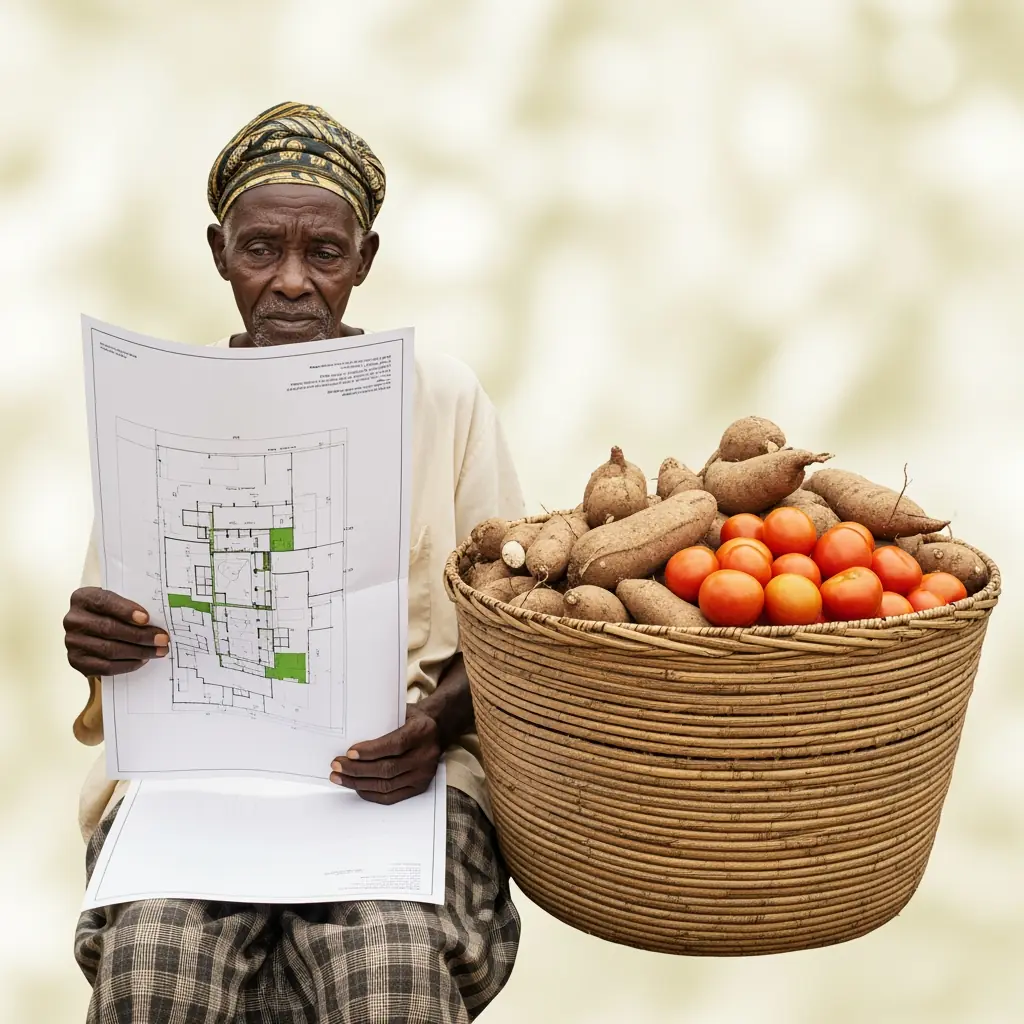
The cost of maintenance for a vehicle on a non-existent path is a burden that few can bear. Consider the impact on the real estate market. Some individuals purchase land based on the promise of a new bypass. They see the map in the survey office and believe in the expansion of the city. Years pass and the bush remains undisturbed.
A land buyer whose property never appreciated said: “They showed me the blueprint. The road was supposed to pass behind my fence. Ten years later, the only thing passing behind my fence is goats.”
A Road That Exists Only on Paper can freeze the capital of investors for a generation. The value of the land stays stagnant because the promised access is missing. The paper promises profit. The reality promises bush.
The Expansion of Administrative Oversight
The digital space offers a new way to track the progress of these projects. Some platforms now allow the public to view the status of government contracts. This increased visibility creates a demand for physical results. Experienced individuals in the civil service are beginning to prioritize the verification of work on the ground.
The digital bridge now connects the citizen to the construction site. A person in a village can report that no bulldozer has arrived despite the contract award. This feedback loop ensures that the distance between the office and the road shrinks with every report.
The move toward a transparent framework of reporting is essential for the future of the nation. The World Bank suggests that Nigeria requires massive investment to close the gap in its transport network. This investment is not just about the money. It is about the transition from the document to the dirt.
Each kilometer of asphalt laid down is a victory over the inertia of the bureaucracy. The focus must shift from the approval of the plan to the arrival of the equipment. A Road That Exists Only on Paper provides no benefit to the driver who is stuck in the mud.
Practical Progress for the Future
The future of the road network in Nigeria depends on a shift in perspective. The goal is the creation of durable paths for the citizens. This involves a commitment to the quality of the materials and the timeline of the construction. The expansion of the road network is a physical task that requires physical presence.
When the bulldozer meets the soil, the illusion of the paper map begins to fade. Many communities wait for the day when the lines on the map become the stone under their feet. This transition is the true measure of progress for any administration.
A village elder watching a long-awaited road construction finally begin said: “We buried three chiefs waiting for this road. The fourth chief will ride on it.”
The focus keyword A Road That Exists Only on Paper must eventually become a relic of the past. The path forward is paved with the determination to build a reality that the people can walk upon. Each bridge built and each mile covered brings the nation closer to its potential for expansion.
The ink must dry on the page. But the stone must set in the ground.

Digital IDs and the Future of National Security

The Market Fire and the Silent Alarm That Failed Us

The Clerk Who Buried the Truth in a Dusty Drawer

The Scholarship That Never Left Asaba for the Youth

A Road That Exists Only on Paper and Not in the Soil

When the Transformer Blew in July and the Town Cried

The Civil Servant with Ten Names and One Salary

How Flood Water in the Governor’s Inbox Changed Policy

The Missing File of the Widow’s Land and the New Law

The Contractor and the Half-Built Bridge of Sighs

Hunting Ghost Workers in the Primary School

How Digital Records Stop Money Leakage in Government Offices

Internet Sovereignty: Why Some Countries Want Their Own Separate Internet

How One Misplaced Dot Broke a Bank Login Page

The Untold Story Of The Nigerian Who Helped Build Global Internet Systems

Nigerian Hackers: The Global Fraud Story and Its Fallout

Forgotten Satellites Defy Silence, Beaming Signals for Decades

Implement Local SEO Fixes for Lagos: Beat Google Maps Competitors

Core Web Vitals Checklist: How to Achieve a Near-Perfect Score on Mobile Devices

The “Village People” Aren’t Blocking Your Sales; Your Bad SEO Is.

The 1-Star Review That Almost Bankrupted a Bakery

Why Your Competitor is Stealing Your Clients While You Sleep

The Business That Died because the Owner Refused to “Go Beyond.”

Why Are You Hiding Your Business From People With Money?
 Edutech Portal2 weeks ago
Internet Sovereignty: Why Some Countries Want Their Own Separate Internet
- Digital Hustle2 weeks ago
How One Misplaced Dot Broke a Bank Login Page
- Edutech Portal2 weeks ago
The Untold Story Of The Nigerian Who Helped Build Global Internet Systems
- Edutech Portal2 weeks ago
Nigerian Hackers: The Global Fraud Story and Its Fallout
- Edutech Portal2 weeks ago
Forgotten Satellites Defy Silence, Beaming Signals for Decades
- Edutech Portal2 weeks ago
Implement Local SEO Fixes for Lagos: Beat Google Maps Competitors
- Edutech Portal2 weeks ago
Core Web Vitals Checklist: How to Achieve a Near-Perfect Score on Mobile Devices
- Edutech Portal2 weeks ago
The “Village People” Aren’t Blocking Your Sales; Your Bad SEO Is.